
Plumbing & Electrical Bathroom Infrastructure
Return to category.
Go to categoryThe idea sounds almost self-evident: the water leaving the sink or shower is not as dirty as wastewater from the toilet bowl. So why should it go straight down the drain when it could be used for something that does not need potable water, like the cistern? At a time when water conservation matters more and more, greywater recycling sounds like one of the most logical and technically interesting solutions.
In practice, however, greywater is not a simple improvised pipe from the sink to the cistern. It is a non-potable water system inside the building. That means separate pipework, filters, possibly a tank, a pump, an overflow to drain, backflow protection, clear marking, maintenance, and sanitation. If it is done carelessly, it can create odors, bacterial growth, clogs, stains in the toilet bowl, malfunction of the cistern, or even a contamination risk for the drinking-water system.
The most important point is that greywater is not clean water. It may come from showers, sinks, and bathtubs, but it still contains soaps, hair, skin, organic matter, microorganisms, cosmetics, toothpaste, limescale residue, and cleaners. The Washington State Department of Health defines greywater as wastewater from bathtubs, showers, bathroom sinks, washing machines, dishwashers and kitchen sinks, i.e. from sources other than toilets and urinals. For use in the cistern, however, the "cleanest" sources are usually the shower and bathroom sink, not kitchen water.
Gray water reuse for cisterns belongs to non-potable water applications. The EPA describes on-site non-potable water reuse systems as systems that collect and treat water produced in or around a building, such as greywater, stormwater or rainwater, and use it for non-potable applications.
In this guide we will see how such a system works on a technical level, which waters are collected, how they are filtered, how they are stored, how the cistern is fed, what are the main risks, why it should not be connected directly to the drinking water network, when it makes sense in a Greek residence and why in an apartment without planning from the beginning it is often a difficult and expensive solution.
Greywater is used water that does not come from a toilet bowl. In the context of a bathroom, the most common sources are the sink, shower, and bathtub. These waters have already been used, but they do not carry the same contamination load as toilet wastewater. That is why, after suitable treatment, they are considered more appropriate for non-potable reuse.
However, gray water should not be confused with clean water. Shower water can have soap, shampoo, hair, skin debris and microorganisms. The sink water may have toothpaste, soaps, shaving hair, cosmetics and cleaners in it. If these are stored untreated, they start to smell and develop microbial activity.
Gray water is also not the same as black water. Black water is that which comes from a toilet bowl and contains human waste. In a proper system, black and gray water must remain completely separated. Technical specifications of greywater systems point out that the collection piping must be completely separated from the blackwater to avoid contamination.
For the owner, the practical distinction is crucial. Shower and sink water can be considered for reuse. Toilet wastewater cannot. Kitchen water is also much more problematic, because it contains fats and food residue. So for bathroom reuse, the most sensible technical basis is usually the shower or bathtub together with the bathroom sink, not the whole house.
The cistern does not need drinking water in the same way that the tap does. It needs water to carry waste away and rinse the toilet bowl. In theory, that makes it a very suitable non-potable use. If water from the shower or sink can be collected, filtered, stored briefly, and fed to the cistern, drinking-water consumption falls.
The logic is particularly attractive because production and demand are naturally linked inside the home. The bathroom produces greywater from the shower and sink, while the same bathroom also needs water for flushing. In a family, water from one shower can theoretically cover a large share of the day's flushes.
A practical example: if a person takes a shower and uses 50 liters of water, while the faucet is a 3/6 liter dual flow, this water could theoretically cover several flushes. In practice not all is used, because there are losses, filters, storage limitation, availability and quality issues. Nevertheless, the savings potential is real.
The use in the cistern also has an advantage over irrigation: the demand is there all year round. It does not depend on season or garden. On the other hand, it has stricter requirements, because the water is stored and distributed inside the building, near people, in a cistern and basin.
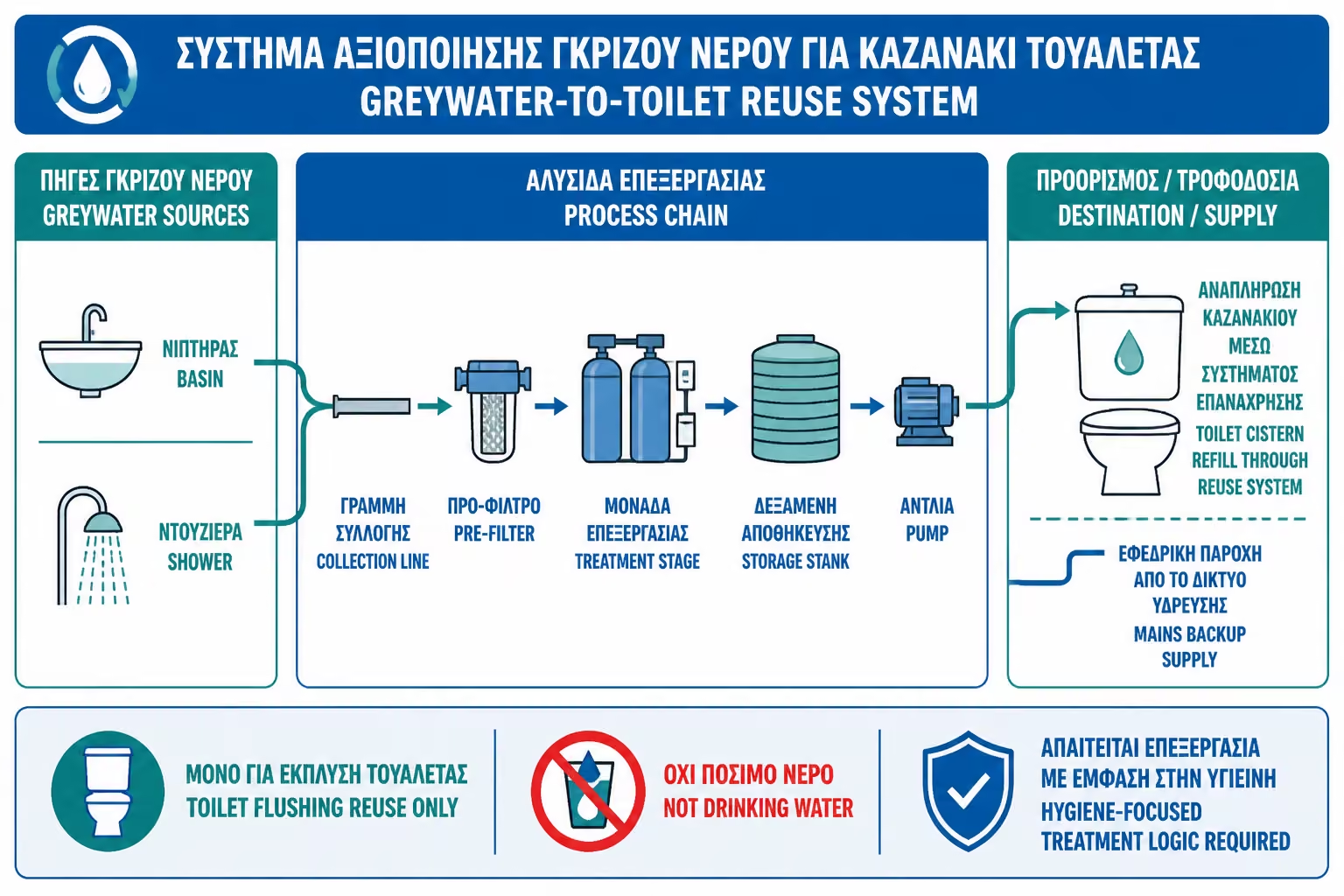
A proper system is not just a pipe from the sink to the cistern. It is a small non-potable water treatment and distribution system. It typically includes a separate greywater collection line, a primary filter for hair and solids, a tank or treatment unit, a pump or pressurization system, a non-potable water line to the cistern, an overflow to drain, and a backup potable-water supply with safe separation.
The flow is approximately as follows: the water from the sink or shower is led to a separate collection line. It passes through a filter for hair, soaps and solids. It is concentrated in a small tank or unit. If necessary, it undergoes treatment, such as sedimentation, filtration, biological treatment or disinfection, depending on the system. From there it is pumped to the cistern. If gray water is not available, the cistern is fed from the potable water network through a safe arrangement.
The system should have an overflow to the drain so that if the tank fills up, the excess water can be safely drained away. It must also have a bypass capability so that if the system is shut down for maintenance, the bathroom can still function normally.
In commercial or larger buildings, the system can be quite complex. In residence, there are smaller solutions, but the principle remains the same: collection, processing, storage, distribution and safe backup.
The idea of "putting the water in the sink into the cistern" seems simple, but it has serious pitfalls. The cistern has a filling mechanism, float, valves, seals and often thin passages. Untreated gray water can have hair, soaps and organic matter that will stain, smell and clog mechanisms. It can also form a biofilm inside the cistern.
That's why some household safety guides warn against putting greywater directly into the basin tank. New Mexico State University, for example, states that greywater can be pumped into the flush basin, but not into the toilet tank, because it can cause problems with the mechanism and operation. This caveat is important, especially for sketchy DIY solutions.
In a properly designed system, the cistern or flush unit must be compatible with non-potable treated water. The water must be filtered and suitable for the mechanisms. There must also be a way to clean and maintain it. We don't want to create a cistern that smells, gets dirty and breaks down every few months.
The cistern is seemingly simple to use, but its mechanisms are not designed for soap scum, hair and micro-organisms. Processing is essential.
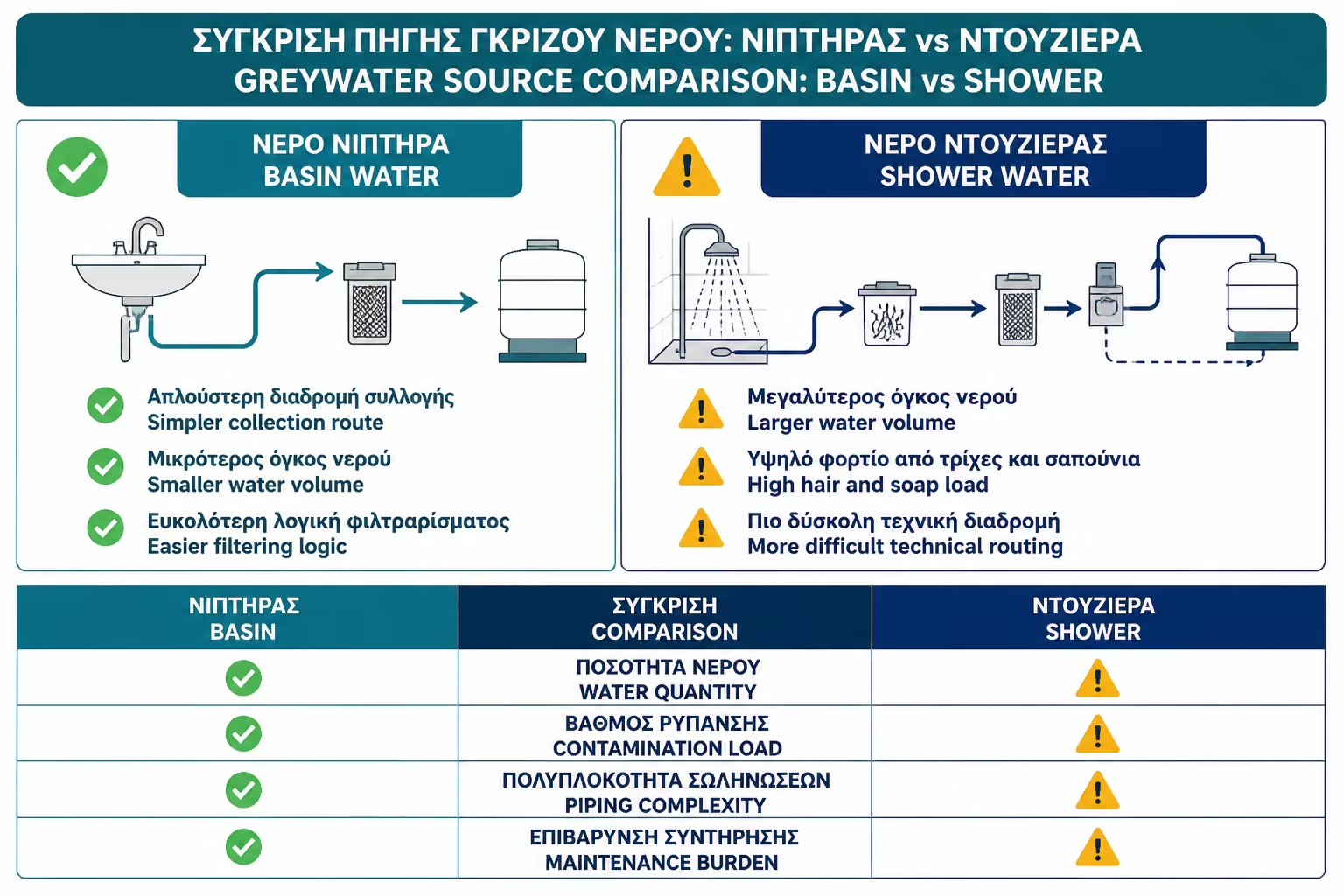
The sink is technically an easier source because it is often located near the toilet. If designed from scratch, it can be routed to a separate greywater line. But the amount of water from the sink is usually less than that of the shower. It also contains toothpaste, shaving hair, soaps, and cosmetics, all of which can leave residue.
In a guest WC, where there is only a sink and a toilet, the idea of using sink water for the cistern is attractive. There are even compact solutions that place a hand-wash basin above the cistern so that used water can drop straight into it. These solutions are simple, but they still have aesthetic, hygienic, maintenance, and comfort limitations.
In a full bathroom, the sink alone is rarely enough for all the washes. It can cover a part. But if it is combined with the shower, the available quantity increases a lot.
The advantage of the sink is proximity. The downside is the small amount and the residue from toiletries. So it needs a filter and frequent maintenance.
The shower is the most interesting source of gray water in terms of quantity. A shower can produce tens of liters of water. If this water is collected, it can power several cistern flushes. That is why, on a technical level, the shower is often more important than the sink.
But collecting from the shower is more difficult. The shower drain is located low, often in the floor. To separate gray water, a separate drain or diversion must be designed before it joins the rest of the wastewater. In an existing apartment with a concrete slab, this can be very difficult or practically unprofitable, as international guides for greywater toilet flushing in existing homes with concrete floors point out.
Also, the shower water has hairs and soaps in it. So a good pre-filter is needed. If hair gets into the tank, it will clog and create odors. If the soaps are left in stagnant water, the quality drops quickly.
The shower collection makes sense mainly in new construction or a complete renovation where floors and drains are being changed. If the bathroom is already finished, the intervention may be disproportionate.
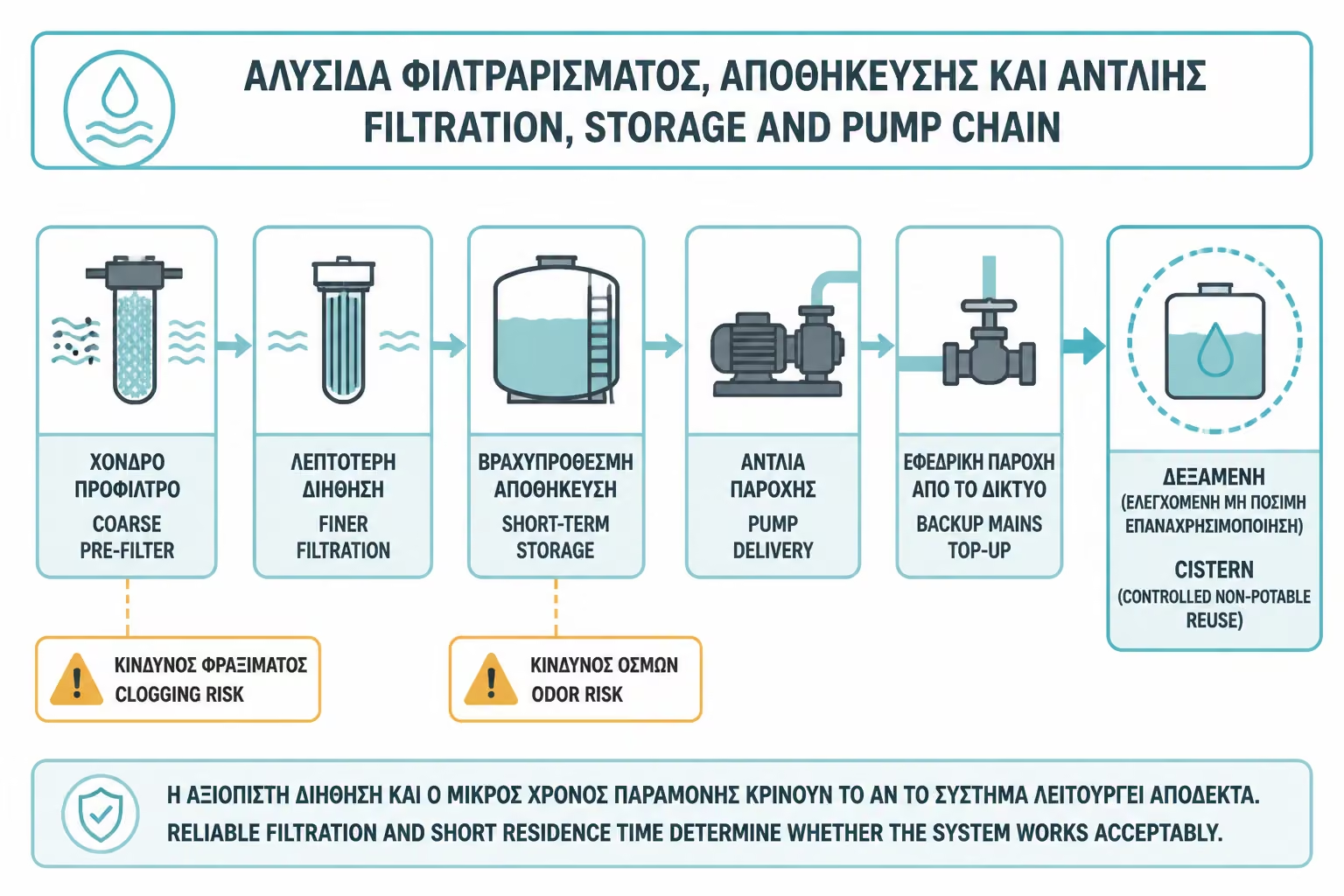
The first stage of a greywater system is solids removal. In the bathroom, the main solids are hair, lint, soap scum, skin residue and small particles. If these are not removed early, they will go into the tank, pump or cesspool.
A good system needs a pre-filter accessible for cleaning. This can be a bristle filter, sieve, cartridge or more complex stage, depending on the size of the system. The filter should be easy to clean. If in order to clean it a tile has to be opened or half a system has to be solved, in practice it will not be properly maintained.
After the initial filter there may be sedimentation, biological treatment, sand filter, membrane, UV or chlorination, depending on the system and quality requirements. For simple use in a residential cistern, it doesn't always need an industrial level of treatment, but it does need enough to keep odors, biofilms and damage free.
The technical challenge is balance. The simpler the system, the easier the maintenance. The more demanding the use and storage, the more processing is needed. An overly complex system in a small apartment can be left unmaintained and fail.
Greywater deteriorates quickly when stored. It contains organic load, soaps, and microorganisms. If it stagnates, it starts to smell. That is why many practical guidelines recommend not storing untreated greywater for more than 24 hours. Greywater Action, for example, gives as a basic guideline not to store greywater for more than 24 hours, because the nutrients start to break down and odors are created.
In systems that reuse cistern water, this means that the tank must be small and active, not a large storage tank. We want the water to be used quickly. If not in use, it must be safely disposed of down the drain and the system supplied with potable water.
The tank must have a lid, ventilation where required, an overflow, access for cleaning and a level sensor. If it is in a closed bathroom furniture, it can create odors. If it is inside a false ceiling or built-in without access, maintenance becomes difficult.
A frequent mistake is to calculate a large tank "so as not to lose water". In greywater, a bigger tank is not always better. If the water stays, it smells. The tank should be designed for rapid replenishment.
The cistern needs to be filled with a specific flow rate and pressure. If the gray water tank is low, a pump is needed. The pump must be suitable for the water it pumps, be protected against solids, have a filter before it, have a level sensor and not run dry.
The pump adds cost, noise, electrical consumption and maintenance. If it breaks down, the cistern must not be left out of service. That is why the system must have a back-up supply from the potable water network with a safe separation. If there is no gray water or if the pump is damaged, the cistern must be filled normally from the network.
The pump must also be accessible. It should not be hidden in a place without access. Pumps need filter cleaning, possible replacement and inspection. If the pump is behind tiles, the installation is bad practice.
In small domestic systems, the pump is often where the theory becomes daily maintenance. If the homeowner doesn't want to clean filters or listen to a pump, the system may not be right for their home.
The most critical safety issue is to prevent gray water from returning to the drinking water network. Potable water and non-potable water must remain hydraulically separated. If the system is backed up from the mains, there must be suitable back-up protection, such as an air gap or certified arrangement, depending on the design and regulation.
International plumbing codes emphasize the importance of backflow protection in plumbing installations. The International Plumbing Code, for example, states that supply lines and fittings of plumbing fixtures must be installed to prevent backflow of water. In a greywater system, this principle is even more important, because we are talking about non-potable water inside the building.
The backup supply should fill the system when greywater is not present, but never come into direct contact with the non-potable water tank in a way that allows contamination. This is not a DIY detail. It is a key design point.
Also, non-potable water piping must be separate and properly marked. A future plumber should not confuse them with drinking water. Signage, documentation and access are part of security.
Water that goes into the cistern will not be drunk, but may come into contact with people through aerosol, splash, cleaning or maintenance. It also stays inside tanks, pipes and mechanisms. So quality matters.
Greywater reuse research shows that reuse for toilet flushing can be done with controlled risk when the water has been properly treated. A quantitative microbial risk assessment study for greywater toilet flushing reported that the risks of pathogenic E. coli contamination through flushing with treated domestic greywater were almost negligible for the scenarios considered. But this concerns treated water and specific assumptions, not a casual channeling of untreated water into a cistern.
In practice, human contact with untreated greywater should be avoided. Odors, standing water and places where micro-organisms can grow must also be avoided. The system must have regular maintenance, filter cleaning and, where provided, disinfection.
The owner must understand that "no drinking" does not mean "no rules". It means it has its own system of rules.
Greywater reuse within a building should not be treated as a simple plumbing conversion. Depending on the country, region and type of installation, a permit, study, inspection, specific specifications and professional installation may be required. Internationally, regulations vary significantly. In some areas, simple irrigation uses are permitted, but cistern use is more stringent because it is connected to indoor piping and non-potable water systems.
New Zealand, for example, mentions in a greywater guide that for use in the cistern a building consent is required and a plumber to install a greywater recycling system connected to the toilet. This points the way: it is not a cursory intervention by an owner.
In Greece, the owner must check the case with an engineer and plumber familiar with non-potable water systems, and where necessary with the competent agency. Particular attention is needed in apartment buildings, where drains, columns and communal facilities do not belong exclusively to one apartment. Changing sewers or creating a second network may require technical and legal assessment.
The European EN 16941-2:2021 gives a framework for the design, installation and maintenance of treated gray water systems for non-potable uses such as WC flushing. For a Greek project, the existence of a standard does not mean automatic installation permission, but it shows that the right solution must follow recognized technical principles.
In an existing apartment, the drains are already connected. Washbasin, shower and basin water can end up very quickly in the same column. In order to collect gray water, it must be separated before it is combined with black water. This often requires opening floors, walls and accessing piping that is not easily accessible.
The shower is the most difficult part, because its drainage is low. If there is no height for a separate line, a pump or special device may be required. In high-rise buildings, slope, columns and shared piping greatly limit the options.
In addition, space is needed for a tank, filters and possibly a pump. A typical Greek bathroom of 3–5 sq.m. it does not easily have space for a technical unit. If the unit is placed in a cabinet, maintenance may be difficult. If it goes into a suspended ceiling, there are issues of access and weight. If it goes outside the bathroom, additional piping is needed.
This is why gray water recycling makes much more sense in a new build, detached house, hotel, apartment complex or complete renovation where facilities are being designed from the ground up. In a finished apartment, it may be technically feasible but financially difficult.
Greywater-to-toilet makes more sense when there is enough greywater production, enough demand in cisterns and technical installation is possible. A family in a single-family house, a small hotel, an Airbnb complex, a gym, student housing or centrally planned apartment building can have a more serious benefit than a small one-bathroom apartment.
In an individual small apartment, the savings may not justify the cost and maintenance, especially if the system is retrofitted. There perhaps more efficient solutions are a double-flow faucet, correct float setting, eco-flow shower, aerators and leakage control. These solutions have lower cost, less maintenance and immediate effect.
In new construction, however, things change. If a second greywater network, tank space, filters, pump and non-potable water piping are foreseen from the beginning, the cost is built into the project and the system becomes much more reasonable. The same applies to large buildings where water consumption is high.
The decision must be based on a technical and economic study: how much greywater is produced, how much water is needed by the cisterns, what is the cost of the installation, what maintenance is required and what is the water/sewer price in the area.
Costs can vary enormously. A very simple solution of reusing washbasin water in a special cistern is completely different from a complete system of shower collection, filtration, tank, pump and network of non-potable water. There is no single price for this.
At the level of simple forecasting in a new renovation, the cost for separate plumbing from a sink or shower can be included in the overall plumbing project, but will increase due to second lines, access and design. For a small domestic system with tank, filter, pump, automation and cistern connection, the cost can easily go from a few hundred to several thousand euros, especially if retrofitted.
In a complete residence or detached house, a more complete system can range from €2,000–€6,000 or more, depending on capacity, processing, automation, piping, work and maintenance requirements. In larger buildings, the cost becomes a mechanical installation project with a separate study.
Prices depend on the area, whether the project is new or retrofit, whether there are tiles/sets to be opened, system quality, whether a permit/study is required, whether VAT is included, and maintenance. A "cheap patent" without treatment and protection should not be compared to a real greywater system.
A greywater system is not "set it and forget it". Filters collect hair and soap. The tank needs cleaning. The pump needs checking. The level sensors can become dirty. Piping may develop biofilm. If there is disinfection, it needs to be checked. If there is UV, the lamp has a lifetime.
If the maintenance is not done, the system will start to smell, clog or give poor water quality to the cistern. This is the main reason simple, sketchy solutions fail. The owner is excited about the idea, but doesn't want to clean filters every few days or weeks.
Maintenance should be part of the purchase decision. Before choosing a system, ask: how often are the filters cleaned? Where is the access? Are there spare parts? What if the pump breaks? Is there a bypass? Does it smell if we are away from home? How is the tank emptied?
A system that saves water but requires maintenance that will not be done is not a good solution. The right technical solution must fit the owner's lifestyle.
The first mistake is the direct connection of a sink or shower to a cistern without a filter and treatment. This leads to odors, clogs and damage.
The second mistake is storing raw gray water for a long time. The water starts to smell and degrade.
The third mistake is the connection to the drinking water network without proper backflow protection. This is a serious health hazard.
The fourth mistake is the lack of overflow and bypass. If the tank fills or the pump fails, the system must have a safe alternative.
The fifth mistake is the lack of access to filters, pump and tank. If they are not cleaned, the system fails.
The sixth mistake is the use of kitchen water or highly charged water. Fats and organic residues create big problems.
The seventh mistake is the installation in an apartment building without technical and legal control. Columns, shared networks and regulations do not allow arbitrary interference.
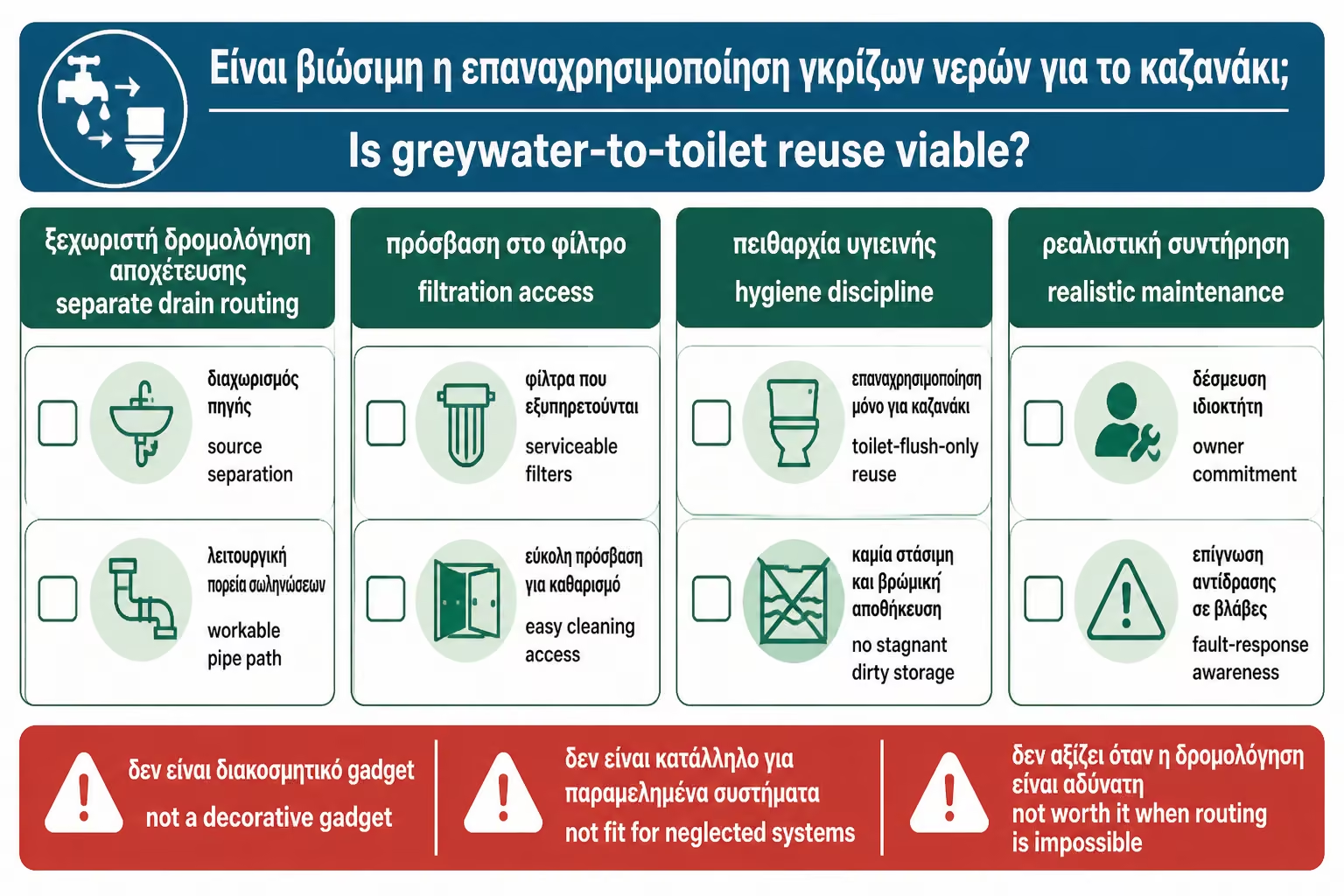
Before you finalize the choice or installation, review the following points first:
| Question | Yes / No |
|---|---|
| Is the bathroom undergoing a complete renovation or new construction? | Yes / No |
| Can sink/shower drains be separated from black sewage? | Yes / No |
| Is there room for filters, a tank and possibly a pump? | Yes / No |
| Is there access for filter cleaning and maintenance? | Yes / No |
| Does the system have an overflow to drain? | Yes / No |
| Is there a bypass so that the cistern works even without greywater? | Yes / No |
| Is the back-up drinking water supply protected against backflow? | Yes / No |
| Are non-potable water pipes separate and marked? | Yes / No |
| Has the legal/regulatory framework been checked by an engineer? | Yes / No |
| Have you calculated whether the savings justify the cost and maintenance? | Yes / No |
If most of the answers are "no", then the system is probably difficult for the particular residence. In this case, simpler savings solutions may be more cost-effective.
If you must keep only one thing, keep this: gray water is not clean water and should not be flushed down the drain. A proper system needs separate piping, filter, small and accessible tank, overflow, bypass, backflow protection and maintenance. If the bathroom is already finished, the solution is often expensive and difficult. If you are planning new construction or a complete renovation, then it is worth serious consideration with mechanical and plumbing from the beginning.
Recycling gray water from a sink or shower for use in the faucet is one of the most interesting technical solutions to save water in the bathroom. It makes real sense: we're using water that's already gone through a relatively mild use for a second, non-potable use. In properly designed systems, especially in new buildings or complete renovations, it can significantly reduce potable water consumption.
But it is not a simple operation. It needs separation of gray and black water, filters, treatment, tank, pump, proper supply of the cistern, backup drinking water with safe separation and continuous maintenance. If done sloppily, it can create more problems than it solves: odors, clogs, broken mechanisms, health hazards and messes.
For the Greek apartment owner, the most realistic approach is to consider the simplest solutions first: dual flow cistern, correct float setting, leak control, aerators and eco-flow showers. But if the project concerns a new construction, single-family house, hotel or complete renovation with the possibility of new pipes, then greywater-to-toilet deserves technical study from the beginning.
Gray water recycling is a great idea when designed as a system. Not when treated as a patent.
Return to category.
Go to categoryReturn to the central guide.
Go to guide