
Plumbing & Electrical Bathroom Infrastructure
Return to category.
Go to categoryThe cistern is one of the bathroom components that rarely gets attention until something goes wrong. As long as it fills, flushes, and refills normally, most owners do not think about it. And yet, in daily use, the toilet bowl and cistern can be among the biggest water consumers in the home. Each flush can mean 3, 6, 9, or even more liters of water, depending on the mechanism, its settings, and the age of the installation.
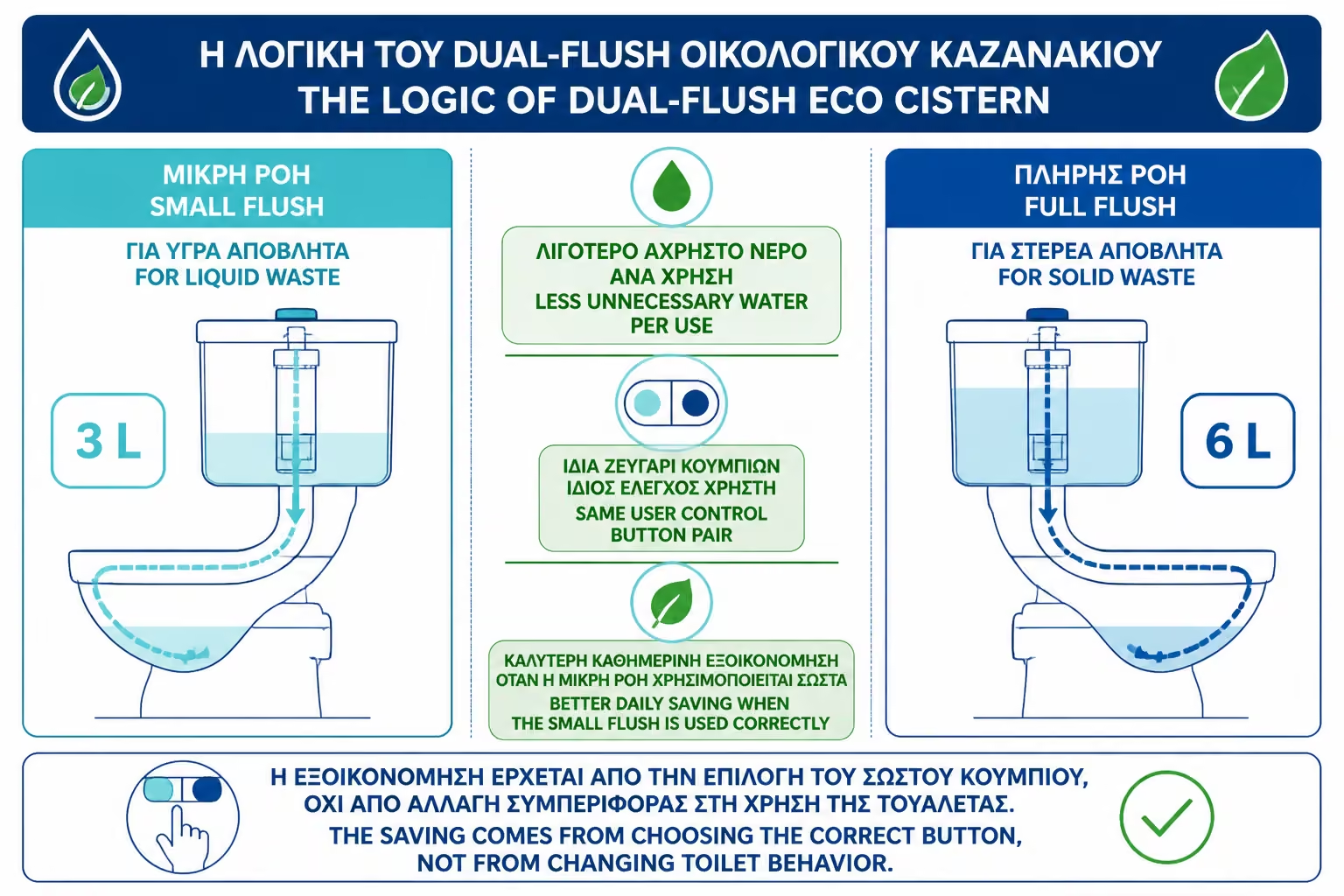
In a family home, the cistern may be used dozens of times a day. Small differences per use become big differences month and time. If an old cistern pours 9 liters with each push, while a modern double-flow one gives 3 liters for small use and 6 liters for large use, the savings can be very significant without changing the daily habit. We are not talking about theoretical ecology, but about real consumption reduction.
Water-saving cisterns are not just about "using less water". Good performance depends on the correct discharge mechanism, proper float setting, compatibility with the toilet bowl, mains pressure, the condition of the mechanism, and the design of the bowl itself. A rimless bowl, for example, may be easier to clean and may distribute water differently, but it still has to work properly with the cistern and the flow it provides.
The logic of 3 and 6 liters is now very common. Flush system manufacturers report that dual flow cisterns can offer two options, usually 6 liters for a full flush and 3 liters for a small flush, while some systems can be set even lower, such as 4.5 and 3 liters, if the system and basin allow. This shows that saving is not only a matter of product change, but also of proper setup.
In this guide we'll look at how dual flow cisterns work, what 3/6 liter means in practice, why float adjustment is critical, what rimless technology offers, what mistakes lead to waste or poor flushing, and when a plumber is needed. The goal is not just to turn the water down until it doesn't rinse well, but to strike the right balance between cleaning, hygiene and savings.
In the bathroom, the shower and sink usually get the most attention when we talk about saving water. But the toilet is used many times a day, and every flush carries a fixed volume of water. That makes the cistern one of the most important points for reducing consumption.
The difference between an old and a modern cistern can be big. Older sinks and cisterns could use many more liters per flush than today's systems. In the US, the EPA reports that toilets are among the main consumers of water in the home, and WaterSense efficient models use up to 1.28 gallons per flush, which is about 4.8 liters, aiming for lower consumption without loss of efficiency.
In the European market, 3/6 liter dual flow systems are particularly popular. The logic is that not every use needs the same amount of water. For liquid waste, the small flow is usually sufficient. For solids, the big one is used. So the savings are made without drastically changing the user experience.
A simple example shows the difference: if a family makes 20 uses a day and 12 of them can be done with a small flow of 3 liters instead of a full 6 liters, 36 liters are saved per day just from this difference. In a month, this is more than 1 cubic meter of water, not counting possible leaks or excessive settings.
The dual flow mechanism is the system that allows the cistern to have two different amounts of flushing. Usually the user sees a button with two parts: a small button for small flow and a large button for full flow. In built-in cisterns, the operation is done through the control panel. In external cisterns, it is done through the mechanism on the lid.
Low flow is often set at around 3 liters and high flow at 6 litres. This relationship is not accidental. It is meant to cover the two main flushing needs with two different water volumes. The important point is that the toilet bowl must be compatible with those quantities. It is not enough to change the mechanism if the old bowl needs more water to flush properly.
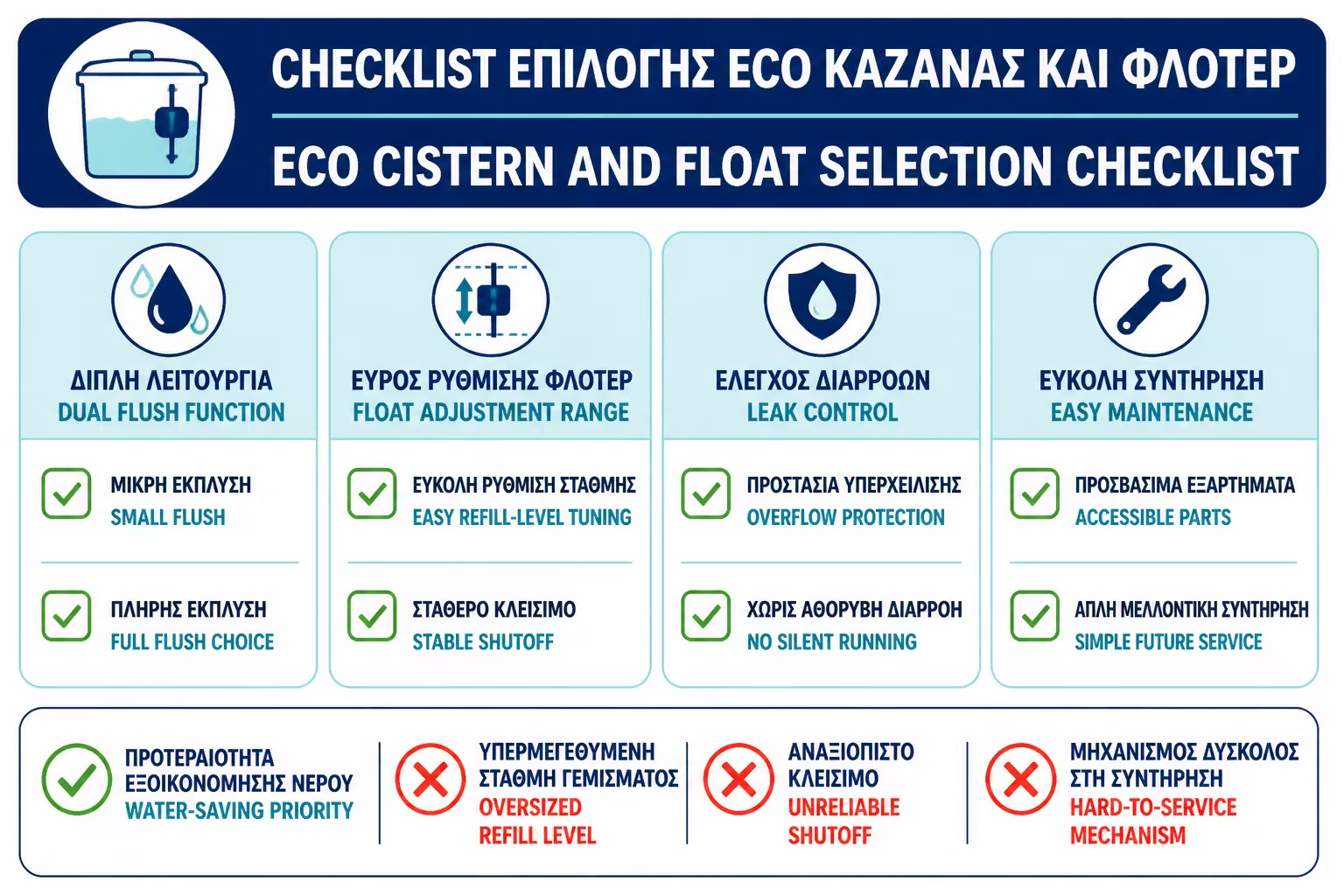
A good dual flow mechanism should be reliable, close properly, not allow water to pass into the basin, be properly adjusted and have spare parts. In cheap or poor-quality mechanisms, problems can occur: the small button does not empty enough, the large one sticks, the seal does not close properly, or the cistern continues to run quietly.
Savings, then, do not depend only on having two buttons. It depends on whether the mechanism is properly adjusted and whether the basin flushes effectively with the quantities selected.
Three and six liters are flush volumes. The smaller 3-liter flush is mainly for liquid waste. The larger 6-liter flush is intended for solid waste and for cases where a more thorough rinsing of the bowl and trap is needed.
The logic is simple, but the application needs proper setup. If the small flow is too low, the user may press the button twice, losing the save. If the high flow is too low for that basin, a second flush may be needed. Conversely, if both flows are set too high, the savings remain on paper.
In European systems, references to 6/3 liters are very common. GROHE, for example, describes dual-flush cisterns that offer a 6-liter full flush and a 3-liter reduced flush, while some systems can be adjusted to lower quantities such as 4.5 and 3 liters. This is useful in modern toilet bowls designed to perform well with less water.
In practice, however, we should not arbitrarily reduce the large flow. Sewerage needs sufficient water to properly transport waste. If the water is too little, clogs, odors or poor removal may occur. Proper saving is not "the less the better". It is as little as possible without breaking the function.
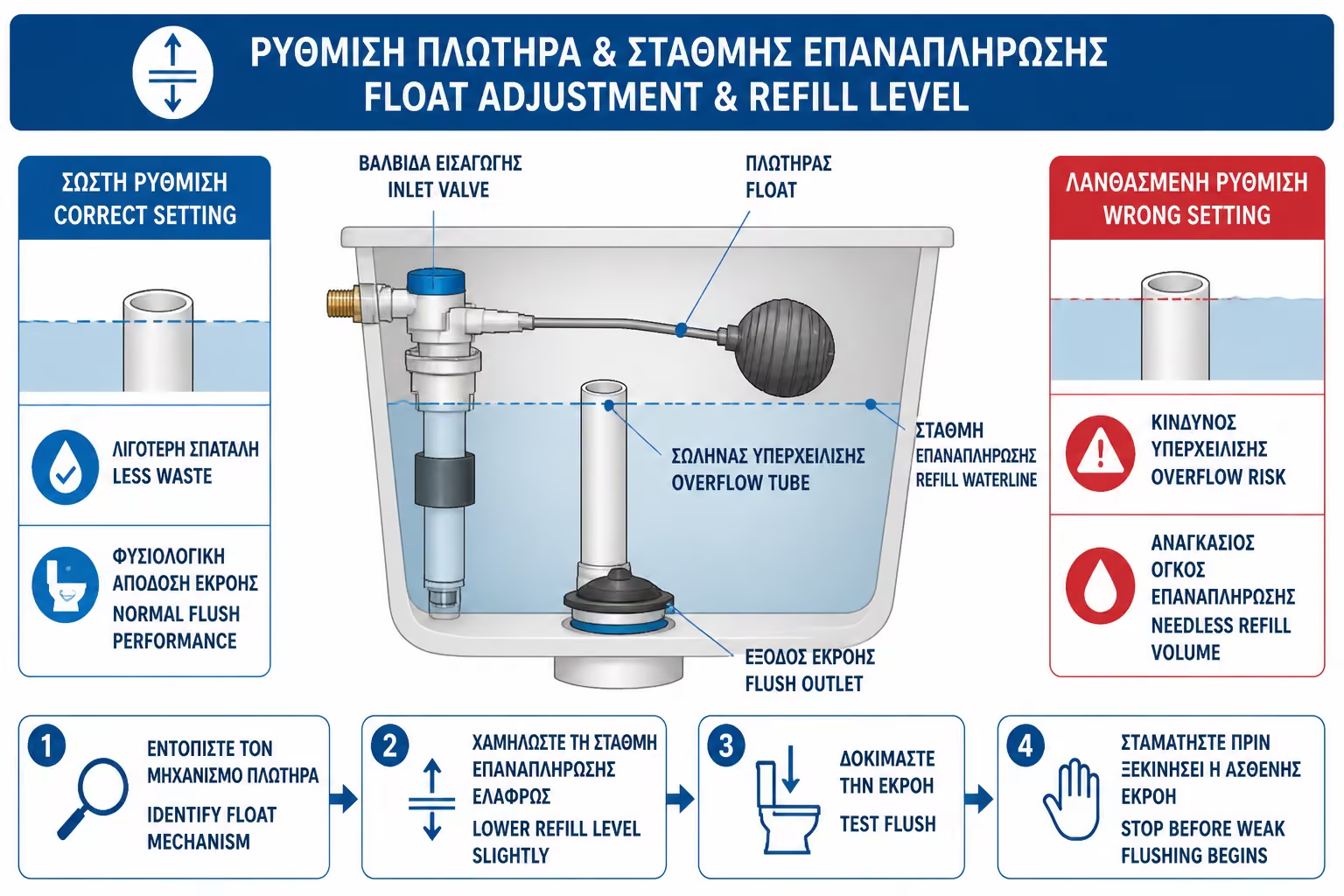
The float, or floater, is the mechanism for filling the cistern. His job is to fill the cistern with water and stop when the level reaches the correct height. If the float is set too high, the cistern fills with more water than necessary. If it is set too low, it may not provide enough water for a proper flush.
In older mechanisms, the float was often a ball on an arm. In newer ones, it's usually a solid plastic mechanism with height adjustment and a screw or clip. The principle remains the same: it regulates the fill level.
Poor setup can lead to waste without the owner realizing it. If the level is too high, water can pass through the overflow and quietly drain into the basin. If the fill valve does not close properly, the cistern continues to fill and leak. These small leaks can use up several liters a day.
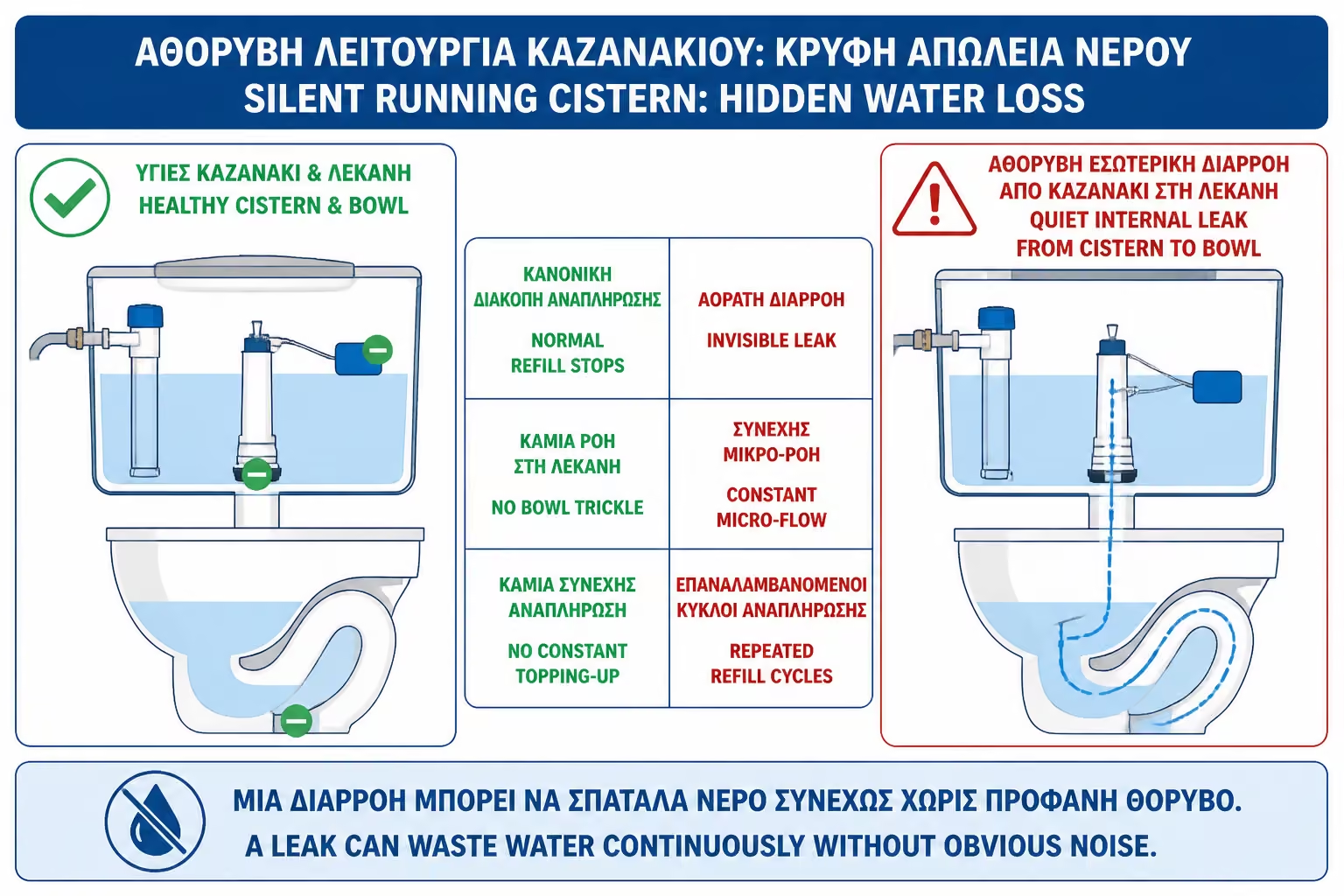
A practical sign is sound. If you hear the cistern filling for a few seconds without being used, there is a possible leak. If you see a small flow of water in the basin, even if it is almost invisible, the cistern is leaking. This loss can cancel out all the savings an ecological mechanism gives.
Adjusting the float is aimed at achieving the correct water level, not the lowest possible level. Many cisterns have a level indicator on the inside, usually a line or marking from the manufacturer. The level should be where it should be, just below the overflow, so that there is enough water to flush without overdoing it.
In outdoor cisterns, access is relatively simple: the lid is carefully removed, the filling mechanism is located and adjusted according to its type. In some mechanisms there is a screw that raises or lowers the float. Others have a clip or toothed guide. In built-in cisterns, access is from the control panel and can be more demanding.
The owner can do a simple visual check and see if the water rises above the allowable height or if it goes into the overflow. But he should not push mechanisms, break plastics or change settings blindly. If it is not clear how it is adjusted, it is better to call a plumber.
The correct process is gradual. Small change, flush test, check if it cleans properly, check if it stops filling. If a second press is often required after adjustment, the level has dropped too low or the mechanism/basin are not working together properly.
A cistern that leaks quietly is one of the biggest hidden sources of water waste in the bathroom. It does not always make obvious noise. There may be a very subtle flow into the toilet bowl that you notice only if you look closely at the water. You may hear the fill valve opening for a few seconds during the night. There may be a slight ripple in the bowl water.
The cause may be a worn seal on the discharge mechanism, dirt or scale that prevents the valve from closing, a float set too high, a worn fill valve, or an overflow problem. In hard water areas, salts accelerate this wear and tear.
A simple test is to put a few drops of food coloring into the cistern and wait without flushing. If color appears in the toilet bowl after a while, there is a leak through the discharge mechanism. This is a simple diagnostic check, not a repair.
The leak must be repaired immediately. A water-saving cistern that is constantly leaking can consume more than an older cistern that is working properly. Maintenance is part of saving.
Rimless basins do not have the classic inner rim under which the water circulates. In the old basins, the water ran under the rim and out through small holes around the basin. This helped distribute the flow, but created hidden spots where salt, dirt and germs collected.
In rimless basins, water is distributed in a different way, often through specially designed directional flow. The advantage is that the basin is easier to clean, because there is no hidden lip. The places where dirt accumulates are reduced and daily hygiene becomes simpler.
This does not mean that every rimless basin will flush perfectly with any faucet. Basin design and water quantity/rate must work together. A good rimless basin with a proper cistern can give a clean flush with a smaller amount. A bad or incorrectly combined solution may splatter, not clean evenly, or require a second press.
A practical point: if you intend to reduce the large flow from 6 to 4.5 liters, you need to be sure that the toilet bowl is designed for this amount. It is not enough that the cistern allows it. The toilet bowl must also support it.
Rimless technology is often associated with hygiene and ease of cleaning, not exclusively with water conservation. Savings occur when the design of the basin allows efficient flushing with a smaller amount of water and when the cistern is properly adjusted.
In a well-designed rimless basin, the flow is directed more efficiently. This can help the small or large flush work properly without overdoing it. But the word "rimless" is not a guarantee of savings. There are good and mediocre products, as in every category.
Also, rimless basins may have different splash behavior. If the flow is too strong or the faucet is not properly adjusted, unwanted splashing may occur. This is usually solved by choosing the right basin, the right cistern and the right flow setting.
For the owner, the practical guideline is not to choose a basin just because it says rimless. He needs to check if it is compatible with 3/6 or 4.5/3 liters, if it has a good flush rating and if it fits the cistern that will go in.
The external cisterns have easy access, because the lid opens and the mechanism is visible. Adjusting a float, changing a seal or replacing a mechanism is usually simpler. On the other hand, they look more aesthetically pleasing and do not always suit modern renovations.
Built-in cisterns are hidden in the wall and give a cleaner result, especially with wall-hung toilet bowls. Access is through the flush plate. That means the mechanism must be good quality, properly adjusted, and supported with spare parts. If an unknown or very cheap system is chosen, future maintenance may become difficult.
In terms of savings, both solutions can be efficient if they have the right mechanism. Built-in is not in itself more ecological. The exterior is not itself more wasteful. Savings depend on flow, setup, basin and maintenance.
A big advantage of quality built-in systems is that they often have precise settings for low and high flow. But this is only of value if the installer sets them up correctly and the owner knows how to check for leaks.
The right savings starts with measuring the real need. If the cistern already works properly and gives 3/6 liter, the big savings can be found in the use of the small button and maintenance. But if the cistern is old, pours a lot of water or leaks, then there is a lot of room for improvement.
The first step is to check for leaks. Then the float level is checked. Then it is checked if the double flow mechanism is working properly. Finally, it is evaluated whether the basin flushes well with the existing quantities.
If everything works, a small reduction in level or high/low flow adjustment can be made where the mechanism allows. But every change must be tested. If it often takes two taps after setting, the savings have been lost. If the basin does not clean properly, the setting is incorrect.
A practical example: an owner lowers the water level to "save water". The longer flush is no longer enough, so users flush twice. In theory they went from 6 liters to 4.5, but in practice they are using 9 liters. That is false economy.
In many cases, only the cistern mechanism can be changed to a double flow mechanism. This can be an economical solution when the cistern and basin are in good condition. But it doesn't always work perfectly in very old basins designed for a larger amount of water.
If the old basin needs 9 liters to flush well, a 3/6 mechanism may result in a poor flush. A second press may be needed or drainage problems may arise. In this case, the correct solution may be to replace the basin and cistern together, not just the mechanism.
On the other hand, if the basin is relatively modern and the problem is simply an old mechanism, replacement can be very cost-effective. A good dual flow mechanism, properly adjusted, can reduce consumption without much work.
The plumber must assess compatibility. It is not enough that the mechanism fits mechanically. It must functionally match the toilet bowl.
Water conservation should not be confused with poor operation. If the cistern fills too slowly, there may be a clogged filter in the fill valve, low pressure, scale, a half-closed valve, or a problem with the mechanism. If it makes a loud noise, there may be high pressure, a worn mechanism, or poor fill flow.
The float setting doesn't solve all of that. If the fill valve is worn, it needs cleaning or replacement. If the pressure is too high, a pressure reducer may be needed in the installation. If scale is present, the mechanism may not close properly.
A common mistake is to set the float lower to stop the noise. If the noise is due to pressure or wear, the lower level just temporarily hides the issue and may spoil the flush.
Proper saving requires a mechanism that operates quietly, fills correctly, closes completely and does not leak.
In the Greek market of 2026, a simple dual-flow mechanism for an outdoor cistern can start at around €15–35, while better mechanisms, branded spare parts or systems with more precise settings can range from around €35–80. Plumbing work to replace a mechanism depends on access, the condition of the cistern, the salts and whether the fill valve needs to be changed.
A new dual-flush exposed cistern can be a relatively inexpensive solution, but the final price still depends on quality and workmanship. Built-in cisterns cost more because they include the frame, mechanism, flush plate, installation work, masonry or plasterboard work, and tiles. In a full bathroom renovation, choosing a built-in cistern is part of the overall budget.
A rimless basin can start at relatively affordable prices, around €100–200 for basic models, while better hanging or branded solutions can go quite a bit higher. The price is affected by whether it is floor or hanging, whether it has a soft-close seat, whether it is rimless, whether it has a special coating and whether it comes with a branded tank system.
Prices depend on area, store, quality, VAT, labor, access, whether the bathroom is being renovated or finished, and if any repairs are required. The cheapest solution is not always the most economical if it leaks water, has no spare parts or needs a double tap to clean.
If the cistern is leaking, if the mechanism is sticking, if the float will not stop, if the built-in flush plate is not working properly, or if you do not know how to adjust the system, you need a plumber. Work on a cistern looks simple, but the plastic parts break easily, especially in areas with persistent limescale.
A plumber is also needed when you want to change the mechanism in an old cistern and you are not sure about compatibility. In embedded systems, access is limited and the wrong move can create a bigger problem. If there is a leak in a built-in cistern, the check must be done immediately.
Also, if you experience drain problems after reducing the flow, such as frequent clogs, foul odors, or poor drainage, you shouldn't just adjust settings. Basin, siphon, drain slope and low flow compatibility should be checked.
The owner can do basic observation and cleaning. Adjustment and repair, when not completely clear, is a plumber's job.
The first mistake is lowering the level too much. If the basin needs a second tap, the save disappears.
The second mistake is buying a very cheap mechanism without reliable operation. If the seal is leaking or the button is sticking, it will waste water.
The third mistake is ignoring leakage. A leaking cistern can consume far more water than people realize.
The fourth mistake is basin and flow incompatibility. Not all old basins work well with too little water.
The fifth mistake is choosing rimless just for design. The rimless basin should have good hydraulic design, not just a modern description.
The sixth mistake is not to maintain the mechanism in areas with salts. Salts damage seals, valves and flow.
The seventh mistake is closing up a built-in cistern with poor access or with an unknown mechanism that has no spare parts. Future repairs then become difficult and expensive.
Before you finalize the choice or installation, review the following points first:
| Question | Yes / No |
|---|---|
| Does the cistern have a dual flow mechanism? | Yes / No |
| Are the low and high flow settings correct? | Yes / No |
| Does the toilet bowl flush properly without a second press? | Yes / No |
| Does the float stop at the correct height and no water goes into the overflow? | Yes / No |
| Is there any indication that the cistern is quietly leaking water? | Yes / No |
| Has the seal and discharge valve been checked? | Yes / No |
| Is the bowl compatible with 3/6 or 4.5/3 liters? | Yes / No |
| If it's rimless, has it been tested to not splash and clean evenly? | Yes / No |
| Are there any spare parts available for the mechanism? | Yes / No |
| Has the cistern been checked for leaks after adjustment? | Yes / No |
If the answer to any basic question is "don't know", start with leak testing and the correct level. Savings in the cistern is not only visible on the button. It is seen in the operation of the mechanism.
If you keep only one idea from this guide, make it this: do not chase the smallest possible amount of water. Chase the smallest amount that still flushes properly. A 3/6-liter dual-flush cistern really saves water when the reduced flush is used correctly, the full flush works with one press, the float stops at the right level, and the mechanism does not leak quietly. If a second press is often needed, or if the cistern trickles all day, the so-called "eco" solution has already failed in practice.
Water-saving cisterns and dual-flush mechanisms are among the most practical water-saving solutions in the bathroom. The choice between a small and a large flush allows only as much water to be used at a time, while modern toilet bowls, especially when properly designed, can do much better with smaller amounts.
The real savings, however, do not come only from buying a new mechanism. They come from correct float setting, the right water level, compatibility between bowl and cistern, zero leaks, and maintenance of seals and valves. A cistern that leaks or needs a second flush can consume more than a less "eco" system that simply works properly.
Rimless technology can help with hygiene and ease of cleaning, but it shouldn't just be chosen as a fad. It must be combined with good hydraulic design and proper flow. If a renovation is being carried out, it is worth choosing a reliable cistern-basin system with available spare parts and proper access.
For the owner, the practical instruction is simple: first check if the existing cistern is leaking, set the float correctly, use the double flow correctly and do not reduce the water so much that the flush is spoiled. A good saving is one that the user does not think about every time. It just works right, every day.
Return to category.
Go to categoryReturn to the central guide.
Go to guide