
Plumbing & Electrical Bathroom Infrastructure
Return to category.
Go to categoryThe electric water heater is one of the devices that most owners take for granted. We press a switch, wait for the water to heat up and turn it off. As long as it works, we rarely bother with what's behind the panel, what wire is feeding it, if the line is dedicated, if it's protected by leakage relays, or if the switch we're operating actually cuts both phase and neutral.
This is wrong, because the water heater is not a small household appliance. It is a powerful electrical load, typically 3–4 kW in many homes, connected to water, metal container, resistance, thermostat, piping and bathroom use. If the installation is old, shoddy or undersized, it can create overheating wires, fuse trips, current leaks, panel damage and a serious risk of electric shock.
In Greek reality, we often encounter water heaters that have been operating for years with old lines, dubious grounding, worn switches or connections that were made "just as it was convenient". In older apartment buildings, the water heater may have been added after the original installation. In renovations, tiles, batteries, showers and furniture are often changed, but the line of the water heater remains the same, because "since it works, we don't bother with it". This is one of the most dangerous economies.
The current framework of electrical installations in Greece is based on ELOT 60364, as provided by Y.A. 101195/2021, which describes ELOT 60364 as a Greek standard for electrical installations, drawn up based on CENELEC harmonization documents, mainly from the HD 60364 series but also from the HD 384 series. For areas with a bathtub or shower, Section 701 has a special role, while ELOT has published ELOT HD 60364-7-701:2024 for spaces containing a shower or sprinkler.
In this guide we will see what an owner should pay attention to in the electrical installation of a water heater or boiler, why a dedicated line and a proper fuse are needed in the panel, what the correct cable cross-section means in practice, why the bipolar switch is not a decorative accessory and when a licensed electrician should be called. The article is not a DIY instruction. Water heater installation is work that must be done and checked by a professional.
A water heater is essentially a high power electrical resistance that heats water in a container. This means that when operating it draws significant current for quite some time. It is not a momentary charge, nor a small one. If the line is not properly sized, if the cable is short, if the fuse is wrong, or if the connections are loose, the installation can become dangerously hot.
In a typical apartment, a 4 kW electric water heater at 230 V draws about 17–18 A. This is a significant load. If it is fed from an old line, from a rough branch or from a circuit that also serves other loads, the installation is stressed. If there are bad contacts on the panel or switch, the spot can heat up.
The problem becomes more serious because the water heater is connected to the bathroom and the hot water. The user may be in the shower while there is an electrical fault in the device or its line. That's why protection isn't just about whether a fuse will blow. Covers electric shock, grounding, leakage relays, equipotential bonding and proper isolation.
A practical example: in an old apartment, the water heater works "fine", but the switch on the panel is slightly blackened and when it works for a while it smells like hot plastic. This is not normal wear and tear. It is an indication of overheating or poor contact and should be checked immediately.
In everyday language we often use the words water heater and boiler as if they are the same. In practice, we can talk about an electric storage water heater, a boiler that is also connected to a radiator or solar, or a rapid heater that heats water instantly. The electrical treatment is not the same in all cases.
The classic electric storage water heater has a resistance of a certain power, a thermostat and a tank. Its line must be designed for its load. The boiler can have an electric resistance but also a connection to another heating system. The heater, on the other hand, can be much higher wattage, so the supply, protection and cross-section requirements can be completely different.
This is important because we cannot say in general "put a cable for a water heater". We need to know the power of the device, its type, whether it is single-phase or three-phase, where it is located, how far it is from the panel, what the existing installation is and what the manufacturer provides.
In a renovation, the owner must give the electrician the technical data sheet for the appliance before any cables are run. If the boiler is selected after the wiring, it may prove that the line is insufficient or that other protection is needed.
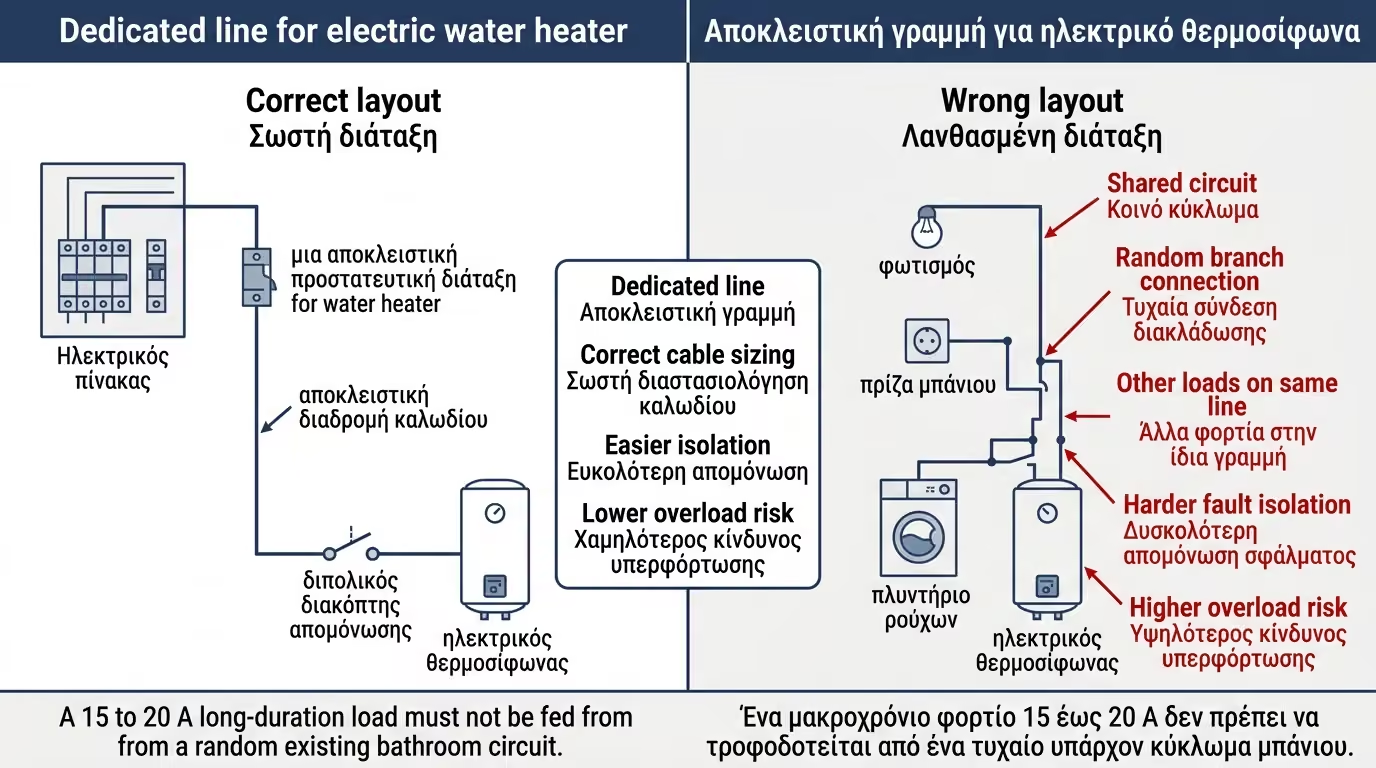
The electric water heater must be treated as a large and critical consumption. That is why, in practice, a dedicated line from the electrical panel is needed, with its own protection and correct cross-section. It should not draw power from a bathroom outlet, a light line, a washing line, or a rough branch.
The exclusive line has three main reasons. First, it allows the cable to be properly protected with the appropriate fuse. Second, it avoids overloading other circuits. Third, it facilitates the control and isolation of the device in case of failure.
An old mistake we come across is a water heater that has been connected "close" because the panel was far away or because they didn't want to dig. It might work, but that doesn't mean it's right. When a load draws 15–20 A for a long time, it should not be served by a random line.
In a bathroom renovation, the question "should we keep the old water heater line?" it must be answered by inspection, not by habit. If the line is old, questionable, or we don't know how it has been passed, it needs to be evaluated.
The cross-section of the cables must be selected by an electrician based on the power of the device, the length of the line, the method of installation, the temperature, the voltage drop, the type of protection and the requirements of the manufacturer. It is not correct to give an absolute instruction "we always put this much cable" without checking the case.
In Greek practice, for classic domestic water heaters we often find lines with 3×4 mm² conductors and around 20 A fuse, depending on the power and conditions. In smaller powers there may be different solutions, while in larger or special devices another cross-section may be required. Using 2.5mm² for a powerful water heater may be marginal or inappropriate depending on the load, length and installation method.
The important thing is not to decide the cross section by what we "found available". The cable is protected by the fuse. If the fuse is larger than the cable can handle, the cable may overheat before the protection breaks. If the fuse is less than the load, it will drop continuously. In both cases, the installation is not properly designed.
An example from practice: an old 4 kW water heater is connected to a line that was designed for a lower load. The owner replaces the device with a new one of the same or greater power without a cable check. The device works, but after a while the fuse heats up. The problem is not necessarily the water heater. It can be the line, contacts or security.
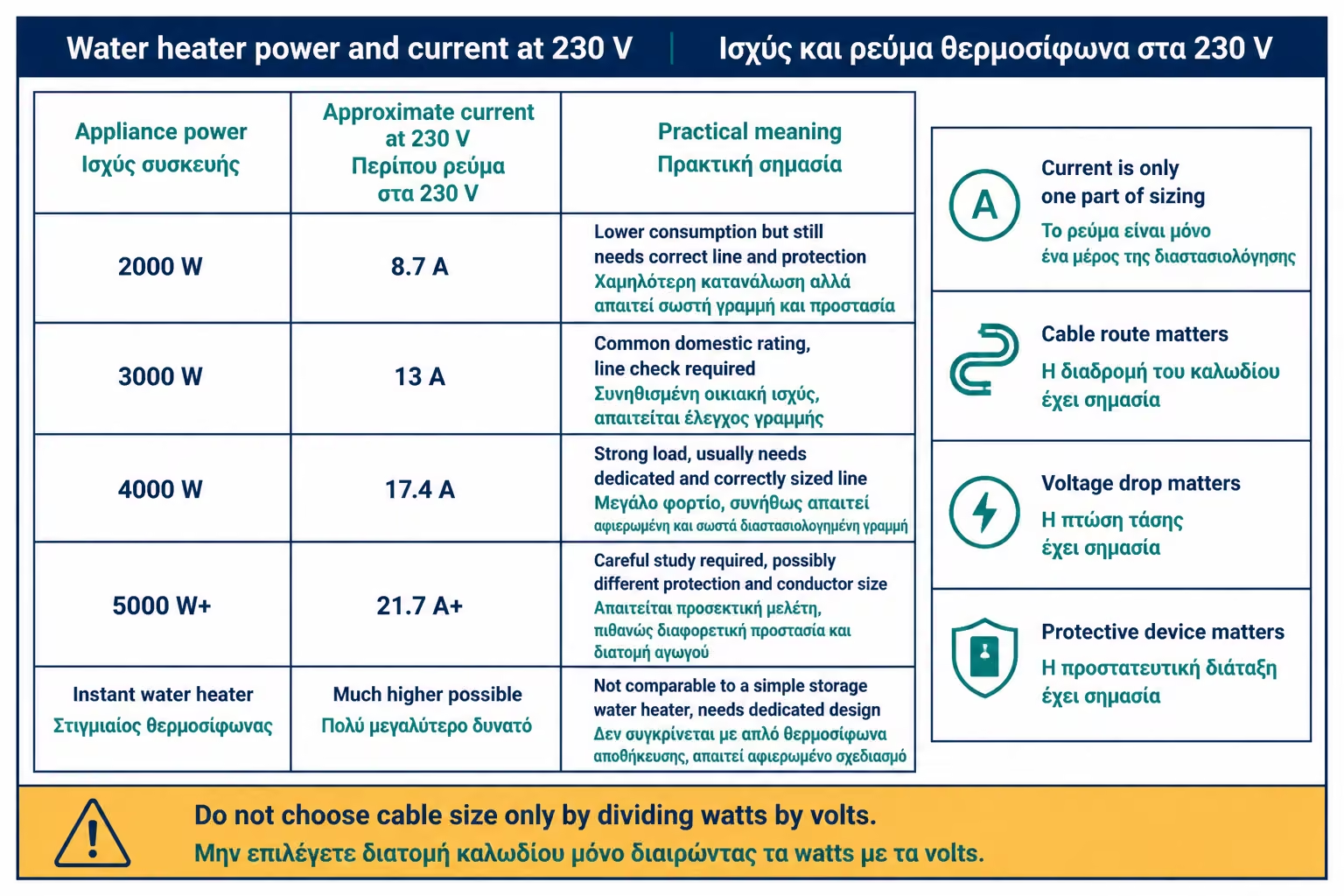
The table below is not an installation guide. It is a practical illustration for the owner to understand why the power of the water heater affects the line and the protection.
| Device power | Current at approximately 230 V | Practical importance |
|---|---|---|
| 2,000 W | 8.7A | Less consumption, but still requires proper line and protection |
| 3,000 W | 13 A | Common power to several devices, line check needed |
| 4,000 W | 17.4 A | Classic heavy load, usually requires a dedicated and properly dimensioned line |
| 5,000W+ | 21.7 A+ | It requires careful study, possibly different protection and cross-section |
| Rapid heater | It can be much higher | It cannot be compared to a simple water heater, it requires a special design |
Current calculation is only one part of the picture. The cable cross-section is not decided by the power-to-voltage division alone. It is affected by how the cable is routed, if it is in a conduit, if it coexists with other cables, how long it is, what the temperature is and what protective device is used.
For the owner, the conclusion is simple: the greater the power, the less "patents" are allowed.
The water heater must have its own panel protection. Safety is not a convenience switch. It is a line protection device. It is chosen to protect the cable and cooperate with the load.
In many Greek panels we see a separate water heater fuse and a separate control switch. This practice has historically been used for permanent loads such as the water heater: the circuit breaker is used for operational control and the microcircuit as a protection device. Technical training material for electrical installations states that in Greece it is customary to combine a switch and a micro-automatic for permanent loads such as a water heater, with the switch for handling and the micro-automatic as protection.
The critical thing is not to use a general fuse for multiple loads with the water heater. If a water heater and other devices operate on the same line, the installation may be overloaded. Also, in the event of a breakdown, it is more difficult to isolate the problem.
The fuse must be suitable for the cross-section of the cable and the power of the device. If someone "raises" the fuse because it falls, without changing the line and without checking, it can create a risk of overheating. Security doesn't drop to bother us. It goes down because something needs to be checked.
The bipolar switch is particularly important in the water heater because it isolates both the phase and the neutral. Simply put, when closed, the device is more completely disconnected from the supply than a single-pole switch that only cuts the phase.
This is of practical importance in high power devices and in installations where we want clear isolation for safety, maintenance and handling. The water heater is a load that the user turns on and off frequently. This switch should not be rough, worn or of questionable quality.
In many panels there is an indicator light along with the switch so that the user can see if the water heater is active. This is practical, but not a substitute for a proper switch and proper protection. Also, the lamp must be properly wired and not improvised.
A common mistake is the old water heater switch that has hardened, heats up or sparks. We don't keep him because he "works". The water heater draws a lot of current, so the switch contacts are stressed. If the switch is worn, it must be replaced by an electrician.
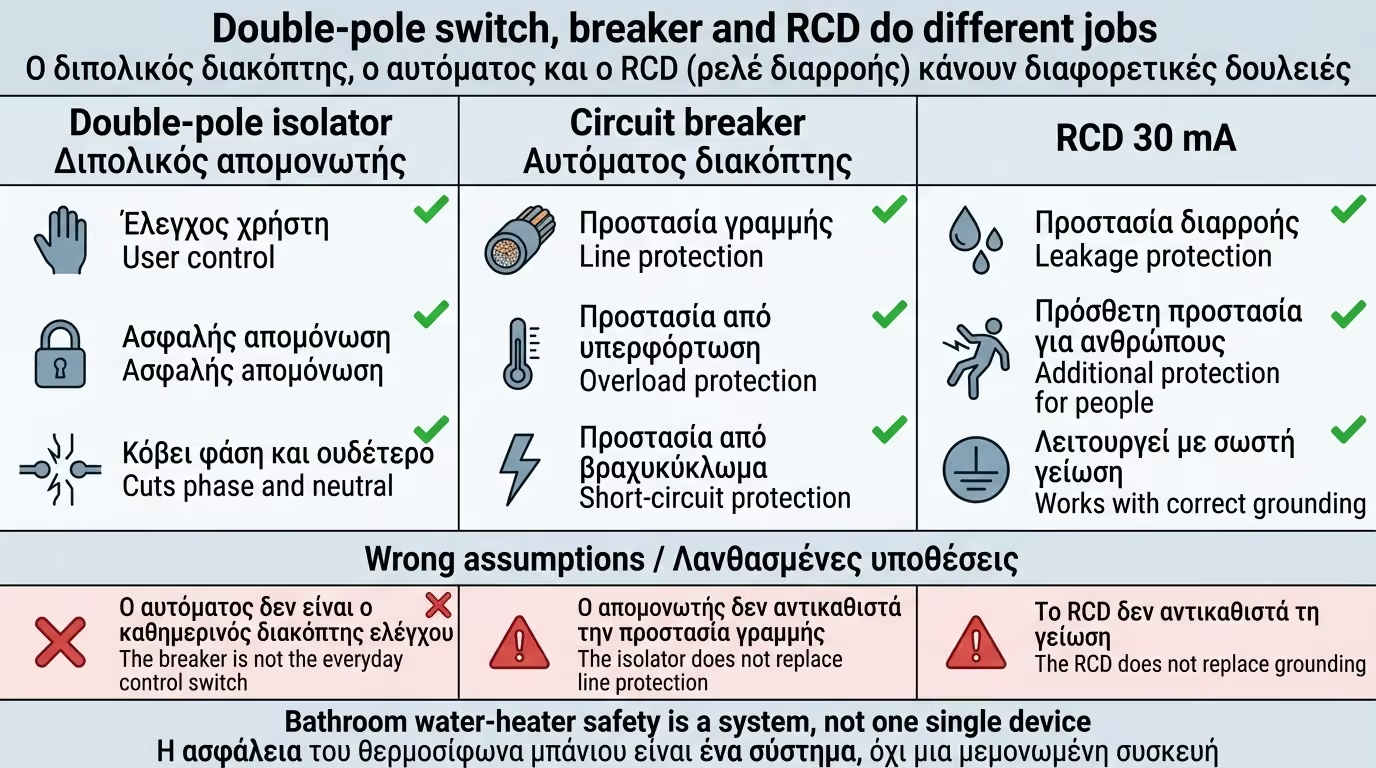
In the water heater there are three different concepts that are often confused. The double pole switch is used for handling and isolation. The fuse or circuit breaker protects the line from overload and short circuit. The leakage relay protects against current leakage to earth and contributes to electric shock protection.
We shouldn't ask one component to do the other's job. The switch is not a fuse. The fuse is not a leakage relay. The RCD does not protect the cable from overload in the same way that the micro-circuit does.
In a proper table, these work together. The line is properly secured. The installation is protected by an RCD. The water heater is properly operated through a suitable switch. Grounding is continuous. Connections are tight and checked. This is a protection system, not individual components.
A practical scenario: the water heater drops the RCD when it opens. We don't just change the RCD. We check resistance, insulation, line, moisture and ground. If the fuse blows, we check load, short circuit, fuse and line. If the switch heats up, check contacts and sizing.
The water heater is one of the devices where the RCD is of particular importance, because it combines electricity and water. If the water heater resistance leaks to the tank or if there is an insulation problem, the leak relay can shut off the supply before a dangerous situation occurs.
In the bathroom, 30mA RCD protection is a central requirement of modern electrical practice for circuits supplying bath or shower room equipment. Guides for Section 701 state that circuits supplying such spaces require an RCD not exceeding 30 mA.
Be careful though: an RCD is not a substitute for grounding, proper wiring, proper fuses, or proper water heater installation. It is a critical layer of protection within a system. If the water heater is not properly grounded, if the line is sketchy, or if the panel has errors, the problem is not solved simply by a relay.
One of the most serious signs is when the RCD trips only when the water heater is turned on. This often indicates a leak in the device or its line and should be checked immediately. The RCD must not be bypassed to "work the hot water".
The water heater must be properly grounded. The metal container, piping and parts related to water must not be left in a questionable condition. In the event of a fault, grounding helps protective devices operate and reduces the risk of dangerous voltages in accessible parts.
In the bathroom, grounding is also connected to equipotential protection. Metal pipes, metal bathtub, radiator bodies, electric towel rail, washing machine and water heater must be evaluated as a whole. The IET describes complementary equipotential bonding as the bonding of simultaneously accessible conductive parts to reduce the potential difference between them.
In older homes, grounding may be problematic or different from today's requirement. Metal pipes may have been replaced with plastic ones, some renovations have been done, or old connections have been cut. That is why it should not be taken for granted that "grounding exists".
The electrician must make measurements. The phrase "the cable has a yellow-green conductor" is not enough. There must be continuity, proper connection and proper protection.
The location of the water heater affects both plumbing and electrical safety. In many houses it is located in a bathroom loft, in a warehouse, on a balcony or in a special area. Each location has different access, ventilation, moisture protection and serviceability requirements.
If the water heater is located in or near the bathroom, it must be evaluated against the protection zones, especially if there is a bathtub or shower nearby. ELOT HD 60364-7-701 concerns areas with showers or sprinklers and their special requirements. It does not mean that every water heater is prohibited near a bathroom, but the location and installation must be checked.
If the water heater is located in a loft, there must be safe access to check, replace the resistor, thermostat, safety valve and electrical connections. Many times lofts have poor access, low height, dampness or rough joints. This makes maintenance difficult and increases the chance of problems remaining hidden.
A proper project does not stop at "hiding" the water heater. It must be able to be controlled and safely isolated.
Many focus on the panel and forget about the connection point on the water heater itself. There are wires, thermostat, resistor, ground, terminals and cover. If the connection is loose, if the cable is pinched, if the lid does not close properly, or if moisture is present, serious problems can arise.
The connection must be made with a suitable cable, correct box entry, correct terminals and correct grounding. There should be no bare wires, loose joints, insulating tape as a permanent solution, or cables touching hot parts.
A frequent problem is the replacement of a resistor by an unqualified technician without checking the electrical connection. The resistance changes, the heater works, but the terminals are not tightened properly or the ground is not checked. After some time damage or overheating occurs.
The water heater must not be opened by the owner. The presence of electricity and water makes the operation dangerous.
Although the article focuses on the electrical installation, the overall safety of the device cannot be ignored. The thermostat regulates the water temperature. Thermal protection prevents overheating in the event of a fault. The safety valve protects hydraulics from overpressure.
If the thermostat gets stuck, if the thermal protection does not work, or if the safety valve is blocked, the water heater can become dangerous. Electrical protection is critical, but is no substitute for proper hydraulic and mechanical device safety.
In maintenance, resistance, thermostat, ground, gasket, safety valve and connections must be checked. If there is a water leak near the electrical parts, the water heater should be isolated and checked by a technician.
A common sign is water dripping from the bottom cap or gasket. This is not just a plumbing issue. It can affect electrical parts and must be dealt with immediately.
In a bathroom renovation, the water heater is often left on the sidelines. If it does not change position and is not visible in the bathroom, the owner considers that the project does not concern him. In fact, renovation is the best time to check.
If tiles are removed, walls are opened or new lines are laid, it must be checked whether the water heater line is correct. If a new boiler is to be installed, the power must be checked. If a washing machine is to be installed in the bathroom, lines must not be confused. If a new panel or a new DHW will be made, the water heater must be included in the inspection.
A big mistake is investing €5,000–7,000 in a new bathroom and leaving an old panel with a dubious water heater line. The bathroom looks new, but the basic electrical fuse remains old.
The correct practice is for the electrician to come before walls and suspended ceilings are closed. If a new line is needed, it is better to do it now than after the tiles.
The cost depends on whether it is a simple water heater replacement in the same location or a complete electrical line from the panel. It is one thing to connect a new device to an already correct and tested line, and another to run a new dedicated line, change a fuse, install a bipolar switch, check an RCD and take measurements.
In the Greek market of 2026, a simple water heater connection or replacement, when the line is already correct and accessible, can have relatively limited labor costs. However, if a new electrical line is required from the panel, the cost can be approximately €150–350 or more, depending on the distance, digging, materials, floor and access. If you need panel work, a new RCD, a switch/fuse change or old wiring to be fixed, the cost goes up.
For a more comprehensive panel upgrade including water heater, RCD, bipolar switch, new fuse, metering and possible DHW, a larger budget may be needed. Prices depend on area, whether VAT is included, materials, panel quality, cable length and condition of existing installation.
A very low quote that simply says “water heater connection” may not include line, ground, RCD or panel testing. This must be clarified before the work is done.
There are signs that should not be ignored. If the leakage relay drops when you turn on the water heater, it needs to be checked. If the fuse goes down, too. If the switch on the panel gets hot, if it smells like burnt plastic, if there is blackening around the switch, or if sparks are heard, the installation should be checked immediately.
Also, if the water heater is old and has not been serviced for years, if water drips near the electrical parts, if it makes strange noises, if the water takes too long to heat up, or if there are frequent resistance failures, a total check should be done.
Be careful if you feel a "sting" from a battery, water, washing machine or metal part in the bathroom. This is a serious sign and should not be considered normal. Switch off the relevant appliance from the panel only if you can do so safely and call an electrician.
The water heater is not a device for experimentation. The coexistence of electricity and water leaves no room for cursory tests.
The owner does not need to know the technical details of dimensioning. But he must know what to ask for. Before installing or replacing a water heater, ask to check if there is a dedicated line from the panel, what is the cross-section of the conductors, what fuse protects it, if there is a bipolar switch, if it is protected by a 30 mA RCD and if the grounding is correct.
Also, have the connection point checked on the device, not just the board. If the water heater is in a loft, there must be safe access. If it is in a damp area, the protection of the junction box and its position must be checked.
A correct quotation should state whether it includes a new line, cable, pipe, fuse, double pole switch, RCD, connection to appliance, earthing test and measurements. If it only says "water heater installation", it may only be about mechanical or plumbing installation, not full electrical safety.
If renovating, ask for the inspection to be done before walls and tiles are closed. Then each change costs more.
The first mistake is connecting the water heater to a non-exclusive line. Such a large load should not share a circuit with other loads.
The second mistake is the use of small or inappropriate cross-section of cables. If the cable is not sufficient, the installation may overheat.
The third mistake is the wrong security. We don't "increase" security because it's falling. We check why it falls.
The fourth mistake is the absence of a bipolar switch or the use of a worn switch on the panel. The operation of the water heater must be clear and safe.
The fifth mistake is the absence of an RCD or its bypass because it falls when the water heater is turned on. If it falls, there is a reason.
The sixth mistake is the lack of ground control. The water heater is connected to water and metal parts. Grounding is critical.
The seventh mistake is replacing a device without line control. A new water heater on an old problem line does not mean a safe installation.
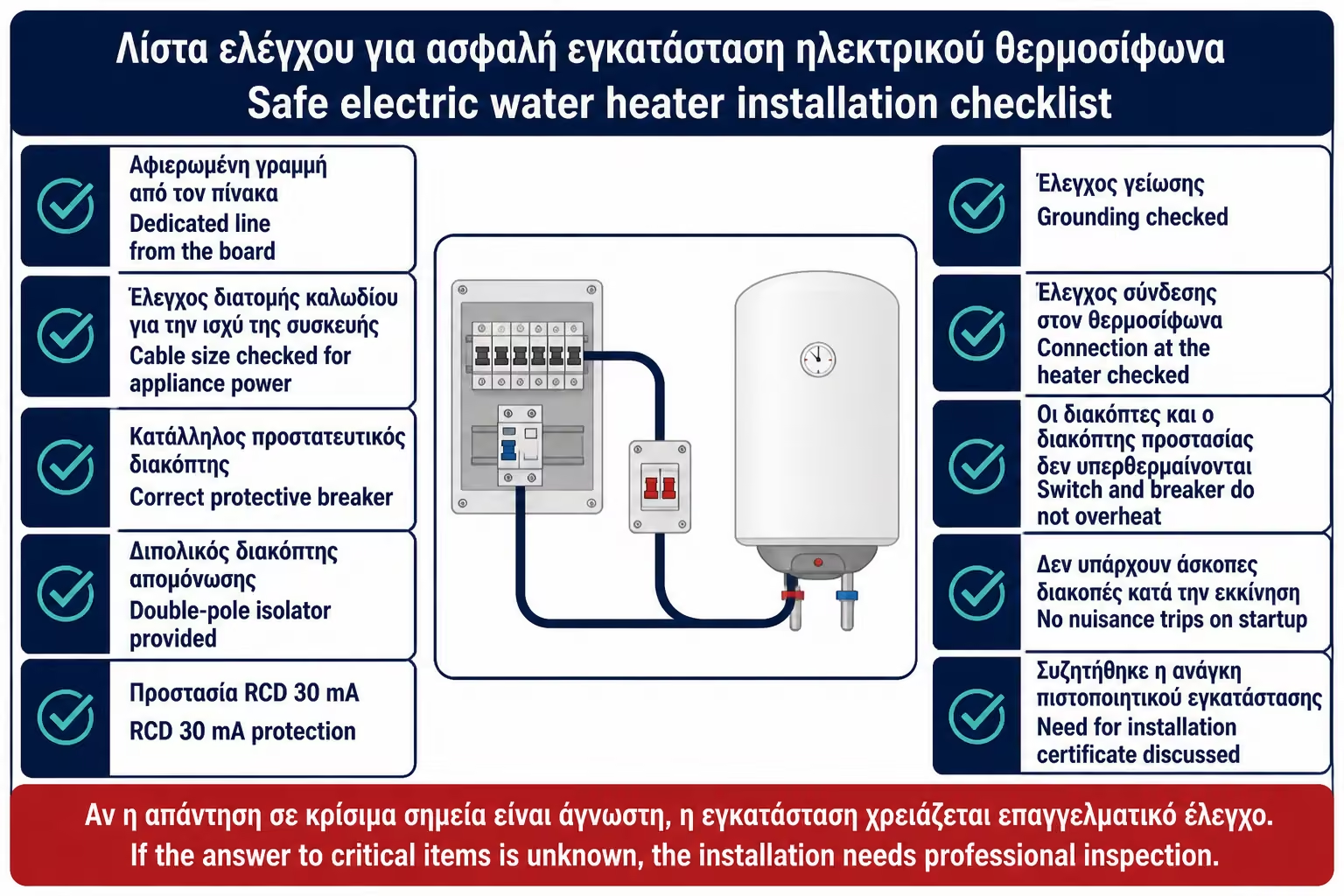
Before the installation is considered safe, check the following points first:
| Question | Yes / No |
|---|---|
| Is there a dedicated line from the panel for the water heater? | Yes / No |
| Has the cross-section of the cable been checked based on the power of the device? | Yes / No |
| Is the line protected by a suitable fuse in the panel? | Yes / No |
| Is there a bipolar switch for safe handling and isolation? | Yes / No |
| Is the line protected by a 30 mA RCD? | Yes / No |
| Has the device been grounded? | Yes / No |
| Has the connection on the water heater and not just the panel been checked? | Yes / No |
| Does the switch and fuse get hot during operation? | Yes / No |
| Does the RCD or fuse trip when the water heater is turned on? | Yes / No |
| Has there been a discussion as to whether an ED or update is required after surgery? | Yes / No |
If the answer to basic questions is "don't know", the installation needs checking. It is not enough to heat water. It must do so with a safe electrical installation.
If you keep only one thing from this guide, keep this: the water heater should not be treated as a simple device that “gets power from somewhere”. It needs a dedicated circuit, the correct cable cross-section, an appropriate breaker, a double-pole isolator, a 30 mA RCD and proper grounding. If the RCD or breaker trips, we do not bypass the protection or blindly install a larger breaker. We call an electrician, because a water heater combines significant electrical load, water and daily bathroom use.
The safe installation of an electric water heater or boiler is not a detail of the panel. It is a basic home security issue. The water heater is a powerful load, works for a long time, is connected to water and serves the most sensitive area of the house: the bathroom. That's why they don't fit sketchy lines, short cables, old fuses, worn switches or questionable grounding.
Proper installation starts with the dedicated line and correct cross-section of cables. Continued with appropriate panel fuse, bipolar switch for safe handling, leakage relay protection and ground check. The electrician must check both the panel and the connection on the device, because problems can appear in either place.
For the owner, the right decision is not to consider the water heater "given". If you're changing an appliance, doing a bathroom remodel, if the relay trips, if the switch heats up, or if you don't know which line is on, have a licensed electrician check it out. A bathroom can be beautiful and modern, but if the water heater is supplied by an old or problematic installation, the renovation has left open one of the most important issues.
On the water heater, the fuse is not visible on the outer casing. It appears on line, panel, ground and control.
Return to category.
Go to categoryReturn to the central guide.
Go to guide