
Plumbing & Electrical Bathroom Infrastructure
Return to category.
Go to categoryThe RCD, which many people describe as an anti-shock protective switch, is one of the most important components in an electrical panel. It does not look like a socket or a light fitting in everyday life. It does not affect the aesthetics of the house. It is not something the owner consciously uses every day. But in a fault, it can be the difference between a dangerous incident and an immediate interruption of supply.
Its value becomes even clearer in the bathroom. There the body is often wet, the feet may be bare, the floor wet, and the user may touch metal batteries, pipes, washing machine, water heater or electric towel rail. In these conditions, a small current leak that in another place might not be immediately noticeable, in the bathroom can become extremely dangerous.
That is why the absence of an RCD from an electrical panel, especially when the house has a bathroom with sockets, a water heater, a washing machine, lights, a fan or other electrical devices, is not just a sign of an "old installation". It is a serious safety flaw.
In Greece, the current framework for low voltage electrical installations is based on ELOT 60364. Y.A. 101195/2021 describes ELOT 60364 as a Greek standard for electrical installations, drawn up based on CENELEC harmonization documents, mainly from the HD 60364 series but also from the HD 384 series, and published as ELOT 60364:2020. For spaces with a bath or shower, the modern logic of Section 701 places particular emphasis on additional protection with a 30 mA RCD for circuits supplying equipment in the space, such as lighting, power showers and heated towel rails.
In this guide we will see what an RCD is, how it works, what exactly it protects, why it is crucial for the bathroom, what mistakes are most often made in old panels, why it is not enough that "there is some relay somewhere", and what the owner should ask a licensed electrician before considering the installation safe.
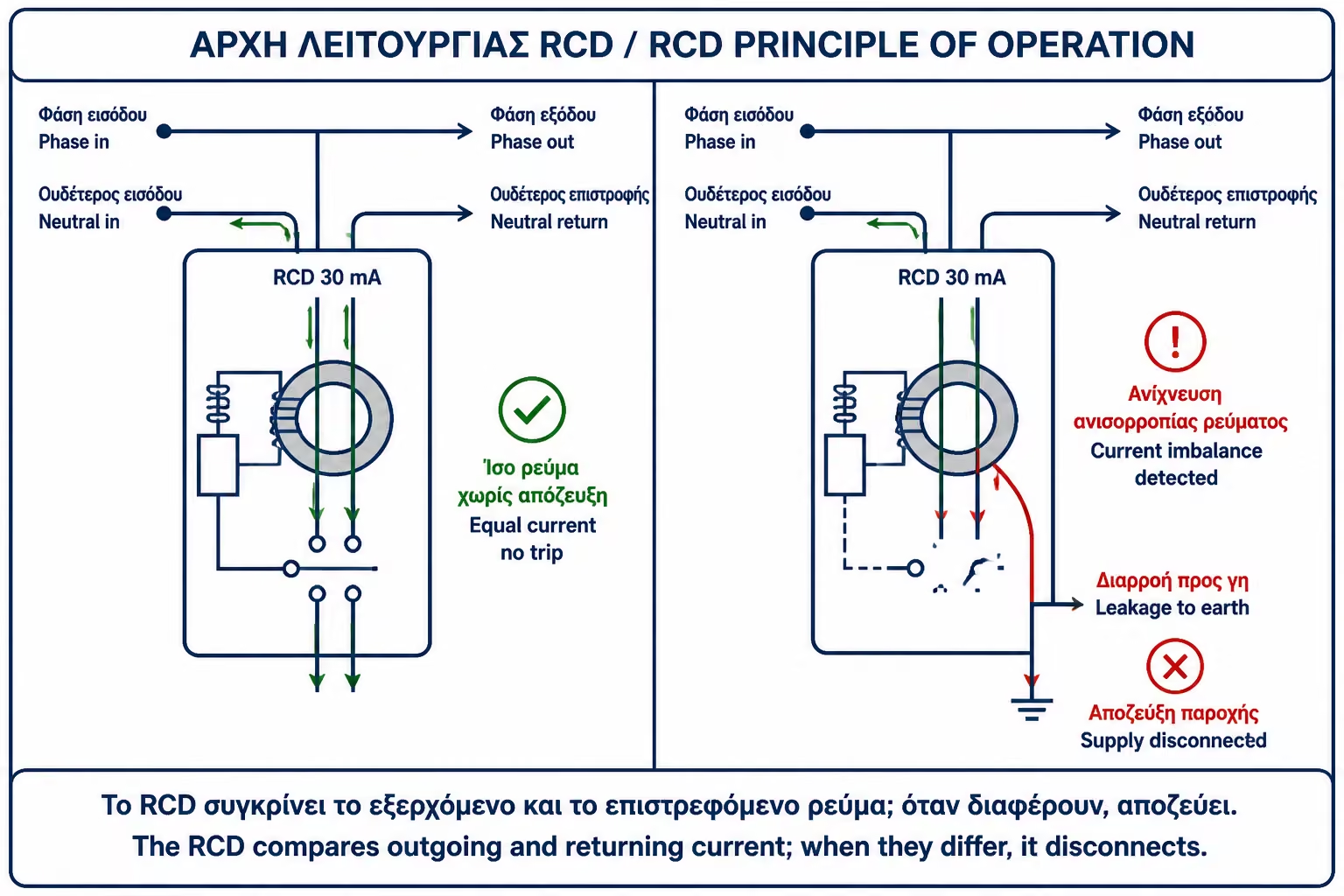
The RCD is a protective device in the electrical panel that monitors whether the current leaving a circuit returns normally. In a healthy electrical installation, the current going out through the live conductor should return through the neutral. If part of the current is "lost" to another path, for example to earth or through the human body, the RCD detects that difference and interrupts the supply.
This is its basic operating principle. It does not wait for a wire to burn. It does not wait for a breaker to trip from overload. It monitors leakage current. That is why it is different from a miniature circuit breaker, which mainly protects against overload and short circuit.
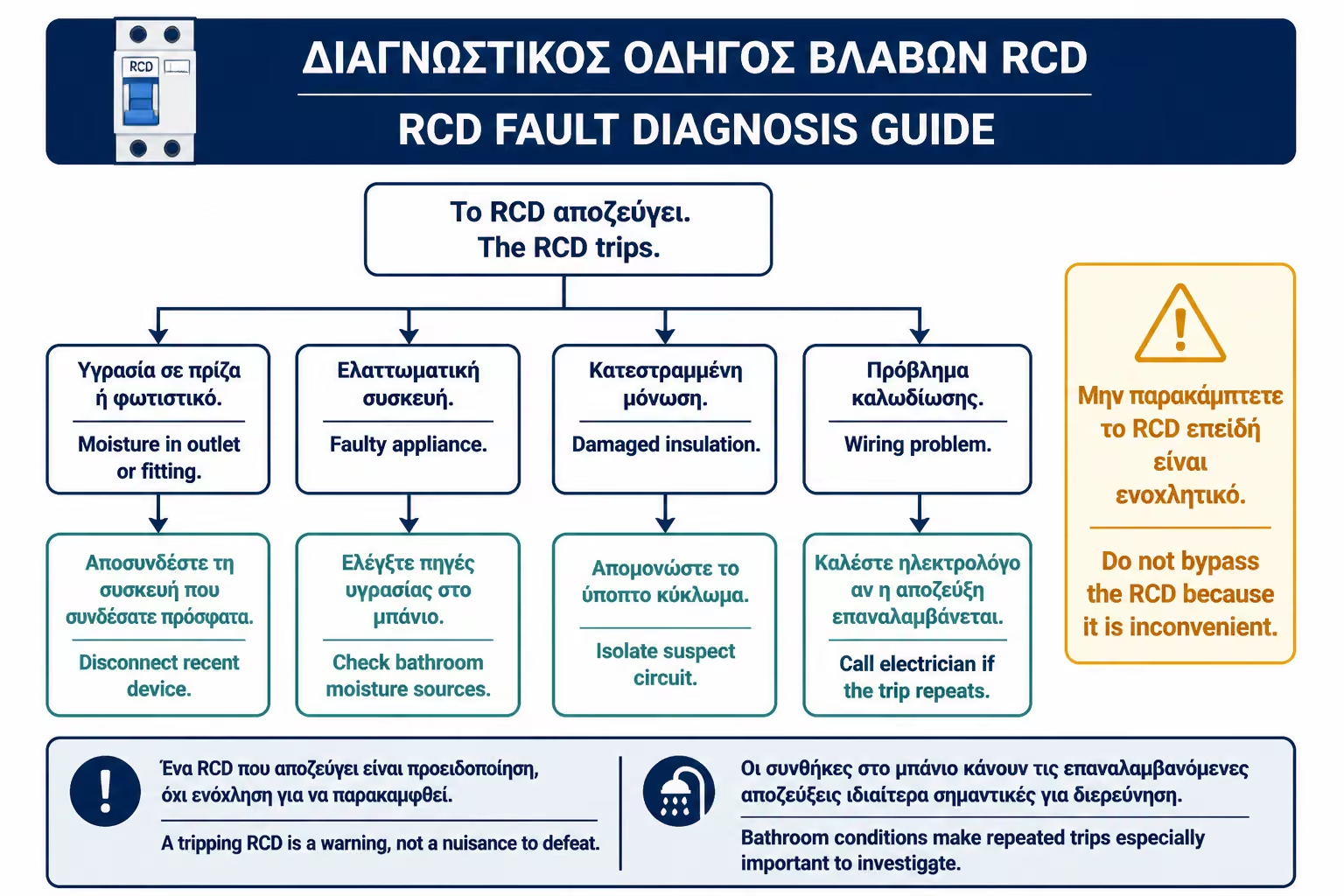
In everyday language, the RCD is the switch that trips when there is a current leakage. It may trip because there is a genuinely dangerous fault, because a device has a problem, because there is moisture in a circuit, or because the installation has incorrect connections. The fact that it trips is not a nuisance to ignore. It is a warning.
A common mistake is for someone to say "my RCD keeps tripping, so I'll remove it". This is one of the most dangerous reactions. If the RCD trips, the cause must be found. Removing or bypassing it does not solve the problem. It removes protection.
Electric shock can occur when electrical current passes through the body. This can happen if someone touches a metal housing of a device that has become live due to damage, if there is a frayed cable, if a plug is wet, or if a device is used incorrectly.
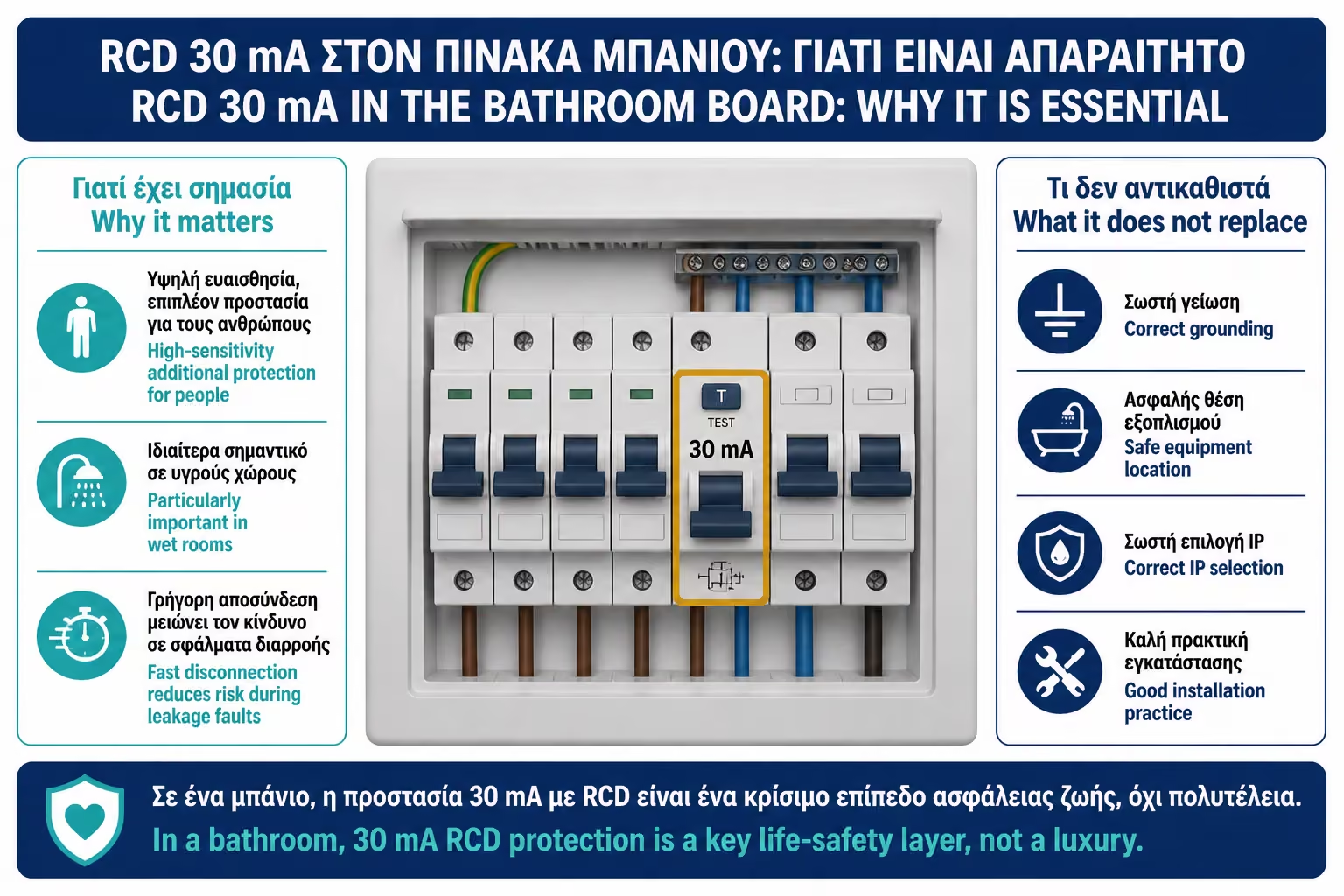
The RCD does not make electricity "safe". This is important to understand. It is not a magic shield. What it does is cut off the supply quickly when it detects a leakage above a certain threshold. For human protection, high-sensitivity devices such as 30 mA RCDs are commonly used for additional protection against electric shock.
In the bathroom, this protection is critical. A person with dry hands in a living room and a person who is wet, barefoot and standing next to a metal tap are not in the same danger situation. In the bathroom, the body can become an easier conductive path. That is why trip time and protection sensitivity matter so much.
A simple example: a washing machine in the bathroom develops an internal fault and part of the current leaks into the metal casing. If the earthing and the RCD are working properly, the fault can lead to immediate disconnection. If there is no RCD or the grounding is problematic, the risk to the user rises sharply.
The bathroom gathers all the features that make a power leak more dangerous: water, moisture, wet human body, metal elements, short distances and electrical devices near the use of water. That is why the requirements for rooms with a bathtub or shower are strict.
In modern Section 701 practice, all circuits supplying equipment in a bath or shower space, such as lighting, power showers, heated towel rails and related equipment, require protection by an RCD not exceeding 30 mA. This is not a detail. It means we're not just looking at the outlet. We look at all the circuits that serve the bathroom.
Many owners only ask if the outlet has a relay. The right question is broader: is bathroom lighting protected? Is the washing line protected? Is the water heater protected? Is the electric towel rail protected? Is the fan protected? Is the board properly organized?
An old bathroom might have an outlet that was added later, a light fixture that was changed later, a vent that was pulled from the light line, and a water heater on another fuse. Unless these are fully vetted, we don't really know what is protected and what isn't.
In the electrical panel there are usually micro-automatic switches, i.e. line fuses, and leakage relays. Many confuse them. Όμως η λειτουργία τους είναι διαφορετική.
The fuse mainly protects the cable and installation from overload or short circuit. If too much current flows through a line, the fuse blows. The leakage relay protects against current leakage to earth. It may trip even if the current is not large enough to blow the fuse.
This is critical for electrocution. A current dangerous to humans can be very small compared to the current needed to trip a classic fuse. So an installation with fuses but no leakage relay does not have full protection against electric shock.
An example from practice: owner says "I have insurance for the water heater, so I'm covered". But the water heater fuse does not do the same job as the leak relay. If there is a current leak, the fuse may not trip as the RCD would. Both are needed, with proper installation.
When we say 30 mA leakage relay, we are talking about the rated differential operating current of the device. Simply put, it is the level of leakage that the relay is designed to react to. 30 mA is widely used as additional protection for people in homes and especially in high risk areas.
But the owner should not stay only on the number. A relay must be of the correct type, correctly connected, suitable for installation and tested. There are different types of RCDs such as AC, A and others depending on the types of loads and requirements. In modern installations with electronic devices, inverters, chargers and special loads, the type of relay is not indifferent.
Here the owner does not have to decide for himself. But he needs to ask the electrician: what type of relay is there? Is it suitable for today's installation? Does it protect all the circuits it should? Has it been tested? Does it need to be replaced?
An old 30mA relay that hasn't been tested in years should not automatically be considered reliable. Like any protective device, it needs inspection.
Many owners, when asked if they have a leakage relay, answer "yes, it has one on the panel". This is a good start, but not enough. The question is not only whether there is a component that looks like a relay. The question is whether it is connected correctly, whether it works, whether it protects the correct circuits and whether it is suitable.
Old paintings have often had additions made over the years. A new washing line, water heater, fan, bathroom outlet, air conditioner or extension may have gone through without being properly wired into the RCD. So the panel may have relays but some circuits not protected.
There are also installations with wrong neutrals, common returns, old grounds or connections that cause the relay to trip for no apparent reason. In such cases, the temptation is to bypass the relay. This is dangerous. The correct solution is to fix the installation.
For the bathroom, the control must be specific. "There is a relay" is not enough. We need to know if the bathroom lighting circuit, socket, water heater, washing machine and any related equipment are properly protected.
The absence of a leakage relay does not mean that the house will not have power. Everything can work normally: lights, sockets, water heater, washing machine. This is precisely what makes the problem insidious. The installation appears functional, but a critical layer of protection is missing.
If there is a malfunction in an appliance, moisture in an outlet, worn insulation, a leak in a water heater, or a problem with a light fixture, the leak may not cause an immediate fuse trip. The user can touch a metal part and become part of the current path. This is especially dangerous in the bathroom.
The absence of an RCD in an old installation should not be treated with the logic of "for so many years nothing happened". Safety systems are not judged by the fact that an accident has not yet occurred. They are judged by what they will do when damage occurs.
Therefore, on a practical level, a home without a leakage relay should be checked immediately by a licensed electrician. Especially if there are bathrooms with old sockets, water heater, washing machine, metal piping or renovations that were done piecemeal.
If we had to rank the places where the leak relay is absolutely critical, the bathroom would be at the top. The kitchen, outdoor areas and wet areas in general are also important, but the bathroom has the worst contact condition: water and body at the same time.
The bathroom line may include lighting, mirror socket, fan, electric towel rail, washing machine, water heater or other appliances. If one of them leaks, the user may be in direct contact with water or metal parts. That is why protecting the bathroom is not a point of economy.
A typical example is the water heater. It is a high-powered device, connected to water, and often remains for years without substantial control. If its line is not properly protected, the risk not only concerns the device, but also the use of hot water in the bathroom.
The same goes for the washing machine. A washing machine in the bathroom, in an old socket, without proper grounding and without an RCD, is a classic example of an installation that can work every day, but has a serious safety gap.
One of the most serious mistakes is the perception that "since I have a relay, there is no need for grounding". This is wrong. The leakage relay and ground work together. Grounding creates a safer path for the fault current and aids the operation of the protective devices. The relay detects the leak and switches off.
If the grounding is problematic, if it is cut, if it has poor continuity, or if the outlets are connected incorrectly, the installation remains dangerous. An RCD greatly reduces the risk, but is no excuse for poor earthing or sloppy connections.
In the bathroom, grounding is also connected to equipotential protection. Metal parts, appliances and piping must be evaluated as a whole. A modern bathroom is not safe because it only has one good light fixture or a socket with a cover. It is safe when all measures work as a system.
The owner should request an earthing test along with the RCD test. Not just visual inspection, but measurements by an electrician.
Another big mistake is thinking "let's put the socket there, since there is a relay". The RCD is not a license for incorrect placement. If an outlet is too close to the shower, in a problem zone or where it can get wet, the relay does not automatically convert it to a correct installation.
In the bathroom, protection zones, distances, equipment IP, safety caps, earthing and RCD must be combined. If one of them is used to override all the others, the installation is not correct.
A practical example: a socket with a cover is placed near a walk-in shower. The electrician or handyman says "no problem, it has a relay". But the user may come out wet, touch the socket, the lid may be open because he is charging a device, or the water may reach there from the shower head. The problem is not solved only with the relay.
The correct approach is first correct position, then correct material, then correct protection. Not the other way around.
When the RCD trips, the panel is trying to tell us that there is a leak or another problem. It could be a device, a circuit, moisture in a component, a damaged cable, a wrong connection or a combination of loads. It should never be dismissed as just "acting up".
If the relay trips when the water heater is turned on, the water heater and its line should be checked. If it falls when the washing machine is running, the washing machine, outlet and circuit should be checked. If it falls after a shower or on very humid days, there may be moisture in the light fixture, fan, or connection. If it falls randomly, a more systematic diagnosis is needed.
The mistake is the bypass. Some change the relay to a less sensitive one, remove it, move lines outside of the RCD or just "pick up" some fuses without finding the cause. These practices may hide the symptom, but they leave the risk.
The correct thing to do is to have it identified by an electrician, with circuit isolation, device testing, insulation measurements and panel testing.
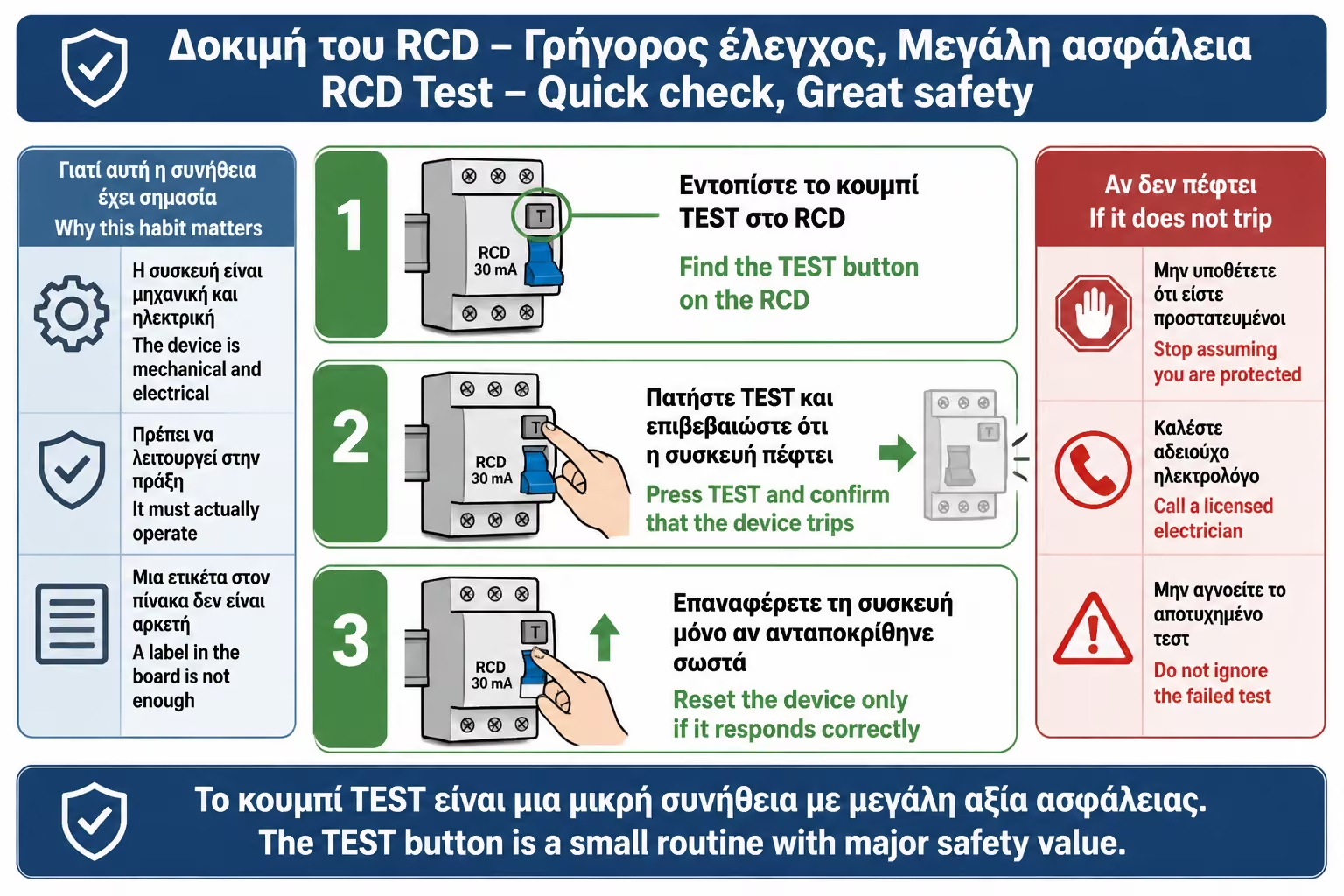
Most leakage relays have a test button, usually marked “T” or “TEST”. This button is there to check if the device mechanically and electrically trips when a test leak is created. It does not replace a professional inspection, but is a basic maintenance habit.
The owner may, according to the manufacturer's instructions and after being briefed by an electrician, periodically press TEST to confirm that the relay drops. If it does not fall, an immediate electrical check is needed. If it falls but does not come back up, it also needs checking.
Many never press TEST for years. This is wrong. A relay is a mechanism. It can get stuck, worn out, out of date, or unresponsive. Its existence in the panel is not enough if it does not work.
In a professional test, the electrician is not limited to the TEST button. It measures disconnection time and current with a suitable instrument, checks grounding, continuity of conductors and correct wiring.
There are different types of RCDs on the market. The AC type was very common in older installations, but modern homes now have many electronic devices, power supplies, inverters, LED drivers, washing machines, chargers and equipment that can create different forms of leakage. That is why in many modern applications types such as Type A are used, depending on the requirements.
The owner does not have to choose the type himself. But he must know that "a relay" is not always a sufficient description. In an old panel, especially if renovation is being done or new appliances are being added, the electrician should assess whether the existing RCD is suitable.
There are also solutions with a general relay for the whole house, but also more modern logics with circuit separation or RCBO, i.e. devices that combine line and leakage protection per circuit. These options affect cost as well as functionality. If a general relay goes down, the whole house can be left without power. With better separation, the damage is easier to spot and doesn't affect everything.
In the bathroom, where protection is critical, the electrician must decide on the appropriate solution based on the installation, not the cheapest component.
If a home has no leakage relay at all, the homeowner should call a licensed electrician to check. It is not a DIY job. It's not just replacing a switch. The electrician should check the panel, lines, ground, neutrals, leaks, condition of the installation and see if the protective devices can be properly installed.
In very old installations, simply fitting relays can reveal problems. The relay may drop due to old leaks, moisture, worn insulation or wrong connections. This does not mean that "the relay does not work". It means that the installation had problems that were not visible before.
In such cases, a gradual upgrade may be necessary: correction of earthings, separation of neutrals, new line for bathroom or water heater, change of panel, replacement of old cables or issuance of a new YDE where required.
The most dangerous thing is to say "we put a relay but it falls, so we take it out". This is equivalent to returning to the problem.
The Responsible Installer Declaration is not just a standard piece of paper. It is part of the process of documenting that an electrical installation has been inspected. Y.A. 101195/2021 includes the requirements for the design, construction, modification, maintenance and control of electrical installations, with the aim of their safe and proper operation.
When a major panel change is made, an RCD is added, a new bathroom line is made, a water heater is changed, or a renovation is made that affects electrical circuits, it should be discussed with the electrician whether a new or updated DHW is required. It is not enough to put a component on the board without measurements and documentation.
For the bathroom, the YDE and the measurements are particularly important because many things are hidden after completion: circuits inside walls, grounding, connections, equipotential bonding, lighting and appliance supplies. If they are not checked properly, the owner is left with an installation that looks new but has no proven safety.
The electrician must measure, not just verbally state that "it's OK".
The cost for leakage relays depends on whether we are talking about a simple replacement in an organized panel or a total upgrade of an old installation. The part itself is not always the big cost. Often the cost lies in checking, correcting old connections, grounding, separating circuits and possibly changing the panel.
In the Greek market of 2026, a simple replacement or addition of an RCD in a switchboard that is in good condition can be indicatively lower, around €80–180 including labor and basic material, depending on the type of relay, the area and the switchboard. But if you need to change the panel, arrange wiring, new lines or fix leaks that appear after installation, the cost can go up significantly.
For a more comprehensive panel upgrade, with new equipment, circuit separation, possible use of more RCDs or RCBOs, earthing testing and metering, the cost can range from around €300–€800 or more, depending on the installation. If it is combined with a bathroom renovation and new lines for a water heater, washing machine, lighting or towel rack, it must be calculated in the total electrical cost of the project.
Prices depend on area, access, materials, type of equipment, VAT, panel condition, DHW need and measurements. A very low price for just "putting in a relay" should not be compared to work that includes full testing and documentation.
There are signs that should not be ignored. If the panel has no leakage relay at all, it needs to be checked. If you do not know if the bathroom is protected, it needs to be checked. If the relay drops frequently, it needs checking. If someone suggested you bypass it, you need a second opinion from a serious electrician.
Also, immediate inspection is needed if you feel a "sting" when touching a tap, washing machine, water heater, metal casing or appliance. Even if it is momentary or weak, it should not be ignored. It may indicate a grounding problem, leakage or a potential difference.
Another serious sign is moisture in outlets, light fixtures or bathroom switches, a burning smell, black spots, flickering lighting, hot outlets or old sloppy connections. At these points, the owner should not open components himself.
In the bathroom, "we'll see" is not a good strategy for electrical issues.
The first mistake is the absence of a leakage relay in an old house. If it doesn't exist, we don't postpone it. We check it immediately.
The second mistake is bypassing the relay because it "drops". If it falls, something needs checking. Override removes protection.
The third mistake is to think that a simple fuse does the same job. The fuse protects against overload and short circuit. RCD protects against leakage.
The fourth mistake is to think that the RCD is sufficient without grounding. It needs proper grounding, equipotential protection where required and proper installation.
The fifth mistake is to never test TEST. A relay that has not been tested for years should not be considered functional.
The sixth mistake is to install new sockets or appliances in the bathroom without checking that they are protected by an RCD.
Before you assume the bathroom is properly protected, check the following points first:
| Question | Yes / No |
|---|---|
| Is there an RCD in the electrical panel? | Yes / No |
| Is it 30mA for additional shock protection? | Yes / No |
| Has it been tested to protect bathroom circuits? | Yes / No |
| Are the lighting, socket, washing machine, water heater and fan protected? | Yes / No |
| Has the installation been earthed? | Yes / No |
| Has the TEST button been tested according to the electrician's instructions? | Yes / No |
| Has the disconnection time and current been professionally measured? | Yes / No |
| Does the relay drop inexplicably or frequently? | Yes / No |
| Hasn't any circuit been bypassed because the relay was "dropping"? | Yes / No |
| Has it been discussed whether a YDE or an updated inspection is required after the changes? | Yes / No |
If the answer to any critical question is "don't know", the board needs checking. There is no shame in the owner not knowing what each line protects. But it is a risk to leave it unknown.
If you keep only one thing from this guide, keep this: the RCD is not an optional "extra" in the panel. It is a basic life-safety measure, especially for the bathroom. If it is missing, if it trips frequently, if it has been bypassed, or if you do not know which circuits it protects, call a licensed electrician to check it. Do not remove it because it is inconvenient, and do not assume that a simple breaker does the same job. The right RCD, together with proper grounding, the correct protection zones, suitable materials and real measurements, is one of the most important protections a home can have against electric shock.
The RCD is one of the few parts of a home you may never think about, but it protects you the moment something goes wrong. Its job is not to make the installation look more "modern" on paper. Its job is to detect current leakage and interrupt the supply before a fault becomes dangerous to people.
In the bathroom, its importance multiplies. Water, moisture, wet body, metal surfaces and electrical appliances create conditions where the absence of an RCD is a serious safety gap. It is not enough to have an insurance. It is not enough that the water heater works. It is not enough that an accident never happened. The installation must have proper anti-electric shock protection, proper grounding and documented control.
For the owner, the practical direction is clear: check if there is a leakage relay, if it is suitable, if it protects the bathroom circuits and if it has been tested. If you are renovating, don't leave the panel "as is" without an assessment. A new bathroom with an old, out-of-control panel is half the job.
The leak relay is not visible on the tiles, is not admired in the photos and does not enhance the aesthetics of the bathroom. But it raises the security. And this, in a space with water and electricity, is the most important result.
Return to category.
Go to categoryReturn to the central guide.
Go to guide