
Plumbing & Electrical Bathroom Infrastructure
Return to category.
Go to categoryThe socket in the bathroom is one of the points that clearly shows the difference between a practical installation and a safe installation. The owner usually thinks of it in terms of use: to charge the electric toothbrush, to run the hair dryer, to connect the LED mirror, to put the washing machine in, or to have a backup supply. The electrician, however, must first look at it based on water, protection zones, leakage relay, grounding and how the bathroom is actually used.
The same goes for switches. A light switch, a fan switch, a mirror control, a dimmer or an electric towel rail switch may seem simple details. In the bathroom, however, it is not enough that they are nicely placed or easy to reach. They must be in a safe location and suitable for the humidity environment.
In the Greek reality, many bathrooms have sockets and switches that were entered "with the logic of the time" or with the logic of convenience. Sockets next to the bathtub, switches in very small bathrooms, old lines without adequate protection, a power strip for a washing machine or LED mirrors that were haphazardly connected after the renovation. Just because something works for years doesn't mean it's right or should be copied in a new renovation.
The current framework for electrical installations in Greece is based on ELOT 60364. Y.A. 101195/2021 activated ELOT 60364 as a Greek standard for electrical installations, which has been drawn up based on CENELEC harmonization documents, mainly the HD 60364 series but also the HD 384 series. For rooms with a bathtub or shower, Section 701 is especially important.
In this guide, we'll see where sockets and switches should go in the bathroom, what safety zones mean in practice, why distances from the tub and shower are more important than aesthetics, what role safety caps play, why they are not enough on their own, and when you absolutely need a licensed electrician.
In a bedroom or living room, a socket is mainly judged by practicality, height and whether it serves the devices. In the bathroom, the same socket has to be assessed much more strictly. The reason is that the human body may be wet, skin resistance is lower, feet may be bare, and the environment contains water, water vapour and conductive surfaces.
An outlet next to the mirror may seem innocent. But if it is near an open shower or a bathtub that is used daily as a shower, it can be in an area of increased risk. If the user handles the dryer with wet hands, if there is splash from the shower or if the outlet is not properly protected by an RCD, the installation becomes dangerous.
The socket in the bathroom should not be treated as a final convenience that is added when "we see where it's convenient". It has to be planned from scratch, along with the location of the bathtub, shower, sink, mirror, furniture, washing machine and cabin. In small bathrooms, this is even more critical, because distances are limited and many positions that seem convenient may not be right.
A practical example: in a 3 m2 bathroom, the owner requests a socket to the right of the mirror. It looks reasonable in design. But when the walk-in shower is installed, the outlet is very close to the area that gets wet. If this is visible after the tiles are in, it is difficult and expensive to fix. If it is seen before, the position of the mirror can be changed, a different piece of furniture can be chosen or a safer solution can be designed.
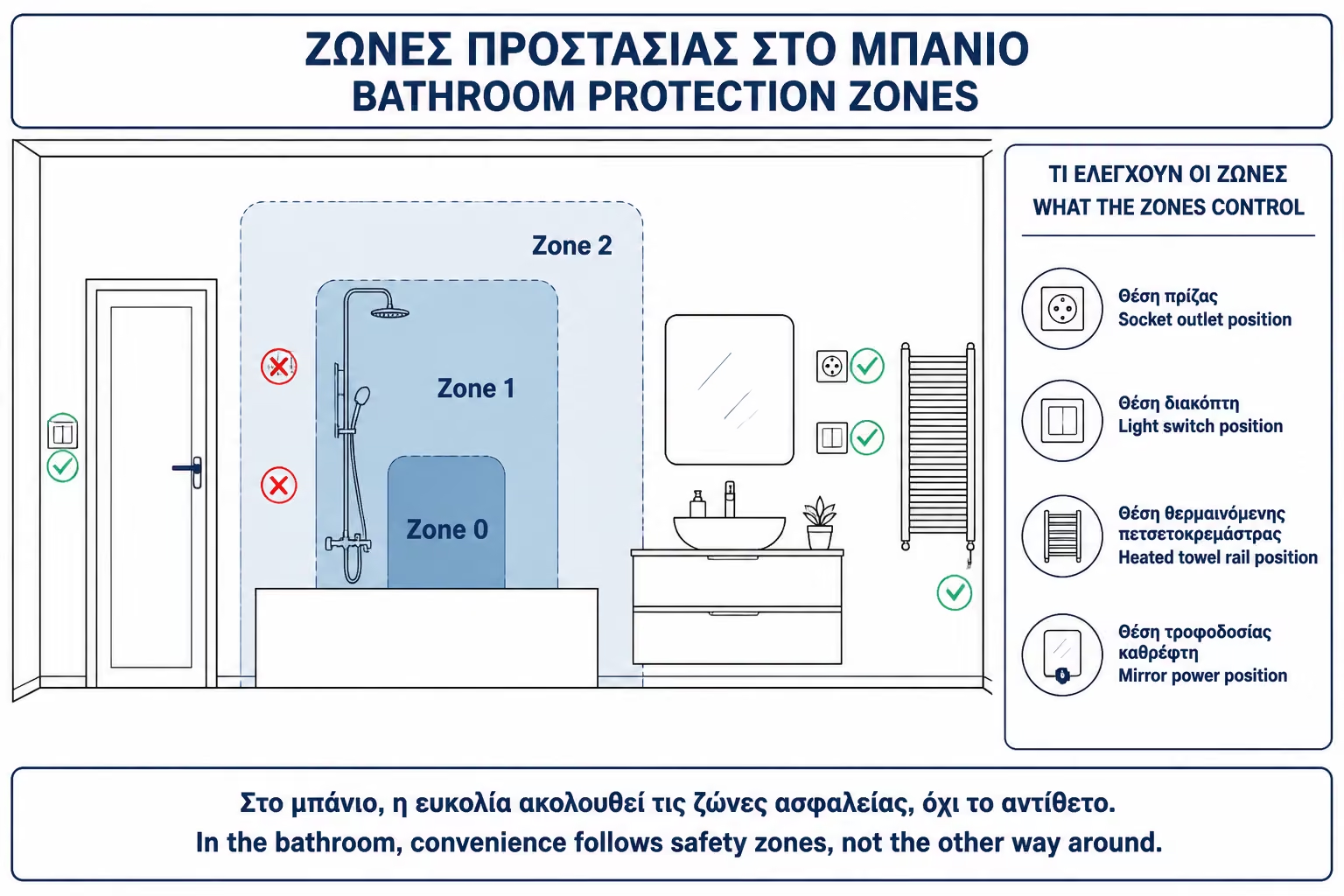
The safe placement of a socket or switch starts with the protection zones. Zones are defined based on the tub or shower, not just where there is water in general. Zone 0 is the inside of the bathtub or shower. Zone 1 is the area above this. Zone 2 is the adjacent area around the bathtub or shower. In the older logic of HD 384 we also encounter Zone 3, but in the modern approach of ELOT 60364 the applicable framework must be checked and not mechanically applied old diagrams.
For the owner, the practical conclusion is simple: the closer the socket or switch is to the bathtub or shower, the more difficult and strict the installation becomes. Conventional sockets are not included in direct zones. Even when we are outside the most stringent zones, proper protection, proper earthing, RCDs and equipment with an appropriate IP rating are required.
The bathroom should not be designed with the logic of "fitting sockets where there is excess wall". The zones must be drawn first. Then to decide the positions. In renovations, this process should be done before cables are run and before tiles are closed.
A common mistake is that the outlet is placed at the base of the sink, without taking into account the shower. The owner says "it's for the mirror, not the shower". But if the shower is right next to it, the outlet is affected by the shower zone. Using the sink does not negate the risk from the shower.
Distances in the bathroom are not a simple matter of "how many centimeters away from the tap". They are calculated in relation to the bathtub or shower and the zones created around them. In the older practical presentation of zones, Zone 2 is often referred to as an area of approximately 60 cm around the bath or shower. Zone 1 includes the area above the bath or shower, with a standard reference of up to 2.25 m in earlier HD 384 presentations.
But for new projects it is not enough to remember a number. The exact assessment must be done by an electrician based on the current standard, the final configuration of the bathroom and the type of equipment. Especially in walk-in showers or showers without a tray, marking the zones can be more complex than a classic bathtub.
In practice, if a socket is located near a bathtub or shower, it should be treated with caution. If it is outside the immediate zones but can still receive splashes, it needs adequate protection. If it is next to an open shower without an enclosure, the distance on paper may not be enough, because real use carries the water farther.
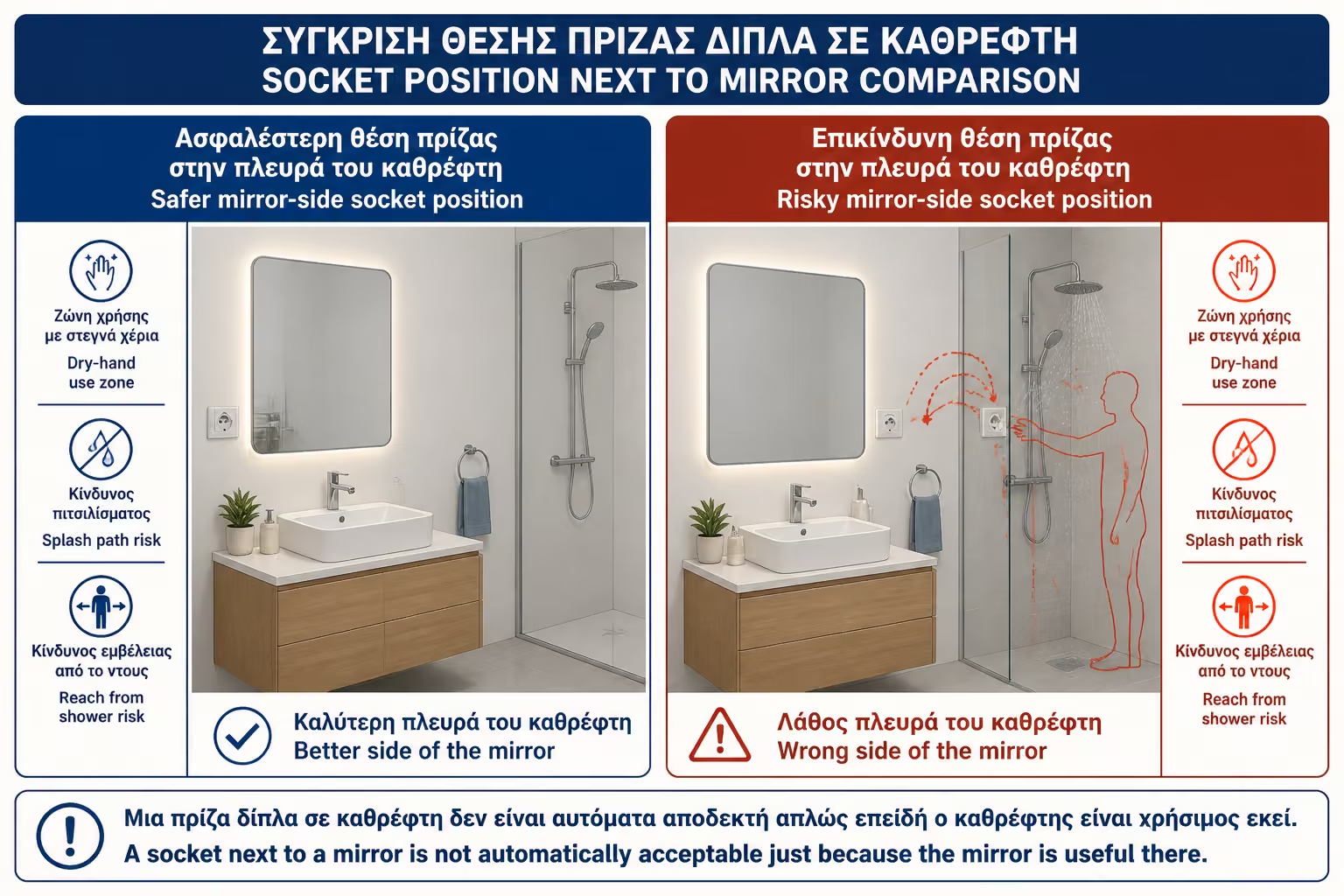
A useful practical criterion is for the owner to ask: can someone standing in the shower reach the socket with their hand? Can the handheld shower point toward the socket? Can the enclosure door open and drip water on it? If the answer is yes, the position should be checked again.
The most common outlet in the bathroom is the one next to the mirror or above the vanity unit. It is practical for hair dryer, shaver, electric toothbrush or small appliances. But it is not obvious in every bathroom.
The sink alone does not define the primary zones of Section 701 in the same way that a bathtub or shower does. Nevertheless, the sink poses a real risk of splashing and use with wet hands. That is why the socket must be at a reasonable distance from the tap, have adequate protection, be properly grounded and be protected by an RCD.
In small bathrooms, the mirror socket can end up close to the shower. This is the crucial point. If the sink is next to the shower, the socket is not assessed only as a "sink socket". It is assessed against the shower, the protection zones, splashes and actual use.
A common scenario: the bathroom has an 80 cm piece of furniture, a sink, an LED mirror and right next to it a walk-in shower with a fixed glass. The socket is placed on the side of the mirror, towards the side of the shower. If the glass does not provide enough protection or if the distance is short, this position can be problematic. A safer solution might be a socket on the other side of the mirror, another furniture arrangement or a different type of equipment.
Many Greek houses have the washing machine in the bathroom. This creates a special category of outlet, because the washing machine is a high-consumption appliance, it works with water, it is often located in a small space and can be placed near a shower, sink or pipes.
The washing machine supply should not be treated like a simple free socket. It must have a proper line, proper fuse, earth, RCD protection and location not exposed to water. The socket should not be located behind the washing machine in a place where it can get wet from a leak or cannot be accessed in an emergency. On the other hand, it should not be placed in an exposed place near the shower.
In renovations, a washing machine is often placed under the counter or next to the sink. If the socket is left low, behind the appliance, access may be difficult. If she gets high and near water, she can be dangerous. It takes proper planning, not a last-minute solution.
Even more care is needed when a dryer is placed on top of a washing machine. Power, ventilation, humidity and electrical loading must be evaluated. It is not appropriate to operate large appliances from a power strip or rough extension in the bathroom.
In many homes the bathroom light switch is outside the door. This solution has a practical advantage, because it avoids contact with a switch in a humid area. In other houses, especially older ones, the switch is inside the bathroom, near the door or next to the mirror.
Whether a switch can be located inside the bathroom depends on the location, the zone, the type of equipment and the protection of the installation. It is not appropriate to insert a switch where someone can touch it while in the shower or with wet hands. It is also not appropriate to place it in a place where it receives splashes.
In new renovations, it is often preferable to keep the main switch outside the bathroom or in a safe place near the entrance. For functions such as LED mirror, fan or heatsink, separate solutions can be used, but they must be properly designed.
The mistake is to treat the switch as a simple cosmetic accessory. A minimal black switch can match the tiles, but if it's in the wrong place, the look doesn't matter.
Modern LED mirrors often have touch switches, touch sensors, anti-glare function, dimming or even integrated sockets. These elements make the mirror more practical, but also more demanding electrically.
A touch switch on the mirror should not automatically be considered safe because it is "built-in". The product, location, IP, operating voltage, connection and distance from the shower should be checked. If the user touches the mirror with wet hands, the quality and suitability of the product become very important.
Motion or touch sensors can be useful, but they are no substitute for proper electrical design. The same applies to bluetooth mirrors, heated mirrors or cabinets with lighting. The more complex the device, the more important it is to give the electrician the technical brochure before purchase.
A practical mistake is to buy an LED mirror from an online store without clear technical characteristics and then ask to "connect it somehow". In the bathroom, "somehow" is not an acceptable technical solution.
Waterproof covers or safety caps on sockets have practical value. They protect the socket when it is not in use, reduce the risk of splashes and dust, and are useful in damp areas. But they should not be treated as a magic solution.
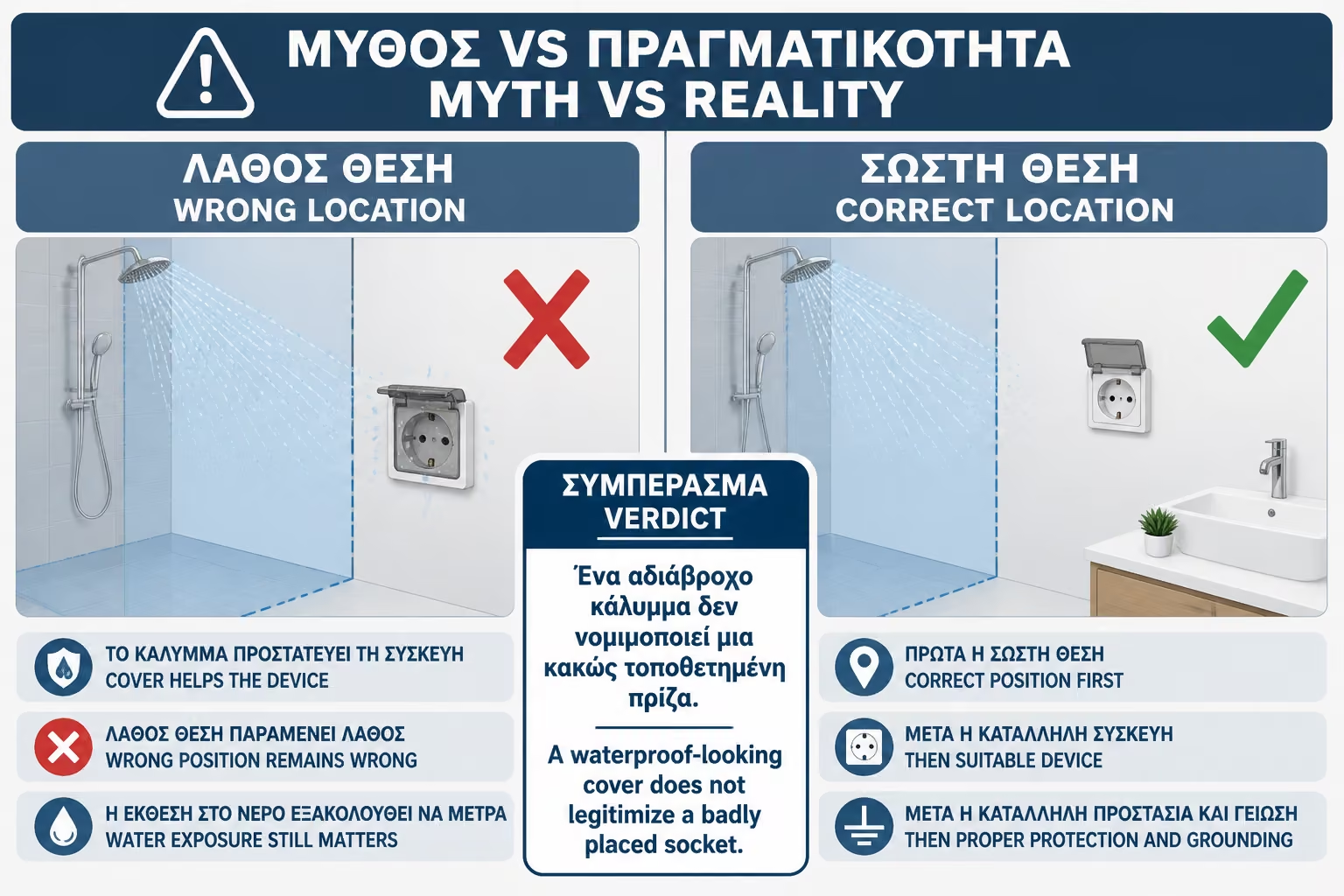
The lid protects mainly when it is closed. When the outlet is in use, for example with a hair dryer or charger, the cover is open or does not fit completely. So actual use may invalidate some of the protection. Also, the cap does not change the zone the socket is in. If the position is wrong, a cap does not legitimize it or automatically make it safe.
We must also distinguish the simple plastic cap from a socket with a certain degree of IP protection. A bathroom socket must have technical characteristics and proper marking, not just a lid that closes. The quality of the application, the sealing rubbers and the method of installation play an important role.
A classic example: a socket with a cover is placed next to the shower because it is "waterproof". The user puts in a hairdryer, the lid is left open, the cable hangs near the sink and the shower does not have a full cabin. The problem is not just the product. It's all position and use.
Like lighting, sockets and switches can have an IP degree of protection. An IP44 switch or socket may be suitable for some wet or splash areas, while more exposed locations may require higher protection or a different solution. IP, however, is not judged in isolation.
IP indicates enclosure protection. It does not tell by itself whether the socket is in a permitted position, whether the circuit is protected by an RCD or whether the grounding is correct. It also does not say how the socket behaves when used with a plug, when the lid is left open or when the product is worn.
In a bathroom, the second number of the IP, i.e. protection against water, is of particular importance. But the choice must be made by an electrician based on the zone, the use and the manufacturer's instructions. "Put IP44 and you're good" is an oversimplification.
If the outlet is going to be used frequently, such as for a hair dryer, it is better to have it in a safe and ergonomic location rather than trying to salvage a bad location with a higher IP.
The residual current device, or RCD, is a critical protection measure in the bathroom. Its function is to interrupt the current when it detects earth leakage. In a bath or shower room, additional protection with a high sensitivity RCD, typically 30mA, is a basic requirement in modern electrical practice. Section 701 guides state that circuits supplying equipment in tub or shower rooms require RCD protection not exceeding 30 mA.
But the RCD is not a licence to put a socket in the wrong place. It is additional protection, not a replacement for the protection zones, the correct location, the right IP rating and grounding. If a socket is too close to the shower, we do not say "it is fine, we have an RCD". We say the position should be checked.
In old houses, the first question is not only whether there is an RCD in the panel. It is whether it actually protects the bathroom circuits, whether it is connected correctly, whether it works and whether it has been tested. There are installations with relays in the panel, but with old plug-ins that have not been joined properly or with problematic grounds.
Before putting a new socket in the bathroom, the panel must be checked. The safety of the socket is not only in the plastic of the front. It is located throughout the circuit.
Grounding is one of the most important but least visible issues in the bathroom. The owner sees the socket, the switch and the lid. But it does not see if the grounding is correct, if the conductors have continuity, if the panel is properly organized and if the protective devices will work when needed.
In a bathroom, where there are metal batteries, piping, radiators, water heaters, washing machines and water, grounding and equipotential connections are of particular importance. If the installation is old or has undergone many conversions, it should not be taken for granted that everything is correct.
A frequent practical problem occurs in renovations where plumbing is changed. Old metal pipes are replaced with plastic ones, new appliances are added, old radiator bodies are removed or moved. These changes may affect the electrical behavior of the space. The electrician must know them.
A capped socket and RCD are important, but without proper grounding the installation remains incomplete.
In addition to the basic light switch, the bathroom may have switches or controls for a fan, water heater, electric towel rail, underfloor heating or an LED mirror. These elements must be carefully planned.
The water heater switch is usually located on the panel or in a safe location outside the zones. It should not be casually placed in the bathroom because it is "convenient". The device has a lot of power and requires proper line, protection and handling.
The fan can be connected to the lighting or have a separate switch. If the switch is inside the bathroom, its position must be checked. If it is outside, several practical issues are resolved. If it has a time delay or humidity sensor, the connection must be made according to the instructions.
The electric towel rail must not be powered from a rough outlet in a marginal position. If it is permanently installed, it needs proper supply, proper location, protection and control. The fact that the device says "bathroom" does not mean that it can fit where there is an extra wall.
One of the most dangerous mistakes in the bathroom is using power strips and extensions. It usually starts as a temporary solution: there's no outlet for the washing machine, the hair dryer cord doesn't reach, the toothbrush needs a charger, or an LED mirror has been added. But the temporary stays for years.
Power strips are not designed to solve electrical design deficiencies in a wet area. They can be found on the floor, exposed to water, overloaded or used with high power devices. Especially in a washing machine, dryer, heaters or hair dryer, using a power strip is bad practice.
If a bathroom does not have enough sockets, the right solution is not to add a multi-socket. It is to consider whether new supply can be passed in a safe way. This may cost more than a patchwork solution, but it significantly reduces risk.
A bathroom with a power socket behind the washing machine or on the vanity is a sign that the installation needs checking.
In old bathrooms we find sockets and switches in positions that today we would not choose. They can be located near the bathtub, at a low height, next to the sink without protection or in places that receive water vapor. The owner often says "it's always been there". But this does not mean that the position is correct.
Y.A. 101195/2021 recognizes the importance of compliance with the requirements that were in force at the time of construction for existing facilities, but for modifications and extensions it is required that they be designed and implemented based on ELOT 60364 or an equivalent safety level.
This practically means that when a renovation or a new operation takes place, we do not mechanically copy the old position. If the old outlet was problematic, it should be moved, removed, or replaced with a safer solution. If the old switch is in an area that is not suitable, it should be re-examined.
Renovation is the opportunity to right decades of wrongs. It is not just an opportunity to put new faces on old problematic positions.
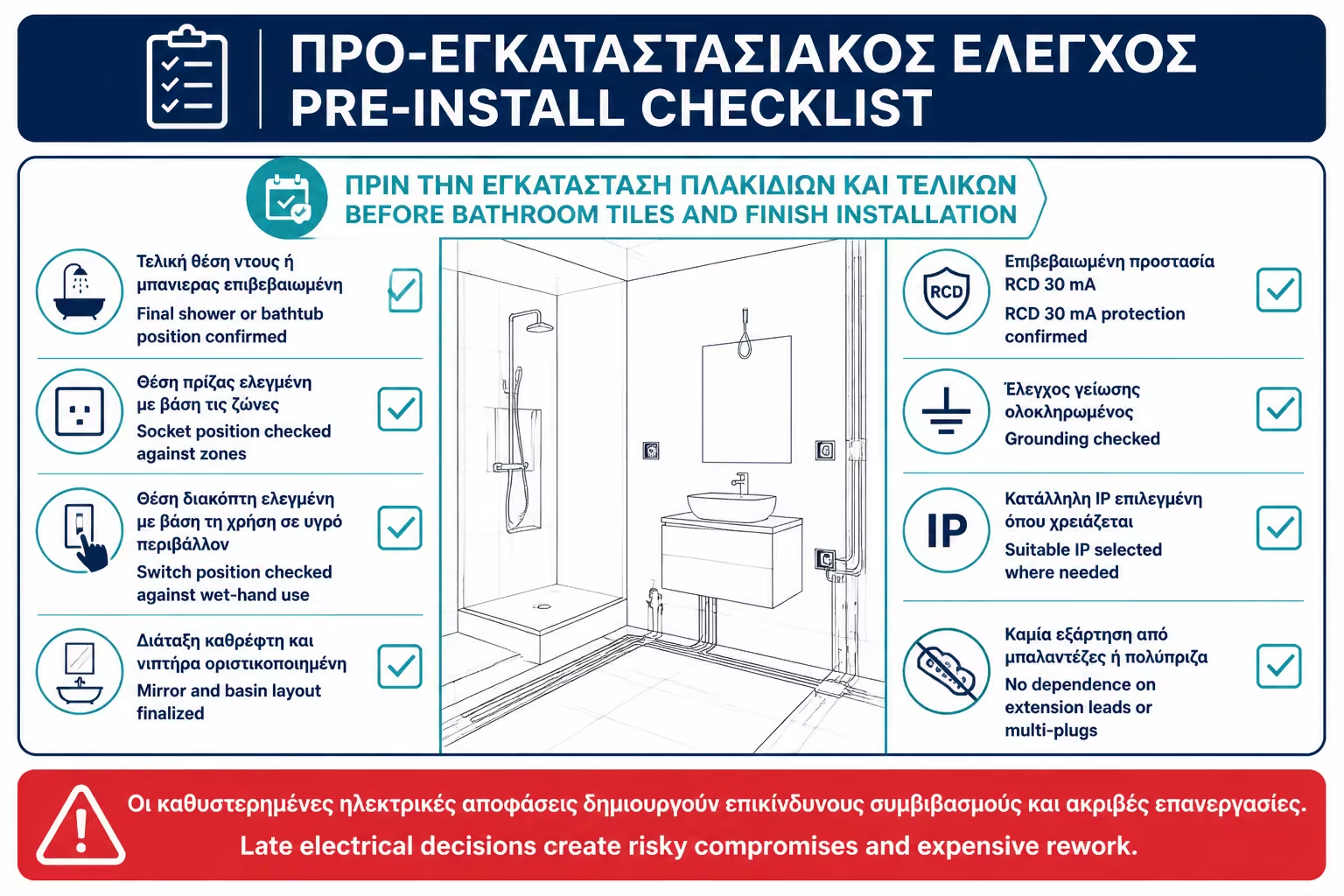
The correct design of sockets and switches is done before the tiles are laid. Then the electrician can run correct lines, change positions, predict waits, check the panel and work with the plumber and board.
Before installation begins, the location of the shower, bathtub, sink, mirror, furniture, washing machine, fan and lighting must be decided. It must also be known whether there will be an enclosure, fixed glass, a walk-in opening or a bathtub that will be used as a shower. All of these affect the protection zones and the safe positions.
If the sockets are decided after the tiles are put in, the options are limited. Then there are sketchy solutions, obvious channels, makeshift conversions or compromises in the wrong places. In the bathroom, poor design at first shows up later as increased cost or reduced safety.
Best practice is to mark the locations on the wall before closing, confirm the distances and have them approved by the electrician. Not by eye, but based on the final layout.
The cost for sockets and switches in the bathroom depends on whether we are talking about a simple facade replacement, a new supply, a line move, an intervention in the panel or a complete electrical upgrade. It is one thing to replace an existing socket with a suitable IP socket in the correct location and another to run a new line through the panel.
In the Greek market of 2026, a simple replacement of a socket or switch with suitable hardware can be a relatively small cost when the installation is already correct. But in a bathroom renovation, electrical work is rarely limited to one outlet. For a typical bathroom, basic electrical interventions can run around €250–600, when they include limited waits, lighting, a mirror socket or a fan without major panel changes. A more comprehensive intervention with new lines, RCD, washing machine socket, mirror lighting, ventilation, ground control and possible panel changes can reach around €600–€1,200 or more.
The prices depend on the area, the floor, the access, whether the bathroom is already stripped, the length of the lines, whether materials are included, VAT, renovation, measurements and possible VAT. A low value may only be about 'plugging in', not proper zone, RCD and ground control.
In bathroom electronics, the criterion should not be the cheapest socket unit. It must be the right position, the right line and the safe operation.
The owner does not need to know the regulation like a technician. But he needs to know what to ask for. Before starting work, he should ask the electrician to confirm zones, socket and switch locations, RCD protection, earthing, IP of materials and whether any panel changes are required.
A proper offer should not simply say "bathroom electronics". It should describe what is included: how many sockets, how many switches, if there is a new washing line, if there is an LED mirror supply, if a fan is provided, if an RCD will be checked or replaced, if there will be an earthing check and if bathroom materials are included.
It should also be clear what is not included. For example, restoring tiles, changing a table, or issuing a YDE can be separate tasks. This is not a problem as long as it is clear from the start.
Good cooperation with the electrician is not only visible in the final result. It shows in the questions he asks before he starts: where will the shower go in, where will the cabin open, what appliances will go in, if there will be a washing machine, what mirror was bought, how is the space ventilated and what is on the panel.
The first mistake is the outlet too close to the shower or bathtub. Even if it has a cap, the location can be wrong.
The second mistake is the outlet behind the washing machine without proper access or in a place where it can get wet from a leak. Safety is not only a matter of distance from the shower, but also a matter of actual use.
The third mistake is the switch in the bathroom where it is touched with wet hands or receives splashes. If he can get out of the bathroom or in a safer location, that's usually a better option.
The fourth mistake is the power strip. It is not a bathroom solution. If more facilities are needed, they must be designed properly.
The fifth mistake is buying materials before the inspection. Sockets with caps, switches, LED mirrors and appliances must be selected after knowing the location and zone.
Before the positions are finalized, check the following questions first:
| Question | Yes / No |
|---|---|
| Has the location of the outlet been checked in relation to the bathtub or shower? | Yes / No |
| Has it been confirmed if the point is inside or outside the protection zone? | Yes / No |
| Is the outlet far enough away from splashes, shower phone and cabin opening? | Yes / No |
| Is the socket protected by a 30mA RCD? | Yes / No |
| Has the line ground been checked? | Yes / No |
| Does the hardware have a proper IP and not just a plastic cap? | Yes / No |
| Is the switch in a location that is not easily accessible with wet hands? | Yes / No |
| Is the washing machine socket properly wired and not powered by a power strip? | Yes / No |
| Are the positions decided before the tiles go in? | Yes / No |
| Will the installation be done and checked by a licensed electrician? | Yes / No |
If the answer to a critical question is “no”, the position should be reconsidered. In the bathroom, an outlet a few inches away can make the difference between a proper installation and a problematic one.
If you keep only one thing from this guide, keep this: a safety cover does not correct a bad position. First we check the zones, distances, RCD, grounding and IP, and only then do we choose the socket or switch. Do not leave the socket decision until the end of the renovation, because by then the options are fewer and the quick fixes are more tempting. In the bathroom, the correct electrical position is more important than whether the faceplate matches the tiles.
Sockets and switches in the bathroom are small elements with great importance. They serve everyday needs, but are located in an area where water, water vapor and contact with a wet body increase the risk. That is why the correct placement cannot be based only on convenience or aesthetics.
Secure installation starts with security zones. It continues with correct distances from the bath and shower, suitable IP, protection with a 30 mA RCD, correct grounding and choosing materials that are really suitable for the bathroom. Safety caps are helpful, but not a panacea. They protect when used correctly and when the position of the outlet is already correct.
For the homeowner, the best decision is to get the electrician involved before the tiles go in and before mirrors, switches, outlets and appliances are purchased. In this way, the positions are designed correctly, clutter is avoided and the bathroom is delivered not only beautiful, but also safe for daily use.
In the bathroom, an outlet is never "just an outlet". It is part of a security system that must work properly every day.
Return to category.
Go to categoryReturn to the central guide.
Go to guide