
Plumbing & Electrical Bathroom Infrastructure
Return to category.
Go to categoryThe bathroom fan is one of the devices that is often underestimated. The owner thinks of it primarily as a solution to water vapor, mold and odors. In a bathroom without a window, or in a small WC that retains moisture for a while, the fan seems almost self-evident: it turns on the light, the ventilator works, the water vapor leaves. In practice, however, its correct electrical installation needs more attention than it seems.
A fan is not just a little plastic machine on the wall. It is an electrical device in a space with water, water vapor, condensation and often limited ventilation. It can be located near the shower, above the bathtub, in a suspended ceiling, in a vent or on an external wall. If the device does not have a suitable IP, if the wiring is sloppy, if there is no leakage relay, or if the timer is connected incorrectly, the result can be from annoying to dangerous.
The most common mistake is that the vent is added at the end. The bathroom is already finished, the lamp, the mirror, the tiles have been put in, and then someone says "let's put in a fan". If there is no proper standby, the craftsman can casually draw power from the fixture, run an exposed wire, or make a connection without considering whether the model has a timer, needs permanent phase, has a humidity sensor, or needs to be isolated for maintenance.
In Greece, low-voltage electrical installations are examined in the context of ELOT 60364. For rooms with a bathtub or shower, a special role is played by ELOT HD 60364-7-701:2024, which concerns rooms containing a shower or sprinkler and is shown by ELOT as a valid standard. For such spaces, modern Section 701 practice requires that circuits supplying equipment, including lighting and related bathroom fixtures, be protected by an RCD not exceeding 30 mA.
In this guide, we'll look at how to properly wire a bathroom fan, what the difference is between a simple fan, a timer model, and a humidity sensor model, what it means to connect to a light switch, why time-delay models usually need different wiring, and what a homeowner should have a licensed electrician do before closing the ceiling or wall.
The fan is a small load compared to a water heater or an electric towel rail. But that doesn't mean it can be casually connected. The risk does not only come from its power. It comes from its location, humidity, water vapor, working with lights and the need to work often after using the bathroom.
In a windowless bathroom, the fan may run several times a day. After a shower, the air fills with water vapor. If the device is located on a cold wall or false ceiling, it may receive condensation. If its connections are not protected or if the cable entry is not correct, moisture can cause damage over time.
Proper electrical installation must consider not only "turning the fan", but also how it will be isolated for maintenance, how it will work with the light, whether it will continue to work after being turned off, where it is in relation to the protection zones, and whether the circuit is properly protected.
A practical example: in a small bathroom, the fan is connected directly to the light, without a separate provision. When the user turns off the light, the fan stops immediately, while the room is still full of water vapor. After months, mold appears on the ceiling. The problem is not that "the ventilator was not good". It is that its function was not designed properly.
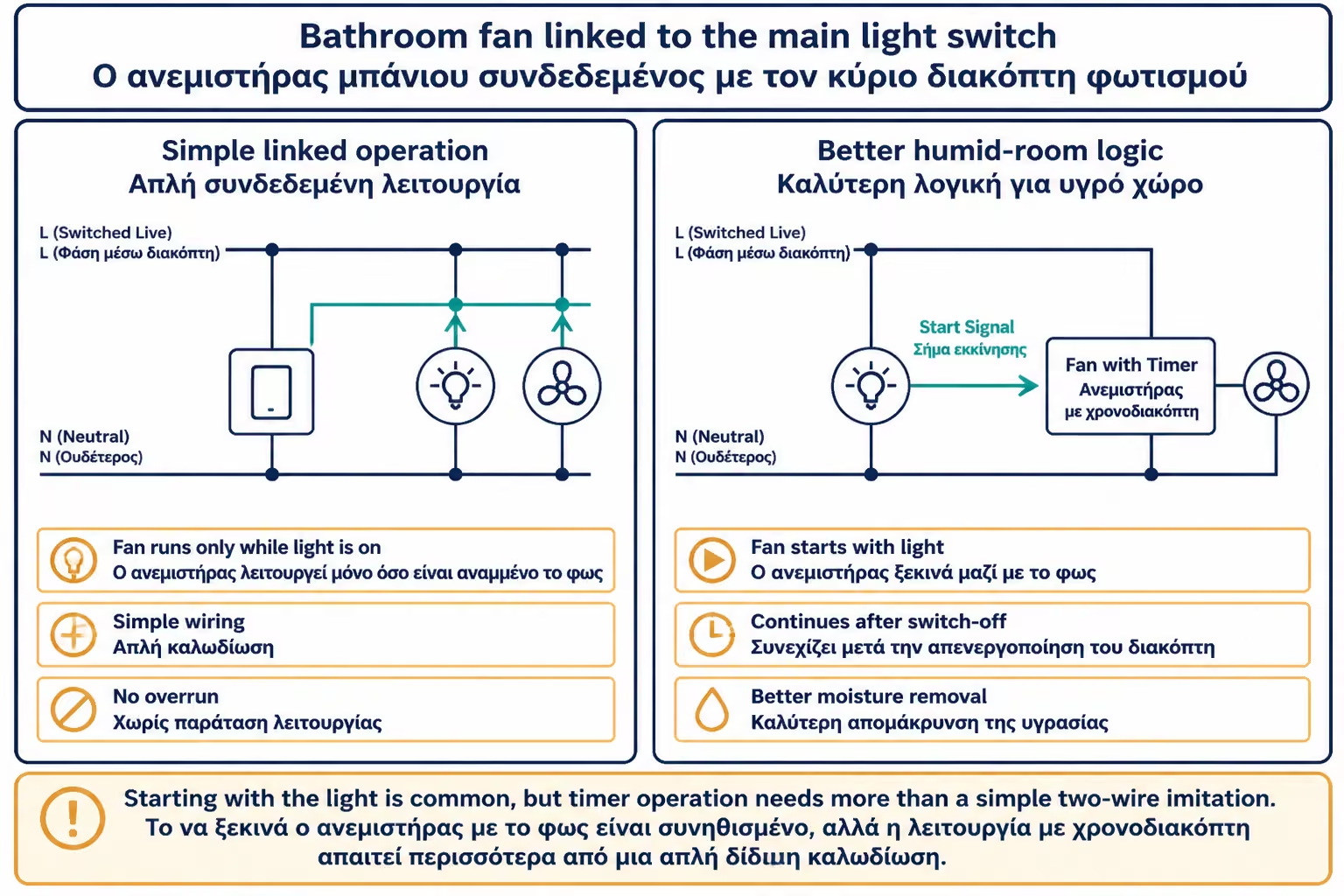
Before we talk about wiring, we need to clarify what kind of fan we want. A simple fan works as long as we give it power. If it is connected to the light, it turns on with the light and turns off with the light. It is a simple solution, but not always the best for the bathroom, because water vapor remains after extinguishing.
A fan with a timer can continue to run for a few minutes after the light goes out. This is very useful, because ventilation does not stop as soon as the user leaves the bathroom. However, for the timer to work properly, the fan usually needs a permanent phase, neutral and a command from the lighting phase. That is, it is not the same wiring as a simple fan.
There are also models with a humidity sensor, the so-called humidistat. These activate when the humidity passes a threshold and stop when the humidity drops. Some models require permanent power for the sensor to work. Others combine timer, sensor and manual command.
This means that the owner should not buy a fan based on size and noise alone. It needs to know what function it wants and whether the existing wiring supports it. A timer fan will not function properly as a timer if it is not wired as required by the manufacturer.
The most common connection is for the fan to open with the light. This is practical, because the user does not have to remember a separate switch. In a WC or small bathroom, it is often a satisfactory solution, especially if the fan has a timer and continues after switching off.
The simple connection without a timer can be made with the phase returning from the light switch and the neutral, if the model allows it and the installation is correct. When the light turns on, the fan is also powered. When it goes out, it stops. But this does not give a time delay.
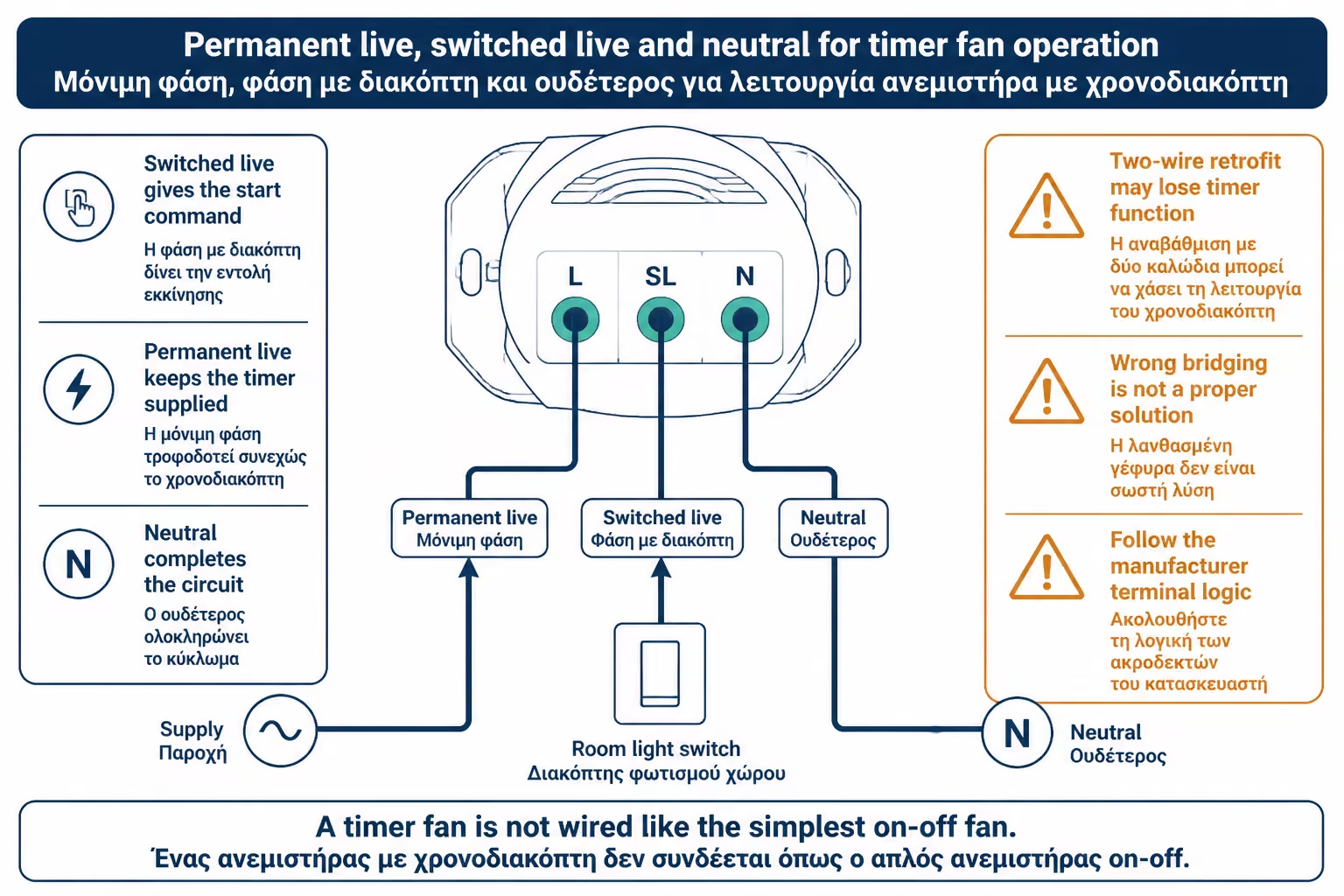
In models with a timer, things change. Usually the fan needs permanent phase to have power available after the light goes out, neutral for the return, and a separate switched live ie command from the light switch. Fan installation sources explain that a timer fan needs permanent phase, switched live and neutral: switched live starts it with the light and permanent phase keeps it running after power off.
This is where many mistakes are made. If the electrician or handyman only finds two wires in the old location, the new timer fan may not work properly. It can only work while the light is on, or the wrong terminals are bridged, or a conductor is left loosely insulated. These are not jobs for testing.
In order for the owner to understand why different wiring is needed, it is worth simply explaining the basic conductors. The neutral is necessary to complete the circuit. Switched live is the phase that comes from the light switch and gives a command when the light turns on. Permanent phase is continuous power that is present so that the timer or sensor can operate even when the light is turned off.
In a simple fan, power that only comes in when the light is on may be sufficient. In a timer fan, if there is no permanent phase, the device cannot continue after shutdown. In a model with a humidity sensor, the permanent power supply is often even more important, because the sensor has to "monitor" the humidity.
In discussions of bathroom fan replacement technicians, it is often mentioned that timer models require permanent live, switched live and neutral, while humidity sensor models may also require permanent power. This confirms the practical principle: before buying a model with functions, we need to know if the wiring supports it.
A common mistake is bridging terminals to "work somehow". It may be that the fan spins, but loses the timer function or is not connected as intended by the manufacturer. The correct solution is to run the appropriate wiring, not to casually adapt the device to the wrong cable.
The timer is not a luxury. It is often practically necessary, especially in bathrooms without natural ventilation. The water vapor does not leave immediately after the shower is over. If the fan stops when the light goes out, the room stays damp. This favors mold, odors, swelling in paint, moisture in joints and wear and tear in furniture.
With a timer, the fan continues to work for a predetermined time. We're usually talking about a few minutes, depending on the size of the bathroom, fan power, length of vent and usage. There is no one time fits all. A small WC may take less time, while a bathroom with a shower and poor ventilation may take longer.
The important thing is not to set the timer just based on noise annoyance. Many keep it to a minimum because they don't want it to be heard. But if the fan stops too soon, it is not doing its job. It is better to choose a quiet model of good quality and work as needed, than a cheap noisy fan that everyone wants to turn off immediately.
A practical example: in an indoor bathroom without a window, the fan only works while the light is on. The user takes a shower, gets out, turns off the light and leaves. After half an hour the mirror remains cloudy and the joints retain moisture. This indicates that the ventilation is not sufficient as operating time.
The humidity sensor is useful when the problem is not only light use. For example, one can shower with natural light without turning on the lamp. Or humidity may remain high for some time after use. A humidistat fan can be turned on or off until the humidity drops to an acceptable level.
This solution is more "intelligent", but needs correct setting. If the humidity threshold is set too low, the fan may run continuously, especially in areas with high humidity or in houses that are not well ventilated. If it goes in too high, it may not activate when it should. Also, the sensor should be located where it actually measures the humidity of the room, not in a blind spot or in an incorrectly affected air duct.
In terms of wiring, many models with a sensor need permanent power. Some can be combined with a light command so that they start with light but also control humidity. So before buying the manufacturer's instructions should be read.
A common mistake is to buy a fan with a humidity sensor and connect it like a regular fan. Then the sensor may not work properly or only work when the light is on, losing much of its value.
Many timer fan installations provide an isolation switch so that the unit can be safely disconnected for maintenance, cleaning or replacement. In technical discussions about extractor fans, the use of a three-pole isolator on fans with permanent phase, switched live and neutral is often mentioned, so that all relevant supply conductors are interrupted.
The owner does not have to decide for himself which isolator is required. But he must understand the logic: if the fan has a permanent phase for a timer, it can stay powered even when the light is off. So for someone to clean it or replace it, there must be a safe way to isolate it.
The isolation switch must not be accidentally placed in the wrong zone. Often it can be located outside the bathroom, above the door, in a safe place or in an appropriate location according to the study. Its position must be practical but also safe.
A common problem in old installations is that no one knows where the vent is isolated from. The user turns off the light and thinks there is no current, while the permanent phase remains. This is dangerous for anyone who tries to open the device.
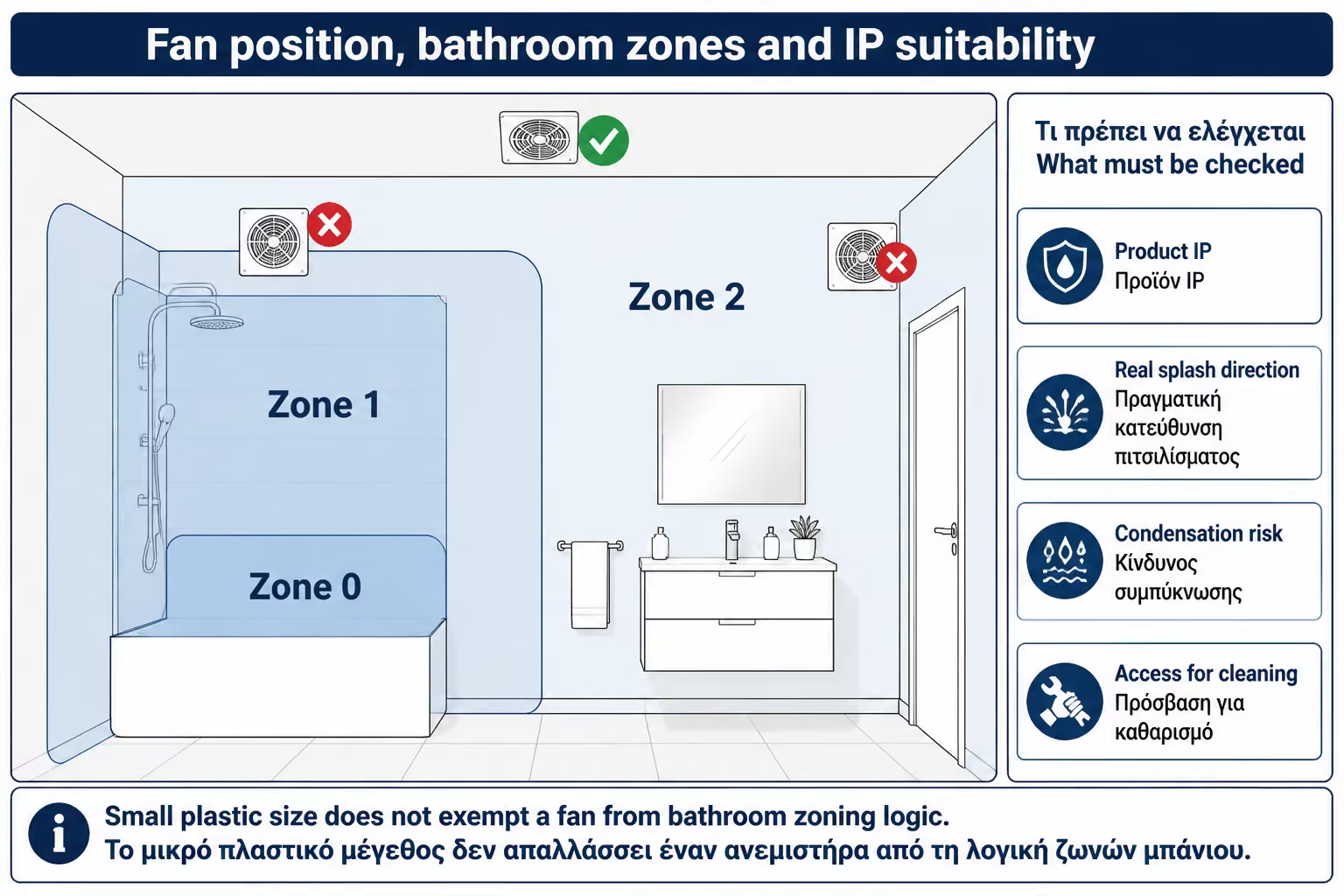
The ventilator must be suitable for its location. If placed near a shower or bathtub, the IP rating and protection zones are critical. If it is on a ceiling above a shower, the requirements are different from a vent on a wall away from water.
ELOT HD 60364-7-701:2024 concerns areas with a shower or sprinkler, so the location of electrical equipment in such areas must be evaluated based on its requirements. On a practical level, a bathroom ventilator should have a clear IP rating suitable for a wet area and for the zone where it is placed. It is not enough to say "bathroom fan" in general.
In many cases, for splash points we look for at least IPX4/IP44 type protection, while more demanding locations may require higher protection or a different installation location. The exact level should be confirmed by the electrician and the manufacturer's instructions.
A practical mistake is the vent directly above the shower, because that's where the vent fits, without checking if the product is allowed there. The location of the vent is not in itself an electrical installation permit.
Powering from the lighting circuit is a common solution for a bathroom fan, especially when the fan works together with the light. This may be correct as long as the line is suitable, RCD protected, the fan is a small load and the connection is made as intended by the manufacturer.
But it becomes sketchy when the craftsman "steals" electricity from wherever he finds it, without a connection box, without a correct neutral, without grounding where required, without knowing if there is a permanent phase for a timer and without isolation. It also becomes problematic when the timer fan needs extra conduit and the existing wiring doesn't have it.
In a proper project, the fan wiring is designed from scratch. If it will be simple, the appropriate power passes. If it will have a timer, the necessary wiring goes through. If it will have a humidity sensor, permanent power supply and proper handling are provided. If there will be an isolator, its location is provided.
The mistake is to decide the model after wiring. Then the owner buys a timer fan, but there are only two ducts on the wall. The result is a compromise or a compromise.
Many ventilators are installed in false ceilings or plasterboard. This gives a clean result, but creates a need for proper access. Connections must not be buried inside a closed ceiling without control. The same applies to any power supplies, controllers or connection boxes.
The false ceiling of the bathroom receives water vapor. If there is no good ventilation or if the ventilation is poor, water vapor can condense inside the cavity. That is why the electrical connections must be in suitable boxes, in safe places and not just with terminals in the void.
If the fan is inline, meaning the motor is inside the air duct or false ceiling and not in the vent, the need for access is even greater. The motor may at some point need cleaning or replacement. If you have to cut through drywall to get there, the installation is impractical.
A good bathroom doesn't just hide the technical points. It hides them in a maintainable way.
Some ventilators are Class II, meaning they are double insulated and do not require a ground connection in the same way as a Class I device. Others may have metal parts or different requirements. This must be obtained from the manufacturer's instructions and checked by an electrician.
If there is a ground conductor in the line, we don't cut it because "the fan doesn't pick it up". We properly terminate and protect it according to technical practice. If the device requires grounding and the installation does not have proper grounding, it should not be casually connected.
In old bathrooms, having two wires in place of the vent may mean that there is no ground available. This is not always a problem for a Class II fan, but it must be evaluated. It is not a decision made by the color of the wires or with a test screwdriver.
Grounding is part of overall safety. Even if the particular fan does not use it, the electrician should check the line and the panel.
The ventilator is a small device, but it is located in a special area. That is why the circuit that supplies it must be protected by a 30 mA RCD when it belongs to the circuits of the room with a bathtub or shower. The IET states for Section 701 that all circuits in such spaces, including lighting and associated equipment, need RCD protection up to 30 mA.
In older installations, the bathroom lighting may not be protected by the leakage relay, while the sockets are. This should not be taken as a given for new work. If a fan is added, it must be checked which circuit it is fed from and if this circuit has the required protection.
If the RCD trips when the fan is running, we do not bypass the relay. We check the device, humidity, connections, timer and wiring. RCD dropping is a symptom that needs to be diagnosed.
A small load does not mean a small responsibility. In the bathroom, even lighting and ventilation must be treated with electrical seriousness.
The ventilator does not work by itself. It needs proper ventilation. If the duct is too long, narrow, with many angles or without a non-return valve where necessary, the fan may work longer without effect. This also affects its electrical life, because it works for longer and in more difficult conditions.
Poor performance often leads to the wrong conclusion: "let's put a bigger fan". Sometimes a better model is indeed needed. Other times the problem is the airway. If the duct is blocked, blowing against it, has condensation, or ends up in the wrong place, the electrical equipment is stressed.
Attention also needs to be paid to the condensation inside the duct. If water vapor condenses and returns to the fan, it may affect the device. In such cases, the solution is not only electrical. It wants proper duct routing, slopes, insulation, or proper fittings, depending on the project.
The electrician and the ventilation technician must work together. A properly wired fan in a bad vent does not solve the humidity problem.
Noise is one of the main reasons users turn off or avoid the fan. If the fan is cheap, noisy or poorly placed, the owner will quickly turn it off. So the ventilation will not be done properly, even if the wiring is correct.
The choice of model must take into account the volume of the bathroom, whether it has a shower, the length of the ventilation duct, the existence of a window, the frequency of use and whether a timer or humidity sensor is needed. We don't choose a fan just by diameter or price.
A more powerful model is not always better. It may make more noise, vibrate, or not work properly with the existing vent. Accordingly, a very weak model may not remove water vapor, so moisture remains.
The right ventilator is one that has sufficient air supply, low noise, suitable IP, correct timer or humidity function and correct electrical installation.
In the Greek market of 2026, a simple bathroom fan can start around €25–60 for basic models, while quieter or better quality fans with a timer, humidity sensor or better construction can be around €70–180 or more. Inline solutions, quieter models or better performing systems can cost more.
Electrical work depends on having proper wiring ready. If replacing a simple fan with a new simple model in the same position, the cost is relatively small. But if a timer is added and a permanent phase, switched live, neutral, isolator or new supply is needed, the cost goes up. In a renovation, predicting the wiring before the surfaces are closed is usually more economical than adding it later.
As an example, simple installation or replacement can range from around €50–120 for work, depending on access and existing condition. New wiring, timer fan, isolator, connection to lights, suspended ceiling or panel corrections can raise the total cost to €120–300 or more. If construction/correction of an air duct is also needed, this is calculated separately.
Prices depend on area, floor, access, whether VAT is included, whether maintenance is required, model type, RCD presence and panel condition. A cheap quote that just “puts in a fan” may not include proper timer wiring, isolation, IP control or protection control.
Before buying a fan, tell the electrician what function you want. Do you want it to open only with light? Continue after shutdown? Activate with moisture? Should it have a separate switch? These options change the wiring.
Ask to check if there is a permanent phase, switched live and neutral in the position where the fan will be inserted, if a model with a timer is chosen. Also ask to check that the circuit is protected by a 30mA RCD, that there is proper grounding or proper protection conductor management, that the model has an appropriate IP for the location and that an isolator is required.
A correct quote should state whether it includes simple replacement, new wiring, lighting connection, timer, isolator, RCD control, meremety, false ceiling and duct connection. If it only says “installation of fan”, you don't know exactly what is involved.
The owner must also request that the wiring be done before the tiles or false ceiling are closed. This avoids obvious channels and rough connections.
The first mistake is to buy a timer fan while the wiring only supports simple operation. The result is a compromise or misconnection.
The second mistake is that the fan takes power casually from the lamp without a proper connection box, without protection and without RCD control.
The third mistake is not having a permanent phase for a timer or humidity sensor. Without it, many functions do not work properly.
The fourth mistake is the absence of isolation. If the fan is permanently powered, it must be able to be safely isolated for maintenance.
The fifth mistake is placing in the wrong zone or using a model without an appropriate IP for the location.
The sixth mistake is to hide connections inside a suspended ceiling without access. The damage then becomes permanent.
The seventh mistake is choosing a very noisy model. If the user immediately closes it, the ventilation is not doing its job.
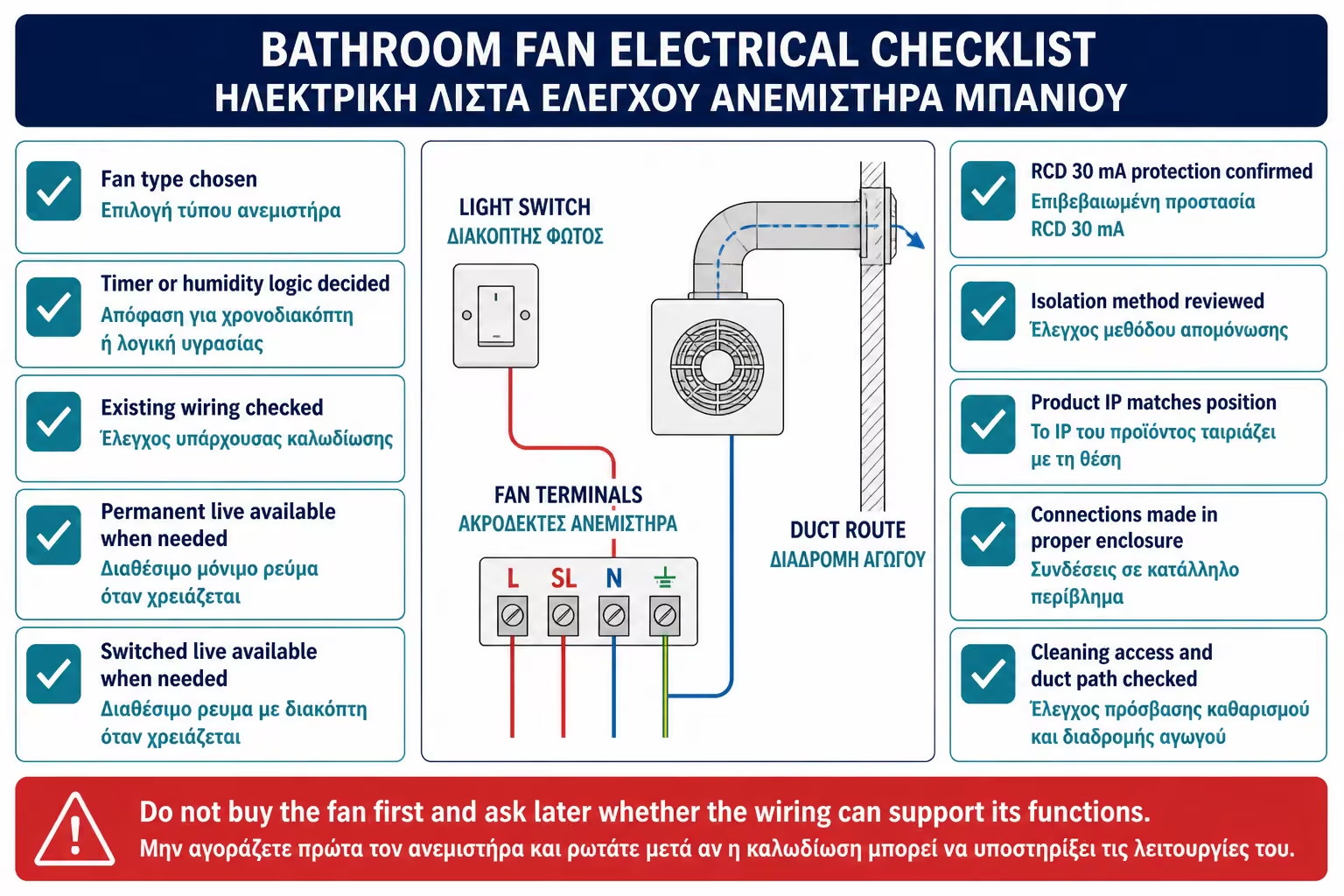
Before the installation is finished, check the following points first:
| Question | Yes / No |
|---|---|
| Has it been decided whether the ventilator will be simple, with a timer or with a humidity sensor? | Yes / No |
| Does the existing wiring support the functionality you want? | Yes / No |
| For timer fan is there permanent phase, switched live and neutral? | Yes / No |
| Is the circuit protected by a 30 mA RCD? | Yes / No |
| Has it been checked if an isolation switch is required? | Yes / No |
| Does the ventilator have an appropriate IP for its location? | Yes / No |
| Has its location been checked against the bath or shower zones? | Yes / No |
| Will the connections be made in a suitable box and not rough in a suspended ceiling? | Yes / No |
| Is there access for cleaning and replacement? | Yes / No |
| Has the vent been checked for fit and not blocked or excessively long? | Yes / No |
If the answer to basic questions is "I don't know", don't buy a model yet. First check the wiring and location. The vent should be selected based on the bathroom, not just the diameter of the hole.
If you keep only one thing from this guide, keep this: a timer fan does not connect like a simple fan. It usually needs a permanent live, a switched live and a neutral, so that it starts with the light and continues after the light is turned off. Do not buy a model with a timer delay or humidity sensor before an electrician checks the existing wiring. And do not leave connections hidden in a suspended ceiling without access. Good ventilation needs the right device, the right duct and the right electrical installation.
The electrical installation of a bathroom fan looks simple, but in practice it has quite a few details. Another simple fan that works together with the light and another fan with a timer or humidity sensor. The difference lies mainly in the wiring, permanent power supply, isolation capability and proper circuit protection.
Connecting to the main light switch can be practical, but it must be done correctly. For timer operation, the device usually needs permanent phase, light command and neutral. For a humidity sensor, a permanent power supply is often required. In any case, the circuit must be RCD protected, the location must be controlled based on the bathroom zones and the model must have an appropriate IP.
For the owner, the correct practice is to design the vent before closing the bathroom. To choose a model after knowing what wiring is there or what wiring will be passed. Ask the electrician to provide a timer, isolation, RCD and access. So the ventilator will not be just a motor that spins, but a proper dehumidification system that works safely and for a long time.
In the bathroom, ventilation is not only a matter of comfort. It protects the space from moisture, mold and damage. And like any electrical device in a wet environment, it must start with proper installation.
Return to category.
Go to categoryReturn to the central guide.
Go to guide