At the sink
The cold water runs normally, but the hot side feels weak.
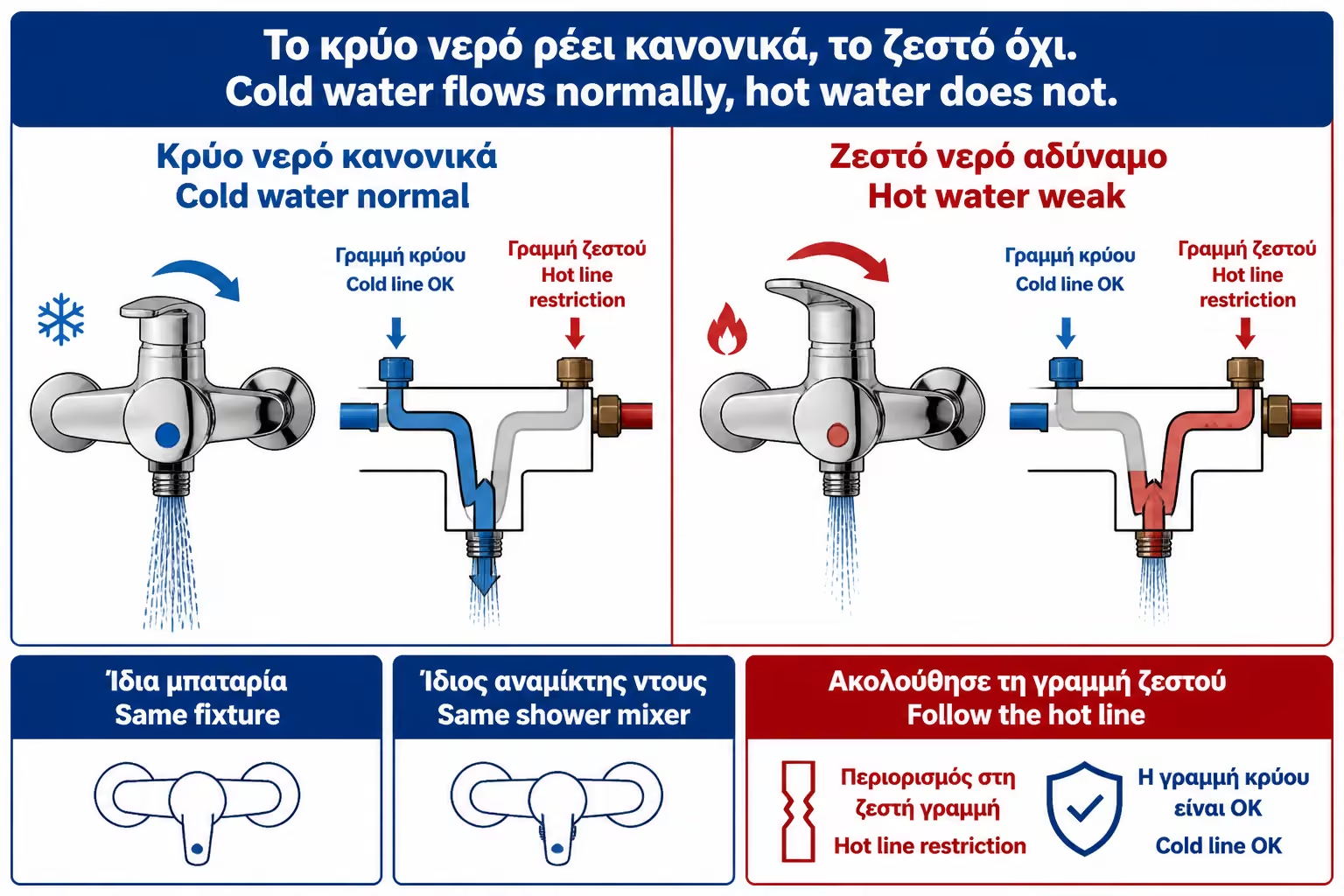
When cold water runs normally but hot water comes out weakly, the issue usually is not the home's overall water pressure. The restriction is typically somewhere along the hot-water line.
That distinction matters, because many homeowners say they have "low pressure in the bathroom" when the cold side is actually working fine and only the hot side has reduced flow.
The cause may be something simple, such as a clogged aerator or a half-closed angle valve, but it can also involve the water heater, boiler, solar heater, safety valve, check valve, faucet mechanism, old hot-water piping, or scale build-up in the system.
To avoid unnecessary part replacements, diagnosis should move in order: first the simple local checks, then the more central and complex ones.
The clearest sign is when you open the same faucet and the cold water has normal flow while the hot side is noticeably weaker.
When the contrast is that clear, the main supply to the home usually is not the real problem. The investigation should focus specifically on the hot-water path.
The first signs that point specifically to a hot-water-only problem are usually the following:
The cold water runs normally, but the hot side feels weak.
The cold side has force, but flow drops when you turn toward hot.
The cold water is fine, but the hot side is slow or restricted.
Every outlet has reduced flow only on the hot-water side.
People often say “low pressure” when what they are actually seeing is low flow. Pressure is the force inside the plumbing system, while flow is the amount of water that finally makes it out of the faucet or shower.
Hot water may still be under pressure while actual flow is being strangled somewhere along the line. That is why you should not jump straight to replacing the faucet or water heater. First identify where the restriction really is.
The core distinction you should keep in mind is this:
Small debris or scale can reduce the flow before it reaches the outlet.
Deposits slowly narrow the hot-water path over time.
Older or restricted pipework can limit delivery without killing pressure entirely.
A partially closed or damaged valve may be enough to choke the line.
The restriction may sit at the heater’s inlet, outlet, or one of its attached fittings.
A simple local valve can make the problem look bigger than it is.
The faucet itself may be limiting only the hot-water side.
Before blaming the water heater or the central hot-water system, work out whether the problem affects one outlet only or every hot-water outlet in the home. That distinction determines where the diagnosis should start.
In practice, the main test scenarios are the following:
The problem is usually local. Start with the hot-water angle valve, the faucet filter or aerator, the flexible supply hose, and the faucet mechanism itself.
In this case, local scale or a small restriction close to the point of use is far more likely than a central system fault.
Then the likely suspects are the shower head, the hose, the thermostatic mixer, the inlet filters, or a built-in mixer mechanism.
If the cold side is strong but the hot side drops only in the shower, the mixer assembly itself moves much higher on the list.
When the same symptom appears everywhere, the focus shifts to the central hot-water system: the water heater, boiler or solar heater, the safety valve, the check valve, old hot-water piping, a main shutoff, or a manifold.
In that case, scale in the network or a central valve restriction becomes much more likely.
Open the faucet gradually and watch what happens to flow as you move from cold toward hot. What matters is not only the final hot position, but the point at which the flow begins to fall away.
If flow is normal here, the main supply probably is not the issue.
If the drop begins here, the faucet or mixing mechanism becomes more suspicious.
If the weakness appears only here, the investigation should move directly to the hot-water line.
If flow is weak in every position, the shared faucet filter or aerator is a more likely cause. If it drops as you turn toward hot, the restriction is more likely to be in the hot-water path or inside the mixer mechanism.
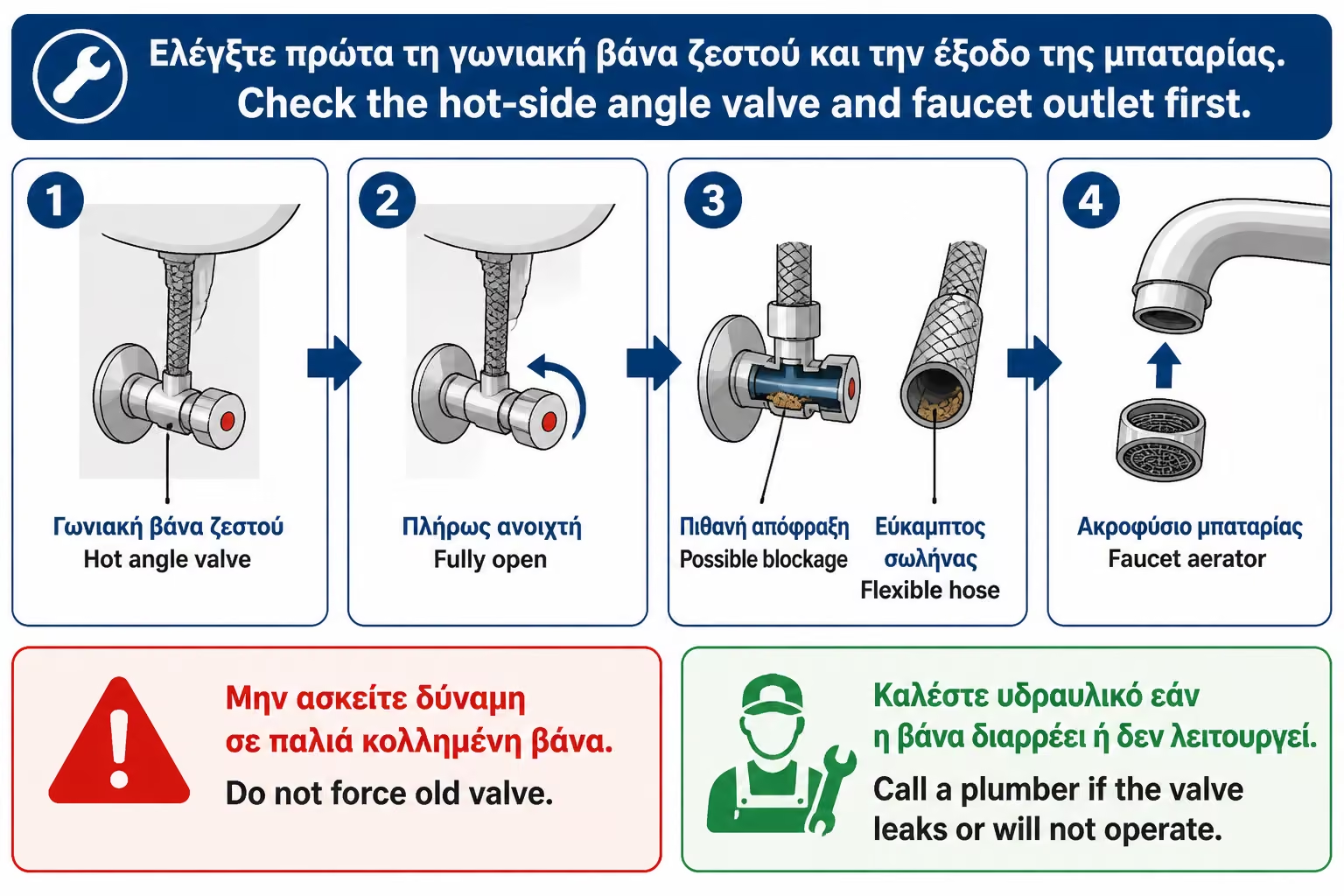
Even when the symptom looks hot-water-specific, the first easy check is still the faucet filter. The aerator at the tip of the faucet may have collected scale, rust, or debris, reducing the total flow.
If cleaning it improves both hot and cold, you found the issue. If the cold side stays strong but the hot side remains weak, the root cause lies farther upstream.
It is the quickest and cheapest way to tell whether the restriction sits inside the faucet or deeper in the hot-water line.
Under the sink, the hot-water angle valve may be half closed, seized, or partially clogged. This fault is more common than most people expect.
If there is reason to think it is not opening fully or it looks worn, it should be checked before moving to more expensive explanations.
The main points worth checking around that valve are the following:
An older valve may have been disturbed or left slightly mis-set.
Dust, debris, or rushed adjustments often create this exact issue.
The line may have carried dirt that ended up in the local shutoff point.
Wear and long periods of inactivity make seizure much more likely.
Scale build-up reduces the opening and makes full flow harder to achieve.
The mechanism may be stiff, restricted, or unable to open fully.
If you want one short practical summary, keep this in mind:
Check whether it is fully open. If the valve is old and stiff, do not force it, because it may start leaking or break.
Hot water encourages scale build-up more than cold water does, which is why the hot-water line often degrades first. In many homes, the issue is not one single blockage but gradual build-up across several points in the same line.
The harder the local water, the more likely this kind of issue becomes and the faster it tends to worsen.
Scale inside the unit affects the whole hot-water supply.
Deposits can reduce flow and make the whole system less stable.
Small internal passages clog easily and start restricting the line.
Local shutoff points are common accumulation points for debris and scale.
Repeated clogging is often a sign of a bigger issue behind them.
The mechanism or outlet may load up with deposits and slow the flow.
The internal passage can narrow gradually from deposits or carried debris.
Older hot-water lines often carry the heaviest long-term scale load in the system.
The most direct and common symptom.
The hot side starts to feel sluggish at the tap.
Deposits often come with harsher operating sounds.
The symptom returns soon after cleaning.
The line becomes not only weak, but also less predictable.
Constant maintenance can point to a more central scale problem.
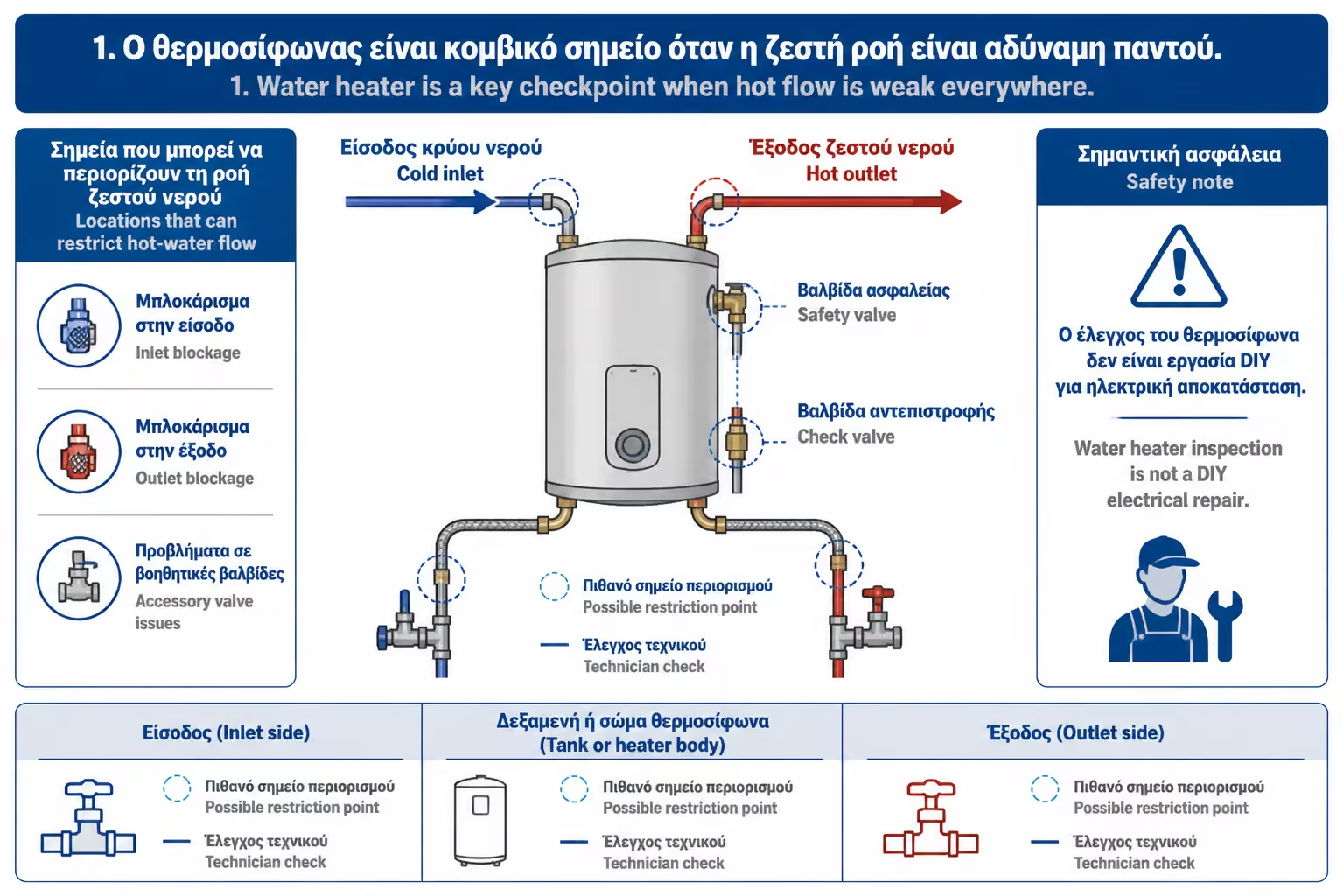
If reduced hot-water flow appears at several outlets, the water heater should be one of the first central components checked.
It is not enough to ask whether it still heats water. You also need to know whether it is allowing hot water to pass freely toward the outlets.
Internal deposits can restrict the whole hot-water supply.
The system may be underfed before the water even reaches the heater.
The choke point may sit right where hot water leaves the unit.
If it is restricting flow, it can make the whole system look faulty.
A small valve can reduce flow more dramatically than expected.
The restriction may be right before or after the heater, not inside it.
Carried material often clogs narrow passages in connected fittings.
A bad installation detail can create a permanent restriction point.
A water heater combines water, pressure, and electricity. It should be checked by a plumber and, where electrical work is involved, by a licensed electrician.
The safety valve is an essential part of a water-heater installation. It protects against overpressure and should never be removed or bypassed.
Even so, it can affect flow when it has filled with scale, collected debris, worn out, been installed incorrectly, or is simply no longer operating properly.
If there is reason to suspect it is restricting flow, it should be inspected and, if necessary, replaced by a professional rather than handled casually.
The effect is usually system-wide rather than limited to one outlet.
Visible water release is a clear sign that it needs checking.
Unusual sounds may accompany a faulty or loaded valve.
The hot-water supply becomes inconsistent for no obvious reason.
If the symptom began after work, the valve should be reviewed early.
Water-heater, boiler, and solar installations often include a check valve to stop water from flowing the wrong way. If that valve sticks, clogs, or fails to open properly, it can noticeably restrict hot-water flow.
It is a small component, but a faulty one often imitates a much larger system problem.
The most obvious symptom is a steady drop in hot-water delivery.
The rate may shift abruptly without any other visible explanation.
Some faults also create harsher sounds near the valve or heater.
The hot side may not behave the same way each time it is used.
This makes a central valve issue much more plausible.
Thermostatic and mixer faucets can cause low flow only on the hot side when their internal mechanism is worn, clogged, or set up incorrectly.
When the behavior changes with the handle position or temperature setting, the faucet itself becomes a key suspect and deserves direct technical inspection.
Debris at the inlets can limit the hot side before it even reaches the cartridge.
Deposits make the mechanism less responsive and more restrictive.
The faucet may no longer open the hot side properly.
A bad installation can confuse the mixing behavior from the start.
The imbalance can upset thermostatic performance significantly.
A defect inside the faucet can interfere with how the two lines behave.
The visible trim may look fine while the hidden mechanism is the real problem.
The hot side drops much more than the cold side at the same fixture.
The mixing function loses stability during use.
The faucet may not be allowing full access to the available hot water.
Thermostatic sets often show the problem as unstable shower performance.
That strongly suggests the restriction is inside the faucet mechanism.
If the issue appears in a built-in shower mixer, diagnosis needs extra care because much of the mechanism is hidden inside the wall.
Because the main body sits inside the wall, rough trial-and-error work can easily create more damage or unnecessary demolition. The diagnosis needs to be methodical and based on the actual model details.
The restriction may sit at the hot inlet even if nothing looks wrong from outside.
A bad installation detail can affect the whole mixer’s behavior.
The hidden unit may have loaded up over time.
The problem may sit in the feed line, not in the trim or handle assembly.
Wrong setup can limit flow long before the faucet body is blamed.
The hidden core may need repair or replacement.
The built-in mixer may simply be exposing a more central restriction.
Always keep the model details and technical documentation for a built-in mixer. Without them, diagnosis and repair become much harder.
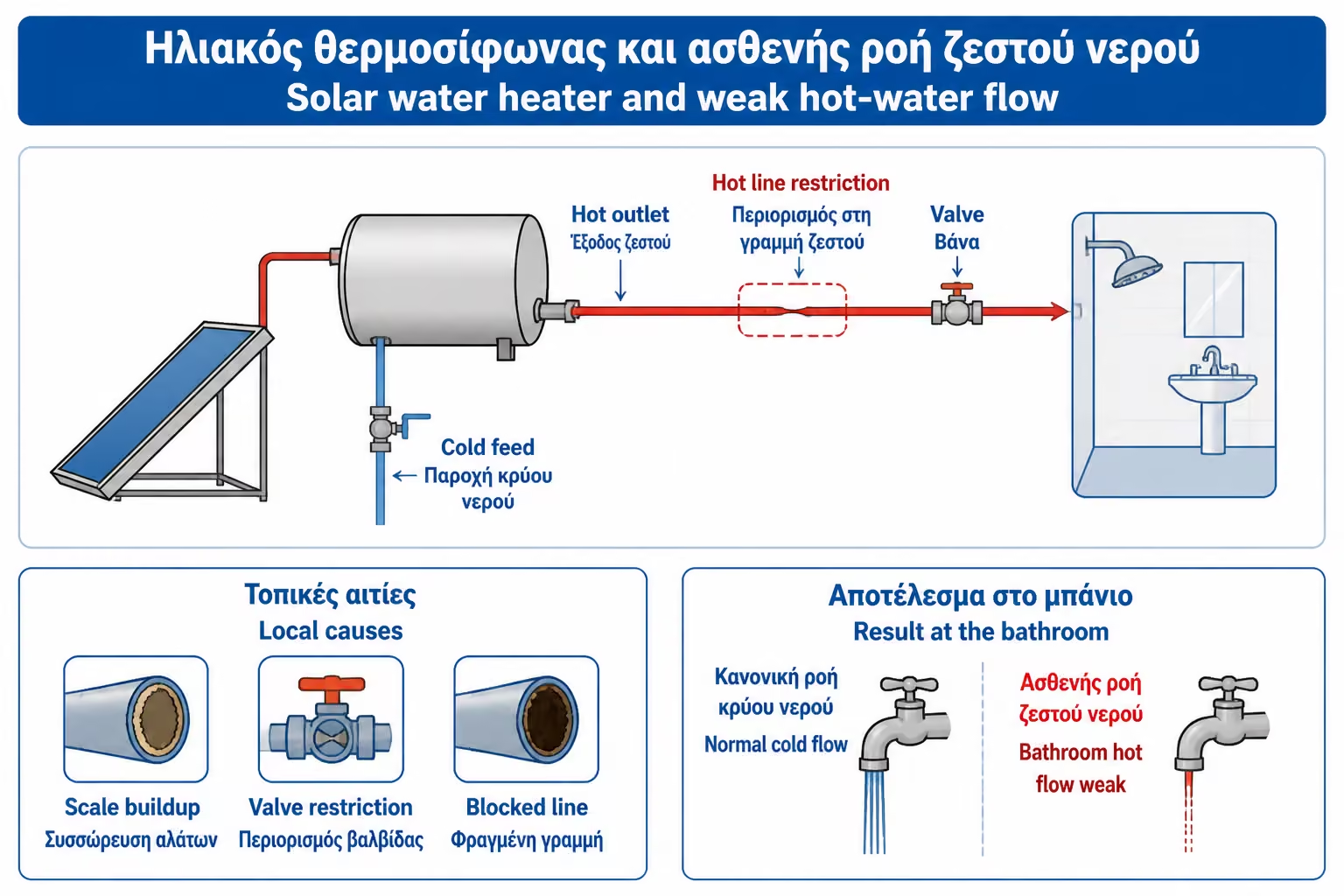
If hot water is supplied by a solar water heater, the list of possible causes becomes longer because more components and connections are involved.
In this kind of system, the diagnosis has to separate a tank problem from a valve problem and from a piping restriction on the domestic hot-water side.
Internal deposits can noticeably reduce performance and flow.
If it is faulty, it can affect the whole hot-water line.
A small fitting can heavily restrict the domestic-use circuit.
If it sticks or is mis-set, both temperature and flow suffer.
The restriction may be upstream of the bathroom itself.
These clog easily with debris or scale and choke the line.
An ageing solar system often develops several smaller resistance points at once.
The problem may affect the consumption side of the system rather than the collector loop.
In solar systems, scale build-up and ageing components can reduce flow gradually over time. The inspection should be done by a technician who knows the system.
Some installations include a thermostatic mixing valve that blends hot and cold water to deliver a safer outlet temperature.
If that valve clogs, sticks, or is misadjusted, it can reduce hot-water flow or create unstable temperature. It is both a safety and comfort component, so it should not be bypassed casually.
The valve may be blending in too much cold water.
The internal mechanism can become a restriction point on the line.
The mixing function stops behaving in a stable way.
If the valve is central, the symptom spreads through the house.
In those systems, the mixing valve is a frequent and important suspect.
In older installations, the hot-water pipe itself may have narrowed internally because of scale, rust, or long-term deposits. This is especially common in older metal pipework.
If the pipe has lost too much of its internal diameter, the real fix is usually replacement rather than repeated filter cleaning.
The symptom is not limited to one tap or shower.
Debris keeps returning because it is coming from farther back in the line.
They suggest the old network is affecting both flow and water quality.
Newer pipe runs often perform much better than the older parts of the same installation.
If the symptom comes back, the pipe itself may be the real cause.
If the system includes a manifold or a central hot-water shutoff, make sure the valve is truly fully open. A half-closed valve is enough to reduce flow to one branch or to the whole hot-water circuit.
After plumbing work or maintenance, it is not unusual for a valve to be left partly closed by mistake.
If it is not fully open, an entire branch may be affected.
The restriction may begin before the heater itself.
A small reduction here is enough to weaken the whole line.
The problem may affect one branch rather than the whole property.
Even with a central manifold, the local shutoff still has to be checked.
To avoid wasting time on the wrong assumption, follow a logical sequence from the simplest checks to the more involved ones.
The most useful diagnostic order is the following:
If the cold side flows well and the hot side does not, the restriction is almost always on the hot-water path.
If it is just one sink, start locally. If it affects the whole house, move to the water heater, boiler, or solar system.
This is the simplest and cheapest check, and sometimes it solves the issue immediately.
Make sure local shutoffs really are open and not stiff or restricted by scale.
At shower points, those components are far more common causes than people first assume.
If the issue is system-wide, the diagnosis must move to the central hot-water equipment.
Safety valves, check valves, and thermostatic mixing valves can all restrict flow without making it obvious at first.
If the problem still persists, the hot-water line itself may be narrowed or too old internally.
There are a few basic checks you can do safely before calling a technician. The key is to stay with simple accessible points and avoid opening safety devices or equipment bodies.
A quick clean can rule out one of the most common causes immediately.
Scale in the head often makes a local restriction look like a larger fault.
A small local shutoff can reduce flow far more than expected.
This quickly tells you whether the issue is general or limited to the hot side.
The distinction between local and system-wide changes the entire repair path.
A visible drip or damp point may point you toward the right area.
On the other hand, some jobs should not be attempted without a professional because they involve pressure, electricity, or concealed parts of the system.
This involves a live system that may combine heat, pressure, and electrical risk.
That requires proper electrical safety and technical competence.
You would be disabling a critical protection device.
That can create a more dangerous system problem instead of solving the original one.
The wrong move can lead to damage inside the wall or unnecessary demolition.
The system has more components and needs someone who understands how they interact.
This is installation work, not a basic homeowner test.
Call a plumber or technician without delay when the symptoms clearly go beyond a simple local issue or involve safety devices and electrical equipment.
That means the diagnosis has to move to the central hot-water system.
Those systems are not the place for guesswork.
A protective component now needs direct attention.
A sudden change often means a new blockage or fault has developed.
The line may be revealing a deeper deterioration issue.
If both flow and temperature are shifting, the diagnosis becomes broader and more urgent.
That requires model-aware diagnosis and careful access.
Pressure or age can turn a simple test into a real failure.
Safety comes first before any further plumbing diagnosis.
At that point the issue is not just weak flow, but active damage risk.
Electric water heaters in particular require extra caution because water and electricity are involved together.
Cost depends mostly on whether the fix is a simple cleaning job, a small part replacement, or a deeper intervention in the water heater or piping.
| Work | Realistic cost |
|---|---|
| Cleaning aerator / filter | €0 – €30 |
| Replace hose or shower head | €10 – €60+ |
| Replace angle valve | €40 – €120+ |
| Plumber inspection | €40 – €100+ |
| Replace water heater safety valve | €50 – €150+ |
| Water heater inspection / service | €80 – €200+ |
| Clean or replace thermostatic faucet | €80 – €250+ |
| Hot water line replacement | depending on the area |
The cheapest cases usually involve filters, aerators, or small fittings. Costs rise when the issue sits inside the water heater, in control valves, or in old pipework.
Some of the most common mistakes that delay or confuse the diagnosis are the following:
A valve, aerator, or filter may be the real culprit.
The problem may have been nothing more than scale in the aerator or inlet filters.
It is a small component with a surprisingly large effect.
It is dangerous because pressure, heat, and electricity may all be involved.
Skipping that step often leads to the wrong repair path.
With built-in or thermostatic faucets, the exact model matters for diagnosis and repair.
If the line itself is old or scaled up, the problem will keep coming back.
Use the checklist below to see whether you have covered the main points before deciding on the cause:
| Question | Yes / No |
|---|---|
| Does the cold water flow normally? | Yes / No |
| Is the problem limited to one outlet? | Yes / No |
| Does the problem affect the whole house? | Yes / No |
| Was the aerator cleaned? | Yes / No |
| Was the hot-water angle valve checked? | Yes / No |
| Was the hose or shower head checked? | Yes / No |
| Is there a thermostatic faucet? | Yes / No |
| Is there a built-in mixer? | Yes / No |
| Has the water heater or solar system been checked? | Yes / No |
| Has the safety valve been checked? | Yes / No |
| Is there a thermostatic valve? | Yes / No |
| Are there old hot water pipes? | Yes / No |
| Have you had a plumber check if it persists? | Yes / No |
If the basic steps do not solve the issue, the next move should be proper technical diagnosis rather than random part replacement.
At one sink, the cold water runs strongly but the hot side produces very little flow. The homeowner immediately assumes the water heater has failed.
The plumber starts with the local checks and finds that the hot-water angle valve is half closed and full of scale. Once it is replaced, normal flow returns immediately.
The fault was neither central nor expensive. It was a small fitting under the sink.
In an older apartment, hot water has weak flow at the sink, shower, and kitchen, while cold water remains normal. Filters can be cleaned, but they clog again soon afterward.
Inspection shows scale and deposits at multiple points in the hot-water line, along with ageing pipework running from the water heater to the outlets.
A temporary fix may involve cleaning and replacing some parts, but the right long-term solution is often to replace the hot-water line itself.
When low flow appears only on the hot side, do not start with the most expensive repair.
First decide whether the issue is local or system-wide. Check filters, aerators, shower heads, angle valves, and hoses before suspecting the water heater or the piping.
If the same symptom appears at every hot-water outlet, then the investigation should move to the water heater, safety valve, check valve, thermostatic mixing valve, and hot-water line.
Never remove or bypass safety valves. They are protective components, and if they are causing a problem, they should only be replaced correctly by a professional.
Low pressure or, more accurately, low flow only on the hot-water side usually has a specific and traceable cause. It may begin with something simple such as a clogged filter, scale in the faucet, an angle valve, a hose, or a shower head, but it can also point to a more central problem.
When the same symptom appears everywhere, suspicion shifts toward the water heater, the safety valve, the check valve, the thermostatic mixing valve, a built-in mixer, old hot-water piping, or scale inside the network itself.
In final summary, these are the main points that should stay in focus:
Filters, aerators, shower heads, and local valves come first.
This is the key step that organizes the entire diagnosis.
Random replacement often costs more and still misses the real cause.
If the cold side is fine and the hot side is weak, the restriction is almost always somewhere along that route.
Water heaters, valves, and piping matter most when the issue is not limited to one outlet.
Safety and check valves should never be bypassed as a shortcut.
A proper diagnosis is cheaper than a chain of wrong repairs.
The right approach is always an ordered diagnosis: first the simple checks, then the local ones, and finally the central components of the installation.
Return to category.
Go to categoryReturn to the central guide.
Go to guide