Example
If the cistern keeps running and there is no shut-off on its supply, you may have to close the main valve to the whole house for what should have been a small repair.
In a bathroom renovation, most owners focus on the big visible elements: tiles, vanity, sink, toilet, taps, enclosure, and lighting.
But small components often determine how easy the bathroom will be to maintain in the years ahead. Isolation valves and angle stop valves are high on that list.
The logic is simple: each main water supply should, wherever possible, be isolated on its own. If the basin mixer fails, you should not have to shut off water to the whole house. If the cistern keeps running, only that supply should need to close. If a flexible hose or fitting has to be replaced, nobody should be hunting for the main shut-off.
On renovation day, that can sound like a minor detail. On the day there is a leak, a fault, or a repair job, it becomes a major practical advantage.
A bathroom should not only look good. It also needs to be maintainable.
Angle stop valves are small shut-off valves usually placed where the water supply exits the wall and connects to a fixture or appliance.
We most often see them under the basin, next to or below the cistern, on the washing machine supply, on bidet or hygienic shower feeds, and at other auxiliary water points.
Their job is to shut off water only at that specific point without interrupting the rest of the plumbing network.
For example, if you want to replace the basin tap, you shut off the two angle stop valves under the basin, one for hot water and one for cold, and the rest of the house keeps running normally.
Isolation valves allow an entire line or one part of the plumbing installation to be shut off independently.
They may sit in a distribution panel or manifold, inside a cupboard or technical area, on the washing machine feed, before the water heater, or ahead of a specific group of fixtures.
In a better-organised installation, each line can have its own valve. If there is a problem on one branch, only that branch needs to be isolated.
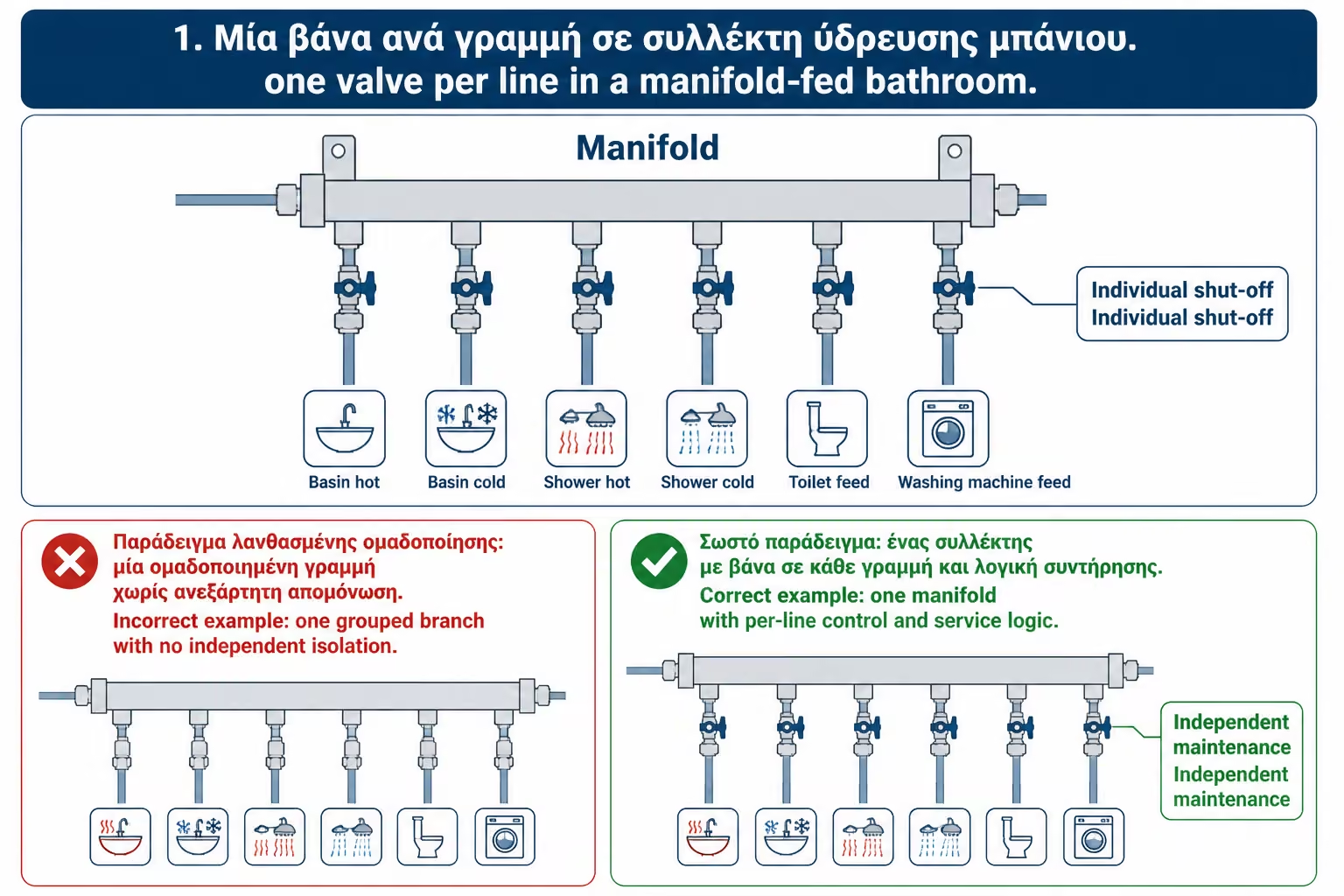
That is a major advantage in manifold installations, where every supply can have its own dedicated line and shut-off point.
Angle stop valves and isolation valves are small components, but they have a direct impact on how practical the bathroom is to use and maintain.
Without them, even a simple breakdown can become an inconvenience.
Without them, a minor bathroom fault can end up cutting water to the kitchen, the second bathroom, the washing machine, the water heater, or even the whole apartment.
If the cistern has its own angle stop valve, you simply close that point until the repair is complete and the rest of the house can keep working.
A simple example shows why that provision matters so much in practice:
If the cistern keeps running and there is no shut-off on its supply, you may have to close the main valve to the whole house for what should have been a small repair.
In a properly designed bathroom, shut-off points are planned from the start. Each key supply should be easy to isolate without disrupting the rest of the home.
At the basin, that usually means two angle stop valves: one for cold water and one for hot.
With that in place, a basin tap, flexible hose, or trap can be serviced without shutting off water to the entire house.
The same applies to the cistern, which often develops minor leaks, float problems, or constant running and should be isolated quickly.
The washing machine valve, meanwhile, should stay accessible and should not disappear behind the appliance where nobody can reach it.
These locations need proper thought, because flexible hoses, small valves, and connection fittings are exactly where leaks often start.
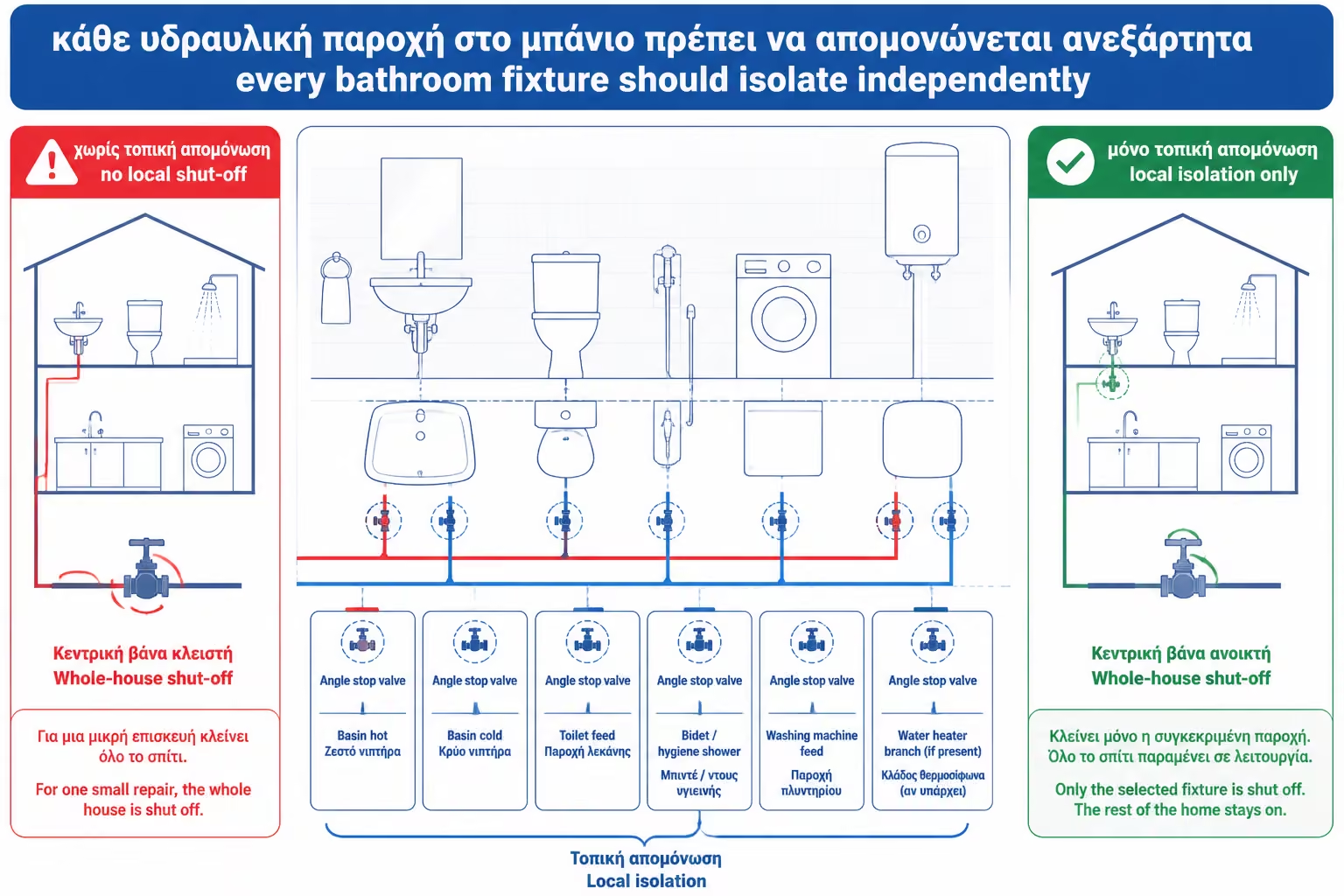
In practice, the main points that should have local shut-offs are the following:
The basin should have two angle stop valves, one for each supply, so maintenance can happen without a whole-house shut-off.
The toilet or cistern should have its own supply shut-off so leaks and faults can be handled immediately.
The washing machine supply needs a separate valve in a practical position so it can be closed quickly if needed.
The supplies to and from the water heater or boiler must have the correct valves, depending on the installation, so that service can be carried out without shutting down the entire network.
If there is a bidet spray or bidet, it is worth adding a dedicated shut-off there as well for safer use and easier maintenance.
The basin is one of the places where angle stop valves are used most often, because it is a frequent maintenance point.
At some point you may need to replace the tap, change a flexible hose or filter, inspect a leak, repair the supply, or isolate the basin temporarily while a small job is being done.
Without shut-off valves here, even a simple tap replacement or minor service job becomes more disruptive than it should be.
The vanity has to be designed so those valves remain genuinely usable, not just theoretically present behind drawers or panels.
At the basin, these are the main points worth checking:
The valves should be easy to reach by hand and should not disappear behind drawers or fixed panels.
They should not be installed in such a tight spot that opening or closing them becomes awkward.
It is worth using proper valves rather than very cheap parts that seize or wear out quickly.
They need to match the flexible hoses, the tap, and the rest of the connection hardware correctly.
If you want to reduce that to one simple rule, keep this in mind:
Basin shut-off valves should be accessible, good quality, and correctly matched to the rest of the connection hardware.
The cistern is one point that should always be easy to isolate, because it is one of the most common sources of minor bathroom faults.
That applies whether you are dealing with an exposed cistern, a concealed cistern, a wall-hung toilet, or a simple floor-mounted toilet.
Cisterns contain mechanisms that sooner or later need adjustment, inspection, or replacement.
Typical problems include water running continuously into the bowl, a sticking float, a cistern that will not refill, a dripping shut-off valve, a leaking flexible hose, or a flushing mechanism that needs replacing.
If there is a shut-off valve, you close only the cistern and keep the rest of the plumbing network available.
If there is none, the central supply must be shut off.
The usual faults that show why this shut-off matters are the following:
Constant running, a stuck float, a leaking hose or valve, and poor refilling performance are exactly the kinds of issues that make a local shut-off indispensable.
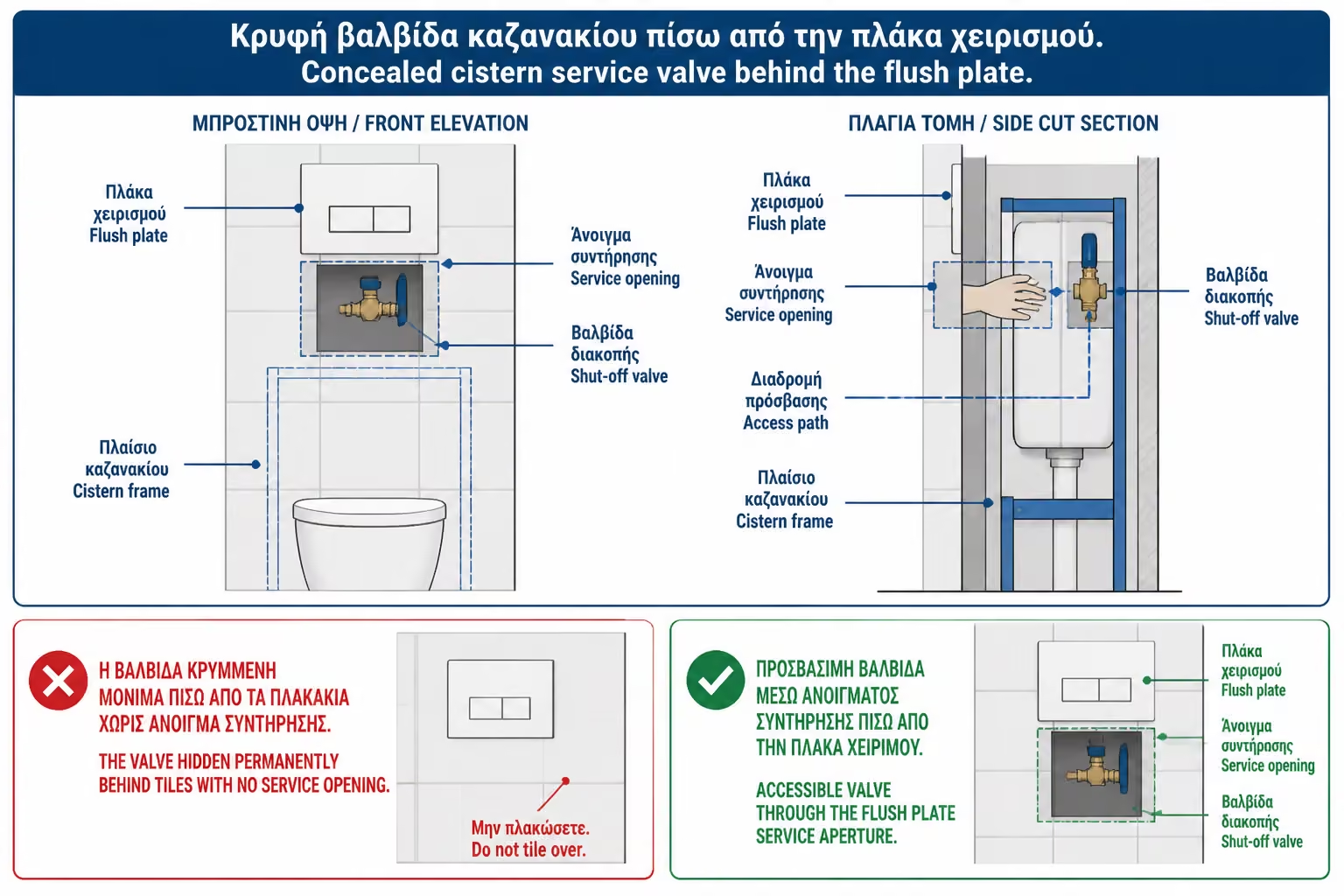
In concealed cisterns, the supply and the valve must remain accessible through the service plate opening.
That is not a detail. It is a basic maintenance requirement.
The flush plate is not only where you press to flush. It is also the only access point for future inspection and repair.
Through that opening, the technician must be able to turn off the water, inspect the mechanism, replace the float, adjust the flush, and swap out parts without destructive work.
If the valve is not accessible, or if the opening has been restricted by poor tiling decisions, any future maintenance becomes much harder than it should be.
The washing machine supply should have its own valve, because the hose and its fittings are exactly the kind of components that need a quick response when something goes wrong.
The mistake is to place the valve so low or so far back that no one can reach it after installing the washing machine.
If the hose leaks, the owner should be able to shut off the water immediately without moving the appliance first.
In practice, that means the valve should be easy to reach, set at the right height, close to the supply point, not buried fully behind the appliance, and planned alongside a safe waste connection.
If you have to move the whole appliance just to close the valve, the location has been planned badly.
The practical rule for the washing machine valve is this:
The washing machine valve should be easy to reach, set at the right height, and positioned so it can actually be used in an emergency.
In some installations, it also makes sense to provide a main shut-off valve for the whole bathroom.
That is useful, but it does not replace local angle stop valves at each fixture.
A main bathroom shut-off isolates the whole room, while local valves isolate each fixture individually. The best arrangement usually combines both, along with valves per line on the manifold where available, so you have flexibility for small repairs as well as larger interventions.
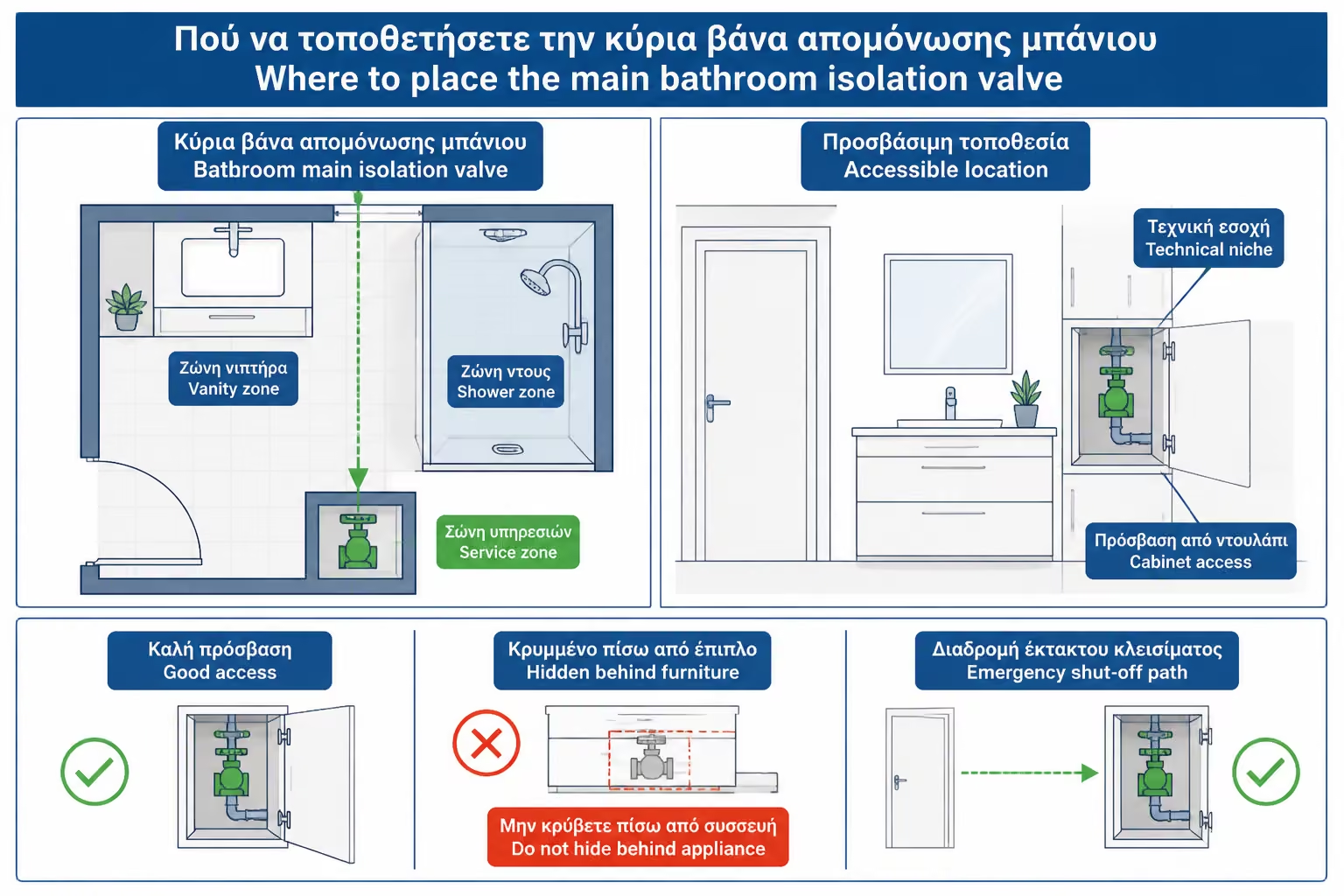
The most balanced arrangement can be summed up like this:
The most practical arrangement combines one bathroom-level shut-off with local valves at every key supply.
In an installation with a manifold or distribution panel, each line can have its own valve and be controlled independently.
That is one of the system's biggest advantages, especially when easy diagnosis and maintenance matter.
For example, the manifold may feed separate lines for the basin hot and cold supplies, the shower hot and cold supplies, the cistern, and the washing machine.
If each line has its own valve, it can be isolated individually without affecting the others.
The result is a cleaner, more organised, and much more maintainable installation.
The main benefit of that approach becomes obvious in the following example:
If there is a problem with the shower, the basin does not need to be shut down as well. If the cistern is running, the whole bathroom does not need to go out of service.
Angle stop valves cost very little compared to the renovation as a whole, but they are not a sensible place to cut quality.
A poor-quality valve can seize up, drip, fail to close fully, break when turned, corrode, damage its own thread, or create a hidden leak behind furniture.
In many homes, these valves sit untouched for years. When the moment comes to use them, a poor-quality or neglected part may fail exactly when it matters most.
If you want one simple buying instruction, ask clearly for this:
Ask for good-quality shut-off valves rather than the cheapest fittings on the market. The price difference is small, but the reliability difference can be significant.
It is not enough for a valve to exist on a drawing or in a quote. It has to be usable in real life.
Very often, valves end up behind drawers, too close to the wall, low behind the washing machine, hidden behind furniture, or trapped in a spot where a hand cannot even fit. At that point, they might as well not exist.
This is something to check before the bathroom is handed over and before furniture and appliances are fixed permanently in place.
The most common places where accessibility gets lost are the following:
If a valve sits behind drawer hardware, it will be awkward to use even for a simple shut-off.
If it is pushed too close to a wall or corner, your hand cannot turn it properly.
Behind a washing machine or heavy cabinet, the valve loses its value exactly when you need it most.
If there is no room for a hand or tool, the shut-off exists only on paper.
All of that can be reduced to one simple rule:
Every shut-off should be turnable by hand without dismantling furniture, moving an appliance, or opening a wall.
In modern bathrooms, many people want to hide supply points and shut-offs as much as possible to keep the room visually clean.
That makes aesthetic sense, but it should never come at the expense of maintenance or safe operation.
The wrong approach is to say "don't show the valves at all," "hide them behind the vanity," "put them wherever they fit," or "they will never be needed." The right approach is for them to stay discreet, not spoil the design, and still be ready for immediate use when something goes wrong.
The good engineering solution is not to eliminate maintenance. It is to integrate it subtly.
The difference between the wrong and the correct approach becomes clear below:
Making the valves disappear completely, even if that means nobody will be able to use them when a fault appears.
Integrating them discreetly into the design while keeping them accessible and quick to use when needed.
If there are no angle stop valves or isolation valves, even small issues turn into unnecessary disruption.
A simple basin tap replacement can suddenly mean shutting off water to the entire house.
A running cistern or a leaking washing machine hose can leave you scrambling to find the main shut-off.
When water is leaking, response time matters, and a local valve makes a real difference.
A few simple examples show how much everyday maintenance changes:
These comparisons show how much easier day-to-day maintenance becomes when local shut-offs are in place.
For a basin tap replacement, you close only the basin supply.
For the same task without local shut-offs, you close water to the whole house.
If the cistern is running, you isolate only that supply.
Without a shut-off on the cistern feed, you turn off the main supply.
In a washing machine leak, you shut the valve immediately and limit the damage.
Without an accessible valve, you lose valuable time looking for the general shut-off.
Shut-off valves deserve a simple periodic check, just like any other component you expect to work on demand.
A valve that is never turned for ten years can easily seize up just when you need it.
Once or twice a year, it is enough to turn the valve gently, check that it closes properly, see whether it drips, inspect the flexible hoses, and make sure there is no moisture under the basin or around the connection point.
There is no need to overdo it. They simply should not be left untouched for years on end.
If a valve is stiff, leaking, or will not close fully, call a plumber.
In practical terms, that routine check comes down to this:
Once or twice a year, a quick check is enough to confirm that everything still moves and shuts off properly.
The cost of angle stop valves and shut-off valves is small compared to the total budget of a bathroom renovation.
As a rough guide, costs are usually in the following range:
| Part / Job | Realistic cost |
|---|---|
| Basic angle stop valve | €5 – €15 |
| Better-quality angle stop valve | €15 – €35+ |
| Washing machine supply valve | €10 – €40+ |
| Small line or manifold valve | €10 – €30+ per line |
| Installation in a new plumbing setup | Usually part of the plumbing package |
| Replacing a valve after completion | €40 – €120+, depending on access |
Planning these valves correctly from the beginning is far more economical than correcting omissions after the bathroom is finished.
The plumbing quote should not be vague on this point, because this is where omissions often get hidden.
A vague line such as "connection of sanitary fixtures" does not always confirm whether the necessary shut-off points are actually included.
For the quote to be genuinely clear, it should spell out at least the following:
The quote should state clearly whether basin angle stop valves and a dedicated cistern shut-off are included.
It should also mention the washing machine valve and any valves on the manifold or distribution panel where relevant.
It should clarify whether the valves are exposed or concealed and whether they will remain accessible after completion.
Flexible hoses, connection materials, and whether these items are included in the price or charged separately should all be spelled out.
Before the pipework is boxed in and before furniture and appliances are installed, ask these questions clearly:
Ask whether the basin will have angle stop valves, whether the cistern will have its own shut-off, and whether the washing machine will have an accessible valve.
Ask whether there will be a main bathroom shut-off and, if there is a manifold, whether each line will have its own valve.
Confirm that the valves will remain accessible after the vanity is installed and ask whether they can be replaced without dismantling furniture.
Ask what quality of valves will be installed, how discreet they will look, and whether they are included clearly in the quote.
If the answer is simply "you'll shut off the main valve," it is worth pushing for a better solution before the installation is completed.
Use the checklist below to confirm whether the installation covers the key shut-off points:
| Question | Yes / No |
|---|---|
| Does the basin have a hot water shut-off? | Yes / No |
| Does the basin have a cold water shut-off? | Yes / No |
| Does the cistern have its own shut-off? | Yes / No |
| Does the washing machine have an accessible valve? | Yes / No |
| Is there a central valve for the bathroom? | Yes / No |
| If there is a manifold, does it have valves per line? | Yes / No |
| Are the shut-off valves easily accessible? | Yes / No |
| Are they clear of drawers and appliances? | Yes / No |
| Are the valves good quality? | Yes / No |
| Are they tested to close properly? | Yes / No |
| Are they listed in the quote? | Yes / No |
If most of the answers are "no," the installation will almost certainly be harder to maintain in the future.
A homeowner renovates a bathroom. A new vanity with drawers, a new basin tap, and a new cistern are installed, but the angle stop valves end up behind the drawer where they cannot be turned easily.
A year later, one flexible hose starts leaking. The owner tries to close the valves, cannot reach them, and ends up shutting off the house main and calling a plumber urgently.
The fault itself was minor. The inconvenience came from the valves being planned in the wrong place.
In another renovation, the plumber plans from the start for two angle stop valves under the basin, a shut-off for the cistern, an accessible washing machine valve, and valves per line in the distribution panel.
The vanity is chosen so the valves remain genuinely accessible. Before handover, every valve is tested to confirm it closes properly.
Later on, if a hose or tap fails, the repair can be done quickly without shutting off water to the whole house.
That is what sound technical planning looks like.
Angle stop valves and isolation valves cost little, but they make a huge difference in maintenance. Ask for an independent shut-off at every key supply, from the basin and cistern to the washing machine and any auxiliary point. Most importantly, do not stop at having them shown on paper: they still need to be accessible after furniture, drawers, and appliances are installed. A well-designed bathroom does not pretend maintenance does not exist. It integrates it discreetly and keeps it available when needed.
Isolation valves and angle stop valves are among the most useful details in a well-planned bathroom plumbing installation.
They allow each supply to be isolated individually so maintenance, repair, or replacement can happen without shutting off water to the whole house.
Above all, they need to be accessible, correctly positioned, and good quality.
In final summary, these are the main points that should remain in place:
These valves should be planned consistently at the basin, cistern, washing machine, and any other point that may need quick isolation.
Where relevant, the water heater, boiler, hygienic shower, and other auxiliary supplies also need the right shut-off strategy.
In manifold or distribution-panel installations, per-line valves make the whole network clearer and easier to maintain.
Where practical, a bathroom-level shut-off adds another layer of control without replacing local valves.
They may not stand out in the photographs, but they stand out immediately in everyday use and future maintenance.
A bathroom that is easy to repair is ultimately better designed than one that only looks good.
Return to category.
Go to categoryReturn to the central guide.
Go to guide