Forceful flow
Water comes out too aggressively when you open a tap.
Low water pressure is easy to notice: the shower feels weak, the basin tap runs poorly, and everyday use becomes frustrating.
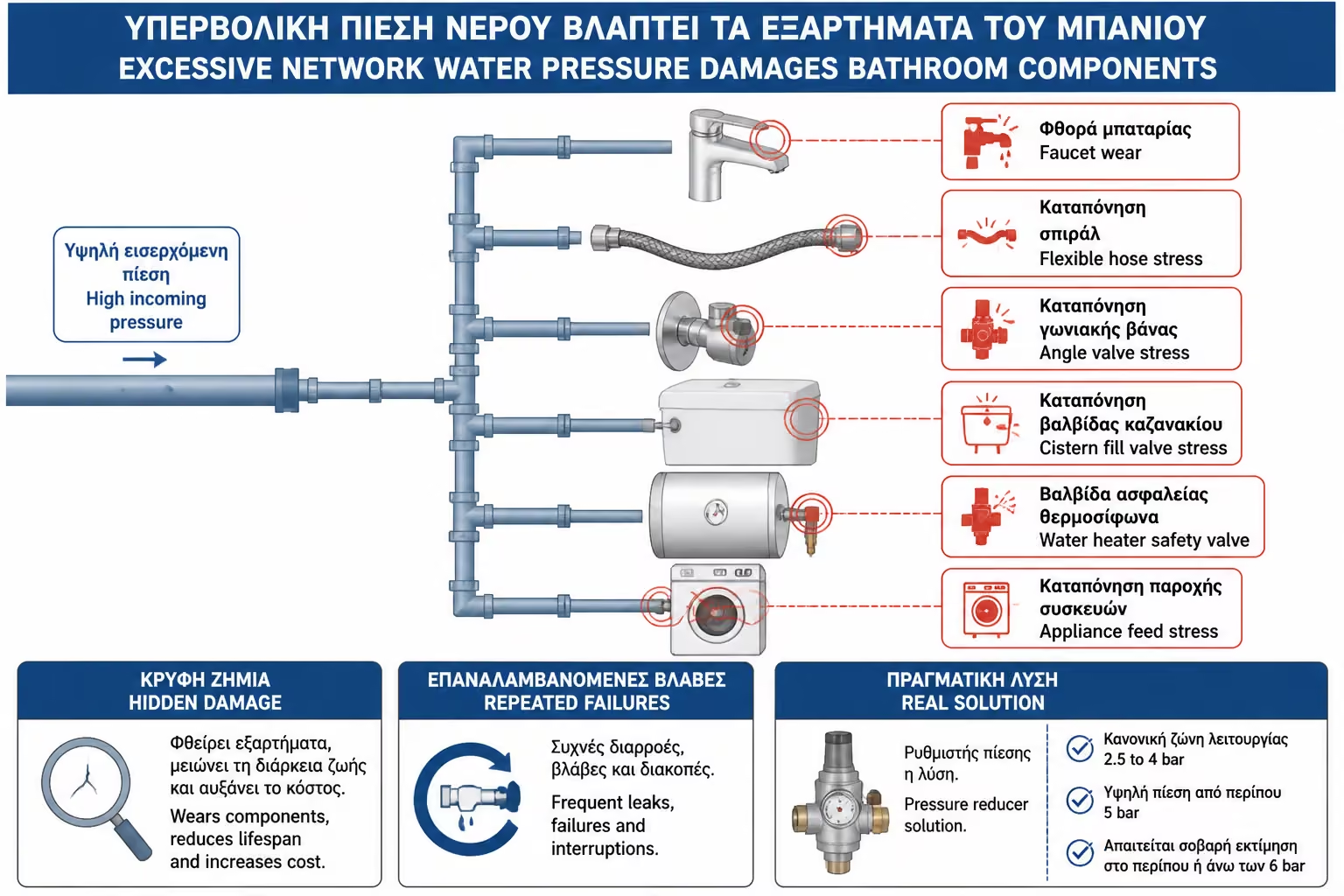
Excessive pressure is more deceptive. At first it can feel like an advantage because the water comes out forcefully and fixtures fill quickly. In practice, though, constant overpressure wears out components, shortens the life of the installation, and increases the risk of leaks.
It can affect taps, flexible hoses, angle valves, cisterns, fill valves, water heaters, safety valves, concealed cisterns, press fittings, pipework, and appliances such as washing machines and dishwashers.
If the mains pressure is too high, the solution is not to keep replacing fill valves, taps, and hoses. The first step is to measure the pressure and, where needed, install a pressure reducer on the main supply.
Water pressure is the force with which water moves through the plumbing network.
In a home, you want enough pressure for taps, the shower, the water heater, and appliances to work properly, but not so much that the entire installation is under strain.
When the pressure is too high, every component works harder than it should. Seals, mechanisms, flexible hoses, and valves are all subjected to unnecessary stress.
The first warning signs usually show up like this:
Water comes out too aggressively when you open a tap.
Taps may buzz, whistle, or make pressure-related sounds.
Flexible hoses wear out and fail more often than they should.
The toilet cistern begins to show recurring fill or leak problems.
The water heater safety valve releases water more often than expected.
The network starts to sound harsh or unstable during operation.
Minor leaks appear again and again at stressed points.
Filters and internal mechanisms wear out earlier than expected.
Strong water flow does not automatically mean the installation is working well. It may simply mean the system is being overpressurized.
The right pressure depends on the installation, the building, and the specifications of the components.
In many homes, a practical operating range is roughly 2.5 to 4 bar. In some cases it may be slightly lower or higher, depending on the building, the floor level, the network, and the equipment.
Pressure above about 5 bar starts to be considered high for many residential installations and should be checked.
Pressure approaching or exceeding 6 bar is often a sign that the installation needs serious evaluation and, quite possibly, a pressure reducer.
The feeling of “strong water” is not enough to draw a safe conclusion.
The basic rule is this:
You do not judge this by eye. Pressure must be measured with a gauge.
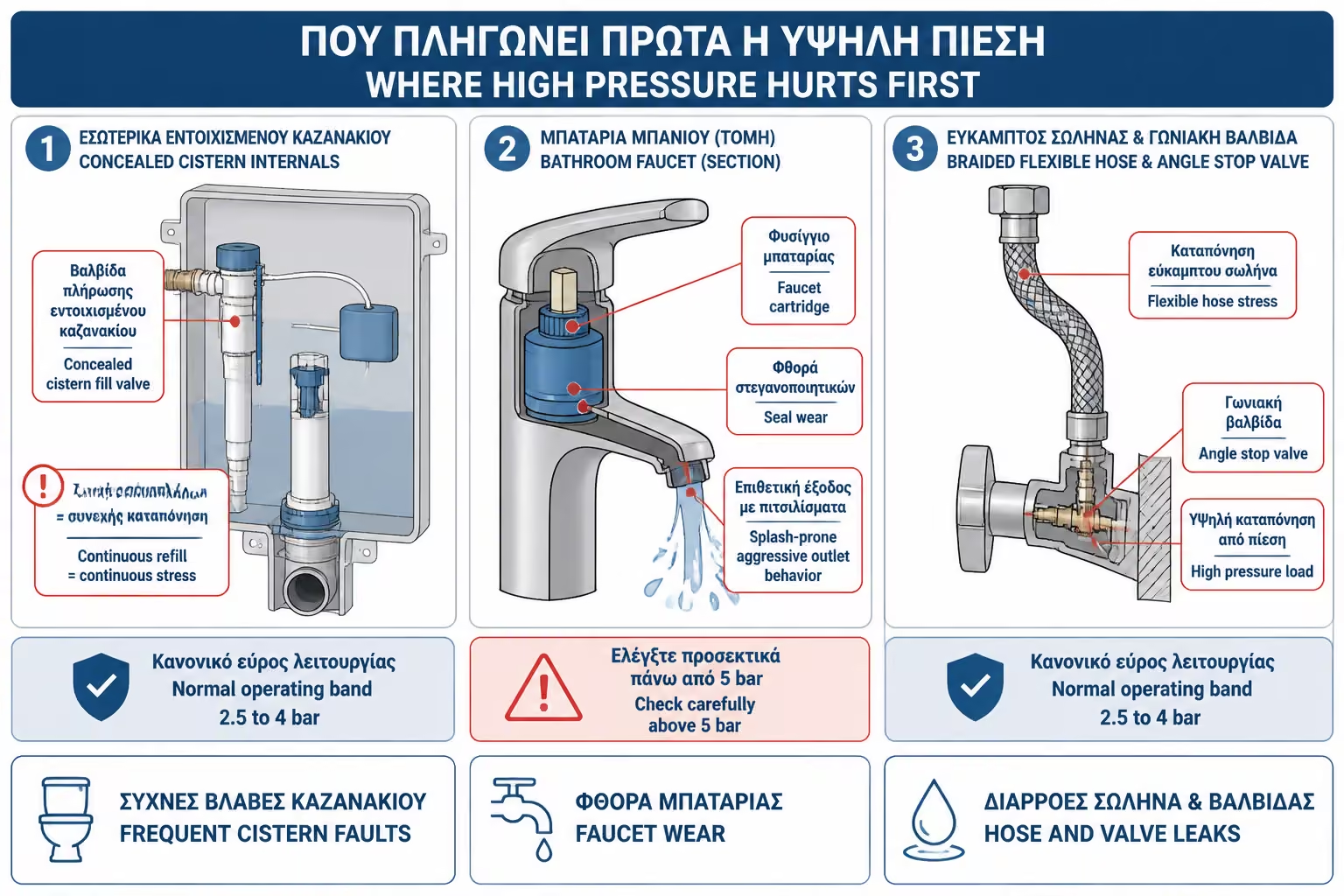
Bathroom taps contain internal mechanisms, ceramic cartridges, seals, filters, and other parts with specific operating limits.
When the pressure is too high, the tap is under more stress and wear appears sooner.
In practice, the most common problems are the following:
The cartridge loses smooth operation sooner under constant stress.
Excess pressure increases the chance of leakage around the control.
Opening and closing can feel heavier or more abrupt than normal.
The tap may buzz, whistle, or sound rough when operating.
Water comes out too aggressively for comfortable control.
The stronger discharge makes normal use messier.
Internal and external components are put under extra mechanical strain.
Filters clog or deteriorate more quickly than expected.
The tap as a whole needs replacement sooner.
In thermostatic mixers, excessive pressure or a large pressure imbalance between hot and cold water can create even more problems with temperature stability.
The practical takeaway from that check is this:
If a tap keeps failing, do not look only at product quality. Check the pressure conditions it is working under.
The cistern is one of the first places where excessive pressure tends to show up.
The fill mechanism, or float valve, has to control incoming water and stop it when the tank is full.
When the pressure is too high, that mechanism is under strain and proper adjustment becomes harder.
The most common cistern symptoms are the following:
The cistern fills more violently and becomes much louder.
The fill valve loses reliability and needs replacement more often.
Water may keep running into the pan instead of stopping cleanly.
The inflow itself becomes more aggressive and harder on the mechanism.
Minor but persistent leaks start appearing around stressed parts.
The pressure can produce sharp or irritating operating noise.
In concealed systems, the same issue costs more in time and access.
If you keep replacing the fill valve and the problem returns, the part itself may not be the real issue. The pressure may be.
In concealed cisterns, reliable operation matters even more because access is only through the flush plate.
If the pressure is excessive, it can lead to:
The system refills with louder and harsher operation.
Small failures keep returning instead of being solved once.
The fill valve ages faster under constant overpressure.
Correct setup becomes more sensitive and less stable.
Persistent leakage becomes more likely.
The system asks for intervention sooner and at greater inconvenience.
Because the cistern is hidden inside the wall, you do not want the mechanism to be under unnecessary strain.
In high-pressure installations, a pressure reducer also protects these harder-to-access systems.
Flexible connection hoses and angle valves are small components, but they live under network pressure every day.
With excessive pressure, the risk increases for:
Flexible connectors are often the first weak point to fail.
The hose body wears out and loses structural strength.
Seals are forced to work harder than necessary.
The local shut-off point can start dripping or behaving inconsistently.
Opening and closing the water line may trigger pressure noise or vibration.
The downstream tap or fixture receives a harsher supply than it should.
In many cases, small leaks begin at these inexpensive parts. But the real cause may be the high pressure stressing them all the time.
A water heater has a safety valve to protect against overpressure. That valve may drip when pressure rises or when it activates as part of its protective function.
A few drops under certain conditions can be normal, especially when the water heats up and expands. But if the valve drips often or continuously, it should be checked.
Possible causes include:
Constant overpressure loads the valve and forces it to relieve water more often than it should.
As water heats up, it expands and raises the pressure inside the system.
Once its internal parts are stressed or worn, it may no longer seal properly after releasing pressure.
A valve with unsuitable specifications may activate under the wrong conditions or protect the system poorly.
Where one is necessary, the lack of an expansion vessel leaves the safety valve to absorb all the pressure rise.
A poor installation detail or weak connection point can make it look like the valve alone is at fault.
If it drips continuously, do not just “stop the leak.” Check the underlying cause.
A safety valve must never be blocked or bypassed. It is a protective device, not an inconvenience that should simply be silenced.
Excessive pressure does not affect only the bathroom.
It can also affect appliances such as:
Their valves and supply connections are put under more strain.
Stable water feed matters for long-term reliable operation.
Filtration systems do not tolerate unnecessary pressure well.
Their delicate supply parts are especially sensitive to overpressure.
The domestic hot-water system also feels the effects of excessive pressure.
Valves, fittings, and protective components are all affected.
Appliance solenoid valves do not tolerate high pressure well. They may wear out faster or start making noise.
If solenoid valves or appliance hoses fail often in the house, it is worth measuring the pressure before replacing the same parts again.
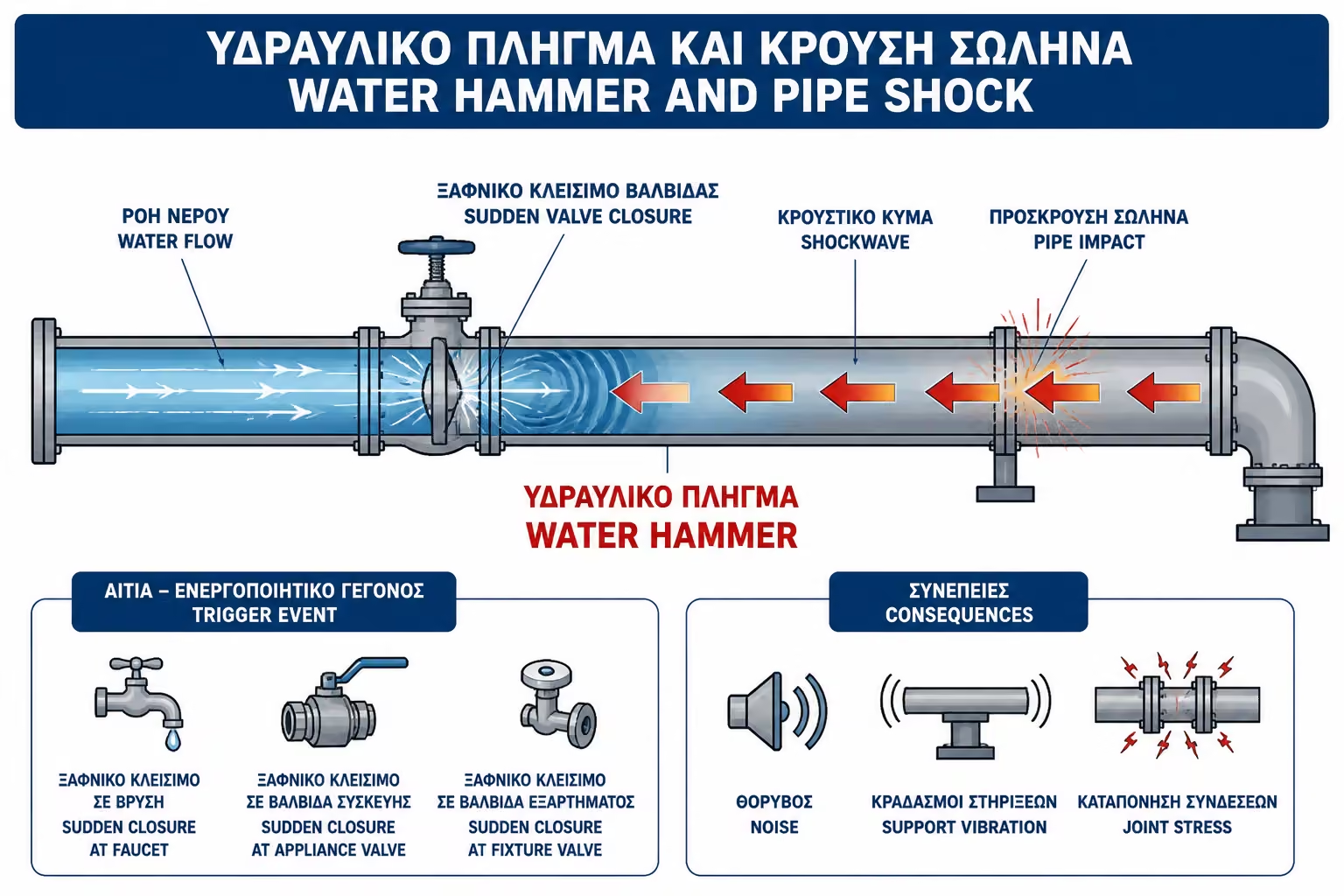
Excessive pressure is often linked with water hammer.
Water hammer is the impact sound you hear when a supply closes suddenly and the flow of water stops abruptly.
High pressure makes the effect stronger and increases mechanical stress throughout the network.
When that happens, you may notice the following:
The sound appears as a hollow impact inside the network.
The vibration is strong enough to be felt in the structure around it.
The system may shake when a line shuts off abruptly.
The sound appears when a tap is shut quickly.
A similar impact may be heard when the machine stops taking water.
Repeated pressure shocks weaken connection points over time.
Pipe brackets and supports are forced to absorb extra movement.
Terminal fixtures lose durability more quickly under repeated shock.
The issue is not just audible. It is a real mechanical load on the system.
A pressure reducer can help, but in some cases other measures are also needed, such as anti-vibration support or dedicated shock-absorbing components.
Pressure is measured with a gauge.
A plumber can connect it at different points in the network, as long as the chosen point gives a reliable picture of the supply conditions.
An easy-access point for an initial reading.
Useful when the main supply is not immediately reachable.
Can show local conditions at a specific branch of the system.
The exact location depends on access and diagnostic purpose.
This allows comparison between incoming and regulated pressure.
The clearest overall picture of what the installation is receiving.
Measured when no water is running and critical for hidden stress.
Measured while water is being used to show real operating behavior.
The reason this measurement matters is the following:
Pressure may look normal while water is running, yet climb too high when every outlet is shut.
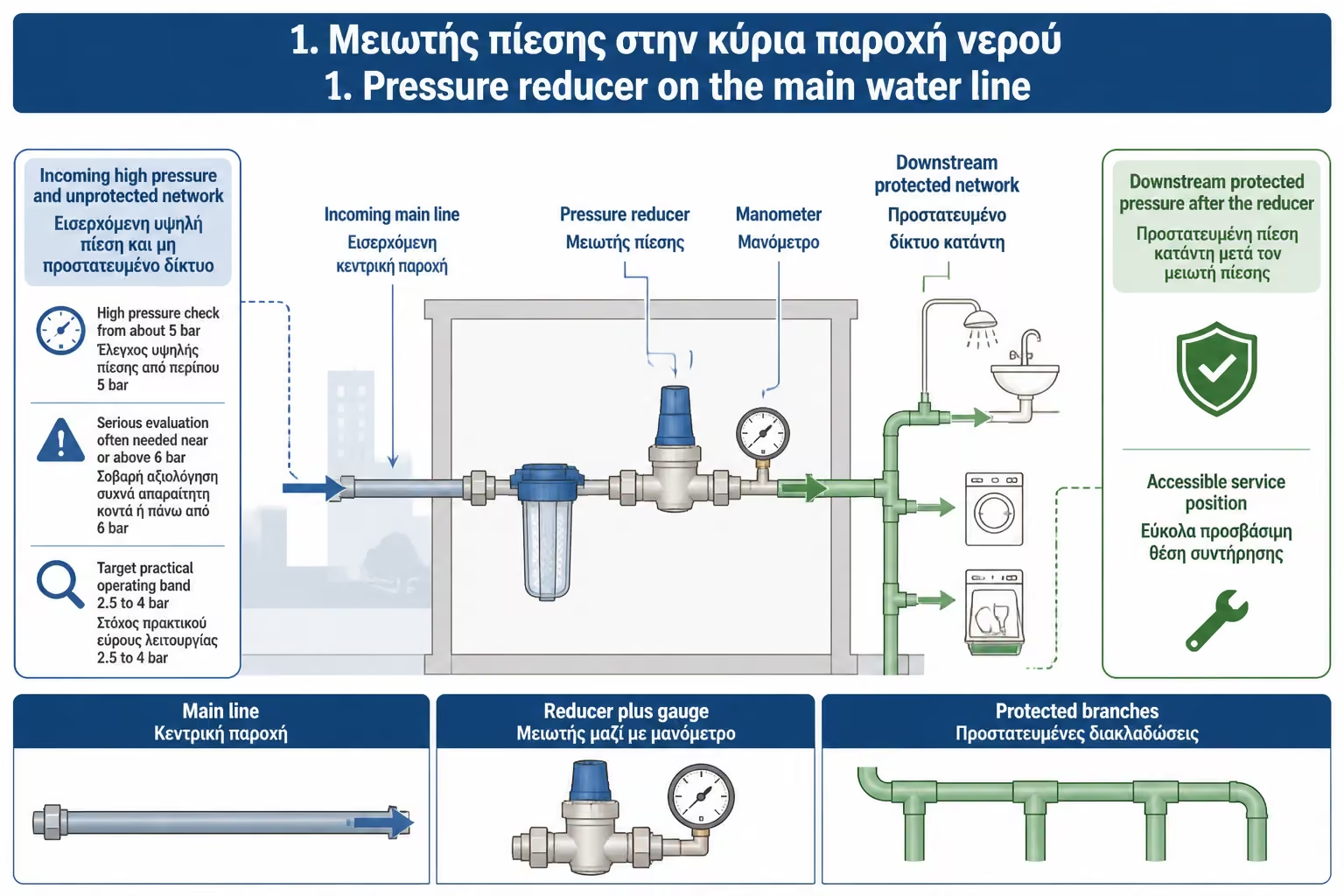
A pressure reducer is installed on the main supply and regulates the pressure that enters the home’s internal plumbing network.
It is not a comfort accessory. It is a protective measure when the installation is receiving more pressure than it should.
The basic sign that regulation may be needed.
Repeated replacement does not solve the underlying cause.
The safety valve may be reacting to excessive supply pressure.
Fill-valve failures often point back to pressure conditions.
The system starts to operate more harshly than it should.
Pressure spikes and abrupt closure effects become part of daily use.
Lower floors often receive higher pressure in the same building.
A badly adjusted booster can push the whole system beyond safe limits.
Local pressure instability makes regulation much more valuable.
In many cases, a pressure reducer is not a luxury. It is basic protection for the installation.
It is usually installed on the apartment or house main supply, before water is distributed through the internal network.
The right location is not just about easy installation. It also determines whether the reducer can be checked and serviced properly later on.
A proper installation point should cover the following:
The reducer should be reachable without opening walls.
That way the internal network is protected from the first possible point.
All downstream lines should receive the regulated pressure.
It should not sit exposed to frost or damaging external conditions.
The installation should allow visual and practical checks.
A visible reading makes setup and diagnosis much easier.
Where needed, the filter protects the reducer itself.
It should not be hidden inside a wall with no access. A reducer is a serviceable component that may need adjustment, cleaning, or replacement in the future.
A proper pressure reducer should come with a gauge or at least allow the pressure to be checked easily.
The gauge shows the pressure after adjustment and turns the setup into a measured result instead of a rough estimate.
The plumber can set a real target instead of guessing.
You can confirm whether the reducer is doing its job.
Pressure changes become visible instead of speculative.
Later troubleshooting becomes faster and more evidence-based.
Without measurement, the adjustment is only an approximation.
Yes. In many areas, mains pressure changes depending on the time of day.
That is why a single measurement may not show the full picture.
Pressure often rises when overall demand in the network drops.
Static pressure may climb well above what you see in daytime use.
Some properties naturally receive more pressure than higher ones.
Local topography can strongly affect pressure behavior.
Some supply zones fluctuate enough that one reading is not representative.
If there are symptoms of overpressure, it may be necessary to check at different times or to use a gauge that records peak pressure.
In an apartment building, the issue may concern just one apartment or the whole building. You cannot assume the cause is identical in every case.
The issue may be limited to a local branch supply.
Pressure behavior can affect some levels differently from others.
Then the investigation must start from the central network.
A poorly set booster can change pressure for everyone.
The incoming feed itself may already be too high.
What once made sense may now be creating avoidable problems.
Lower floors often receive higher pressure than upper floors, depending on how the system is arranged.
If the problem is shared, it should be discussed with the building manager and the central network should be checked. If the problem concerns only one apartment, a local pressure reducer on that apartment’s supply may be needed.
In older plumbing networks, excessive pressure is even more dangerous.
Old fittings, old pipework, old flexible hoses, and old joints may already have wear or hidden weaknesses.
Existing weak points open up more easily under high pressure.
An aging network loses tolerance for extra pressure.
Older joints and fittings may not tolerate repeated stress peaks.
Old seals are far less forgiving when overpressure is present.
Already worn fixtures deteriorate even faster.
Older fill mechanisms struggle more under high pressure.
If you are renovating a bathroom in an older apartment, it is worth measuring the pressure before connecting new fittings to an old network.
A pressure reducer also protects the water heater, but it is not enough to look at that component in isolation. When water heats up, it expands and, in installations with a non-return valve or a reducer, pressure can build up inside the closed part of the system.
In those cases, the installation may also need an additional measure, such as a suitable expansion vessel, depending on the layout of the system. That decision should be made by a plumber, because fitting a reducer alone does not automatically solve everything.
In many installations, it is useful to have a filter before the pressure reducer.
The filter is not a small detail. It protects the reducer from debris carried by the network.
Loose particles can interfere with the reducer’s internals.
Deposits wear the mechanism and destabilize the setting.
Even small debris can affect smooth regulation.
The network can bring materials that should never reach the reducer.
If the reducer fills with dirt, it may stop regulating correctly or seize. The filter should also be accessible for cleaning.
So a proper installation is not just “fit a reducer.” It also means the right location, a filter where needed, and proper maintenance access.
The cost depends on the size and quality of the reducer, access to the main supply, and whether a filter, gauge, or pipework changes are needed.
| Work / Material | Realistic Cost |
|---|---|
| Simple pressure measurement by a plumber | €40 – €100+ |
| Basic pressure reducer | €40 – €100+ |
| Higher-quality adjustable reducer | €80 – €180+ |
| Gauge / control fittings | €10 – €50+ |
| Filter before the reducer | €30 – €120+ |
| Installation labor | €80 – €250+, depending on access |
| Total for a typical installation | €150 – €450+ |
These figures are only indicative. If the main supply is difficult to access or the pipework needs modification, the cost will increase.
The most common mistakes in cases like this are the following:
It may be a sign of overpressure rather than a sign of a healthy installation.
If the pressure is too high, the new part may fail again very quickly.
That is dangerous. The valve is there to protect the system.
Then no one really knows what pressure it was set to.
At some point it will need maintenance or replacement.
If there is a booster with the wrong setting, it has to be corrected.
Pressure often rises when there is little or no consumption.
Before deciding, ask specific questions. The right questions reveal whether a real diagnosis is being made or only a quick guess.
Ask for a real value, not a general impression.
The answer should come from measurement, not intuition.
Static pressure is often where the real problem hides.
The recommendation should follow symptoms and measurements.
Location affects both performance and long-term serviceability.
Do not accept a solution that hides the equipment in the wall.
A visible reading helps both setup and future checks.
The filter may be crucial for reducer lifespan.
The full installation should be assessed together with the reducer.
That changes the diagnosis for the whole property.
The job is not finished when the reducer is merely connected.
Future access should be planned from the start.
If a plumber recommends a reducer without first measuring the pressure, ask for the pressure to be checked before any decision is made.
Use the short checklist below to organize the main points:
| Question | Yes / No |
|---|---|
| Does the water come out excessively forcefully? | Yes / No |
| Are there frequent tap failures? | Yes / No |
| Does the cistern fill valve fail often? | Yes / No |
| Does the water heater safety valve drip? | Yes / No |
| Do you hear knocking in the pipes? | Yes / No |
| Are there frequent small leaks? | Yes / No |
| Has the pressure been measured with a gauge? | Yes / No |
| Does the pressure often exceed 5 bar? | Yes / No |
| Is there a pressure reducer? | Yes / No |
| Is the reducer accessible? | Yes / No |
| Is there a gauge or another way to check the setting? | Yes / No |
| Is there a filter before the reducer where needed? | Yes / No |
If you answer “yes” to several symptoms and there is no reducer, the installation should be checked by a plumber.
A homeowner keeps replacing the cistern fill valve every few months, while the basin tap has started dripping and the water heater valve frequently releases water. Each time, only the failed part is replaced, but no one ever measures the pressure.
When the pressure is finally checked, it turns out to be very high. The real issue was not poor quality across every component, but the fact that all of them were operating under constant overpressure. After a pressure reducer is installed, the failures drop significantly.
In another home, the owner notices very strong flow, noisy taps, and knocking sounds when the washing machine shuts off. The plumber measures the pressure at the main supply and finds that it is high, especially during low-consumption hours.
The fix is handled properly: a pressure reducer is installed in an accessible location together with a gauge and a filter, and the pressure is adjusted to a safe level for that installation. The result is quieter operation, less noise, and better protection for all the components.
Excessive water pressure is not a sign of a good installation. It is often a cause of premature wear.
If fill valves, taps, or flexible hoses keep failing, or if the water heater safety valve drips, ask for a pressure measurement first. Do not keep replacing parts without checking the root cause.
The pressure reducer should be installed on the main supply, in an accessible location, ideally with a gauge for checking the setting. It should never be hidden inside a wall.
The right pressure protects the entire network: taps, cisterns, water heaters, valves, flexible hoses, and appliances.
Excessive water pressure may look like an advantage at first, but in practice it puts the whole installation under strain.
It is not enough to keep changing the parts that fail. You need to find out why they are failing and address the underlying cause.
In summary, these are the main points to keep in mind:
Internal mechanisms and seals wear out earlier than they should.
The cistern stops working consistently and reliably.
Constant pressure amplifies small weaknesses in the mechanism.
Connection hoses are among the first parts to suffer.
The water heater valve reacts more often to excessive pressure.
The plumbing system no longer operates calmly or smoothly.
The pressure shocks stress the network beyond the noise you hear.
Overpressure exposes weak points in fittings and connections.
The same pressure problem spreads beyond the bathroom to the rest of the home.
The right response starts with measuring the pressure. If the pressure is high, a pressure reducer on the main supply can protect the entire network.
In a sound plumbing installation, water should have enough pressure for comfortable use, but not so much that it damages the network itself.
Return to category.
Go to categoryReturn to the central guide.
Go to guide