Demolition and opening-up
Breaking tiles and opening a wall or floor just to reach the faulty point.
Choosing the water-supply piping is one of the most critical decisions in a bathroom renovation. It is invisible in the finished result and has little direct impact on aesthetics, but it determines whether the bathroom will operate properly and remain leak-free for many years.
The homeowner sees the tiles, the sanitary ware, the vanity and the shower enclosure. What they do not see is the piping behind the wall. If the wrong material is chosen, if joints are handled badly or if the installation is careless, the problem can return later as leaks, damp patches, low pressure, noise, limescale issues or even the need to reopen the wall.
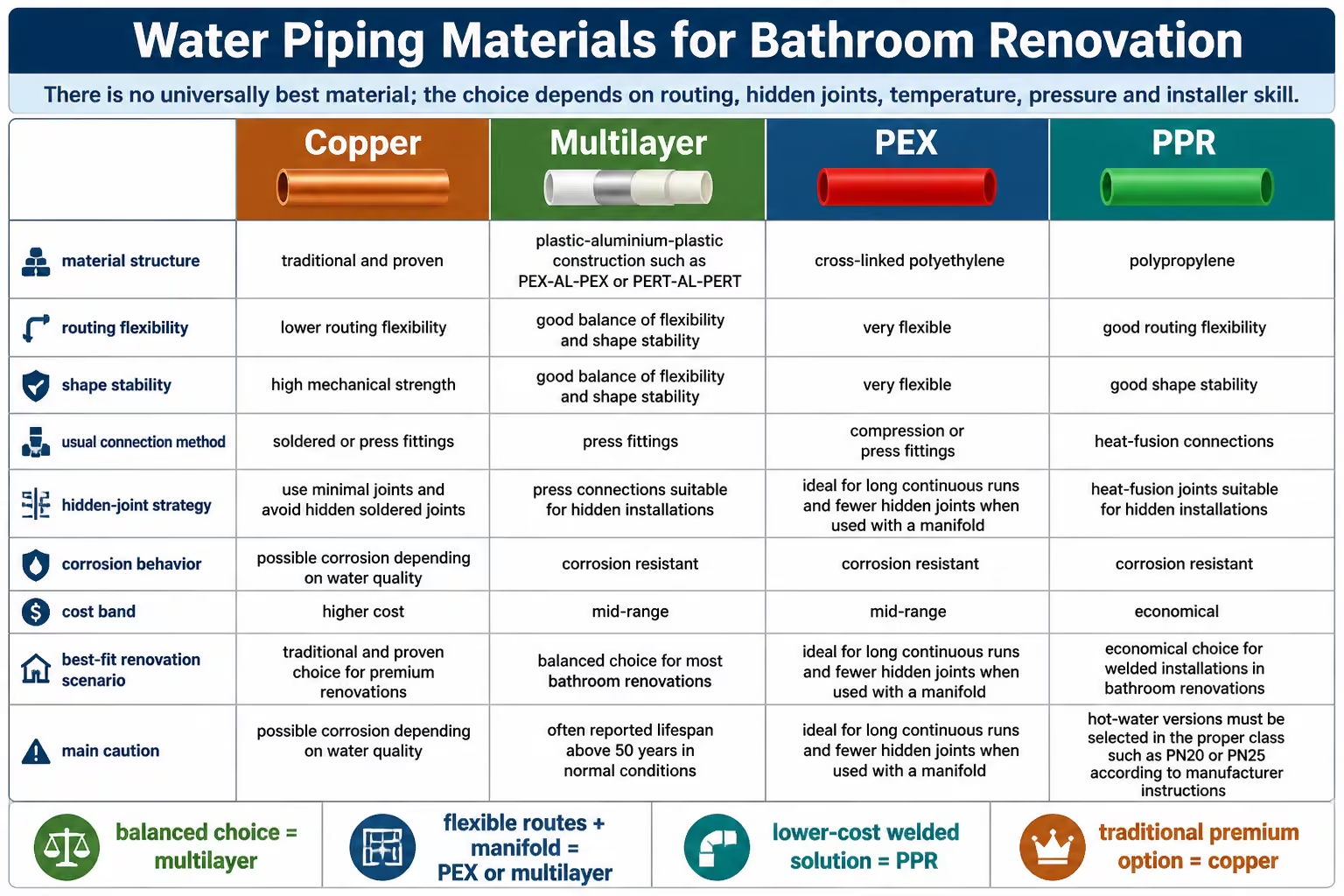
In the Greek market, four options dominate bathroom water-supply work: copper, multilayer pipe, PEX and PPR polypropylene.
Each solution has advantages and trade-offs. The right choice is not simply about asking "which material is best?" but about matching the project, the network pressure, the operating temperatures, the quality of the system, the connection method and the plumber's experience.
In a bathroom renovation, the pipes are among the elements that disappear behind plaster, tiles and furniture. Once the project is complete, they are difficult to inspect and expensive to alter.
If a failure appears, replacing one fitting is rarely enough. You may also need:
Breaking tiles and opening a wall or floor just to reach the faulty point.
Finding the route of the leak, diagnosing the issue and repeating plumbing work.
Rebuilding plaster, replacing tiles and repainting to restore the bathroom.
Dampness or damage in neighboring areas, which often costs more than the original fitting.
That is why the water-supply system should never be chosen on price alone. The cheapest option is not automatically bad, but it has to be selected correctly and installed correctly.
Installation quality matters just as much as pipe quality.
Before comparing the options, it helps to define what each one actually is.
Copper is the most traditional and proven water supply material. It has been used for decades and has a long life when properly installed and when water does not cause corrosion problems. A lifespan of around 50–70 years in the right conditions is often reported.
Multilayer pipe, often of the PEX-AL-PEX or PERT-AL-PERT type, combines plastic layers with an intermediate aluminium core. It offers flexibility, shape stability and reliable behavior under pressure and temperature changes. Good systems are often cited as a solution with a service life of more than 50 years under normal operating conditions, depending on the system and installation.
PEX is crosslinked polyethylene. It is flexible, practical and widely used in water supply and heating installations. Its main advantage is the ease of routing and the possibility of installation with fewer joints inside the walls, when properly designed.
PPR is polypropylene and is usually heat bonded. It is economical, corrosion resistant and widely used in water supply installations. For hot water, appropriate pipe pressures/series are used, such as PN20 or PN25 depending on the application, temperature and manufacturer's specifications.
The question "which material is better?" is too broad to be useful on its own.
Better questions are:
What kind of building this is and whether the work is a renovation or new construction.
Whether the pipes will pass through walls, floors or other hidden routes.
Whether a manifold will be used and how many hidden joints or branches will remain.
The actual mains pressure, domestic hot-water demand and thermal loads.
Whether the system must work with a solar water heater or another hot-water source.
How easy it will be to inspect, service or repair the network later.
Which system the plumber genuinely knows how to install correctly.
Whether branded fittings, technical support and spare parts are available.
A premium material installed badly is worse than a more affordable material installed correctly.
Copper is still seen by many professionals as the classic water-supply solution. It has a long track record, strong mechanical performance and excellent temperature resistance.
Long service life, excellent temperature resistance, strong mechanical behavior and decades of proven use in water-supply installations.
Higher material and labor cost, more demanding connection work, more rigidity than PEX or multilayer pipe and sensitivity to certain water chemistries.
Copper makes sense when we want a very proven solution, when there is an experienced craftsman and when cost is not the main limitation. It is also a good choice in special cases where temperature resistance or mechanical robustness is required.
Copper needs extra attention when the budget is limited, when the water in the area can create corrosion problems or when the installation requires many routes and many joints inside closed places.
Multilayer pipe is very common in modern renovations because it combines flexibility with shape stability. The aluminium layer helps the pipe hold its form and reduces expansion compared with simpler plastic systems.
The material is good when the system is complete: pipe, fittings, tools and installation technique must match.
Good flexibility, shape stability, reliable hot- and cold-water performance, fast installation and usually a more balanced cost than copper.
Performance depends heavily on fitting quality, proper pressing, the right tools and avoiding rough connections in inaccessible spots.
For a typical bathroom renovation in Greece, multilayer pipe is often one of the most balanced options. It offers good practicality, reasonable cost and quick installation, as long as the plumber uses a reliable system and correct fittings.
It calls for attention when cheap components are used, when connections are made haphazardly, or when there are many hidden joints inside the wall.
PEX is highly flexible and very practical. It is widely used where the goal is long continuous runs with fewer joints.
Excellent flexibility, quick installation, fewer joints when used with a manifold and strong corrosion resistance for many modern layouts.
It requires a certified system, correct fittings, care with temperature and pressure limits, protection from UV exposure where relevant and an installer who knows the system well.
PEX makes sense when we want flexible installation, when there is a collector and when we can avoid hidden joints. It is particularly useful in installations where each supply can come from a collector with a continuous pipe.
Care should be taken when entering high temperature installations without specification control, when there are many joints inside the wall, or when the system is not complete and branded.
PPR is also widely used, mainly because it is economical, corrosion-resistant and installed through heat fusion. The pipe and fitting are joined with a dedicated tool that heats both surfaces before connection.
Low cost, corrosion resistance, good chemical durability and heat-fused joints without metal fittings at the same point.
More rigid than PEX or multilayer pipe, more prone to expansion and highly dependent on correct heat fusion and the right pipe class for hot-water duty.
PPR makes sense when we want an economical and durable solution, when the plumber has experience with the system and when the passages are relatively clear.
It needs attention in very narrow bathrooms, in many corners, in hidden joints without control and in hot water where the correct class of pipe must be selected. For hot water, the PN20 or PN25 option may be more suitable than lower ratings, depending on the system and manufacturer's instructions.
| Material | Resistance to time | Cost | Ease of installation | Main advantage | Main attention |
|---|---|---|---|---|---|
| Copper | Very good | High | Moderate | Tested and durable | Cost and potential corrosion depending on water |
| Multi-layered | Very good with proper system | Medium | Good | Balance of cost, flexibility and durability | Quality fittings and correct pressing |
| PEX | Good to very good | Medium/lower | Very good | Flexibility and few joints | Correct system, temperatures, UV |
| PPR | Good to very good | Low/medium | Moderate | Economical and corrosion resistant | Heat sealing, expansions, correct pipe class |
Lifetime does not depend only on the material.
It depends on:
Pipe quality, fitting quality and overall compatibility of the system components.
Correct installation, proper support and clean connection work without shortcuts.
Mains pressure, water temperature and the local water quality.
Avoiding hidden joints, protecting the lines from mechanical stress and insulating them correctly.
Badly installed copper can fail. Multilayer pipe with poor fittings can fail. PPR with careless heat fusion can fail. PEX with the wrong fittings or careless handling can fail as well.
The right question is not only "which pipe should we use?" but "which complete system will be installed, and by which technician?"
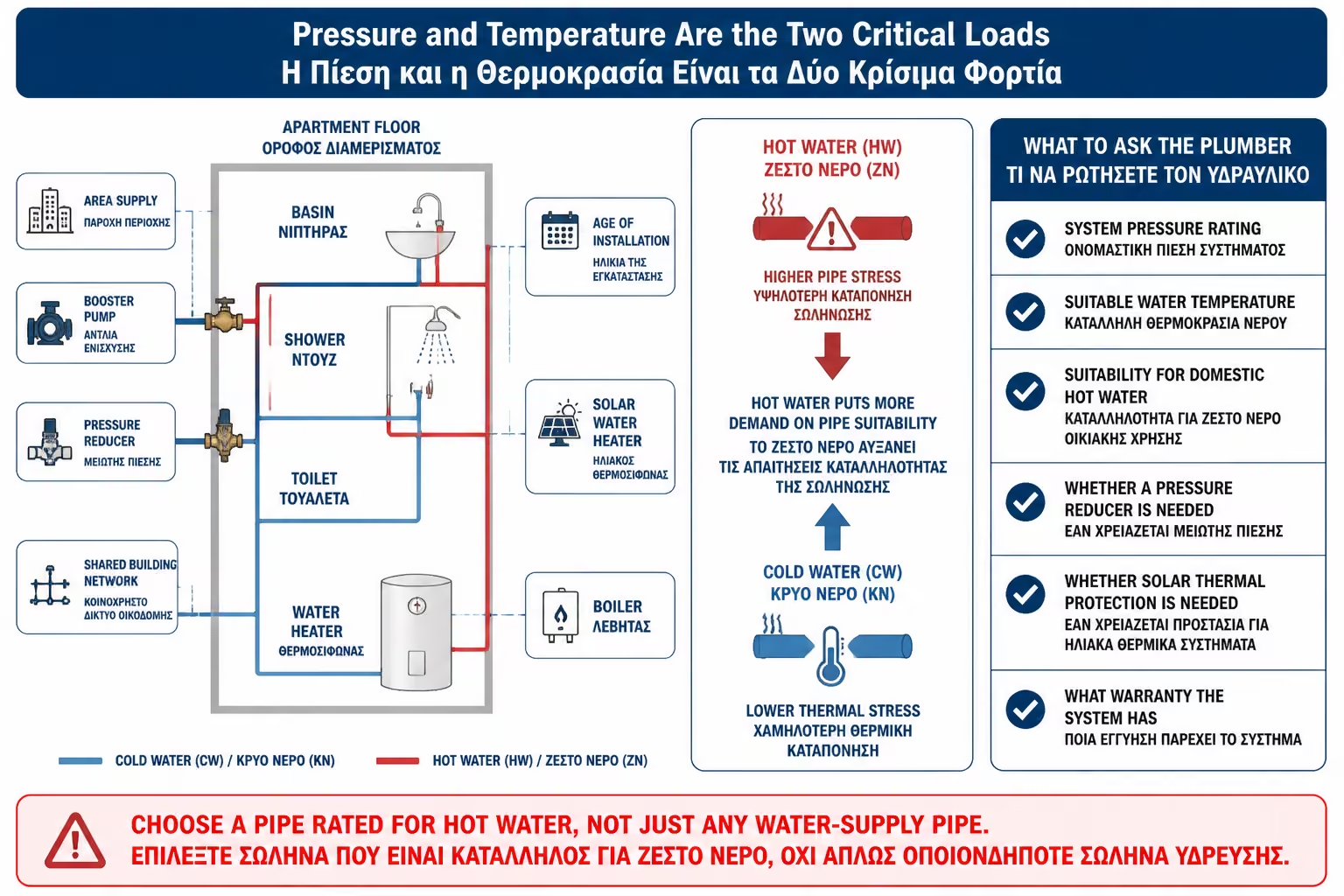
The water supply pipes must withstand the pressure of the network and the temperature of the water.
Pressure is not the same in every property. It depends on the area, the floor, the building network, whether there is a booster or pressure reducer and the age of the existing installation.
If pressure is high or fluctuates sharply, the system must be designed accordingly. The same applies to hot water, which stresses the pipework more than cold water.
That is why "water-supply pipe" is not enough as a description. The system must be suitable for domestic hot water, for the real operating temperatures and for the actual pressure range of the property.
In homes, pressure can vary according to the area, the floor, the building network and any pressure-control equipment.
Hot water puts more stress on the pipes than cold water. Solar water heater, boiler or water heating system can give higher temperatures than a simple use.
Ask the plumber what pressure the system can withstand, what temperatures it is rated for, whether a pressure reducer or thermostatic protection is needed and what warranty is provided.
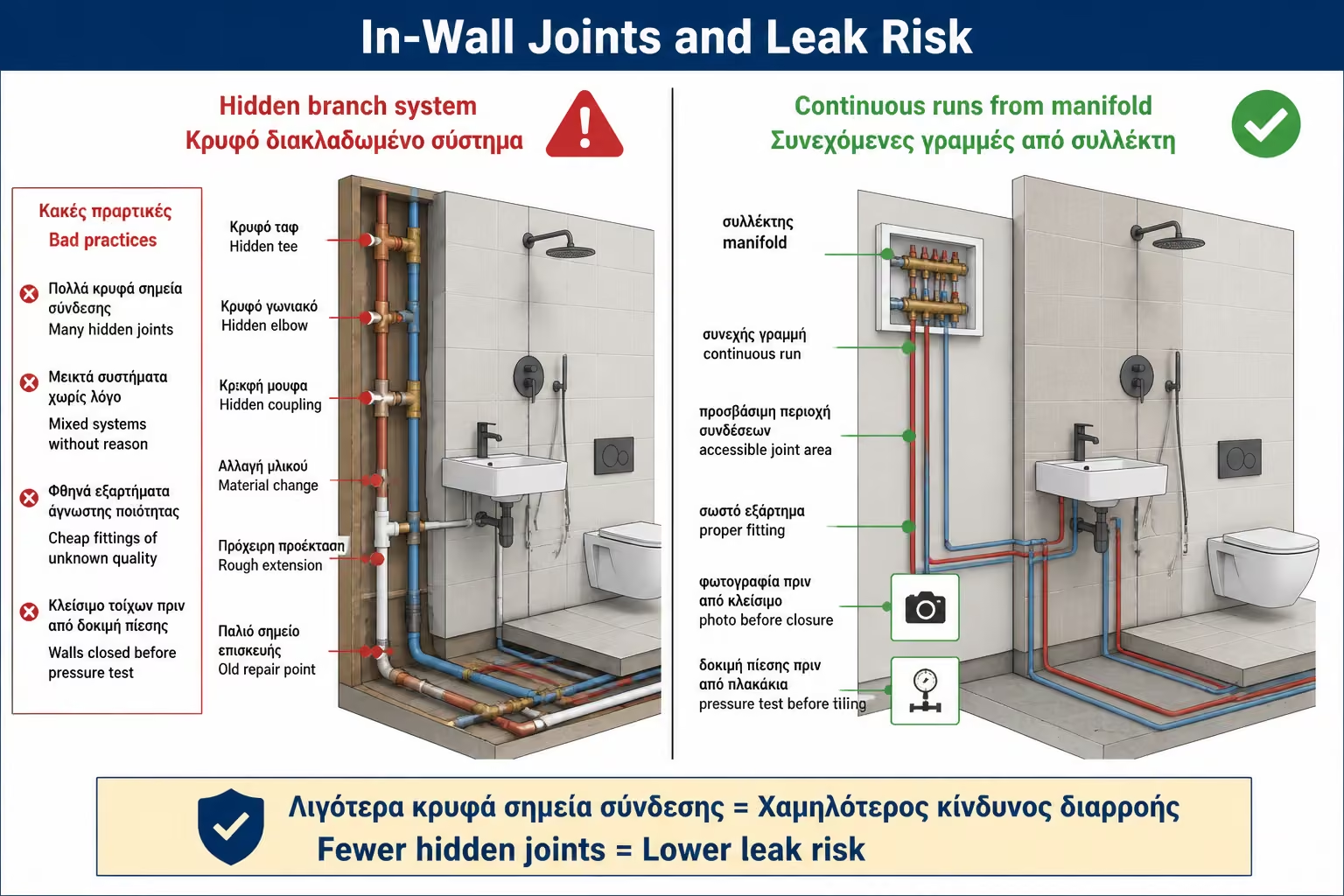
Many plumbing failures do not happen in the middle of a pipe. They happen at the joints.
The fewer hidden joints there are inside walls and floors, the lower the long-term leakage risk becomes.
Proper installation must be planned from the start so the network is not dependent on blind luck once the tiles are installed.
Continuous runs, a manifold where appropriate, accessible joints, correct fittings, photos before closure and a pressure test before tiling.
Rough hidden joints, mixing systems without reason, cheap unknown fittings and closing the walls before the network has been tested.
A collector is used in many modern installations. Separate lines start from the collector to each supply.
However, it is not always possible in small or very old bathrooms without space.
Fewer hidden joints, better control of each line, easier isolation of supplies and a cleaner maintenance logic overall.
Higher upfront cost, the need for physical space, proper planning and the requirement that the manifold remains accessible.
In a bathroom renovation, if the project is a total renovation and there is a possibility, the collector can be a very good choice, especially with multilayer pipe or PEX.
Costs vary by region, system, brand, diameter, runs and plumber. For this reason, the following are indicative and not a final offer.
| Material | Relative cost of materials | Relative labor costs | Overall picture |
|---|---|---|---|
| Copper | High | Medium/high | More accurate solution, tested |
| Multi-layered | Medium | Medium | Balanced solution for renovations |
| PEX | Low/medium | Medium | Very practical with a proper system |
| PPR | Low/medium | Medium | Economical, needs proper heat sealing |
For a typical bathroom, the cost of plumbing work and basic materials can be around €850 – €1,400 when there is a substantial replacement of services and drains, as we have mentioned in previous cost guides. The final amount is affected more by the extent of the job, routes, drainage and supply points than just the pipe material.
The difference between two materials can be less than the difference between good and bad installation.
For a typical bathroom renovation, the most practical solutions today are often multilayer pipe and PEX, especially when installed with proper design and as few hidden joints as possible.
PPR can be an economical and reliable choice when the plumber works it right and the routes favor it.
Copper remains a very good and proven solution, but usually at a higher cost.
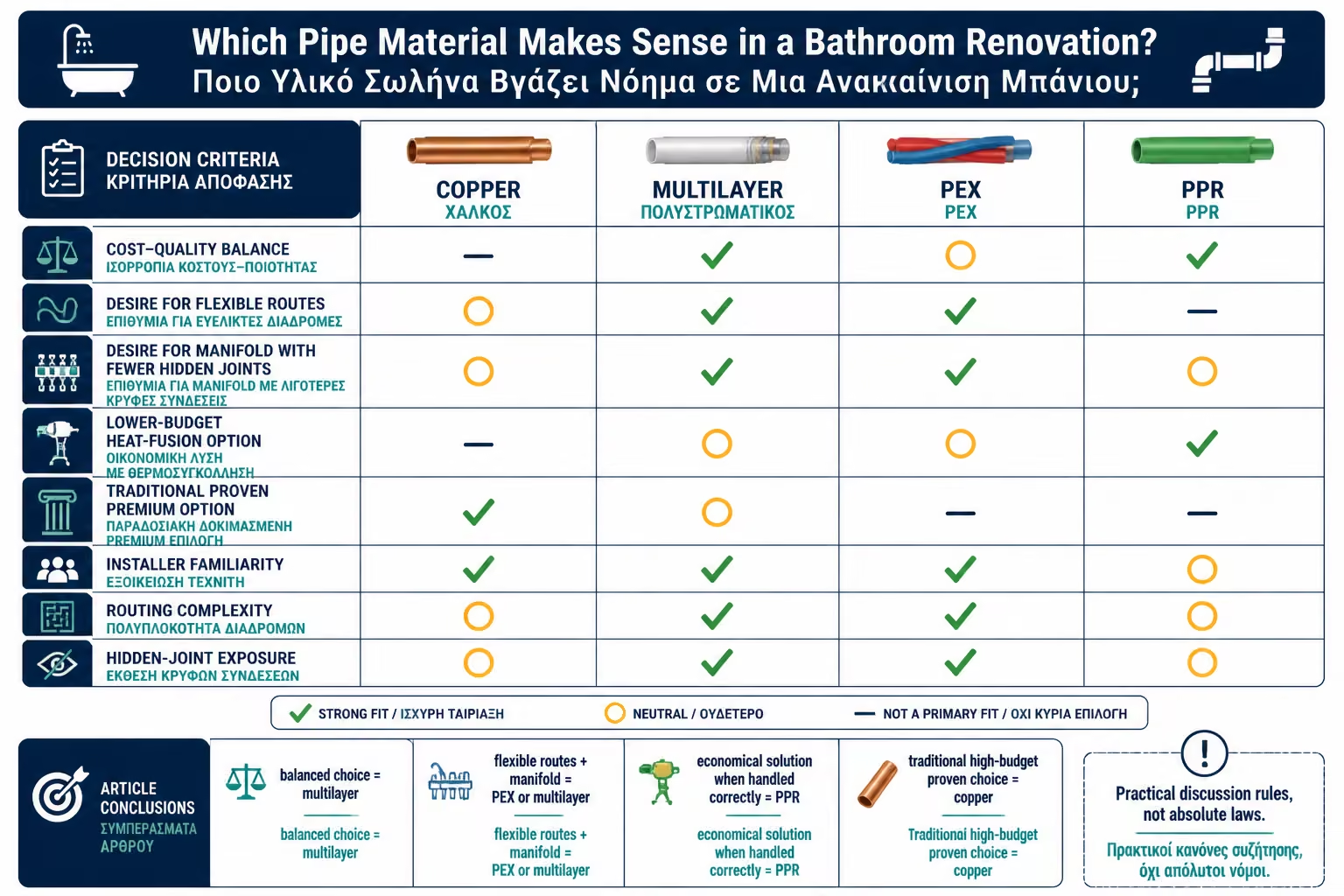
Multilayer pipe is often the most balanced choice for a typical bathroom renovation.
If you want a manifold layout and as few hidden joints as possible, PEX or multilayer pipe are strong candidates.
PPR can be a reliable, economical solution when the plumber knows the system well and the routes suit it.
Copper remains a very proven solution, but it usually comes with a higher budget.
These are not absolute rules. It's a practical conversation guide with the plumber.
The cheapest hardware isn't always the best choice if it leads to more joints, difficult routing, or questionable components.
The more different systems are mixed together, the greater the potential for error.
In modern piping, the fittings are just as important as the pipe. Don't choose a system just because the tube is good.
In PPR, a wrong heat seal can limit the internal cross-section or create a weak point.
In multilayer systems, pressing must be done with the right tool and the right fitting.
Before the walls are closed, the installation must be checked.
Photos of pre-tiling runs are very helpful for future maintenance.
Before you decide, ask for clear answers to the following:
What material do you recommend, and why does it suit this project?
Is it suitable for domestic hot water, and what pressure can the system handle?
Which fittings will be used, and will hidden joints remain inside the wall?
Can the critical connections remain accessible if future work is needed?
Will the network be pressure-tested, and will you receive photos before the walls close?
Will a manifold be used, and what is the layout logic behind that choice?
What warranty is provided, and are replacement parts available later?
What happens if a leak appears, and does the quote cover drainage as well as water supply?
If the plumber only answers "we put this in because that's what we always put in", ask for more explanation.
The offer should not simply read:
> New bathroom plumbing.
It should state more clearly:
The quote should clearly name the pipe system that will be installed.
It should specify the class or rating of the pipe, not only the generic material family.
It should state whether both hot and cold supplies are included.
It should clarify whether drainage work and a new trap are included.
It should record how many points are served and whether a washing machine line is included.
It should say whether a manifold layout is included and how the network will be organized.
It should identify the type and quality level of the fittings and accessories.
It should provide for a pressure test before walls and floors are closed.
It should list what is not included so you can compare offers fairly.
This way you know what you are buying and can compare offers correctly.
| Inquiry | Yes / No |
|---|---|
| Is a specific piping material recommended? | Yes / No |
| Do I know why this material was recommended? | Yes / No |
| Is it suitable for domestic hot water? | Yes / No |
| Is it suitable for the mains pressure? | Yes / No |
| Are branded fittings used? | Yes / No |
| Are hidden joins avoided where possible? | Yes / No |
| Is a collector provided where it makes sense? | Yes / No |
| Will it be pressure tested before the walls are closed? | Yes / No |
| Will there be pictures of the installation? | Yes / No |
| Is the material listed in the offer? | Yes / No |
| Is there a labor or system warranty? | Yes / No |
| Has the drainage been checked as well, not just the water supply? | Yes / No |
If many answers are "no", the plumbing has not been described clearly enough.
A homeowner gets a quote for a bathroom renovation. The quote says “new plumbing” without mentioning hardware, fittings, drainage or testing.
The owner considers it a complete new installation.
In practice, only a few adjustments are made to the old piping, with few joints inside the wall. No regular testing and no photos.
After a year, moisture appears on the adjacent wall. Then the debate begins: what exactly was agreed? what material went in? who is responsible? where do the pipes go?
The problem was not only technical. It was also a problem of unclear supply.
The safest option is not just a material choice.
The safest option is the right combination of design, execution and verification:
The material must fit the real application, not just the lowest price or the most familiar name.
Use a branded, coherent system whose pipe, fittings and accessories are meant to work together.
The installer must know the specific system and not improvise behind new tiles.
The cleaner the route and the fewer blind joints, the lower the long-term risk.
Pressure testing and installation photos should happen before the next trades continue.
The quote should clearly state what is installed, tested and covered.
There should be a clear line of responsibility for the labor or the system.
Drainage should be checked together with the water supply so the job is complete.
If these are present, copper, multilayer pipe, PEX and PPR can provide a good installation.
If these are missing, even the best hardware can fail.
Do not choose water-supply pipes on material or price alone. Ask which complete system will be installed, which fittings will be used, whether hidden joints will remain inside walls or floors, and whether the network will be pressure-tested before it is closed up.
In a typical bathroom renovation, multilayer pipe and PEX are often the most practical solutions, while PPR can also be reliable and economical when it is specified correctly and installed with care. Copper remains a proven option, but it usually comes with a higher budget.
The real risk is not only the pipe itself. It is the combination of unknown materials, cheap fittings and careless installation logic behind new tiles. That hidden work has to be right before the project moves on.
Always ask for installation photos and a pressure test before plaster, waterproofing and tiling begin.
The choice of plumbing is one of the most important decisions in a bathroom renovation.
Copper is proven and durable, but more expensive. Multilayer pipe offers a very good balance for renovations. PEX is versatile and practical, especially with the right design and manifold layout. PPR is economical and durable, but needs proper heat fusion and the right pipe class.
There is no material that is always best for all situations.
The right choice depends on a combination of factors, not on a single label in the quote.
Whether this is a total renovation, a partial intervention or a job with specific technical constraints.
The real operating conditions of the network and the domestic hot-water system.
The way the lines will run, how many joints remain hidden and whether a manifold is used.
The reliability of the pipe, the fittings and the system as a whole.
The plumber’s ability to install that specific system correctly.
How easy the network will be to inspect or repair if something goes wrong later.
If you want to reduce risk, don't just ask “what tube should we put in?”. Ask “how will it be installed, with what fittings, where will there be joints and how will it be checked before the wall is closed?”.
In plumbing, the best choice is one that you won't have to look at again for many years.
Return to category.
Go to categoryReturn to the central guide.
Go to guide