If the cold-water side drops
If someone flushes the toilet or opens cold water elsewhere, the cold flow to the shower mixer can be reduced.
One of the most frustrating bathroom problems is a sudden temperature swing in the shower. You are bathing normally, and then the water suddenly turns icy or far too hot because someone flushed the toilet, opened the kitchen tap, or started the washing machine.
This is very common in older plumbing systems, in pipework with small diameters, in networks with poor distribution, or in bathrooms where the shower mixer cannot compensate for pressure changes.
It is not only a comfort issue. It can also become a safety issue, especially in homes with children, elderly people, or users with reduced mobility. A sudden rise in temperature can cause scalding or panic in the shower.
The answer is not always to "use the other taps less". A proper fix starts with the plumbing network itself: correct pipe sizing, good distribution, a manifold where appropriate, and the right shower mixer, ideally a thermostatic one.
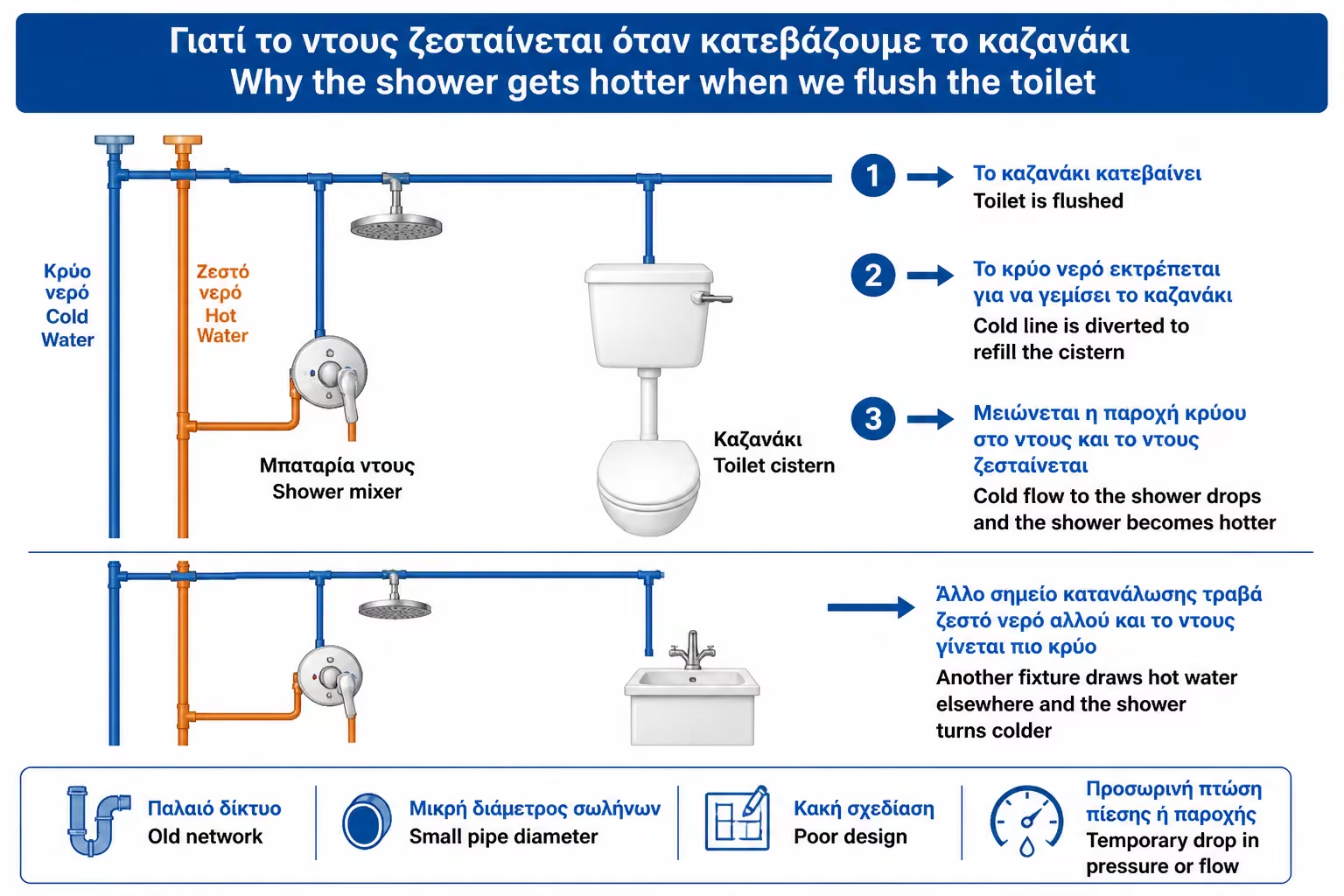
The toilet cistern uses cold water. When someone flushes, the cold-water network has to send flow to refill it.
If the network is old, undersized, or poorly designed, that extra demand can temporarily reduce the pressure or flow of cold water reaching the shower mixer.
The mixer continues to receive hot water, but the cold side drops. As a result, the shower water suddenly becomes hotter.
Likewise, if someone opens hot water strongly elsewhere, the hot flow to the shower may drop and the water may suddenly turn colder.
The temperature change depends on which supply is affected.
If the cold side drops, the mix shifts hotter. If the hot side drops, the shower turns colder. When both kinds of change appear, it usually means the network does not behave hydraulically in a stable way.
The most common scenarios are the following:
If someone flushes the toilet or opens cold water elsewhere, the cold flow to the shower mixer can be reduced.
If someone opens hot water in the kitchen or in another bathroom, the hot flow to the shower can be reduced.
In more problematic networks, pressure can keep rising and falling on both sides. The shower becomes unstable and the user keeps trying to correct the mixer handle.
In older installations, the pipes may be undersized or internally narrowed by scale and rust.
When a network is already limited in flow, any additional use creates a large change.
The toilet refills, the cold side at the shower drops, and the water suddenly gets hotter.
In such a case, changing the shower mixer may improve the situation a little, but it does not always solve the main problem: the network itself is undersized or worn out.
A typical example of how this happens is the following:
If the cold-water pipe feeding the bathroom is already marginal, then the cistern, the basin, and the shower end up "competing" for the same supply.
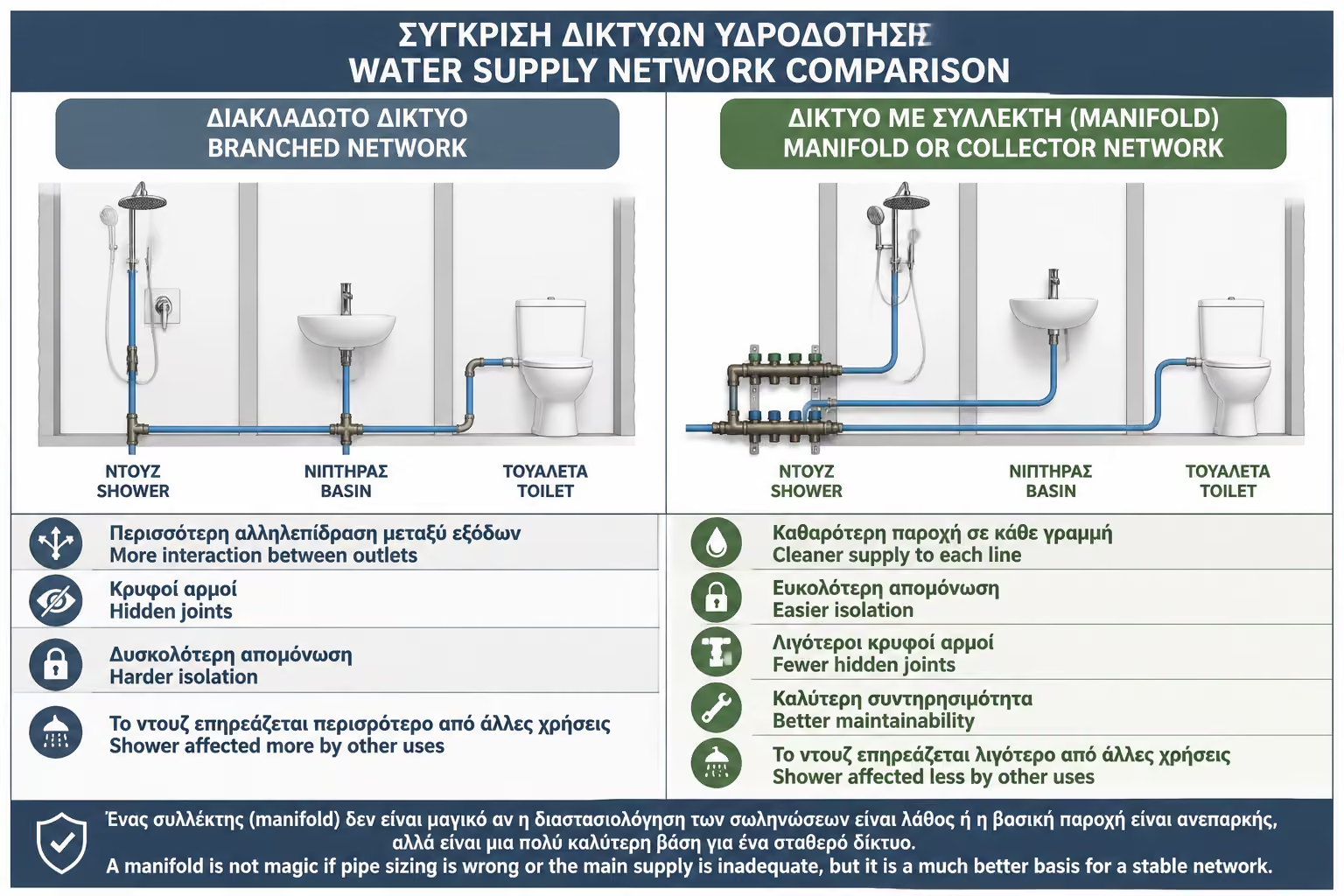
In a traditional network, a main line runs through the bathroom and branches out to various points.
In that kind of layout, the same cold-water line may feed the following outlets:
When one point opens, it affects the rest.
This does not mean every traditional branched network is wrong. With correct pipe sizing and proper design, it can still work satisfactorily.
But in old or sketchy networks, branches often create large flow fluctuations.
A plumbing manifold organises the network with separate lines for each outlet.
Instead of the shower, basin, and cistern being fed through improvised branches inside the wall, each point can have its own dedicated line from the manifold.
A manifold is not a magic answer if the pipe diameters are wrong or the main supply is insufficient. But it is a much better foundation for a stable network.
With a properly designed manifold, the main advantages are the following:
If the main supply to the house is small, if pressure is low, or if the hot-water side is insufficient, then a manifold alone cannot work miracles.
To find the real cause, a full check is needed on the following points:
If water does not reach the manifold in adequate quantity, the manifold cannot distribute it properly.
So the manifold is part of a proper design, not a single component that solves all problems.
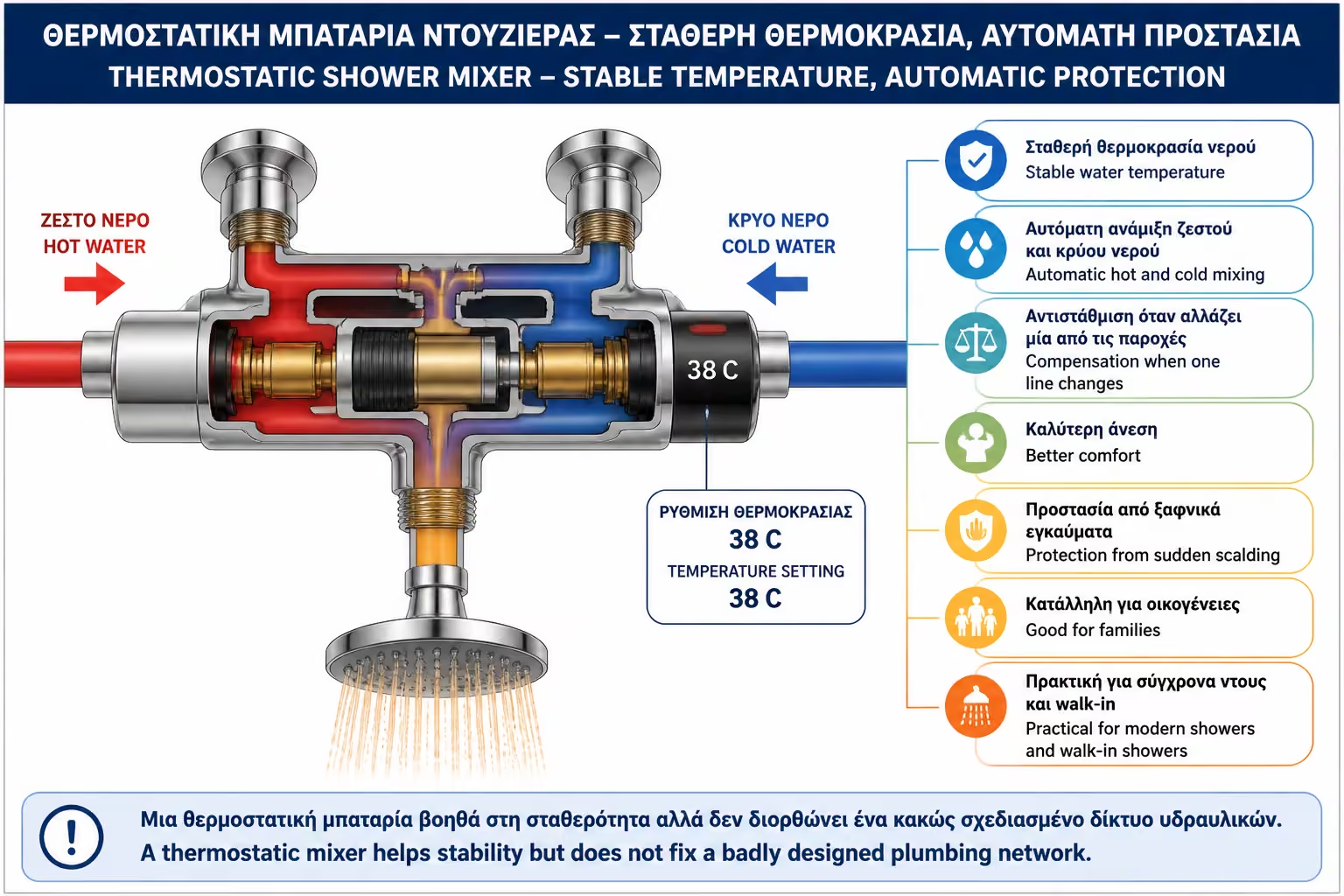
A thermostatic shower mixer is designed to keep the outgoing water temperature as stable as possible.
The user sets a target temperature, for example 38°C, and the mixer automatically blends hot and cold water to maintain that setting as closely as it can.
If pressure or temperature changes on one side, the mechanism tries to compensate for that shift.
A thermostatic mixer does not fix bad plumbing on its own, but it can greatly improve shower stability.
The main advantages of a thermostatic mixer are the following:
A thermostatic mixer is especially worth considering in the following situations:
In homes with frequent sharp fluctuations, a thermostatic mixer can greatly improve the user experience.
But if the hot or cold drops almost completely, even the thermostat will struggle. It also needs a proper network.
An important advantage of a thermostatic mixer is protection against sudden temperature rise.
Many models have a safety limit, often around 38°C, so that the temperature does not easily rise accidentally.
This becomes especially valuable in the following situations:
Temperature safety is just as important as comfort.
Thermostatic mixers are more complex than simple manual mixers.
They include filters, regulating elements, and internal moving parts that can be affected by the following conditions:
If the water carries a lot of scale or rust, the thermostatic mixer needs better protection.
The main protective measures that help most are the following:
Even a good thermostatic mixer can develop problems if it is installed on a dirty old network without protection.
Temperature fluctuations can also be related to hot water production.
The most common problems on the hot-water side are the following:
If the problem occurs only in hot water, the hot water source should be checked.
If the hot-water side cannot provide stable flow, the shower mixer cannot work miracles.
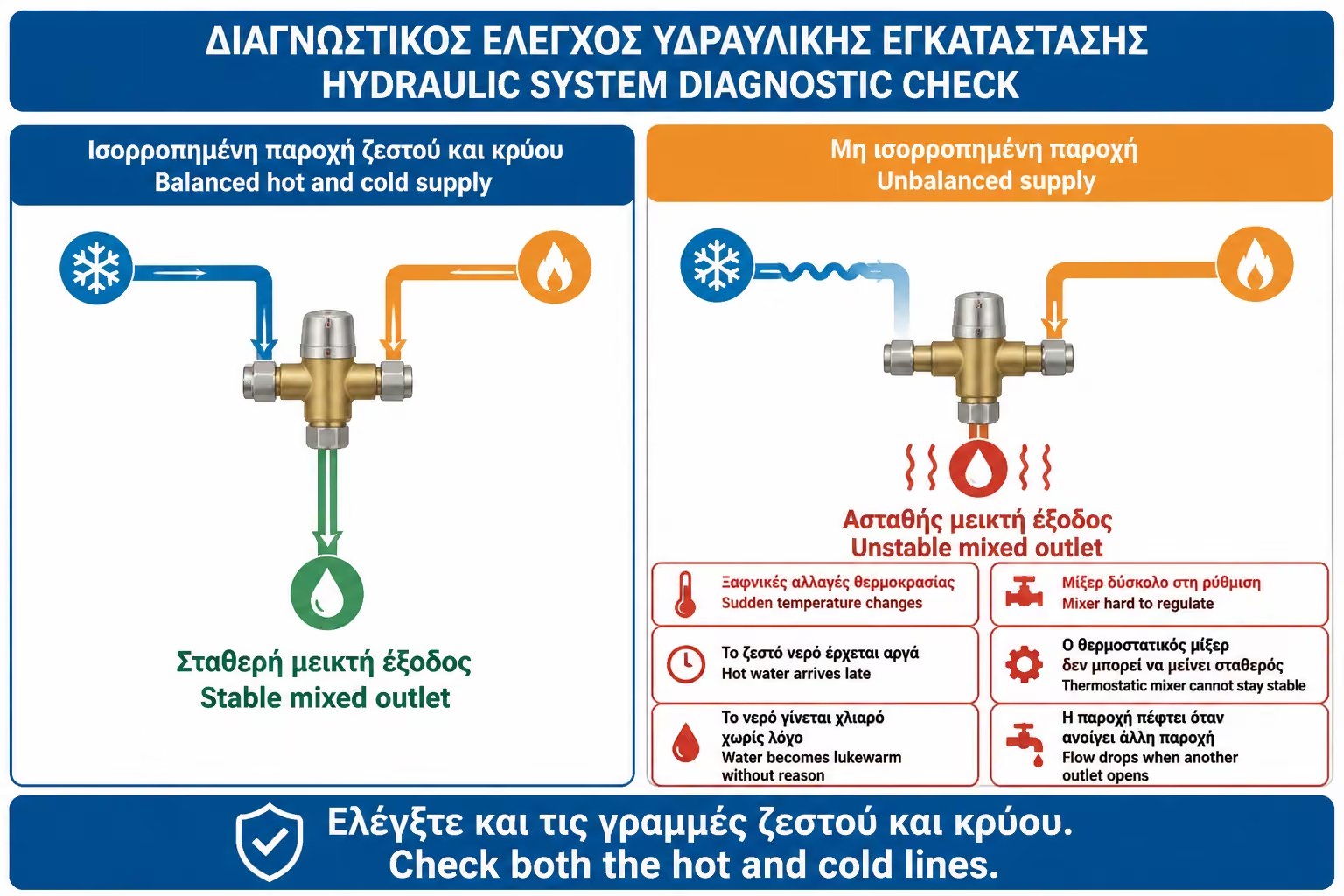
For a standard mixer or a thermostatic mixer to work properly, hot and cold need to arrive with reasonably balanced supply conditions.
If the cold side has much higher pressure than the hot side, or vice versa, the mixer struggles to keep the blend stable.
In such a case, both lines must be checked: hot and cold.
The most common symptoms of imbalance between hot and cold are the following:
Correct pipe diameters are fundamental.
If the pipes are undersized or narrowed internally by scale and rust, then the flow is not enough when multiple outlets are used at the same time.
If the network has properly sized pipes and separate lines, the effect is reduced.
A stable shower temperature starts with proper plumbing design, not just with a better mixer.
A simple example makes this easier to understand:
If the shower and the toilet cistern both take cold water from the same small line, the cistern can "steal" part of the flow while it is refilling.
In old houses, the cause may be internal deterioration of the pipes.
Old galvanized or iron systems often show the following problems:
If the flow is already marginal, then any other use causes variation.
In such cases, replacing the pipework may be a more meaningful solution than replacing the shower mixer alone.
Appliances with electrovalves, such as a washing machine or dishwasher, open and close the supply abruptly.
That abrupt operation can cause the following effects:
If the problem occurs when the washing machine is running, the device's supply, mains pressure and possibly the need for anti-surge protection or better distribution of lines should be checked.
The diagnosis should be done in sequence and with clear observation of when the problem appears.
The first questions that need answers are the following:
If you freeze, the hot side is probably dropping. If you get scalded, the cold side is usually the one that is being reduced.
A sensible diagnosis path can be organised in the following steps:
Note whether the change appears when the toilet is flushed, when the kitchen tap opens, or when an appliance starts drawing water.
If you get scalded, the cold side is usually dropping. If you freeze, the hot side is usually the one losing flow.
The plumber can measure whether the two supplies are balanced and whether one line is clearly underperforming.
Pipe diameters, the presence of a manifold, old pipework, filters, and shut-off valves all need to be reviewed.
Check whether it is a simple mixer or a thermostatic one, whether its filters are clean, whether scale is present, and whether it is operating correctly.
A thermostatic mixer is the most direct upgrade for better temperature stability in the shower.
The main advantages of this solution are the following:
If the network has severe flow problems, a thermostatic mixer will help but will not eliminate the issue completely.
For it to perform properly, the installation needs to provide the following conditions:
In a full renovation, a manifold layout is one of the best ways to improve distribution between outlets.
With separate lines from the manifold, the main benefits are these:
In combination with a thermostatic mixer, it can deliver a much better result.
If the problem is longstanding and caused by undersized or blocked pipes, the real solution may be to replace the pipework.
During a bathroom renovation, the following points are especially worth checking:
If the bathroom is opened anyway, it is a mistake to leave an old fluctuating network.
If the pressure is too high or unstable, a pressure reducer may be needed.
If the pressure is too low, a supply, pressure or multi-unit check may be needed.
Temperature stability also requires pressure stability.
Before choosing any pressure-related fix, the following need to be measured first:
Only after that should the solution be chosen.
The key warning here is simple: do not install parts without measuring first.
The table below gives a realistic picture of the most common cost ranges:
| Solution | Realistic cost |
|---|---|
| Cleaning mixer filters | €0 – €50 |
| Simple thermostatic shower mixer | €80 – €250+ |
| Higher-quality thermostatic mixer | €250 – €600+ |
| Built-in thermostatic solution | €300 – €1,000+, depending on system |
| Installing a thermostatic mixer | €60 – €180+ |
| Manifold layout | €150 – €500+ extra, depending on lines |
| Replacement of bathroom pipes | part of plumbing package, usually €850 – €1,400+ with drainage |
| Pressure reducer | €150 – €450+ with labour, depending on installation |
The prices are indicative. The correct solution depends on the diagnosis.
The most common mistakes that lead to incomplete or misleading fixes are the following:
If the network is problematic, a new shower mixer will not solve the issue on its own.
Its filters may be constantly clogged.
It could be the water heater or the hot line.
In old branches, this creates fluctuations.
Feeling is not enough. Measurement is required.
The aesthetics are upgraded, but the problem remains.
The key questions worth asking the plumber are the following:
If the answer is simply "just install a thermostatic mixer", ask for the network to be checked first.
The table below works as a quick check to show whether the problem points toward the network, the mixer, or both:
| Inquiry | Yes / No |
|---|---|
| Does the temperature change when the toilet is flushed? | Yes / No |
| Does it change when you open the kitchen tap? | Yes / No |
| Does it change when hot water is used elsewhere? | Yes / No |
| Is the problem too hot? | Yes / No |
| Does the problem swing toward cold? | Yes / No |
| Is there a thermostatic mixer? | Yes / No |
| Is there a manifold? | Yes / No |
| Does the shower have separate lines? | Yes / No |
| Have the mixer filters been checked? | Yes / No |
| Have hot and cold been tested separately? | Yes / No |
| Has pressure been measured? | Yes / No |
| Are there old pipes? | Yes / No |
If several answers point to a network issue, the solution is not simply to replace the shower mixer.
One homeowner freezes in the shower every time someone opens hot water in the kitchen. They buy a new shower mixer, but the problem remains.
Inspection shows that the hot-water line is old, has low flow, and feeds multiple outlets from a common branch.
The mixer could not solve the problem, because the hot-water supply itself was inadequate.
During a full bathroom renovation, the owner asks for stable shower temperature.
In that case, the proposed solution includes the following:
The result is that toilet flushing affects the shower far less, and the thermostatic mixer holds temperature much more steadily.
If you freeze or get scalded in the shower whenever someone opens another outlet, the problem is usually a combination of network behaviour and mixer limitations.
A thermostatic mixer helps a lot, but it still needs proper hot and cold supply. If the pipes are undersized, old, or clogged with scale, the mixer cannot correct everything on its own.
In a full renovation, ask whether a manifold with separate lines to the shower should be included. It is a much better foundation for stable operation.
For comfort and safety, the best combination is a sound plumbing layout, correct pipe sizing, clean filters, and a thermostatic shower mixer.
Temperature fluctuations in the shower are not a random phenomenon.
They occur because the balance between hot and cold water changes when another supply is opened or closed.
The main causes behind these swings are usually the following:
The main solution directions are usually the following:
A stable shower is not a matter of luck. It is the result of proper plumbing design.
Return to category.
Go to categoryReturn to the central guide.
Go to guide