
Salt Buildup in Pipes: How Hard Water Chokes the Network and When a Filter or Softener is Needed
Hard water is one of the most common water-quality problems in many regions of Greece. It does not always look like a fault at first. The water still runs, the taps still work, the water heater still heats up, and everything seems normal.
Over time, though, limescale starts leaving traces everywhere: white marks on tiles, clogged tap filters, a weak shower, stiff tap handles, noise in the water heater, reduced hot-water flow, and more frequent wear in internal mechanisms.
The main problem is that limescale does not stay only on visible surfaces. It can also build up inside pipes, filters, valves, tap cartridges, and the water heater itself.
In older plumbing systems, especially where there are metal pipes or an already reduced internal diameter, limescale can gradually choke the flow. The result is lower pressure, clogged aerators, hot-water problems, and the need for frequent maintenance.
The real question is not only how to clean the deposits. It is also when the whole plumbing system needs protection with a whole-house filter or a water softener.
1. What is Hard Water?
Hard water is water that contains increased concentrations of salts, mainly calcium and magnesium.
The more salts the water has, the harder it is considered.
Hard water is not necessarily dangerous to health in itself, but it creates many technical and practical problems in the installation and appliances.
The most typical visible signs of hard water are the following:
Scale on the shower and tiles
Cloudy shower-cabin glass
Clogged shower heads
White residue in the kettle
Reduced flow from taps
Filters that clog often
Noise or reduced performance from the water heater
If you see limescale on the outside, there is a good chance that deposits are also forming inside the plumbing system.
2. How Limescale Reduces Pipe Diameter
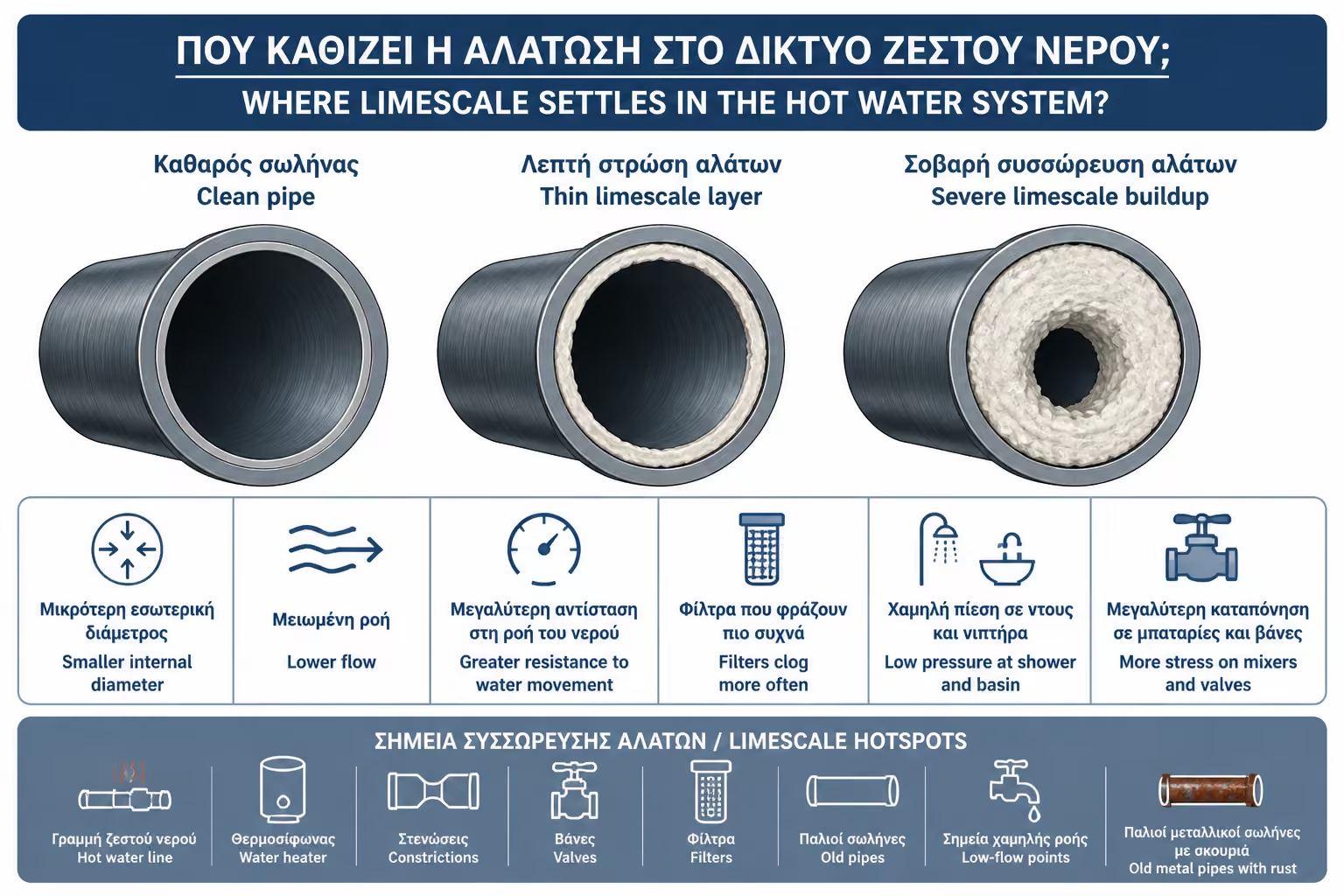
As water moves through pipes, especially when it is heated, limescale can settle on the inner walls.
At first, that layer is thin. Over time, however, it gets thicker.
Put simply, the pipe may look unchanged from the outside while becoming narrower on the inside.
The most common effects of that internal narrowing are the following:
Smaller internal diameter
Lower flow
Greater resistance to water passing through
Frequent filter blockages
Low pressure at the shower and basin
Extra strain on taps and valves
Limescale buildup is usually more intense in the following parts of the system:
On the hot-water line
Inside the water heater
At narrow sections
Inside valves
Inside filters
In older pipework
At points with low flow
In old metal pipes that already have rust inside
3. Why Hot Water Is Usually More of a Problem
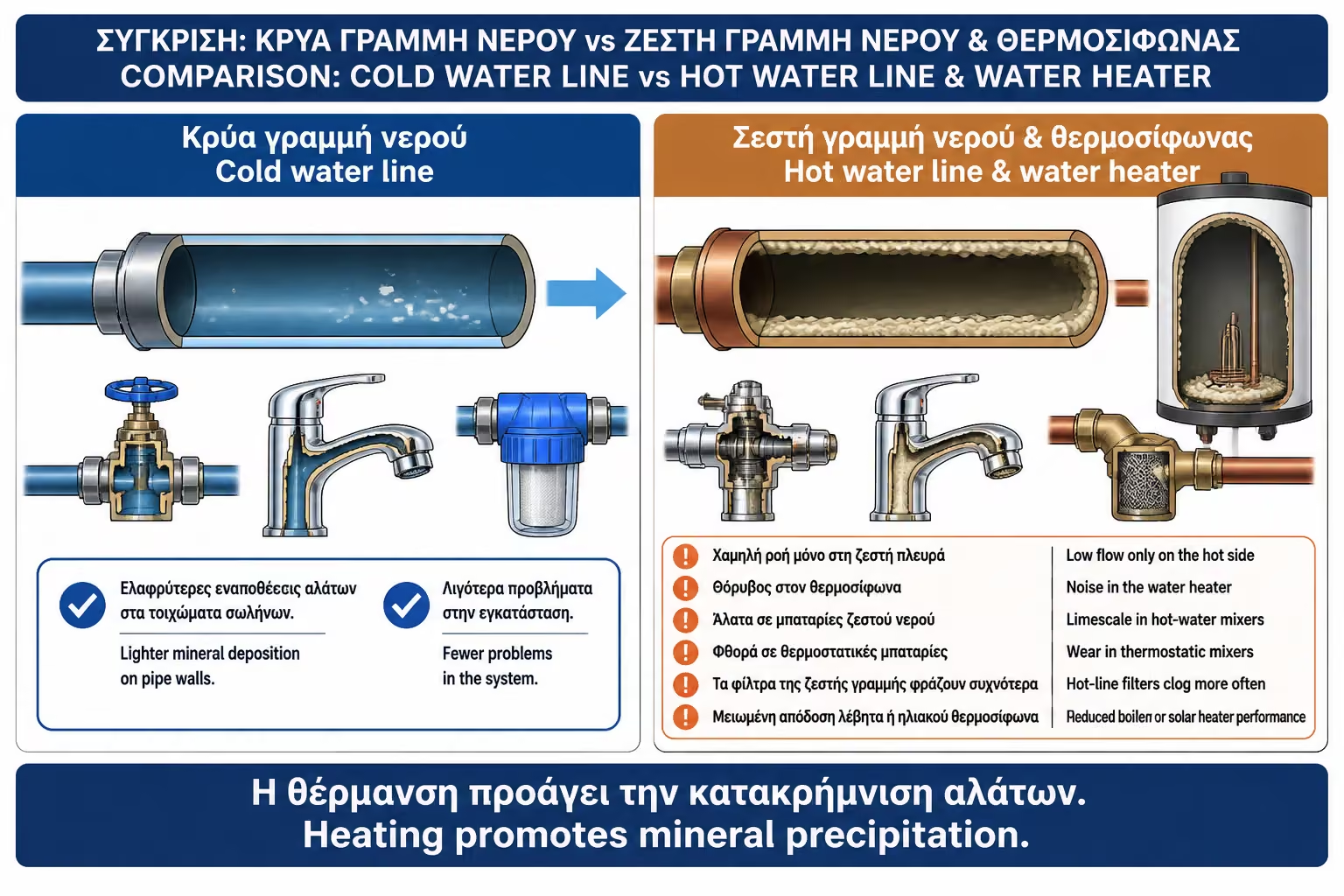
Limescale shows up more strongly on the hot-water side because heating encourages minerals to precipitate out of the water.
The water heater is one of the first places where limescale usually creates a problem.
When a scale layer forms inside it, heating becomes less efficient, the unit is put under more strain, and noise or reduced performance may follow.
The most common warning signs on the hot-water line are the following:
Low flow only on hot water
Noise from the water heater
Scale on hot-water taps
Wear in thermostatic mixers
Filters on the hot line clogging more often
Reduced performance from a boiler or solar water heater
4. How to Tell When Limescale Is Starting to Cause Problems
The most common signs that scale is starting to interfere with the system are the following:
Low flow at the basin
Weak shower
Clogged aerators
Shower head spraying unevenly
White marks on taps
Stiff tap handle
Dripping tap
Low flow only on the hot side
Noisy water heater
Frequent cartridge replacement
Filters filling with scale
Reduced performance from the washing machine or water heater
If the same problems keep coming back after cleaning, the issue is probably not just surface scale. There may be a broader water-quality problem or an aging plumbing network behind it.
5. Limescale or Rust? Don't Confuse Them
Scale and rust may appear together, but they are not the same thing.
The characteristics that point more clearly to limescale are usually the following:
White in colour
Hard texture
Stone-like deposits
Around taps
Inside shower heads
Inside filters
Inside water heaters
The characteristics that point more clearly to rust are usually the following:
Brown colouring
Orange colouring
Reddish colouring
Metallic appearance
Mud-like residue or loose particles
Often a sign of old metal pipework
In old iron pipes, both limescale and rust may be present together. When that happens, the internal cross-section is reduced even more.
6. Where Hard Water Causes the Most Trouble
Limescale does not create problems only inside the pipes.
The parts most commonly affected by limescale are the following:
Taps and mixers
Cartridges
Thermostatic mixers
Shower heads
Aerators
Cistern float valves
Safety valves
Water heaters
Boilers
Solar water-heating systems
Washing machines
Dishwashers
Filters
Angle valves
Many times the owner constantly changes parts without addressing the cause: too hard water.
7. Cleaning Filters and Aerators
The first simple step is to clean the filters on the taps.
Aerators usually collect the following materials:
Limescale
Fine particles
Sand
Rust
Debris carried by the network
If they are cleaned, the flow may return temporarily.
The basic cleaning process usually includes the following steps:
Unscrew the filter
Rinse it
Remove loose particles
Soak it in vinegar or a suitable descaling cleaner
Install it again
If it clogs again very quickly, though, the cause is usually deeper in the system.
8. Cleaning the Shower Head
The shower head is one of the places where limescale is most visible.
The small holes become clogged and the flow becomes weak or irregular.
The most practical actions that help with a shower head are the following:
Clean it with vinegar
Remove scale from the spray holes
Replace an old shower head
Use a shower head with an anti-scale surface
Maintain it periodically
If the shower head clogs again and again, a hardness test or a whole-system solution is usually needed.
9. Water Heaters and Limescale
The water heater is especially vulnerable to limescale.
When water is heated, mineral deposits form more easily. Over time, they can create a layer inside the tank or around the heating element.
The signs that usually show a water heater is being affected by scale are the following:
It takes longer to heat up
It makes noise
Its performance drops
It releases scale or particles
Hot-water flow becomes low
The heating element fails more often
The safety valve starts dripping
In hard water areas, water heater maintenance is more important.
10. Central Supply Filter: What It Does
The central supply filter is placed at the water inlet to the house.
Its job is to trap solid particles such as the following:
Sand
Rust
Dirt
Fine particles
Debris carried by the public network
That is, it does not effectively remove the calcium and magnesium salts that cause hardness.
So it can protect batteries and valves from particles, but it is not a softener.
This matters a lot, because many people buy a filter expecting the limescale problem to disappear. If the unit is just a basic mechanical particle filter, it will not do that. Put simply, a particle filter does not remove water hardness.
11. Types of Central Supply Filters
Not all whole-house filters do the same job. Some are mainly for suspended particles, some help limit deposits in specific uses, and others focus more on taste, smell, or chlorine reduction.
Before choosing one, you need to know exactly which problem you are trying to solve: particles, limescale, taste, chlorine, or hardness. The material also has to be selected correctly, replaced when needed, and matched to the actual installation.
The most common categories of whole-house filters are the following:
Mechanical particle filters
They trap sand, rust, and other suspended particles coming through the network.
Polyphosphate filters
They are used in some applications to limit scale buildup. They do not remove hardness the way a softener does, but they can help in specific installations.
Activated carbon filters
They improve taste and odour and help retain certain substances, but they are not a solution for limescale.
Combined filters
They may include multiple stages, but it must be clear what each stage is actually designed to do.
12. Water Softener: What It Does
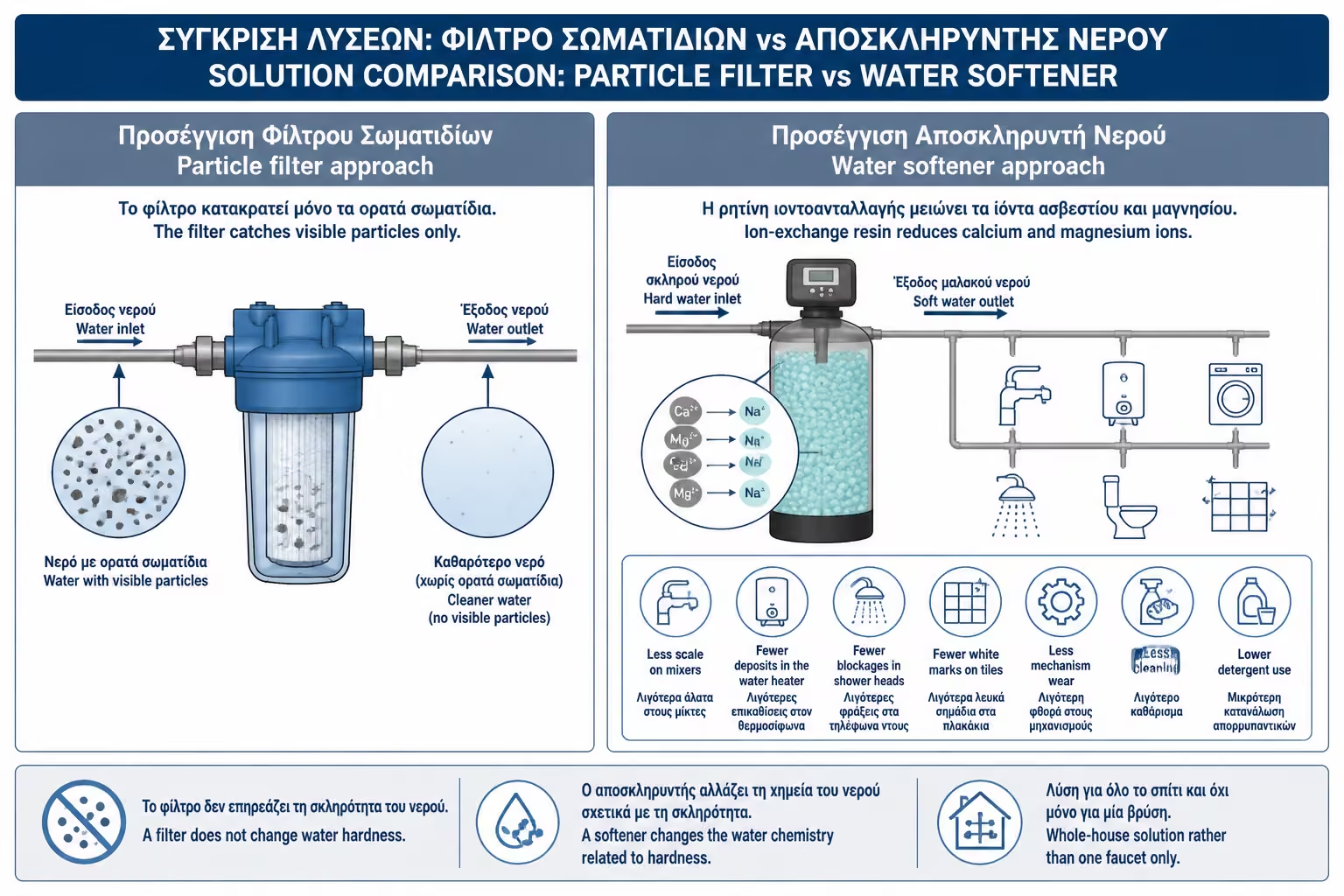
The water softener is the most complete solution for hard water.
It usually works with an ion exchange resin, which reduces calcium and magnesium ions, the main elements of hardness.
Simply put, the softener doesn't just hold particles. It changes the water chemistry in terms of hardness.
It is a solution for the whole house, not just for one tap.
The main problems a water softener can reduce across the house are the following:
Scale on taps
Deposits inside the water heater
Clogging in shower heads
White marks on tiles
Wear in internal mechanisms
The need for frequent cleaning
Higher detergent consumption
13. When is a softener worth it?
It is worth serious consideration in the following cases:
The water is very hard
Scale appears everywhere
Taps and mechanisms fail often
The water heater keeps filling with scale
Filters clog frequently
There are expensive taps or concealed systems in the house
There is a solar water heater or boiler
The house has many water-using appliances
You want full-system protection
It is not necessary in every home. But it is a serious solution in areas with a strong problem of hardness.
14. When Is One Filter Enough?
A filter may be enough when the main issue is mostly one of the following:
Sand
Rust coming from the network
Carried particles
Aerators clogging with debris
Protecting a pressure reducer
Protecting taps from fine particles
If the problem is white salts everywhere and hard water, the particle filter alone is not enough.
It may be part of the solution, but not a complete mitigation.
15. Softener and Drinking Water
If a softener is installed throughout the house, what happens to the drinking water must be considered.
The most common drinking-water arrangements in these cases are the following:
A softener for the whole network
A separate line for unsoftened drinking water
An under-sink filter in the kitchen
A bypass for selected uses
The choice depends on the water quality, the needs of the house and the instructions of a specialist.
A water softener should not be installed without proper adjustment and without knowing the water quality.
16. Maintenance of Filters and Softener
No solution is "set and forget".
Filters usually need the following in order to keep working properly:
Cleaning
Cartridge replacement
Pressure checks
Replacement of worn materials
Easy service access
If they are not maintained, they can reduce flow or become a problem themselves.
A softener also needs specific care, including the following:
Regeneration salt
Hardness adjustment
Resin checks
Regular servicing
Cleaning of the brine tank
Valve checks
Proper drain provision for regeneration
Maintenance should be factored into the total cost.
17. Cost of Solutions
The cost depends on the size of the installation, the quality of the equipment and the needs of the home.
The table below gives a realistic picture of the most common cost ranges:
| Solution | Realistic cost |
|---|---|
| Cleaning aerators / shower heads | €0 – €30 |
| Simple faucet filter | €20 – €100+ |
| Central particle supply filter | €50 – €200+ |
| Installing a central supply filter | €100 – €300+ |
| Polyphosphate system | €80 – €250+ |
| Household softener | €600 – €1,500+ |
| Bigger/better softening system | €1,500 – €3,000+ |
| Service / consumables | depending on the system |
The prices are indicative. Before investing in a water softener, it's worth having your water hardness measured.
18. First Step: Measuring Hardness
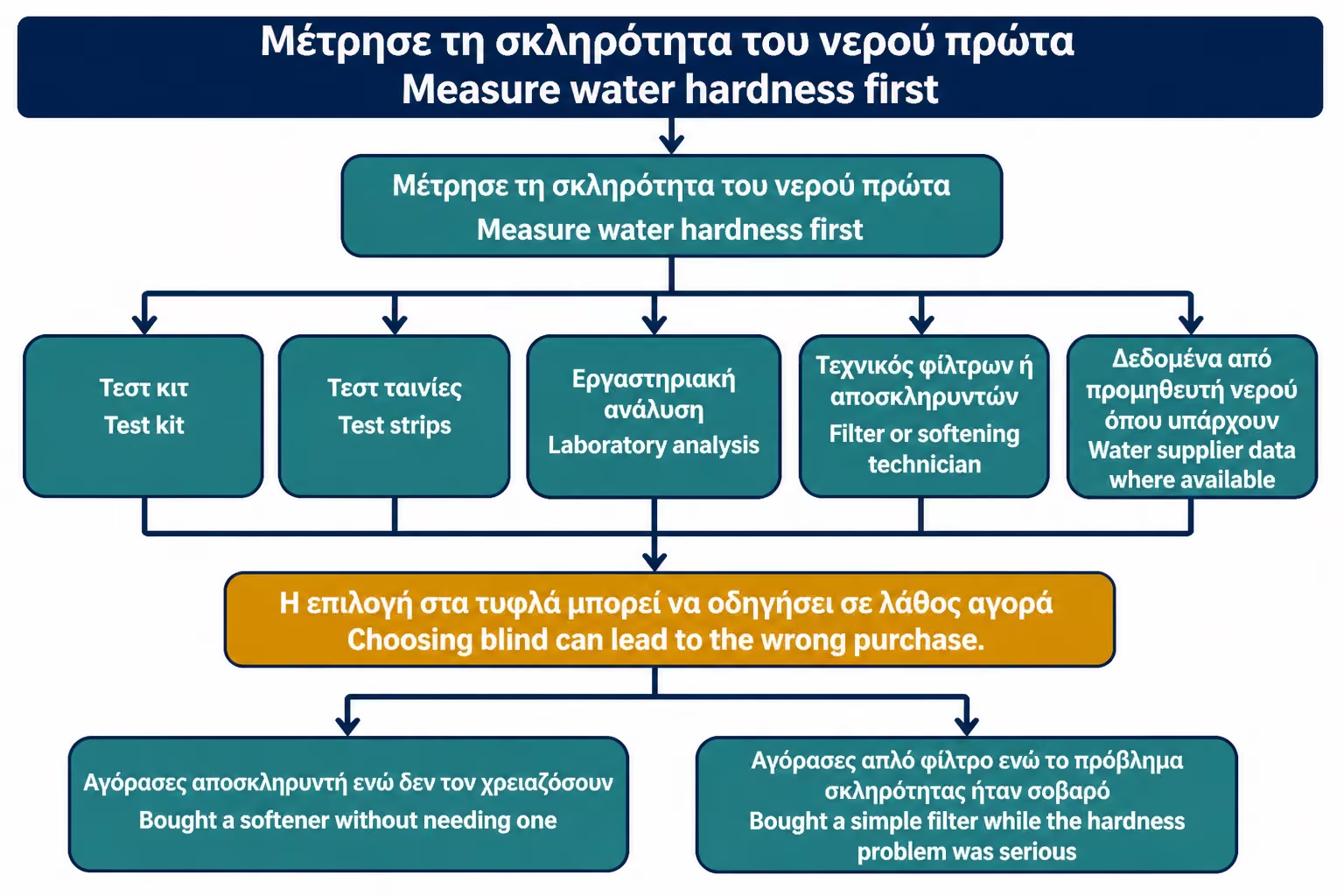
Before you decide on a solution, you need to know how hard the water is.
Without measurement, the choice is made "blindly".
You may buy a softener when you don't need it, or a simple filter when the problem is serious hardness.
Water hardness can be measured in one of the following ways:
A simple test kit
Test strips
Laboratory analysis
A filter or softening technician
Data from the water supplier, where available
19. When Salts Show Need for Pipe Replacement
If the mains is old and already has reduced flow, salt may be only part of the problem.
Pipe replacement should be considered when one or more of the following are present:
Low flow at many outlets
Filters clogging constantly
Brown or rusty water
Galvanized or iron pipes
A network older than 30-40 years
Micro-leaks
A full renovation is already happening
Many old repairs across the system
In such cases, the filter or softener can protect the new network, but does not negate the need to change an already worn old network.
20. What to Ask the Plumber or Technician
The key questions worth asking the plumber or technician are the following:
Do we have hard water or suspended particles?
Do we need a hardness measurement?
Is the main problem scale or old pipework?
Is a whole-house filter enough?
Do we actually need a water softener?
Where will the system be installed?
Will it stay accessible for service?
What consumables will it need?
Will the drinking water setup be affected?
Is a bypass needed?
Is there space for a regeneration drain?
What will maintenance cost over time?
Are there old iron pipes that should be replaced first?
Don't buy a system based on a commercial description alone. Ask for technical justification.
21. Hard Water and Salt Checklist
The table below works as a quick check to see whether the issue may need a broader response:
| Inquiry | Yes / No |
|---|---|
| Do you have white salts on batteries and tiles? | Yes / No |
| Do aerators often clog? | Yes / No |
| Does the shower head lose flow often? | Yes / No |
| Is the hot water flow low? | Yes / No |
| Is the water heater making noise or has reduced performance? | Yes / No |
| Do cartridges or floats often fail? | Yes / No |
| Has the water hardness been measured? | Yes / No |
| Is there a central supply filter? | Yes / No |
| Are there old iron pipes? | Yes / No |
| Are the filters clogged with rust or scale? | Yes / No |
| Has a softener been tried? | Yes / No |
| Is there a filter maintenance program? | Yes / No |
If there are many "yes", the issue usually needs a broader solution, not just simple tap cleaning.
22. Example of a Simple Problem
A homeowner notices that the basin has low flow. They unscrew the aerator and find it full of scale.
It is cleaned with vinegar, fitted back in place, and the flow returns.
If this happens infrequently, it is not necessarily a sign of a serious problem. It is normal maintenance in an area with moderate hardness.
23. Example of a More Serious Problem
In another home, the aerators clog every month, the shower head keeps filling with limescale, the hot-water flow is low, and the water heater makes noise.
The measurement shows very hard water.
In this case, simple cleaning only helps temporarily. A more appropriate solution is to consider whole-system protection: a particle filter and, if the water analysis justifies it, a water softener.
24. Old Network Example
In an older apartment, there is low flow, brown water in the morning, and filters that clog often.
The owner considers installing a softener. The plumber, however, finds that the old galvanized pipes already have internal corrosion and narrowing.
In that case, a softener does not solve the root problem. The condition of the old pipework has to be addressed first.
💡 The Engineer's Advice
If you can already see limescale on the taps, there is a strong chance there is limescale inside the plumbing too. The real question is whether this is simple maintenance or serious buildup that is already restricting flow.
Do not confuse a whole-house particle filter with a water softener. The filter traps debris, rust, and sand. The softener reduces the hardness of the water itself.
Before buying any system, measure the water hardness and check the condition of the pipes. If the pipes are already old and partly blocked, no filter will make them new again.
In a full bathroom renovation, if there is a serious limescale problem, it is worth planning protection for the new pipework from the start.
Conclusion
Limescale buildup inside pipework is a slow but important problem.
Hard water can lead to the following problems across the system:
White marks
Clogged filters
Low flow
Weak shower performance
Hot-water problems
Wear in taps and mixers
Water-heater faults
Frequent maintenance needs
Reduction of the internal pipe diameter
The main response options are usually the following:
Cleaning filters and shower heads
A whole-house filter for particles
Special systems that help limit deposits
A water softener for real hardness reduction
Replacement of old pipes when the system is already worn out
The right solution is not the same for every home.
First we measure hardness. Then we check the network status. And then we choose if a filter, softener or pipe replacement is needed.
Salts are not always visible inside the pipes. But when they start reducing the flow, the network already warns you.
Related Articles
Low Water Pressure in the Shower or Sink: Causes, Control and How to Restore Proper Flow Low Pressure Only in Hot Water: Why It Happens and How to Identify the Problem Brown or Rusty Faucet Water: What It Means, When It's Temporary, and When It Indicates Old Iron Pipes Temperature Fluctuations in the Shower: Why You Freeze or Burn When Someone Turns on the Faucet or Pulls the Faucet
Plumbing & Electrical Bathroom Infrastructure
Return to category.
Go to categoryCentral Guide
Return to the central guide.
Go to guide