Siphoning
Poor venting pulls water out of the trap seal.
Drainage venting is one of the most misunderstood topics in a bathroom. Most homeowners think about the pipe that carries away water and waste, but far fewer realize that the same network also needs air to work properly.
A drain is not just a pipe that takes water away. It is a live network in which water, air, and pressure are constantly interacting. When you flush the toilet, empty the bathtub, or run a heavy flow through the shower, pressure changes are created inside the pipework.
If the network does not "breathe" properly, it can pull water out of the traps. Once the water seal is lost, odors from the main drainage system can travel back into the bathroom. That is the siphoning effect.
That is why a proper drainage installation must include proper venting: either with a vent pipe terminating above the roof, or, in specific cases, with a suitable air admittance valve where that approach is allowed and correctly applied.
Drainage venting is the system's ability to take in or release air so pressure inside the pipes stays balanced.
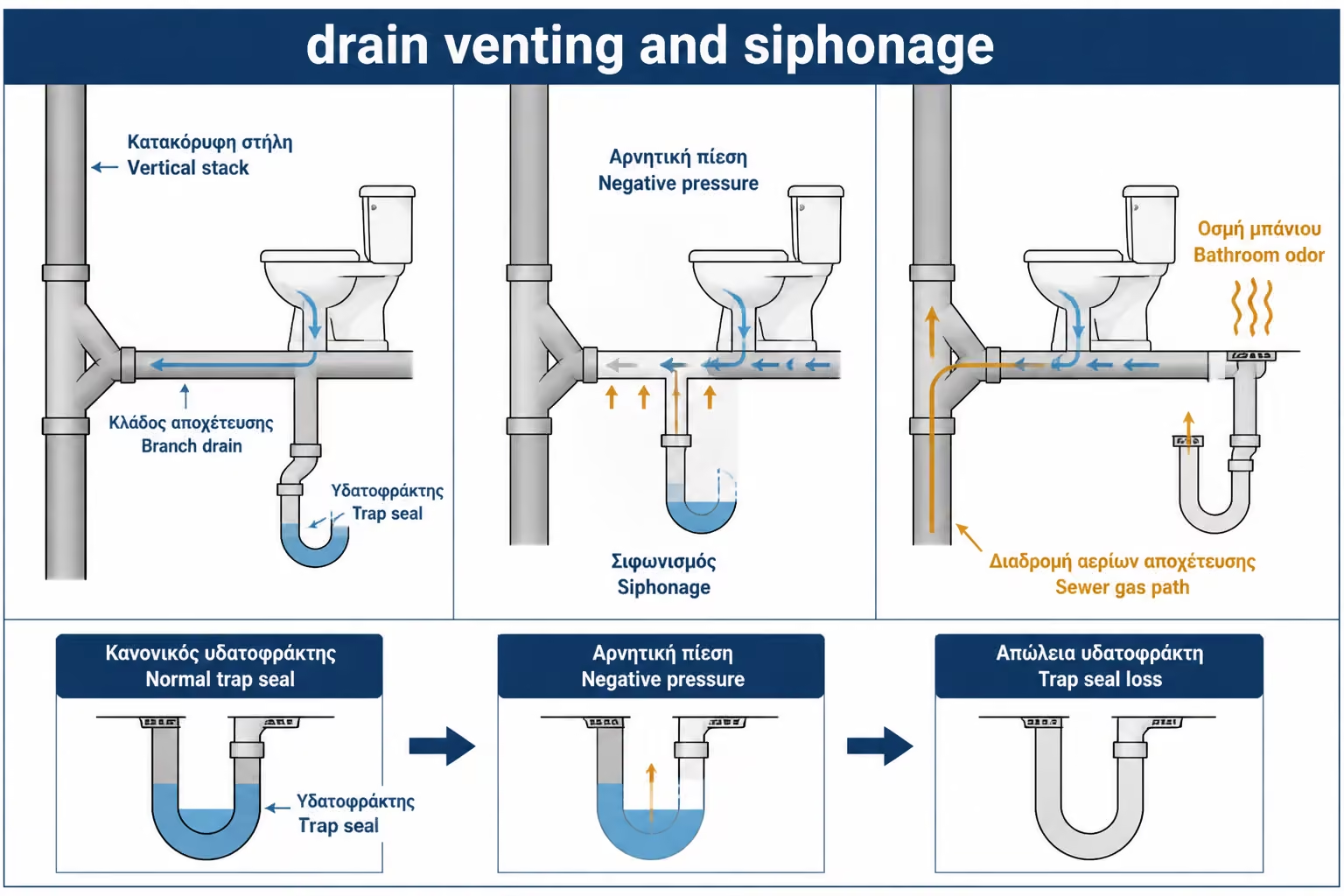
As water moves through the drain, it pushes air ahead of it and can create negative pressure behind it. If the network cannot draw in replacement air, that negative pressure can "suck" water out of the traps.
That trapped water is what seals off sewer odors. Once it is gone, smells pass into the room. Venting is not an optional extra. It is a core part of proper drainage design.
Siphoning is the effect in which trap water is pulled out because negative pressure develops in the drainage network.
In practice, this is most obvious when the toilet discharges quickly, the network needs replacement air, cannot get it through a proper vent path, and starts pulling it through a nearby trap instead. Along with the air, it also drags away the trap seal water.
That is why you may hear a gurgling sound from the basin trap or floor drain when the toilet is flushed. It is a warning that the network is not venting properly or that the drainage layout itself has a design problem.
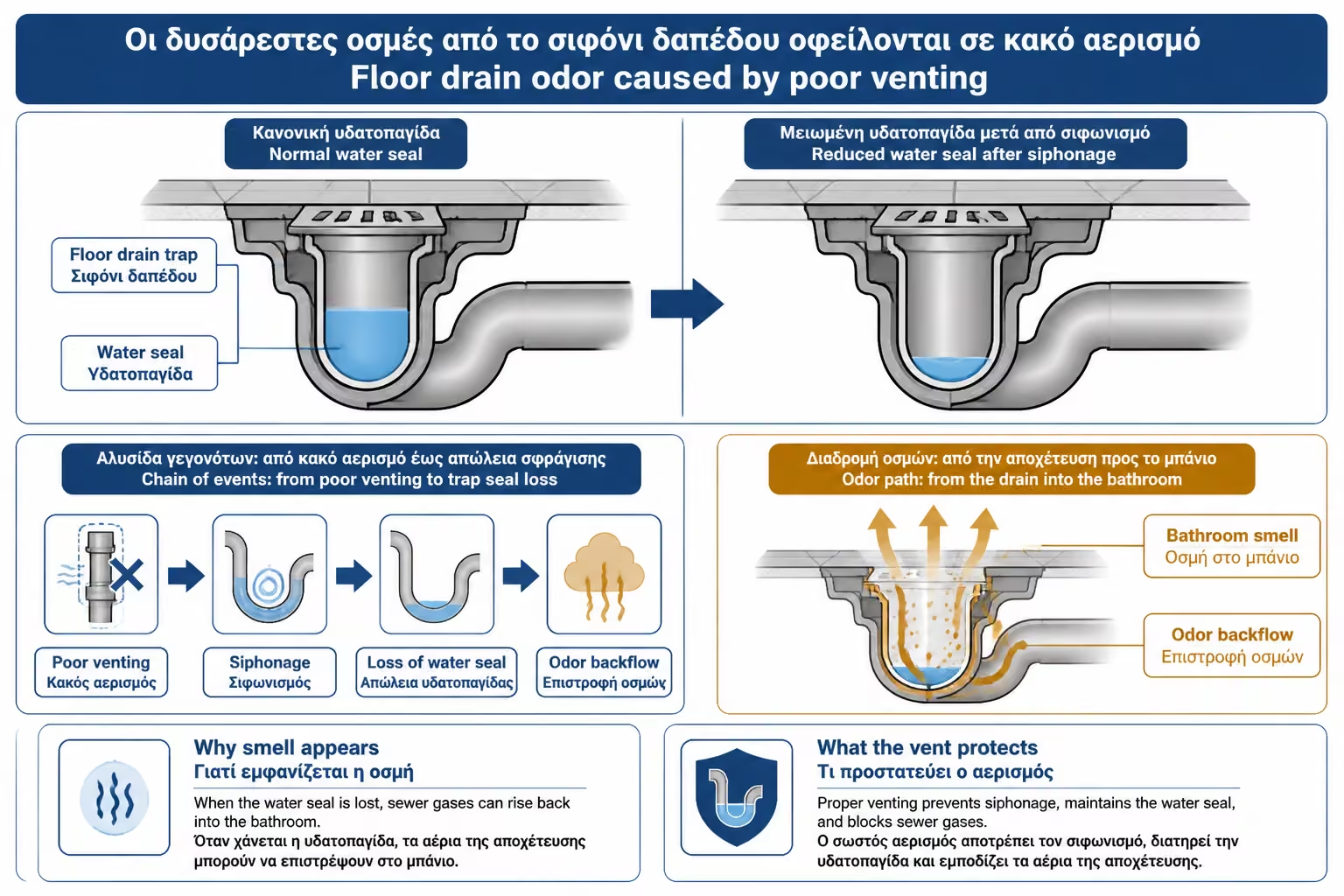
Traps hold water inside the odor seal. That water acts as a barrier that stops sewer odors from rising back through the drain.
Once that barrier is lost, the bathroom starts to smell. The cause is not always the same, so the diagnosis has to separate siphoning from simple evaporation, poor layout, or a broader drainage fault.
Poor venting pulls water out of the trap seal.
In a rarely used bathroom, the seal may simply dry out over time.
A bad drainage connection can expose the room to both pressure effects and odors.
Reduced flow changes pressure behavior and stresses the traps.
When the drainage geometry is wrong, the whole system behaves badly.
Longer runs increase the need for correctly designed venting.
Without a proper air path, the network steals air through the traps.
A small water seal is simply easier to lose.
Use at other fixtures can upset a vulnerable branch.
If the problem only appears in a rarely used bathroom, the trap seal may simply have evaporated.
But if it happens when the toilet is flushed or when a large volume of water discharges, the venting of the drainage network should be checked properly.
Venting problems usually announce themselves before anyone names the real cause. The important thing is to notice the pattern, not just one isolated symptom.
If everything looks dry but the room smells, drainage belongs in the diagnosis.
The system is often pulling air through the wrong point.
The toilet discharge is a classic stress test for venting.
Strange bowl behavior often signals unstable pressures in the network.
If it is not limited to one fixture, the issue may be more systemic.
The water seal is being lost faster than it should.
Large flows make bad venting much easier to expose.
This is one of the clearest signs of poor venting or poor layout.
If it keeps coming back, dirt is probably not the real cause.
If there is an odor while the traps are clean and still hold water, the whole drainage network and its venting should be investigated.
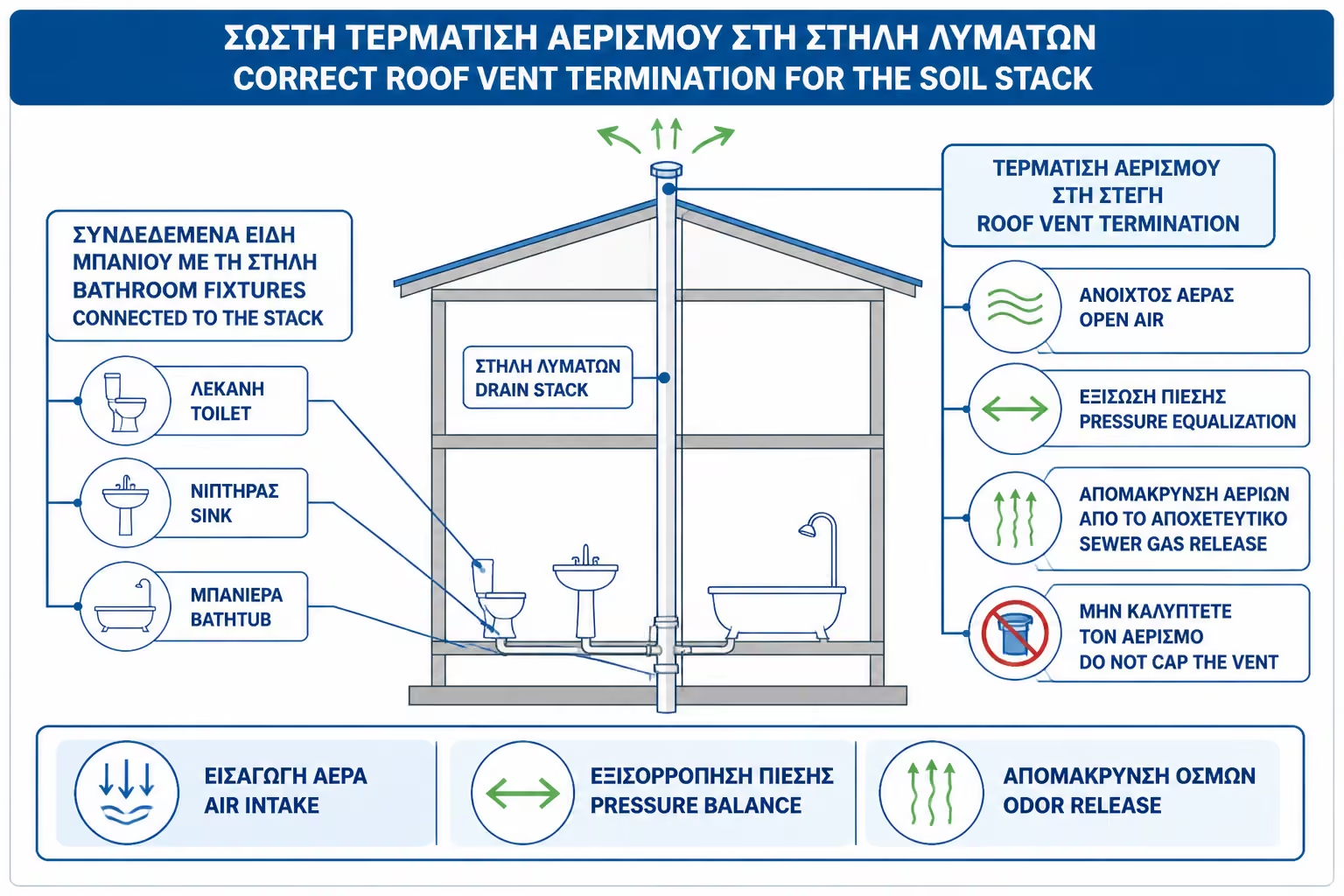
The most reliable and standard approach is for the vertical drainage stack to continue upward and terminate in the open air, usually above the roof.
That open roof termination lets the network draw in air when it needs it, release gases outward, balance pressure, reduce siphoning, and protect trap seals during toilet flushing and other heavy discharges.
The vent stack should never be cut, capped, or blocked off just because it smells or because someone dislikes how it looks.
If odors are noticeable on the roof or elsewhere, the answer is to check the outlet location, its height, and its distance from openings, not to remove the venting function.
If someone closes or caps the drainage vent termination, serious problems can follow. The network will no longer be able to balance pressure properly.
Trap seal water is lost and odors can return.
Air starts passing through the wrong fixtures and makes itself heard.
Once the water seal is broken, sewer smell reaches the room.
Poor pressure balance interferes with smooth discharge.
The network stops behaving in a stable, predictable way.
Smells no longer leave the system the way they should.
Bathroom traps lose their seal more easily than they should.
The toilet is often the first place where bad venting becomes obvious.
A drainage system has to breathe. If its air supply is cut off, it will try to pull air through the traps instead.
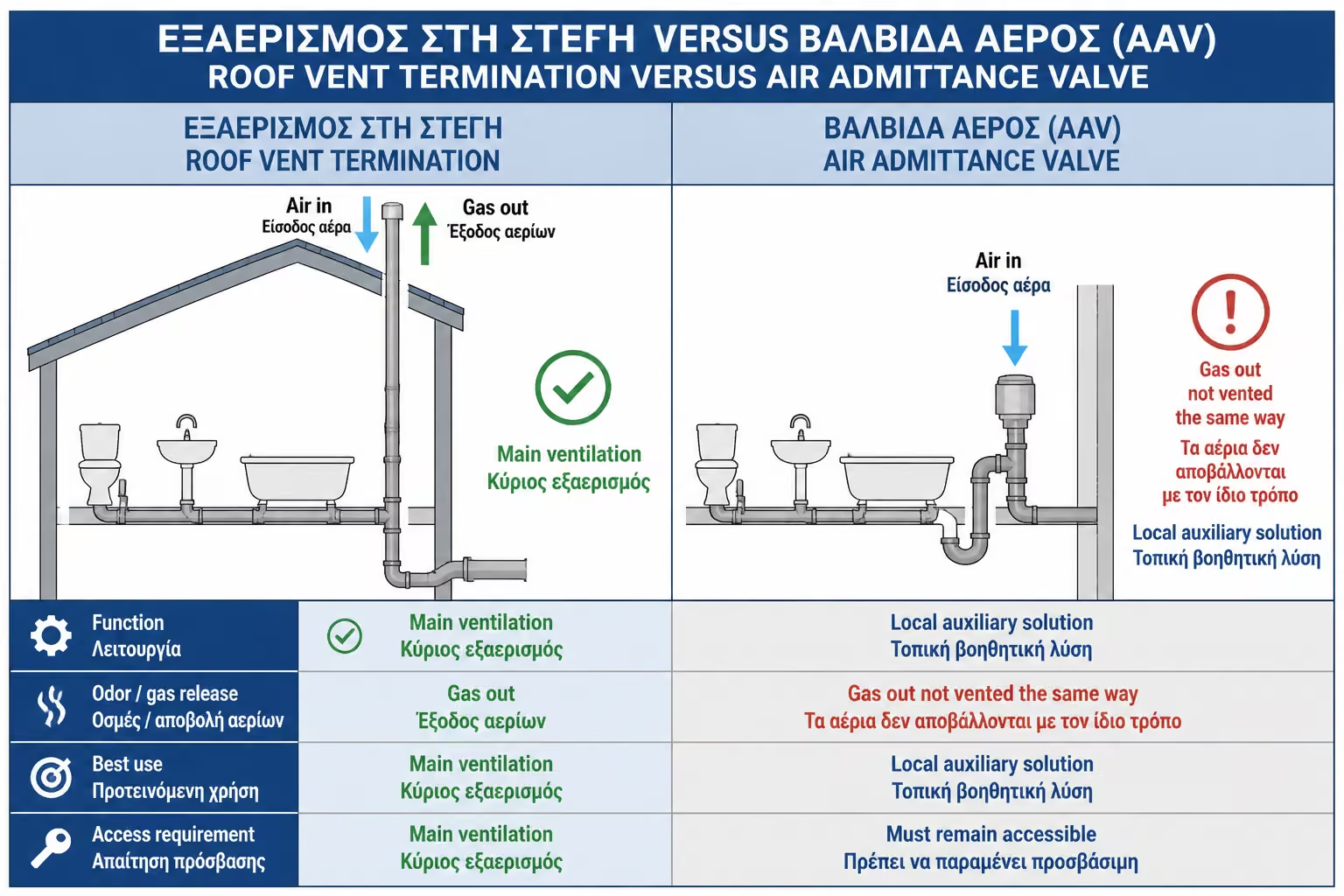
The vent valve, also known as an air admittance valve, is a component that allows air to enter the network when negative pressure develops.
When needed, it opens and lets air in. When not needed, it closes so odors do not come back into the room.
It can be useful in specific situations, especially where extending a full vent to the roof is difficult. But it is not a magic fix for every drainage problem, and it has to be chosen and installed correctly.
A vent valve can mainly be considered in situations like the following:
A local solution can make sense when the problem is not general.
In renovation work, a new vertical vent is not always easy to add.
The farther the branch is, the more it may need help drawing air.
A valve solves a specific lack of replacement air, not every drainage failure.
The plumber still has to judge whether it truly fits the installation.
It can be placed:
A common location if access and surrounding air are both adequate.
Suitable only if the valve remains reachable later.
Access is a requirement, not a convenience.
The critical point is that it must not be trapped behind finished materials.
The valve position should serve the exact run that needs air.
The key point is that it remains accessible for inspection or replacement.
It should never be buried permanently behind tiles or any other inaccessible finish.
A vent valve does not always replace a proper vent stack.
Some situations need a more fundamental technical solution, such as the following:
The answer has to address the root of the system, not a side symptom.
A valve does not replace a vent stack that is not functioning.
A proper roof termination serves a role a valve cannot fully replace.
If the issue is widespread, a local fix usually will not be enough.
A valve does not repair bad drainage geometry.
If the flow path is obstructed, that has to be solved first.
Undersizing needs design correction, not a convenient add-on.
If the central system is involved, the answer cannot be a private patch.
The valve allows air in. It does not correct bad drainage geometry, a blocked stack, or a wrong connection.
The comparison below shows clearly what each option does and where each one fits best:
| Criterion | Roof Vent Termination | Vent Valve |
|---|---|---|
| Operation | Allows air in and out | Mainly allows air in |
| Elimination of odors/gases | Yes, to the outside | Not in the same way |
| Suitability for core network | Very important | Complementary solution |
| Use in renovation | Harder if none exists already | Easier locally |
| Maintenance | Usually limited | Needs access and may need replacement |
| Risk of application error | If capped or badly positioned | If installed without access or undersized |
| Role | Basic ventilation | Local supporting solution |
The best solution remains a network with proper vertical venting. A vent valve can help in the right situation, but it should not be used as a quick patch without technical review.
The floor drain trap is especially vulnerable to siphoning because it often serves multiple discharge points and sits at a low point in the bathroom.
If the network pulls air through it, the trap seal can empty and odors will appear. That is especially common when the connection is wrong, when too many fixtures discharge into one point, when the WC empties nearby, or when the trap seal itself is shallow and vulnerable.
If the floor drain smells after the toilet is flushed, cleaning alone is not enough. The venting and the overall drain connection need to be checked.
The WC creates a sudden, high-volume discharge. That is why it is one of the fixtures that affects network pressure the most.
When you flush, water moves quickly toward the stack. If the stack is not vented correctly, negative pressure can build up and pull water from nearby traps.
Possible signs:
A WC connection needs the right pipe size, the right fall, and the right venting strategy. If one of those is wrong, flushing is often where the problem shows up first.
The basin has its own trap, usually under the vanity, so it is often one of the first places where a venting problem becomes obvious.
If the drain is not vented properly, you may hear gurgling or notice odors even when the trap itself is clean.
Many homeowners assume the basin trap itself is at fault or simply needs cleaning. But the real cause may be negative pressure elsewhere in the drainage network.
If the sink smells often:
If the basin smells often, do not stop at cleaning alone. A venting problem should also be ruled out.
In walk-in showers, odors become especially annoying because the drain opening is often exposed and very close to the user.
If the trap seal empties, odors show up immediately.
The problem tends to get worse when one or more of the following conditions are present:
It often holds less water and is easier to deplete.
The less water it keeps, the easier it is to lose the odor barrier.
The longer the run, the more important proper venting becomes.
Walk-in shower drains reveal poor air balance very quickly.
The drainage path becomes more demanding and less forgiving.
Evaporation adds another layer to the venting problem.
With linear drains and wall drains, venting control becomes even more important because many of these systems are less forgiving of installation mistakes.
If a newly renovated bathroom smells, it does not automatically mean the materials are poor or the room is being cleaned badly.
Some of the most common technical causes are the following:
A technical mistake often becomes obvious only when the bathroom starts normal use.
The bathroom smells even though everything is new.
The issue may be the air path, not cleaning or materials.
If the main outlet does not work, pressure problems show up elsewhere.
Bad selection or bad positioning gives a false sense of solution.
Bad slope affects both flow and venting behavior.
A shallow seal is much easier to lose.
If no one checked it properly, faults appear after handover.
In that case, the issue needs a technical diagnosis. Air fresheners may hide the symptom for a while, but they do not solve the cause.
In a proper technical inspection, the plumber should work through at least the following points:
The first check is whether the stack actually reaches open air.
A capped outlet is enough to upset the whole network.
Venting depends not just on presence, but on proper dimensioning.
If they exist, they should also be correct and accessible.
Bad layout can imitate or create a venting fault.
Long branches change the way the system behaves under use.
The drainage path needs to flow correctly if venting is going to work correctly.
If the traps are too shallow or wrong, odors return more easily.
Cleaning a trap is not enough on its own. If the root cause is venting or layout, the problem will come back.
A vent valve has to be placed in a suitable location so it can draw air when negative pressure develops.
Where required, the position has to respect fixture flood levels.
If you cannot reach it later, the placement is already poor.
Permanently burying it creates future damage for simple maintenance.
The valve should operate in a safe environment.
It needs room to admit air properly when negative pressure appears.
Undersizing does not solve the problem, it just relocates it.
The exact position should match the valve system being used.
A very common mistake is installing a valve inside a closed construction with no access. If it fails, replacement becomes a repair job instead of simple maintenance.
A vent valve is a mechanical component and should never be treated as something that will work forever without inspection.
Over time it can stick, get dirty, stop sealing properly, lose effectiveness, or simply reach the point where it needs replacement like any other mechanical part.
That is why it must remain accessible. If a bathroom with a vent valve smells, the valve itself should be checked, and it should never be treated as a once-and-for-all installation.
If new drainage work or a full bathroom renovation is being priced, the quotation should state clearly what is being done about venting.
To avoid ambiguity, the quote should clarify at least the following points:
The quote should say whether one exists and what condition it is assumed to be in.
It is not enough to assume the stack works simply because it exists.
The quote should say clearly whether that solution is part of the plan.
The intended position should be specific and technically sensible.
It should be clear that the valve will remain reachable later.
The quote should say if the main building drainage system is involved.
In an apartment building, the work may not be a purely private matter.
The diagnostic scope should be written explicitly, not left implied.
The phrase "new drainage" on its own does not guarantee proper venting.
The cost depends on whether there is already proper ventilation or whether new interventions are required.
As a rough guide, the typical cost range looks like this:
| Work / Material | Realistic cost |
|---|---|
| Simple siphon and odor control | €50 – €150 |
| Placement of ventilation valve in an accessible place | €80 – €250+ |
| Correction of drainage connection with ventilation | €150 – €500+ |
| Check or clean ventilation column | per case |
| New vertical venting or major surgery | €500 – €1,500+, depending on access and apartment building |
The prices are indicative. In high-rise buildings, costs can be affected by access to shared columns, roof, skylight or other floors.
Some of the most common mistakes that lead to odors, siphoning, or the wrong diagnosis are the following:
The vent stack is capped to stop odors, but that creates siphoning elsewhere.
It is hidden behind tiles and cannot be checked or replaced easily.
The trap is cleaned while the real problem is negative pressure in the network.
A shallow trap seal empties easily and the odor appears immediately.
The new route creates pressure changes and new venting problems.
It is used as a workaround while the real fault is in the main drainage system.
Use the checklist below to confirm whether the key venting points have actually been checked:
| Question | Yes / No |
|---|---|
| Is there a drain vent termination above the roof? | Yes / No |
| Has it been checked that it is not capped or blocked? | Yes / No |
| Do you hear gurgling when the toilet is flushed? | Yes / No |
| Do the traps empty or smell? | Yes / No |
| Is there a vent valve where needed? | Yes / No |
| Is the valve accessible? | Yes / No |
| Has the WC connection been checked? | Yes / No |
| Has the shower drain been checked? | Yes / No |
| Are the pipes sloped correctly? | Yes / No |
| Is the ventilation control mentioned in the offer? | Yes / No |
If there are many "no's" and the bathroom smells, the ventilation needs to be seriously checked.
An owner renovates an old bathroom. The WC is moved a little farther away, a walk-in shower is added, and a new floor drain is installed. But the vent stack is never checked.
After handover, every flush causes a gurgling sound at the shower drain. A little later, odors start to appear.
The trap is cleaned, but the problem comes back.
The cause was not dirt. The network was not venting properly and was pulling water out of the trap seal.
In another renovation, the plumber checks the stack, the WC position, the distances, and the traps before the drainage runs are closed up.
He finds that one branch needs extra venting, so a suitable vent valve is installed in an accessible position inside a cabinet with an access panel.
After installation, a proper test follows: the toilet is flushed, water runs through the shower, and the traps are checked.
There is no gurgling, the trap seal stays in place, and no odors return. That is what correct technical planning looks like.
If a bathroom smells after flushing the toilet or if you hear gurgling at a trap, do not assume the problem is simply poor cleaning. Very often the real issue is bad venting that pulls water out of the trap seals. The right fix is to check whether the drain stack terminates properly above the roof, whether that termination is open, whether a local vent valve is needed, and whether the pipe falls are correct. Never hide valves or venting points behind inaccessible finishes. Anything with a mechanical function must remain serviceable.
Proper venting is essential if a bathroom drainage system is going to work reliably.
The network needs to "breathe" so that flushing the toilet or discharging a large volume of water does not create negative pressure that empties the traps. Once the trap seal is lost, sewer odors return to the room.
A proper installation checks all the critical venting points, not just whether water disappears down the pipe.
It has to exist, stay open, and actually work.
The system should prove in use that it can breathe properly.
A valve belongs only where it genuinely helps and is technically justified.
Anything mechanical should remain reachable for inspection and replacement.
Good drainage flow and good venting behavior go together.
The toilet branch is often the first place where a fault becomes obvious.
The seals should hold water and stay stable in real use.
Gurgling or seal loss means the network still needs real investigation.
Bathroom odors are not always solved with cleaner. Very often they are solved with proper air in the drainage system. A well-designed bathroom does not just have drainage. It has drainage that can breathe.
Return to category.
Go to categoryReturn to the central guide.
Go to guide