
Plumbing & Electrical Bathroom Infrastructure
Return to category.
Go to categoryDampness in the bathroom does not only appear when we see the mirror fogging up. It starts from the moment the hot water is turned on in the shower and the air is filled with water vapor. If these water vapors are not removed quickly, they sit on tiles, joints, ceiling, furniture, mirrors, frames and cold surfaces. At first the problem seems innocent: a little blur, a few drops, a smell of closure. Over time, however, it can develop into mold, blown paint, blackened joints, worn furniture and a permanent feeling of dampness.
The simple bathroom fan helps, but it has one major drawback: it depends on the user. If someone forgets to open it, closes it with the light immediately after showering, or avoids it because it makes noise, the ventilation is not done properly. In windowless bathrooms, this is especially serious. The room may remain full of water vapor for a long time after use.
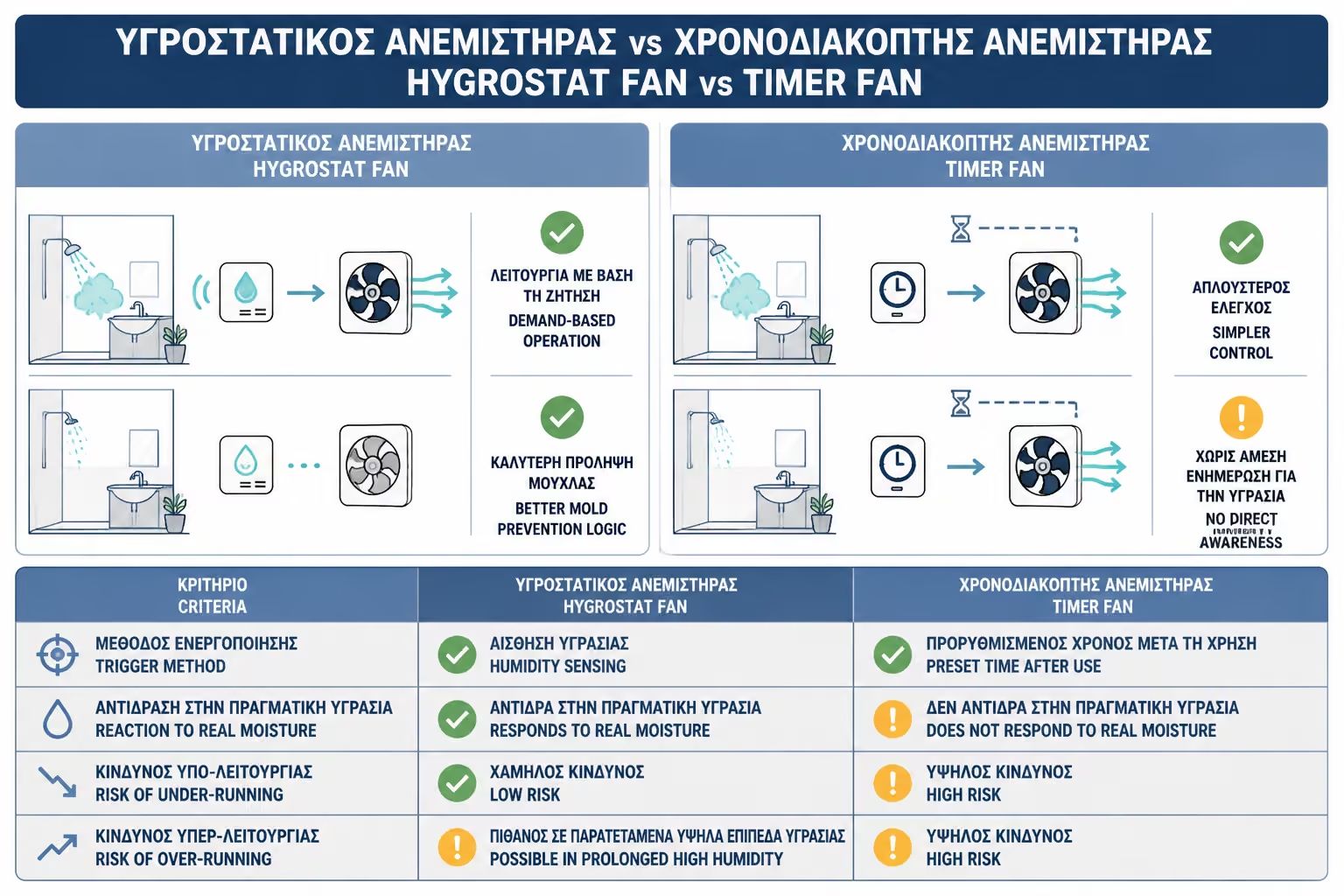
This is where the ventilator with hygrostat comes in, i.e. with a humidity sensor. Instead of waiting for the user to press a switch, it monitors the relative humidity of the room. When the humidity rises above a threshold or when the sensor detects a sudden increase due to a shower, it activates the fan. When the humidity drops back to an acceptable level, it stops. Manufacturers and technical guides describe exactly this function: the sensor monitors the humidity, activates the fan when the limit is exceeded and stops it when the air returns.
This has two major advantages. First, it reduces the risk of mold, because the ventilation is done when it is really needed. The EPA notes that controlling moisture is a key home mold prevention measure. Second, it can save electricity compared to a fan that stays on unnecessarily for hours, because it does not work based on habit but based on actual humidity. Of course, this is true when the fan is properly adjusted, properly sized, and properly installed.
In this guide we will see how a fan with a humidity sensor works, when it is better than a simple fan with a switch or timer, what you need to pay attention to in the setting, how the volume of the bathroom and the air duct affect the performance, what is required in the electrical installation and what mistakes lead to noise, poor operation or permanent humidity.
A hygrostat is a sensor and control mechanism that measures the relative humidity of the air. In a bathroom fan, its job is to decide when the humidity has risen enough to require ventilation. Instead of the fan only running when the light is on, it can run automatically when the room fills with water vapor.
In simple models, the user or technician sets a humidity threshold, for example 60%, 70% or 80% relative humidity. When the humidity exceeds this limit, the fan starts. When it drops below the threshold, it stops. In smarter models, the sensor can sense the sudden increase in humidity, even if the general humidity of the house is already high, and activate the fan more correctly.
This is important in Greece, where the humidity of the outdoor environment can be high in certain areas or seasons. If the hygrostat is simple and set very low, it can work continuously on humid days. If it is set too high, it may not open in time after the shower. Proper setup is critical.
The owner does not need to know electronics. But he must understand that the hygrostat is not a "magic eye". It is a sensor that needs the right position, the right setting and the right fan. If the fan is small or the vent is bad, the sensor will give a command, but the room will not dry properly.
The simple switch fan has one key advantage: it's simple. It lights up when you give it power and goes out when you cut it off. If connected to the light, it turns on with the lighting. This is economical and understandable. The problem is, it doesn't know anything about humidity.
In a bathroom, the humidity doesn't end when the light goes out. After a hot shower, surfaces remain wet and the air full of water vapor. If the user turns off the light and leaves, the simple fan stops just when it needs to go on. That is why it is often recommended to run the fan during the shower and for some time afterwards. Recent home maintenance articles and guides often mention practices such as running the fan during and for 15–30 minutes after showering to reduce moisture and the risk of mold.
The problem is that few do consistently. Others forget the fan is off. Others leave it open too much. Others turn it off immediately because they are disturbed by the noise. So the ventilation is based on the user's behavior.
The fan with hygrostat solves part of this problem. No need to remember to open it. If the humidity rises, it starts. If it falls, it stops. In bathrooms without windows, in children's bathrooms, in Airbnbs or in places where many different users use the bathroom, this is a big advantage.
Timer and hygrostat are often confused, but they are not the same. The timer makes the fan run for a specified time after the light goes out or the command stops. For example, it can work 10, 15 or 20 minutes after use. The hygrostat, on the other hand, makes decisions based on humidity.
The timer is a good solution when habits are relatively stable. If each shower creates about the same humidity and the fan is properly sized, a 15–20 minute delay may be sufficient. But if someone takes a very hot and long shower, the time may not be enough. If someone just goes into the WC for two minutes, the timer can run pointlessly.
The hygrostat is more adaptive. If the humidity is low, it does not work for nothing. If the humidity remains high, it continues. This can save power and improve efficiency, as long as it is properly configured.
The best solution in many bathrooms is a combination of hygrostat and timer. The humidity sensor activates the fan when needed, while the timer ensures that it will not stop too quickly or have a controlled continuation after a manual command. In good models, the two functions work together.
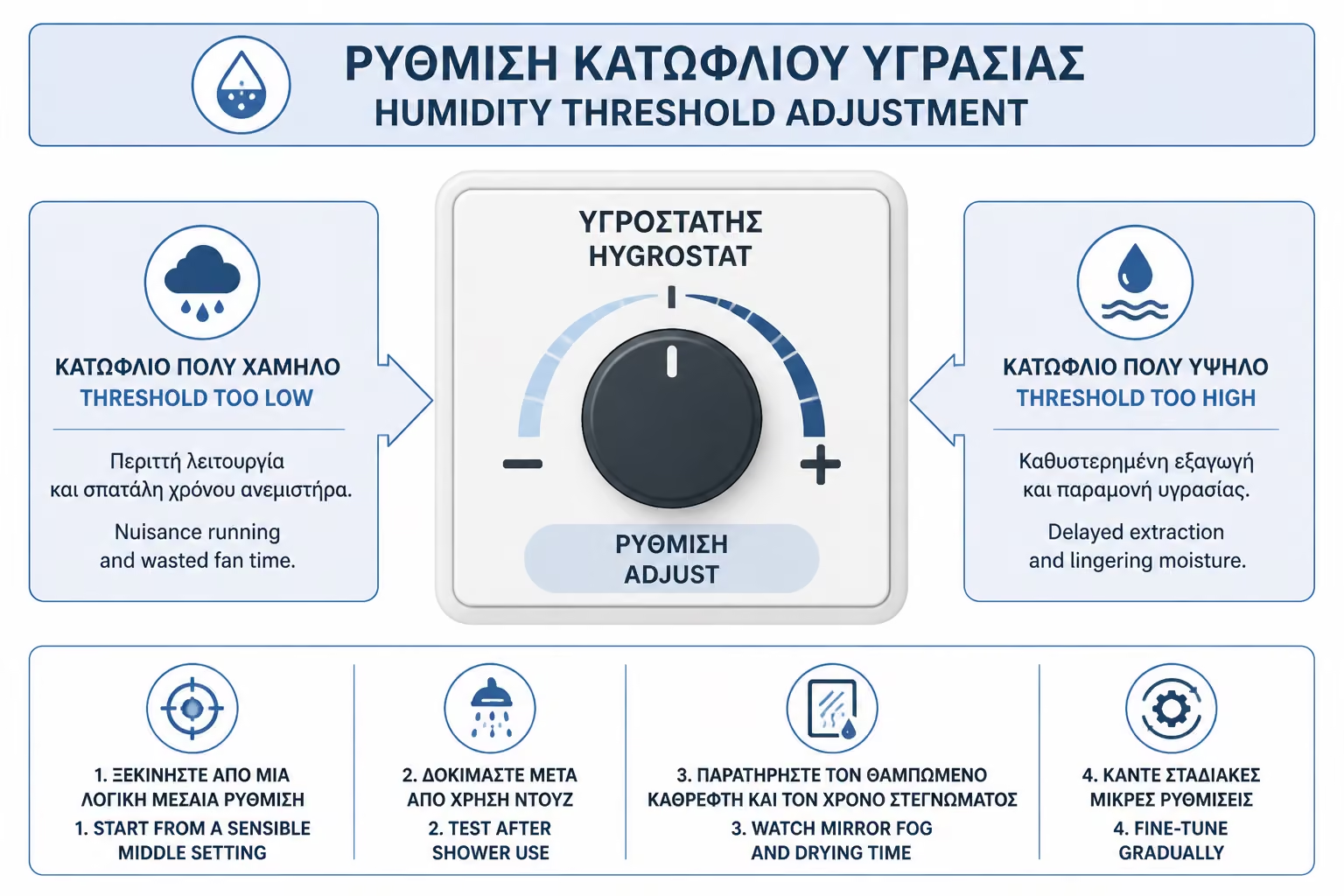
The setting of the hygrostat is one of the most critical points. If the limit is set too low, the fan may turn on frequently for no reason, especially on humid days. If it goes in too high, it may not activate in time and the bathroom will be left with steam.
Many models have small potentiometers or dip switches to adjust the limit. Some technical guides suggest practical adjustment with real use: you create humidity in the room, for example by running hot water for a while, and gradually adjust the hygrostat until it activates at the level you want. Humidistat fan setup guides describe a similar process: we increase the humidity in the room and adjust the limit until the fan starts at the right time.
In Greek bathrooms, a very low threshold can be annoying in coastal or wet areas. If the house is generally high in humidity, the fan may run too often. This does not necessarily mean that the system is bad. It may mean that the house needs more general ventilation or dehumidification, not just bathroom ventilation.
The correct adjustment is usually made after a few days of observation. If the mirror stays cloudy for a while, the threshold or operating time may be too high/low. If the fan runs continuously without using a bathroom, the limit may be too low or the sensor is in the wrong position.
The best sensor doesn't help if the fan is small for the space. The efficiency of a fan is measured in air flow, usually cubic meters per hour or CFM. It must match the volume of the bathroom, the use, the length of the air duct and the resistances of the installation.
For bathrooms, a rule of thumb based on air changes per hour is often used. The Home Ventilating Institute states that for many bathrooms ventilation is recommended on the basis of approximately 8 air changes per hour, while for typical bathrooms this often equates to approximately 1 CFM per square foot of surface area for an 8 ft. ceiling. These are not mechanically transferred to every Greek bathroom, but they show the logic: the fan should be calculated, not selected only by the diameter of the hole.
In a small WC, a small fan may be sufficient. In a bathroom with a shower, poor natural circulation and a long vent, a stronger or better quality model may be needed. If the air duct has many corners, if it is narrow, or if it ends at a point with a headwind, the actual efficiency drops.
A common mistake is to buy a fan based on the 100mm diameter without checking the actual output. Two fans of the same diameter can have very different performance and noise. The hygrostat activates the device, but the device must have the power to remove water vapor.
The fan does not remove the moisture. He carries her out of the room. If the vent is bad, the ventilator may work without any real effect. A vent that is too long, too many corners, a kinked hose, a dirty nozzle, a closed louver, or no external exhaust can drastically reduce performance.
One of the most serious mistakes is venting in a false ceiling, loft or empty space instead of outside. This simply moves the moisture from the bathroom to another part of the building. InterNACHI points out that bathroom exhaust fans should direct air to the outside of the home, not into spaces such as attics or hidden spaces.
In Greek apartments, there are often vertical apartment building ventilation ducts. If the vent is common, blocked, or without a proper non-return valve, odors or moisture may back up. If the fan is pushing into a bad column, performance is reduced. In such cases, the fan is not the only one to blame.
Before buying an expensive model with a hygrostat, check the air duct. A good fan in a bad vent is like a powerful pump in a clogged pipe. It makes noise, consumes power, but does not solve the problem properly.
A fan with a hygrostat can save electricity because it only runs when needed. If in a house the fan is often left on for hours "to dry the bathroom", the sensor can limit the operation to the really necessary time. Conversely, if users forget to open it, the hygrostat may increase the operating time, but improves the protection of the space.
So saving is not always a reduction in operating time. It's better control. The fan does not work unnecessarily when there is no humidity, but works when there is a real need. The result can be lower consumption compared to misuse, but also more operation compared to a user who closed it too early.
An important role is played by the consumption of the fan itself. Modern low consumption models, especially with good engines, can work economically. An old noisy fan can consume more and discourage use.
The real economy must be calculated along with the damage avoided. A bathroom with mold, blown paint, damaged furniture and blackened joints costs much more than the electricity of a properly working fan.
Mold needs moisture to grow. If surfaces are often left wet, especially in corners, ceilings, joints, behind furniture or around windows, the risk increases. The EPA emphasizes that controlling moisture is the key to preventing mold in the home.
Automated ventilation helps because it reduces the duration of humidity in the room. It doesn't leave ventilation to chance. In windowless bathrooms, this can be the difference between a clean ceiling and recurring mold in the corners.
But we should not expect the fan to solve all problems. If there is a leak behind tiles, poor sealing, thermal bridging, insufficient heating, a permanently closed door or furniture stuck to cold walls, mold can persist. The fan reduces water vapor, but does not repair leaks or insulate the room.
A practical example: bathroom with hygrostat fan still has mold behind the furniture. The fan works properly, but the furniture is against an external cold wall with no ventilation and there is a leak from the shower joint. In this case, the problem is not only ventilation.
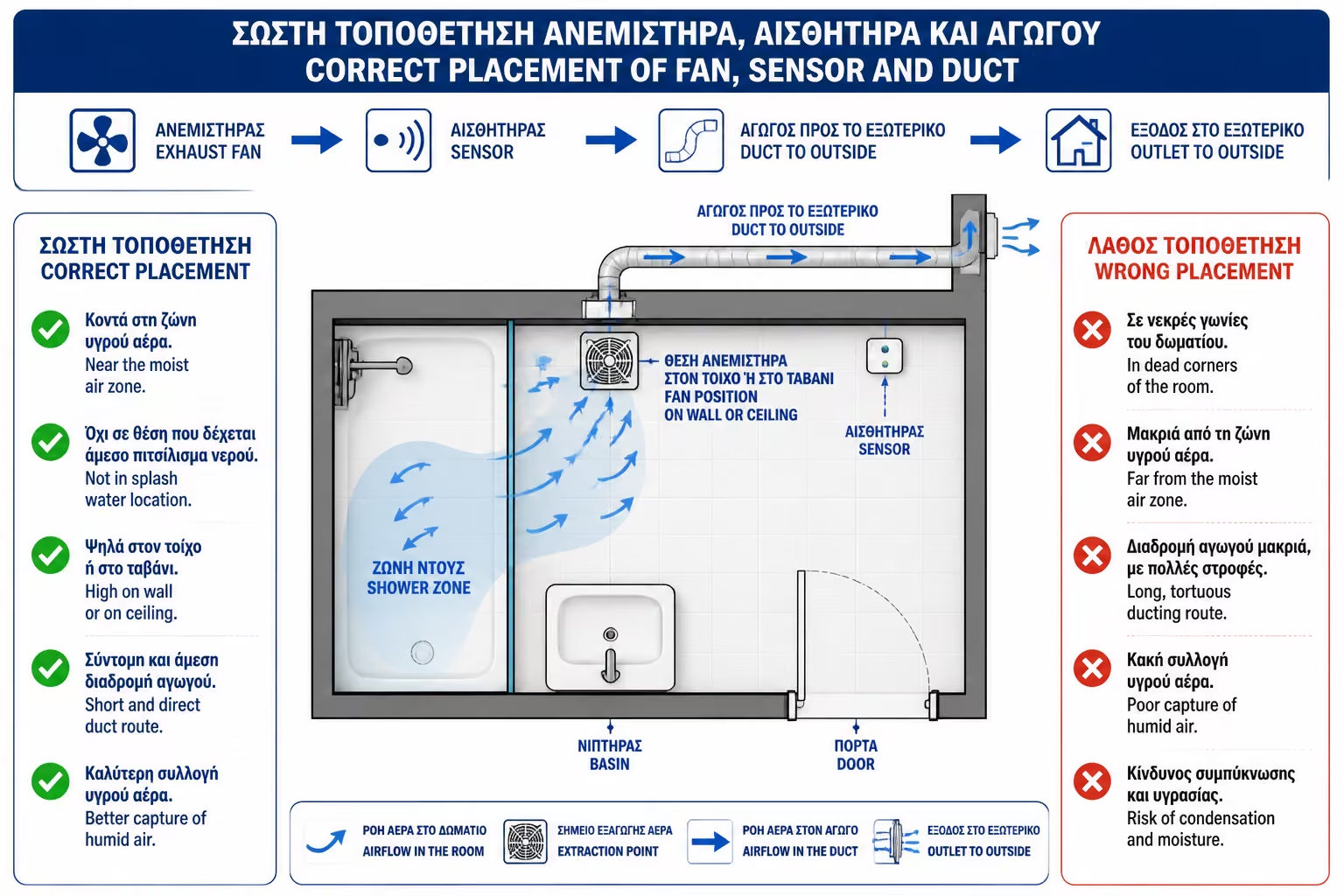
In most home fans, the humidity sensor is located inside the device itself. So the position of the fan also affects the measurement. If the fan is too far from the shower or in a blind corner, it may be slow to detect the increase in humidity. If it is too close to direct water, it may be in a zone that requires special protection or accept conditions for which it is not suitable.
Ideally, the fan should be located where it effectively collects moist air. Often this is high up on the wall or ceiling, close to the vapor generating area but not in the wrong zone and not where it receives direct splashes. The position must be combined with the route of the airway. A short and straight path is usually better than a long, twisty airway.
In large bathrooms, a different approach may be needed. If the shower is at one end and the fan at the other, the water vapor may stay locally. In such cases, an inline fan with an outlet near the shower and a unit in an accessible location may be a better solution.
The position should not be decided only by where a hole already exists. The old hole may be in the wrong location or lead to a bad vent. In renovation, it is worth considering from the beginning.
A fan with a hygrostat often needs a permanent power supply so that the sensor can monitor the humidity even when the light is off. If we want it to work with the light switch, it may also need switched live, i.e. a command from the light. If it has a timer, the wiring becomes even more important.
This means that the old wiring of a simple fan is not always enough. A simple fan might have only phase from light and neutral. A hygrostat/timer fan may need permanent phase, switched live and neutral, depending on the model. In technical discussions and guides for timer/humidity fans this need for different wiring is often mentioned.
Installation must be done by a licensed electrician. We are talking about an electrical device in a bathroom, with humidity and protection zones. The circuit must be protected by a 30 mA RCD, the product must have an appropriate IP for the location, and there must be a safe means of isolation for cleaning or replacement.
Rough connections must not be made inside a false ceiling, with terminals without a box or cables that take power "from wherever it's convenient". Automation does not make the installation more secure by itself. Correct wiring is essential.
The bathroom fan must have a degree of protection suitable for its location. If it is located away from the shower, the requirements are different than a fan above or very close to the shower. If located in a splash zone, higher protection and inspection by an electrician is required.
The issue is not resolved with the phrase "it's for the bathroom". We need to see the IP, the manufacturer's instructions and the installation zone. If the fan goes into a ceiling above a shower or in a small bathroom with a walk-in shower, the assessment must be strict.
Also, the humidity sensor is usually located inside the device. If the device is not suitable for the position, it is not enough to have a smart function. It can be damaged by moisture, give wrong readings or become electrically problematic.
Safe practice is to select a ventilator with a clear IP, suitable for the location, and install it in accordance with the manufacturer's regulation and manual. In a bathroom, electrical products do not fit "around".
Noise is very important. If the fan is annoying, users will try to avoid it, turn it off, or set the hygrostat so high that it rarely comes on. Thus the function loses its value.
A quiet model is more likely to be used correctly. Especially in bedrooms with en-suite bathrooms, in small apartments or in houses where the bathroom is close to sleeping areas, noise can determine the acceptability of the system. Noise depends on motor, mount, air duct, diameter, flow and vibration.
In many cases, an inline fan placed further away from the vent can be quieter in the bathroom. But it needs space, proper access and proper ventilation. It is not always possible in small apartments.
The mistake is to choose the cheapest fan and then wonder why everyone turns it off. In ventilation, comfort of use is a technical criterion, not a luxury.
There are two ways: a fan with a built-in hygrostat or an external switch/humidity sensor that controls a fan. The built-in solution is simpler and cleaner. The sensor is on the device and the setting is done from there. For most homes, this is the most practical solution.
The external sensor can make sense when we want a better measuring position or when the fan is inline and not inside the bathroom. Then the sensor can be placed in the room and command the fan. This solution is more flexible but requires better electrical design.
There are also smart home humidity sensors that can activate fans through automations. This solution can be interesting, but it should not replace safe electrical installation. If the Wi-Fi goes down or the hub is lost, basic ventilation should not be left out in a critical bathroom.
For most Greek bathrooms, a reliable fan with built-in hygrostat and timer is simpler and more durable than a complicated smart home automation. But if there is a complete smart home, humidity monitoring and recording may make sense.
In the Greek market of 2026, a simple bathroom ventilator can start around €25–60. A better model with a timer can be around €50–120. A fan with hygrostat, timer, low noise and better quality can be around €80–200 or more, depending on brand, power, noise, IP, design and functions.
The task depends on whether proper wiring is already in place. If an old fan is replaced with a new one of the same type, the cost is less. But if a permanent phase for a hygrostat, switched live for light operation, an isolator, a new line or a proper junction box has to be passed, the cost goes up. As an example, a simple replacement can run around €50–120 in labor, while new wiring and setup can reach around €120–300 or more, depending on access, false ceiling, accessories and installation condition.
If an air duct needs to be changed or cleaned, this is calculated separately. A good fan won't work if the vent is bad. Also, if an electrical upgrade, RCD or panel arrangement is required, the cost should not be hidden within the simple "installation of a fan".
The cheapest solution is not always the most economical. If a fan is noisy, weak or poorly adjusted, it will not protect the bathroom from moisture. The right solution is judged by performance, noise, regulation, ventilation and installation.
It's especially worthwhile in windowless bathrooms, small shower rooms, rentals or Airbnbs where you don't control user behavior, children's bathrooms, homes with recurring mold, and areas where users forget to turn on or leave the fan running.
It's also worth it in en-suite bathrooms where you don't want the fan running unnecessarily every time the light comes on at night. With proper adjustment, it can be opened mainly when there is real moisture and not every short use.
It may not be worth it in a WC without a shower, where no steam is generated. There a simple fan with a switch or timer can be enough for odors. It may also not solve the problem in a bathroom with structural moisture, leaks or thermal bridges. In such cases, the hygrostat helps, but does not treat the cause.
The right question is: is the problem moisture from use or is there another source of moisture? If it is water vapor, the hygrostat is a very useful solution. If it's a leak or a bad seal, it needs to be repaired first.
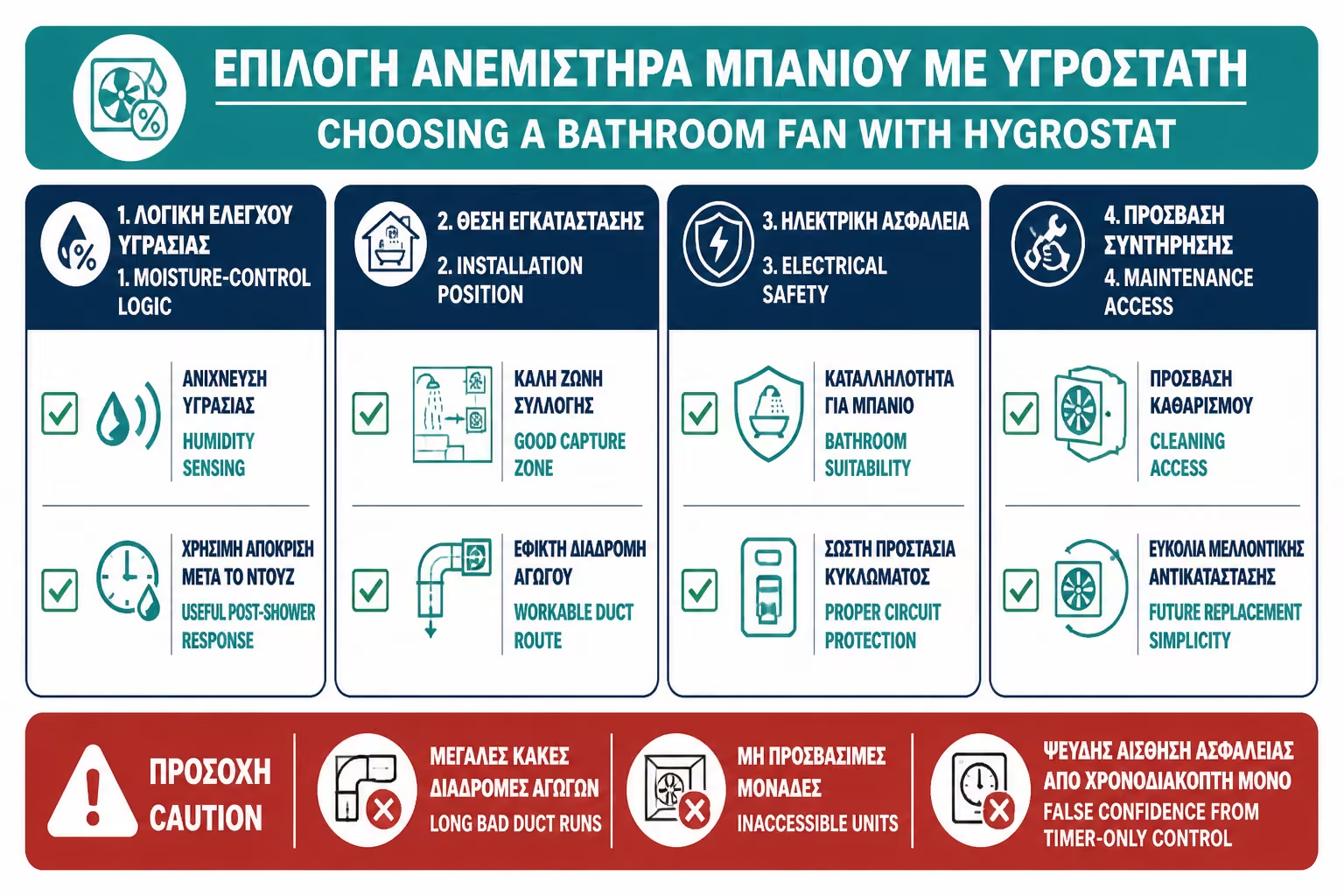
Before choosing a model, ask to check the volume of the bathroom, the position of the fan, the ventilation, the existing wiring, the need for a permanent phase, the RCD protection, the IP and the method of isolation. If the fan will also be connected to the light, proper wiring must be provided.
Also ask how the hygrostat is adjusted. With a potentiometer? With dip switches? By application? Can it be easily changed after installation? If the adjustment is behind a lid that does not open easily, adjustment will be more difficult.
A correct quotation should state the model, air supply, noise level, hygrostat/timer functions, IP, wiring work, isolator where required, and any duct work. If it just says “fan placement”, it's not clear enough.
After installation, request a trial. Create humidity, see if it opens, how long it stays on, and if the area dries out in a reasonable amount of time. The fan is not delivered properly because it just spins. It is properly delivered when the bathroom functions as it should.
The first mistake is the fan with a hygrostat in a bad air duct. The sensor gives a command, but the moist air does not leave properly.
The second mistake is wrong humidity setting. Too low means continuous operation. Too high means delayed activation.
The third mistake is choosing a weak fan. If the supply is not sufficient, the bath remains wet.
The fourth mistake is too noisy a model. If it's annoying, users will try to disable it.
The fifth mistake is the installation without a permanent power supply while the model needs it for a sensor or timer.
The sixth mistake is placing in the wrong zone or with an inappropriate IP for the location.
The seventh mistake is to expect the fan to solve mold from a leak or poor seal. Ventilation controls water vapor, not broken joints or pipes.
Before you finalize the choice or installation, review the following points first:
| Question | Yes / No |
|---|---|
| Does the bathroom have a real water vapor problem after use? | Yes / No |
| Has the required air flow been calculated for the size of the room? | Yes / No |
| Does the vent actually lead to the outside? | Yes / No |
| Is the air duct clear, free of many obstructions and free of kinks? | Yes / No |
| Does the fan have a hygrostat and timer if needed? | Yes / No |
| Is there proper permanent power for the sensor? | Yes / No |
| Is the circuit protected by a 30 mA RCD? | Yes / No |
| Is the IP of the fan appropriate for its location? | Yes / No |
| Can the humidity setting be adjusted after installation? | Yes / No |
| Has it been tested with actual humidity after installation? | Yes / No |
If the answers are not clear, model selection must wait. In automated ventilation, the secret is not just the sensor. It is the right combination of fan, vent and regulation.
If you have to keep only one thing, keep this: the hygrostat fan is not just "a fan that opens by itself". It is a humidity control system. To work properly, it must have adequate air supply, proper venting to the outside, proper IP, RCD protection, permanent power supply where required and proper humidity limit setting. If the bathroom has mold from a leak, poor sealing or thermal bridging, the fan will help but not solve the cause. First we find the source of the moisture and then we automate the ventilation.
Automated ventilation with a humidity sensor is one of the most practical upgrades to a bathroom, especially when there is no window or when users forget to leave the fan running after showering. The hygrostat monitors humidity and turns on the fan when it's really needed, helping to remove water vapor before it becomes mold, odors and damage.
Its value can be seen in everyday use. It does not rely on the user's memory. It doesn't necessarily work for nothing every time the light comes on. It can work more targeted and, when set up correctly, protect the bathroom with less power wastage and better humidity control.
But technology does not fix a bad installation. If the fan is small, the vent is bad, the IP is inappropriate, the wiring is sloppy or the setting is wrong, the result will be mediocre. That is why the right choice must be made together with an electrician and, where necessary, a ventilation technician or plumber.
For the owner, the practical direction is clear: if the bathroom holds water vapor, if the mirror stays cloudy, if the joints turn black or if mold appears on the ceiling, a good hygrostat ventilator is seriously worth it. As long as you don't see it as a gadget, but as part of a proper ventilation solution.
Return to category.
Go to categoryReturn to the central guide.
Go to guide