
Plumbing & Electrical Bathroom Infrastructure
Return to category.
Go to categoryThe bathroom is one of the places where heating is of particular importance, but also a particular waste when it is not properly controlled. We don't use it all the time like the living room or the kitchen. But we need it at very specific times: in the morning before work, in the evening after the shower, when the children are taking a bath, when we want a dry towel or when the floor is frozen in winter. If the bathroom is cold at the time, the experience is unpleasant. But if the heating is left on all day to be ready for half an hour, the electricity consumption can become unjustified.
Smart bathroom heating tries to solve exactly this problem. With a Wi-Fi thermostat, the right program, floor sensor, app and maybe remote control, we can have a warm floor or a heated towel rail when we really need them. Not all day. Not with a blind timer that turns on even when we're away. Not with a manual switch that we forget to turn on.
The most common application is electric underfloor heating under tiles. It is particularly popular in bathrooms, because the tile is a cold material and the feeling of a warm floor completely changes the experience. Electrical systems are relatively easy to integrate into a small space renovation, but have significant operating costs if they work unnecessarily. That is why the thermostat is not a simple accessory. It is a key element of the system.
The second application is the electric towel rail. It can be used for gentle space heating, but often its main role is to warm or dry towels. But if it stays on from morning to night, it consumes electricity for no reason. With Wi-Fi control, schedule or smart relay, it can work at specific times: before the morning bath, after the shower, or only when there is a real need.
In all of this there is a critical condition: we are talking about electrical charges in a bathroom. So it's not a simple smart home task. Requires proper electrical installation, 30mA RCD/leakage relay, suitable IP where required, correct thermostat or power supply location, load compatibility and installation by a licensed electrician. The IET states for areas with a bath or shower that all circuits, including heated towel rails, should be protected by an RCD not exceeding 30mA.
In this guide we will see how smart bathroom heating works, what is the difference between a Wi-Fi underfloor thermostat and smart towel rail control, how programs are designed so that electricity does not burn all day, what role the floor sensor plays, what are the most common mistakes and when is the investment really worth it.
Smart bathroom heating doesn't just mean turning on a device from a mobile phone. It means that the heating works based on schedule, temperature, time, presence, need and safety. Instead of staying on all day, it turns on before use and turns off when not needed. Instead of working blindly, it is controlled by a thermostat or sensor. Instead of requiring the user to remember it, it can have automations.
In underfloor heating, the "smart" element is mainly the thermostat. It measures room or floor temperature, follows a program, activates or deactivates the electrical circuit and, in the Wi-Fi version, allows control from an application. In good systems, there may be a learning function, adaptive start, open window detection, energy monitoring or geofencing.
In the electric towel rail, the "smart" element can be a built-in timer, Wi-Fi controller, smart relay or thermostat, depending on the device. The towel rail does not always need a full room thermostat. It often needs safe scheduling: turn on 30–60 minutes before use or after showering and turn off by itself.
The key is not to use the app as a simple remote control. If every time we have to remember to open and close from the mobile phone, the savings will be limited. The real value comes from proper programs and automatic shutdown.
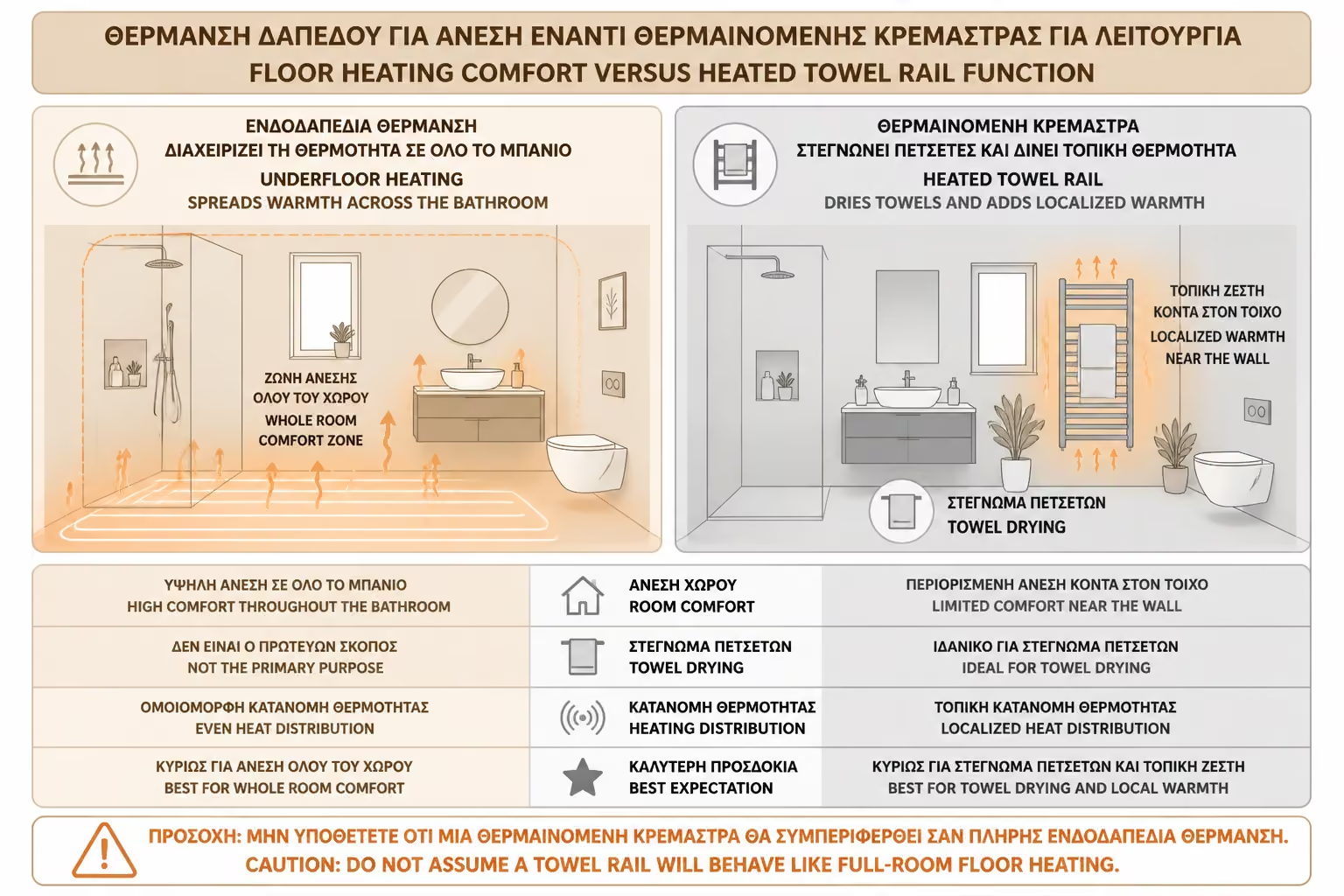
Underfloor heating is particularly comfortable in the bathroom, because it heats the floor and gives a uniform feeling. It doesn't blow air, doesn't take up wall space and makes tiling much more enjoyable. In a small bathroom, it can be an ideal comfort solution.
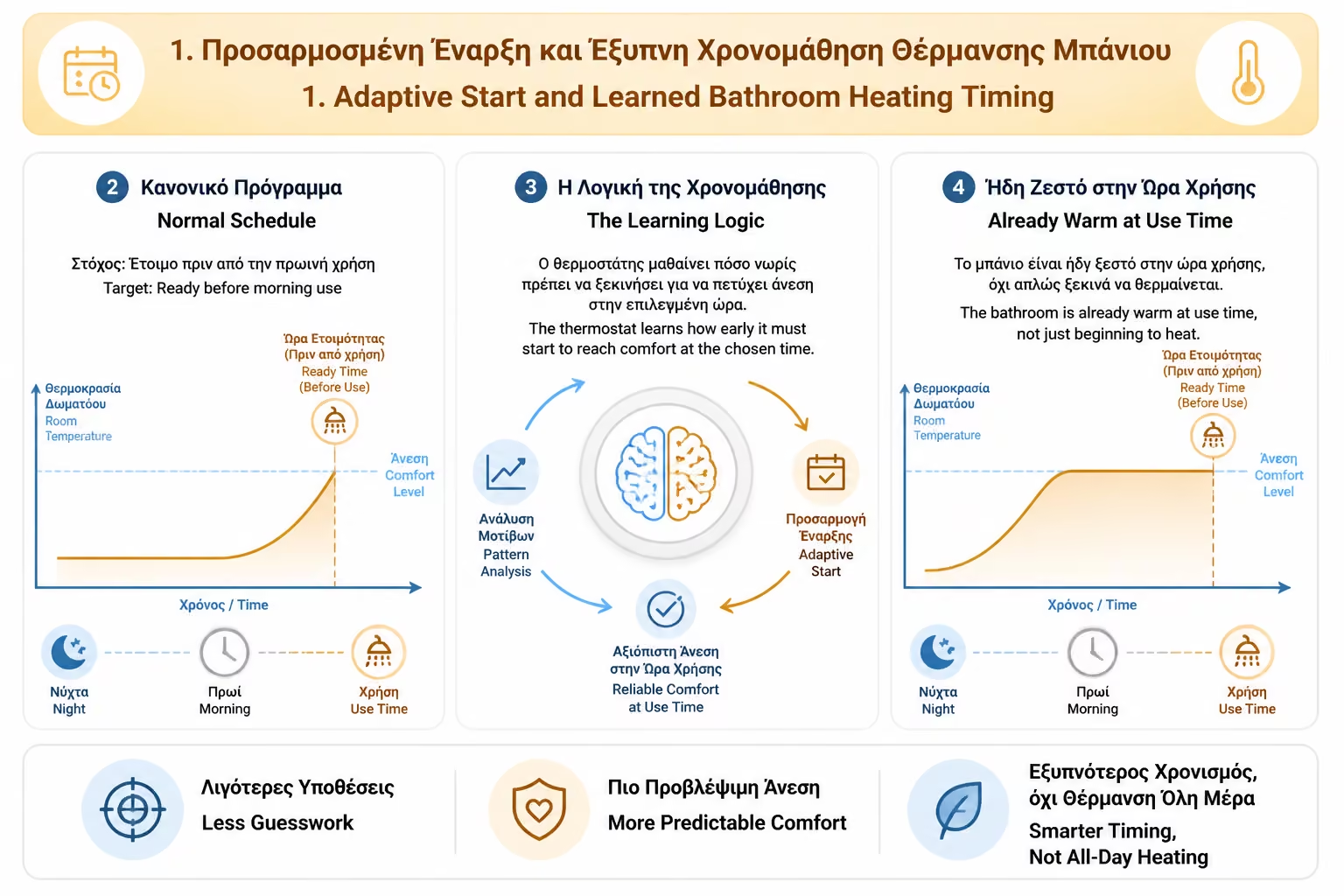
The main disadvantage is that it does not react immediately like an air heater. The floor needs time to warm up. Depending on wattage, insulation, adhesive/tile thickness and thermal mass, it may take 20, 30, 60 minutes or more to reach the desired feel. That's why the smart thermostat has value: it can start earlier, so the bathroom is ready when you need it.
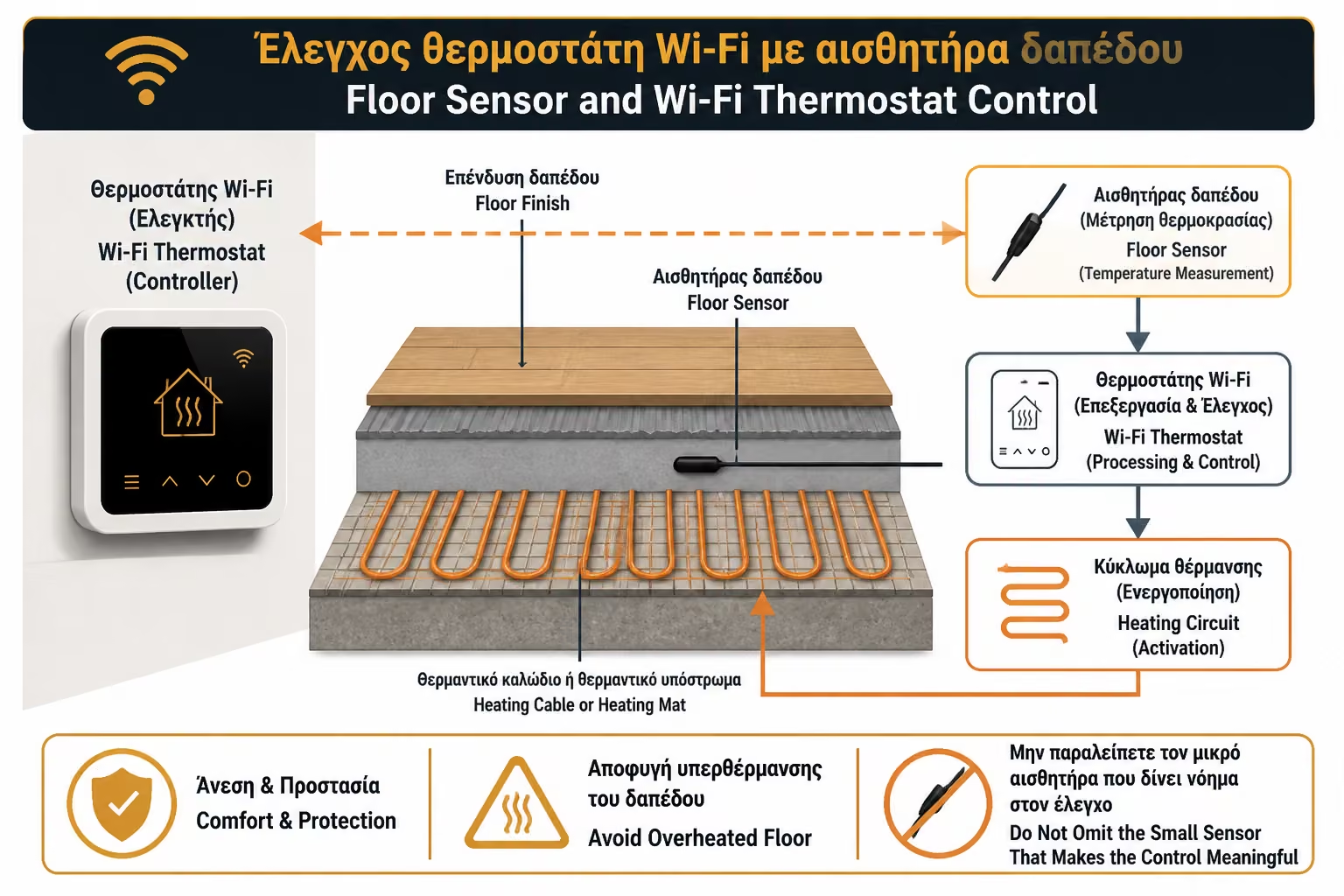
In electrical underfloor installation guides, the floor sensor is presented as a key element that sits under the tiles and sends data to the thermostat, helping to maintain a constant temperature and avoid overheating sensitive floors.
The practical conclusion is that underfloor heating should not be switched on only when you enter the bathroom. It needs to start earlier. That is exactly where the Wi-Fi thermostat helps: scheduling, adaptive start, remote activation, and automatic shutoff.
The electric towel rail has two different roles, which are often confused. The first is to heat and dry towels. The second is to help heat the bathroom. If the bathroom is small and well insulated, a towel rack can provide mild thermal comfort. If the bathroom is cold, large or with losses, it may not be sufficient as basic heating.
This is important for control. If you use it mainly for towels, it doesn't need to work all day. It can turn on at specific times or for a specific duration after showering. If you use it as basic space heating, you may need a space thermostat or a different heating element. A simple smart plug or relay is not always enough, especially in a bathroom where the electrical needs attention.
Bathroom electrical regulation guides state that electric heated towel rails can be installed in bathrooms but must be protected by a 30mA RCD and location/connection depends on zone and IP. This is critical: the towel rail is an electrical charge in a wet area, not a simple gadget.
Best practice is to select a device with a built-in safe control or install it through proper circuitry and handling by an electrician. We do not rely on a common smart plug in the bathroom, especially if the outlet is near water zones.
The Wi-Fi thermostat for underfloor heating controls the electrical circuit of the heating cable or mat. It usually has a room sensor, an input for a floor sensor, a weekly program, manual mode and an app. In more sophisticated models, it can have adaptive start, that is, it learns how much earlier it should start in order to reach the desired temperature at the right time.
The floor sensor is very important. We don't want to rely only on the air temperature, because the goal of the underfloor heating in the bathroom is often the comfort of the foot and the protection of the floor from overheating. The sensor must be properly placed between the heating cables, not on a cable, and ideally in a tube/channel so that it can be replaced if it breaks. Electric underfloor technical guides state that the floor sensor is placed in the center of the heated area, avoiding direct placement above the heating cable, and in a conduit so that it can be replaced.
The thermostat must be compatible with the load of the underfloor heating. If the heating mat has more power than the thermostat can handle, a relay/contactor or other solution is needed. This is not decided by the owner. The electrician checks it based on the power in Watts and the current in Amperes.
A common mistake is to buy a Wi-Fi thermostat from an online store because it "fits aesthetically", without checking the load, the sensor type, the compatibility with the heating cable and the installation location. The thermostat is the control center. If it is wrong, the whole system becomes problematic.
The floor sensor is one of the most important but most underrated parts of electric underfloor heating. It is a small probe that is placed inside the floor and measures the temperature where it matters: under the tiles. Without it, the thermostat can only rely on the air temperature, which in the bathroom changes quickly due to showers, ventilation and humidity.
The sensor helps prevent the floor from overheating. This is important for comfort, safety, material protection and economy. If the floor reaches a very high temperature, the user may feel discomfort, the materials may be strained and the system may consume unnecessarily.
The installation must be done before the tiles are inserted. If it is forgotten, then it is very difficult to correct. Also, it is good to have the possibility of replacement through a tube. If the sensor is buried directly in the glue, a failure can mean a broken floor.
In a serious installation, the electrician should measure and record the resistances of the heating wire and sensor before, during and after installation. This helps to detect faults before the floor is closed. It's not a detail. It is project security.
Electric bathroom heating becomes expensive when it runs without a schedule. If the underfloor heating is left on all day to keep the bathroom warm in the morning and evening, consumption increases. If the towel rack works 24 hours to dry a towel, too.
The right logic is time-based. For example, the underfloor heating can start at 06:00 so the floor is warm at 07:00, and turn off at 08:00. At night it can start 30–60 minutes before normal use. The towel rail can run just before the morning shower or for an hour after, not all day.
The app helps because it allows quick changes. If you are away tomorrow, you deactivate the program. If you return earlier, turn on the heating beforehand. If the system supports geofencing or away mode, it can avoid operation when you are not home. But these must be set up correctly. The manufacturer's default schedule rarely fits your life.
A practical example: a bathroom with a 500W electric underfloor that works 8 hours a day consumes about 4 kWh/day. If with a correct program it works 2 hours a day, the consumption drops to about 1 kWh/day. The sense of comfort in critical moments may remain, but the costs change drastically.
Adaptive start is a function that allows the thermostat to start earlier or later depending on how quickly the room or the floor heats up. If you want a 27°C floor at 07:00, the thermostat does not wait until 07:00 to switch on. It calculates how long heating takes and starts in time.
This is very useful with underfloor heating, because the response is not immediate. In October it may need less time; in January, more. If the thermostat has a good adaptive-start function, it can adjust automatically. If not, you have to tune the schedule yourself with enough margin.
This function also helps to save money, because it avoids excessively early starting. If the floor takes 35 minutes, there's no reason it should turn on 2 hours early. If one day it is very cold, it can be adjusted.
Not all Wi-Fi thermostats have a really good adaptive start. Some just have a weekly schedule and app. If this feature interests you, ask for a specific description and not the general phrase “smart learning”.
Mobile control is practical because it gives you flexibility. You can turn on the bathroom before you get home, change the program from bed, turn off a towel rail you forgot to turn on, or set vacation mode. In a country house, it can be especially useful.
But the app should not be the only mode of operation. A natural thermostat or switch is needed in the bathroom. If the Wi-Fi goes down, if you change routers, if the account is lost or if you don't have a mobile phone, the heating must be able to be controlled locally. Good solutions have a normal thermostat on the wall and the app works in addition.
Also, mobile checking doesn't mean savings in and of itself. It can also lead to more consumption if you turn on the heating more often because it's easy. Savings come from schedule, temperature limits, automatic shutdown and use only when needed.
The right question is not "does it have an app?". It's "can I program it right and trust it to go off?".
In bathroom heating there are two different goals. One is to keep the floor warm underfoot. The other is to heat the bathroom air. They are not always the same. A floor can feel pleasantly warm without being enough to raise the whole room to a high temperature, especially if the bathroom has heat loss or poor ventilation.
The thermostat can work with a floor sensor, an air sensor or a combination. For a bathroom, it often makes sense to have floor control with a maximum temperature limit and perhaps a room sensor for comfort. If you rely only on the air temperature, the floor may not heat up as you would like. If you rely only on the floor, the air can stay cold.
Adjustment should be made based on usage. If you just want to avoid stepping on a frozen tile, the goal is floor temperature. If you want the entire bathroom to be heated, you may need more power, better insulation, or an additional heating source such as a towel rail or radiator.
A frequent mistake is to expect a small electric underfloor in a bathroom to completely replace space heating. It can provide comfort, but it is not always enough for thermal coverage.
Electric underfloor heating is more common in small bathroom renovations because it fits relatively easily under the tiles and does not need a hydronic circuit. But its running cost per unit of heat is usually higher than that of a well-designed system powered by a heat pump or boiler.
The hydraulic underfloor heating makes more sense in a new construction or complete renovation of the entire residence. For a single small bathroom, it is usually more difficult and expensive to retrofit. The electric solution is more practical but must be strictly controlled with a thermostat and program.
Renovation guides often state that electrical systems are cheaper to install and more suitable for small areas such as bathrooms, while plumbing systems are more efficient in larger or new installations.
For the owner, the practical instruction is simple: in a small bathroom, the electric underfloor is a comfort solution. No excuse to heat the space all day. The Wi-Fi thermostat helps keep usage on target.
The towel rail can be controlled in several ways. The simplest is a timer built into the device, for example a 2-hour run. A more advanced solution is a Wi-Fi controller or smart relay that allows scheduling and remote control. In premium models there may also be a built-in thermostat and app.
The important thing is the load. An electric towel rail can be 300W, 500W, 750W or more, depending on size and type. The smart controller must withstand the load, be suitable for permanent use and be installed correctly. We don't put any small smart relay behind a switch without power, temperature and position control.
In a bathroom, the connection must be stable and secure. In many cases, a permanent connection to an outlet box or isolator switch is preferred, not a plug in an outlet near a shower. The position of the towel rail in relation to the bathroom zones, IP and RCD protection are critical. Technical guides for bathroom electrics state that in zone 1, a towel rail must be fixed and permanently connected, without an accessible plug/socket, with at least IPX4 protection, while all bathroom circuits must be protected with a 30 mA RCD.
The smart mode is valuable when it adds safe schedule and auto shut-off. It should not add a rough connection.
Many think of the simple solution: "I put a smart plug on the towel rail and operate it from the mobile phone". In general areas this may be practical. In the bathroom, however, it is often problematic. Outlets have location restrictions, protection requirements, and splash or moisture hazards. A common smart plug is usually not designed for a wet environment.
If the towel rail has a plug and is placed in a socket outside of danger zones, with an RCD and suitable protection, the electrician can assess the solution. But the general practice in bathrooms is to temporarily avoid plugs, multi-sockets and adapters for permanent heating loads. Even more if they are near the shower.
The most correct solution is a device with integrated safe control or a smart relay/timer installed by an electrician in a suitable position. This avoids bulky smart plugs, loose sockets and exposed connections.
The app should not make us forget that we are talking about a heating device. The heating device needs the right line, the right protection and the right handling.
Any electrical heating system in the bathroom must be treated as a serious electrical installation. The electrical underfloor has cables under the floor. The towel rail is a heated metal body. The thermostat has 230V or low voltage depending on the solution. The controllers have electronics. All of these are in a humid area.
For electric underfloor heating in areas with a bath or shower, IET technical discussions state that electric heating cables or flexible heating elements must meet relevant product standards and have a metal jacket/sheath or thin metal mesh connected to the protective conductor. This shows how important the right choice of certified system and protection connection is, not just "a heating mat under the tiles".
The circuit must be protected by a 30 mA RCD. Thermostat location must be safe, usually out of direct water zones, or strictly follow manufacturer and regulatory guidelines. Junction boxes must be accessible. Connections under tiles are forbidden to be done casually.
Installation must be done by a licensed electrician. The placement of the heating mat can be coordinated with plates, but the electrical measurements, connections and thermostat are electrical work.
The Wi-Fi thermostat should be placed in a location that is both practical and safe. We usually don't want the thermostat in the immediate shower area or where it gets splashed. If placed in the bathroom, it must be suitable for the location and the belts must be observed. In some installations, the thermostat can be placed outside the bathroom, near the door, especially if there is no safe indoor location.
The position also affects the air temperature measurement. If the thermostat is outside the bathroom, it does not measure the bathroom air properly, but it can control the floor via a floor sensor. If it is inside, it can be affected by water vapor, drafts or heat from a towel rail. This is why the floor sensor is so important.
For the towel rail, the location of the controller or switch must also be evaluated. It should not be located where the user can touch it from the shower. It should not be below the dripping point. He should not be hidden behind towels where he overheats.
Electrical safety is not just "it has an RCD". It is also correct location, correct IP, correct connection method and possibility of isolation.
Smart bathroom heating can reduce consumption mainly by limiting operating time. It does not change the physics: a 600W electrical load when working for one hour consumes 0.6 kWh. If it works for 5 hours, it consumes 3 kWh. Saving comes from working as much as needed and not more.
The Wi-Fi thermostat helps with a weekly program, adaptive start, vacation mode, remote shutdown and temperature limits. The towel rail helps with a timer, e.g. 1–2 hour operation instead of continuous opening. If the system has energy monitoring, you can see how much it consumes and adjust the usage.
But we must not promise exaggerations. If until now you only turned on the heating for 20 minutes a day and with smart control you start to preheat it for 2 hours, the consumption will increase. But if you've been leaving the towel rack all day until now, smart control can drastically cut costs.
The best saving is the one that does not spoil the comfort. Hot bath at the right times, low or zero operation the rest.
In a typical residential bathroom, the program can be very simple. For weekdays, the underfloor heating starts 45–60 minutes before morning use and goes off shortly after. If there is an evening shower, it turns on again before that. The weekend can have a different schedule or work manually from an app.
The towel rail can be turned on 30–45 minutes before the morning shower and left for 1 hour after to dry the towel. If the bathroom is very humid, it can help, but it should not replace ventilation. If the towels stay damp for hours, the problem may be the ventilation, not the heating.
For family, programs must consider multiple uses. If three people bathe at different times, the function may be broken. If everything is done in one time zone, the heating can be more concentrated.
The app helps with exceptions. If you have a day off tomorrow, you change the schedule. If you are going on a trip, vacation mode. If you come back from outside and want a hot bath, you open it earlier. This is the real advantage of Wi-Fi.
Heating helps the bathroom dry faster, but it does not replace ventilation. Warm air can hold more moisture, but if it is not removed, the moisture remains in the space and can condense on cold surfaces. So heating and ventilation must work together.
A warm bath after a shower is pleasant. But if the fan is not working or the window is closed, the water vapor will sit on joints, mirror, ceiling and furniture. The towel rack can dry the towel, but it does not remove water vapor from the space.
In a smart ecosystem, cooperation can make sense: after the shower, the hygrostat fan works, the towel rail turns on for a certain time, and the lighting dims. But the basic logic remains technical: the moisture must escape to the outside.
If there is mold, don't try to solve it with just more heat. Check ventilation, leaks, thermal bridges and sealing.
In the Greek market of 2026, a Wi-Fi thermostat for an electric underfloor can cost around €80–250, depending on the brand, functions, screen, app, sensors and compatibility. More premium models or systems with a better ecosystem may cost more.
The electric underfloor as a material can range indicatively around 40–90€/m² for mats/cables, depending on power and quality, not counting thermal insulation, glues, tiles, thermostat and labor. In a small bathroom, the total cost can be manageable, but proper installation and measurements are essential.
An electric towel rail can start around €120–250 for simple models and reach €300–700+ for better ones, design or with built-in control. Smart relay, timer or controller can add €50–200 to equipment, plus electrician's work. If a new line, RCD, supply move or fixed connection is needed, the cost goes up.
Prices depend on area, VAT, condition of bathroom, whether open renovation or finished space, quality of materials, access and panel requirements. The cheapest solution is not always economical if it does not properly control the operating time or if it creates an electrical risk.
Smart bathroom heating is worth it when the bathroom is used at certain times and you want comfort without constant consumption. It is worth it in small bathrooms with electric underfloor, in master bathrooms, in houses with children, in holiday homes where you want remote preheating and in bathrooms that have an electric towel rail that is often forgotten open.
It's also worth it when the renovation is done now and you can get proper wiring, floor sensor and thermostat location before the tiles are closed. Then the addition becomes more difficult. If you plan to install sub-flooring, the Wi-Fi thermostat is a small part of the total cost but a big part of the experience.
It is not worth it if the bathroom first has basic problems: poor waterproofing, insufficient ventilation, old panel without RCD, low electrical power or poor thermal insulation. In such cases, smart heating can become an expensive patch.
For a towel rail, it's worth it if it's used often and you want automatic shut-off. If you rarely use it, a simple timer may be enough.
Have the underfloor or towel rail load calculated, check if a separate line is needed, 30mA RCD confirmed, earthing checked, correct thermostat location provided and floor sensor installed in replacement pipe.
For underfloor heatings, ask for resistance and insulation measurements before and after installation. Ask for photos of the wiring layout before the floor is closed. Ask to record where the sensor passes. This information is valuable if there is a future breakdown.
For towel rail, ask for stable and secure connection, suitable location, IP/zone control and isolation method. If a smart controller is inserted, ask to check the power of the controller and the behavior in Wi-Fi interruption. The device must be able to be turned off manually.
A proper quote should list equipment, thermostat/controller, sensor, power line, protections, labor and final inspection. Not just "installing a smart thermostat".
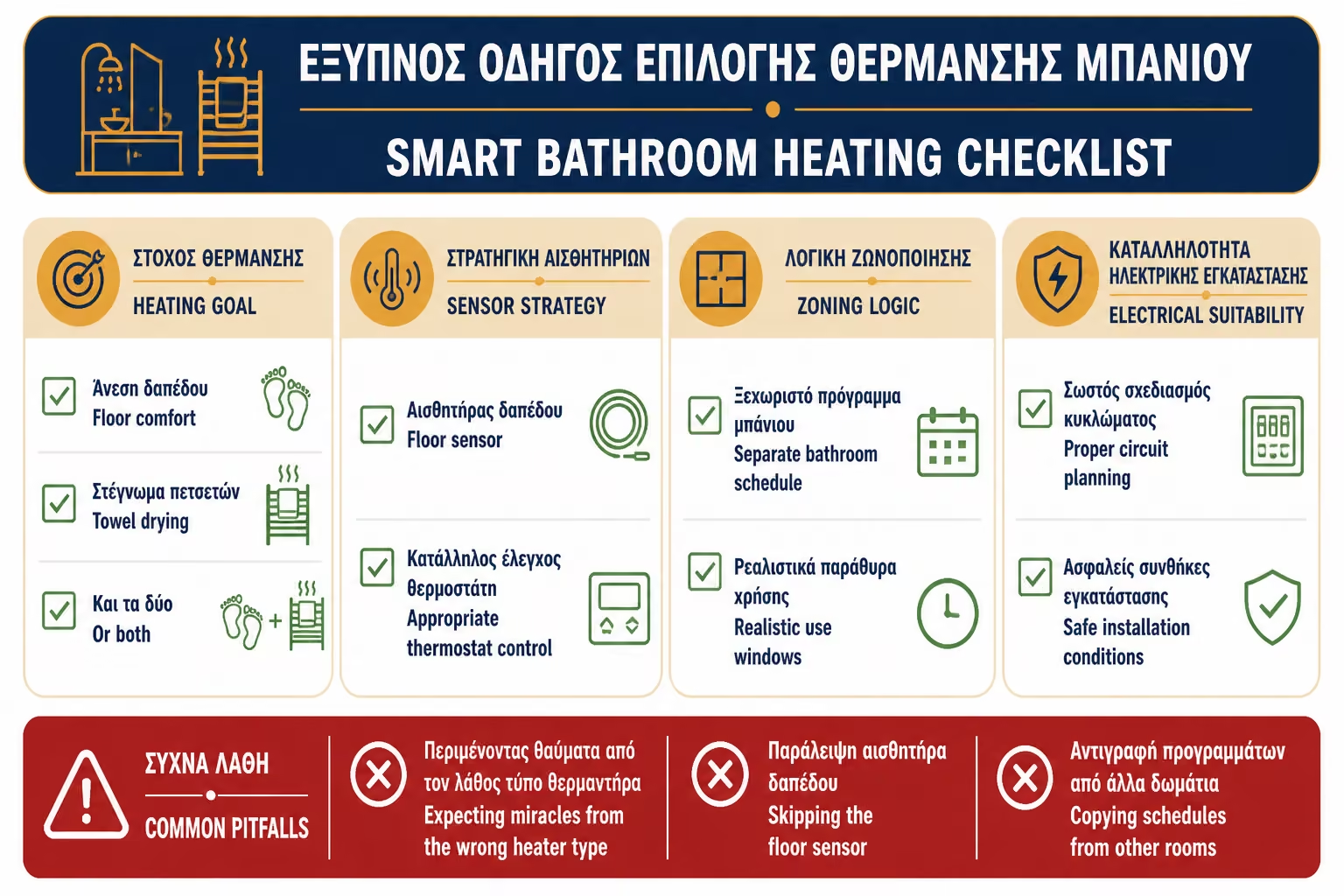
The first mistake is the underfloor heating without a correct floor sensor. After tiling, correction is difficult.
The second error is Wi-Fi thermostat incompatible with the heating load. The thermostat must handle the power or control a suitable relay.
The third mistake is heating all day "so that the bathroom is ready". The program should target hours of use.
The fourth mistake is a smart plug in a bathroom for a permanent heating load without zone control, IP and RCD.
The fifth mistake is a towel rack that is used as basic heating while it is not sufficient for the space.
The sixth mistake is to hide connections or controllers without access.
The seventh mistake is expecting that heating will solve the mold. Moisture needs ventilation and leak control.
Before you finalize the choice or installation, review the following points first:
| Question | Yes / No |
|---|---|
| Is it clear whether you want floor, space or towel heating? | Yes / No |
| Has the power of the system been calculated by an electrician? | Yes / No |
| Is there a 30mA RCD/leakage relay in the circuit? | Yes / No |
| Does the underfloor heating have a floor sensor in a replaceable tube? | Yes / No |
| Is the Wi-Fi thermostat compatible with the load? | Yes / No |
| Does the towel rail have a secure permanent connection or a suitable controller? | Yes / No |
| Is the operating schedule based on actual usage hours? | Yes / No |
| Is there an auto shut off so it doesn't stay on all day? | Yes / No |
| Does the system also work without Wi-Fi/app? | Yes / No |
| Are ventilation and humidity control provided? | Yes / No |
If the answers are not clear, start with the electrical design. Smart heating is first safe heating and then an app.
If you have to keep only one thing, keep this: smart bathroom heating is not about turning on the towel rail from the mobile phone. It's about having a hot bath just when you need it and turning it off when you don't. For underfloor, the floor sensor and the right thermostat are critical. For the towel rail, the safe circuit, RCD and automatic shutdown are critical. If the setup isn't right, Wi-Fi just makes it easier to control the wrong system.
Smart bathroom heating can offer great comfort with controlled consumption. Underfloor heating makes the tile pleasant and the bathroom more welcoming in winter. The electric towel rail provides hot and dry towels. The Wi-Fi thermostat or smart controller allows these to work only when they are really needed.
The savings don't come from the app. It comes from a correct program, floor sensor, temperature limits, adaptive start, automatic shutdown and avoid continuous operation. If the bathroom needs heating at 7am, the system should start on time and stop when the use is over. Not to burn all day.
For the owner, the correct sequence is clear: first load and safety planning, then device selection, then smart control. Electric heating in a bathroom means an RCD, proper grounding, proper zones, safe connections and a licensed electrician. Only on this basis does the Wi-Fi thermostat make sense.
The ideal smart bathroom is not one that stays warm all day. It's the one that gets hot just when you need it — and then stops consuming.
Return to category.
Go to categoryReturn to the central guide.
Go to guide