
Plumbing & Electrical Bathroom Infrastructure
Return to category.
Go to categoryThe electric towel rail is one of the solutions that have become particularly popular in bathroom renovations. It warms the towels, helps them dry faster, adds a sense of comfort and in small bathrooms can also act as a supplementary heater. That is why many owners see it more as an element of comfort or design than as an electrical device.
But in reality, an electric towel rail is not just a pretty metal body on the wall. It is electrical equipment in a space with water, water vapour, wet hands and short distances. If it is placed in the wrong place, if it does not have an appropriate degree of IP protection, if it is powered from a rough outlet or if it is not protected by a leakage relay, it can turn from a practical solution into a serious electrical hazard.
The biggest mistake made in practice is that the towel rail is chosen at the end of the renovation. The tiles, the shower, the furniture, the mirror, the sockets and the lamps have already been decided, and at some point the owner says "let's put an electric towel rail here". But "here" in the bathroom is not decided only by whether it fits on the wall. It is determined by the protection zones, distance from the shower or bath, electrical supply, IP, grounding and the manufacturer's instructions.
In Greece, low-voltage electrical installations are examined in the context of ELOT 60364. For areas with a bathtub or shower, part 7-701 has a special role, while ELOT has published ELOT HD 60364-7-701:2024 for areas containing a bath or shower. This standard appears as current and specifically addresses the requirements for such special spaces.
In this guide we will look at where an electric towel rail can be safely fitted, what IP44, IPX4 or higher IP means in practice, when hidden wiring is preferred, when plugging is allowed or avoided, why the 30mA RCD is critical and what the home owner should ask their electrician before purchasing and installing the appliance.
The electric towel rail is a heater designed for the bathroom, usually metal, with an electric resistance or an electric heating element. It can be exclusively electric or combined, i.e. connected to a hydraulic heating circuit and having an electric resistance for use outside the heating season.
What the owner needs to understand is that this is no ordinary hanger. It has a power supply, operating temperatures, metal housing, possible thermostat, cable, switch or control. If it is a Class I device, it needs proper grounding. If it's Class II, it's double insulated, but that doesn't mean it can get in anywhere we want. In any case, the location and connection must be checked by a licensed electrician.
Also, it should not be confused with a simple hydraulic radiator body. A classic radiator body has hot water from the heating system. An electric towel rail has power in the bathroom. This difference changes the safety criteria.
A practical example: a water towel rail can be placed on the wall opposite the shower with the main criteria being plumbing and functionality. Its electric version, however, must also be checked as an electrical device: where it is powered, if it gets wet, if it is protected, if it has the correct IP and if it can be touched by a person in the shower.
Most towel racks are selected based on width, height, color, finish and how many towels they hold. These are important for everyday use, but they are not the first criterion. The first criterion is the position in relation to the bathtub or shower.
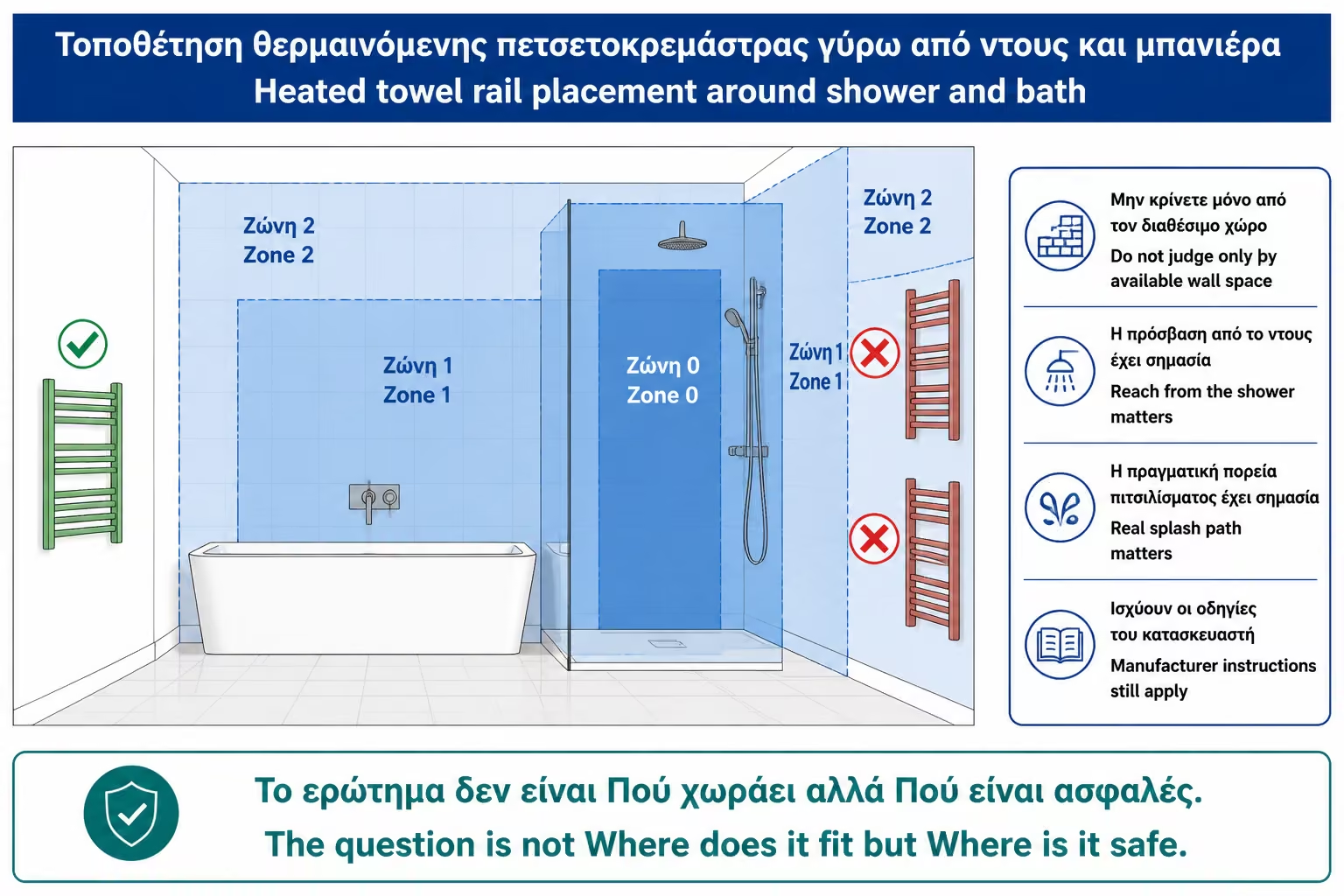
There are safety zones in the bathroom. The closer an electrical device is to where water falls or collects, the stricter the requirements. A towel rail on the opposite wall of a large bathroom is not rated in the same way as a towel rail next to an open walk-in shower.
The crucial question is not only "does it get wet?" It's also "can someone touch her while she's in the shower?", "can the phone in the shower be pointed at her?", "is the cubicle door dripping on her?", "is water running from the floor to her wall?", "where's the cord or plug?".
A common mistake in small bathrooms is to place the electric towel rail on the only free wall, which is right next to the shower. The owner thinks "it fits there". The electrician must think "is it allowed there?".
The electric towel rail should be considered in relation to the safety zones of the bathroom. Zone 0 is the inside of the bathtub or shower. No such device is placed there. Zone 1 is the area above the bathtub or shower. Zone 2 is the area around them where there is still a risk from splashes and water vapour.
In modern practice, heated towel rails in areas with a bath or shower should be protected by an RCD not exceeding 30mA. The IET's guide to Section 701 specifically states that all circuits, including lighting, electric showers and heated towel rails, require RCD protection up to 30mA.
On a practical level, the towel rail is preferred to be placed outside the most dangerous zones, on a wall that does not get wet directly and in a place that is not touched by the user while in the shower or bathtub. If entering an area close to Zone 2 or in a marginal location, the electrician must check the IP requirements, connection and manufacturer's instructions.
In small bathrooms, there is often no "ideal" wall. This does not mean that the device fits where there is excess space. It may be necessary to change the arrangement, a smaller body, a hydraulic instead of an electric solution, or the choice of another form of heating.
Walk-in showers make the bathroom more modern and comfortable, but electrically they need a lot of attention. Because they often don't have a full cabin, the water can move more freely. A towel rail that looks "quite far" in plan may actually receive splashes or be in the shower opening.
A fixed glazing does not always mean that the area is fully protected. If the glass is small, if there is an opening, if the shower head is movable or if the slope of the floor is not correct, water can reach further. This should be taken into account before deciding on the location of the electric towel rail.
A practical example: in a 4 m2 bathroom, the towel rack is placed on the wall just outside the fixed glass of the walk-in shower. At first use it seems ok. After a few weeks, the owner notices that the underside of the body and the cable outlet are often spattered. This is not just a matter of cleanliness. It is an indication that the position may not have been properly evaluated.
In walk-in solutions, the electric towel rail must be designed together with the glass, water direction, battery position and opening. Not after.
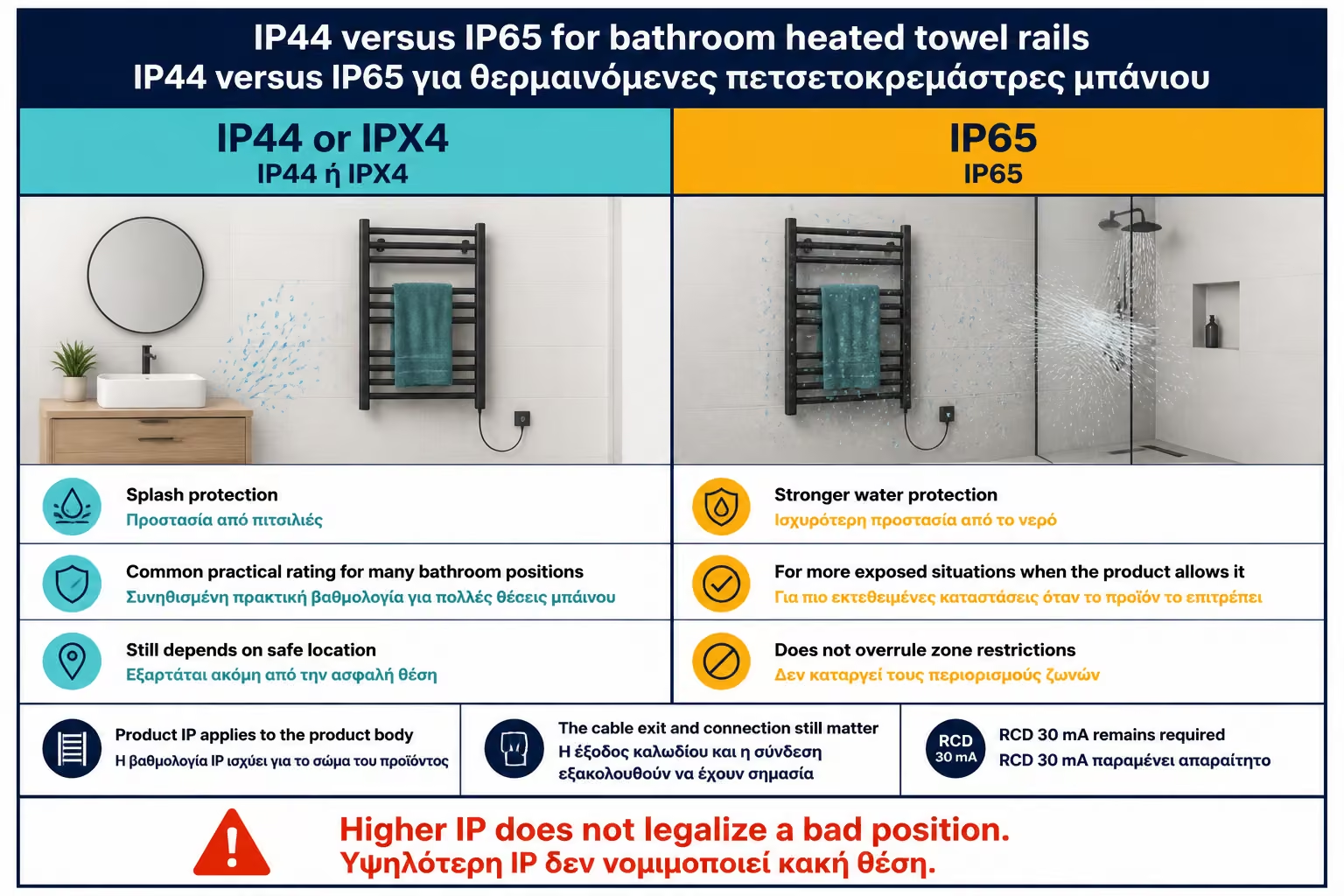
The IP degree of protection indicates the protection of a device's housing against solid bodies and water. In the bathroom, the second number is particularly important, because it concerns protection from water. For equipment located in areas where there is a possibility of splashing, often the practical requirement is at least protection against splashing water from various directions, i.e. IPX4 or respectively IP44 when the first digit is also mentioned. Commercial technical guides for bathroom heaters state that towel rails intended for Zone 2 must have splash protection, such as IPX4/IP44.
But this does not mean that IP44 is sufficient everywhere. If the location is more exposed, if there is a possibility of heavy water, or if the manufacturer requires higher protection, a different choice may be needed. If the towel rail is out of zones and in a secure location, the requirements may be less stringent, but since we are talking about a bathroom, choosing a product without a clear IP is bad practice.
It must also be remembered that the IP refers to the device housing, not the entire installation. A towel rail with the correct IP can be installed incorrectly if the cable comes loose from the wall, if the connection is made to the wrong box, if there is a socket in the wrong place or if there is no RCD.
The owner should ask the electrician to see the technical brochure of the device before purchase. The phrase "it's for bathing" is not enough. It needs a specific IP, protection class, installation instructions and acceptable installation zones.
On the market you will find towel rails with different IPs. Many household electric towel rails have IP44 or IPX4, i.e. protection against splashes. Some may have a higher degree of protection. The choice should not be made only with the logic "the bigger the better IP", but based on the location.
| Installation location | Standard practice assessment | What to watch out for |
|---|---|---|
| Away from bath/shower, on a dry wall | A bathroom-friendly device with a clear IP may suffice | RCD, earthing, correct supply and manufacturer's instructions |
| Close to a shower but not in direct water exposure | At least IPX4/IP44 is often requested | Not to be touched by the shower and not to receive splashes |
| In a marginal position near a walk-in opening | It needs special evaluation | Maybe another position or a different solution is needed |
| Inside an area that gets wet immediately | Poor choice for standard electric towel rail | To be avoided, unless there is a special study and product suitable for the zone |
| Connection through an outlet near water | Usually problematic practice | The socket, plug and cable must be assessed separately |
The table shows the most important thing: we don't choose IP first and location second. We choose a location, check the zone and then choose a suitable device.
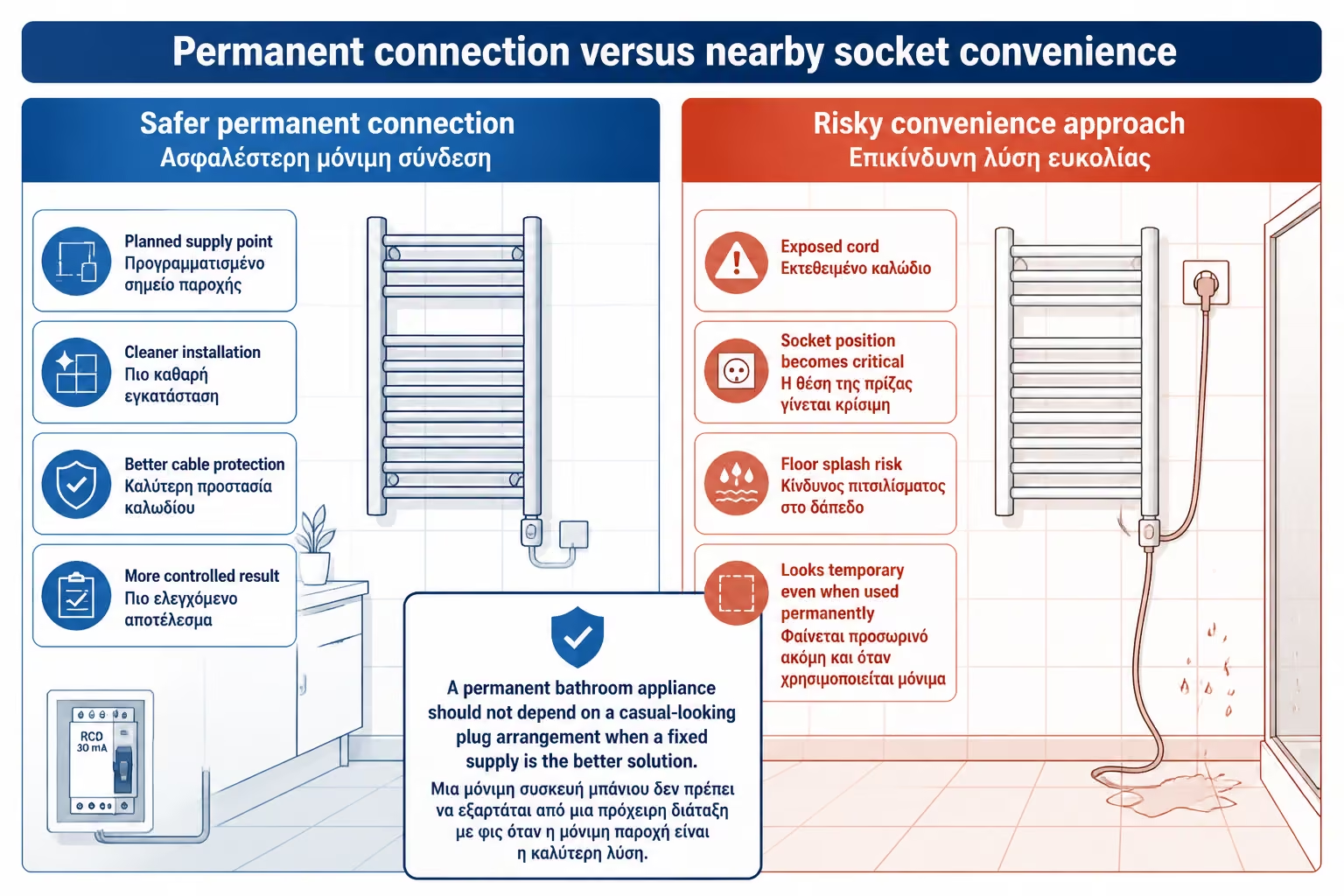
The question "hidden wiring or outlet?" are among the most important. Concealed or permanent wiring, when done correctly by an electrician, is usually the cleanest and safest solution for a permanently installed electric towel rail. The cable does not hang, the connection point can be properly protected, the device has its own supply and plugs and sockets in damp areas are avoided.
Plugging in is not always prohibited as a general idea, but in the bathroom it must be considered very carefully. Where is the socket located? Is it out of range? Does it have a suitable IP? Is it RCD protected? Does the cable pass through an area that gets wet? Does the plug remain permanently exposed? Can the user touch it with wet hands? If the answers are not clear, the socket solution is not good.
In fixed bathroom heaters, many manufacturers and electricians prefer a permanent connection through a suitable supply point, with an isolating switch where RCD protection is also required. In border zones, the use of a plug/socket becomes even more problematic.
A practical example: the owner buys an electric towel rail with a plug and wants to plug it into an existing outlet next to the sink. But the outlet is near an open shower. Even if the towel rail has a good IP, the socket and plug become the weak point. In such a case, the correct solution may be a new permanent supply in a safer location or a design change.
The socket looks practical because it allows easy connection and disconnection. But in a permanent bathroom appliance, convenience is not the only criterion. A plug that is permanently plugged in, in a damp area, with a cord that hangs or runs close to the floor, can cause problems.
The socket safety cap mainly protects when the socket is not in use. When the towel rail plug is permanently attached, the lid either stays open or doesn't fit properly. So the actual protection may be less than what the owner imagines.
Also, the socket can be used later for other devices as well. If there is an outlet near the shower for the towel rail, one can put in a hair dryer, charger or other equipment. Thus a position designed for a permanent use turns into a general hazardous supply.
Therefore, when the towel rail is a permanent fixture, a hidden or fixed connection is often a more controlled solution. It's not just a matter of aesthetics. It's a matter of limiting usage errors.
A safe permanent connection means that the towel rail is supplied from a suitable line, with proper panel protection, a 30mA RCD, earthing where required, a suitable junction box or supply point and the ability to isolate for maintenance. It doesn't mean we just hide the cable inside the wall.
The line must be suitable for the power of the device. Most towel rails are not as powerful as a water heater, but they are still heaters that can run for quite some time. If they are accidentally connected to a light line or an already loaded outlet, problems can arise.
The connection point must be accessible for inspection, but protected from water. It should not be located behind a spot that gets wet or in a position where the cable is stretched, pressed or passes low to the floor. If there is a control or thermostat, it must be suitable for a bathroom and properly positioned.
A proper plan shows in advance where the supply goes, where the towel rail rests and how it is insulated. If these are decided after the tiles, we usually end up with exposed cables or sketchy solutions.
The leakage relay is absolutely critical for electric towel rails in a bathroom. We are talking about a metal heater, often close to water, that the user can touch with wet hands. It is not a device that should be operated without electric shock protection.
As mentioned, guides for Section 701 note that all circuits in areas with a bath or shower, including heated towel rails, must be protected by an RCD not exceeding 30 mA.
This does not mean that the RCD allows the wrong position. If the towel rail is in a wet spot or in the wrong zone, the relay does not "save" it. An RCD is additional protection, not an excuse for poor design.
In old bathrooms, before installing an electric towel rail, it must be checked whether the circuit is really protected by an RCD. It is not enough to have a relay in the panel. We need to know that particular line goes through it and that the ground is correct.
Electric towel rails can be of different protection class. If they are Class I, they need a connection to the protective conductor, i.e. grounding. If they are Class II, they have double or reinforced insulation and are not connected to ground in the same way. But this does not mean that the owner decides on his own based on a symbol. The electrician must see the product and the technical brochure.
In bathrooms with metal parts, equipotential protection can also be important. Metal piping, radiator bodies, metal bathtubs, towel rails and electrical appliances must be assessed as a whole. Complementary equipotential bonding is intended to reduce the potential difference between simultaneously accessible conductive parts.
On a practical level, if you are replacing an old hydraulic towel rail with an electric one or adding an electric body to an old bathroom, the grounding should be checked and whether any additional protection is required. It is not a simple "body to body" change.
A mistake that is made is to remove an old radiator body and insert an electric towel rail without any electrical control. If the new device has a metal casing and an electrical supply, the installation has changed substantially.
Many electric towel rails have a switch, timer, thermostat or electronic control. The position of this manipulation is as important as the position of the body itself. It must not be in a place that is touched by a user in the shower, nor in a place that receives splashes.
If the device has a built-in control at the bottom, it must be checked that it is in a secure position after installation. In some cases, the device may look fine on the wall, but the control may be too close to the floor, in a wet area, or near the shower opening.
If there is an external isolation switch, it should be placed in a safe location, often outside the bathroom or outside the zones, depending on the solution. It is not right to put a switch where the hand is just convenient.
A practical example: a towel rail with an electronic thermostat in the lower right part is placed next to a shower. The body does not get wet directly, but the thermostat is located near the point where the cabin door opens and water drips. This position must be reconsidered, because the sensitive point is not only the body but also the handling.
The electric towel rail is not always enough to heat the entire bathroom. Many models range in power from about 300W to 1,000W, depending on size and type. They can warm towels and provide mild heat, but in a large, cold or poorly insulated bathroom they may not be sufficient as primary heating.
This is important because many owners buy a towel rail based on the design and then get disappointed because it "doesn't heat the bathroom". Sometimes I dry towels and sometimes I heat a space. If the bathroom is outside, without good insulation, with a large window or with intense humidity, a different heating solution or a stronger body may be needed.
Power also affects the power line. A small 300W fixture does not have the same requirements as a 1,200W fixture, but both must be installed correctly. Line, protection and connection are not decided by "it's a small device" alone.
A useful practical criterion is to ask the supplier and the electrician to see the technical characteristics: power, IP, protection class, zone guidelines, connection method and proposed use.
In the Greek market of 2026, a simple electric towel rail can start around €120–250 for basic models, while higher quality, larger or designer models can move around €250–600 or more. Models with a thermostat, timer, better finish, special dimensions or combination function may have a higher cost.
The cost of installation depends on whether a proper supply is already in place or whether a new line has to be laid. If there is already a provisioned supply in the right place and a protected circuit, the connection can be relatively simple. But if a new line, digging, switchboard intervention, RCD, isolator or rectification of an old installation is needed, the cost goes up.
As an example, a simple electrical connection to a prepared supply can have a small labor cost, while a new supply or hidden wiring can run around €100–300 or more, depending on distance, access, considerations, materials and paneling. If combined with a total bathroom renovation, it is best to be part of the overall electrical package.
Prices depend on the area, the floor, whether VAT is included, the condition of the panel, the type of device, the need for a new line and whether a HYD or installation update will be required. A cheap solution that simply plugs into an existing outlet may seem economical, but if the location is wrong or the outlet is not suitable, the risk outweighs the savings.
Before buying an electric towel rail, you need to know where it will be placed. Not nearly. Exactly. You need to know the distance from the shower or bath, if it is in a buffer zone, if there is or will be a hidden supply, if the cable will be visible, where the switch will be and if the product has an appropriate IP.
Ask for the technical brochure before paying. Power, IP rating, protection class, connection method, permitted distances or placement restrictions and installation instructions must be listed there. If the product does not have clear instructions, it is a bad sign.
Also, pay attention to the dimensions. The towel rail must have space around it, not rest on furniture, not be behind a door that hits it, not obstruct the use of the bathroom and be able to be properly fixed to the wall. A heavy body on a weak wall or plasterboard needs proper support provision.
Ideally, the electrician should see the make and model before purchase. This avoids returns, temporary solutions and unpleasant surprises at the end of the renovation.
The electrician must check the installation zone, device IP, connection method, RCD protection, earthing, power, power line and isolation method. It is not enough to "give power" to the device.
If the towel rail is to be permanently attached, there must be a proper supply point. If it will be plugged in, the location of the outlet, its IP, distance from water and actual use must be evaluated. If the existing socket is in the wrong place, it should not be used because it "already exists".
A proper quotation should clarify whether it includes new line, concealed wiring, junction box, isolator, RCD, earthing test, errands and final measurements. If the project is a renovation, it must be agreed when the supply will be passed before tiles are laid.
Also ask if the device affects the PES or if the installation needs to be checked after the addition. The electric towel rail is a permanent electrical device in a special area. It should not be treated as a tabletop air heater.
The first mistake is placing it too close to the shower. If it can get wet or touched by someone from the shower, the position is problematic.
The second mistake is connecting to an existing outlet without checking. The socket may be in the wrong zone, not have an appropriate IP, or not properly protected.
The third mistake is the dangling cable. A permanent appliance in the bathroom should not have rough wiring, a cable resting on the floor or a plug in an exposed point.
The fourth mistake is buying without a technical brochure. If you don't know IP, protection class and connection method, you don't know if the product is suitable.
The fifth mistake is the absence of an RCD or ignorance of whether the line is protected. In a bathroom, this is not a detail.
The sixth mistake is adding after the tiles. If the provision is not foreseen from the beginning, the solutions become more sketchy and expensive.
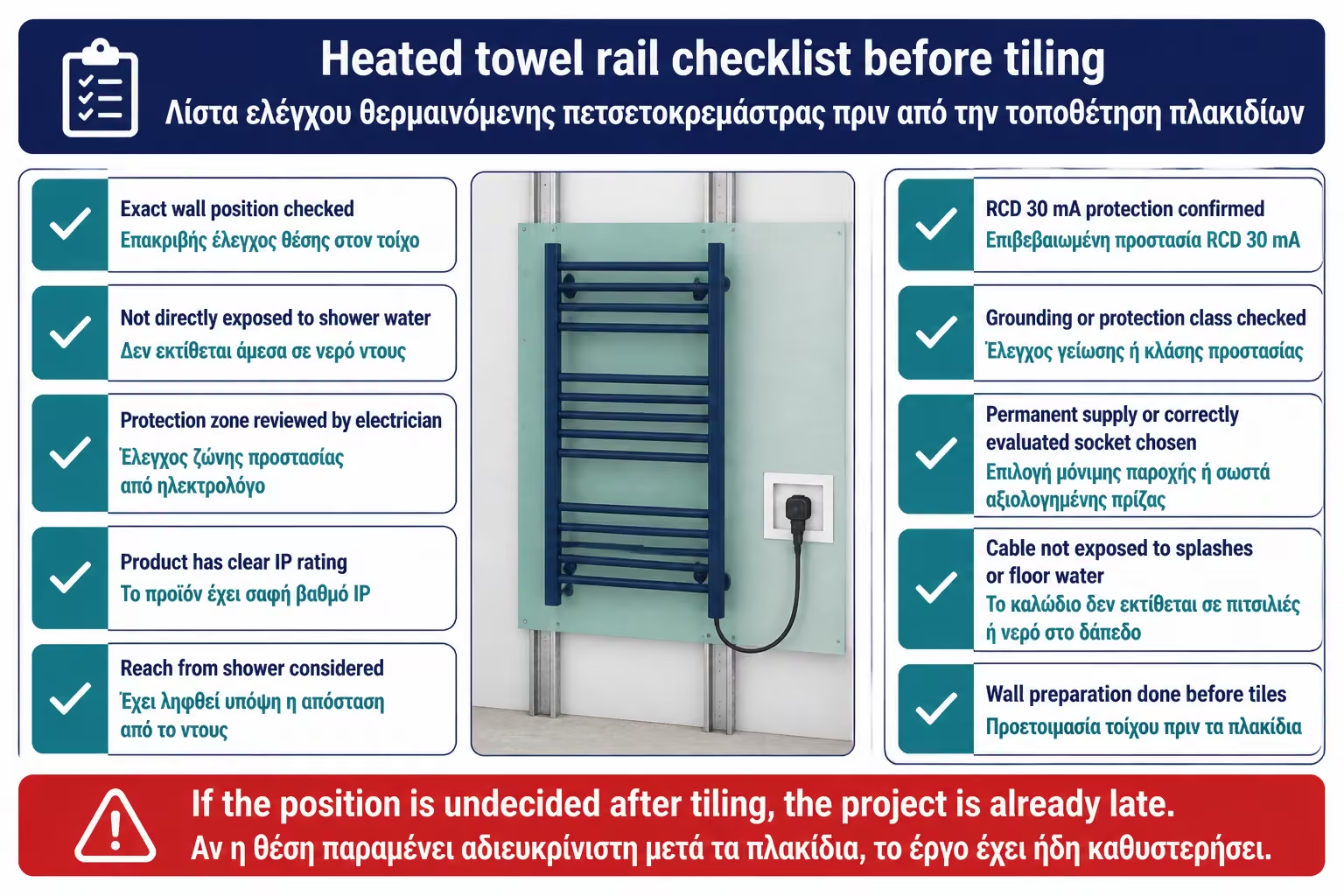
Before installation moves forward, run through the following questions first:
| Question | Yes / No |
|---|---|
| Has the exact position been checked in relation to the bath or shower? | Yes / No |
| Is the towel rail out of a spot where it gets wet? | Yes / No |
| Can someone touch her while she's in the shower? | Yes / No |
| Has the protection zone been checked by a licensed electrician? | Yes / No |
| Does the product have a clear IP rating appropriate for the position? | Yes / No |
| Is there a 30mA RCD protecting the line? | Yes / No |
| Has the earthing or protection class of the device been checked? | Yes / No |
| Will the connection be to a safe permanent supply or properly rated outlet? | Yes / No |
| Will the cable not be exposed to splashes or the floor? | Yes / No |
| Are the wait times over before the tiles come in? | Yes / No |
If the answer to critical questions is "no" or "I don't know", the placement should be stopped until an electrical check is made. The towel rail is not a decorative accessory. It is a permanent electrical device in a wet area.
If you keep only one thing from this guide, keep this: the electric towel rail should be planned before the tiles go in, not added at the end because “one wall was left free”. First we check the zone, the distance from water, the IP rating, the RCD, the grounding and the connection method. For a permanent installation, a concealed or fixed supply is usually a safer and cleaner solution than a plug into an existing socket. If the socket is near the shower or the cable will hang in a wet area, the solution is not correct, no matter how good the towel rail looks.
The electric towel rail can make the bathroom more comfortable, more functional and more pleasant to use on a daily basis. But since it is an electrical device in a water space, it should not be treated as a simple accessory. The right choice starts from the position and not from the design.
Safe installation requires zone control, appropriate IP, 30 mA RCD protection, proper earthing or appropriate protection class, correct connection method and compliance with manufacturer's instructions. Concealed wiring or permanent supply, when properly designed, usually provides a cleaner and more controlled result. Connecting to an outlet may seem easy, but in the bathroom it must be considered very carefully, because the outlet, plug and cable can become the weak point of the installation.
For the owner, the best practice is to decide early on whether they want an electric towel rail, show the location to the electrician, and select a product after confirming that it fits the installation. So the towel rack will not only be beautiful and practical, but also safe.
In the bathroom, comfort is only valuable when accompanied by proper electrical safety.
Return to category.
Go to categoryReturn to the central guide.
Go to guide