
Plumbing & Electrical Bathroom Infrastructure
Return to category.
Go to categoryThe bathroom mirror is no longer just a glass surface above the sink. In a modern makeover, the mirror can function as a basic face lamp, an ambiance element, a practical morning routine tool and, in more advanced versions, a small smart hub. Smart bathroom mirrors combine LED lighting, anti-glare function, touch controls, meter, sensors, Bluetooth speakers and sometimes room temperature or even connection to apps.
Their basic promise is very attractive: you get out of the shower and the mirror doesn't fog up. You set the light cooler for shaving or makeup and warmer for relaxed evening use. You lower the intensity at night so that the light does not "hit" you. See the time without picking up a mobile phone. Listen to music or podcasts from built-in Bluetooth speakers without bringing a portable speaker into a wet area.
All of these can be really useful. But a smart mirror is not just a "mirror with nice lights". It is an electrical device in a bathroom. It has an LED driver, anti-fog heating pad, touch sensor, wiring, possible power supply, electronics, speakers and often a permanent connection to the current. So it must be chosen based on location, IP rating, electrical protection, serviceability and lighting quality, not just based on design.
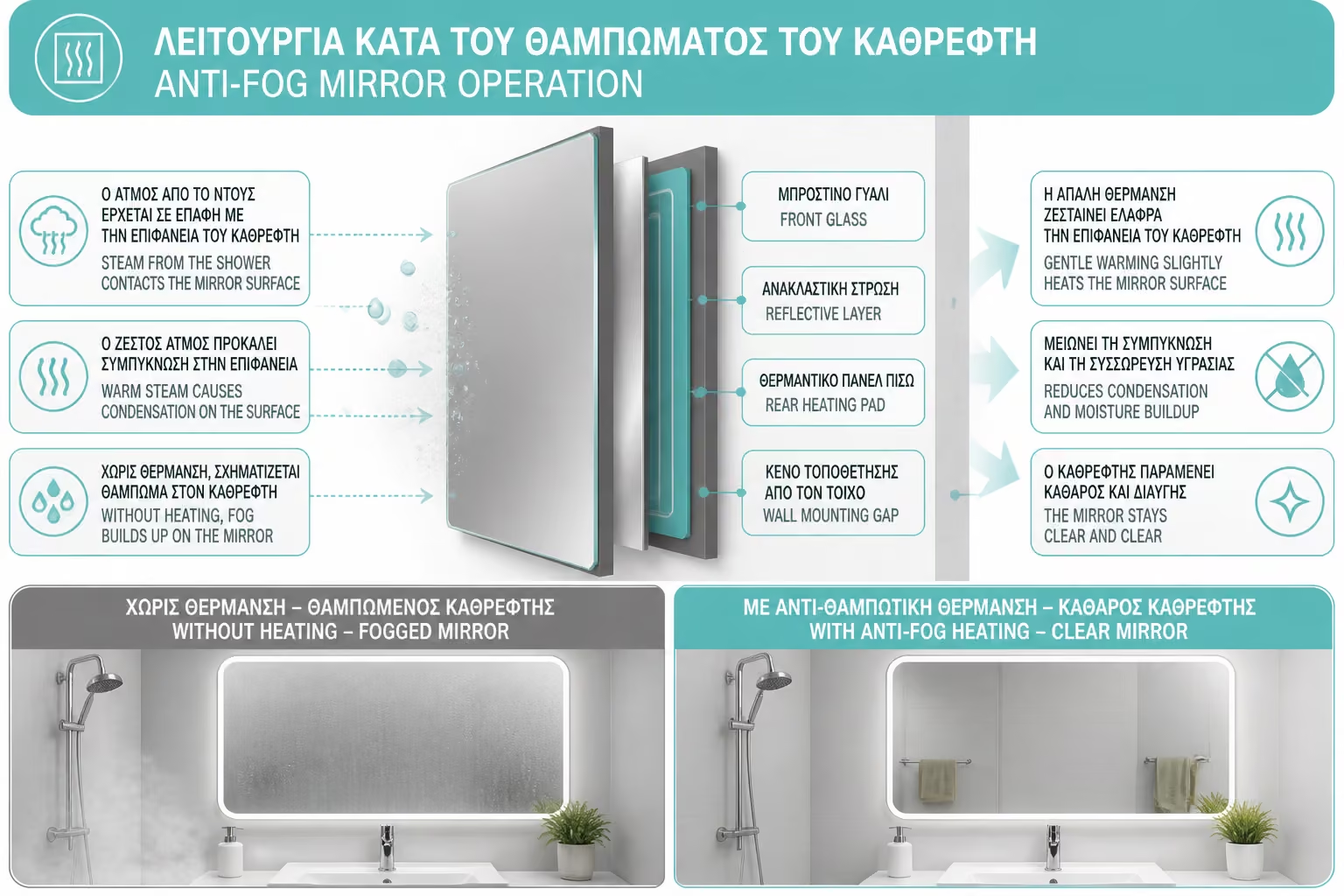
The anti-glare function, for example, usually relies on a thin heating pad behind the mirror. This slightly heats the surface so that no condensation forms. Buyer's guides and technical articles explain that demister pads are thin heating elements stuck behind the mirror that heat the surface above the dew point and thus prevent water vapor from forming.
In this guide we'll see how smart bathroom mirrors work, what they're really worth, how to choose the right LED lighting, what dimming and Kelvin mean, when Bluetooth speakers are useful and when they just add to the cost, what electrical points need to be checked and what mistakes lead to mirrors that are beautiful at first but annoying in everyday use.
A smart mirror is a mirror with integrated electric or electronic functions. In its simplest form, it can have LED lighting and a touch switch. In a more complete form it can have anti-fog, volume adjustment, color temperature change, setting memory, meter, Bluetooth speakers, motion sensor, temperature display or even smart home functions.
Not all smart mirrors are the same. An illuminated mirror with a simple LED frame is not necessarily "smart". A mirror with anti-fog and CCT change already has more practical technology. A mirror with Bluetooth, meter and sensors falls more into the smart gadget category. The question is, which of these do you need?
In everyday use, the two most useful functions are usually anti-fog and proper face lighting. The watch is practical, but secondary. Bluetooth speakers are nice, but not necessary. Very "smart" functions, such as news screens or apps, need attention, because the bathroom is not always the best place for complex technology.
A good smart mirror should do its basic job first: show clearly, illuminate properly, not fog up too much, be safe in wet environments, and be able to be repaired or replaced without ruining half the wall.
The anti-fog function does not magically remove moisture from the bathroom. It simply prevents or reduces condensation on the mirror surface. When we take a hot shower, the air fills with water vapor. If this water vapor touches a cold mirror, it condenses into small droplets and the surface becomes cloudy. The demister pad slightly heats the back of the mirror so the surface isn't as cold and drips don't form as easily.
Usually, anti-fog covers a specific area behind the mirror, not necessarily the entire surface. This means that only the central zone can remain clear in a large mirror. It's not a problem if you know it. It's a problem when you expect the entire mirror to stay perfectly clean after a very hot shower.
The function can be activated with a touch button, together with the lighting or automatically, depending on the model. In some mirrors, the anti-fog comes on when the light comes on. On others, it has a separate button so it doesn't draw power when it's not needed. Automatic activation is practical, but it needs good logic: there is no need to heat up the mirror every time we go in just to wash our hands.
Anti-fog is great for comfort, but it's no substitute for ventilation. If the bathroom retains moisture, if joints turn black or if mold appears, the mirror can stay clean while the space remains problematic. The mirror solves the fogging of the glass, not the humidity of the bathroom.
On smarter mirrors, the anti-glare function can be activated automatically. This can be done with a humidity sensor, with a connection to the bathroom light, with a presence sensor or simply when the mirror is opened. The idea is that the user does not have to remember to press the anti-fog before or after the shower.
The most practical solution is often a separate activation or activation together with a specific bathroom function. If the anti-fog lights up every time the LED is turned on, it may consume power unnecessarily in short uses. If it never turns on automatically, the user may only remember it after the mirror has already fogged up.
The ideal function depends on the use. In a master bathroom with daily showers, automatic activation is valuable. In a guest WC without a shower, anti-fog is almost unnecessary. In a bathroom with very good ventilation, it may be rarely needed. In a small interior bathroom without a window, it is one of the most useful functions.
Before you buy, ask what exactly "auto anti-fog" means. Does it have a sensor? Does it turn on with the light? Does it turn on with touch? Does it turn itself off? Is there a timer? If the description is unclear, you may just be buying a mirror with a manually activated demister.
Mirror lighting should not be judged only by whether it "looks nice". In the bathroom, the mirror is used for shaving, make-up, facial care, contact lenses, cleaning and daily routine. So the lighting needs to illuminate the face properly, not just the wall.
Many LED mirrors have perimeter or backlit lighting. The backlit light, i.e. the light towards the wall, creates a nice atmosphere and makes the bathroom look more luxurious. But it is not always enough for grooming, because it can illuminate mainly around the mirror and not the face. Front lighting, from the frame or from vertical bands on the right and left, is often better for practical use.
A good smart mirror should have enough brightness, uniform distribution, low shadows and correct color temperature. If the light comes only from above, it can create shadows under the eyes and chin. If it comes only from behind, it may be beautiful but insufficient. If it is too strong and cold, it is tiring.
Before choosing, see if the product lists lumens, watts, color temperature and dimming capability. The general phrases "powerful LED lighting" or "luxury lighting" are not enough.
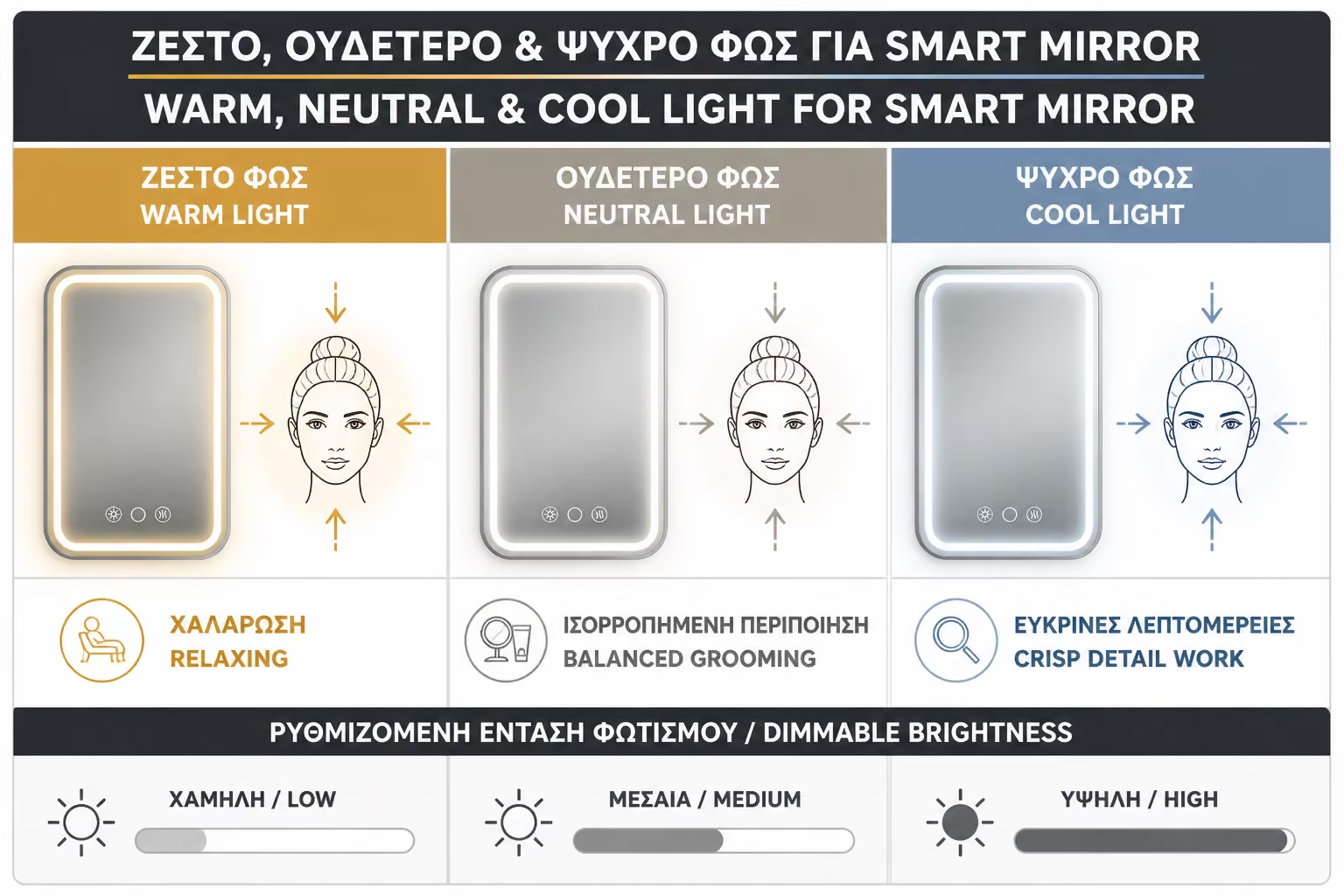
Dimming allows to decrease or increase the intensity of the lighting. This is very useful in the bathroom, because we don't always want the same light. In the morning we may want bright, clear light. At night we may want a lower volume so that it doesn't wake us up too much. For makeup or shaving, we may need more light. For leisurely bathing, less.
In a good smart mirror, dimming should be smooth and flicker-free. If the LED flickers at low intensity, it is eye straining and looks cheap. Also, it is good to have a memory function, so that the mirror remembers the last setting and does not turn to the maximum every time.
Some mirrors have a touch dimmer: press and hold and the intensity changes. Others have separate buttons or sensor. The important thing is not the way, but the practicality. If the controller is difficult with wet hands or does not respond well, the operation will be frustrating.
On the market there are LED mirrors and bathroom mirror luminaires with integrated dimming and CCT options. Product examples include IP44, touch dimmer and temperature options such as 3000K/4000K or adjustable color temperature. This shows that these features have now become practical standard across several ranges, not just premium luxury.
Color temperature is measured in Kelvin. In the bathroom, common choices are around 2700–3000K for warm light, 4000K for neutral/natural light and 5000–6500K for cooler daylight. Each option has a different use.
Warm light is more relaxed and pleasant for evening use, but is not always ideal for makeup or face detail, as it can distort color perception. Neutral light around 4000K is often the best balance for everyday bathing. Cold light gives a feeling of clarity and detail, but if it is too intense it can make the room hard and tiring.
Kelvin change, also known as CCT adjustment, is practical when the same bathroom is used for different needs. A more neutral or cool light can be chosen for morning treatment. For evening relaxation, warmer. For make-up, we often want as natural color rendering as possible and not overly warm or blue light.
But be careful: Kelvin is not the same as lighting quality. A mirror can change color temperature but have low color rendering. For make-up and grooming, it is good to examine the CRI index, when given. The better the color rendering, the more natural skin tones look.
The built-in meter is one of the functions that seems secondary, but in daily use they can be useful. In the morning, when you get ready for work or school, you see the time without picking up your mobile phone. This can also reduce the tendency to open the phone in the bathroom and waste time.
In a master bathroom, the meter makes sense. In guest WC, less. On Airbnb or rentals, it might look more premium but it doesn't have to. The issue is sharpness and regulation. If the indication is very strong at night, it can be annoying. If it does not keep time after a power outage, it will need constant adjustment.
Some mirrors combine a meter with a temperature or date display. These are nice, but not critical. If the budget is limited, it is preferable to emphasize good lighting, anti-fog and IP rather than more indicators.
A smart feature has value when you use it every day. If it's there just to look impressive in the store, it's not necessarily a good investment.
Bathroom mirror Bluetooth speakers allow you to listen to music, podcasts or the radio without bringing a separate speaker into the bathroom. This is practical, because portable devices are often not suitable for wet environments and end up near water. An embedded system, if properly designed, is a cleaner solution.
But you shouldn't expect hi-fi sound quality. In-mirror speakers are usually small, with limited bass and moderate volume. It's enough for casual listening. For really good music experience, not always. Also, the bathroom has hard surfaces, tiles and reverberation, so the sound is affected.
You also need to think about connectivity. Will every mobile connect easily? Remember the last device? Can it accidentally connect to a phone in another room? Is there a logout indicator or button? In a family, Bluetooth products can create minor annoyances if they are not well designed.
Bluetooth speakers are worth it if you really listen to sound in the bathroom often. If not, prefer better lighting and anti-fog. They are more everyday functions.
Most smart mirrors have touch buttons on the glass. These can control light, dimming, CCT, anti-fog, Bluetooth and meter. The aesthetics are clean, because there are no mechanical switches. But the practicality depends on the quality of the sensor.
A good touch control responds consistently, even in a slightly damp environment. A bad one may require multiple taps, accidentally activate during cleaning, or not work well with wet fingers. In a bathroom mirror, this matters.
Some models have a motion or proximity sensor, so they turn on without touching. This reduces fingerprints on the glass and helps hygiene. But if the sensor is very sensitive, it can light up when you pass by. If it is too weak, it becomes annoying.
The best solution is the one that suits the use. For a master bathroom, touch controls with memory are usually enough. For guest toilets, a simple switch with a fixed setting may be more convenient. For smart home, it may make sense to connect with a switch or automation, but always with a safe electrical installation.
A smart mirror has electronics, LEDs, drivers, a possible heating pad and speakers. So it must have adequate protection for the bathroom. The IP rating indicates the degree of protection of an enclosure against solids and water. The IEC explains that the IEC 60529/IP code is used to rate the protection of electrical and electronic enclosures against dust/solids and liquids.
In practice, many bathroom mirrors are IP44, meaning they are designed to protect against solid objects over 1mm and water splashes. This is common for fixtures and mirrors in areas of the bathroom where there is no direct water flow. However, the correct IP depends on the location. If the mirror is located very close to a shower or where it receives water, a stricter assessment may be required.
Guides for bathroom zones often state that in Zone 2 at least IP44 is required and that for 230V equipment a 30mA RCD protection is required. This information comes from British practice/BS 7671, but technical logic is important for Greek bathrooms as well: position in relation to water and shower determines safety.
For the owner, the practical instruction is simple: do not buy a smart mirror without a clear IP rating and installation instructions for the bathroom. If the product is a general LED decorative mirror but not suitable for a bathroom, it should not be placed above a sink in a wet area.
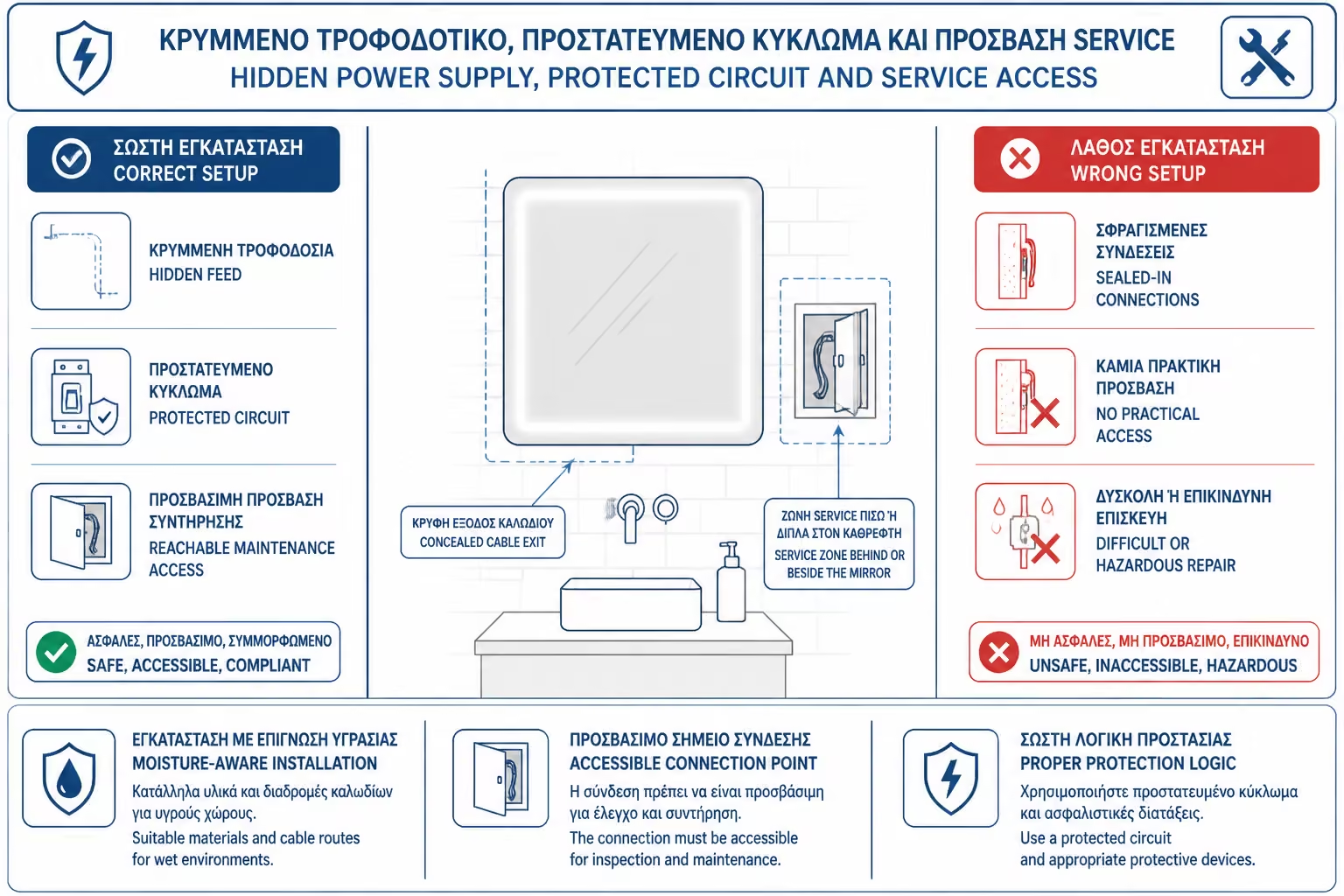
A smart mirror usually needs a permanent power supply behind the mirror. In a proper renovation, the electrician leaves a hold at the right height and point so that the mirror can be connected stealthily and cleanly. If this is not provided for, the installation may end up with an exposed cable, channel or socket in the wrong place.
The supply should be protected by an RCD/leakage relay, like any electrical circuit in a bathroom where required. There must also be a safe way of service isolation. If the LED driver or anti-fog fails, the technician should be able to disconnect the mirror without dangerous workarounds.
The position of the stand must be coordinated with the size and type of the mirror. If the mirror is too thin, there is not always enough space behind it for terminals or power supplies. If it is a mirror-cabinet, it needs extra depth and proper cable routing. If it has an external driver, we need to know where it goes.
Drivers or connections must not be buried inside the wall without access. Electronics may need replacing. Pure aesthetics should not be achieved at the expense of maintenance.
Before looking at features, look at dimensions. The mirror should match the washbasin, the furniture, the height of the users, the lamps, the tiles and the distances from the shower or window. A mirror that is too small looks poor and does not serve. One that's too big can clash with sconces, cabinets, or power strips.
Usually the mirror is chosen a little narrower or about the width of the vanity, unless we deliberately want a large wall-to-wall effect. The height should accommodate different users. If it has a built-in light at the top and bottom, there needs to be room for it to be seen properly. If it has touch buttons low, they should not be hidden by a faucet or a sink.
The position also affects the anti-fog. If the mirror is too close to the shower, it will absorb more water vapor. If the bathroom has poor ventilation, the anti-fog will work more. If there is a window or cold exterior wall behind the mirror, it may fog up more easily.
A smart mirror that is the wrong size or the wrong height won't be made right because it has Bluetooth. First we plan placement, then we choose technology.
There are simple smart mirrors and mirrored cabinets with smart functions. The plain mirror is thinner, more elegant and often more economical. The mirror-cabinet gives storage, something valuable in small bathrooms, but it has more depth and needs more careful placement.
A smart mirrored cabinet can include LED, demister, shaver socket, Bluetooth and interior lighting. Buying guides for smart mirror cabinets often describe demister pads, shaver sockets and Bluetooth speakers as key features in this category. But each additional function increases the complexity.
In a small bathroom, the mirror cabinet can be more useful than a slim smart mirror without storage. But if it is too close to the faucet or protrudes above a small sink, it can be annoying. Depth, door opening, lighting position and headroom should be checked.
The dilemma is practical: do you need storage or clean aesthetics? If the bathroom already has enough cabinets, a slim smart mirror might be better. If the sink is small and there is no space for products, the mirrored cabinet may have more value.
Anti-fog uses heat. It doesn't usually use as much as a water heater, but it's not zero. If it comes on every time someone enters the bathroom and stays on for a long time, it adds unnecessary consumption. That is why it is useful to have a timer, automatic shutdown or a separate button.
In a well-designed system, the demister is activated when needed: before or during the shower, and briefly afterwards. It doesn't have to stay on all day. If the bathroom is well ventilated, little may be needed. If the bathroom is indoor and wet, it will be used more often.
The anti-glare function should not be used as a substitute for ventilation. If the mirror stays clean but the bathroom has steam, the problem is simply transferred to other surfaces: ceiling, joints, furniture, doors. The mirror becomes more comfortable, but the space remains damp.
If you want a real humidity solution, combine smart mirror with a proper ventilator, hygrostat or good natural ventilation. Anti-fog is a comfort function, not a dehumidification system.
In the Greek market of 2026, a simple LED bathroom mirror can start around €80–180, depending on size and quality. A better mirror with anti-fog, dimming and Kelvin change can be around €180–450. Larger models, mirrors with Bluetooth, meter, sensors, premium frame or mirrored cabinets can reach around €400–900 or more.
Cabinet mirrors with LED, demister, shaver socket, Bluetooth and internal storage usually cost more than a simple flat mirror. Cost is affected by size, LED quality, mirror thickness, IP rating, hinge quality, power supplies, warranty and spare parts availability.
In the installation, if there is already a proper power standby behind the mirror, the cost is less. If a new line has to be run, a supply moved, dug or a switch added, costs increase. In a complete renovation, the electrical waiting must be foreseen from the beginning, because after the tiles every correction becomes more expensive.
Don't just compare product price. Compare complete solution: mirror, electrical supply, installation, safety, serviceability and warranty. A cheap smart mirror without spare drivers or without a clear IP can become expensive at the first failure.
A smart mirror is well worth it in bathrooms that are used daily for showering, shaving, makeup or an intense morning routine. Anti-fog solves a real problem. Dimming and Kelvin switching improve usability. The watch helps in everyday life. If you often listen to music in the bathroom, Bluetooth speakers have value.
It is also worth it in small bathrooms where the mirror can visually enlarge the space and add lighting without many sconces. A well-lit mirror can make the bathroom look cleaner, larger and more modern.
It is not always worth it in a guest WC without a shower, where the anti-fog will not be used. A nice mirror with simple lighting might be enough there. It's also not worth it if the electrical installation is sloppy or if the bathroom has more serious problems first, such as poor ventilation, mold, wrong sockets or inadequate ceiling lighting.
The right priority is: safety and lighting first, then anti-fog, then conveniences like meter and Bluetooth.
Ask the supplier for a clear IP rating, LED power, lumen, Kelvin or CCT range, dimming capability, presence of anti-fog, how to activate anti-fog, warranty, driver spare parts and installation instructions. If the product has Bluetooth, ask where the speakers are, how they are connected, if there is a reset, and if they work regardless of lighting.
From the electrician, ask for proper waiting behind the mirror, RCD protection, secure connection, isolation capability and position control in relation to bathroom zones. If the mirror has an external driver, it must be decided where it will fit and how it will be accessible.
If the mirror is heavy or a cabinet-mirror, it also needs proper support on the wall. Drywall, aerated concrete or old plaster may require special plugs or reinforcement. Do not leave the installation to the "mirror" alone without coordination with an electrician.
A correct offer should not only say "smart mirror", but also the functions, IP, electrical connection, installation and warranty. The more electronics a mirror has, the more important it is to know exactly what you're buying.
The first mistake is buying a mirror without a clear IP rating for a bathroom. Beautiful LED doesn't mean suitable for wet room.
The second mistake is installation without proper power standby. Visible cables behind a mirror spoil both safety and aesthetics.
The third mistake is to choose a mirror with backlight only and then it turns out to be insufficient for shaving or makeup.
The fourth mistake is too much emphasis on Bluetooth and meter, while the lighting is mediocre. Extras don't fix bad light.
The fifth mistake is anti-fog without proper ventilation. The mirror may not fog up, but moisture remains in the space.
The sixth mistake is to hide a driver or connection without access. If it breaks, it will need excision.
The seventh mistake is wrong size or height. The mirror must first serve the face and the piece of furniture, then be smart.
Before you finalize the choice or installation, review the following points first:
| Question | Yes / No |
|---|---|
| Does the mirror have a clear IP rating suitable for a bathroom? | Yes / No |
| Is its location safe in relation to shower and bath zones? | Yes / No |
| Is there proper electrical standby behind the mirror? | Yes / No |
| Is the circuit protected by a 30 mA RCD? | Yes / No |
| Is LED lighting sufficient for face, shaving or make-up? | Yes / No |
| Is there flicker-free dimming? | Yes / No |
| Is there a Kelvin/CCT change with practical options? | Yes / No |
| Does the anti-fog cover a sufficient area of the mirror? | Yes / No |
| Does the anti-fog turn itself off or does it have a separate control? | Yes / No |
| Is there access to a driver/connection for service? | Yes / No |
If most of the answers are unclear, don't just choose from a photo. The smart mirror is a technical product, not just a decorative one.
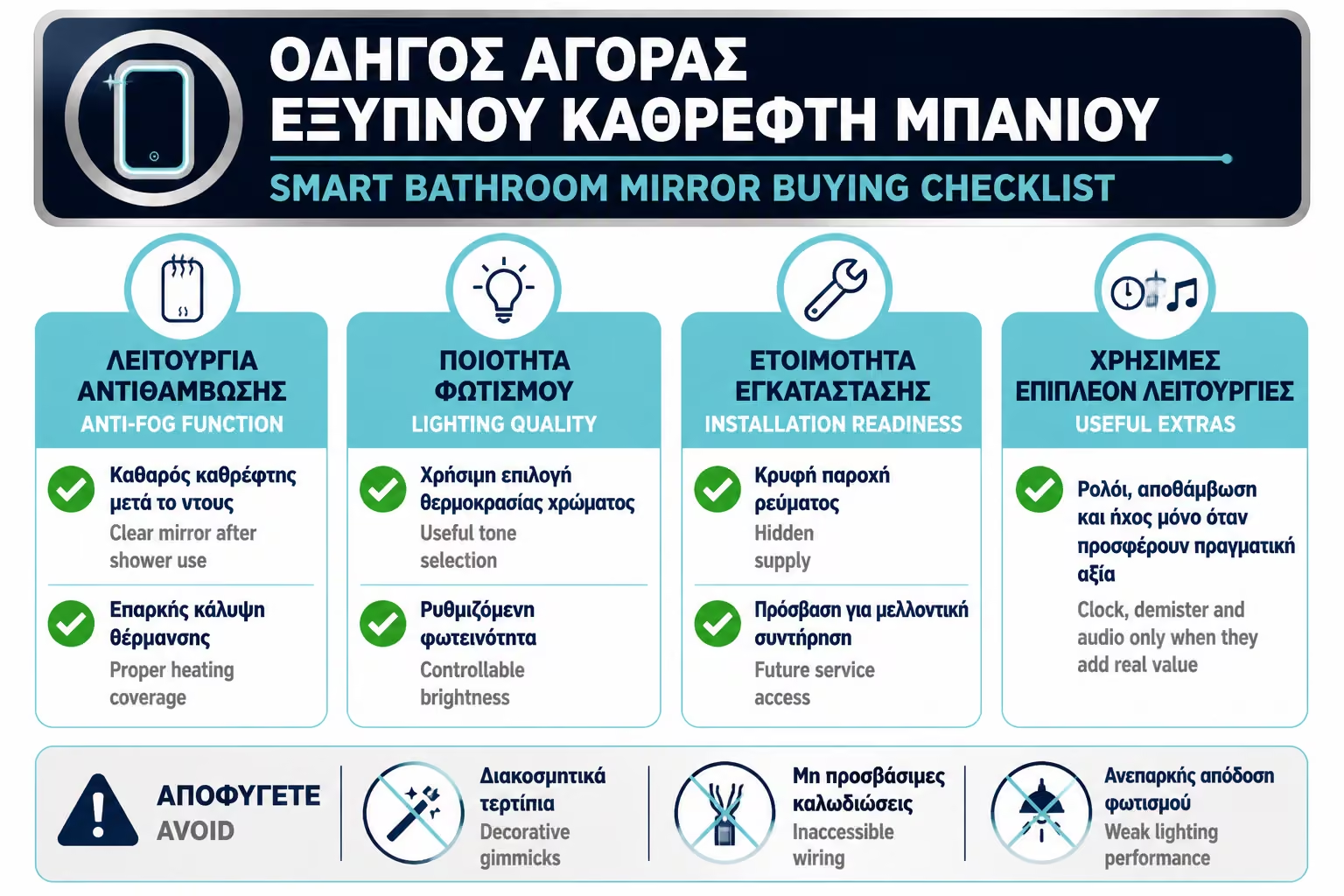
If you have to keep only one thing, keep this: in the smart bathroom mirror, the most important features are not the Bluetooth and the meter. It's the right lighting, the secure IP, the right electrical connection and the anti-fog that works when you really need it. If the mirror does not illuminate the face well or is not suitable for a wet area, the rest is decorative. Anticipate the power supply before the tiles go in and don't hide drivers or connections without access.
Smart bathroom mirrors can be one of the most enjoyable and practical upgrades to a renovation. The anti-fog function solves the daily problem of a foggy mirror after a shower. The adjustable LED lighting with dimming and Kelvin change makes the same space more functional in the morning and more relaxed in the evening. The meter and Bluetooth speakers add convenience when actually in use.
But the smart mirror remains an electrical device in a bathroom. It must have a suitable IP, correct location, safe power supply, RCD protection and serviceability. It also needs to light properly, not just look impressive in a photo. A mirror with many features but poor light or a rough installation will get tired quickly.
For the owner, the right approach is to start from the use: do I need a clean mirror after the shower? Do I need good face light? Do I want warm and cool lighting? Do I often listen to music in the bathroom? Do I have a proper power supply at the site? When these questions are answered, the smart mirror can be chosen correctly.
In the smart bathroom, the best mirror isn't the one with the most buttons. It is he who makes the daily routine more comfortable, cleaner and safer without adding unnecessary complexity.
Return to category.
Go to categoryReturn to the central guide.
Go to guide