
Plumbing & Electrical Bathroom Infrastructure
Return to category.
Go to categoryThe lighting around the mirror is one of the most important elements of a bathroom. There we shave, paint, wash the face, put in contact lenses, dry hair, check details that cannot be seen with a simple central lighting. Bad lighting creates shadows, strains the eyes and makes the bathroom look cheaper than it is. Correct lighting, on the other hand, changes the entire user experience.
But in the bathroom, mirror lighting is not only a matter of aesthetics. A sconce above the sink, two side lamps, a mirror with integrated LEDs or an LED strip behind the piece of furniture are electrical equipment in a room with water, moisture and splashes. If the wrong product is selected or a careless connection is made, malfunctions, oxidations, flickering, relay drops, short circuits or even the risk of electric shock may occur.
The most common mistake is that the owner buys the mirror or sconce based on the design and then asks the electrician to "wire it". In the bathroom this order is reversed. First we need to know where the sink is in relation to the shower or tub, if the spot receives splashes, what protection zone affects the location, if there is a proper supply, if the line is protected by a leakage relay and what IP rating the product has.
The IP rating is not an advertising detail. The international standard IEC 60529 is used to rate the protection of electrical and electronic device enclosures against dust, liquids and access to hazardous parts. So when we talk about a lamp or LED mirror in a bathroom, the IP indication is an essential technical feature, not just "a number on the package".
In Greece, low-voltage electrical installations are examined in the context of ELOT 60364, while for spaces containing a bathtub or shower, part 7-701 has a special role. The ELOT has published the ELOT HD 60364-7-701:2024 for spaces containing a shower or sprinkler, with a date of issue of December 6, 2024 and stage "Effective".
In this guide we'll look at how to choose and safely place lighting around a mirror, what to look out for in sconces, spots, LED mirrors and LED strips, how the subject relates to the basin, shower and protection zones, what IP is reasonable to ask for and why the leakage relay and proper grounding are just as important as the light fixture itself.
The general lighting of the bathroom is intended to illuminate the space as a whole. Mirror lighting has a different mission: it must illuminate the face clearly, without strong shadows, without blur and without tiring. That is why it is usually placed near the washbasin, either above the mirror or to the right and left of it or integrated into the furniture itself or the mirror.
But precisely because it is located near the sink, it is exposed to conditions that do not exist in other rooms. The user washes the face, shakes water from the hands, opens and closes the faucet, cleans the sink with liquid cleaners, uses a hair dryer or shaver. Splashes can reach a lamp, switch, cable or connection point.
In many bathrooms, the sink is located very close to the shower. This is especially common in small Greek apartments. There, the mirror lighting is not only evaluated as a "washbasin light". It should also be assessed in relation to the shower, bath and safety zones.
A practical example: an IP20 wall light that could fit comfortably in a bedroom, is placed above a bathroom mirror because it "does not get wet directly". After months of use, blurring of the cover, rusting of screws or flickering occurs. The problem is not only the quality of the product. It is that the product was not designed for a place with moisture and splashes.
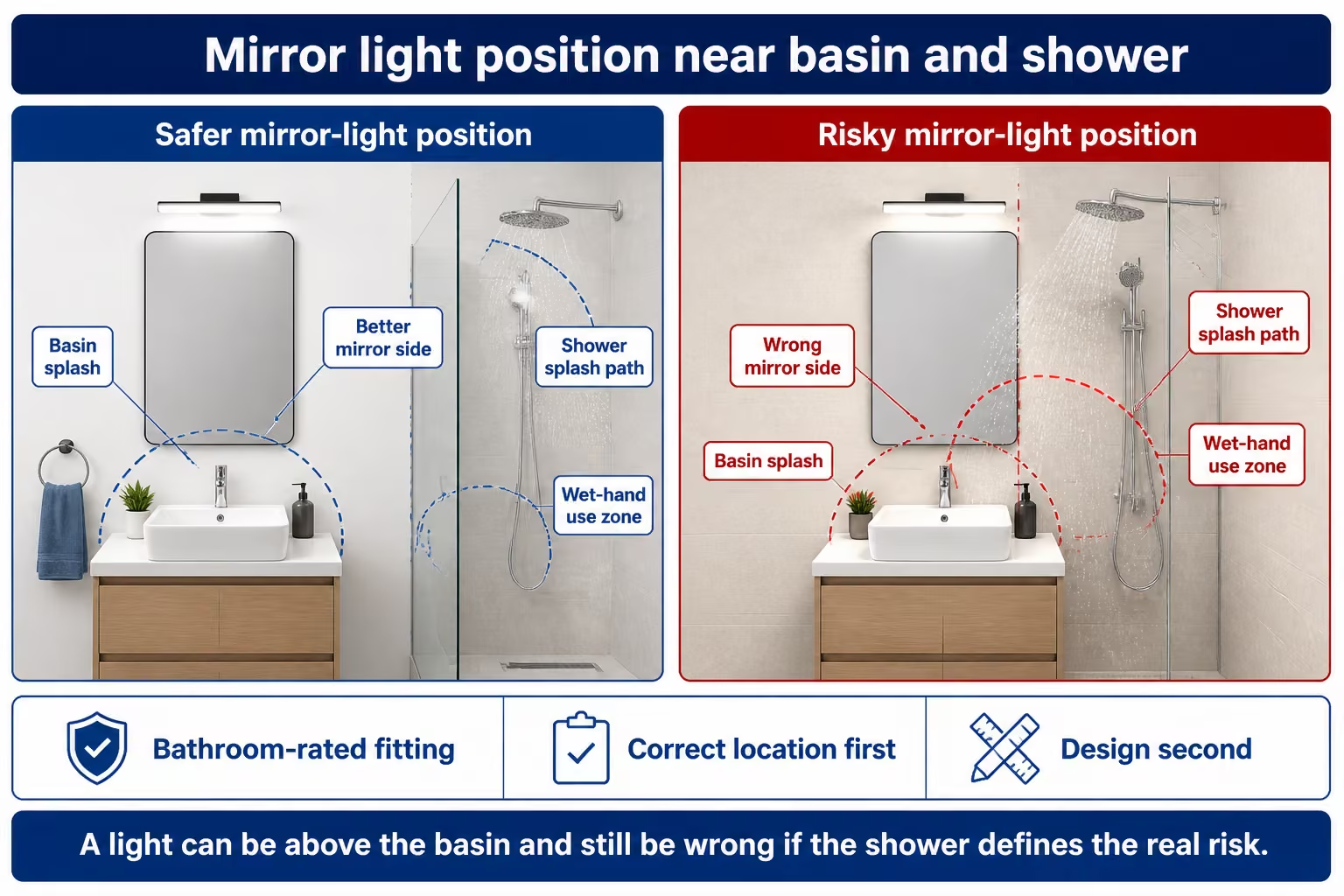
Many homeowners think of mirror lighting only in relation to the sink. They ask "how far should it be from the tap?". This is a reasonable question, but it is not enough. In the bathroom, the basic regulatory logic of buffer zones starts at the tub or shower, not the sink.
This means that a light above the mirror can be in a safe position if the basin is in a separate, dry area. The same light fixture, however, can be problematic if the sink is right next to a walk-in shower or a tub that is used daily as a shower. The actual path of the water, the splashes and the ability to turn the shower phone towards the mirror play a big role.
In a small bathroom, the shower may be less than a meter away from the mirror. If there is only a curtain or a small fixed window, splashes may reach the sink area. In this case, the choice of lighting must be made more strictly.
The right question is not only "will water fall from the tap?". It is "throughout the daily use of the bathroom, can the lamp or its connection receive water, water vapor or touch with wet hands?".
Sconces above the mirror are a classic choice. They illuminate the face from above, are easy to place and are available in many designs. But not all sconces are suitable for the bathroom. Many products sold as "modern sconces" are designed for hallways, bedrooms or living rooms, not wet areas.
The mirror sconce must have a clear IP rating appropriate for its location. In a place where there is moisture and possible splashes, a product without IP or with very low protection is not a good choice. Also, it must have a suitable mounting method, secure cable entry, protected junction box and moisture resistant materials.
Another issue is the temperature and the type of bulb. LEDs have greatly reduced heat problems compared to older fixtures, but it doesn't mean that every LED sconce is suitable for a bathroom. The electronic power supply, driver, connections and housing must be protected.
In practice, a mirror sconce should be purchased once the exact location is known. If the lamp is first purchased and then it is found that it is too close to the shower or that it does not have a suitable IP, the owner is faced with a dilemma: either to change the product or to accept a solution that is not technically correct.
Side sconces to the right and left of the mirror often give better face lighting than a single sconce above the mirror. They reduce shadows under the eyes and chin, illuminate more evenly and are particularly useful for daily care.
But technically they have more requirements. It needs two feed points, correct symmetry, correct height and correct tightness. If one of the two sconces is on the side of the shower, its position may be more burdensome than the other. Both sides are not always evaluated in the same way.
In a small bathroom, for example, the mirror can be located between the wall and the shower. The right sconce can be close to an open shower, while the left one can be away from water. If two identical sconces are placed without considering the actual exposure, there may be a problem on one side.
The lateral solution is very good when designed from the ground up. Before tiles are put in, the electrician can get the waits right. After the tiles, the moves are difficult and often result in exposed cables or sketchy connections.
Spots are often used in suspended ceilings, hidden lighting or above the sink. They can give a clean, modern effect, but they have one pitfall: if placed only on the ceiling, they often create shadows on the face, especially if they are behind the user's position.
From a safety point of view, the spots must be evaluated in relation to their position. A spot above the sink, away from the shower, has a different exposure than a spot near or above the shower. If the suspended ceiling receives water vapor, if there is poor ventilation or if the spot is in a zone of increased risk, the IP and the method of installation are critical.
Caution is also needed in recessed spots. Many times only the ring is visible, but the electrical connection is inside the suspended ceiling. If water vapor collects there or if there is no proper connection box, damage can occur. Just because the fixture looks small doesn't mean installation is simple.
A common mistake is to use the same spots throughout the house and in the bathroom. But the bathroom does not have the same conditions as the corridor or the living room. The lamps must be selected for the space where they will be placed.
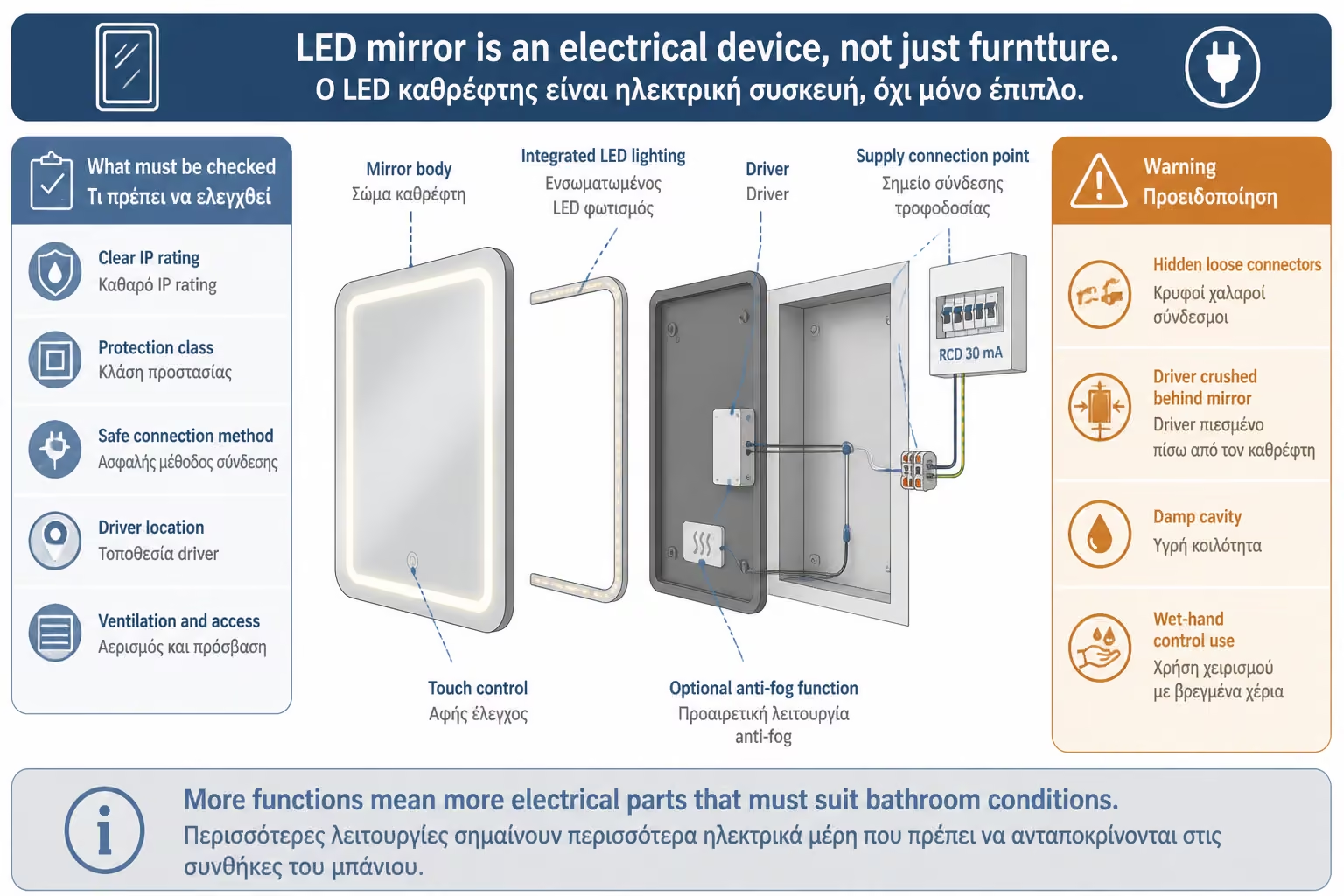
Mirrors with integrated LEDs are now very popular. They can have perimeter lighting, front lighting, anti-glare resistance, touch switch, dimmer, color temperature change, bluetooth, meter or even a built-in socket. The more complex the mirror, the more it should be treated as an electrical device and not as a simple piece of furniture.
The first thing to check is the mirror IP. A mirror intended for a bathroom must have clear technical characteristics. The general description "bathroom mirror" is not enough. We need to know IP, protection class, connection method, driver location and installation instructions.
The second is the location of the electrical supply. If the supply exits directly behind the mirror, the connection must be made in a safe way, in a suitable box or according to the manufacturer's instructions. There should be no bare joints, rough terminals, crimped wires, or connections exposed to water vapor.
The third is handling. If the mirror has a touch switch, the user will often touch it with wet or wet hands. This does not mean that it is prohibited, but it does mean that the product and the position must be really suitable.
LED strips behind mirrors, under furniture or in recesses give a very beautiful effect. They create atmosphere and make the bathroom look more modern. But they are among the most common sources of sketchy installations.
The problem isn't just the movie itself. They are the joints, the cutting points, the terminals, the power supply, the driver, the position of the driver, the entry of the cable and the way of support. A tape may say IP65 or IP67, but if it is cut and not properly sealed, the actual level of protection at the cut point may be much lower.
In addition, the power supply is often placed casually behind the mirror or inside a vanity sink. If it is in a damp, unventilated, inaccessible or near splash area, it can cause problems. The low voltage on the tape does not mean that the whole installation is safe, because somewhere there is a power supply connected to 230 V.
A typical example: an LED strip is placed behind a mirror, with a driver hidden inside the sink cabinet. Water from cleaning runs under the sink, there is a siphon and often moisture. If the driver is not properly protected and accessible, the installation is not good, even if the light looks impressive.
There is no one answer that applies to every bathroom. The required IP depends on location, exposure to splashes, distance from bath or shower and protection zones. Nevertheless, for fixtures around a sink in a wet area, it makes sense to look for products with a clear IP suitable for a bathroom, often at least IP44 in areas where there is a possibility of splashing.
IP44 means protection against solid bodies and water splashes from various directions. It can be a suitable choice for many sconces or mirrors in a bathroom, when they are not in direct exposure from a shower. IP65 offers greater protection against water in the form of a jet and is found in more demanding positions or products. IP67 refers to protection against temporary submersion under certain test conditions, but does not mean that the product is automatically allowed anywhere.
Importantly, IP is not evaluated alone. An IP44 light may be adequate above a sink in a large bathroom, but inadequate next to an open shower. An IP65 product may have good protection, but if it is connected sloppily, the installation remains problematic.
For the owner, it is safe practice to ask an electrician to confirm the IP before purchase. Don't just ask the seller if it's "for a bath".
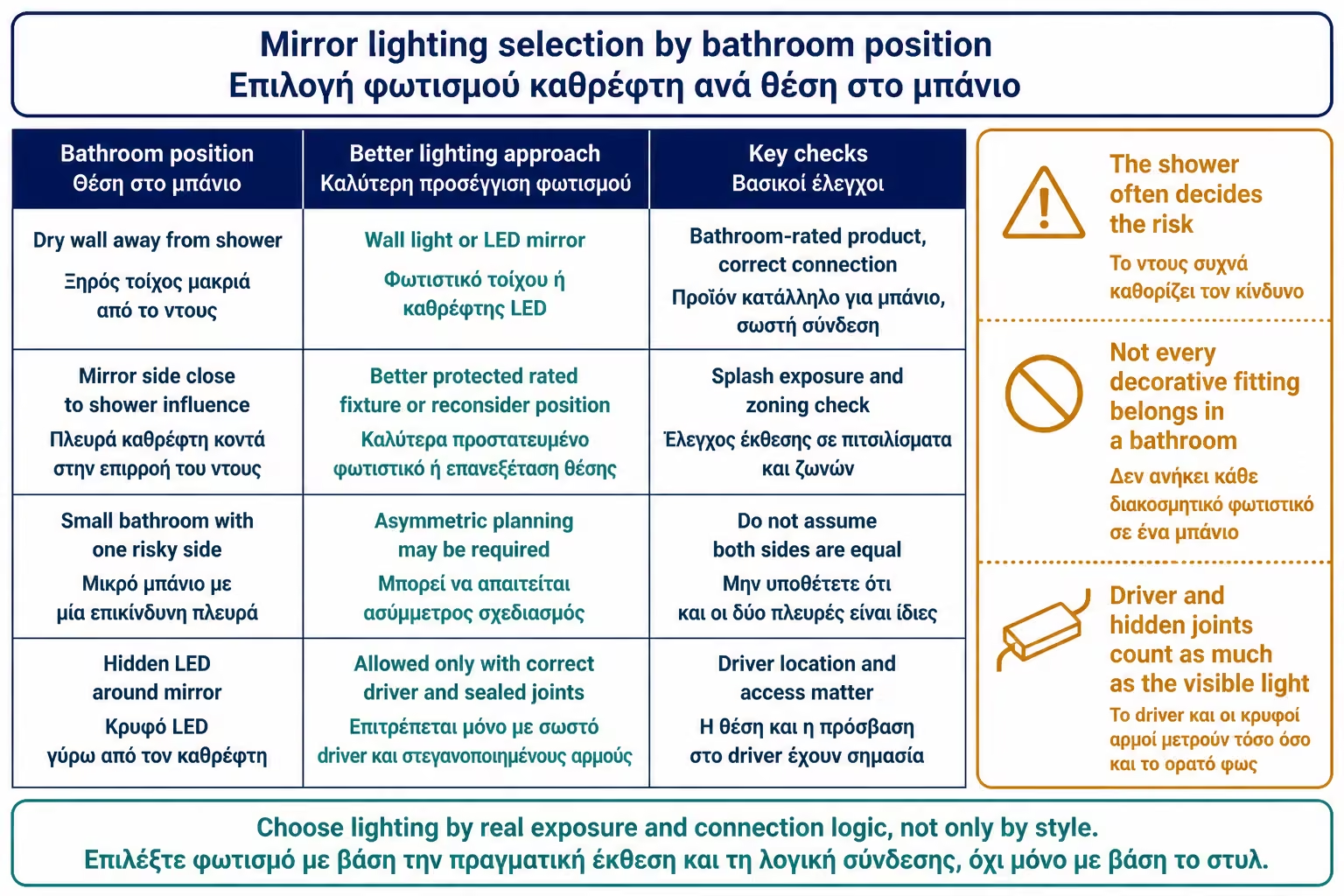
The table below helps to distinguish the common cases. It does not replace the electrician, but shows the logic of selection.
| Lighting position | Usual risk | What to watch out for |
|---|---|---|
| Sconce above mirror, away from shower | Water vapors and light splashes from the sink | Product suitable for bathrooms, often IP44 or equivalent |
| Side sconce to the side of the shower | Splashes and possible exposure from an open shower | Band control, higher attention to IP and location |
| LED mirror above the sink | Moisture, touch with wet hands, hidden connection | IP, protection class, secure connection box |
| LED strip behind mirror | Moisture in compounds and driver | Tape protection, proper cut sealing, safe driver position |
| Ceiling spot near the shower | Water vapors and protection zones | Suitable IP for the location, correct installation in false ceiling |
| Lighting on a vanity unit | Splashes, cleaners, moisture under the sink | Protection of connections and power supplies, no rough connections |
The basic principle is that the closer the fixture is to the shower or to possible splashes, the more strictly it should be controlled.
Mirror lighting may seem like a small load, but that doesn't mean protection is secondary. In the bathroom, circuits supplying equipment in a bath or shower area need additional protection with an RCD up to 30mA in accordance with the modern logic of Section 701. The relevant IET guidance states that circuits in a bath or shower area, including lighting, must be protected by an RCD not exceeding 30mA.
This is critical because the problem is not just the wattage of the fixture. The problem is the environment. A small LED can be located where the user has wet hands, where there are splashes, or where a current leak would have more serious consequences.
It must therefore be checked whether the bathroom lighting circuit is protected by an RCD. In older homes, there may be a relay in the panel, but it may not protect all circuits, or additions may have been made afterwards. It is not enough that "there is a relay". It must be confirmed that it also protects the mirror light line.
Also, if the RCD trips when the mirror lighting comes on, it should not be bypassed. The cause must be found: moisture, problematic driver, bad connection, broken lamp or wrong wiring.
Many mirror lights have a metal body. If they are Class I devices, they must be properly connected to the protective conductor, i.e. to earth. If they are Class II, they have double or reinforced insulation and are not grounded in the same way. But this must be derived from the technical characteristics of the product, not from an assumption.
A metal light fixture without proper grounding can become dangerous in the event of a malfunction. If it is in the bathroom, the risk increases. That is why the choice of luminaire must take into account the protection class, the IP and the connection method.
In old bathrooms, there may be a lighting standby without proper grounding. The owner buys a metal sconce and the craftsman connects it as he finds. This is wrong. If the fixture requires grounding and there is no proper grounding, it should not be installed without correcting the installation.
Grounding is not visible in the final result, but it is one of the elements that determine whether the lamp is safe.
LED mirrors and sconces are often connected to a hidden supply behind the mirror. This gives a clean aesthetic effect, without visible wires. But the hidden connection must be done correctly. It doesn't just mean we hide the compounds behind the mirror.
There must be a suitable junction box or a prescribed way of connection according to the manufacturer's instructions. Joints must be protected, accessible where required and not exposed to water vapour. The cables must not be pressed behind the mirror, pinched or come into contact with unprotected metal parts.
A common mistake is to connect with simple terminals behind the mirror and then press the mirror to the wall. If there is moisture, if a cable is injured or if maintenance is required, the connection is not properly controlled. Mirrors with drivers must also be ventilated and replaceable.
Hidden connection is a good solution when designed. Not a good solution when used to hide a rough joint.
Some mirror lights or LED elements are sold with a plug. This can be convenient in dry areas, but in the bathroom it must be carefully evaluated. Is the outlet in a suitable position? Does it have an IP? Is it RCD protected? Is the plug left exposed? Does the cable run near the sink? Can it get wet from cleaning or splashes?
A socket with a cover does not always solve the problem. When the plug is permanently connected, the lid usually stays open or does not close completely. So the socket is not protected as when it is empty and closed. In addition, if there is an outlet near the mirror, it can later be used for other devices, such as hair dryers or chargers.
For permanent mirror lighting, hidden or fixed wiring is usually a cleaner and more controllable solution if done by an electrician. A plug connection can only be placed if the socket is in a safe, permitted and properly protected position.
A practical example: an LED mirror with a plug is connected to a socket inside the washbasin cabinet. There the siphon goes, there is moisture and the owner stores cleaning products. If the socket is not properly protected and if the plug is in a place where it can receive water from a leak, the solution is problematic.
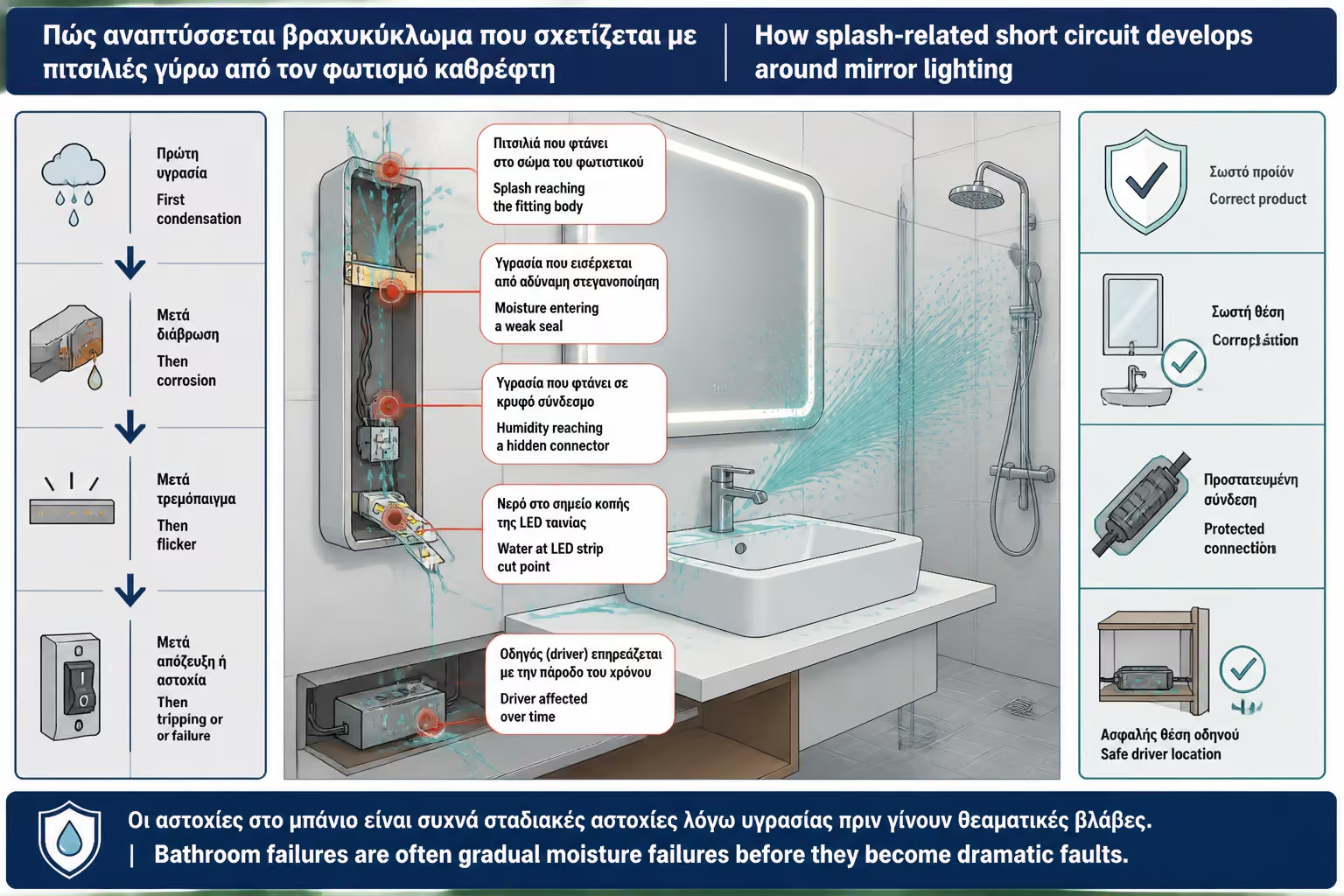
When we hear "splash short", we often imagine water falling directly onto bare wires. In practice, problems are usually more gradual. Small splashes, water vapors and moisture get into a bad housing, a weak joint, an LED strip cut point or a cheap driver. Oxidation, leakage, flickering or damage occurs over time.
The short circuit does not always appear on the first day. The light may work for months and then start to flicker. The relay can drop only when there is a lot of moisture. The driver may burn. It can blacken a connection point. These are signs that the installation or product cannot withstand the conditions.
Prevention is based on four elements: suitable product, correct location, correct connection and circuit protection. If one of them is missing, the risk increases. A good IP does not save a bad connection. A good connection does not save a lamp that is not for the bathroom. An RCD does not make a wrong position right.
The bathroom is less forgiving of small mistakes than a dry area.
Many homeowners ask whether they should choose warm, neutral or cool light. This is important for comfort and aesthetics, but is not directly related to electrical safety. A lamp can have a perfect light color and be unsuitable for a bathroom. A safe light can also give poor lighting if it is in the wrong position or the wrong color temperature.
For a mirror, neutral light, around 4000K, is usually preferred because it best renders the face without being too yellow or cold. For a more atmospheric bathroom, it can be combined with warmer indirect lighting. But these are functional options. Safety comes first.
If the LED mirror has the ability to change the color temperature, dimmer or touch controls, the driver and electronic construction must be checked. More functions mean more electronic infrastructure and therefore more need for proper product quality.
A proper bathroom does not choose between beautiful and safe. It must have both, but in the right order: first suitability and safety, then lighting comfort and aesthetics.
The cost depends on the type of lighting, quality, IP, design and installation. A simple bathroom wall light can start around €25–60, while better solutions with the right IP, quality LED, good body and a more refined finish can range from around €70–180 or more. Paired side sconces naturally add to the cost.
LED bathroom mirrors can start around €100–180 for basic options and reach €250–600 or even higher when they have anti-glare, touch controls, dimming, a cabinet, better IP or premium construction. LED strips and hidden lighting may seem economical as a material, but the cost of proper installation, drivers, profiles, seals and benefits must be calculated.
The electrical work depends on whether there is already a proper standby. If the supply is provided before the tiles, the connection is easier. If a new line has to be passed after the bathroom is finished, the cost goes up due to considerations. For example, simply connecting a lamp to a ready correct standby can be a small labor cost, while a new hidden supply, moving points or connecting several lamps can be included in the general electrical package of the renovation.
Prices depend on area, floor, access, if VAT is included, quality of materials, condition of panel, need for RCD/WDE and restoration of surfaces. Don't just compare the price of the lamp. Compare product, location, IP, installation and review.
Before buying a mirror light, show the electrician the layout of the bathroom and the technical brochure of the product. Have the location checked in relation to the shower or bath, IP, protection class, connection method, presence of RCD and grounding.
If it is an LED mirror, ask where the driver will be located and if it will be accessible. If it has an anti-glare function, touch controls or an outlet, ask for it to be rated as a full electrical appliance. If it is an LED strip, ask for proper profiles, seals, terminals and power supply location.
A correct quote should set out materials, labour, new standby, light fixture connection, any switch, possible supply move and protection check. If it only says “mirror connection”, it may not include the control you really need.
Ideally, the waiting time should pass before the tiles are placed. This way the lighting is positioned correctly, without visible cables and without having to adjust the security to the aesthetics afterwards.
The first mistake is buying a lamp without IP. If the product does not have clear technical characteristics, it should not be placed in the bathroom.
The second mistake is placing a sconce too close to an open shower, because "it's over the sink". The shower affects the position, even if the light serves the mirror.
The third mistake is the rough connection behind the mirror. Hidden compounds must be correct, protected and as directed.
The fourth mistake is the LED driver inside a wet sink cabinet or behind a mirror without ventilation and access.
The fifth mistake is using LED tape without properly sealing the cuts and joints. That's often where the damage starts.
The sixth mistake is the belief that "because it's LED, it's not dangerous". The LED can work at low voltage, but the power supply is connected to the mains and the installation must be correct.
Before the lighting is selected or installed, check the following points first:
| Question | Yes / No |
|---|---|
| Has the position of the light fixture been checked in relation to the bathtub or shower? | Yes / No |
| Does the lamp or mirror have a clear IP suitable for a bathroom? | Yes / No |
| Does the seat receive splashes from a sink or shower? | Yes / No |
| Is the lighting line protected by a 30mA RCD? | Yes / No |
| If the fixture is metal, has the grounding or protection class been checked? | Yes / No |
| Is the connection behind the mirror made in a suitable box or according to the instructions? | Yes / No |
| If there is an LED driver, is it in a safe, accessible and ventilated place? | Yes / No |
| If there is LED tape, are cuts and joints properly sealed? | Yes / No |
| Are the waits anticipated before the tiles go in? | Yes / No |
| Will the installation be done by a licensed electrician? | Yes / No |
If the answer at any critical point is "I don't know", the purchase or placement must wait. Mirror lighting is a daily point of use, but remains electrical equipment in a wet area.
If you keep only one thing from this guide, keep this: mirror lighting is not chosen only by how good it looks in a photo. First we check the position in relation to the shower and sink, then the IP rating, then grounding or protection class, the RCD and the connection method. Splashes rarely damage a properly selected and properly installed light fitting. What they do damage very easily are rough connections, the wrong LED strips, unsuitable drivers and lamps that were never meant for a bathroom.
Mirror lighting is one of the most useful and aesthetically important options in a bathroom. It can upgrade daily use, make the space more comfortable and give a much better result than a simple central lighting. But because it is located around the sink and often near the shower, it must be treated as an electrical installation with safety requirements.
The right choice starts with the position. If the mirror is located away from the shower, the requirements are different from a small bathroom where the sink is next to a walk-in shower. Product IP, protection class, grounding, RCD, junction box, driver and installation quality are all part of the same decision.
For the owner, the practical instruction is simple: do not buy sconces, LED mirrors or LED strips before the electrician has seen the place. Ask for products with clear technical characteristics and avoid sketchy connections behind the mirror. So the lighting will not only be beautiful, but also safe in real use, with water vapors, cleaning, splashes and daily operation.
In the bathroom, the light should flatter the space, but first it should respect the water.
Return to category.
Go to categoryReturn to the central guide.
Go to guide