
Plumbing & Electrical Bathroom Infrastructure
Return to category.
Go to categoryHidden LED lighting can completely change the look of a bathroom. A bright line behind the mirror, under the vanity unit, in a recess, above a false ceiling or along a shower gives a sense of hotel, cleanliness and modern renovation. That's why many owners ask for "a little hidden LED" in almost every new bathroom.
The problem is that hidden LED lighting looks simple, but it is not always simple. The tape itself can operate at 12V or 24V, i.e. at a lower voltage than the mains. This leads many to believe that "there is no danger". But somewhere there is a power supply, a transformer or driver that takes 230V and converts it to 12V or 24V. If this power supply is placed in the wrong place, in moisture, behind a mirror without ventilation, under a sink next to a faucet or over a shower, the installation can become problematic.
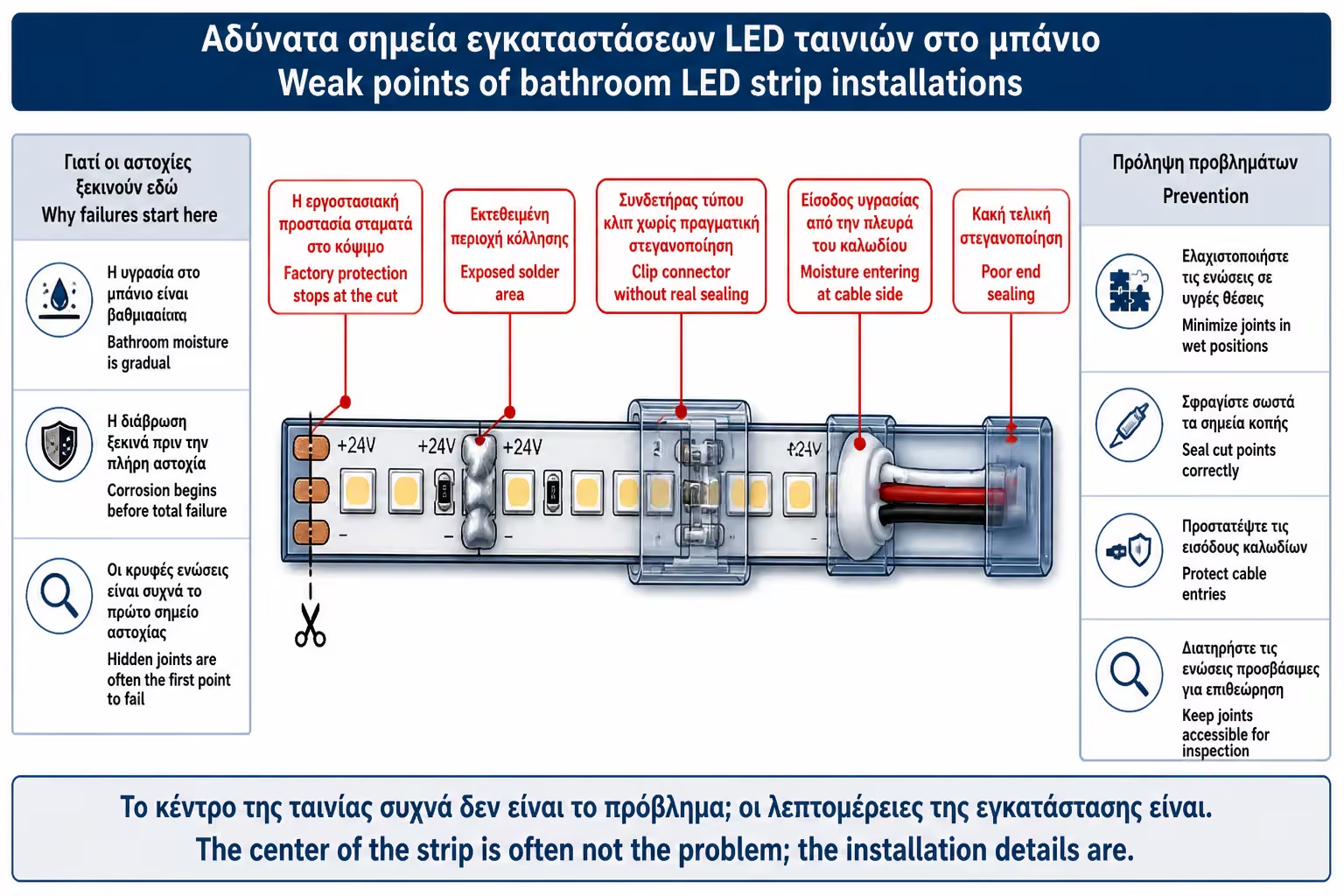
In practice, most hidden bathroom lighting failures don't always start with the strip itself. They start from the points that cannot be seen: the cuts, the joints, the terminals, the driver, the point where the cable enters, the junction box or the bad position of the power supply. An LED can look perfect the first week and after a few months flicker, change color, burn out in parts, or drop the relay when the space fills with water vapor.
The IP rating is central to this selection. IEC 60529 is the international standard that rates the protection of electrical and electronic device enclosures against dust, liquids and access to hazardous parts. So when a product says IP44, IP65 or IP67, it is not an advertising word but a specific protection class under specific test conditions. (https://www.iec.ch/ip-ratings?utm_source=chatgpt.com))
In Greece, low-voltage electrical installations are examined in the context of ELOT 60364, while for areas with a bathtub or shower, part 7-701 has a special role. ELOT has published ELOT HD 60364-7-701:2024 for spaces containing a bath or sprinkler, i.e. bathtub or shower, and displays it as the applicable standard.
In this guide we will see which LED strips are suitable for bathrooms, what IP ratings mean in practice, why cuts and joints are the weak point, where 12V/24V power supplies should be placed, why they should not be hidden where there is "extra space" and what the owner should ask the electrician before tiles, mirrors and furniture are installed.
Hidden LED lighting has two faces. On the one hand, it is low consumption, thin, flexible and easy to integrate into architectural details. On the other hand, the bathroom is a wet place. This means that the tape, profile, joints and power supply must withstand conditions that do not exist in a living room or a bedroom.
The owner usually only sees the final light. It doesn't see where the driver is located, how the LED pieces were joined, if the cuts were sealed, if there is an aluminum profile for heat dissipation, if the tape is really waterproof, or if it just has a thin layer of silicone that over time yellows, peels, or traps moisture.
The bathroom creates three main pressures on hidden lighting. First, moisture and water vapor that seep in gradually. Second, splashes from the sink or shower. Third, heat, because LED strips and power supplies need proper heat dissipation to have a lifetime. When we hide them in completely closed places without ventilation, we reduce their durability.
A practical example: in a bathroom with an LED mirror, the craftsman hides the power supply behind the mirror, pressed between the mirror and the wall. At first everything works. After a while, due to heat and steam, the driver starts to fail. To change, the mirror must be unhooked and the connection opened. This is not a good setup. It's a hidden problem.
In the market you will see LED strips with descriptions such as waterproof, silicone, IP65, IP67 or "suitable for bathing". These descriptions need attention. A tape may have splash protection, but may not be suitable for a spot that gets wet directly. Another may withstand temporary immersion as a product, but lose its protection where it is cut or joined.
The film IP is for the product as tested. When the tape is cut to length, when a cable is glued, when it is inserted into a profile, when it is sealed with heat shrink or silicone, the final protection depends on the quality of the application. This is the most common point of failure.
For bathroom use, a simple IP20 LED strip, i.e. open strip with no protection, is not a good choice for wet or splash areas. It can only be placed in completely protected, dry and accessible places, again with technical judgement. In places around a sink, under a piece of furniture, near a shower or in recesses, a film with suitable protection is needed, often IP65 or higher, depending on the location.
But a higher IP does not always mean a better installation. An IP67 tape may have worse heat dissipation if fully enclosed in a thick housing. It can also be more difficult to cut and join correctly. So selection should be based on position and study, not just on the basis of the highest number.
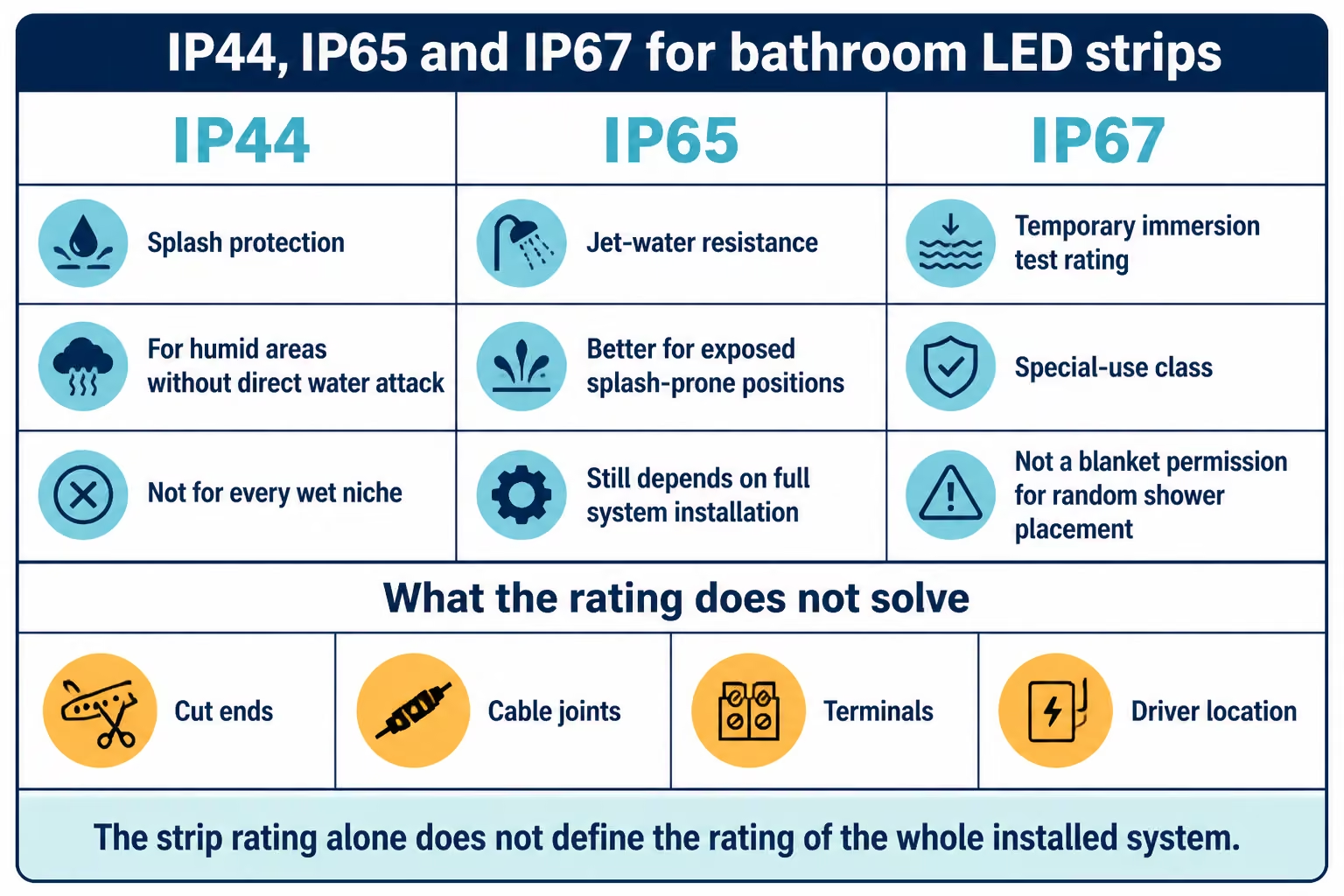
The second digit of the IP indicates the protection against water. In concealed bathroom lighting, this is critical. IP44 refers to splash protection. IP65 refers to protection against water jets. IP67 refers to protection against temporary submersion, under specific test conditions. The IEC explains that the IP rating rates the resistance of enclosures against the ingress of dust and liquids, but should not be confused with a general commercial promise of "waterproof for everything". (https://www.iec.ch/ip-ratings?utm_source=chatgpt.com))
In practice, for concealed lighting behind a mirror or above a vanity sink, a splash-proof product may be sufficient if the location does not receive direct water. For lighting near a walk-in shower or in a splash-prone recess, higher protection and much more careful application is often needed. For lighting in a spot that gets wet, we don't just decide by the IP of the film. We check zone, voltage, power supply, profile, connections and if the system is really allowed there.
The table below helps as a general practical picture:
| Indicator | Practical interpretation | Where it can be used with caution |
|---|---|---|
| IP20 | No substantial protection from water | Only in protected, dry areas free from moisture, if confirmed by an electrician |
| IP44 | Splash protection | In areas with moisture but no direct water, depending on location |
| IP65 | Protection from water in the form of a jet | In more demanding areas with possible splashes or increased exposure |
| IP67 | Temporary submersion protection under test | Special applications, not general permission for rough installation in the shower |
The most important point is that the final IP of the installation is also decided by the associations. A haphazardly glued and open-ended IP67 tape can end up being much more vulnerable than a properly installed IP65 tape in a suitable profile.
The LED strips are cut at specific points to get the right length. This is practical, but creates the basic problem of tightness. The factory casing stops at the cut point. If there is not a proper seal, moisture can penetrate under the protective layer, oxidize the contacts and cause damage.
Wired joints are just as sensitive. A simple glue that is left exposed behind a mirror or inside a vanity sink is not a solution for a bathroom. It needs proper insulation, waterproofing, proper mechanical protection and placement in a place that does not receive water. Ready-made connection clips are convenient, but they are not always suitable for a wet environment, especially if they do not offer real waterproofing.
A common example is the LED strip under floating bathroom furniture. The film looks protected, because it is under the furniture. In practice, however, water from mopping, splashes from the sink or moisture from the faucet can pass there. If the joint is low and not tight, failure is only a matter of time.
Good practice is to avoid compounds in wet areas as much as possible. Where necessary, they must be made with materials and technique appropriate for the position. And they must remain accessible for inspection, not buried behind tile or inside an enclosed structure.
The LED strip can work on 12V or 24V. The power supply, however, is connected to the 230V network. This makes it much more critical from an electrical safety standpoint. If the driver is placed in the wrong place, if it is not ventilated, if it receives water vapor or if it is not accessible, the installation becomes problematic.
The most common mistake is to hide the power supply where it cannot be seen: behind a mirror, inside a sink cabinet, inside a false ceiling without a window, behind plasterboard, above a shower or in a closed box without ventilation. Aesthetics are solved, but maintenance and safety are getting worse.
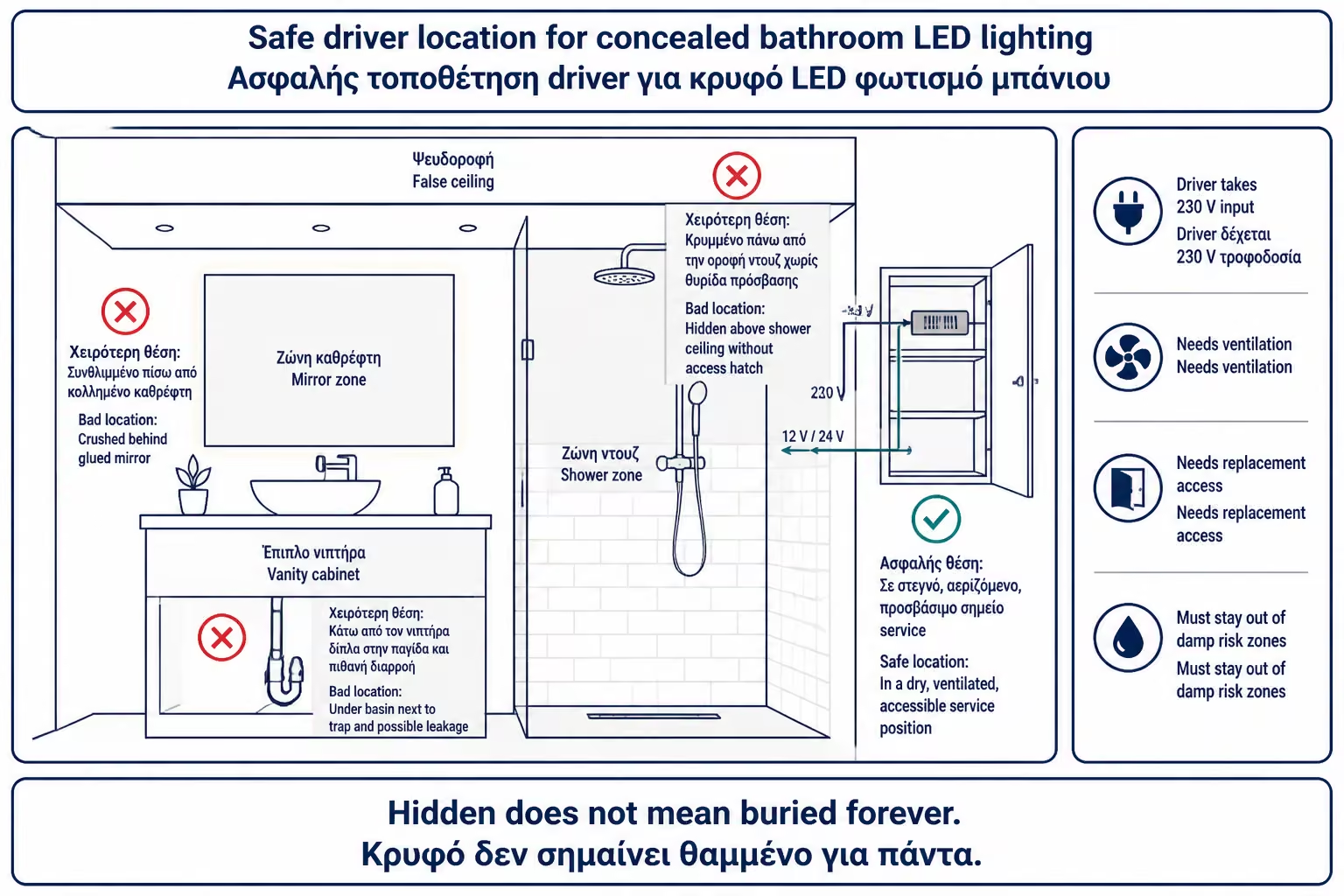
The power supply needs three things: safe location, ventilation and access. It must be located outside of direct water zones, in a place where it does not receive water vapor or splashes, be able to dissipate heat and be able to be replaced without breaking the bath. A bathroom LED installation guide points out that the SELV driver should be placed outside of zone 0 and 1 and in an accessible location, such as an adjacent ceiling void, cabinet or dedicated electrical box outside of wet zones.
A proper bathroom should not require removing a mirror, furniture or false ceiling to change a driver that has burned out. Drivers are components that may need to be replaced at some point. So access must be provided.
Low voltage LED strips usually run on 12V or 24V. The choice depends on the length, the power per meter, the voltage drop, the connection method and the system we want to build. At longer lengths, 24V often helps to reduce voltage drop and provide more even lighting. In small applications, 12V may be sufficient.
From a security perspective, both solutions can be suitable when properly designed. The critical thing is not only whether the tape is 12V or 24V. It is whether the power supply is suitable, whether it is in the correct position, whether the 230V circuit is protected, whether the tape has the correct IP and whether the connections are made correctly.
Many people think that because the tape is 12V, they can put it anywhere they want. This is wrong. Even at low voltage, the bathroom environment can cause oxidation, damage, overheating, driver failure or joint problems. Also, the power supply remains connected to 230V.
The choice of 12V or 24V should be made by an electrician or lighting technician based on the study. It's not a matter of "whatever we find in the store".
The ideal location for the power supply is out of wet areas, in a protected, accessible and ventilated area. In many cases, a better location may be above a suspended ceiling with an access hatch, in an adjacent cabinet outside the bathroom, in an electrical box in a dry location, in a cabinet that does not accept water vapor or in a technical room.
The power supply must not be placed inside a closed cavity without access. It must not be placed inside the sink cabinet next to the faucet, unless there is special provision and protection. It should not be placed where it can get wet from leakage. It should not be located above a shower or in a zone where water vapor condenses strongly.
A practical example: in a bathroom with hidden lighting under a piece of furniture, the craftsman puts the driver inside the piece of furniture itself, behind the cleaners. After a small drip in the siphon, the driver gets wet. The light burns and the relay drops. The problem was not the LED strip. It was the location of the power supply.
The right question before installation is: "If the driver breaks in three years, how will we change it?". If the answer is "we should get rid of", the position is not good.
There are spots that look convenient, but are bad choices. Behind non-removable glued mirror. Inside a closed false ceiling without a door. Behind a tile. Under the sink next to the faucet. In an airtight box. Above the shower. Behind furniture that cannot be removed. At a point where water vapor condensation occurs.
The problem with these spots is not just moisture. It is also maintenance. Power supplies are electronic components. They have a shelf life. They are warming up. They may break. If they are not accessible, a simple lighting failure turns into a meremet.
A frequent mistake in premium bathrooms is the excessive desire to see nothing. But in a good installation, the technical elements should not just disappear. They must be properly hidden and remain accessible. This difference is important.
The owner must ask the electrician to show him where the driver will be located before the construction is closed. If the answer is vague, such as "somewhere behind the mirror", more specific planning is needed.
Lighting behind a mirror is one of the most common applications. It can be done with a ready-made LED mirror or with a custom tape behind the mirror. In both cases, the driver must be installed correctly.
If the mirror is a finished product with a built-in driver, it must be checked that it is designed for a bathroom, has a suitable IP and installation instructions. If the driver is external, a safe place must be provided. If the mirror is permanently attached to the wall, the driver should not be trapped behind it without access.
In custom solutions, the film needs to fit into a proper profile and not just stick to the back of the mirror in a way that heats up or peels off. The driver must have ventilation and access. If it goes in a cupboard, it should be in a dry place, not under a faucet or next to cleaners.
A practical scenario: mirror with perimeter LED lighting flickers after six months. The electrician finds that the driver is behind the mirror and cannot come out without coming off. The repair costs more than the part. This is a design error, not a simple product failure.
LED strips in shower recesses, niches, linear channels or low points of the wall are impressive, but they are also the most demanding. There is direct or almost direct exposure to water, cleaning agents, water vapors and temperature changes. The installation should be treated as a special application, not as a simple decorative light.
In such places, a product with suitable IP, correct low voltage, power supply outside wet zones, tight joints, correct profile, maintainability and compatibility with protection zones is needed. IEC 60364-7-701 covers electrical installations in spaces where a bath or shower is permanently installed and their associated zones, so such applications must be checked as part of the electrical design of the space.
A frequent mistake is the LED strip inside a shower recess, with the driver hidden in the false ceiling directly above the shower. The tape may be tight, but the driver is in a bad position. Another mistake is the IP65 tape inside a point that receives a continuous flow of water. There a different system may be needed or the solution may need to be avoided altogether.
For the owner, the practical advice is simple: if the hidden lighting is inside the shower zone, don't treat it like "a little LED strip". Request electrical design.
Lighting under a floating vanity unit is very popular. It gives a nice feel to the floor, helps night use and makes the bathroom look lighter. But it is a position that is often underestimated.
Under the sink there is a siphon, water supplies, cleaners, moisture, mopping and often leaks that are not immediately visible. If the LED strip, junction or driver is low and unprotected, the risk increases.
The tape must be suitable for moisture and splashes, be installed in profiles, not be mopped and have properly protected joints. The driver should not be placed at the lowest point of the furniture, nor next to the siphon. If it needs to be inside the furniture, it must be in a safe, dry, ventilated and accessible place.
A frequent scenario is a small leak in the siphon that drips for days inside the furniture. The owner understands this when the hidden lighting stops working. In a proper installation, a small hydraulic leak should not immediately destroy the electrical part.
False ceilings offer many possibilities for hidden lighting. Perimeter strip, indirect lighting, spots and light lines can be created. But the suspended ceiling should not become a "drivers graveyard" without access.
In a bathroom, the suspended ceiling receives water vapor. If there is no good ventilation, water vapor can condense on cold spots. If there are power supplies inside the false ceiling without protection or without access, maintenance becomes difficult and damage is more likely.
The correct practice is to provide an access box or other accessible technical point for the drivers. Cables must be routed, connections must be in boxes, and power supplies must not be covered with insulating or heat-trapping materials.
A practical example: in a bathroom renovation, perimeter hidden lighting is inserted into the suspended ceiling. The driver is hidden inside the plasterboard without a slot. After two years it burns. To change, the roof must be cut. This is not a correct technical solution, no matter how clean it looked on the day of delivery.
Many believe that LEDs do not get hot. In fact, LED strips and drivers generate heat. If this heat is not removed, their lifespan is reduced. That is why aluminum profiles are not only decorative. They help dissipate heat and protect the film mechanically.
An LED strip glued directly to wood, behind a mirror or in a narrow recess without ventilation can get hotter than it should be. This leads to brightness drop, color change, adhesive peeling or premature failure. Drivers also need space around them. If we close them in a small box without ventilation, they heat up and their lifespan is reduced.
The bathroom aggravates the situation even more, because it has humidity and temperature changes. After a hot shower, the space fills with water vapor. If the water vapor encounters cold spots on the suspended ceiling or behind a mirror, it can condense.
Proper LED installation is not only electrical. It is also thermal. It wants profile, ventilation and access.
Even if the LED strip works on 12V or 24V, the power supply is connected to the mains. That is why the circuit that feeds it must be properly protected. In areas with a bath or shower, modern Section 701 practice requires protection of circuits with an RCD not exceeding 30 mA. Section 701 guides state that all circuits supplying equipment in such spaces, including lighting, need RCD protection up to 30 mA.
Grounding depends on the type of power supply and equipment. Some drivers are Class II and are not grounded the same way. Others have a metal case and require grounding. We do not decide this empirically. The product shows it and the electrician checks it.
Beware of cheap or dubious power supplies without clear markings. The driver is the heart of the system. A cheap driver can cause flickering, overheating, damage or electromagnetic interference. In a bathroom, where safety is more important, it is not correct to choose the cheapest accessory without technical characteristics.
The owner must ask for a branded or reliable driver, suitable for the power of the tape, with load margin and correct installation location.
The power supply must cover the power of the LED strip with a reasonable margin. If the film consumes, for example, 10 W per meter and we have 5 meters, the total power is 50 W. We do not choose a driver exactly 50 W at the limit. We usually leave room so that the driver doesn't work at 100% all the time.
But this does not mean that we put an excessively large driver for no reason. A very large power supply can take up space, cost more and be more difficult to position properly. Selection should be made based on load, tape type, dimming, voltage and manufacturer's instructions.
Also, on long lengths of LED strip, power from two points or a different arrangement may be needed to avoid voltage drop. If we feed a long film from only one end, the beginning may light up more strongly and the end more weakly. This is a common mistake in long hidden lightings.
For the owner, the practical question is: "Has the power of the tape and the driver been calculated, or did we just take a power supply we found?". If no calculation has been made, the installation is rough.
Many LED systems have a dimmer, motion sensor, touch switch, Wi-Fi controller or color change. These features are practical, but they add even more electronic components that need to be placed correctly.
The controller must be in a safe and accessible location, just like the driver. If it is in the bathroom, it must be suitable for the environment. If connected to 230V, stricter requirements apply. If it works at the low voltage after the driver, it remains an electronic component that can be affected by moisture.
In concealed mirror lighting, touch dimmers are often integrated. It must be checked whether the product is suitable for bathing and whether the user will touch it with wet hands. In lighting under furniture, the motion sensors must be placed in a place where it does not receive water from mopping.
Technology makes the bathroom more comfortable, but every additional accessory is also a potential point of failure. The simple, properly designed solution is often more durable than a complex solution that has not been technically foreseen.
Cost depends on tape length, quality, IP, profile, driver, dimming and labor. A simple LED strip may seem economical, but the right bathroom system is not just the strip. Includes aluminum profile, cover, power supply, cables, connections, seals, switch or controller, supply and installation.
In the Greek market of 2026, a simple hidden LED application behind a mirror or under a piece of furniture can start around €80–180 in materials for a basic solution, depending on length and quality. More elaborate solutions with better tape, aluminum profile, correct driver, dimming and sealed joints can move around 180–400€ or more. If a new electrical supply, hidden wiring, access door, false ceiling intervention or connection to a smart system is needed, the cost increases.
The work depends a lot on whether the bathroom is under renovation or already finished. Before tiles and furniture are put in, the waits are more clean and economical. Then, adjustments or compromises are needed.
A very cheap offer for "bathroom LED strip" often hides shortcomings: simple strip without proper IP, driver of dubious quality, rough connections, no profile, no access to power supply and no RCD control. These may not be visible on the first day, but they are visible in the long run.
Before the installation begins, ask them to show you where the LED strip will go in, where the connections will be, where the driver will be located and how it will be replaced if it breaks. These questions are more important than whether the light will be “warm” or “neutral”.
Also ask for technical characteristics: IP of the tape, voltage 12V or 24V, watts per meter, total length, driver power, driver position, cut sealing method, profile type, RCD protection and handling method. If it is lighting near a shower, have the safety zones checked.
A correct offer must mention not only "LED strip", but also what strip, what driver, what profile, what length, what wiring, what protection and what access is provided. If the description is general, it is difficult to assess the quality.
The owner must avoid the "we hide it somewhere and see" logic. In concealed lighting, where each component is hidden is the key issue.
The first mistake is to use a simple LED strip without proper IP in a humid area. It may work at first, but it is not designed for bathing.
The second mistake is sloppy cutting and splicing. The tightness is usually lost at the joints, not in the center of the tape.
The third mistake is the driver behind a stuck mirror or inside a closed suspended ceiling without access. When it breaks, the repair is done promptly.
The fourth mistake is the driver under the sink next to the faucet. There is a risk of moisture, leakage and cleaning agents.
The fifth mistake is the absence of an aluminum profile. The film heats up, peels off and ages faster.
The sixth mistake is driver overload. If it is constantly working at its limits, it will break down faster.
The seventh mistake is the belief that 12V means "no electrician needed". The power supply takes 230V and must be installed correctly.
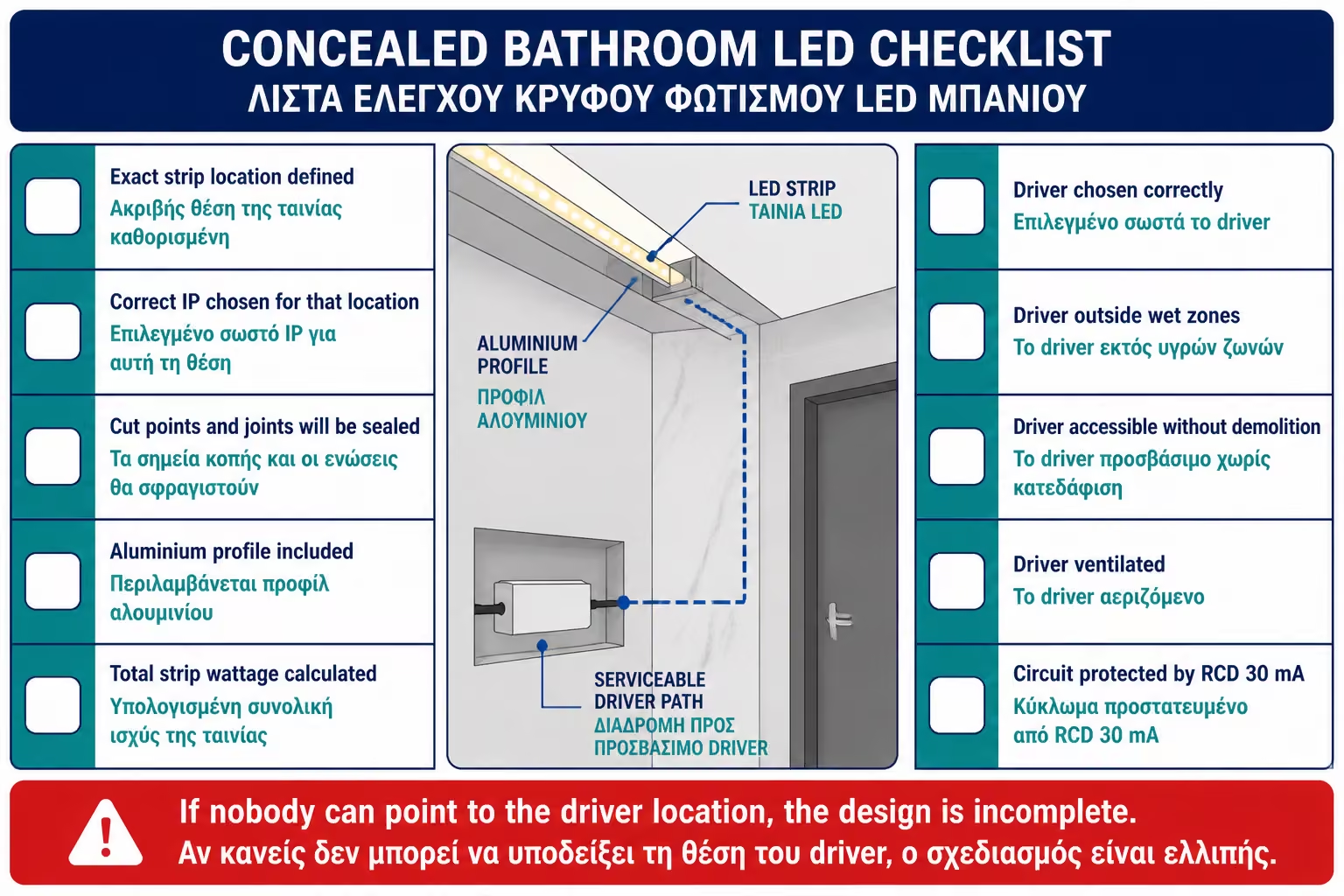
Before the design or installation is closed out, check the following points first:
| Question | Yes / No |
|---|---|
| Is it defined exactly where the LED strip will go in? | Yes / No |
| Is the position near a shower, sink or splash point? | Yes / No |
| Does the film have an appropriate IP for that niche? | Yes / No |
| Will cuts and joins seal properly? | Yes / No |
| Will the film go into aluminum profile? | Yes / No |
| Has the total power of the tape and the correct driver been calculated? | Yes / No |
| Will the driver be outside wet zones? | Yes / No |
| Will the driver be accessible for replacement without breaking? | Yes / No |
| Will the driver be vented and not sealed in a hot spot? | Yes / No |
| Is the circuit protected by a 30 mA RCD? | Yes / No |
If the answer to "where will the driver be?" is not specific, the installation is not ready yet. In recessed lighting, access to the power supply is a matter of design, not detail.
If you keep only one thing from this guide, keep this: in hidden LED bathroom lighting, the most dangerous mistake is not always the strip itself. It is the power supply hidden in the wrong place. Do not leave drivers behind fixed mirrors, inside closed suspended ceilings without an access hatch, or under sinks next to traps. Choose a strip with the right IP rating, seal cuts and joints properly, use an aluminium profile, and provide an accessible, ventilated and dry place for the driver. The light can be hidden. Maintenance and safety should not be.
Hidden LED lighting can give the bathroom a very beautiful and modern effect. But behind the light line there is a small electrical installation that needs to be designed correctly. Tape, profile, joints, driver, power supply location and circuit protection are all part of the same decision.
Choosing a waterproof LED strip is necessary in places with moisture, but it is not enough. The actual strength is judged by the cuts, joints and where the power supply is located. A misplaced driver can quickly fail, drop the relay, or require maintenance to replace. That is why it must be in a dry, ventilated place, outside of wet areas and accessible.
For the owner, the practical direction is clear: don't just ask to “put in an LED strip”. Request a plan. Where will the film fit in? What IP does it have? Where are the compounds? Where is the driver? How does it change if it breaks? Is the circuit protected by an RCD? If these are answered before tiles, mirrors and furniture go in, the hidden lighting will be not only impressive, but also reliable.
In the bathroom, good hidden lighting is not one that is simply not visible. He is the one who has been properly hidden.
Return to category.
Go to categoryReturn to the central guide.
Go to guide