
Plumbing & Electrical Bathroom Infrastructure
Return to category.
Go to categoryThe bathroom is the part of the home where electricity meets the most demanding conditions: water, steam, bare feet, metal elements, tight distances, and devices used every day. A light fitting, a socket, a water heater, a fan, or an electric towel rail may seem like simple choices, but in a bathroom they cannot be installed with the same logic used in a bedroom or hallway.
In practice, many bathrooms in Greece contain electrical work done in different eras. Some were built under older regulations, others were only partly renovated, and others had extra sockets or lighting added later without a proper overall check. That is why we still see sockets too close to the shower, fittings without the right protection, old consumer units without a proper residual current device, or water heaters with questionable connections.
ELOT 60364 replaced the older ELOT HD 384 as the main Greek standard for low-voltage electrical installations. Ministerial Decision 101195/2021 refers to the general and specific requirements for the design, construction, modification, maintenance, and inspection of electrical installations, with the aim of ensuring their safe and proper operation. The same text defines ELOT 60364 as the Greek standard based mainly on CENELEC's HD 60364 series and published as ELOT 60364:2020.
For the homeowner, the important thing is not to memorize the regulation. The important thing is to understand that in a bathroom it is not enough for the electricity simply to "work". The installation has to be designed for a space with water, with the right safety zones, proper protection, suitable materials, grounding, residual current protection, and inspection by a licensed electrician. A bathroom may look fully renovated and attractive, yet still hide dangerous electrical weaknesses behind the switches, light fittings, or the panel.
In this guide, we look at what Section 701 of ELOT 60364 means in practice for spaces with a bath or shower, which zones matter most, what to watch for in sockets, lights, water heaters, extract fans, and electric towel rails, and what the real differences are compared with the older HD 384 logic. The article does not replace an electrician or a proper installation design. It does, however, help the homeowner understand what to ask, what to avoid, and why even "small" electrical alterations in a bathroom should never be done casually.
ELOT 60364 is the Greek standard concerning the requirements for electrical installations. It is not a simple technical brochure nor an optional "good practice" when its application is required by law. The Ministerial Decree on Electrical Installations states that a standard is a technical specification whose compliance is not mandatory, unless its implementation is required by law. In the same decision, installations or their parts are presumed to satisfy the safety and proper functioning requirements when designed, constructed, modified, maintained and controlled according to ELOT 60364 or equivalent standard/technical specifications.
The bathroom specifically concerns Section 701, i.e. spaces containing a bathtub or shower. This section is not generally concerned with "nice" or "convenient" facilities. It deals with safety in a place where the possibility of electric shock is increased, because the human body may be wet, the skin resistance is reduced and contact with grounded or metallic elements is more likely.
This means that a socket is not judged only by whether it "fits" in a wall. It is judged by the distance from the shower or bathtub, by whether it is protected by an RCD, by whether it is properly grounded, by the type of equipment, by the degree of IP protection, and by whether it is in a permitted zone. The same applies to lamps, switches, water heaters, fans, and any electrical device placed in or near the bathroom.
A practical example: in a small bathroom renovation, the owner asks for a socket near the mirror for a hair dryer and shaver. If the basin is too close to the shower, the position that seems practical may not be acceptable, or it may require a different layout. That is not the electrician being "overly strict". It is a matter of safety zones.
In a dry room, an electrical mistake can already be serious. In a bathroom, the same mistake can become far more dangerous. Water does not "create" electricity on its own, but it makes human contact with electrical parts much riskier. Wet skin, bare feet, metal siphons, pipework, taps, and short distances all increase the danger.
That is why the standard does not treat the bathroom as just another tiled room. It divides the space into zones, meaning areas around the bath or shower where different restrictions apply. The closer a point is to water, the stricter the requirements become.
In practice, this affects many everyday decisions. Where should the light switch go? Can there be a socket next to the basin? What type of lighting is allowed above the shower? Can an electric towel rail be placed on the same wall as the shower? Does only the socket need residual-current protection, or does the whole bathroom circuit need it?
The most common mistake is that the owner decides based on convenience and aesthetics, while the electrician must start from safety. In a bathroom, the right order is: first zones and protection, then ergonomics, then aesthetics.
Section 701 deals with electrical installations in areas with a bathtub or shower. Its basic logic is that the closer we get to the point where there is water, the more limited the types of equipment that can be fitted and the greater the protection requirements.
It is not a section of interest only to the electrician at the final stage. It must be taken into account from the planning phase of the renovation. If sanitary ware, cabinets, counters, mirrors and furniture are installed first, and then we "look" for where the socket will go, we often end up with compromises or solutions that are not correct.
In a small Greek bathroom, for example, the distance between the shower, the basin, and the door may be very limited. If the electrician is not involved early enough, they may discover at the end that the desired socket cannot be installed where the owner wants it. Instead of moving the mirror or adjusting the layout in time, the contractor is pressured to make "an exception". Those exceptions are exactly what create problems.
Section 701 is not abstract theory. It is a practical guide to what is allowed, where it is allowed, under which conditions, and with what protection. That is why it should be treated as part of the bathroom design, not as a bureaucratic obstacle.
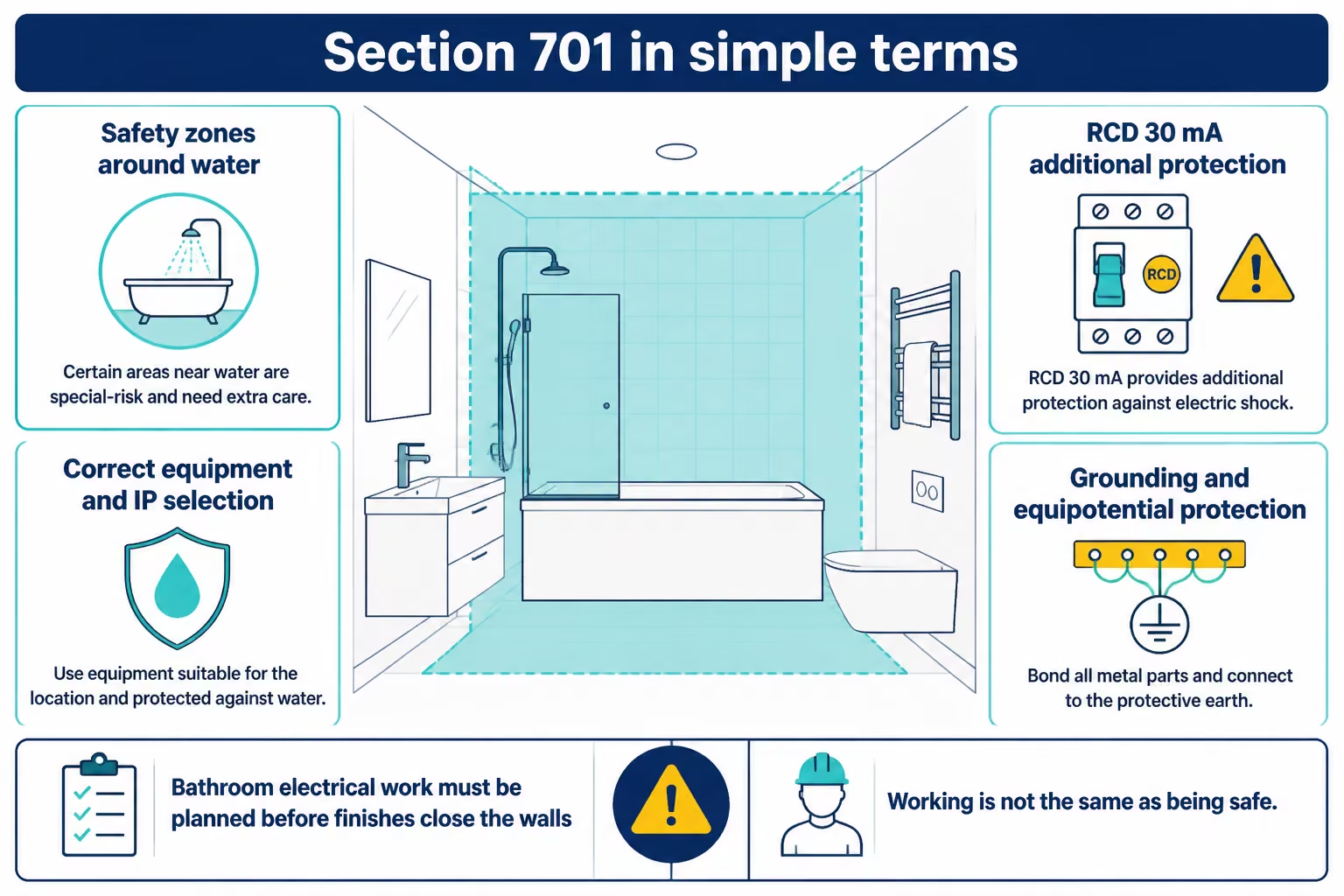
Zone logic is the core of electrical design in the bathroom. Zones are defined based on the location of the tub or shower and show how close a spot is to water.
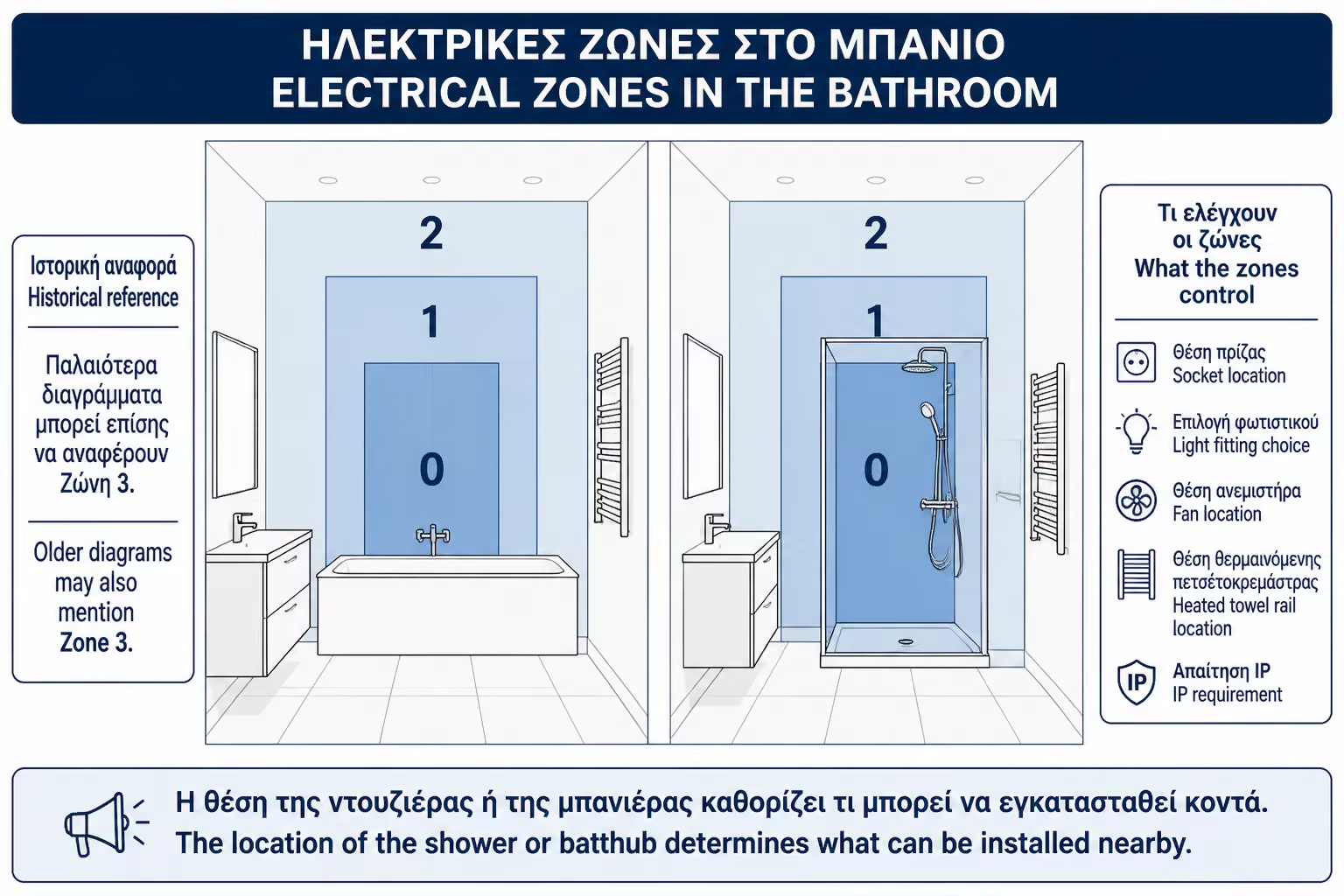
Simply put, Zone 0 is the inside of the bathtub or shower, i.e. the place that can fill or receive water directly. Zone 1 is the area directly above the bath or shower up to a certain height. Zone 2 is the adjacent area around Zone 1 where there is still an increased risk from splashes, water vapor and contact with water.
In the old HD 384 logic Zone 3 was also used. In many old articles, plans or instructions you will still see it mentioned. The more modern approach of the 60364 series focuses mainly on Zones 0, 1 and 2, combined with additional protections such as a 30 mA RCD, proper equipment selection and suitable IP. Sources showing the older HD 384 mention Zones 0, 1, 2 and 3, while the international literature of the transition to newer logic of Section 701 notes the removal of Zone 3 and enhanced RCD protection.
For the owner, the important thing is not to measure the zones himself with a tape measure and decide. The important thing is to understand that the location of the bathtub or shower determines what can be placed around it. If the position of the shower changes in the renovation, the electrical zones also change. If a bathtub is removed and a walk-in shower is installed, the old logic of the space does not automatically apply.
Replacing HD 384 with ELOT 60364 does not mean that all older homes suddenly became "illegal". The ministerial decision itself recognizes that existing installations, or parts of them, satisfy safety and proper-operation requirements as long as they can be shown to comply with the technical requirements that were in force when they were built.
But that does not mean that in new work, an extension, or a renovation we can simply continue with the old logic. The same decision states that modifications or extensions to existing installations are presumed to meet the requirements when they are designed and carried out in accordance with ELOT 60364 or an equivalent level of safety.
The essential change for the bathroom is that the design becomes stricter, more aligned with the European HD 60364 series and more prevention-oriented. It is not enough to say "this is how we have always done it". Zone, circuit, shielding, grounding, IP rating, cable routing and installation control must be considered.
In practice, this matters especially in renovations. An old bathroom may have had a switch or socket in a position that was once considered acceptable or simply went unchecked. But if that bathroom is now being stripped and rebuilt, it is not correct to copy the old position just because "it was convenient there". New work must be designed around today's safety requirements.
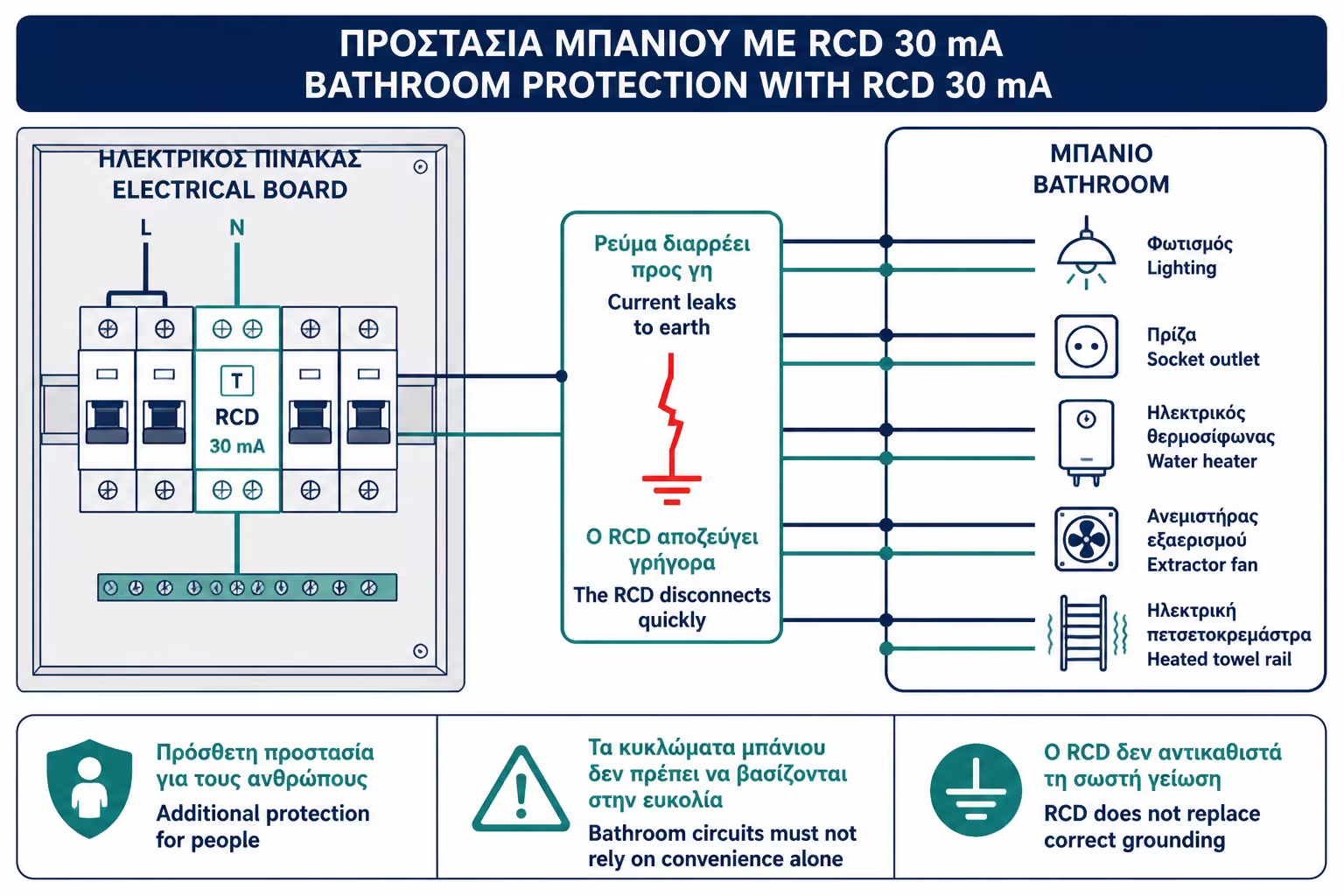
The residual current device, or RCD, is one of the most important protective devices in any electrical installation, and especially in a bathroom. Its job is to cut the supply when it detects current leaking to earth, meaning that part of the current is not returning through the normal path. Put simply, it is a protection measure that can greatly reduce the risk of electric shock.
In the modern approach to bathroom electrical installations, additional protection with a high-sensitivity RCD, typically 30 mA, is a basic requirement for the circuits serving the space. Section 701 guidance internationally states that all circuits supplying equipment in a bath or shower area, such as lighting, heated towel rails, or electric showers, require RCD protection not exceeding 30 mA. In Greek practice, the first thing to check in an older bathroom is whether there is an RCD in the consumer unit, whether it is the correct type, whether it works, and whether it actually protects the bathroom circuits. It is not enough to have an RCD "somewhere" in the panel. It needs to be checked, tested, and properly integrated into the installation.
A common problem in older homes is that the consumer unit and the bathroom circuits have been altered over the years. First a water heater was added, then a socket, then a fan, then a lighted mirror. If those additions were done piecemeal, some circuits may now be insufficiently protected or incorrectly connected. That is why, before approving a renovated bathroom, the inspection should not stop at the room itself. The electrical panel should also be checked.
The socket is probably the most misunderstood electrical element in a bathroom. The owner wants it for a hair dryer, shaver, electric toothbrush, washing machine, dryer, or mirror lighting. But need alone does not determine where it can safely go.
In small bathrooms, especially in apartments, a socket is often requested next to the mirror or near the basin. But if the basin is too close to the shower, that location may not be acceptable. If it is exposed to splashes, if it lacks adequate protection, or if there is no RCD, the risk increases.
A general-purpose socket must also be distinguished from dedicated supplies. The supply for a washing machine, for example, is not treated the same way as a small socket by the mirror. It needs the correct circuit, the right protective device, grounding, RCD protection, and a location that is not directly exposed to water.
One mistake we often see is the use of power strips and extensions in or next to the bathroom. That is not "temporary convenience". It is a dangerous practice. If the bathroom does not have enough correctly positioned outlets, the answer is not to improvise with extensions. The answer is to check whether a legal and safe new supply can be installed by a licensed electrician.
Bathroom lighting is not chosen only on the basis of design. It must be suitable for the space and for the zone in which it will be installed. The IP rating indicates the degree of protection an item of equipment has against solid objects and water. The closer a fitting is to a shower, bathtub, or heavy moisture exposure, the more carefully it must be selected.
An over-the-mirror fixture may be acceptable in one location and inappropriate in another, depending on the distance from the shower and exposure to water. A light in or above the shower zone has much more stringent requirements than a light in the center of a large bathroom.
The same applies to LED mirrors, lighted cabinets, anti-fog functions, and LED strips. Many products are marketed as "for the bathroom", but that does not mean they can be installed anywhere in the room. The IP rating, the manufacturer's instructions, the installation zone, and the connection method all need to be checked by an electrician.
A common renovation example is a mirror with integrated LED lighting and anti-fog function. The owner buys it independently because it fits the aesthetic. When it is time to connect it, it turns out there is no proper mounting provision, the supply point is in the wrong location, or the product is not suitable for that exact position. This can often be avoided if the electrician reviews the technical specifications before the purchase.
The electric water heater is one of the most powerful electrical devices connected to the bathroom. Even if it is located in a loft, warehouse or outdoor area, it directly serves the use of the bathroom and must have a proper electrical line, protection, grounding and handling.
In old houses we often find water heaters with old lines, worn switches, bad grounding or sloppy interventions. Because the water heater "works", the owner thinks everything is fine. But proper operation does not automatically mean a safe installation. Especially in a bathroom renovation, the water heater and its line must be checked.
The same applies to electric towel rails, underfloor bathroom heating, electric bodies, fans, dehumidifiers or other appliances. Installing such devices is not a matter of "finding an outlet". It needs a zone, power, protection, grounding and suitability check of the equipment.
Special attention needs to be paid to the electric bodies placed near the shower. A body may be suitable for bathing, but not for any position in the bathroom. The manufacturer's instructions and the standard should be read together, not separately.
The extract fan is often treated as a small, simple device. In reality, it is installed in a damp area, often close to the shower, and it is frequently connected to the lighting circuit or a timer function. That means its selection and installation need to be handled carefully.
An extract fan must be suitable for its installation point, have the right electrical connection, be protected by the appropriate circuit, and not be placed arbitrarily in a zone where it is not allowed. If it is too close to splash water, the requirements become stricter.
In many older bathrooms without natural ventilation, the extract fan is added later. If there is no proper electrical provision in place, makeshift solutions follow: surface cable trunking, connections taken from the light fitting, improvised switches, or supply borrowed from a nearby socket. These solutions may look simple, but in a bathroom they are far from harmless.
Ventilation is important for controlling moisture and mold, but it must not create a new electrical hazard. The correct solution should be planned as part of the renovation design and connected by an electrician according to the requirements of the space.
Grounding is one of the things the owner usually does not see, yet it is critical. In the event of a fault, earthing helps leakage current follow a safer path and allows the protective devices to operate correctly. In a bathroom, where there are metal elements, pipes, and water, proper grounding and equipotential bonding are especially important.
In old installations, the grounding may be insufficient, bad or different than what is required today. Changes may also have been made to the plumbing, such as replacing metal pipes with plastic ones, which change the behavior of the installation. That's why we shouldn't assume that "since it was there before, it's okay".
Equipotential connections are intended to reduce dangerous potential differences between conductive parts. The electrician must assess what is required, what is there and what needs to be supplemented. It is not a task that the owner does alone, nor is it solved with a simple "wherever we find" cable.
A bathroom may have new tiles, new sanitary ware and modern lighting, but if the grounding is problematic, the safety of the installation remains in doubt. This is one of the reasons that electrical renovation should not be limited to the visible components.
The Responsible Installer Declaration, known as YDE, is the document with which the licensed installer declares the state of the electrical installation in accordance with the prescribed procedures. The ministerial decision includes a definition of YDE and provides for inspections of internal electrical installations to establish and document their safe and proper operation.
For the owner, the important thing is not to treat the YDE as a routine document only for the grid operator or for a name change. It is the documented result of an inspection. When a major renovation, switchboard modification, new circuit, new supply, or change to important parts of the installation is carried out, the owner should discuss with the electrician whether issuing or renewing the YDE is required and what checks must come first.
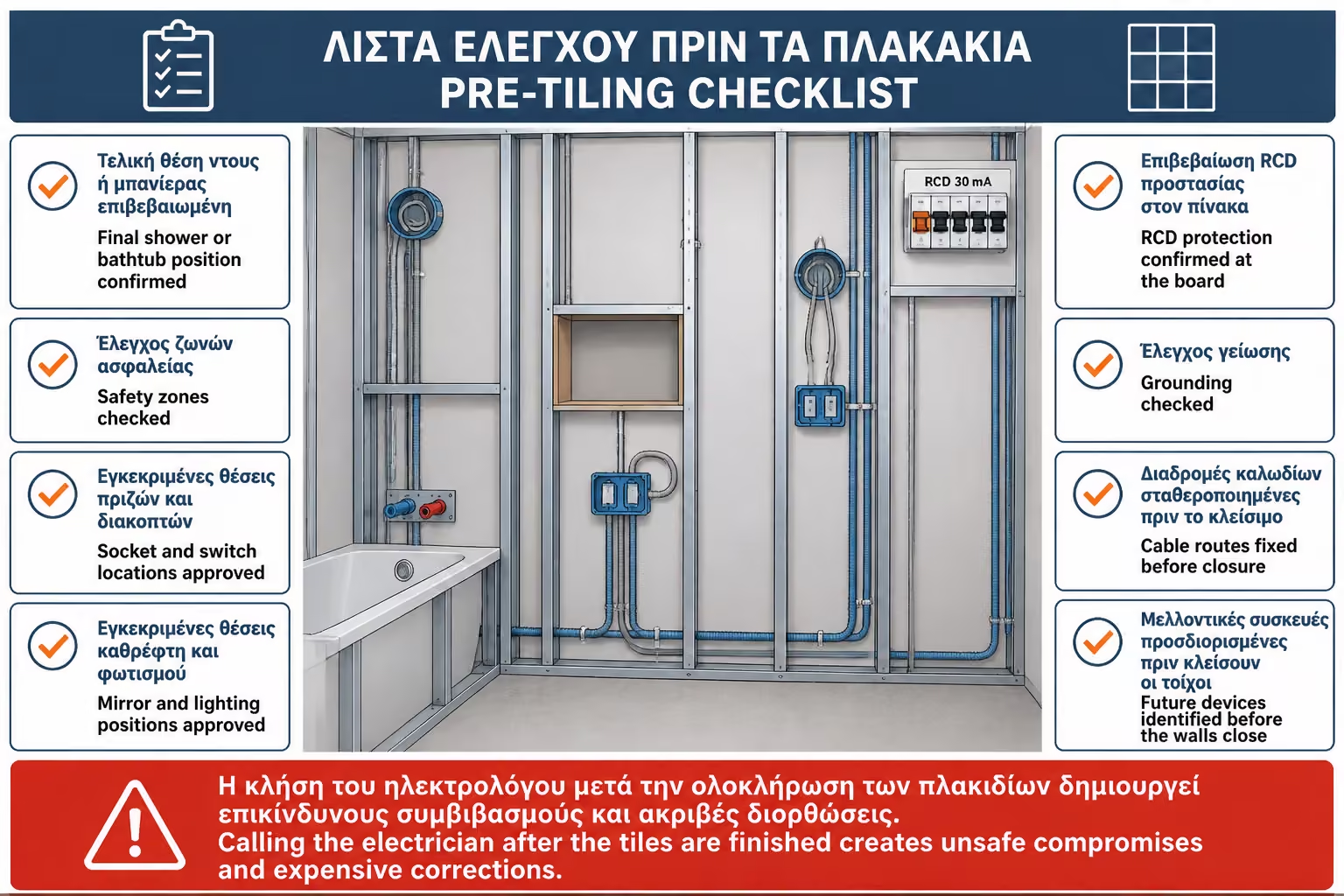
The YDE is not an "afterthought" to close a job. If the electrician is called only at the end, after tiles, furniture, lighting and appliances have been installed, he may find problems that are now difficult to fix. It is good practice to have the electrician involved before walls are closed, before tiles are laid and before positions are finalised.
In simple terms, the YDE should not be an afterthought. It should be part of the project's logic from the beginning.
In a bathroom renovation, electrical decisions need to be made early. The position of the shower, basin, mirror, furniture, water heater, washing machine, and extract fan all affect the electrical zones and the permitted installation points.
The most common mistake is that the owner first decides the layout based on photos or aesthetics and then asks the electrician to "find a solution". In small bathrooms this leads to difficult situations. It may be that the socket is not in a safe position, the light fixture is too close to the shower or the electric towel rail falls in a problem area.
Another mistake is keeping old wiring because "we don't want to break any more". If the bathroom is already being gutted, this is the best moment to check the circuits, grounding, provisions, panel, and protective devices. Leaving old questionable wiring behind brand-new tiles is a saving that may end up costing more later.
Special care is needed when changing the bathtub into a shower. The new shower may have different zones than the old tub, especially if it is a walk-in or if there is no full cubicle. This affects the position of socket, light, switch and appliances.
The cost of electrical work in a bathroom depends on how extensive the intervention is. It is one thing to replace a light fitting with another suitable fitting, and quite another to install new circuits, work on the panel, add RCD protection, provide a washing-machine supply, feed an LED mirror, install an extract fan, and check the grounding.
In a simple bathroom renovation, basic electrical work may range roughly from €250–600 when we are talking about limited interventions, a few provisions, and no major changes to the panel. In a more complete electrical upgrade for the bathroom, with new circuits, protective devices, supplies, ventilation, mirror lighting, and inspection, the cost may be around €600–1,200 or more, depending on the condition of the existing installation.
If work is needed on the electrical panel, if an RCD must be added or replaced, if new protective devices are required, if a new water-heater circuit is needed, or if the old installation needs a broader inspection, that cost should be calculated separately. Also, if a YDE, measurements, and documentation are required, those should not be confused with the cost of simply installing equipment.
The prices depend on the area, access, floor, whether the bathroom is already stripped, whether new lines are passed from the panel, whether materials, VAT, measurements, restoration and certification are included. A very low quote may only be for "pulling a wire and plugging in", not a complete and tested bathroom installation.
Many homeowners do not carry out a full renovation, but only want to change a light fitting, add a socket, install a fan, or replace a water heater. In those cases, care is still needed, because even a small intervention can raise a safety issue.
If an old bathroom has a socket in a problematic position, that does not mean the same position should be preserved simply because "that is how it always was". When a component is being replaced, the electrician should assess whether the location and protection are acceptable. If they are not, the answer may be relocation, removal, or a different solution.
The same applies to old-style lamps. An old light fixture may work for years, but not have adequate protection for where it is located. Replacing it is an opportunity to choose the right product, not just a more modern lamp.
In older homes, the most important question is often: "Has the panel and the RCD been checked?" If the answer is no, there is little point in discussing only whether the socket looks neat or whether the light fitting matches the tiles.
The first mistake is placing a socket based on convenience rather than on zones. A bathroom socket is not a decorative element. If the position is wrong, the problem is not solved with a "waterproof cover".
The second mistake is the use of inappropriate lighting. Many lamps look suitable for a bathroom because they have a modern design, but the suitability is judged by the technical characteristics and the installation location.
The third mistake is to ignore the electrical panel. If the bathroom is being renovated but the panel is old, without a proper RCD or without adequate inspection, the safety upgrade remains only half done.
The fourth mistake is improvised extensions. Cables pulled from a nearby socket, trunking over tiles, power strips, connections hidden behind furniture, and other "temporary" solutions often stay in place for years. In a bathroom, that is especially dangerous.
The fifth mistake is to call the electrician too late. If the electrician comes after the tiles are finished, the options are reduced and the fixes cost more.
Before a renovation or any electrical intervention moves forward, it is worth checking the following points first:
| Question | Yes / No |
|---|---|
| Has the electrician seen the bathroom layout before tiles and fixtures are installed? | Yes / No |
| Are safety zones defined based on the location of the shower or bathtub? | Yes / No |
| Are the sockets in permitted and safe locations? | Yes / No |
| Are the bathroom circuits protected by a suitable 30mA RCD? | Yes / No |
| Has the installation grounding been checked? | Yes / No |
| Do the fixtures and appliances have an appropriate degree of IP protection for their location? | Yes / No |
| Has the water heater or boiler been checked for line, ground and protection? | Yes / No |
| Is the ventilator provided with a proper supply and not a rough connection? | Yes / No |
| Has it been discussed whether a YDE or a repeat inspection of the installation is required? | Yes / No |
| Is there a written quote that separates materials, labor, panel, protections and inspection? | Yes / No |
If the answer is “no” to many of these, the project is not yet ready to proceed safely. The bathroom should be designed together with the electrician, not patched up at the end.
If you keep only one point from this guide, let it be this: in a bathroom, you do not first choose the most convenient place for a socket or a light fitting and then try to "make it acceptable". You start with the safety zones, the RCD, the grounding, the correct IP rating, and inspection by a licensed electrician. If you are renovating, call the electrician before the walls are closed and before the tiles are installed. That is when the right solutions are easier, cleaner, and usually more economical.
The electrical standard for bathrooms is not a minor technical detail. It is the framework that protects the user in one of the most dangerous parts of the home from the standpoint of electrical safety. ELOT 60364, and especially Section 701, treats the bathroom as a higher-risk space, where the position of every socket, light fitting, and appliance must be judged according to zones, protection, and use.
The main change from the old HD 384 mentality is not only the name of the standard. It is the more modern and stricter design logic behind it: closer alignment with the European HD 60364 series, greater emphasis on additional protection with an RCD, better equipment selection, and documented inspection of the installation. The fact that an old installation still "works" does not mean it is suitable for new work without evaluation.
For the homeowner, the right approach is simple: before deciding on sockets, lights, LED mirrors, water heaters, or electric towel rails, a licensed electrician should review the bathroom layout, the safety zones, the panel, the grounding, and the protective devices. That way the renovation will not only look good, but also be safe.
In the bathroom, electrical safety is not always apparent at first glance. But it can be seen in the correct study, the correct installation and the control that is done before the room is delivered for daily use.
Return to category.
Go to categoryReturn to the central guide.
Go to guide