
Brown or Rusty Faucet Water: What It Means, When It's Temporary, and When It Indicates Old Iron Pipes
Brown or rusty tap water is one of the most disturbing phenomena in a home. Turn on the water in the morning and see a brown, orange or yellowish tint. Or after a water break, the water comes out cloudy, with particles, a metallic taste or traces of rust.
The first question is natural: is it safe?
The answer depends on the cause, duration and intensity of the problem.
Sometimes brown water is a temporary phenomenon from sediment disturbance in the water main, especially after a break, works, pipe repair or pressure change. Other times, however, it is an indication of old iron or galvanized pipes that are corroding internally.
If the problem occurs often, mainly in the morning, only in certain taps or only in the hot water, then the internal installation of the house must be checked.
Brown water should not be ignored. It can be just a cosmetic problem, but it can also indicate wear and tear in the plumbing system.
1. What is Brown or Rusty Water
When water has a brown, orange, red, or yellowish tint, it usually contains particles or dissolved elements that change its color.
Common causes are:
Iron
Manganese
Sediment from the network
Disturbance after a water outage
Water-supply works
Old water heater
Old galvanized pipes
Internal corrosion in the installation
The shade gives a first clue, but is not enough for a diagnosis.
| Water shade | Possible cause |
|---|---|
| Brown / red / orange | Rust, iron, old metal pipes |
| Black / dark brown | Manganese, old deposits, sediment |
| Yellow | Iron, sediment, network agitation |
| Blurry white | Air in the network, pressure, recent interruption |
| With particles | Salts, rust, pipe debris |
2. Is it Dangerous for Health?
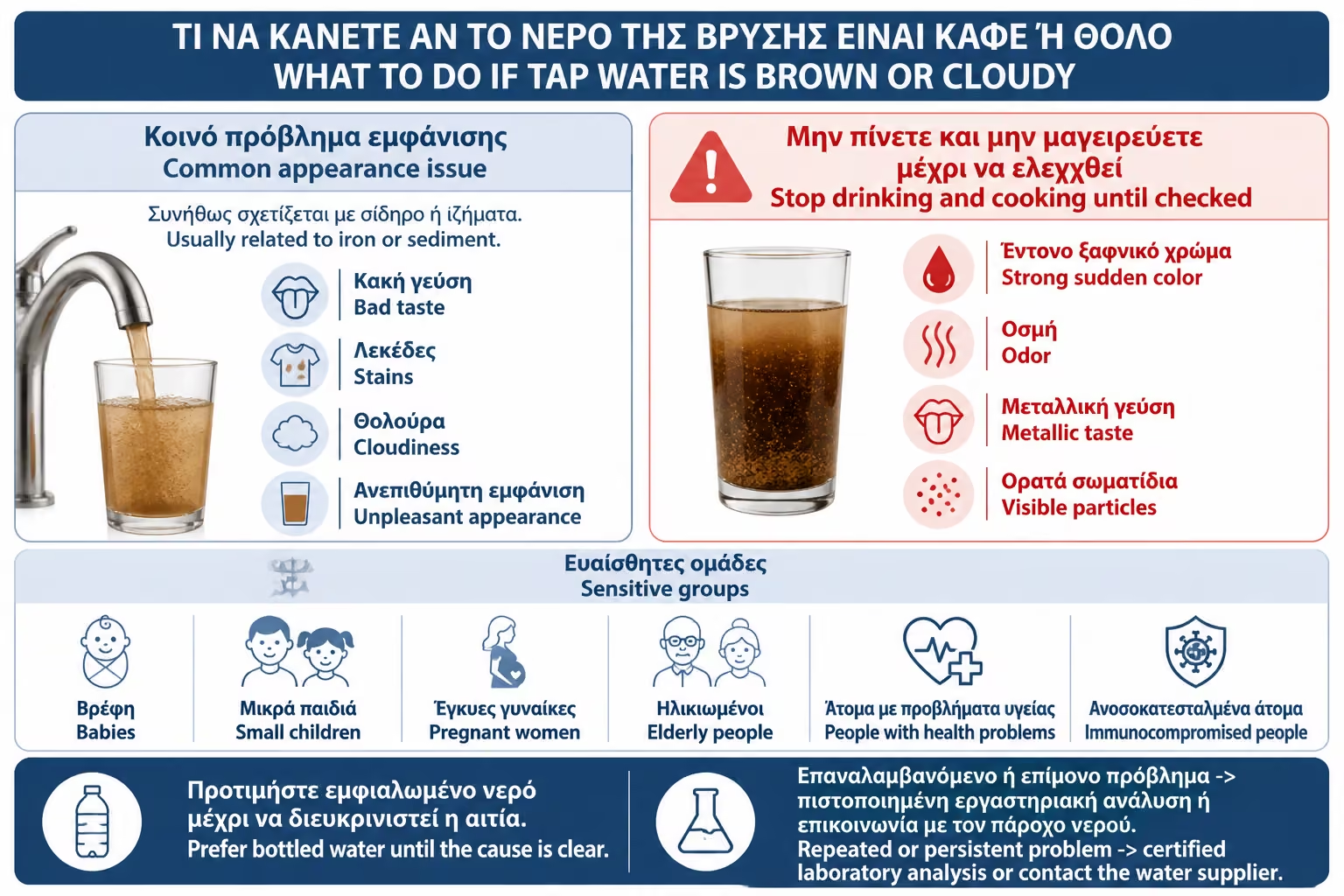
There is no responsible absolute answer without checking the cause first.
In many cases, the brown tint comes from iron or sediment and creates mainly an appearance problem: bad taste, stains, cloudiness, and an unpleasant look. Even so, that does not mean it should be used for drinking without verification.
If the water suddenly develops a strong color, odor, metallic taste, or visible particles, it is better not to use it for drinking or cooking until it clears or the cause is confirmed.
In such cases, bottled water is the safer choice until you have a clear picture of what is happening.
Extra caution is needed if anyone in the household belongs to one of the following groups:
Babies
Young children
Pregnant women
Elderly people
People with existing health issues
Immunocompromised people
If the problem is repeated, persistent, or severe, the safest next step is water analysis at a certified laboratory or direct contact with the water supplier.
3. Why It Usually Occurs in the Morning
If the rusty water appears mainly in the morning, the cause may be that the water has remained stagnant in the pipes overnight.
In old iron or galvanized pipes, when water stagnates, it can "pull" more rust or metal particles from inside the pipe.
In the morning, when you turn on the faucet, the water left in the network comes out first.
If it happens every morning, especially in an old house, it is a sign that the pipes need to be checked.
It does not always mean immediate danger, but it is not normal for a modern installation.
What does this show?
If the water clears after a few seconds or minutes, there may be a local problem in the indoor installation.
4. Why It Occurs After a Water Break
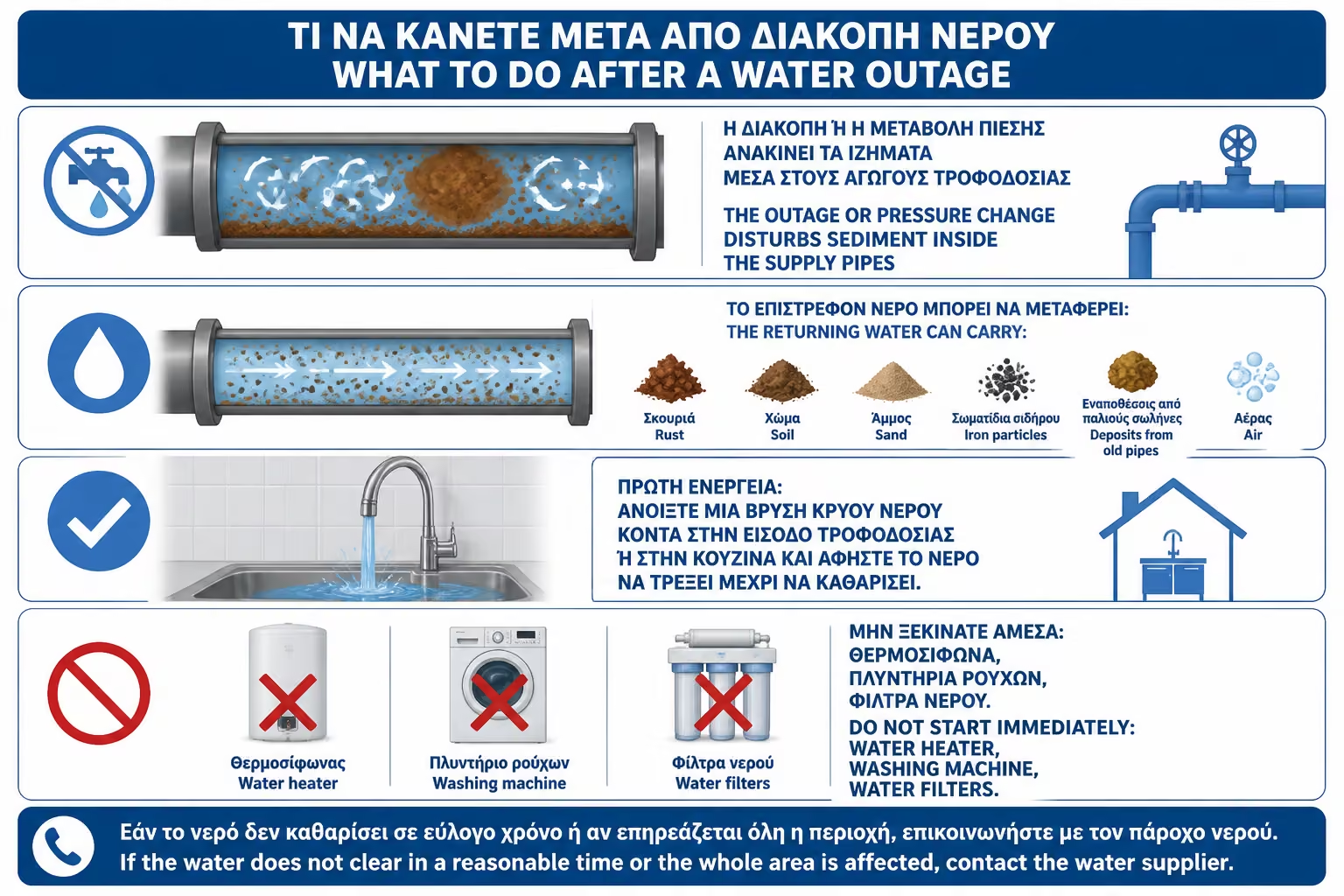
After a water outage, network works, or a pressure change, sediment inside the pipes can be stirred up.
That is why cloudy or brown water often appears for a while after the supply comes back, until the disturbed material has flushed through.
Do not immediately run the water heater, washing machine, or water filters, because they can pull in those particles.
If the water does not clear after a reasonable time, or if the problem affects the entire area, contact your water supplier.
The materials most commonly carried through the line in this situation are the following:
Rust
Soil
Sand
Iron particles
Deposits from old pipes
Air
What to do
First turn on a cold tap, preferably near the supply inlet or in the kitchen, and let the water run until it runs clear.
5. Brown Water Only in Hot
If brown water appears only on the hot side, the likely cause is in the hot-water line or the water heater.
The most likely points to check are the following:
Old water heater
Rust inside the tank or boiler
Scale and internal deposits
Old hot-water pipe
Worn connection
Old metal piping after the water heater
To separate the hot-water side from the rest of the installation, open the following separately:
Cold water
Hot water
If the cold water is clear and the hot water comes out brown or orange, the municipal supply is not necessarily to blame. The water heater or the internal hot-water line should be checked.
What it can mean
In an old water heater, internal corrosion may already be underway. If the problem keeps returning, a technical inspection and possible replacement are justified.
6. Brown Water Only in One Tap
If the problem occurs in only one faucet, then the cause is probably local.
It could be due to:
The faucet aerator or filter
An old flexible hose
An isolation valve
A localized old pipe section
A faucet with internal wear
Residue left after repair work
Local corrosion
If the problem appears only at that specific faucet, the flexible hose, the valve, or the local pipe section may need inspection or replacement.
First check
Unscrew and clean the faucet aerator or filter. If it is full of rust or brown particles, that tells you something in the line is carrying debris forward.
7. Brown Water in the Whole House
If brown water appears in all faucets, the possible causes are more general.
It could be due to:
The wider area network
Water utility works
An old main supply line
An old building riser
Old internal apartment pipework
A tank or booster system
The main service pipe
If others have it, it's probably related to the apartment building or the area.
If only your apartment has it, the problem is most likely in the internal installation.
What to do
Check if neighbors have the same problem.
8. Old Iron Pipes and Galvanized Pipework
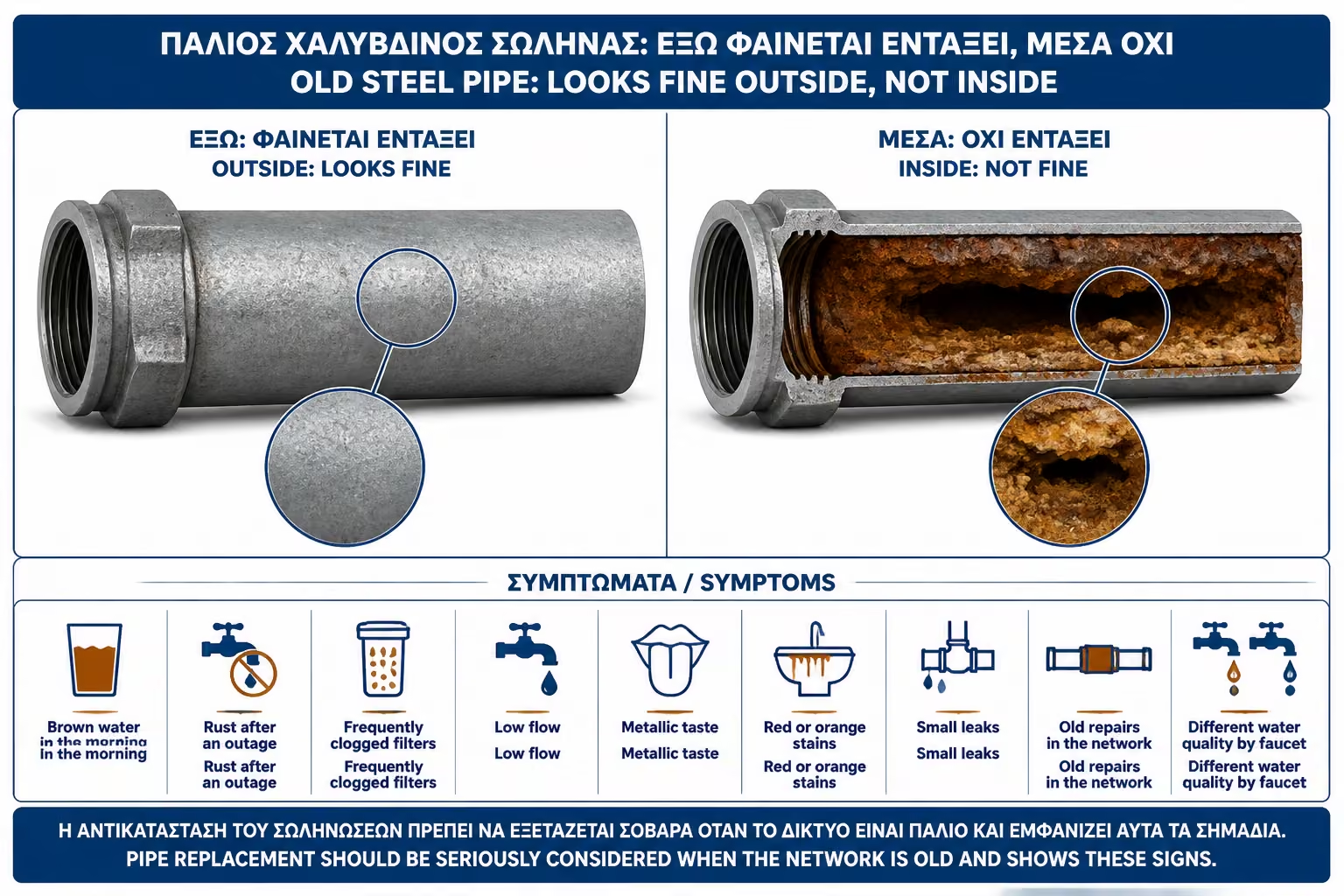
Old iron or galvanized pipes are one of the main causes of rusty water.
Over time, the pipes corrode internally. Deposits build up, rust forms, and the internal passage narrows.
From the outside, a pipe may still look acceptable. Inside, though, it may already be heavily rusted.
If an old network shows this pattern repeatedly, pipe replacement should be taken seriously.
The most typical signs of old iron or galvanized lines are the following:
Brown water in the morning
Rust after an outage
Frequently clogged filters
Low flow
Metallic taste
Red or orange stains
Micro-leaks
Multiple old repairs on the network
Different water quality from one tap to another
9. When a Total Pipe Replacement is Needed
Total replacement is not always the first solution. If brown water appeared once after a break, it does not mean that the house should be gutted.
But full replacement becomes much more likely in cases like the following:
Brown water appears often
It appears mainly after long stagnation
There are old galvanized or iron pipes
The flow has dropped
Filters keep filling with rust
There are micro-leaks
The network is over 30-40 years old
There have been many rough repairs
The bathroom is already being renovated
Walls and floors are being opened anyway
In a complete bathroom renovation, if there are old iron pipes, it is usually a mistake to leave them behind new tiles.
10. Can a Filter Solve It?
A filter can help, but it does not automatically solve the underlying cause.
What it can usually trap is the following:
Particles
Sand
Rust
Deposits
What it does not repair on its own includes problems such as the following:
Corroded piping
Old water heater
Iron pipes that are decaying internally
Internal narrowing of the network
Central building supply problem
Permanent source of rust
If the filter keeps filling with rust, that does not mean the issue has been solved. It only means the filter is holding back the symptom.
11. Central Supply Filter: When It Makes Sense
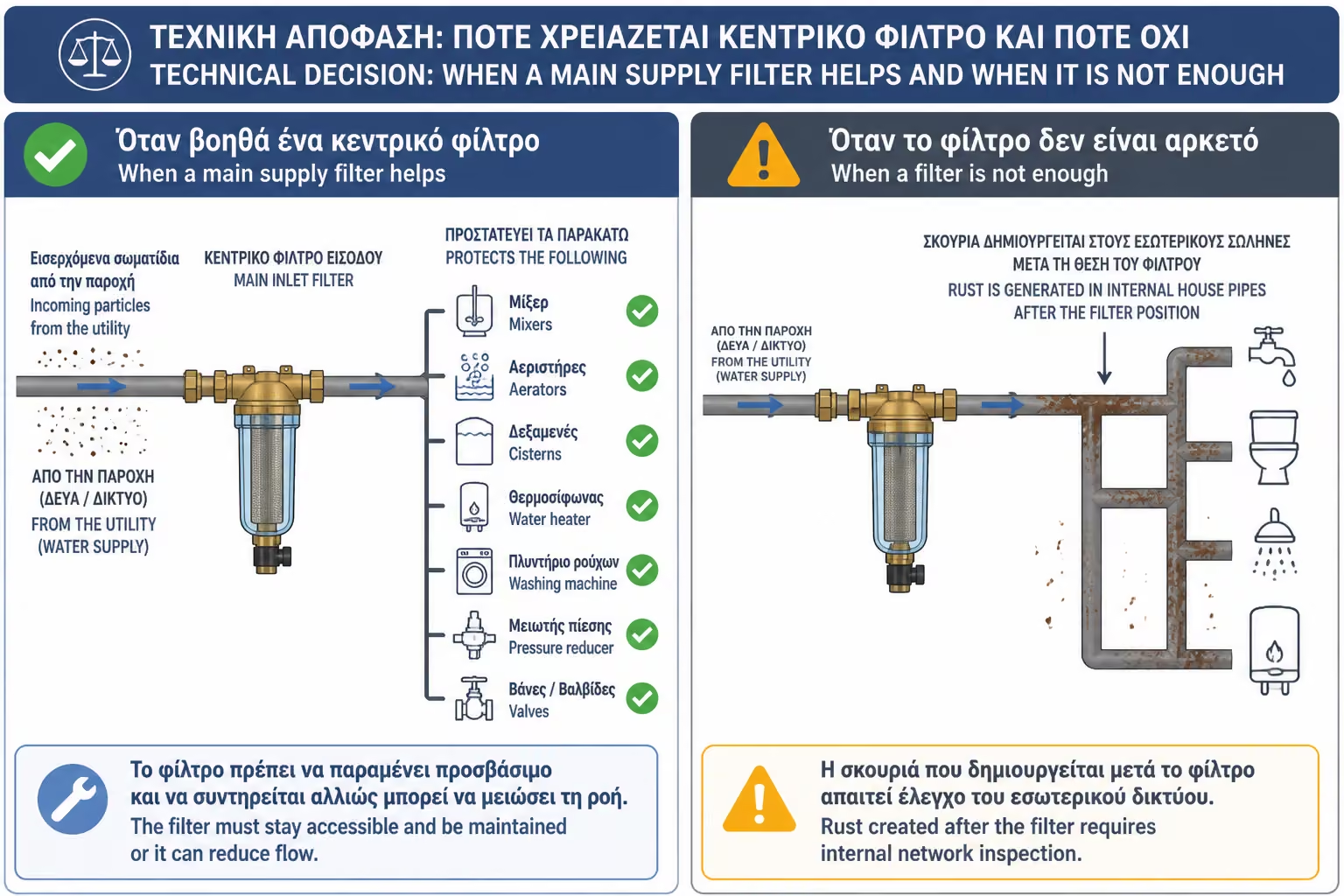
A main supply filter can be useful when the incoming line carries particles.
But it must remain accessible and maintained. If it is not cleaned, it can reduce the flow instead of helping.
If rust still appears after that point, the source is likely inside the house and the internal network needs to be checked.
The fixtures and components it typically protects include the following:
Faucets
Aerators
Cisterns
Water heater
Washing machine
Pressure reducer
Valves
When it is not enough
If the rust comes from the piping after the filter, meaning from inside the house, the main supply filter will not solve the real problem.
12. What To Do Immediately When Brown Water Comes Out
If you see brown water:
- Do not drink it immediately.
- Do not put in the washing machine.
- Do not turn on hot water first.
- Turn on cold water in a faucet and let it run.
- Check if it clears.
- Ask neighbors if they have the same problem.
- Check if there was an interruption or work in the network.
- Clean the faucet aerator or filter if it collects particles.
- If it persists, call a plumber or your water supplier.
Do not use brown water in a washing machine, as it can stain clothes.
13. When You Should Not Use It for Drinking
Avoid drinking and cooking when:
The water is dark brown
It has particles
It has an unusual smell
It has a metallic or chemical taste
It does not clear after sufficient flow
It keeps returning
There are sensitive people in the house
There is an official notice or network work
You do not know the cause
In that case, use bottled water until the quality has been confirmed.
14. When to Call a Plumber
Call a plumber when:
The problem occurs frequently
It affects only your own home
It appears mainly in the morning
There is low flow
Filters keep filling with rust
There is an old network
Brown water appears only on the hot side
There is an old water heater
There are micro-leaks
You are preparing a bathroom renovation
The plumber must check if the problem is local, central, hot, cold or piping.
15. What the Plumber Should Check
The technician should check:
Age of the piping
Piping material
Condition of the isolation valves
Faucet filters and aerators
Water heater
Hot-water line
Main supply
Possible manifold or collector
Pressure reducer if one exists
Main supply filter
Whether the issue is house-wide or local
Whether there are iron or old galvanized pipes
On old networks, it may suggest opening a small point or replacing lines for confirmation.
16. Water Analysis: When It Matters
Water analysis makes sense when:
The problem is persistent
There is concern about drinking safety
There are sensitive people in the house
The water has a strong taste or smell
Metals are suspected
You need documentation for the building or supplier
The color change is not explained by an outage or works
The analysis can check parameters such as iron, manganese, turbidity and other elements, depending on the test package.
17. Indicative Repair Costs
The cost depends on the cause.
| Work / Material | Realistic cost |
|---|---|
| Cleaning faucet aerators or filters | €0 – €30 |
| Change aerators / filters | €5 – €30 per point |
| Plumbing check | €40 – €100+ |
| Central supply filter | €50 – €200+ |
| Filter placement with work | €100 – €300+ |
| Water analysis | €50 – €200+, depending on parameters |
| Bathroom line replacement | depending on the area |
| Complete replacement of old pipes | significant cost, depending on house/accesses |
Total replacement costs more, but if the network is old and corroded, it may be the only real solution.
18. Common Pitfalls
The most common mistakes that lead to the wrong diagnosis or only a half-solution are the following:
1. We drink the water because it “will cleanse”
If it is dark brown or has particles, wait for it to clear or ask for an inspection.
2. We only put a filter
The filter traps rust, but doesn't repair the pipe that creates it.
3. Ignore the hot water
If the problem is only in the hot, the water heater may be to blame.
4. We clean aerators but the problem returns
If they fill up with rust again, there is a permanent source of particles.
5. We keep old iron pipes under renovation
New tiles hide an old problem.
6. We don't ask neighbors
If the problem is common, it may concern the network or the apartment building.
19. Brown Water Diagnosis Checklist
Before jumping to conclusions, use the quick check below to separate a temporary network event from a more persistent plumbing problem:
| Inquiry | Yes / No |
|---|---|
| Did it appear after a water break? | Yes / No |
| Does it clear after a few minutes of streaming? | Yes / No |
| Do the neighbors have it too? | Yes / No |
| Does it occur mostly in the morning? | Yes / No |
| Does it only appear in hot? | Yes / No |
| Does it only appear on one tap? | Yes / No |
| Are the filters full of rust? | Yes / No |
| Are there old iron pipes? | Yes / No |
| Is there low water flow? | Yes / No |
| Is there an old water heater? | Yes / No |
| Has a water analysis been done if it persists? | Yes / No |
| Has it been checked by a plumber? | Yes / No |
If many answers point to an old internal network, pipe replacement should be seriously considered.
20. Example of a Temporary Case
After a water cut in the area, a homeowner turns on the faucet and sees brown water. He asks the neighbors and they have the same problem.
He turns on cold water, lets the line flush, and after a while the water clears.
The phenomenon was probably sediment agitation from the network.
If it doesn't recur, it doesn't necessarily mean the house has rotten plumbing.
21. Example: Old Iron Pipes as the Cause
In old apartment, water comes out brown for a few seconds every morning. The filters of the batteries are often filled with rust and the flow in the bath is reduced.
The neighbors don't have the same problem.
The plumber checks the installation and finds old galvanized piping with internal corrosion.
In this case, the problem is not solved by cleaning filters. The correct solution is to replace the old pipes.
22. Example: Problem Limited to Hot Water
In another house, the cold water is clear, but the hot water comes out orange at first.
The problem mainly occurs after hours of immobility.
Inspection shows old water heater with internal wear and deposits.
The solution is not to replace all the pipes, but first to check and possibly replace the water heater and its connections.
💡 The Engineer's Advice
If the water turns brown once after an outage, do not panic. Let the cold water run first and see whether it clears. Ask the neighbors too.
But if the problem happens often, mainly in the morning, only in your own home, or together with low flow and rust in the filters, the piping should be checked.
In old galvanized or iron pipes, brown water is often a sign of internal corrosion. In that case, filters are only a temporary measure. The real solution is replacement of the old network.
If the water has a strong color, odor, or taste, do not use it for drinking until it has cleared or been tested.
Conclusion
Brown or rusty tap water can have a simple or serious cause.
It may be due to temporary agitation of sediments after a water outage or network works. But it can indicate old iron pipes, galvanized network, internal corrosion or a problem with the water heater.
Proper diagnosis begins with basic questions:
Is it happening throughout the house or only at one faucet?
Does it happen only on the hot side?
Did it appear after an outage?
Do the neighbors have it too?
Does it clear after a short run?
Does it appear every morning?
Are there old pipes in the property?
Do the filters keep filling with rust?
If the problem is occasional and clears up quickly, it may be temporary. If it is repetitive, localized and combined with rust or low flow, it needs a plumber check.
In old installations, brown water is not just an aesthetic problem. It is a warning that the network may have reached the end of its life.
And if you are renovating a bathroom, don't close old iron pipes behind new tiles. It is one of the savings that is usually paid twice.
Related Articles
Salt Buildup in Pipes: How Hard Water Chokes the Network and When a Filter or Softener is Needed Low Pressure Only in Hot Water: Why It Happens and How to Identify the Problem Water Piping Materials: Copper, Laminate, PEX or PPR? Selection Guide for Bathroom Renovation Finding Hidden Leaks Without Digging: How to Find Where a Pipe Is Leaking Through a Wall or Floor
Plumbing & Electrical Bathroom Infrastructure
Return to category.
Go to categoryCentral Guide
Return to the central guide.
Go to guide