
Sewer Smell from a Drain or Toilet: Why the Bathroom Smells and How to Fix It Properly
The smell of sewage in the bathroom is one of the most annoying problems in a home. It may come on suddenly, be worse in the morning, be worse after flushing, or only occur when the bathroom is not used often.
Many owners try to solve the problem with air fresheners, chemical cleaners, or constant cleaning. But if the smell comes from the drain, those measures only mask the symptom for a while. They do not solve the cause.
The odor can come from several different failure points:
a dry trap, evaporation from the water seal, siphoning caused by poor venting, poor toilet sealing, a wrong drain connection, a dirty trap, an uncleaned linear drain, a missing or damaged vent valve, old drainage lines, or even a leak or crack in the pipe.
The first step is to identify where the smell is coming from. A dry drain trap needs one solution, while a toilet that is not sealed properly at its drain connection needs a completely different one.
1. Why Sewer Odors Reach the Bathroom
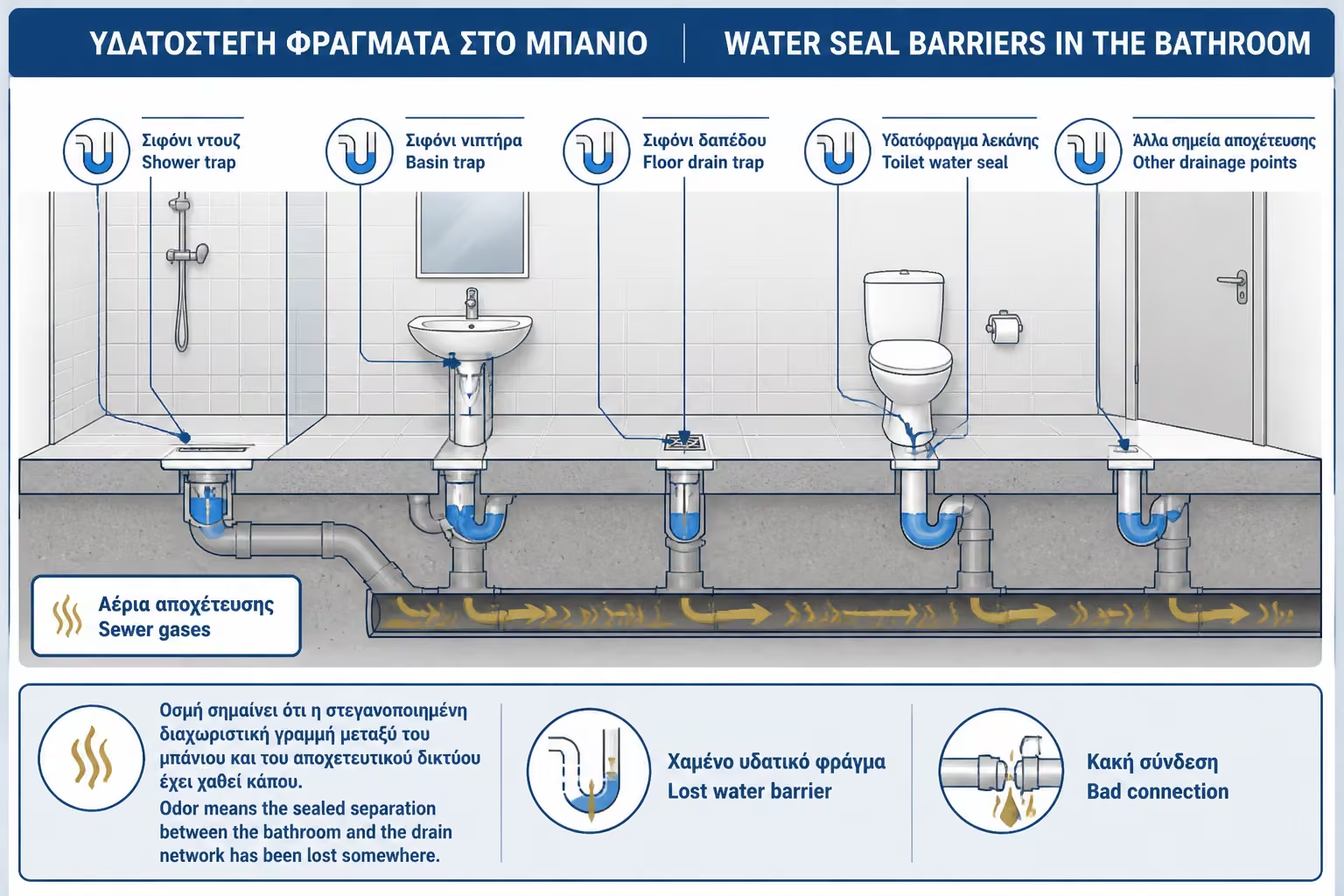
Drain pipes carry wastewater and organic residue. Odors and gases naturally build up inside the system.
Under normal conditions, those odors should never enter the bathroom. They are blocked by water traps, which hold a small volume of water and act as a seal.
If that water seal is lost, or if a connection is not airtight, sewer odors can pass back into the room.
In practice, a sewage smell usually means the separation between the bathroom and the drainage system has failed somewhere.
The most common points that rely on a water trap are the following:
Washbasin trap
Shower drain trap
Linear drain
Toilet bowl with its built-in water seal
Other drainage points
2. Empty Siphon from Water Evaporation
The simplest cause of bad smell is an empty siphon.
If a bathroom is not used often, the water inside the odor trap can evaporate. When it evaporates, the drain is left open to the room and the smell rises.
This often happens in:
Holiday homes
Second bathrooms
Guest WC
Bathrooms in basements or storage areas
Homes left closed for long periods
Showers that are rarely used
The drainage points that dry out most often are usually these:
Floor drain
Shower
Washbasin
Bathtub
Linear drain channel
Allow water to flow through to refill the odor trap.
In areas that are not used often, it is a good idea to periodically pour some water into the siphons.
How to recognize it
If the smell appears after several days without use and disappears once you pour water into the drain, evaporation is the most likely cause.
Solution
Refill every drain trap with water and repeat this periodically if the bathroom stays unused for long periods.
3. Dirty Siphon
Even if the siphon has water, it may smell because it has collected organic debris.
Inside the siphon are collected:
Hair
Soap residue
Shower product buildup
Toothpaste residue
Limescale
Oily residue from body products
Dust
Fine debris
Over time, these create dirt and odors.
The most common signs of a dirty drain trap are the following:
Smell near the drain
Slow drainage
Black residue
Standing water
Gurgling sounds
Bad odor after shower use
In a simple floor siphon:
Remove the grate
Remove hair and debris
Clean the water trap
Rinse thoroughly with water
In a linear siphon:
Remove the cover
Clean the basket or filter
Clean the water trap
Check that water drains properly
If the siphon does not open easily, a plumber is needed.
Symptoms
When odor, slow drainage, and residue appear together, the drain trap usually needs real mechanical cleaning rather than another scented cleaner.
Solution
The drain trap should be cleaned mechanically, not just masked with fragranced products.
4. Siphoning: When the Network "Sucks" the Water from the Siphon
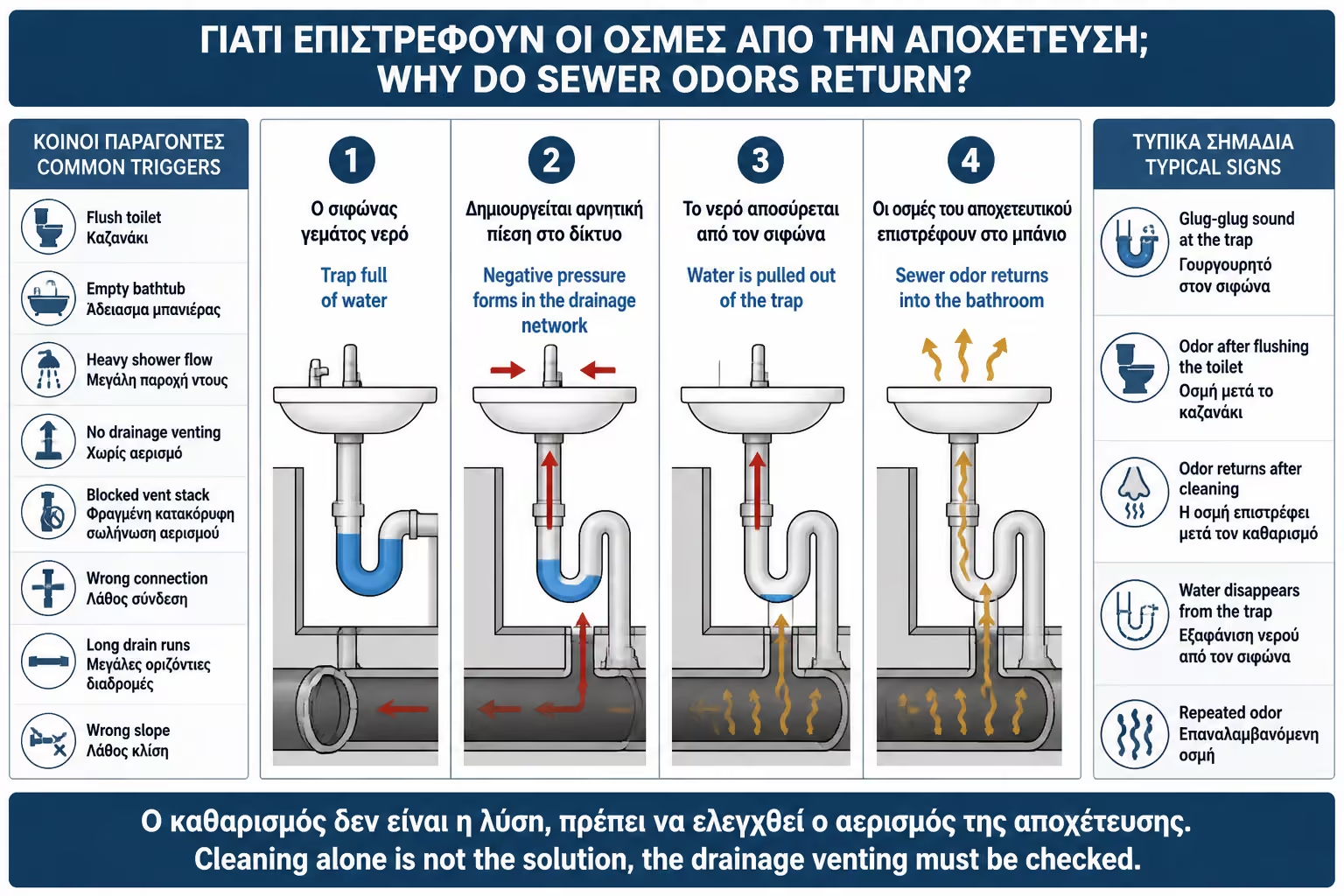
Siphoning is one of the most common reasons a bathroom smell keeps coming back.
It happens when negative pressure forms inside the drainage network and pulls water out of the trap.
In simple terms, the trap fills normally, but when the toilet is flushed or a large volume of water passes through the system, the drain can "suck" that protective water away.
Then the odor returns, even though the trap may have been full a little earlier.
The solution is not simple cleaning. It requires a real check of the drainage venting.
Siphoning is most likely to appear in the following situations:
When the toilet is flushed
When the bathtub empties
When a large volume of water runs through the shower
When the drainage vent is missing
When the vent stack is blocked
When there is a wrong connection or an overly long run
When the drainage slopes are wrong
The typical warning signs are the following:
You hear gurgling from the drain
The smell appears after flushing the toilet
The smell returns even after the drain was cleaned
The odor keeps coming back repeatedly
The water in the trap disappears unusually quickly
When does it happen?
It usually appears when another discharge creates enough pressure change to disturb the water seal.
Signs
If the smell is linked to flushing, gurgling, or a trap that repeatedly dries out, the diagnosis should move toward venting and pressure balance in the drainage network.
5. Lack of Drainage Network Ventilation
The drainage must "breathe". That is, it must have a way to take in and expel air in order to balance the pressures.
Usually this is done by terminating the drainage column on the roof or with appropriate ventilation valves at specific points.
If the network is not vented properly, negative pressures can build up and siphons become empty.
The most common reasons behind poor venting are the following:
The vent stack has been capped or blocked
The roof termination is blocked
There is not enough ventilation
The vent valve is stuck
The valve is installed incorrectly
The drainage layout was changed without venting provision
A proper diagnosis should check all of the following:
Whether there is a vent stack
Whether it terminates correctly
Whether it is open and unobstructed
Whether an air admittance valve is needed
Whether that valve is accessible
Whether the problem is local or central to the building
If proper ventilation is lacking, odors will return.
Possible causes
Blocked roof terminations, stuck vent valves, and drain alterations made without ventilation planning are some of the most common causes.
Final solution
The venting arrangement itself has to be checked and corrected, not just the visible drain opening.
6. Poor Toilet Sealing
The toilet can also be a direct source of sewer odor.
Even if the toilet appears to work normally and does not show an obvious water leak, the drain connection may still be poorly sealed.
The toilet must connect tightly to the drain pipe through the correct connector and seal. If there is a gap, odors from the drain can escape around the base or from behind the toilet.
The most common signs of a poorly sealed toilet are the following:
Smell near the toilet
Smell after flushing
Odor low at floor level
Moisture around the base
Toilet bowl that moves
Rough silicone around the base
Older toilet with a worn connection
The permanent fix is to remove the toilet, inspect the connection, and replace the connector or seal where needed.
Symptoms
When the smell stays around the toilet base and is combined with moisture or movement, the connection needs to be checked directly.
Attention
Silicone around the toilet base is not a substitute for a proper drain connection. If the joint behind or under the toilet is not airtight, the smell will continue.
7. Bad Connection of a Concealed Cistern or Wall-Hung Toilet
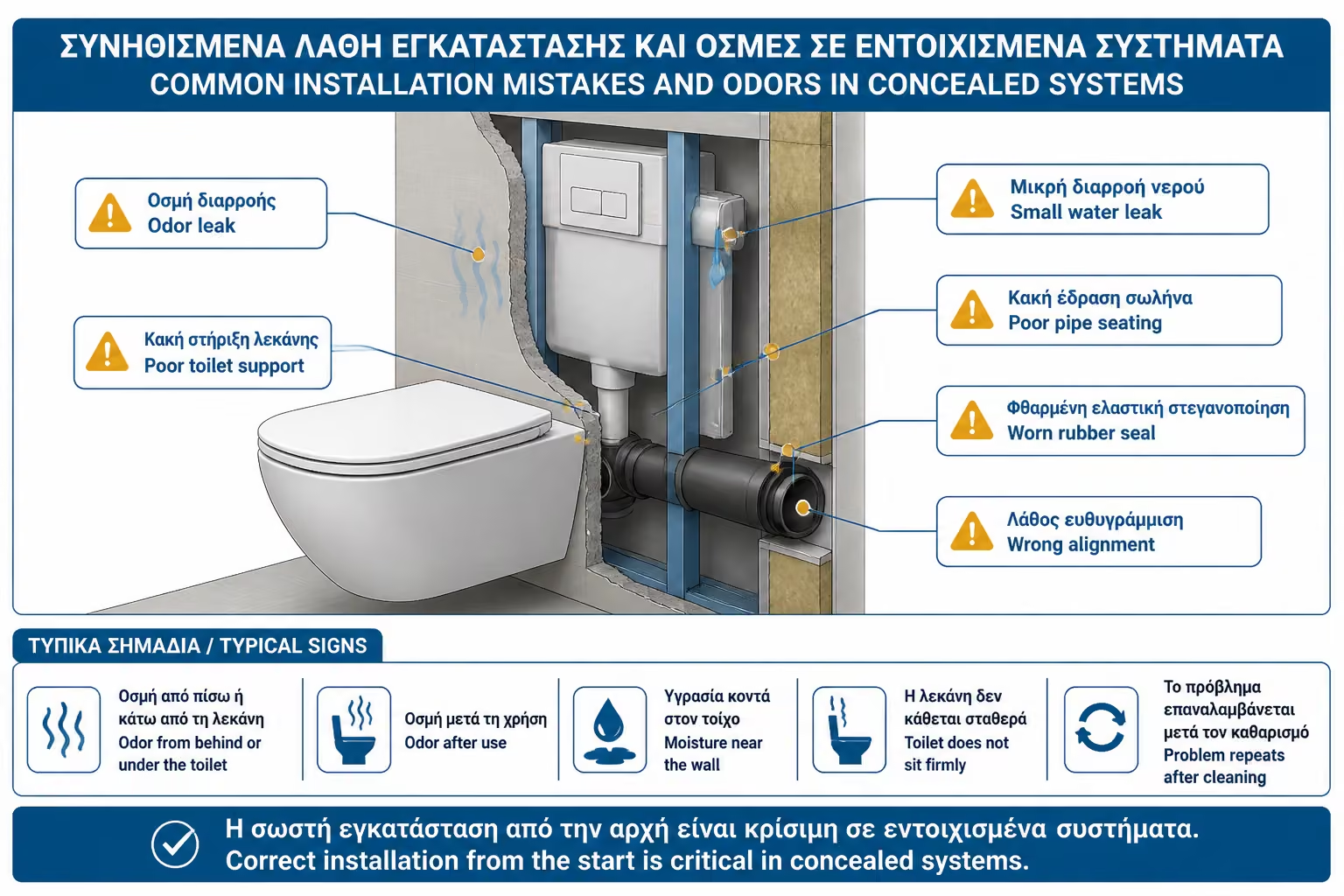
In wall-hung toilets with concealed cisterns, the drainage connection is made inside the built structure.
Because much of the installation is hidden, getting it right from the start is critical.
In such a case, a technician familiar with built-in systems is needed.
If the concealed connection was not assembled correctly, the most common technical failures are the following:
Odor leakage
Small leak
Poor pipe fit
Worn rubber seal
Misalignment
Poor toilet support
The signs you usually see in practice are the following:
Smell from behind or under the toilet
Smell after use
Moisture near the wall
Toilet bowl that does not feel stable
Recurring problem despite cleaning
Signs
When the smell comes from a hidden point and is combined with instability or moisture, the problem is usually inside the built-in connection rather than at the visible surface.
8. Wrong or Low-Quality Shower Drain Trap
In walk-in showers, linear drains, and wall drains, the water trap can be more sensitive.
If the siphon is low profile, has a small water trap, or is not properly cleaned, it can smell more easily.
The most common problems with these shower traps are the following:
Small water seal
Frequent evaporation
Siphoning
Difficult cleaning access
Clogged filter
Limescale
Poor drain connection
Wrong drainage slopes
If the smell comes mainly from the shower, the drain trap should be checked and not just the toilet.
Possible problems
A shallow trap, poor cleaning access, or a bad hydraulic layout can make shower odors return much more easily.
9. Drainage with Improper Slopes or Blockages
Odor can occur when the drain does not properly remove water and debris.
Improper slopes or partial plugging can create stagnant water and organic debris inside the pipe.
The symptoms that point toward wrong slopes or blockage are usually the following:
Slow drainage
Gurgling sounds
Odor after use
Repeated blockages
Water backing up
Odor in more than one location
The technical check in those cases usually includes the following steps:
Cleaning the traps
Checking the slopes
Drain camera inspection if needed
Checking the main stack
Clearing the blockage where it exists
If the pipe has a manufacturing fault, simple cleaning will only help temporarily.
Symptoms
When odor comes with slow drainage and repeated blockages, the issue is rarely just superficial dirt at the opening.
Solution
The drainage system itself needs proper investigation, not just a quick surface cleaning.
10. Odor from the Washbasin Drain
The sink has its own siphon. If this is dirty, dry or incorrectly connected, it can smell.
The most likely causes of odor from the washbasin are the following:
Dirty trap
Trap with too little water
Wrong drain connection
Worn rubber seal
Pipe without a proper trap shape
Siphoning
Limescale and organic buildup
The usual correction path includes the following:
Cleaning the trap
Checking for leaks
Correcting the drain connection
Replacing worn rubber seals
Checking venting if there are gurgling sounds
If the smell is under the cabinet, the connections should also be checked, not just the sink above.
Possible causes
If the smell stays under the vanity unit, the real cause is often in the trap or connection below the basin, not at the visible top surface.
Solution
Cleaning the basin from above is not enough. The hidden connections under the cabinet also need to be checked.
11. Odor After Renovation
If the bathroom smells after a recent renovation, it is not normal to ignore it.
Possible causes:
Wrong toilet connection
Wrong trap
Missing water trap
Bad linear drain connection
Trap that does not fill properly
Venting problem
Wrong slopes
Drainage installed without proper testing
Vent valve inaccessible or in the wrong position
In a new bathroom, the smell usually indicates a technical error or omission.
Fragrances will not solve it. The installation needs to be checked properly by the contractor or plumber.
12. How Do We Identify Where The Smell Is Coming From?
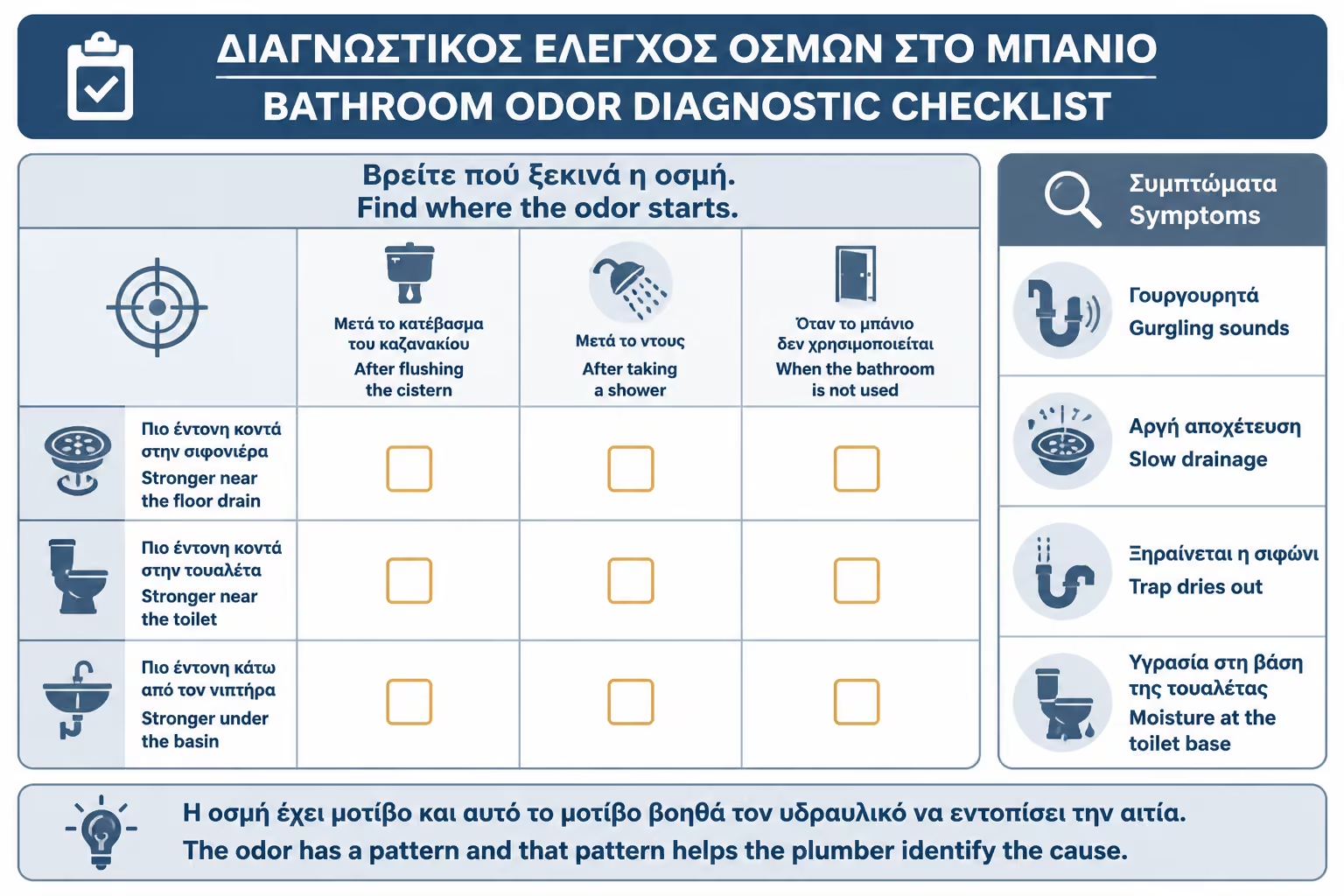
To make a proper diagnosis, the source must be identified.
Sewer smells usually follow a pattern. That pattern helps identify the real source.
Work through the following checks one by one to narrow down the source:
Does it smell more strongly near the floor drain?
Does it smell near the toilet?
Does it smell under the washbasin?
Does it smell after flushing?
Does it smell after a shower?
Does it smell when the bathroom has not been used?
Are there gurgling sounds?
Is drainage slow?
Does the trap dry out?
Is there moisture around the toilet base?
13. First Actions You Can Take
Before calling a plumber, you can do some simple and safe things.
Start by pouring water into the following drain points:
Floor drain
Shower
Bathtub
Washbasin
Linear drain channel
If the smell diminishes, it may be an empty siphon.
1. Fill all siphons
Pour water into every drain point that may have dried out.
2. Clean visible siphons
If accessible, clean up hair, soap and debris.
3. Notice when it smells
After the cistern? After the shower? In the morning; After days of not using it?
4. Ventilate the bathroom well
Poor room ventilation is not always the cause, but it makes the smells more intense.
5. Don't just cover up the smell
Perfumes, bleaches and chemicals can temporarily hide the problem.
14. What Not to Do
Avoid:
Constantly pour strong chemicals into the drains
Seal off drain traps
Close drainage vents
Put silicone around the toilet base without checking the connection
Ignore odor after renovation
Break tiles before diagnosis
Assume it is normal for a new bathroom to smell
If the smell returns, there is a reason.
15. Final Solutions by Cause
The table below links each common cause with the kind of permanent fix that usually solves it:
| Cause | Final solution |
|---|---|
| Dry trap from evaporation | Periodic refilling with water and checking the water seal |
| Dirty siphon | Mechanical cleaning, maintenance |
| Siphoning | Sewer vent control, vent valve where needed |
| Poor toilet sealing | Remove the toilet, install a new connector or seal, and refit correctly |
| Incorrect siphon connection | Plumbing reconnection |
| Blocked drain | Drain clearing and camera inspection where necessary |
| Problem after renovation | Installation check before surface solutions are made |
| Low quality siphon | Replace with correct cleanable siphon |
| Lack of vent stack ventilation | Checking the vent stack, roof termination, or fitting a suitable valve |
The definitive solution depends on the cause. There is no one solution for all odors.
16. When is a Plumber Needed?
Call a plumber when:
The smell keeps coming back
There are gurgling sounds
The smell appears after flushing
The smell is around the toilet
The toilet bowl moves
Drainage is slow
The trap cannot be cleaned properly
The smell started after renovation
A bad connection is suspected
The traps keep emptying
There is moisture or leakage
The plumber should check not only the drain trap, but also the venting network and the toilet connection.
17. Indicative Repair Costs
These costs are only indicative and move significantly depending on access, the age of the system, and how far the investigation has to go:
| Work | Realistic cost |
|---|---|
| Simple siphon cleaning | €0 – €50 |
| Plumbing check | €40 – €100+ |
| Drain cleaning/clogging | €80 – €200+ |
| Sink siphon replacement | €40 – €120+ |
| Change of floor siphon | €150 – €350+ |
| Basin sealing / repositioning | €80 – €250+ |
| Installation of ventilation valve | €80 – €250+ |
| Sewer camera | €120 – €300+ |
| Fix installation error after renovation | depending on the operation |
The prices are indicative. Cost depends on access, age of installation and extent of problem.
18. What to Ask the Plumber
The key questions worth asking are the following:
Where does the smell seem to be coming from?
Is there water in the trap?
Is siphoning taking place?
Is the drainage venting correct?
Does the toilet seal properly?
Does the toilet need to be removed for inspection?
Is there a problem at the linear drain?
Is an air admittance valve needed?
Is there a blockage or wrong slope?
Will a drain camera inspection be needed?
Is the proposed fix temporary or permanent?
Don't be satisfied with the phrase "we'll throw in a cleaner". Ask for a reason.
19. Bathroom Odor Checklist
Use the table below as a quick checklist to see whether the smell points more toward the drain trap, the toilet connection, the venting, or the wider drainage network:
| Inquiry | Yes / No |
|---|---|
| Does it smell near the floor drain? | Yes / No |
| Does it smell near the toilet? | Yes / No |
| Does it smell under the sink? | Yes / No |
| Is the bathroom not used often? | Yes / No |
| Does the siphon have water? | Yes / No |
| Do you hear gurgling when the toilet is flushed? | Yes / No |
| Does it smell after showering? | Yes / No |
| Does the basin wobble or have a gap in the base? | Yes / No |
| Is there slow runoff? | Yes / No |
| Is there a vent valve? | Yes / No |
| Has it been renovated recently? | Yes / No |
| Does the smell return after cleaning? | Yes / No |
If the smell returns, a technical inspection is needed, not just cleaning.
20. Example of Simple Cause
A guest WC that is not used often has a strong sewage smell. The owner keeps cleaning but the smell comes back.
The plumber checks and finds that the floor drain is dry. Once the odor trap is filled with water, the smell stops.
The solution is simple: periodic filling of siphons with water.
21. Example of a More Serious Cause
In another home, the bathroom smells every time the toilet is flushed. A "glu-glu" sound comes from the shower drain, and the odor appears shortly afterward.
Cleaning the siphon does not solve the problem.
The inspection shows that the drainage system is not vented properly, and the flush creates negative pressure that empties the shower trap.
The solution is to correct the drainage venting, not to rely on another cleaner.
22. Example of a Poorly Sealed Toilet Connection
In a renovated bathroom, there is a sewage smell near the toilet. The floor drain still has water, and the washbasin does not smell.
On inspection, it becomes clear that the toilet has not been sealed properly at its connection to the drain.
The toilet is removed, the connection sleeve is replaced, and the unit is refitted correctly.
The smell stops.
The drain trap was not the problem. The real fault was at the toilet connection.
💡 The Engineer's Advice
A sewage smell in the bathroom is not solved with fragrances. The real question is where air from the drainage system is leaking back into the room.
If the bathroom is rarely used, start by refilling every trap with water. If the smell returns after flushing or you hear gurgling, the next step is to check venting and pressure balance in the drainage system.
If the smell is concentrated around the toilet, do not simply hide the base with silicone. The toilet connection to the drain must be checked properly.
The permanent fix depends on the cause: cleaning, restoring the water seal, correcting venting, rebuilding a toilet connection, or fixing the drainage layout itself.
Conclusion
A bad smell from a drain or toilet is a sign that the bathroom is no longer sealed properly from the drainage system.
The most common causes are:
Dry trap from evaporation
Dirty drain trap
Siphoning
Lack of drainage venting
Poor toilet sealing
Incorrect trap connection
Blocked drain
Bad connection after renovation
The right fix always begins with a diagnosis:
Where is the smell strongest?
When does it appear?
Is there water in the trap?
Are there gurgling sounds?
Does it smell after flushing?
Does it smell around the toilet?
Is drainage slow?
If the cause is found, the solution is usually clear. If not found, fragrances and chemicals only temporarily hide the problem.
A proper bathroom should not just look clean. It must not allow sewage to return to the site.
Related Articles
Sewerage Network Ventilation: Why the Sewerage Must "Breathe" so Siphons Don't Empty Bathroom Floor Drain: How the Odor Trap Works, Where to Place It and How It Prevents Odors Leak in the Cistern: Why Water Runs in the Basin and How to Stop the Waste Finding Hidden Leaks Without Digging: How to Find Where a Pipe Is Leaking Through a Wall or Floor
Plumbing & Electrical Bathroom Infrastructure
Return to category.
Go to categoryCentral Guide
Return to the central guide.
Go to guide