
Plumbing & Electrical Bathroom Infrastructure
Return to category.
Go to categorySmart basins, washlets and electronic bidet seats are no longer something we only see in hotels or homes abroad. They are gradually starting to enter Greek renovations as well, especially in bathrooms where the owner wants more comfort, hygiene and a technological upgrade. Heated seat, water wash, self-cleaning nozzle, air drying, night light or automatic lid are functions that require power behind or near the basin.
The problem is that most owners think about it too late. They renovate the bathroom, put in tiles, a built-in faucet, a hanging basin, cabinets and lighting, and after a year they decide they want a washlet. Then they find that there is no power supply behind the basin. In order to insert a socket or standby, tiles must be broken, a cable must be passed, a wall must be opened, or a crude obvious solution must be made that spoils the image and is often unsafe.
Correct forecasting does not necessarily mean that you will install a smart toilet from day one. It means that since the bathroom is already open and wired, you leave a suitable infrastructure for future use. A correct line, correct location, suitable box or socket, RCD, earthing and working with the plumbers can save significant costs later on.
Manufacturers of such systems make it clear: electronic bidet seats need a power supply near the basin. TOTO, for example, states that WASHLETs require a standard household outlet near the sink and recommends GFCI protection due to common water exposure in bathrooms. In European/Greek logic, the corresponding critical point is to protect the circuit with a 30mA RCD/leakage relay and comply with bathroom zones.
In Greece, low-voltage electrical installations are examined in the context of ELOT 60364. For rooms with a bathtub or shower, a special role is played by ELOT HD 60364-7-701:2024, which concerns rooms containing a shower or sprinkler and is shown by ELOT as a valid standard. This means that a supply behind the basin is not judged only by whether it "fits" on the wall. It is judged by its position in relation to the shower, bath, protection zones, RCD, earthing, IP of the equipment and the manufacturer's instructions.
In this guide we will see what you need to anticipate behind the basin if you want a smart toilet, washlet or electronic bidet in the future, which cables or supplies it makes sense to leave, where the socket or standby should go, how it is combined with a built-in cistern, what you should pay attention to in small bathrooms with a shower near the basin and why this prediction should be made before the tiles are installed.
The term "smart basin" is often used for different products. It can be a whole basin with built-in electronic functions. It can be a washlet type seat that goes over a compatible basin. It can be an electronic bidet seat with water supply, heating, washing and drying. It can also be a simpler electric solution with a heated seat or night lighting.
All of these have one thing in common: they need power near the basin. Some have little consumption, others more. Some heat water instantly, others have a small container. Some have an air dryer. Some have sensors and electronics. So it is not enough to say "I will leave a cable". We need to know what kind of device might come in the future and anticipate safe electrical infrastructure.
Unlike a simple basin lid, a washlet is connected to both water and electricity. This makes it more challenging. There must be a cold water supply, water switch, possible filter, correct connection position and electrical supply. If all this is not foreseen, the future installation results in visible pipes, cables and sockets in the wrong places.
A practical example: an owner installs a hanging basin with a built-in faucet and beautiful large-sized tiles. It does not provide electricity. After two years he buys an electronic bidet seat. The only socket available is in the mirror. The "solution" proposed to him is visible cable in channel. The aesthetics are ruined and the security needs to be re-checked. If waiting behind the basin had been provided, the installation would have been clean.
Bathroom renovation is the best time for such predictions. When the walls are open, the cost of running a proper line or electrical hold is much less than doing it afterwards. When the tiles are in, any change means breakage, mess, dust and a possible tile matching problem.
The forecast does not oblige you to immediately buy a smart toilet. It means you leave the bathroom ready for a future upgrade. This is especially useful in homes that are being renovated for long-term use, for the elderly, for higher-quality rentals, or for owners who want to have options in the future.
The supply behind the basin is something that cannot be seen, but it increases the practical value of the bathroom. Just as we provide an outlet for a washing machine even if a washing machine is not immediately plugged in, so we can provide a safe supply for a washlet. The difference is that behind the pelvis the places are more limited and the design has to be more careful.
The main thing is not to do it casually. We don't just leave a cable hidden in the wall unboxed, unmarked and unprotected. We leave an organized standby or outlet, designed by an electrician, in a position that can be used in the future and remain safe until then.
Most electronic bidet seats require a 230V power supply in the European market, via a socket or permanent connection, depending on the product. Some models have a plug, others provide a special connection, and some complete smart toilets may have their own installation requirements. That is why the final answer should always be based on the manufacturer's technical brochure.
TOTO states for WASHLETs that a standard household outlet near the sink is required and that because bathrooms have common exposure to water, GFCI protection is recommended. If we transfer this logic to the Greek installation, the owner should request a line protected by a 30mA leakage relay/RCD, proper grounding, proper location and compliance with bathroom zones.
The power of the devices varies. A simple heated seat has a different consumption than a model with instant water heating and air drying. So the line must be evaluated based on the future device or, if no model has been selected, predicted with a reasonable margin by the electrician.
For the owner, the practical question for the electrician is: "Can we leave a supply behind the basin, protected by an RCD, properly earthed and in a position unaffected by showers or water?". It's not "leaving a cable somewhere".
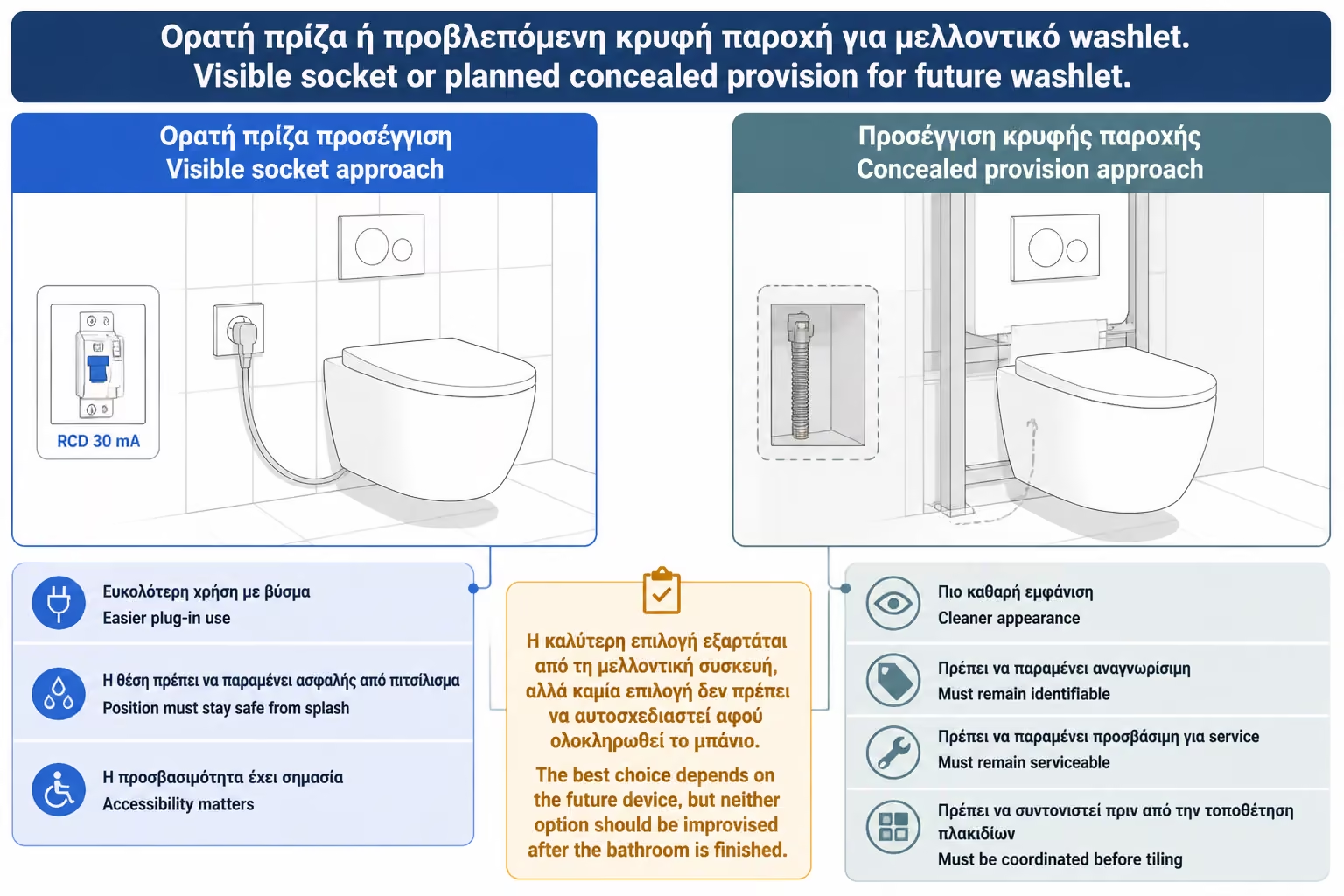
There are two main logics: to put a socket in the right place or to leave it hidden waiting in a box for future connection. The choice depends on the device to be inserted, the position of the basin, the zones of the bathroom, whether there is a built-in cistern, aesthetics and the manufacturer's instructions.
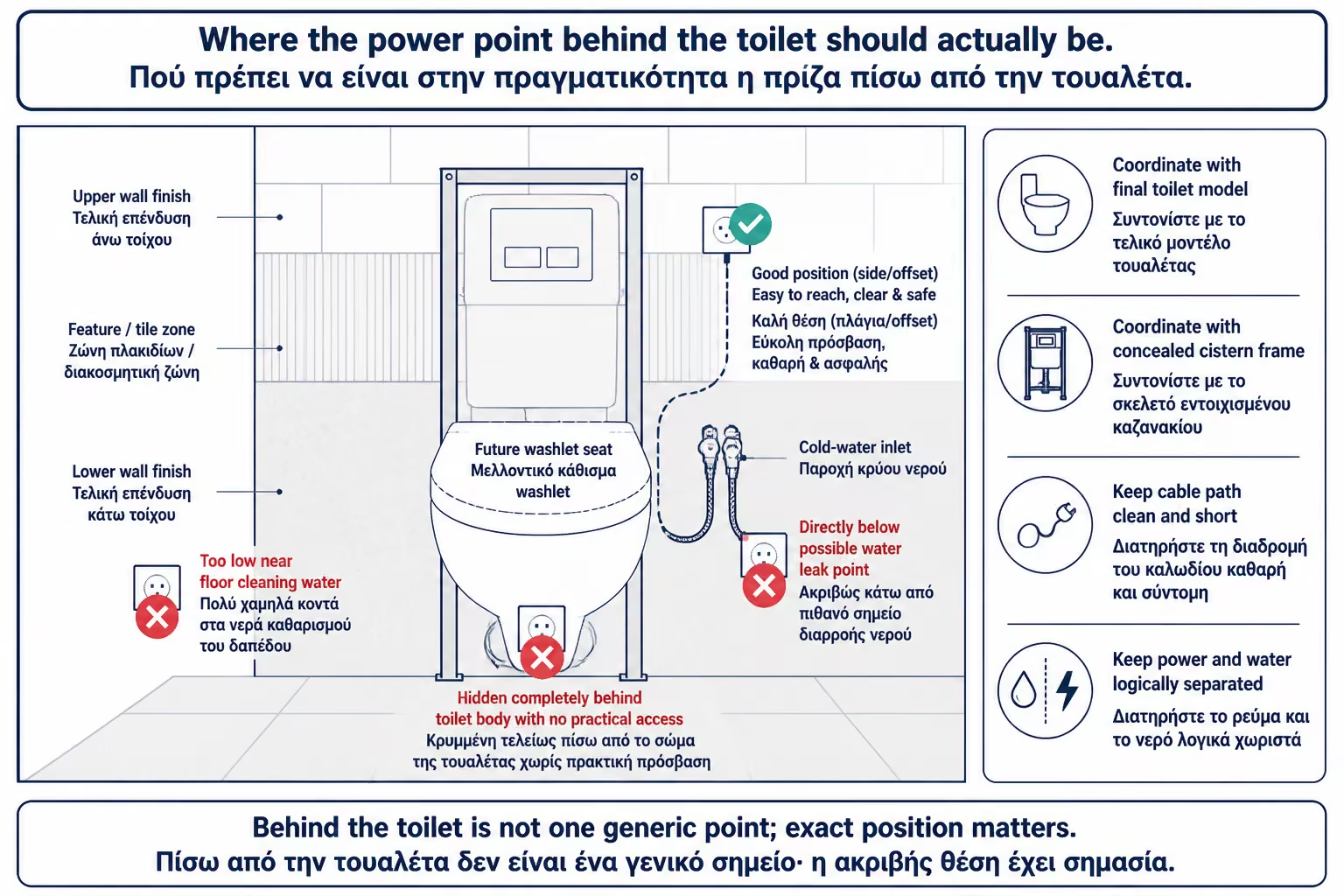
The socket is more practical when the future product has a plug. But in the bathroom the socket does not go where it is convenient. It must be in a safe location, outside of danger zones, protected from splashes, accessible and suitable for the environment. If it goes too low, close to the floor, it can be affected by mopping or leakage. If it gets behind the pelvis in an inaccessible place, the device may not be able to be disconnected easily.
Hidden standby can be cleaner aesthetically, especially in fully embedded solutions. But it must be in a suitable box, properly labelled, protected until used and accessible when needed. It shouldn't be a cable buried behind tile without being able to be traced.
In many cases, the best practice is to design specifically based on a possible model, or at least based on the typical requirements of smart toilet seats. If no model is selected, the electrician can provide safe standby in a location that will not be obstructed by the basin, lid, cistern or future control.
The location of the supply must serve the device but also be protected from water. Usually, for a washlet or e-seat, the supply needs to be close to the pelvis, often in a side position or behind it, so that the cable is not too visible and stretched. But each manufacturer may give different instructions for side, height and distance.
The main thing is not to place the outlet or standby in a place where it will get wet. There may be water behind the basin from cleaning, condensation, faucet leaks, bidet connection or shower splash if the basin is close to the shower. If the basin is next to a walk-in shower, the position becomes much more sensitive.
Also, the provision must be accessible. If the outlet is inserted directly behind a hanging basin and then cannot be seen or reached, it will be difficult to disconnect in the event of a breakdown. Accessibility is part of safety, not just convenience.
A practical example: in a bathroom with a built-in faucet, the electrician leaves a low waiting area behind the basin. After installation, the basin covers the spot and the cable of the future washlet cannot be connected without looking bad. The correct position should have been coordinated with the final basin and lid model.
In Greek bathrooms, the basin is often located near the shower. This creates the greatest difficulty. The electrical supply for a smart toilet may appear "behind the basin", but if the basin is next to a shower without a full cubicle, the supply may be affected by the shower zone or by actual splashes.
ELOT HD 60364-7-701:2024 concerns areas with a shower or sprinkler, so the location of each electrical equipment must be evaluated based on the bathroom zones and the installation. In international Section 701 guides, sockets in a bath or shower room have very strict restrictions, typically stating that 230V sockets are only allowed within 3 meters horizontally of the Zone 1 boundary in the BS 7671 framework.
This does not mean that the owner takes a tape measure and decides for himself. It means that the supply behind the basin must be drawn by an electrician based on the layout of the bathroom. If the basin is too close to the shower, it may require a different location, a special connection method, a full cabin, moving the basin or even a decision not to provide an outlet there.
The most dangerous is the thought "we'll put a socket with a cover and we'll be fine". The cap does not correct a wrong belt. Also, if a smart toilet is permanently plugged in, the outlet cover may remain open or not function as when the outlet is empty.
In a future supply for a smart toilet, a single-phase 230V supply with phase, neutral and protective conductor, i.e. ground, is usually provided. The cross-section and protection must be selected by an electrician based on the power of the future device, the line, the length, the route and the overall installation.
In practice, because most such devices are of a smaller load than a water heater or dryer, we do not usually speak of a "heavy" line. But it should not be casually connected to any circuit without control. The line must be properly shielded, earthed, passed through an RCD and terminated in a suitable socket or box.
If there is a possibility of installing a complete smart toilet with more functions, it is good for the electrician to provide a line with a reasonable margin. If there is already a selected model, the technical brochure is followed. If not, the prediction is based on conservative and safe practice.
The owner should not say to the contractor "leave me a cable behind the basin". He must ask: "I want provision for a future washlet/smart toilet, with normal electrical standby, earthing, RCD and position approved by an electrician".
Whether a dedicated line is needed depends on the device and installation. A simple electronic bidet seat can have a relatively light load and can be powered from a suitable bathroom circuit, provided this is permitted and properly protected. A more complex smart toilet with instant heating, drying and many functions may have greater requirements.
It is safe practice not to accidentally load an existing line that already serves lighting, outlets, a fan, washing machine or other appliances. The electrician must see the load, fuse, cross-section, RCD and simultaneous use. If the provision is made in a complete renovation, it often makes sense to leave a separate line, or at least a separately controlled supply, so that the future connection is clear.
The advantage of a separate line is that we know exactly what it is feeding. In case of failure, it can be isolated. It is not confused with other sockets. It can be protected properly. The disadvantage is the smaller additional cost and the need for board space.
In a renovation where the panel is changed or upgraded, this prediction is much easier. In a finished bathroom, adding a new line can get expensive. That is why it is worth discussing from the beginning.
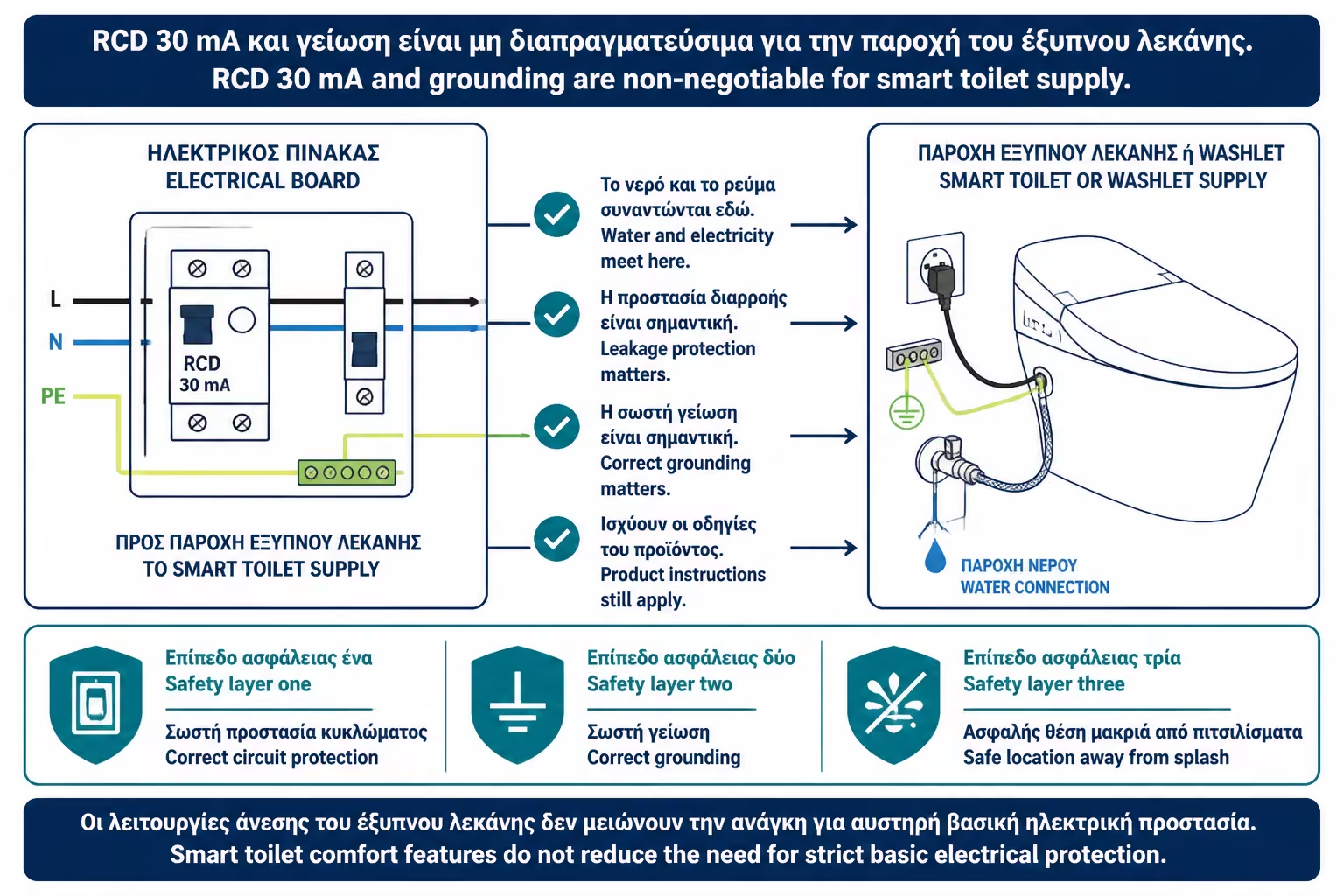
Because smart toilets and washlets combine water and electricity, protection against power leakage is critical. In the US market manufacturers often talk about GFCI protection. In the Greek installation, the corresponding practical control is to protect the circuit by a 30mA RCD/leakage relay, together with proper earthing and compliance with bathroom zones.
TOTO states that WASHLETs require an outlet near the basin and recommends GFCI protection because water exposure is common in the bathroom. This logic is particularly important for Greek bathrooms, where the basin can be located near a shower, washing machine, sink or siphons.
Grounding must be checked by measurements. It is not enough to have a yellow-green wire. If the device has metal parts or a power supply that requires grounding, there must be an actual protective connection. If it is a double insulated device, the electrician must again check the installation and the instructions.
The supply behind the basin must not be connected to a circuit that is not properly protected. If the relay drops when the device is connected, it is not bypassed. Device, line, humidity and connection are checked.
The socket or connection point for a smart toilet must be suitable for the bathroom and the location where it is located. If it is in an area that can receive moisture or splashes, it needs corresponding protection. But the IP of the outlet is not the only issue.
An outlet with a cover can be valuable when not in use. But when a washlet plug is permanently plugged in, the lid may stay open or fail to seal. So actual protection depends on location, plug, cable and use. The socket must not be placed in a place where it gets wet and must be "saved" with a cap.
In many cases, for permanent or semi-permanent devices, a well-designed hidden connection can be cleaner and more protected than a visible outlet. But this depends on the product and must follow the manufacturer's instructions. If the product has a plug, we do not arbitrarily cut the plug to make it "hidden", because the warranty and certification of the device may be violated.
The owner must ask the electrician for a solution that is safe, accessible and compatible with the device. Not just "not to be seen".
Built-in faucets are very common in modern renovations. However, if you want smart toilets in the future, coordination must be done early on. Behind the basin there is a metal frame, cistern, piping, activation board and limited space. The electrical supply must not conflict with them.
The position of the stand must be decided based on the frame of the cistern, the basin, the seat, the water supply and the end tile. If the wait gets into a spot that is later covered by the basin or cover, it will not be useful. If it gets too close to the water supply, it may be a bad choice. If it goes behind the metal frame without access, it may not serve.
In some complete smart toilet systems, manufacturers give specific pre-installation diagrams with water and power locations. These must be followed. If no model is selected, a reasonable and accessible location must be provided that can accommodate future washlet seats.
A frequent mistake is to insert the socket "inside" the space of the built-in cistern without provision for access. This may look clean aesthetically, but if it is not in accordance with the guidelines and is not accessible, it can create a maintenance and safety problem.
A washlet or electronic bidet also needs water. If you foresee electricity but not a proper water supply, the future installation will be done with obvious tuffs, pipes and rough solutions. Ideally, the water supply for the basin and the future seat should be designed together.
A cold water supply with a switch is usually required so that the appliance can be isolated. A filter or special connector may be required, depending on the model. The supply must be accessible for maintenance. It must not be buried behind a non-interruptible basin.
The electrical supply must be sufficiently separated from plumbing points that a small leak does not reach the current immediately. This is a matter of coordinating electrician and plumber. If one works without knowing what the other is doing, the result can be awkward or dangerous.
A practical example: a socket is provided behind the basin, but the washlet's water supply enters directly above it. If at some point the switch or the filter drips, the water falls towards the outlet. The correct layout would have separated the facilities and given access to both points.
Not every bathroom is suitable for future electrical supply behind the basin. In very small bathrooms, where the basin is adjacent to an open shower or in an area that gets wet regularly, the socket provision may not be safe or require serious layout changes.
An honest technical assessment is needed here. If the basin is next to a walk-in shower without adequate glazing, if the floor around the basin gets wet, if the user can touch the supply while showering, or if there is no safe place, the smart toilet may not be a suitable addition without a redesign.
This is not to say that the technology is bad. It means that the layout of the bathroom must allow it. In some cases, the solution is a better cabin, moving the basin, changing the position of the shower or choosing a non-electric bidet. In others, the correct decision is not to make an electrical prediction there.
The owner must avoid the "let's leave it, you never know" logic when the position is clearly problematic. Prediction is only valuable when it is safe.
We want a smart toilet to look clean. We don't want cables hanging behind the basin or visible channels on the tiles. But the clear picture should not be achieved by burying everything without access.
The provision must have reasonable access. If it is an outlet, the device must be able to be unplugged. If it is standby, there must be a box or connection point provided. If there is a transformer or power supply, it must be located where it does not get wet and can be replaced. If the product has a special controller, a position must be provided.
The same goes for water. Water switches, filters and connections must be accessible. If everything is hidden behind an inaccessible hanging basin, the first maintenance will become a problem.
A good installation is one that hides the technical elements from everyday view, but does not make them impossible to check.
The cost depends on whether the bathroom is already in the renovation phase or whether it is finished. If the walls are open and the electrician is already running lines, provisioning behind the basin may be a relatively small additional cost. If it has to be done afterwards, it may require digging, re-wiring, panel changes and tile restoration.
In the Greek market of 2026, a simple electrical standby in the renovation phase can be included in the overall electrical package of the bathroom. If ordered separately, it may cost approximately €80–200 depending on distance from panel or suitable circuit, materials, box, socket and labour. If a new dedicated line from the switchboard, change of protection, RCD/RCBO or fixing of an old switchboard is required, the cost can rise to around €150–350 or more.
Plumbing provision for future washlet, such as cold water supply with switch and suitable location, must be calculated separately. If it is done together with the basin and cistern installation, it is much easier. If done later, it may require breaking or exposed piping.
Prices depend on area, floor, access, whether VAT is included, quality of materials, condition of the panel, whether the bathroom is open or finished, and whether a DHW or installation update is required. Forecasting is cheap when done in time and expensive when done after the fact.
Before closing the wall behind the basin, ask for joint coordination of an electrician and a plumber. Make it clear that you want a provision for a future smart toilet, washlet or electronic bidet. This changes the logic of provision.
Ask the electrician to check the location in relation to the bathroom zones, provide line with phase, neutral and earth, 30mA RCD protection, correct outlet or standby location, suitable IP where required and accessibility. If there is a chance that a particular model will be entered, give them the technical brochure.
Ask the plumber to provide a cold water supply with a switch in a position that serves the future seat without visible piping and without being above the electrical supply. If a built-in cistern is installed, the position must be coordinated with the frame and the basin.
A proper quote should state exactly what is being left: electrical standby or outlet, circuit protection, plumbing, box, location and whether final inspection is included. The phrase "bidet provision" is too general if not accompanied by a technical description.
The first mistake is not to make any predictions and to assume that "we will see if necessary". After the tiles, any change behind the basin is difficult.
The second mistake is to simply leave a cable unboxed, unmarked and unaccessible. This is not a proper wait.
The third mistake is the outlet too close to the shower zone. If the basin is next to an open shower, the position must be checked very strictly.
The fourth mistake is the outlet low on the floor, where water from cleaning or leakage can reach.
The fifth mistake is the electrical supply directly below the water supply or washlet filter. In the case of a small leak, the water may fall upstream.
The sixth mistake is not to provide grounding and RCD. A smart basin combines water and electricity. Protection is not optional.
The seventh mistake is to buy a device with a plug in the future and cut the plug to "hide" the connection, without the approval of the manufacturer and the electrician. This may void warranty and insurance.
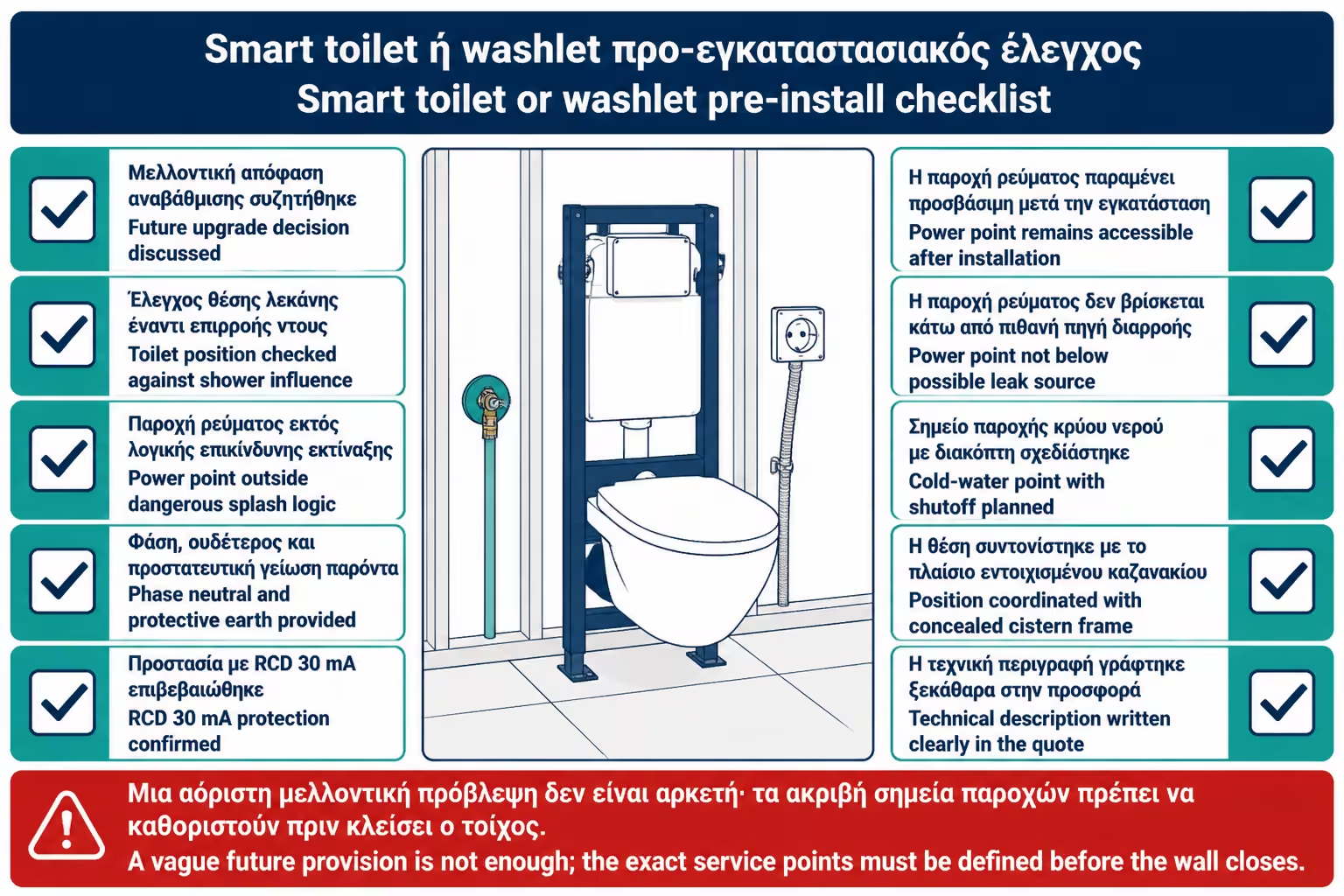
Before the provisions behind the toilet are closed up, check the following points first:
| Question | Yes / No |
|---|---|
| Have you decided whether you want a washlet or smart toilet future forecast? | Yes / No |
| Has the position of the basin been checked in relation to the shower or bathtub? | Yes / No |
| Is the power supply outside of danger zones and away from splashes? | Yes / No |
| Does the line have a phase, neutral and protective/ground conductor? | Yes / No |
| Is the circuit protected by a 30 mA RCD? | Yes / No |
| Is the outlet or standby accessible after the basin is installed? | Yes / No |
| Is the electrical supply not under potential water leakage? | Yes / No |
| Is there provision for a cold water supply with a switch for the future washlet? | Yes / No |
| Is the position coordinated with the built-in cistern or basin? | Yes / No |
| Is there a clear technical description in the offer and not a vague “forecast”? | Yes / No |
If the answers are not clear before the tiles are put in, the prediction may prove useless or dangerous. The right smart toilet infrastructure is a small detail only when planned in time.
If you keep only one thing from this guide, keep this: behind the toilet we do not leave “a cable just in case”. We leave the correct electrical provision or socket, with a 30 mA RCD, grounding, the right location outside the dangerous zones, and access after the toilet is installed. If you are considering a future washlet, ask for a plumbing provision for cold water with an isolation valve. The best time to do it is before tiling. After that, every solution becomes more expensive, more visible and often less safe.
The provision of electricity for a smart basin, washlet or electronic bidet is one of the small decisions that can make a bathroom truly ready for the future. You don't need to install the device directly. But if you're renovating, you need to decide if you want the ability to add it later without breaking and unwieldy wires.
Correct prediction is not just a socket behind the pelvis. It is an organized electrical infrastructure, with proper location, grounding, RCD, water protection, accessibility and cooperation with the hydraulic supply. If the basin is close to the shower, the assessment must be made even more carefully. If there is a built-in cistern, the position must be coordinated with the frame and the basin.
For the owner, the clear direction is this: if the bathroom is now open, it is worth discussing the forecast. If done correctly, it won't be seen and won't bother you. If it is not done, the future addition of a smart toilet may require consideration or lead to sketchy solutions. And in a bathroom, where water and electricity coexist, a rough solution is never a good solution.
Return to category.
Go to categoryReturn to the central guide.
Go to guide