
Plumbing & Electrical Bathroom Infrastructure
Return to category.
Go to categoryIn many Greek homes, especially apartments, the bathroom is the only practical place to put a washing machine. The kitchen has no space, the storage room has no facilities, the balcony is not always protected and so the device ends up next to the sink, opposite the basin or very often near the shower. If a dryer is added, either next to or above the washing machine, the bathroom turns into a small technical space with water, humidity and electrical loads much greater than a simple lamp.
The fact that a washing machine "fits" in the bathroom does not automatically mean that it fits properly. The device has a metal casing, motor, resistance, electronics, water, drainage, vibrations and often runs for a long time. The dryer, especially if it is a condensing or heat pump type, also has an electrical load, heat, humidity and a need for ventilation. When these are placed in a small bathroom, near a shower or bathtub, the electrical and manufacturing attention must be much greater.
The most common mistake is to use an existing outlet without checking. The owner sees that there is an outlet in the bathroom and thinks he can plug in the washing machine there. However, if the outlet is not in the correct position, if it is not protected by a leakage relay, if it is not properly grounded, if it does not have a suitable line, or if it is located near the shower zone, the installation can be dangerous. Even worse is using a power strip for washing machine and dryer together, a practice that should not be treated as a "temporary solution".
In Greece, low-voltage electrical installations are examined in the context of ELOT 60364. For rooms with a bathtub or shower, a special role is played by ELOT HD 60364-7-701:2024, which concerns rooms containing a shower or sprinkler and is shown by ELOT as a valid standard. The modern logic of Section 701 places particular emphasis on bathing zones, limiting equipment within them, and protecting circuits with 30 mA RCDs. The IET guide typically states that 230V sockets in a bath or shower room are only permitted when placed 3 meters horizontally from the Zone 1 boundary, in this particular BS 7671/Section 701 framework.
In this guide we will see when it makes sense to put a washer or dryer in the bathroom, what electrical specifications should be checked, why dedicated or reinforced lines from the panel are often required, where the sockets should be located, what distance from the shower zone means and what mistakes can turn a practical solution into a serious hazard.
The washing machine is not a small appliance that simply "plugs into an outlet". It has electric resistance for water heating, motor, pump, electronic board, metal housing, water supply and drainage. It often runs for an hour or two and can draw significant current during certain phases of the program.
If the washing machine is located in a kitchen or warehouse, the requirements remain serious. But when it's in the bathroom, there's the added factor of moisture, splashes and possible contact with a wet user. The person may step out of the shower, step on a wet floor and touch the appliance or outlet. This changes the risk assessment.
A common example is a washing machine next to a shower curtain. The curtain does not always retain water well. After each bath, the floor around the washing machine may get wet. If the outlet is low behind the appliance or if the cable is resting on the floor, the installation should not be considered safe because "nothing has happened so far".
The right treatment starts from the position. Then comes the power line, socket, earthing, RCD, drainage, access and ventilation. All of these must work together.
The dryer has a different function than the washing machine. It doesn't necessarily take water from a supply, but it generates heat, expels moisture and works for a long time. If it is a condensing or heat pump dryer, it collects or expels water from the clothes. If it is an older type with air extraction, it needs proper liquid air removal.
In the bathroom, this means that the dryer burdens the space with heat and humidity. If the bathroom is not adequately ventilated, condensation can build up on walls, mirrors, false ceilings and electrical points. If it goes on top of the washing machine, there is also the issue of support, vibrations and safe access.
The electrical side is also important. A washer and dryer together should not be operated from a random power outlet. Each device can have significant power consumption, and simultaneous operation can overload an unsuitable line. In many cases a separate line or at least a special assessment by an electrician is required for the total load.
A practical example: the owner puts a dryer on top of a washing machine and connects them to a double outlet that already existed in the bathroom. In the first period everything works. After a while, the outlet gets hot when both devices are working or the fuse blows. This is not a "quirk" of the installation. It is an indication that the line may not be designed for the load.
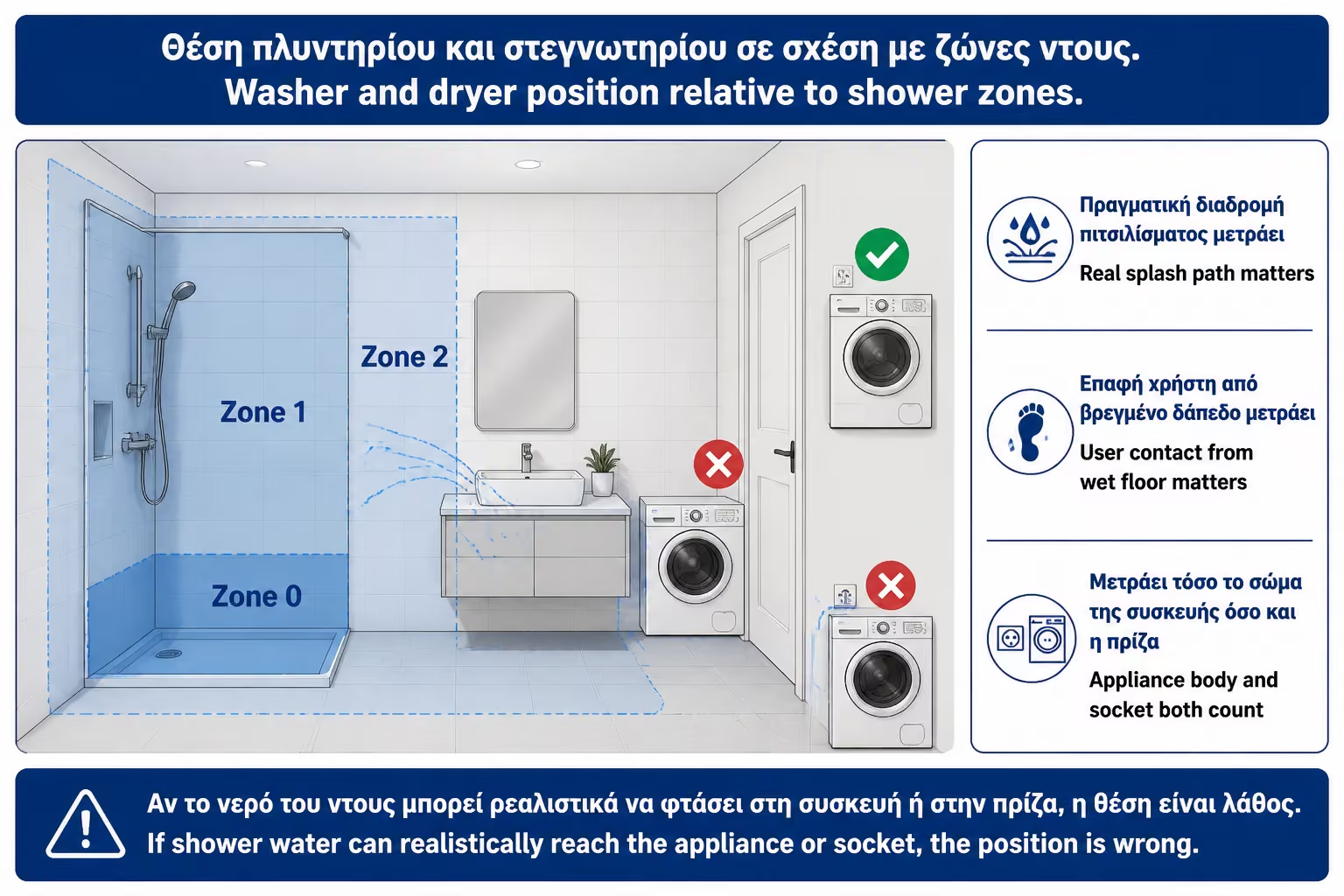
Before we talk about cables and fuses, we need to answer the basic question: where will the device fit? The position in relation to the shower or bathtub is decisive. Bathroom safety zones are defined around the bath or shower head, and the closer we get to the point of water, the more restrictions increase.
A washer or dryer should not be located where it gets wet from the shower, can be directly touched by a person within the shower zone, or exposes the outlet and cord to splashes. Having a booth or a glass can help, but it doesn't automatically mean the location is safe. The opening, the direction of the door, whether there is water dripping, the position of the shower phone and the actual use must be considered.
In small bathrooms, this is often difficult. There may be only one place where the washing machine fits, but it should be next to the shower. In such a case, the correct answer is not to place the device casually. It may be necessary to change the layout, a cabinet that closes properly, move an outlet, different furniture or even choose a different place for the devices.
The critical question is simple: in daily use, can water from the shower reach the appliance, plug, socket or cable? If so, the position should be reconsidered.
The socket for a washing machine or dryer is one of the most sensitive points. In the context of Section 701 which applies to areas with a bathtub or shower, 230V sockets have strict restrictions. The IET guide states that 230V sockets are only allowed in such a space if they are placed 3 meters horizontally from the boundary of Zone 1. This shows the basic logic: the socket should not be located near the immediate area of the shower or bath.
In Greek practice, the licensed electrician must assess the position based on the current standard, the layout of the bathroom and the requirements of the space. It is not enough to simply measure the distance from the tap. The distance refers to the zone of the bathtub or shower and must be technically controlled.
The outlet should be in a location protected from water, not low where it is being mopped or behind the appliance where it could get wet from a leak. It must be accessible so that the device can be disconnected in case of need. If it is behind a washing machine that is not easily moved, practical safety is reduced.
A common mistake is the socket low behind the washing machine, next to the water supply and drain. If a pipe leaks or overflows, the outlet may be in a bad spot. The correct location must be decided before tiles are laid and before the appliance is installed.
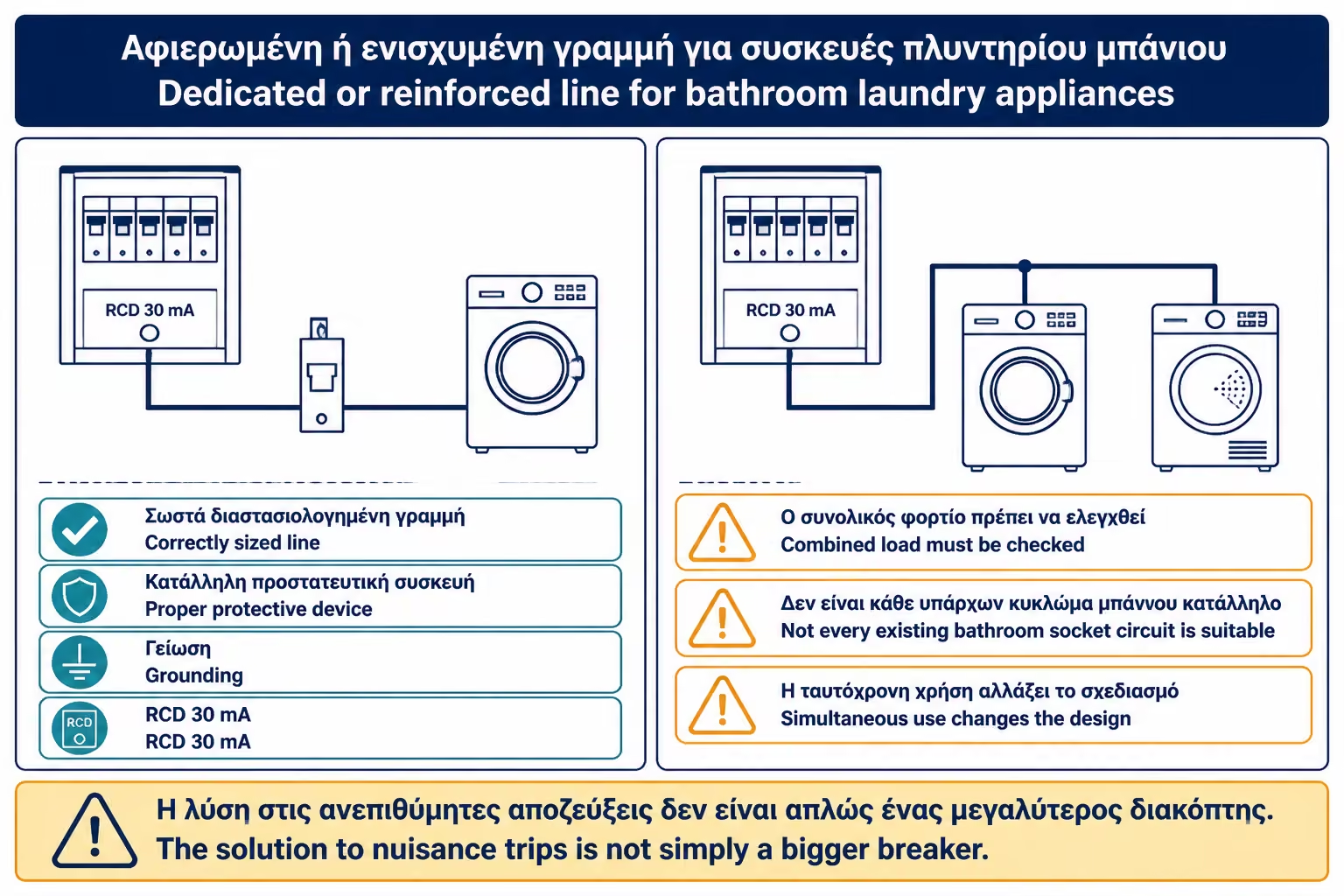
The washer and dryer are appliances that should not be powered by a random line. In practice, for a washing machine in a bathroom it is often the right solution to have a dedicated line or at least a line specially dimensioned and protected for the specific use. If there is also a dryer, the need for proper planning becomes even greater.
The line from the panel must have suitable conductor cross-section, proper fuse, proper earthing and RCD protection. It is not decided based on what cable is already in the wall. It is decided based on the power of the devices, the length of the line, the way of routing, the simultaneous operation and the requirements of the manufacturer.
In many homes, the existing bathroom outlet is part of a general outlet circuit or has been retrofitted. This might have been enough for a shaver or light use, but not for a washer and dryer. If the circuit also serves other outlets, simultaneous consumption can become a problem.
A practical example: in an old apartment, the washing machine takes power from the same line as bedroom and bathroom sockets. When a washing machine is running and a dryer is plugged into a double outlet at the same time, the fuse blows or the outlet heats up. The solution is not more security. It is check and correct line from the panel.
Many owners ask "what cable does the washing machine need?". The correct answer should not be given blindly. The cross-section depends on the power of the device, the length of the line, the installation method, the protection, the temperature, whether there are other cables on the same route and whether we are talking about one or two devices.
In practice, in domestic installations, a washing machine socket line can be stronger than a simple lighting line and protected by a suitable fuse. For a washer and dryer together, the electrician must calculate the total load. It is not right to "share" a line because it is convenient.
The mistake to avoid is changing the fuse without changing or checking the cable. If a fuse blows and someone puts in a bigger one, the cable can be left unprotected. The fuse protects the line, not the user's willingness to work it all together.
The owner does not have to choose a cross-section himself. But he should ask the electrician to confirm that the line is suitable for the load and that the fuse matches the cable and the use.
In a bathroom, the leakage relay is non-negotiable. The washer and dryer have electrical parts, metal housing, power cord and are located in a humid area. If there is a current leakage, the RCD is an essential protection measure.
The modern logic of Section 701 requires protection of circuits in tub or shower rooms with an RCD not exceeding 30 mA, and relevant technical sources emphasize that all circuits supplying equipment in such a room need RCD protection. For the owner, the important thing is not only to have "a relay on the panel", but to actually protect the line of devices.
In older homes, there may be a relay that protects some circuits, but not all. The washing machine socket may have been added afterwards and is not going through the RCD properly. It could also be that the RCD trips when the washing machine is running, and someone has bypassed it. These are serious indications of a problematic installation.
If the relay drops when the washer or dryer is running, we don't just change the appliance and bypass the protection. We check the device, the outlet, the line, the ground and the humidity.
The washer and dryer have a metal housing or metal parts. In the event of a fault, proper grounding helps the dangerous voltage to be routed to the proper path and the protective devices to operate. Without proper grounding, a device may appear to be operating normally but be dangerous to malfunction.
In the bathroom, grounding is also linked to the issue of equipotential protection. There are metal batteries, piping, bodies, appliances and water. If the user touches two conductive parts with wet hands or feet, the potential difference can become dangerous. That is why the ground check is not a standard stage.
A common mistake is to use an outlet without proper grounding because "the washing machine is working". Operation does not prove safety. The washing machine can complete normal programs, but in case of damage there is no proper protective path.
The electrician must check the ground with instruments. It is not enough to see a yellow-green cable in the socket.
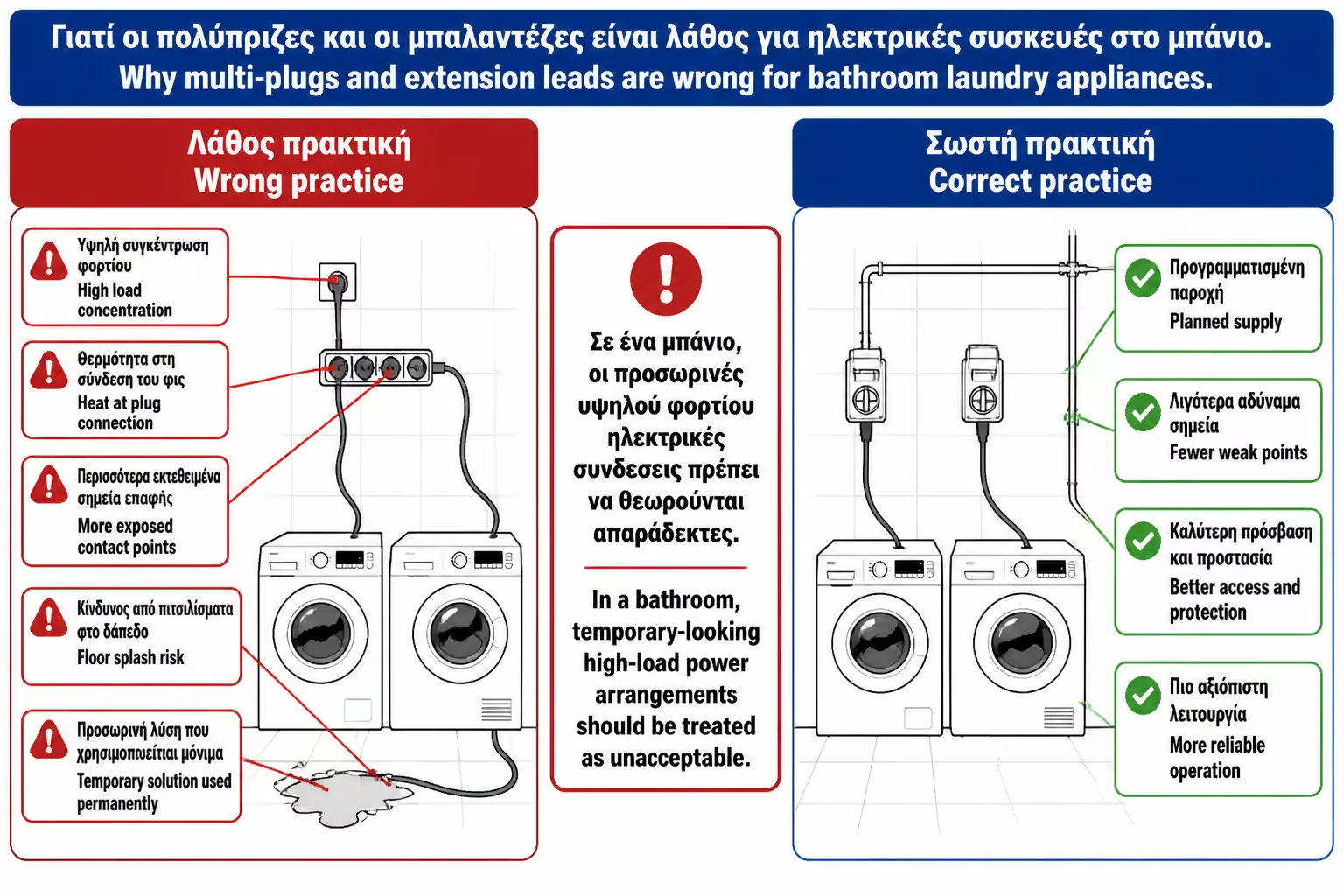
Using a power strip in the bathroom for a washing machine or dryer is one of the most problematic practices. This is usually because the outlet is far away, because there are two devices and one outlet, or because the cable does not reach. But the power strip is not an electrical design solution.
Washer and dryer are loads that can draw significant current. A common power strip can overheat, be placed on the floor, receive water, be covered behind appliances, or be permanently operated in conditions for which it was not designed. In a bathroom, this is even worse.
The same goes for ballads. An extension from a corridor or next room to the bathroom is not a solution. In addition to the load, there is also the issue of cable routing, mechanical wear, moisture and the risk of being stepped on or wet.
If there is no correct outlet in the correct location, the solution is a new line or a new supply by an electrician. No power strip.
Placing a dryer on top of a washing machine is common when space is limited. It can be a good solution, but it needs proper mechanical and electrical foresight. The dryer must be supported by a suitable stacking kit or structure, not simply placed on top of the washing machine. The washing machine vibrates when spinning and this must be taken into account.
The outlet or outlets must be accessible. If they are behind the tower, disconnecting in an emergency can be difficult. If they are too low, the risk of flooding increases. If they are on the side towards the shower, they may be affected by splashes. So the position must be designed together with the devices.
Running a washer and dryer at the same time is also critical. If the devices are on a line, it must be checked that the line can withstand the combined load. In many cases it is best practice to have separate supplies or at least a clear calculation by an electrician.
A common mistake is to build a cabinet for an appliance tower and then find that the outlets are behind the dryer, there is no ventilation, or the cables are pinched. Electrical access must be planned before the furniture.
The dryer needs ventilation around it. Even the most efficient heat pump models generate heat and need space to function properly. If it is closed in a cabinet without ventilation, it can work worse, raise the temperature and burden the space.
In a bathroom, this is associated with humidity. If the dryer is operated in a small, enclosed space without adequate ventilation, the space may become hotter and more humid. This takes a toll on mirrors, joints, paint, furniture and electrical points. If there is already insufficient ventilation, the problem becomes more acute.
If the dryer has a water tank, it should be easily accessible. If connected to a drain, the connection must be correct and not leak near sockets. If it's an exhaust dryer, it needs proper ducting to the outside, not venting moisture into the bathroom.
Electrical safety is not just about the socket. It is also the environment around the device: heat, air, access and humidity.
The washing machine needs a water supply and drainage. If these connections are leaking, if the supply coil is old, if the drain is sloppy, or if the siphon is overflowing, water can get close to the outlet or cord. So a plumbing problem can quickly become an electrical hazard.
The outlet must not be located directly under water supplies or next to a point where it may drip. The supply and drain pipes must be stable, accessible and do not press on the cable. If the washing machine is moved by vibrations, it can pull or squeeze pipes and cables.
A common example is a washing machine in a narrow space, with the socket, valve and drain all behind it. If there is a leak, the owner does not see it immediately. Water may run behind the appliance, near the outlet, until it is visible on the floor. This provision is not a good practice.
Proper installation provides for plumbing and electrical access. To be able to close the valve, disconnect the device and check the point without removing half the bathroom.
Many modern renovations hide the washing machine inside a piece of furniture. Aesthetically, it's a nice solution. Technically, however, a correct prediction is needed. The furniture must have ventilation, access to a socket, valve and drain, and enough space to avoid pressure on cables and pipes.
If a dryer is placed in a closed cabinet, ventilation becomes even more important. The heat must be removed. If the device works in a closed space, it may overheat or reduce its performance. The manufacturer's instructions for distances around the device must be observed.
The socket in a cupboard must be in a safe place. Not under a siphon, not at the lowest level where water can collect, not behind the appliance without access. If the cabinet is also used to store cleaners, cables or plugs must not be pinched.
A beautiful piece of furniture that hides a washing machine but does not allow access to a socket and valve is a poor technical solution. At the first breakdown, it will prove expensive.
In a bathroom, sockets must have appropriate protection for their location. Safety caps or waterproof covers are useful, but should not be overrated. They mainly protect when the socket is not in use. When the washer or dryer plug is permanently plugged in, the lid may stay open or not fit completely.
Therefore, the washing machine socket should not be "saved" only with a cover. It must first be properly located, out of zones and away from splashes, protected by an RCD and properly earthed. The IP of the socket must be confirmed by an electrician based on the location. It is not enough to be a "bathroom plug" in general.
If the appliance has a permanent plug, the outlet must be suitable for continuous use with this load. A cheap double outlet in a wet room, with two large appliances, is not a good solution. If two devices are needed, provision must be made for them.
Actual use matters more than image. An outlet may appear "tight" when empty and closed, but be exposed when the appliance is operating.
In many old bathrooms there is a washing machine that has been running for years in the same outlet. This creates a false sense of security. The owner says "it's been like this for so many years". But electrical requirements, devices, loads and the understanding of safety have changed. Also, materials age.
An old outlet may have loose contacts, a worn ground, moisture, a bad connection or a line without an RCD. Adding a dryer puts even more strain on the old installation. If a renovation is done and the shower is changed, the old location of the outlet may be in a worse relationship with the new zones.
Y.A. 101195/2021 states that existing facilities or their parts can be considered to meet requirements when they are documented to comply with the technical requirements that applied during their construction, but for modifications and extensions the facility must be designed and implemented in accordance with ELOT 60364 or an equivalent safety level. In practice, a new operation does not mean copying an old position.
If renovating, the washing line should be checked. If a dryer is installed for the first time, the installation must be recalculated.
The cost depends on whether a correct line already exists and is simply checked, or whether a new supply has to be run through the panel. For simple socket replacement on an already correct line, the cost can be relatively limited. For new dedicated washing line, new tumble dryer supply, RCD, earthing check and panel arrangement, costs go up.
In the Greek market of 2026, a new line for a washing machine or dryer can indicatively move around €120–300 depending on the distance from the panel, digging, piping, materials, access and considerations. If two lines, panel changes, new RCD/RCBO protection, grounding or DHW testing are needed, the cost can be higher. In a complete bathroom renovation, these works are often part of the overall electrical package, which can move to wider levels depending on the project.
Prices depend on the area, the floor, whether the bathroom is open or finished, the length of the line, whether VAT is included, the quality of materials, the condition of the panel and the need for surface restoration. A cheap quote that says "put in a washing machine socket" may not include a new line, RCD, grounding or zone control.
The most economical time for proper preparation is before tiles and furniture are put in. After that, each change becomes more expensive and more difficult.
Before deciding on a washer or dryer location, have an electrician look at the bathroom layout. It must check the connection to the shower or bathtub, the protection zones, the location of the socket, the existence of RCD, the earthing and the load of the appliances.
If only washing machine is coming in, ask to confirm if the line is suitable. If a dryer is included, ask for a calculation for simultaneous operation. If the devices go into a tower, ask that access to the sockets and valves be provided. If they go inside a piece of furniture, ask for ventilation and a safe outlet location.
A correct quotation should state whether it includes a new line, cable cross-section, fuse, RCD or RCBO, outlet suitable for the location, earthing test, maintenance, and possible DHW or updating. If it only says "washing machine outlet", it's not clear enough.
The electrician must also work with the plumber. The water supply, drainage and outlet should be designed together, not independently.
The first mistake is to put a washing machine next to an open shower without proper splash protection. Just because there is little space does not mean the position is safe.
The second mistake is connecting to an existing socket without line, RCD and earthing control. The socket may be suitable for small use, not for a washing machine.
The third mistake is using a power strip for a washer and dryer. In the bathroom, this practice should be avoided.
The fourth mistake is the socket low behind the device, next to water supplies and drainage. If there is a leak, the point becomes dangerous.
The fifth mistake is the dryer in a closed cabinet without ventilation. Heat and humidity must be accounted for.
The sixth mistake is changing the fuse because it "falls", without checking the cable and load. This can leave the line unprotected.
The seventh mistake is to consider an old installation safe because it has been working for years. Safety is judged by control, not by habit.
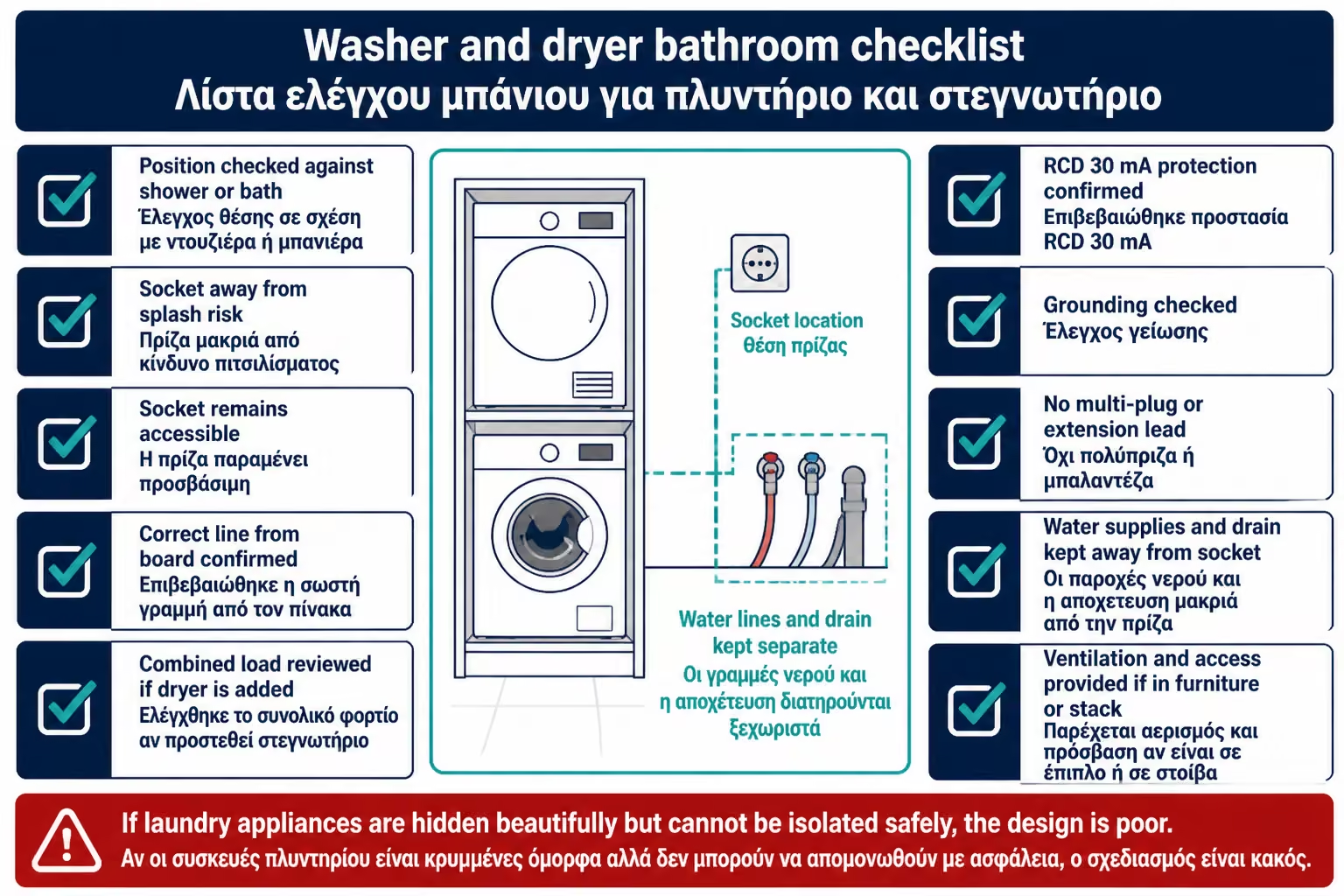
Before the appliances are installed, check the following points first:
| Question | Yes / No |
|---|---|
| Has the location of the appliances been checked in relation to the shower or bath? | Yes / No |
| Is the outlet outside the danger zone and away from splashes? | Yes / No |
| Is the outlet accessible in case of emergency? | Yes / No |
| Is there a dedicated or properly dimensioned line from the panel? | Yes / No |
| If there is a dryer, has simultaneous operation with the washing machine been calculated? | Yes / No |
| Is the circuit protected by a 30 mA RCD? | Yes / No |
| Have the outlet and line been grounded? | Yes / No |
| No power strip or power strip in use? | Yes / No |
| Are water supplies and drains away from the outlet or properly separated? | Yes / No |
| If the devices go into a cabinet or tower, is there ventilation and access? | Yes / No |
If the answer to any basic question is "no" or "I don't know", the installation needs to be checked before the devices are connected. In the bathroom, the washer and dryer are not simple household appliances. They are electrical charges in a wet environment.
If you keep only one thing from this guide, keep this: the washing machine and dryer in the bathroom should not be placed simply “where they fit”. First we check the location in relation to the shower zone, then the power circuit, the socket, the RCD, the grounding and the access. If the two devices operate from a power strip or from an old unchecked socket, the installation has not been designed properly. It is better to run the correct circuit from the panel before the tiles and furniture go in than to try to correct a dangerous position later.
The washing machine and dryer can only be placed in the bathroom when the space and the electrical installation allow it. The main criterion is not whether the devices fit, but whether they are placed in a safe place, away from the shower zone, with sockets protected from water and with lines that can withstand their load.
Proper installation requires electrical design: suitable or dedicated line from the panel, proper fuse, 30mA RCD protection, earthing check, proper socket location and avoidance of multi-sockets. If there is a dryer, heat, ventilation and simultaneous operation with the washing machine must also be calculated. If the devices are placed in a cabinet or tower, there must be access for shutdown, maintenance and inspection.
For the owner, the practical direction is clear: do not leave the washing machine plugged in until the end of the renovation. Plan the location with the electrician and plumber before the walls are closed. So the bathroom will be not only functional, but also safe for daily use.
In the bathroom, a device that works with water and electricity should not be based on luck. It must be based on proper installation.
Return to category.
Go to categoryReturn to the central guide.
Go to guide