
Plumbing & Electrical Bathroom Infrastructure
Return to category.
Go to categoryThe shower was for many years a purely mechanical system. You turned on the faucet, manually adjusted hot and cold, waited for the temperature to stabilize, and if someone turned on another faucet in the house, suddenly the sensation would change. Comfort depended on the mixer, pressure, water heater or boiler, and enough daily "experience" to find the right spot.
Digital and smart shower systems change this logic. Instead of a simple mechanical mixer, they use a digital valve, sensors, electronic control, and often a display or touch panel. The user can select temperature precisely, save profiles, activate different water outlets, set time or eco limits, and, in more advanced systems, start the shower from an app or voice command.
This technology already exists in the market. Manufacturers of smart/digital showers describe systems with a digital valve, controller, temperature and flow regulation, app or voice control, presets and warm-up function. Mira, for example, describes digital/smart showers as systems with a digital valve and smart remote controller, which mix hot and cold water and can incorporate voice/app control, temperature and flow presets, and a preheat function.
On the other hand, a smart shower is not just "a nice touch panel". It is a plumbing, electrical, and digital system all at once. It needs proper pressure, adequate hot-water supply, proper drainage, safe electrical installation, service access, and compatibility with the home's hot-water production method. If all these points are not checked, the result can be an expensive gadget that does not work as promised.
In this guide we will see what smart showers are, how the digital valve works, what touch panels offer, user profiles and eco limits, what are the real advantages, what are the technical limitations, when they are worth it in a Greek bathroom and when a good thermostatic mixer can be a more reasonable solution.
A digital shower system replaces the classic mechanical mixer with an electronically controlled mixing unit. This unit takes hot and cold water, mixes it to the desired temperature, and sends it to the shower outlets: hand shower, overhead head, body jets, or other functions.
The user does not necessarily operate a traditional lever. Depending on the system, they may use a touch panel, rotary digital controller, app, or voice command. The temperature is displayed on the screen and can often be adjusted down to the degree. In more advanced models, the user can save favorite settings, such as “morning shower 38°C”, “child 37°C”, “quick eco shower” or “relaxation with rain shower”.
The “smart” element comes when the system connects with an app, Wi-Fi, smart home or voice assistant. For example, the U by Moen app describes the ability to create up to 12 personalized presets, with name, outlets, temperature, timer and notifications, as well as app and voice control via Alexa, Siri/Apple Home or Google Home.
The difference from a simple thermostatic mixer is that the thermostat mechanically regulates the temperature, while the smart shower can add memory, automations, multiple outlets, consumption measurements, notifications and remote control. The question is not whether it is more impressive. It is whether these extra features have real value for the particular bathroom.
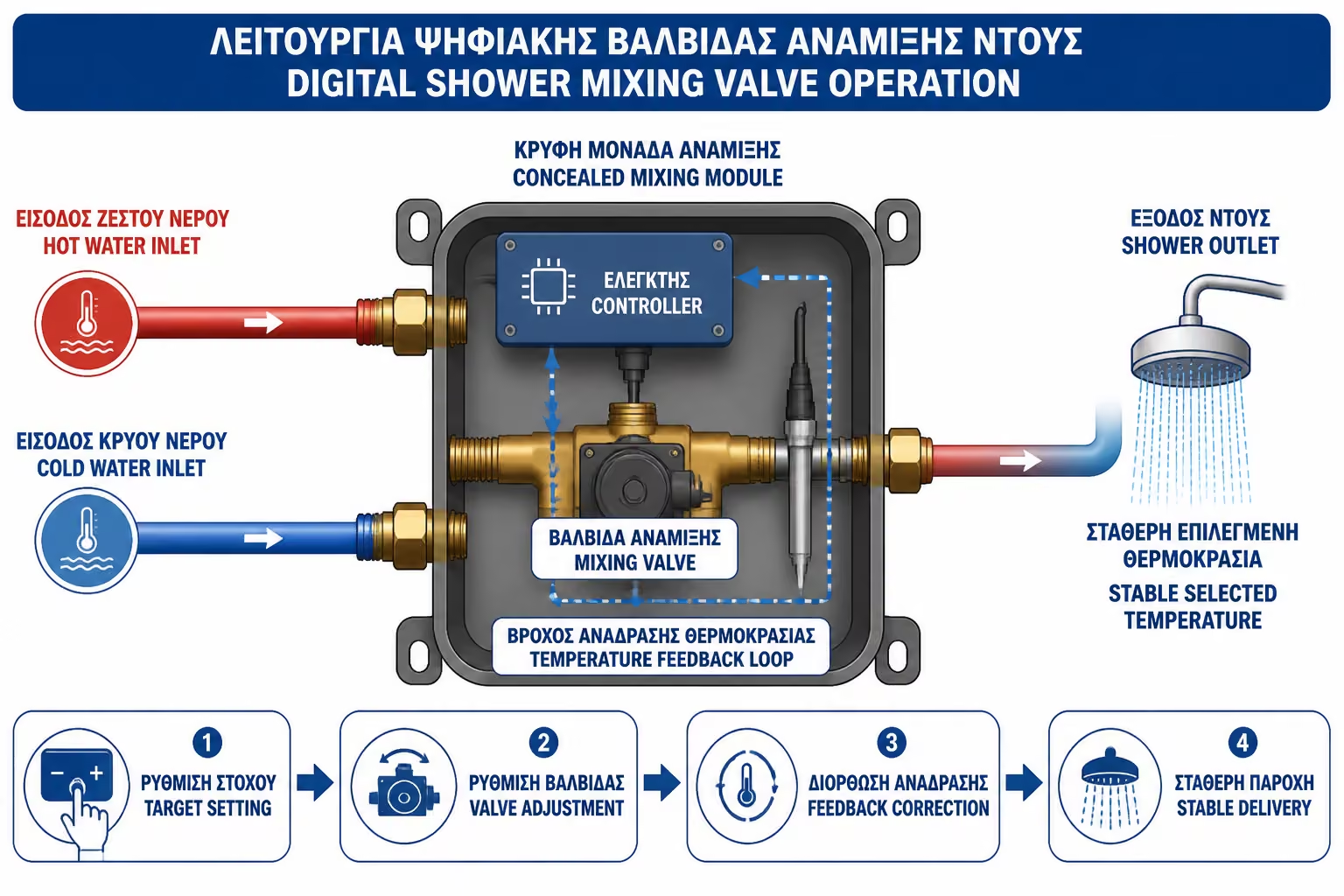
The heart of a digital shower is the digital valve. This is the unit that mixes the hot and cold water. Unlike a simple mixer, where the user blends the water mechanically, here the valve is electronically controlled. Sensors and regulation mechanisms monitor the temperature and adjust the flow of hot and cold to achieve the desired value.
This provides greater comfort. If the user selects 38°C, the system tries to keep this temperature constant. If the inlet pressure or temperature changes slightly, the valve reacts. That doesn't mean it can work miracles. If there is not enough hot water or if the pressure drops too much, the system has limits. But in a proper installation, the experience is more stable than with a simple mixer.
The digital valve is usually installed hidden, behind a wall, in a false ceiling, in a technical room or in an accessible place near the shower. This is critical. The valve must not be "buried" without access, because at some point it may need service, filter, inspection or replacement.
A common mistake in renovations is to emphasize the beautiful control inside the shower, but not provide proper access to the base unit. If the digital valve is hidden behind tiles without a hatch, any future damage becomes a costly mistake. In smart showers, the hidden part is often more important than the obvious.
The touch panel is the most visible part of a smart shower. It can show temperature, run time, selected water outlet, user profile and preheat status. In more advanced systems, it can allow a selection of scenarios, such as rain, hand shower, body jets or combinations.
The practical advantage is that the user does not have to search every time for the right lever position on the mixer. Select a temperature and the system takes over. This is especially useful for families, children, the elderly, or people who want a consistent and predictable experience.
But there is also the issue of ergonomics. The panel must be located where the user can easily handle it without getting unnecessarily wet and without being in the wrong electrical zone. If the control is inside the shower zone, it must be specially designed for this use, with suitable sealing and power supply. It's not just a tablet on the wall.
Also, the control should be simple. A bathroom shouldn't need a manual every morning. If the user needs multiple taps to take a simple shower, technology becomes a hindrance. A good smart shower hides the complexity and makes everyday use easier, not more tiring.
The ability to select temperature with degree accuracy is one of the most attractive features. If someone prefers 38°C, they can save this setting. If a child needs a lower temperature, there may be a separate profile. If a user wants a cooler shower after exercise, they can quickly select another setting.
This also has a safety aspect. The constant temperature reduces the risk of sudden changes. In conventional systems, if someone turns on another tap or changes the hot water supply, there can be a sudden change. Good thermostatic and digital systems reduce this phenomenon. However, they should not be considered to eliminate all risk. They need proper installation, correct hot water temperature, anti-scald protection where required and maintenance.
Temperature accuracy only matters if the hot-water production system can actually support it. An old electric water heater with a small capacity, a fluctuating boiler, or low pressure can limit performance. The smart shower does not produce hot water by itself, unless we are talking about special electric systems. It manages only the water that the installation can provide.
A practical example: the owner installs an expensive smart shower, but the water heater is small and the hot water runs out quickly. The panel shows 38°C, but after a few minutes the temperature drops. The problem is not necessarily the smart shower. It is that the production of hot water is not sufficient for the use we request.
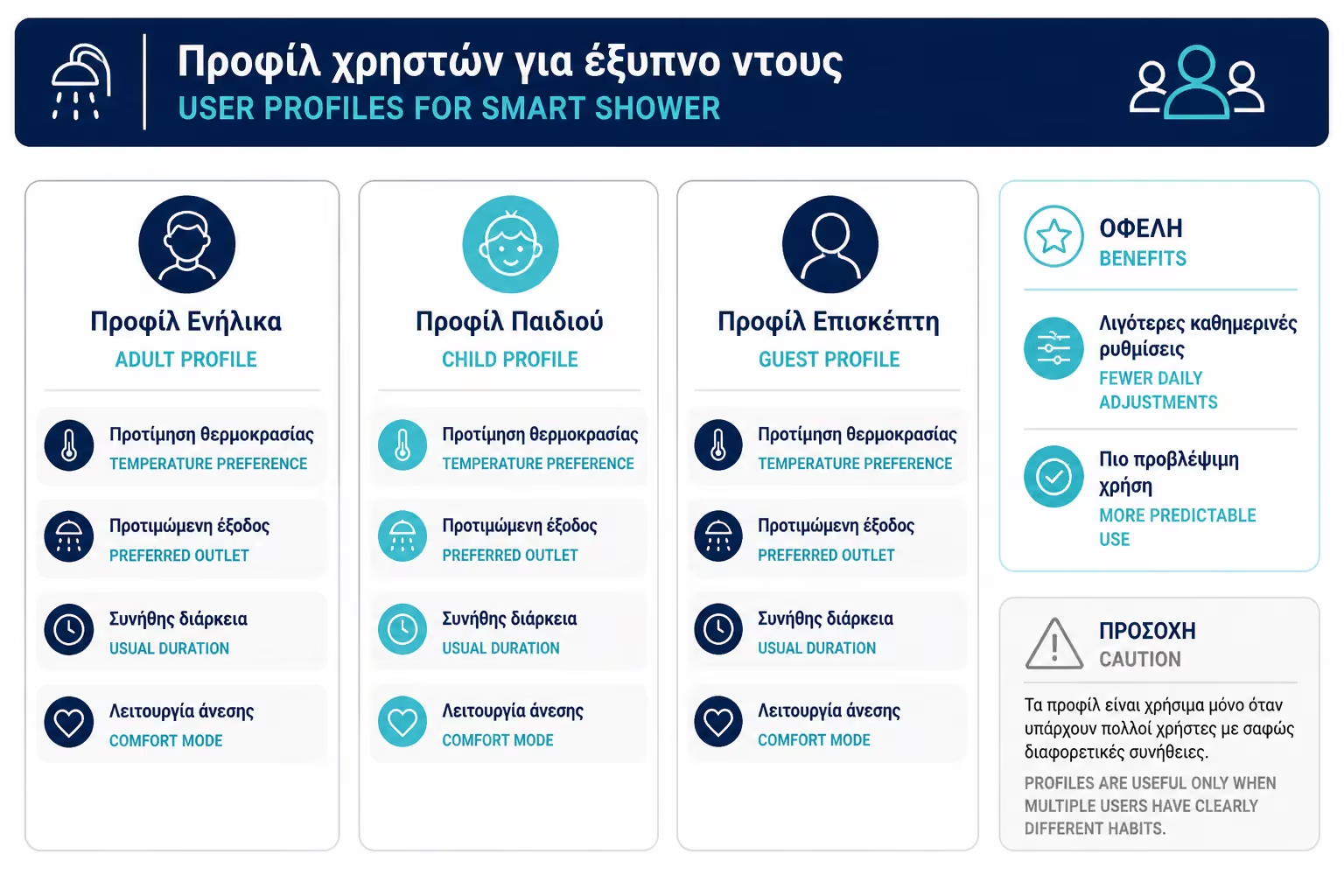
User profiles are one of the features that make a smart shower look really "smart". Each member of the family can have their own temperature, flow, water output and duration settings. A system like U by Moen allows, through the application, to save many personal presets with temperature, outlets, timers and notifications.
In a house with different habits, this can be practical. A user wants a quick shower with a hand shower. Another wants a rain shower at 39°C. A child has a lower temperature threshold. Someone wants eco mode with a time limit. Profiles reduce repetitive setup.
But profiles are only valuable if they are used. If the system is complex, or if users end up always pressing the same button, the feature remains decorative. Also, in rentals or Airbnb, profiles can confuse guests. In such cases, a simple thermostatic mixer or a simpler digital preset may be better.
For a family, the most useful application of profiles is not luxury. It's the control: maximum temperature for children, time limit for economy, favorite setting for a quick morning shower. When profiles help everyday life, they make sense.
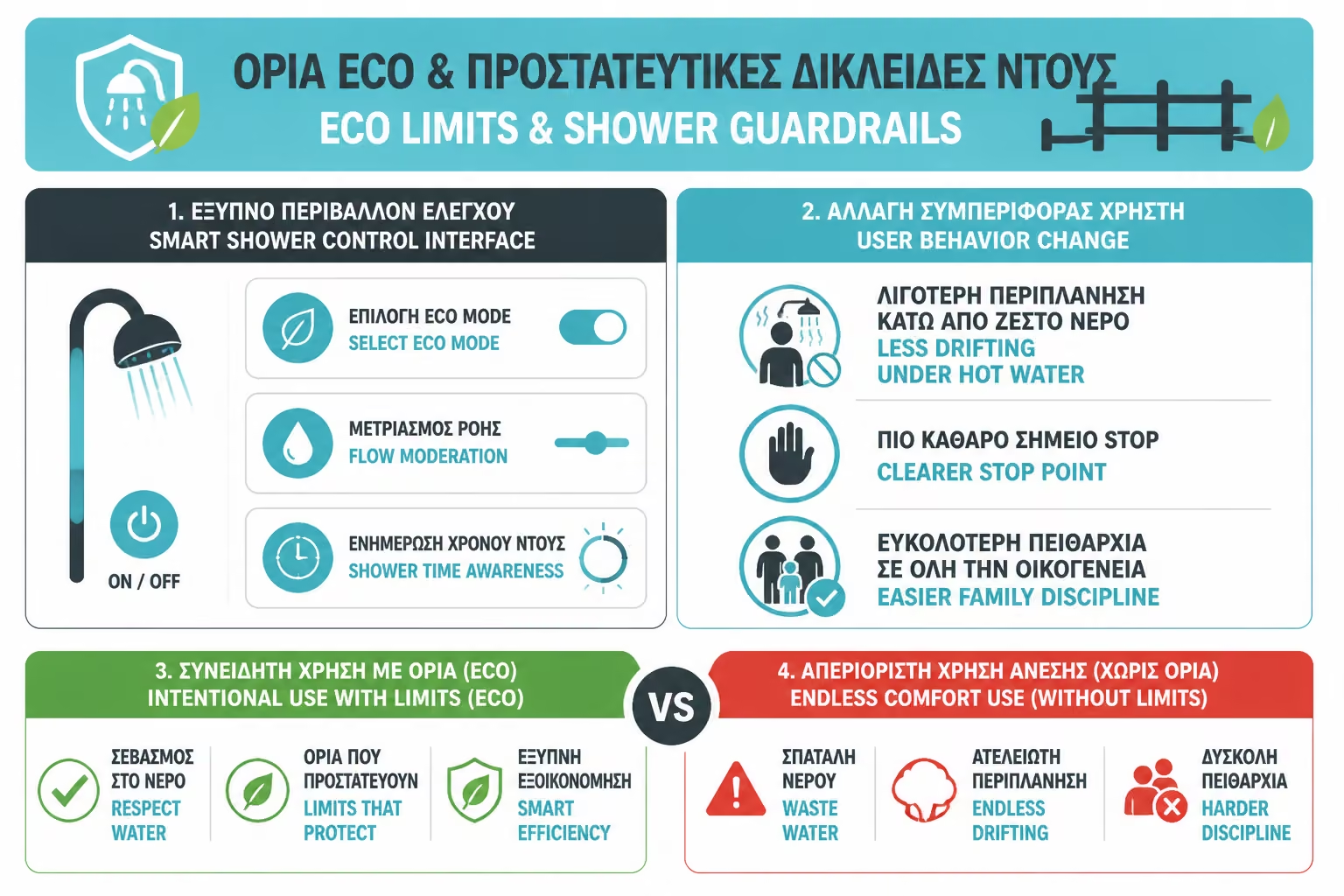
Smart showers can help save water in three main ways: through time limits, through flow control, and through pause or warm-up functions that reduce unnecessary running while the water reaches the desired temperature.
The warm-up mode is interesting. The user starts the shower, the system brings the water to the target temperature, and can then pause or alert the user when it is ready. The U by Moen app describes a function where the user can start the shower from the app and the system will pause when it reaches the desired temperature, saving time and water until the user enters.
Eco limits help when changing behaviour. If a 12 minute shower becomes 7 minutes, the savings are real. If the flow is reduced without compromising comfort, too. But if the smart shower adds more water outlets, rain showers, body jets and "spa" functions, the consumption can increase. Technology alone does not guarantee economy.
A practical example: a conventional low-flow 7 L/min hand shower running for 8 minutes consumes 56 liters. A smart system with a rain shower and body jets can greatly exceed that if several outlets are opened at the same time. So eco mode is only useful if it is applied in real use.
Voice control is one of the attention-grabbing features. Saying "start the shower at 38 degrees" sounds like an image from a smart home of the future. Some systems already offer it. Aqualisa mentions smart digital showers with voice and app activation, as well as compatibility with Alexa and Google.
In practice, voice control is mainly useful before you enter the shower. You can start the warm-up or activate a preset. In the shower, with running water, steam and noise, voice command may not always be practical. Also, many users do not want microphones or cloud services in privacy areas such as the bathroom.
There is also the issue of reliability. What if the Wi-Fi drops? If the app changes? If the smart home does not communicate? A serious system must work normally and without an app or voice assistant. The physical controller should remain the primary means of control.
For the owner, voice control should be considered an added convenience, not a primary purchase criterion. More important are valve quality, temperature stability, service access, installation compatibility and safety.
App-connected smart showers can offer remote control, presets, alerts, updates and possibly usage statistics. In some cases, the user can view shower time, temperatures, functions or set limits. This has practical value for families who want to reduce consumption or control usage.
But there is also the issue of app dependency. If the manufacturer stops support, if the platform changes or if the product is not updated, some of the smart functions may be degraded. That is why it is preferable to choose branded systems with technical support and not unknown products based solely on application.
Also, we need to think about privacy. The bathroom is a personal space. If the system records usage habits or connects to the cloud, the owner needs to know what data is being collected and whether offline operation is possible. This may seem excessive in a renovation, but in smart home products it is now a real issue.
The best approach is to treat the app as a useful add-on, not the only way to operate the system. If the shower cannot be operated simply from the panel, then the technology has become a weak point.
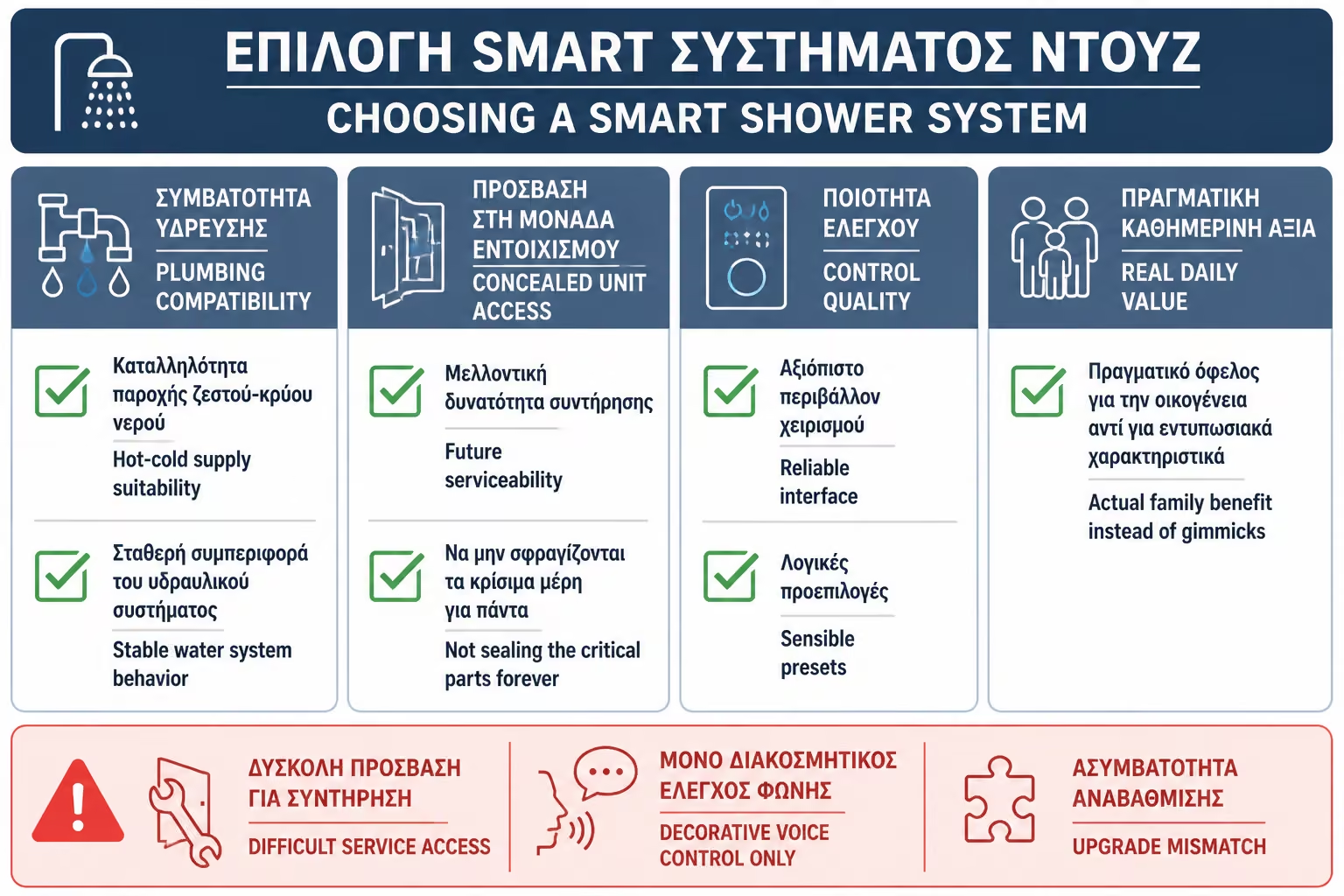
Before choosing a smart shower, the hot-water production system has to be checked. Do you have an electric water heater? A solar system with electric backup? A gas boiler? A heat pump? An instant water heater? Each system behaves differently in terms of flow, temperature, and response time.
A smart shower needs a constant supply of hot and cold water. If the hot water is slow to arrive, if the pressure is low, if the instant heater needs minimal flow to activate, or if the water heater is small, the system may not perform as you expect.
Mira, in a guide to buying digital showers through a retail presentation, states that there are different versions for gravity fed low pressure systems and for combi boiler/unvented high pressure systems, so that the system fits the plumbing. This shows how important it is not to choose a model based on features alone.
In Greek homes, pressure and supply can vary greatly from floor to floor and from area to area. Old networks, narrow pipes, salts and small capacity water heaters can limit the effect. Before buying a smart shower, ask for a hydraulic flow and pressure check.
One of the most attractive features of smart showers is the control of multiple outlets. There may be hand shower, overhead rain shower, body jets, waterfall or steam functions. The digital panel allows you to select which output works or save combinations.
In terms of comfort, this is impressive. In terms of consumption, it needs attention. When several outlets are opened together, the water supply can increase greatly. This means more water consumption, more hot water consumption and more demand from the drainage system. If the drainage of the shower is not sufficient, water may pool.
A system with multiple outlets must be designed together with waterproofing, slopes, linear siphon, drainage cross-section and hot water supply. It's not just a mixer issue. If we put a large flow rain shower and body jets in an old bathroom with a small siphon, a drainage problem can arise.
For the owner, the practical question is: "Do I really want a spa system with multiple outlets or do I just want constant temperature and better comfort?". The second need can be met with a simpler and more economical system.
A smart shower has electronics. The panel, valve, power supply or control units must be installed safely in a water area. This is not a DIY job and should not be left to a handyman without electrical knowledge. Licensed electrician and plumber needed.
The electrical part must be protected by a 30mA RCD/leakage relay, placed in suitable zones, have a suitable IP and follow the manufacturer's instructions. ELOT HD 60364-7-701:2024 concerns areas with a shower or sprinkler and is the critical framework for such installations in Greece.
The power supply or central unit must not be located in a wet or poorly ventilated area. If the system has a control panel outside the shower, its location must be chosen carefully. If it has cables inside a wall, they must be provided before the tiles. If service is needed, there must be access.
The basic message is simple: the smart shower combines water and electronics. Secure installation is part of the product. It is not an optional task.
A conventional hand shower is easy to change. A smart shower has a digital valve, electronics board, controller, sensors, filters, a power supply, and possibly an app connection. That is why serviceability is an important buying criterion.
Before installing, you need to know where the digital valve will sit and how the technician will reach it later. Will there be an access hatch? Will it sit in a false ceiling, a nearby cupboard, or a technical area? If the answer is "we will close it behind a tile", the installation is problematic.
It should also be considered if there are spare parts and technical support in Greece or in Europe. A cheap non-dealership imported smart shower may look attractive, but if the controller or valve breaks, it may not be easily repaired.
Access is a matter of practicality and cost. A system that requires breaking tiles to change a valve can negate the benefit of the technology. In smart products, serviceability is just as important as features.
Before choosing a smart shower, it is worth comparing with a good thermostatic mixer. A thermostatic mixer gives a constant temperature, protection from sudden changes, and comfortable use without an app, Wi-Fi, electronics, or complex servicing. For many Greek bathrooms, this is the most reasonable and durable solution.
A smart shower is worth it when you genuinely want the extra functions: presets, multiple outlets, warm-up control, eco timers, usage control, app or voice control, or a more luxurious experience. If the goal is simply stable, safe water temperature, a good thermostatic mixer can be simpler and more economical.
A mistake is to buy a smart shower because it looks impressive, while the house has an old water heater, low pressure, small drainage and a limited budget. There the priority should be the basic hydraulic quality. If there are no proper facilities, the smart system will not perform.
The right decision is not "smart or not" in the abstract. It is "what problem do I want to solve?" Temperature comfort is one thing, water savings another, luxury another, accessibility another, and smart-home integration another.
Smart showers are clearly more expensive than a conventional mixer. Cost depends on brand, number of outlets, valve type, panel, app/voice capabilities, if a pump is required, if there are body jets, rain shower, hidden piping and electrical installation.
In the Greek market of 2026, a good conventional thermostatic shower system sits much lower than a complete smart shower. A basic digital or smart system may start at several hundred euros for the core components alone, while more complete systems with a digital valve, panel, multiple outlets, and app or voice control can reach €1,500–€4,000 or more in equipment alone. Once installation, plumbing, electrical work, tiling, concealed access hatches, and shower fittings are added, the total can become a significant part of a premium bathroom renovation.
In an international example of a premium digital system, Wired described the Kohler DTV+ as a setup with touchscreen control, a central controller, and optional expansion for sound, lighting, steam, and multiple functions, pushing the total cost very high. The example shows how quickly this category can move beyond a simple shower mixer and become a much larger experiential system.
Prices depend on availability in Greece, import status, VAT, service coverage, installation complexity, the condition of the existing installation, water pressure, hot-water production, and the number of outlets. A proper quote must separate equipment, plumbing, electrical work, tiling, service access, and commissioning.
A smart shower is worth more when the bathroom is under complete renovation or new construction. Then correct piping can be run, valve access can be provided, electrical installation can be done, pressure can be checked, correct siphon can be selected and the panel can be placed in an ideal position.
It is also worth it in premium homes, master bathrooms, homes with smart home logic, hotel bathrooms or spaces where the user experience is an important part of the value. In families, it can be of practical value if there are profiles, temperature limits and eco timers that are actually used.
It is not worth it when the bathroom is small, the installation is old, the budget is limited, or the goal is simply "a little more comfort". In those cases, a good thermostatic mixer, a low-flow hand shower, correct pressure, and proper waterproofing may deliver a better cost-benefit ratio.
In Airbnb or rentals, caution is needed. A complex smart shower can confuse guests or generate service calls. If it's not really simple to use, it can become a disadvantage.
Before buying a smart shower, ask for a technical inspection. The plumber should check hot and cold pressure, supply conditions, the type of water heater or boiler, the possibility of multiple outlets, the drain, the siphon, the slopes, and access to the valve. The electrician should check the protection zones, RCDs, the power supply, power-supply location, and safe cable routing.
If there is a specific model, ask to read the installation manual before breaking walls. There you will see pressure, flow, electrical supply, valve position, maximum distances, IP and service access requirements. If the model doesn't have clear instructions or support, it's a bad sign.
A proper quote should describe not only "smart shower installation" but also exactly what it includes: digital valve, controller, pipework, electrical work, RCD protection, access panels, filters, commissioning, profile setup, warranty, and service. If the quote is vague, the risk of overruns is high.
The owner must also ask something simple: "If the valve breaks, how will we change it?". If there is no clear answer, the installation is not mature.
The first mistake is buying a smart shower without pressure and flow control. If the installation does not provide enough water, the system will not perform.
The second mistake is the digital valve without access. Everything that has electronics and moving parts needs service.
The third mistake is installing a panel or power supply without proper control of electrical zones. The bathroom does not forgive sloppy electrical solutions.
The fourth mistake is to assume that the smart shower always saves water. If more outlets are opened or the duration of the shower is increased, the consumption may increase.
The fifth mistake is relying on an app or voice control without simple manual operation. The shower should work even when there is no Wi-Fi.
The sixth mistake is choosing a product without market support. If spare parts are not available, the cost of future breakdown can be high.
The seventh mistake is placing it in a small bathroom without checking the drainage. Multiple water outlets mean more liters to go quickly.
Before you finalize the choice or installation, review the following points first:
| Question | Yes / No |
|---|---|
| Has the hot/cold water pressure and supply been checked? | Yes / No |
| Is the water heater, boiler or hot water system sufficient for use? | Yes / No |
| Has the drain been checked to supply the shower outlets? | Yes / No |
| Is there an accessible location for the digital valve? | Yes / No |
| Does the panel have an appropriate IP and location within allowed zones? | Yes / No |
| Is the electrical circuit protected by a 30 mA RCD? | Yes / No |
| Does the system work without an app or Wi-Fi? | Yes / No |
| Is there technical support and spare parts? | Yes / No |
| Do eco limits really reduce flow or usage time? | Yes / No |
| Does the offer include plumbing, electrical, service access and commissioning? | Yes / No |
If the answers are not clear, do not buy the product first. In smart showers, the right design precedes the purchase.
If you have to keep only one thing, keep this: the smart shower is not just a nice touch panel. It is a system with valve, electronics, supplies, electricity, drainage and service. Before choosing it, check that the house has sufficient pressure, enough hot water, proper drainage and safe electrical installation. If there is no access to the valve or if the system is only app and Wi-Fi based, think again. Technology has value when it makes showering safer, more stable and more economical, not when it simply adds complexity.
Digital and smart shower systems can offer a real upgrade to the bathroom experience. Accurate temperature, user profiles, preheating, eco limits, multiple outlet selection and app or voice control can make showering more comfortable, more predictable and more personalized. In a well-designed bathroom, especially in a complete renovation, it can be an impressive and practical solution.
But it is not a solution for every home. If the plumbing is old, the pressure is low, the water heater is small or the drainage is limited, the smart shower will not solve these problems. On the contrary, it can highlight them. It also needs safe electrical installation, RCD, correct zones, service access and product with serious support.
For the owner, the most correct approach is to start with the problem he wants to solve. If the main goal is a constant temperature, a thermostatic mixer may be enough. If the owner wants user profiles, warm-up control, consumption data, smart-home integration, and a more luxurious experience, then a smart shower is worth serious consideration. But only with full technical planning from scratch.
In the bathroom, the truly smart solution is not the one with the most features. It is the one that suits the installation, works reliably and remains safe after the first impressive week.
Return to category.
Go to categoryReturn to the central guide.
Go to guide