
Plumbing & Electrical Bathroom Infrastructure
Return to category.
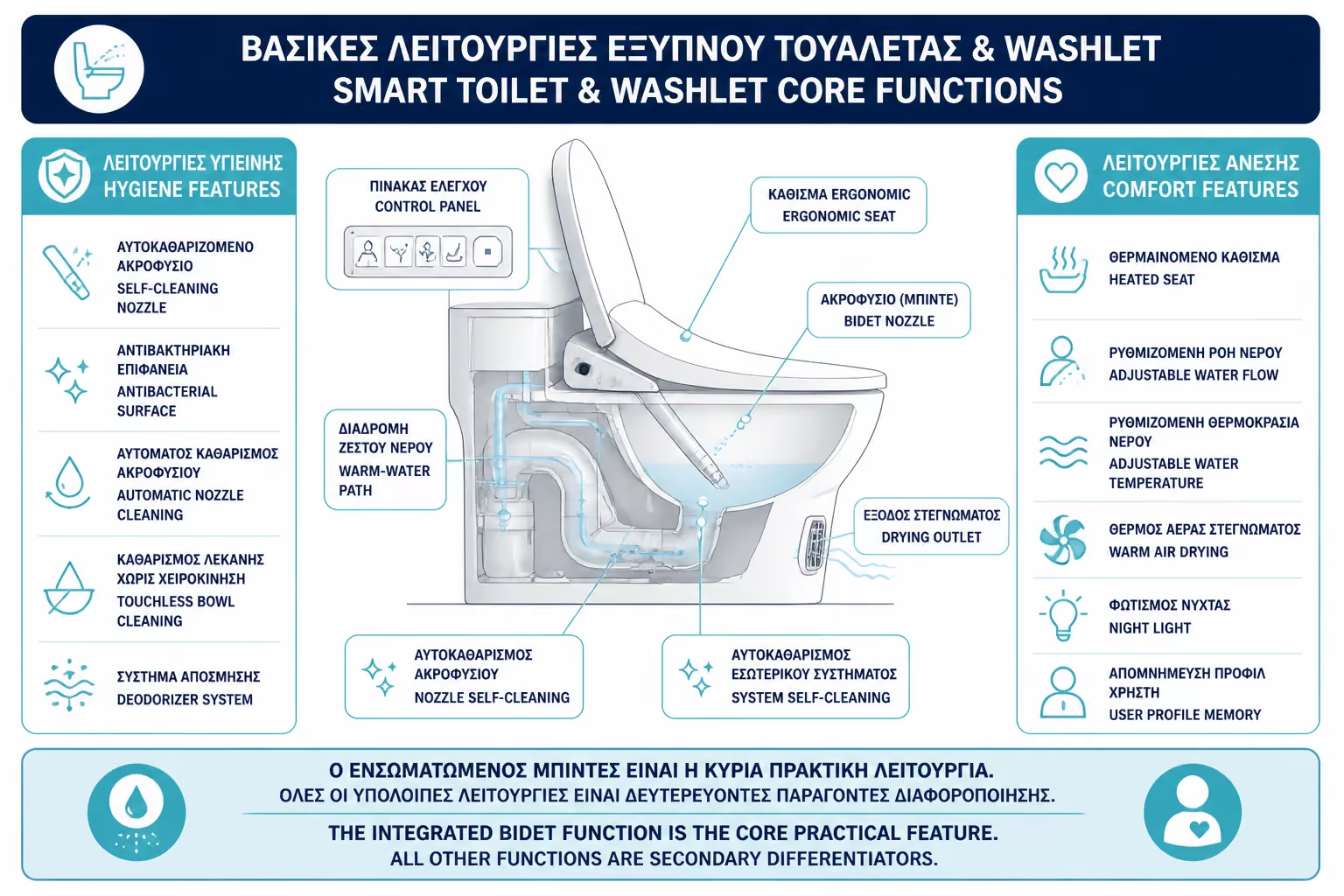
Go to categorySmart toilets and washlets are perhaps the most characteristic example of bathroom technology that started as a "Japanese specialty" and is gradually becoming a global trend. Where once the basin was a purely passive item of hygiene, today it can have a built-in bidet, heated seat, adjustable water pressure, hot air for drying, automatic lid opening and closing, odor absorption, night lighting, self-cleaning nozzle and remote control.
For the owner, the first impression is usually one of comfort. Paper is not needed to the same extent, the seat is warm in winter, washing is cleaner and the use becomes more "luxurious". For people with limited mobility, the elderly or people who struggle with personal hygiene, a good washlet can be more than just a convenience. It can make everyday life easier and more dignified.
But a smart basin is not just a basin with more buttons. It is a hydraulic, electrical and electronic product together. Needs water supply, drainage, electrical supply near basin, leakage relay protection, proper grounding, compatibility with bathroom zones, access for service and product selection with spare parts. If these are not anticipated from the start, the installation can end up with exposed cables, sketchy water tuffs, misplaced outlets or expensive repairs later.
Major manufacturers now describe very specific functions. TOTO presents WASHLET as shower toilets from Japan with different spray types, adjustable water temperature and pressure, odor absorption, heated seat, remote control and warm air dryer.
In this guide we will see what smart toilets and washlets are, which functions have real value, what they require in electrical and plumbing infrastructure, which mistakes are most often made in Greek renovations and when it is worth investing in such a system instead of staying in a conventional basin with a good forecast for the future.
The term smart toilet is often used for two different solutions. The first is the integrated smart basin, where the basin, seat, washing mechanism and electronics are designed as a single product. The second is the washlet or electronic bidet seat, which is placed over a compatible basin and adds washing, heating, drying and control functions.
The completed smart basin is usually cleaner aesthetically. Cables, supplies and mechanisms are better hidden, the design is unified and the user experience more complete. On the other hand, it has a higher cost and if an electronic unit breaks, the repair can be more expensive and more specialized.
The washlet is a more flexible solution. It can fit into an existing basin, as long as it is compatible in size and shape, and usually costs less than a complete smart toilet. But this also needs a water and electricity supply near the basin. If these are not present, the "easy upgrade" is done later.
There are also non-electric bidet attachments, which connect only to water and operate with mains pressure. These are simpler and more economical, but do not have a heated seat, instant hot water, dryer, automatic lid or sensors. It's a different class of solution.
For the owner, the first question is a practical one: do I want a full smart toilet as part of a premium renovation, or do I want to leave provision so I can later put in a washlet? The second solution is often more realistic for Greek bathrooms.
In Japan, electronic basins are not so much considered a “gadget” as part of everyday comfort. Their logic is that personal hygiene is best done with water, not just paper. The seat is heated for comfort, the nozzle is automatically cleaned, the user can adjust pressure and spray position, and many functions are contactless.
This philosophy has started to make its way into the European market, but acceptance varies from country to country. In many Greek homes, the traditional bidet has been removed to gain space. A washlet can restore some of the functionality of the bidet without the need for a separate sanitary ware.
The difference is that the washlet does not take up extra floor space, but requires technical infrastructure. It needs water, electricity, a compatible basin and space for the seat and control. Especially in small bathrooms, where the basin may be close to the shower, these should be carefully checked.
A practical example: in a 4 m2 bathroom, the owner removes the bidet to install a larger shower. However, if it foresees a power and water supply next to the basin, it may in the future have a bidet function through the seat. If it does not anticipate this, future addition will become difficult.
The basic function of a washlet is to wash with water. A small nozzle comes out of the back of the basin or seat and sprays water into the cleaning area. In good models, nozzle position, water pressure and temperature can be adjusted. There can be different programs, such as posterior wash, feminine wash, oscillating spray or pulsating spray.
The advantage is a more comfortable and clean feel compared to using only paper. For many users, it reduces the consumption of toilet paper and the need for wet wipes, which often cause drain problems when flushed down the toilet. This in itself can be of great practical benefit.
However, the wash must be properly adjusted. If the pressure is too high, it can be annoying. If it is too low, it does not clean well. If the water is cold and the user expects hot, the experience is unpleasant. That is why models with adjustable temperature and pressure are more comfortable, but need more electronic infrastructure.
TOTO says the WASHLETs offer up to different spray types and separate water temperature and pressure regulation. This shows that the quality is not only in "having a bidet", but in how controlled and comfortable the operation is.
The heated seat is one of the functions that at first seems unnecessary, but in daily use many users highly appreciate it. In cold bathrooms, especially in houses without continuous heating or in country houses, the difference is noticeable. The seat can be set to different temperatures or have an energy saving function.
The issue is consumption and use. If the seat stays warm all day, it consumes electricity. The best models have an eco mode, schedule or usage sensor to reduce consumption when not needed. In some models, the energy saver function can lower the temperature at times when the basin is not in use.
TOTO WASHLET user manuals show seat temperature, hot water and drying settings, as well as energy saving functions. These details are important, because a smart toilet is not only a matter of comfort but also of daily operation.
For the owner, the question is whether the function will actually be used. In a master bathroom, maybe yes. In a guest WC that is rarely used, it may be overkill. In a holiday home that remains closed, it must be possible to switch it off.
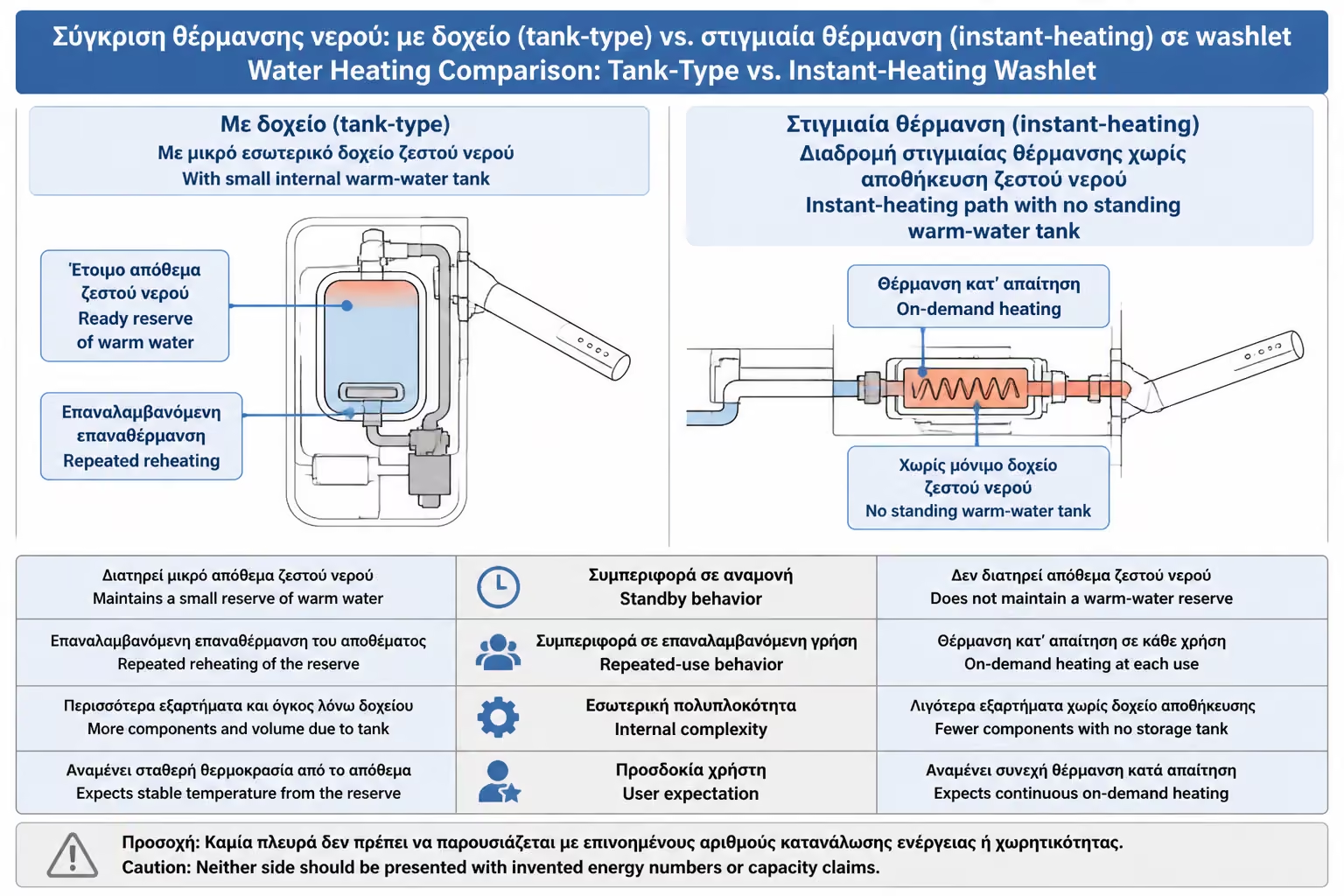
Electronic bidet seats use different technologies for the wash water. Some have a small hot water tank. Others use instant heating. Tank systems have a limited amount of hot water, but can be simpler. Instantaneous heating systems can provide hot water for longer, but have greater electrical requirements.
This affects the power supply. A seat with instant heating can have a higher consumption peak than a simple heated seat. So electrical forecasting should not be done blindly. If you have already chosen a model, the electrician should see the technical brochure. If you are just making a prediction for the future, reasonable provision must be made with a margin.
The water temperature must also be safe. Good models have settings so that the water is not too hot. In families with children or the elderly, this matters. The device must be reliable and certified, not an anonymous product without instructions.
A practical mistake is to buy a high-end electronic seat and plug it into an old socket that is not designed for such use. Just because the plug fits into the outlet does not mean the installation is correct.
The warm air dryer function tries to dry the user after washing, further reducing paper usage. In many models, the air temperature is adjustable. TOTO mentions warm air dryer as a function that follows washing with warm water to help with drying.
In practice, however, users have different expectations. Air drying can significantly reduce the paper, but it does not mean that everyone will use it until it is completely dry. Some find it slow. Others use a bit of paper at the end. This is not failure. It's a matter of habit and time.
In terms of technical installation, the dryer adds power consumption and heat. It's not a big heater, but it's extra electric mode. In a low-quality product, the fan may be noisy or break. In good product, it is quieter and adjustable.
For the owner, the important thing is not to consider that the dryer is necessarily the most critical function. For many, washing with adjustable pressure and temperature has more value than drying. If the budget is limited, the priority should be the quality of basic functions and not the long list of features.
The self-cleaning function of the nozzle is very important. The nozzle is in a harsh environment and must be kept clean. In good systems, it is cleaned before and after use, often with water or a special process. In more advanced models, there may be additional cleaning technologies, antibacterial surfaces or special coatings.
KOHLER mentions smart toilets and bidet seats with built-in self-cleaning bidet wands. This is essential function, not just luxury. If the nozzle is not cleaned well, the user experience and hygiene are degraded.
But we have to distinguish "self-cleaning" from "no cleaning needed". The appliance and basin require regular maintenance. Salts, soaps and water hardness can affect nozzles, filters and mechanisms. In hard water areas, descaling or filter cleaning may be more frequent.
A common mistake is to buy a complex smart toilet without asking the owner how the nozzle is cleaned, if it has spare parts and what maintenance it needs. Healthy functioning is only valuable when it can be maintained.
The automatic cover opening is one of the most impressive functions. A sensor detects that the user is approaching and opens the lid. In some models, the seat also opens, depending on the setting. After use, it can close automatically. This reduces contact with the toilet and gives a luxurious feel.
TOTO states that in WASHLET models there may be automatic lid opening and closing, while in the user manual there are settings and troubleshooting for auto open/close, such as cases where reflective surfaces, sun or wrong settings can cause unpredictable behavior. This shows that the feature is useful, but needs proper setup and proper space.
In small bathrooms, the sensor can "see" movement every time someone walks by. If the basin is facing a mirror or glass cabinet, there may be reflections. If the bathroom is too narrow, the lid may open unnecessarily. So technology does not work in every space in the same way.
For the owner, the automatic lid is a pleasant function but not the first technical criterion. More important are compatibility, plumbing/electrical infrastructure, wash quality and serviceability.
Many smart toilets have a deodorizer, i.e. an odor absorption system. Usually a small fan draws air from the basin area and passes it through a filter. This can improve comfort, especially in small bathrooms or WCs without good ventilation. However, it does not replace proper bathroom ventilation. If the place has dampness or sewer smells, it needs technical control, not just a deodorizer.
Night lighting is also practical. It helps to use at night without turning on the central lighting. It is especially useful in homes with children or the elderly. But it is a small convenience function, not a basic technical criterion.
In products with many functions, each additional component means more electronics and more potential damage. This is not a reason to avoid them, but it is a reason to choose a serious product. An inexpensive smart toilet with dozens of features may look impressive, but long-term reliability is more important.
In a renovation, it is worth separating the functions into "basic" and "luxury". Safe washing, water regulation, compatibility, electrical safety and cleanliness are essential. Luxury is the auto lid, the lighting, the presets and the special effects.
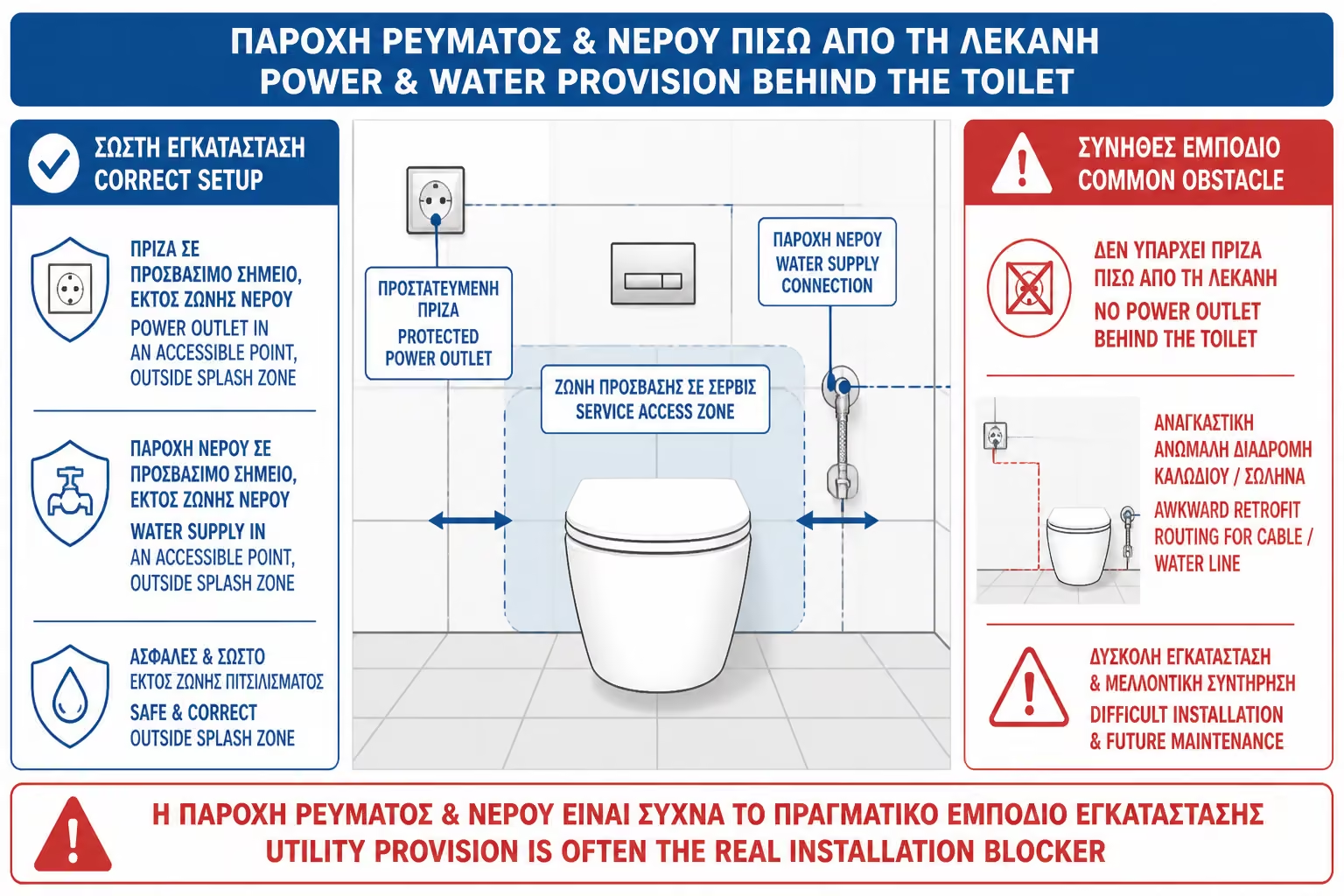
The biggest practical obstacle in Greek bathrooms is that behind the basin there is usually no socket or electrical outlet. If the bathroom is already finished, adding a supply may require channeling, tile breaking, or a rough connection. Therefore, in any renovation, it is worth considering the supply forecast for a future washlet, even if it is not purchased immediately.
Washlet manufacturers often mention the need for an outlet near the basin. TOTO in the US states that WASHLETs require a standard household outlet near the sink and recommends GFCI protection due to exposure to water in the bathroom. In the Greek installation, respectively, RCD/leakage relay 30mA, grounding, socket position, IP and protection zones must be checked.
The socket should not be inserted low to the floor where it may become wet from mopping or leakage. It should not be located within a zone affected by showers. It should not be directly under a water supply. It must be accessible so that the device can be disconnected for service or in case of failure.
A proper project does not leave "a cable somewhere behind the toilet". It leaves an organized, safe and documented supply, designed by an electrician.
In addition to electricity, a water supply is also needed. Usually the washlet is fed from the cold water supply of the basin, through a special tap or shunt with a switch. In complete smart toilets, the requirements can be more specific and given by the manufacturer.
The supply must be capable of isolation. If service is needed, it must be able to shut off the water to the device without leaving the entire bathroom out of order. If there is a filter, it must be accessible for cleaning or replacement. In areas with hard water, this is especially important, because salts can affect nozzles, valves and heating elements.
The water supply should not be located directly above the electrical outlet or power supply. A small leak in a filter, tuff or coil can drip to the electrical point. Plumber and electrician need to coordinate.
A practical mistake is to install electrical standby and hydraulic supply without having selected or even foreseen a type of device. Then the device comes and the cable does not reach, the spiral looks bad or the filter is not accessible. Forecasting should be done with a technical plan, not a general idea.
If we are talking about a washlet seat that will fit into an existing basin, compatibility is critical. Not all seats fit all toilet bowls. The shape of the basin, the length, the position of the fixing holes, the distance from the cistern, the curve of the porcelain and the available space behind all play a role.
In hanging basins with a built-in cistern, the aesthetics are cleaner, but compatibility needs even more attention. The seat must be able to be properly secured. The cable and water coil must be routed. If we want them to be hidden, they must be predicted from the beginning.
Some complete smart toilets come as a set with their own basin and electronic seat. This is a more secure compatibility solution, but has a higher cost. If the owner chooses a basin first and then looks for a washlet, he can greatly limit his options.
The practical advice is clear: if you are considering a future washlet, choose a basin compatible with such solutions and provide for water and electricity supply before tiles are installed.
The basin itself does not define the buffer zones. Critical zones are defined in relation to a bathtub or shower. But in small Greek bathrooms, the basin is often located near the shower, with the result that the socket or the electronic unit of a smart toilet is affected by the zones of the shower.
If the basin is next to a walk-in shower, without a full cabin, it must be checked whether water can reach the seat, the cable, the outlet or the control. If the shower head can be turned towards the basin, the risk increases. If the floor around the basin gets wet frequently, the location of the outlet should be re-examined.
The right thing is not to buy a smart toilet and then try to "make it comfortable". The electrician and plumber must first see the layout of the bathroom. If the location is a problem, it may require a full cab, a different layout, a power outlet move, or a decision not to put an electric washlet in that spot.
Water and current near the basin is not a theoretical issue. In bathrooms that get wet a lot, it can become a practical problem from the first week.
Smart toilets have more maintenance than a simple basin. They need nozzle cleaning, possible descaling, filter check, seat cleaning, deodorizer filter change where available, and in some cases an electronic module update or reset.
In hard water areas, salts are a major issue. They can affect the nozzle, flow, valves and water heating. If the model has instructions for descaling, they must be followed. The TOTO WASHLET manual includes separate descaling and troubleshooting procedures, which shows that maintenance is part of the product's normal life.
The owner should ask before buying: are there spare parts? Is there service in Greece? How is the filter cleaned? How easy is the seat to remove? What if the sensor or solenoid fails? Can the basin basically work if the electronic part breaks?
A smart toilet without available service is a risk. It may be impressive on the first day, but if a small breakdown renders it unusable or requires the insertion of a part, the experience becomes negative.
A smart toilet consumes electricity for the heated seat, water heating, dryer, sensors, auto lid and electronic functions. The consumption is not huge compared to other devices, but it is not zero. If the functions remain continuously active, especially the heated seat, there is daily consumption.
Good models have energy saving functions. They may reduce the seat temperature during non-use hours or go into standby. The owner must configure these functions. If he leaves everything to the maximum, the comfort increases and so does the consumption.
In terms of water, washing uses extra water, but it can reduce the consumption of paper and wet wipes. It should not be presented as an automatic water saver at home. The main ecological value is more the reduction of paper, better hygiene and the possible reduction of use of wet wipes that burden drains.
If the goal is solely to save water, a double-flow faucet and eco-flow fittings can have a greater and more immediate effect. If the goal is hygiene and comfort, the washlet makes more sense.
Prices vary widely. A basic electronic bidet seat can start around €250–€500, depending on brand and features. Better washlets with a heated seat, hot water, pressure regulation, warm air dryer, deodorizer and remote control can range from around €600–1,500 or more. Complete smart toilets can start at higher levels and in premium categories reach several thousand euros.
In the international market, premium smart toilets can be very expensive. A recent test of the Kohler Veil by Good Housekeeping reported a price of around $6,000 for a premium smart toilet, with the conclusion that the big difference isn't always in features, but in build quality, feel, materials and reliability. This is a useful lesson for the Greek market as well: two products may have a similar list of functions, but very different quality.
Installation must be added to the cost. If a proper outlet and water supply is already in place, a washlet can be installed more easily. If you need a new socket, new water supply, conversion to a built-in cistern, change of basin or opening of tiles, the cost rises significantly. In a complete renovation, forecasting is much more economical than retrofitting.
Prices depend on product, availability, VAT, labor, plumbing/electrical supplies, bathroom condition, service and spare parts. Don't just compare the device. Compare the full installation and support system.
A smart toilet or washlet is worth it when hygiene, comfort and everyday experience have a high priority. It is worth it in master bathrooms, in houses that are being renovated for long-term use, for people who are used to bidets, for the elderly or for people who need easier personal hygiene. It's also worth it in premium rental or boutique accommodation, where the bathing experience is part of the value of the property.
It is not always worth it in small bathrooms where the basin is next to an open shower, without a safe place for electricity. It is not worth it if the budget is limited and there are more basic needs, such as waterproofing, proper drainage, ventilation, RCD or replacement of old pipes. It is not worth it if the owner does not want maintenance or if there is no service for the product.
In many renovations, the smartest move is not to buy a smart toilet right away, but to make the right provision: power supply, water supply, compatible basin and location that allows for future installation. This way the owner keeps the option open without committing to a large cost from day one.
The smart toilet is a great solution when designed. It is a bad solution when it is entered casually because "we saw it on video".
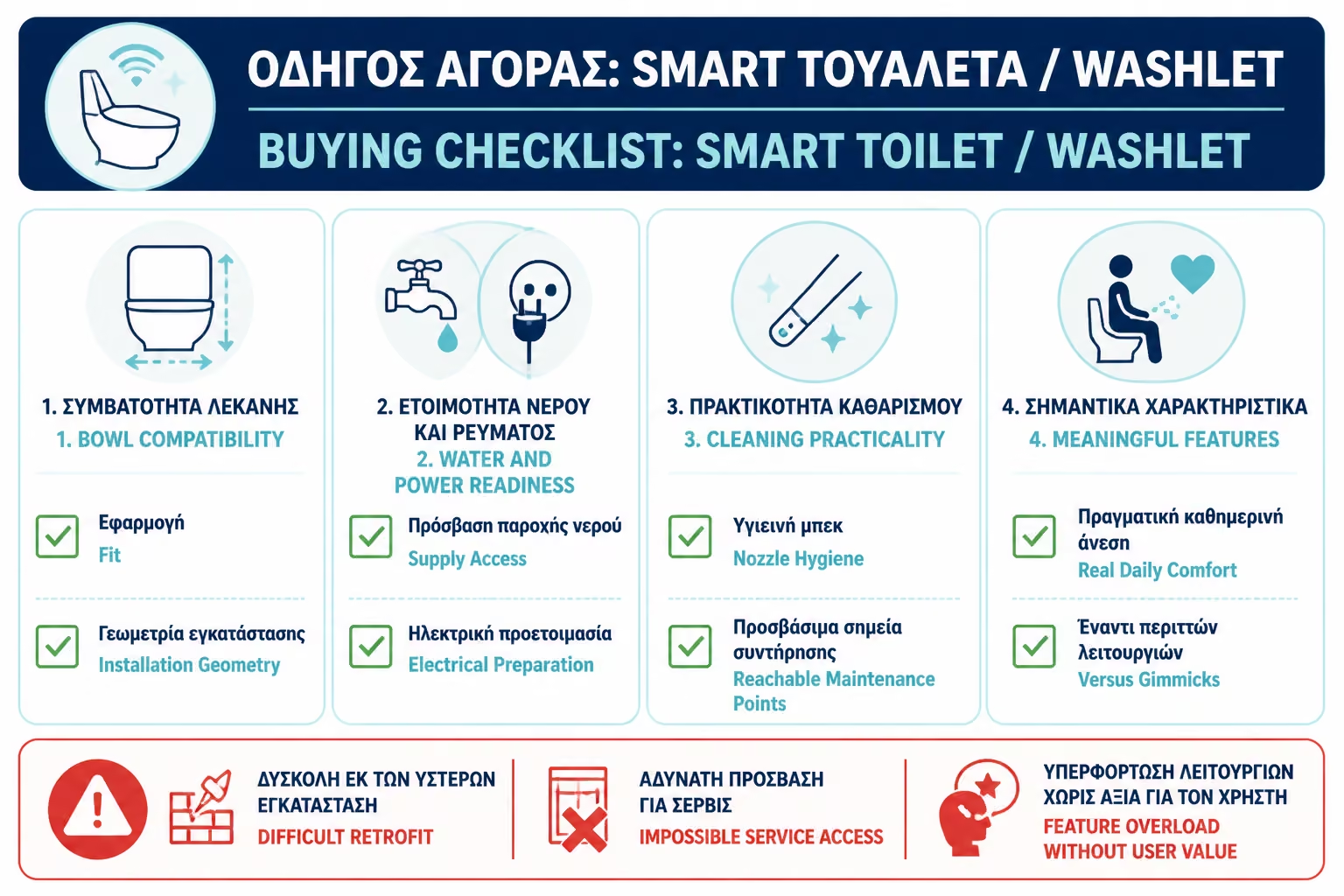
Before choosing a smart toilet or washlet, ask an electrician to check the location of the supply, RCD, earthing, distance from the shower and compatibility with bathroom zones. If there is no outlet behind or near the basin, it must be properly provided for. Not with a ball joint, not with a channel above the tiles, not with an outlet in a place where it gets wet.
Ask the plumber to check the water supply, the isolation switch, the filter, the compatibility with the cistern and the basin, and the access for service. If it is a complete smart toilet, the manufacturer's diagram must be followed. If it is a washlet, it must be confirmed that it fits the basin.
Also ask the supplier for a technical brochure, warranty, spare parts availability and maintenance instructions. Don't settle for the features list. Ask how the nozzle is cleaned, what filters it has, what happens if the power goes out, if the basin is mechanically broken and who does service.
A correct quote should include appliance, plumbing, electrical supply, possible basin change, compatibility check, supplies and final check. If it only says "washlet placement", it's too general.
The first mistake is buying a product without checking if it fits the toilet bowl. Not all seats are compatible with all toilet bowls.
The second mistake is the lack of an outlet. The use of blinds or visible cables in the bathroom is not a good solution.
The third mistake is plugging in where it can get wet from showering, mopping, or a leaking supply.
The fourth mistake is the hydraulic connection with a draft taff without a switch and a filter. In service you must be able to isolate the device.
The fifth mistake is buying a cheap product without service and spare parts. Smart toilets have electronics. At some point they may need technical support.
The sixth mistake is the excessive emphasis on features. Heated seat, auto lid and dryer are nice, but more important are wash quality, safety, maintenance and reliability.
The seventh mistake is to put a smart toilet in a bathroom that first has other serious problems: poor sealing, insufficient ventilation, problematic drainage or an old panel without an RCD.
Before you finalize the choice or installation, review the following points first:
| Question | Yes / No |
|---|---|
| Is the basin compatible with the washlet you want? | Yes / No |
| Is there a power supply near the basin in a safe location? | Yes / No |
| Is the circuit protected by a 30 mA RCD? | Yes / No |
| Has the grounding been checked by an electrician? | Yes / No |
| Is the outlet or outlet located away from splashes and shower zone? | Yes / No |
| Is there a water supply with an isolation switch for the device? | Yes / No |
| Is there a filter or salt provision if the water is hard? | Yes / No |
| Is there service and spare parts for the product? | Yes / No |
| Is the nozzle easy to clean and is there a maintenance procedure? | Yes / No |
| Has the bathroom got the basics sorted out first: waterproofing, ventilation, drainage and electrical safety? | Yes / No |
If the answers aren't clear, don't buy the device yet. First plan the infrastructure. In smart toilets, installation is half the product.
If you have to keep only one thing, keep this: the smart toilet is not just a “smart basin”. It is a system of water, electricity and electronics in a wet space. Before buying, check socket, RCD, grounding, water supply, isolation switch, filter, basin compatibility and access for service. If you're renovating now but don't want to pay for a washlet just yet, leave proper allowance behind the basin. It's much cheaper to do it before tiling than to regret it afterwards.
Smart toilets and washlets can fundamentally change the bathroom experience. They offer better personal hygiene, more comfort, less need for paper, heated seat, hot water, air drying, automatic cleaning and functions that were considered extravagant luxuries just a few years ago. For many users, especially those used to the logic of the bidet, the difference is real.
But their value is only seen when the installation is correct. They need safe electricity, correct hydraulic connection, compatible basin, protection from moisture, service and maintenance. In small Greek bathrooms, where the basin is often located near the shower, the location of the outlet and water supply must be checked very carefully. A sloppy solution with a patch or exposed cable defeats the whole point of a smart upgrade.
For the owner, the most correct strategy is to think about the smart toilet from the renovation phase. Even if he doesn't install it right away, he can provide electricity, water and a compatible basin. This leaves the bathroom ready for the future without paying all the costs from day one.
The basins of the future are not just about technology. It's a matter of proper preparation. When the infrastructure is right, the washlet can become one of the most useful bathroom upgrades. When the infrastructure is lacking, even the most impressive smart toilet becomes difficult, expensive and often problematic.
Return to category.
Go to categoryReturn to the central guide.
Go to guide