
Plumbing & Electrical Bathroom Infrastructure
Return to category.
Go to categoryA water leak rarely starts as a spectacular accident. It usually starts quietly: a leaking faucet under the sink, a loose washer connection, a leaky faucet, a leaking water heater, an overflowing faucet, or an old pipe failing in a closet. The problem is not only running water. It is when you will know. If you're home, you might catch up. If you're away for work, travel or the weekend, even a small leak can do a lot of damage.
Smart water leak detectors were created precisely for this gap. They are small sensors that are placed on the floor or in high-risk areas, such as under sinks, next to washing machines, near water heaters, behind basins, under sinks or in cupboards with facilities. When their contacts "feel" water, they activate an alarm and send a notification to the mobile phone. The most complete systems can also do something much more important: command an electric valve or smart valve and automatically shut off the central water supply.
This difference is crucial. A simple sensor lets you know there is water. An automatic shut-off system tries to stop damage before flooding occurs. State Farm describes exactly this logic, separating simple alarm systems from whole-home leak detection systems with automatic shut-off, which can shut off the supply when a leak is detected.
In practice, however, it is not enough to buy a few Wi-Fi sensors and an electric valve. You need to know where to put them, if they have a reliable signal, if the batteries will last, if the valve can properly shut off the supply, if there is a bypass, if the installation is done by a plumber, if there is manual operation in case of failure, and what if the Wi-Fi or power goes out. A bad system can give a false sense of security. A properly designed system can save thousands of euros in damages.
In this guide we will see how smart water leak detectors work, what is the difference between a floor sensor and a central solenoid valve system, where should the sensors be placed in the bathroom and in the house, when is the automatic shutdown worthwhile, what should you pay attention to in Greek homes and why the correct installation is more important than the app itself.
A smart leak detector is a small device with contact sensors on the bottom or with a detection cable. When water touches the metal contacts, it closes a small circuit and the device understands that there is moisture or water in the place. Then it usually activates a local alarm, sends a notification to the mobile and, if connected to a smart home or central unit, can trigger other actions.
The simplest sensors are battery operated and connect via Wi-Fi, Zigbee, Z-Wave, Bluetooth or a hub. They are placed on the floor and wait. They don't stop the leak themselves. They alert you to act. For many homes, this alone is a big improvement, especially if the leaks are happening in places we don't look at every day.
The most complete systems combine sensors with a central shut-off valve. When a sensor sees water, the system can shut off the central supply. There are also systems that monitor water flow or pressure and try to detect leaks without a sensor in the floor. For example, products such as Phyn Plus are listed as systems that monitor pressure changes and can alert or shut off the supply when a potential leak is detected.
For the owner, the key distinction is simple: do you want notification only or do you want automatic reaction? Notification is cheaper and easier. Auto-stop is more expensive and technically more serious, but it can limit damage even when you're away.
The bathroom has many possible sources of leakage. Faucets, sink fittings, spiral, valves, cistern, basin, washing machine, water heater, shower, linear siphon, joints and drains. Many of these points are low, inside furniture or behind sanitary ware, so the leak can start without being immediately apparent.
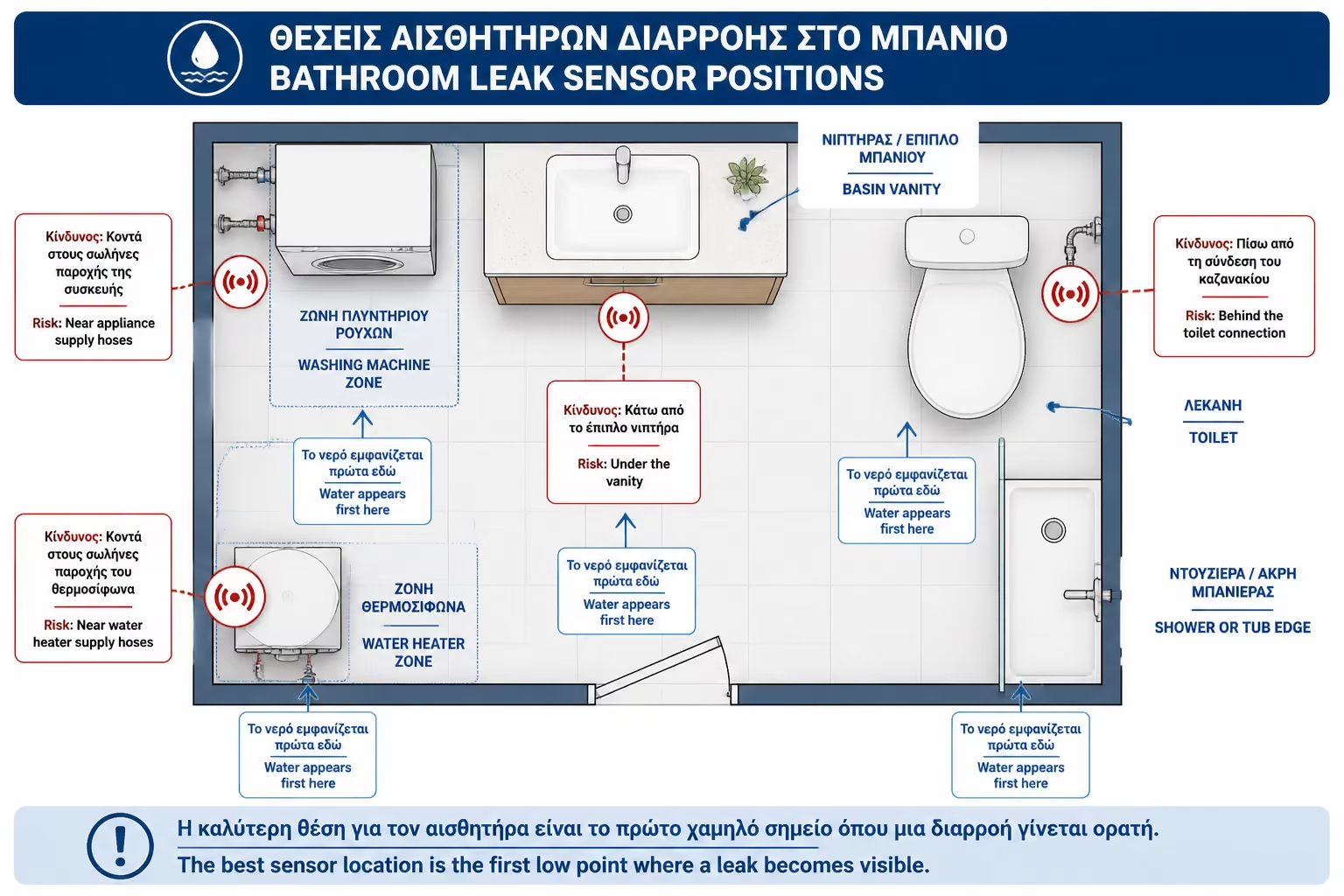
A leak sensor on the floor under the vanity can detect a small leak in the siphon before the vanity inflates. A sensor behind the basin can detect a leak from the cistern or connection. A sensor next to the washing machine can prevent damage from a supply coil or drain. A sensor near the water heater can alert before water reaches ceilings, closets or electrical.
Insurance companies and loss prevention drivers pay particular attention to such sensors. Travelers reports that simple water detectors, often battery-powered, can be placed on floors near places such as bathrooms, laundry rooms and under sinks, i.e. areas more vulnerable to water damage.
In the Greek reality, where many bathrooms are small, with a washing machine inside the space and many old plumbing connections, sensors can be an extremely useful addition. They do not replace maintenance, but act as an early warning.
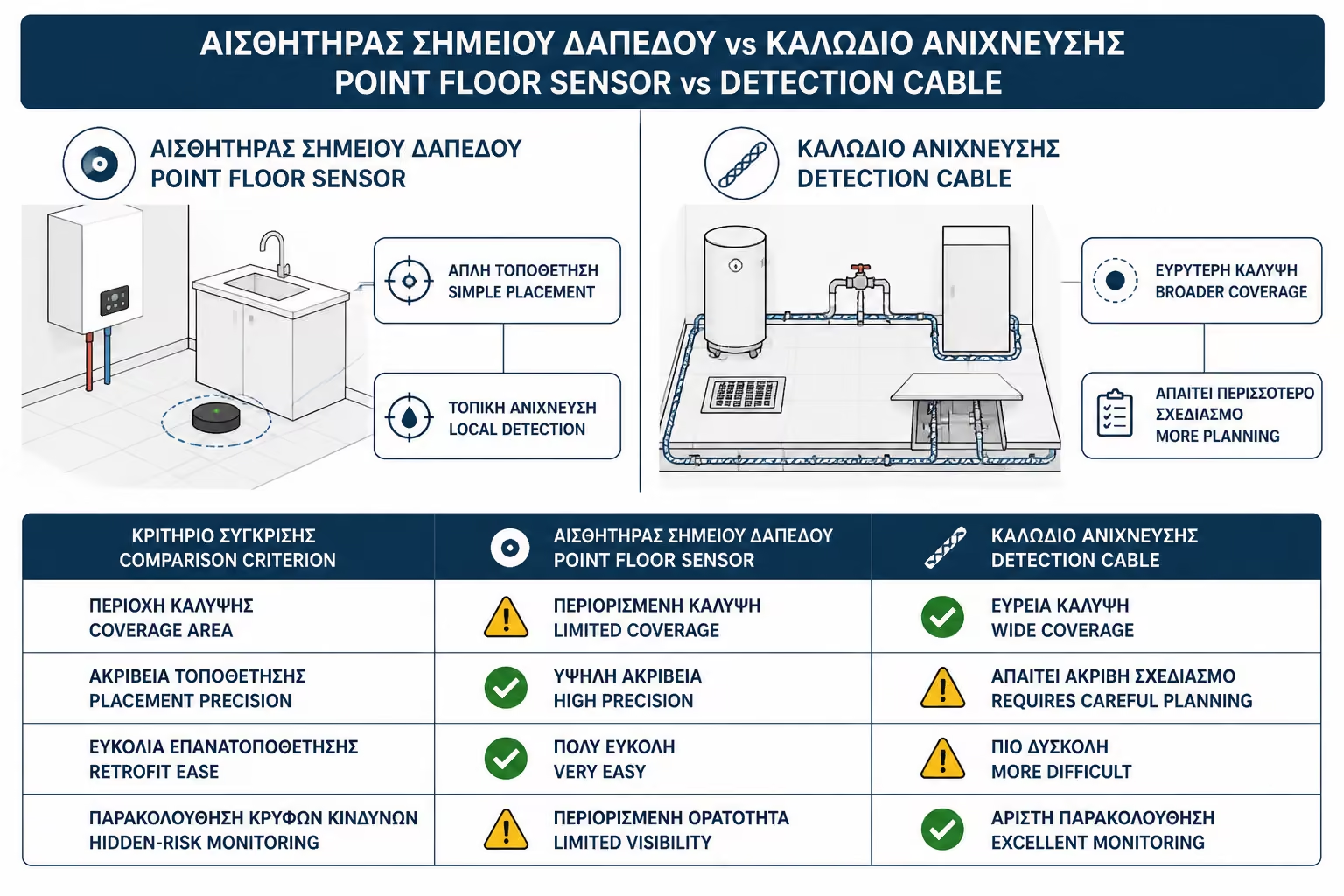
There are two basic forms. The simple floor sensor is a small device that rests on the floor. His contacts are at the bottom. When water reaches below it, it alerts. It is ideal for spot detection: under a sink, next to a washing machine, next to a water heater.
The sensor with sensing cable has a cable that detects water in a longer length. It is useful in areas where we do not know exactly where the water will come from or where we want to cover a surface linearly, such as behind a washing machine, around a water heater, under a large piece of furniture or along a wall. Some automatic shutoff systems, such as the First Alert/Resideo L5, state that the valve can automatically shut off the supply when a leak is detected from the sensor cable, and can also be combined with additional Wi-Fi leak detectors for wider coverage.
The choice depends on the risk. Under a small siphon, a simple sensor is sufficient. On a water heater or washing machine, a tracer wire can give better coverage. In basements, warehouses or machine rooms, linear sensors are even more valuable.
The main thing is to place the sensor where the water will go first. If it goes high on a shelf or on the furniture, it won't see the leak in time. If it gets into a spot where the water doesn't reach due to a sloped floor, it will alert slowly or not at all.
Placement requires practical thought. Water moves to the lowest point and follows slopes, joints, furniture and walls. The probe should be inserted where the leak will appear first, not where it looks neatest.
Under the sink, the sensor should be in the low part of the furniture, close to the faucet and the facilities, but not where it gets wet from cleaning or drips every time the cabinet is opened. Behind the basin, it should be close to the cistern or supply connection, but not obstruct cleaning. Next to the washing machine, it is good to be near the supplies and drainage, not just in front of the appliance.
In a shower, the sensor should not be placed where it normally gets wet from use, because it will give constant false alarms. If a leak is suspected under a cabin or outside the shower area, the sensor is placed outside the normally wetted zone, where abnormal water will appear.
On a water heater, the sensor must be located below the point where water will fall from a flange, safety valve, or pipes. If the water heater is in a loft, special consideration is needed because the water can first be seen on the bathroom ceiling. In such cases, a sensor in a collection tray or a low point of the attic may make sense.
The electric valve or smart valve is the element that makes the system from "notification" to "active protection". It is installed in the main water supply of the house or in a critical branch and can be closed automatically when it receives a command. The command can come from a floor sensor, from a flow monitoring system, from an app or from smart home automation.
Farmers says flow-sensing and automatic shut-off devices are so effective at preventing major damage that in some cases they can lead to insurance discounts or even be required for homes with old plumbing. This shows that technology is not just a gadget. It has real risk management value.
However, the placement is not simple. The central valve must be accessible, in the correct position, with the possibility of manual closing, with a bypass where necessary, with the correct diameter, without creating an excessive pressure drop and with a hydraulic installation. If it is electric, it also needs proper electrical or battery power, depending on the model.
In a block of flats, it must be clarified which is your central supply. In old apartment buildings there may not be an easy independent valve per apartment inside the house. If the central supply is in a common area or well, the installation needs more consultation.
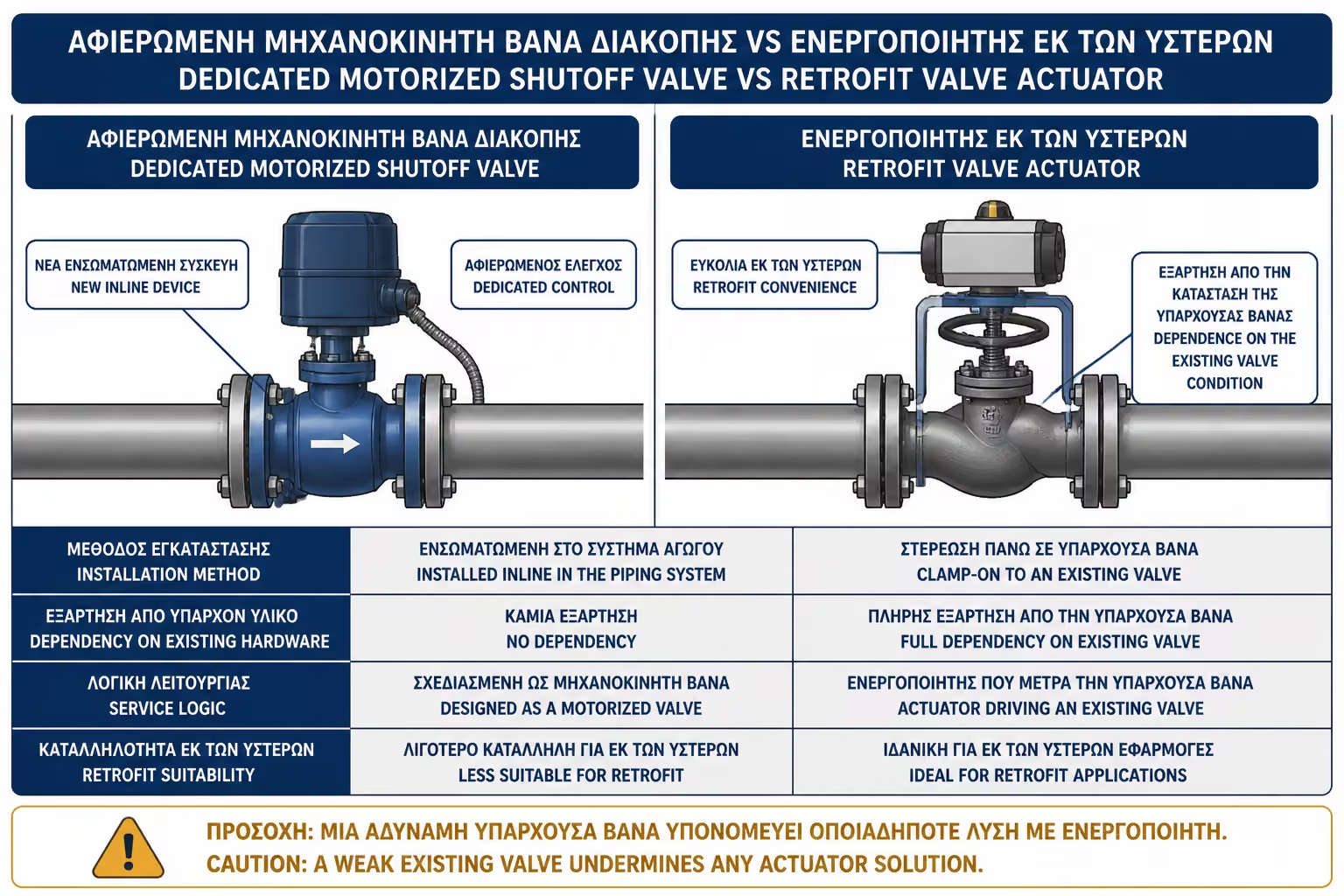
There are two main categories of solutions. The first is the actual inline solenoid valve, which cuts the pipe and goes in as part of the plumbing. This is technically "cleaner" and usually more reliable when properly installed, but requires plumbing work.
The second is the smart valve controller which is placed on top of the existing manual valve and turns the lever mechanically. This solution can be easier, especially in existing installations, because it does not require cutting a pipe. Recent products of this type, such as the Aqara Valve Controller T1, are described as DIY-friendly devices that adapt to existing lever or butterfly valves and can work with leak sensors through a smart home ecosystem.
The mechanical solution has limitations. The existing valve must turn easily. If the valve is old, tight, or partially stuck with scale, the controller may not be able to close it. It also needs to be properly secured and tested periodically. It is not a solution to hide a bad valve.
In a serious installation, especially in a high-risk residence or in a holiday home that remains closed, the inline solenoid valve from hydraulics is often a more professional solution. In a simple smart home upgrade, the controller on top of a good existing valve may be practical, but needs to be tested.
Leak sensors can be connected in different ways. Wi-Fi sensors connect directly to the router and send notifications without a separate hub, but they consume more battery and need good Wi-Fi at the spot. Zigbee or Z-Wave sensors need a hub, but often have better autonomy and reliability in smart home networks. Newer systems with Matter/Thread try to improve interoperability.
For the owner, the important thing is not the technological name. It is the reliability at the mounting point. Under a sink, inside a piece of furniture, behind a washing machine or in a loft, the signal may be weak. If the sensor doesn't communicate reliably, it doesn't matter how "smart" it is.
Smart leak systems installation guides emphasize that before permanent installation, the Wi-Fi signal must be checked at the point of the valve and at each sensor location, such as under a sink, laundry room or near a water heater.
If the house already has a smart home hub, it might make sense to choose a system that works with it. If not, a simple Wi-Fi system might be easier. In any case, the application must send reliable notifications and not depend on complex settings that the owner will forget.
A good system must have provision for failures. If the Wi-Fi drops, the sensor may not send a notification to the mobile. If the power goes out, a solenoid valve may not work, unless it has a backup battery or specific fail-safe logic. If the sensor's battery dies, it will not detect anything.
That is why it must be checked how the system behaves in such cases. Does it have a local alarm? Does it have a low battery alert? Does the valve stay open or close when power is lost? Is there manual opening/closing? Can the owner shut off the water mechanically if the smart part breaks?
There is no one right answer for all homes. In a residence where you live daily, a loud alarm and notification may be sufficient. In a cottage or house that is left empty for weeks, the automatic shut-off and battery backup are more valuable.
A system that only works when everything is perfect, i.e. power, Wi-Fi, cloud and app, should not be the only line of defense. The main manual valve must remain accessible and operable.
If the goal is real flood protection, a sensor in the bathroom is not enough. All water points must be examined. Kitchen, dishwasher, refrigerator with water supply, water heater, boiler, solar, boiler room, pumps, basement, storage, water filters, softener, central supply, water collectors.
In homes with a water collector, a sensor near the collector can be very useful. In houses with a loft water heater, a sensor is needed at the low point. In kitchens, under the sink and next to the dishwasher are key positions. In a washing machine, especially if it is in the bathroom or in a cupboard, the sensor is almost self-explanatory.
Insurance guides often point out high risk areas such as water heaters, sinks, toilets, appliances and laundry areas. Travelers, for example, reports that simple sensors can be placed in areas such as bathrooms, laundry rooms, under sinks and near leak-prone areas.
The correct logic is to map the house. Where is the water? Where is there a device that can break? Where will the water reach first? That's where the sensors come in.
Auto-stop is worth more when the damage can progress without you being there. Vacation Homes, Foreclosed Apartments, Retirement Homes, Airbnb Properties, Homes with Old Plumbing, Homes with Loft Water Heaters, High-rises or Condos Above Other Owners. In such cases, the cost of a flood can be much greater than the cost of the system.
It is also worth it when there are expensive structures: wooden floors, built-in furniture, suspended ceilings, plasterboard, hidden installations, premium bathrooms, electrical equipment or equipment under sinks. Water doesn't just damage tiles. It can get into walls, floors, ceilings and neighboring apartments.
PURE says automatic shut-off systems can help prevent damage and in some cases even be linked to insurance benefits. This does not mean that every insurance policy in Greece will give a discount, but it shows that technology is recognized as a risk reduction measure.
For a simple small apartment where the owner is always present, with new plumbing and easy access to the valve, simple alarm sensors may be enough. For a property that remains closed, the electric valve is a much more serious protection.
A system that constantly gives false alarms will be ignored. This is important. If the sensor is placed where it normally gets wet, such as next to the shower where water falls in every bathroom, it will alert without an actual leak. If an under-sink sensor gets wet from cleaning, it will create irritation. If the solenoid valve shuts off the water for no good reason, the user can disable the system.
Proper positioning reduces false alarms. Sensors go where water shouldn't be. Not where water naturally exists. In the bathroom, that means not putting them inside the shower zone. We put them under furniture, behind appliances, in lofts, in hidden utility points.
Also, there must be automation logic. In a full system, we might not want every drop on a sensor to shut down the whole house if the location is prone to small false damps. In critical places, such as a water heater or washing machine, automatic shutdown makes more sense. Parameterization should be done practically, not blindly.
A good system must be tested. We pour some water on the sensor, see if it alerts, if the valve closes, how long it takes and how it recovers. Unless it's tested, we don't know if it really protects.
The solenoid valve must be inserted in the correct position in the central supply. It should ideally have a manual valve before it so it can be isolated for service. There must be room for its body, for the wiring or motor, and for manual operation. It must be installed with correct flow direction, correct connections and suitable diameter.
In old installations, the center valve may be worn or stuck. Before installing a smart system, the manual valve must be checked and possibly replaced. If the old valve does not close properly, the electric valve does not solve the whole problem.
Also, the solenoid valve must not impede basic use or maintenance. If it breaks closed, there must be a way to get the water back in. If it breaks open, it must be possible to close the supply manually. If it is placed in a well that is difficult to access, the practical value is reduced.
In apartment buildings, attention needs to be paid to common facilities. We do not install solenoid valves on a line that affects other apartments. The plumber must confirm that the line is exclusively for the residence.
If the solenoid valve or hub is powered, a safe electrical installation is required. In wet areas such as shafts, lofts with water heaters or engine rooms, humidity must be considered. Power supplies should not be placed in places that may get wet. Sockets must be suitable for the location and protected by RCDs where required.
In Wi-Fi systems, there is also the issue of account security. If the application allows remote water shut-off and shut-off, a strong code and, where applicable, double confirmation must be used. It's not the most obvious topic in plumbing, but in smart home products digital security is of real importance.
It should also be checked if the system is running locally or is fully cloud dependent. If the internet goes down, will the valve close when the sensor sees water? Some systems work locally through a hub, others need the cloud for automation. This should be clarified before purchase.
A good solution is one that remains functional in basic failure scenarios: down internet, low sensor battery, power outage or need for manual intervention.
Leakage sensors are not "set and forget". They have batteries. They must be controlled. They must be tested. If they are in places with dust, hair or cleaners, their contacts may become dirty. If the battery runs out and the alert is ignored, the sensor is rendered useless.
The solenoid valve must also be tested. A valve that is left open for years can become stuck. Some systems do an automatic periodic "exercise" of the valve, i.e. a small movement to prevent it from sticking. If there is no such function, it is advisable to provide for a periodic check by the owner or the plumber.
App systems must be checked after changing the router, Wi-Fi password or mobile phone. All too often, a smart device goes offline because the network changed and no one noticed. In leakage sensors, this invalidates the protection.
A practical maintenance schedule can be: battery check every 6 months, sensor test with a few drops of water, valve closing test, notification app check and confirmation Wi-Fi reaches all points.
Costs vary widely. A simple Wi-Fi leak sensor can cost around €15–€50 per piece, depending on brand, range, alarm, protocol and if a hub is needed. Higher quality sensors with a sensing cable, temperature/humidity and a better fit can cost €40–100 or more.
A complete solenoid valve or smart shutoff system can start from a few hundred euros and go much higher, depending on valve type, pipe diameter, installation, hub, sensors and flow monitoring features. Market guides report that simple sensors can be economical, while smart water detectors with whole-home monitoring and automatic shutoff can cost several hundred dollars.
In the Greek installation, the cost of plumbing for the installation of an electric valve, possible replacement of an old valve, piping, fittings, possible electrical supply and system adjustment must be added. For a serious installation with a central solenoid valve and several sensors, a realistic range can start around €300–€700 for a basic system and reach €800–€1,500+ for a more complete solution, depending on the product and tasks.
Prices depend on area, access, whether there is an easy mains supply, whether a plumbing conversion is needed, whether VAT is included, whether an electrician is required and how many sensors will be included. The cheap solution with one sensor does not compare to a system that shuts off the water to the whole house.
Simple sensors are sufficient when the risk is local, when you are often at home and when you can react quickly. For example, under a sink, behind a washing machine or next to a cistern, a sensor with a strong alarm and mobile notification can be very useful.
The solenoid valve is worth it when the leak can continue for hours without human presence. Country house, Airbnb, old people's house, apartment above another apartment, water heater in loft, old networks or expensive floors. That's where auto-close is of great value.
There is also an intermediate solution: sensors that notify and enable manual closing of the valve from an app. This is better than just a notification, but if you're on a plane or without internet, you won't act in time. Full automatic shutdown is more protective.
The decision should be based on the cost of potential damage. If a leak can damage parquet, plasterboard, cupboards, electrical or the lower compartment, the electric valve is easier to justify.
Before purchasing a system, have a plumber check the central supply. Where is it? Is it exclusively yours? Does the existing valve close properly? Is there room for electric valves? Does it need a bypass? Is there access for service? What diameter is the pipe? Is there pressure to consider?
Ask the smart home installer or electrician for signal control at the sensor points, protocol selection, notifications, automations, behavior in internet/power failure and testing. If the system has a hub, you need to know where it will go and how it will be powered.
A proper quote should state number of sensors, valve type, installation method, if plumbing work is included, if there is manual operation, if there is battery backup, what happens in a Wi-Fi outage, how notifications are made and who takes care of the setup.
Don't buy appliances first and then figure out who will install them. Sensor-valve-hub-app compatibility is important.
The first mistake is to put a sensor in the wrong place, where the water will not reach or where it normally gets wet and gives false alarms.
The second mistake is to think that the mobile notification is enough when you are away for many hours or days. If you can't react, it needs an automatic stop.
The third mistake is to install a controller on an old valve that does not turn easily. The smart motor does not fix a stuck valve.
The fourth mistake is not checking Wi-Fi under sinks, behind washing machines or in lofts. There the signal is often bad.
The fifth mistake is to ignore batteries. Sensor without battery is just plastic box.
The sixth mistake is the absence of manual operation. If the smart part breaks, you should be able to turn the water on or off.
The seventh mistake is the absence of testing. Unless you've tested a sensor and valve with real water, you don't know if the system is working.
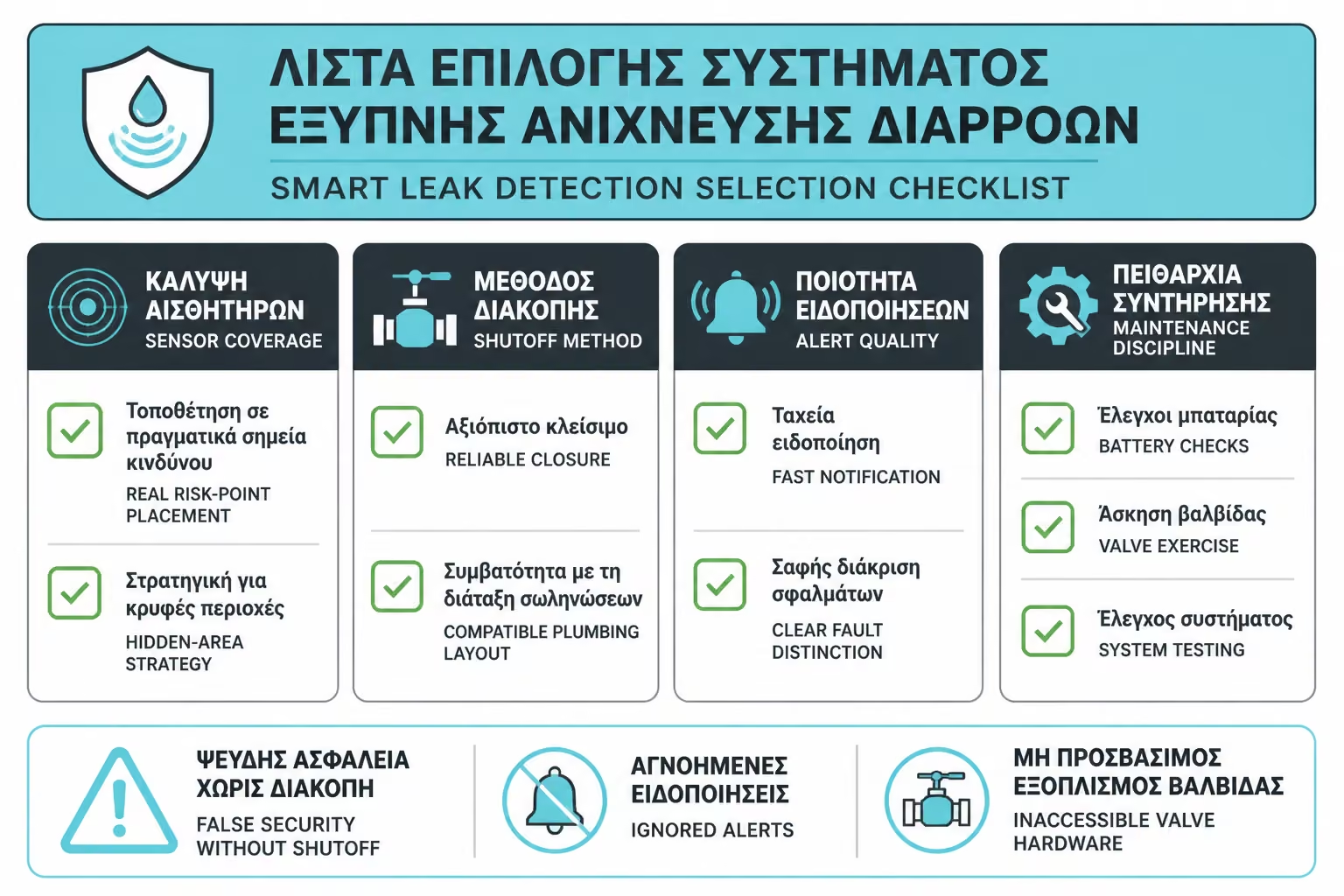
Before you finalize the choice or installation, review the following points first:
| Question | Yes / No |
|---|---|
| Have all high risk points for leakage been identified? | Yes / No |
| Will the sensors go in where the water will reach first? | Yes / No |
| Is there good Wi-Fi or a reliable smart home signal in each location? | Yes / No |
| Do the sensors have a local alarm and mobile notification? | Yes / No |
| Is there a low battery alert? | Yes / No |
| Is the main house valve accessible and working properly? | Yes / No |
| Can the solenoid valve or controller actually shut off the supply? | Yes / No |
| Is there manual operation in case of failure? | Yes / No |
| Has the scenario been tested: sensor sees water → alert → close valve? | Yes / No |
| Is there a battery and valve periodic check schedule? | Yes / No |
If the answer to critical points is "I don't know", the system is not yet a real protection. They are just purchased devices.
If you must keep only one thing, keep it this: leak sensors are only valuable if they are in the right place and if someone or something can act immediately. A Wi-Fi sensor that just sends a notification is useful when you're nearby. However, if you are away often, have old pipes, a water heater in the attic, a washing machine in the bathroom or a property that remains closed, the electric valve with automatic closing is much more essential protection. But don't forget the manual valve, function test and battery maintenance. The smart system does not replace hydraulic logic. It completes it.
Smart leak detectors are among the most useful smart home technologies, because they are not just there for convenience. They exist to prevent damage. A small sensor under the sink, next to the washing machine or near the water heater can detect a leak before it becomes visible. A solenoid valve system can go a step further and shut off the supply before the water spreads.
But the real value is not only in the device. It is in the design. Where do the sensors come in? Which points are most at risk? Is there a signal? Does the valve actually close? Is there a manual mode? What if the Wi-Fi drops or the batteries run out? If these are answered correctly, the system becomes a serious protection measure.
For a simple apartment, a few sensors in the right places can be an economical and smart start. For vacation homes, Airbnbs, old homes, homes with expensive construction, or residences that are often left vacant, an automatic water shutoff with a solenoid valve deserves serious consideration. In any case, installation must be done with plumbing and electrical logic, not just with an app.
Water does damage quickly. The smart sensor has value when it figures it out even faster.
Return to category.
Go to categoryReturn to the central guide.
Go to guide