
Plumbing & Electrical Bathroom Infrastructure
Return to category.
Go to categoryA clogged floor drain or shower drain is one of those problems that usually starts quietly. At first the water takes a little longer to go away. Then it starts pooling around the siphon. At some point, after a shower, the owner sees the water rising instead of draining. At that stage the issue is no longer just annoying. It becomes a practical, everyday problem and often a stressful one.
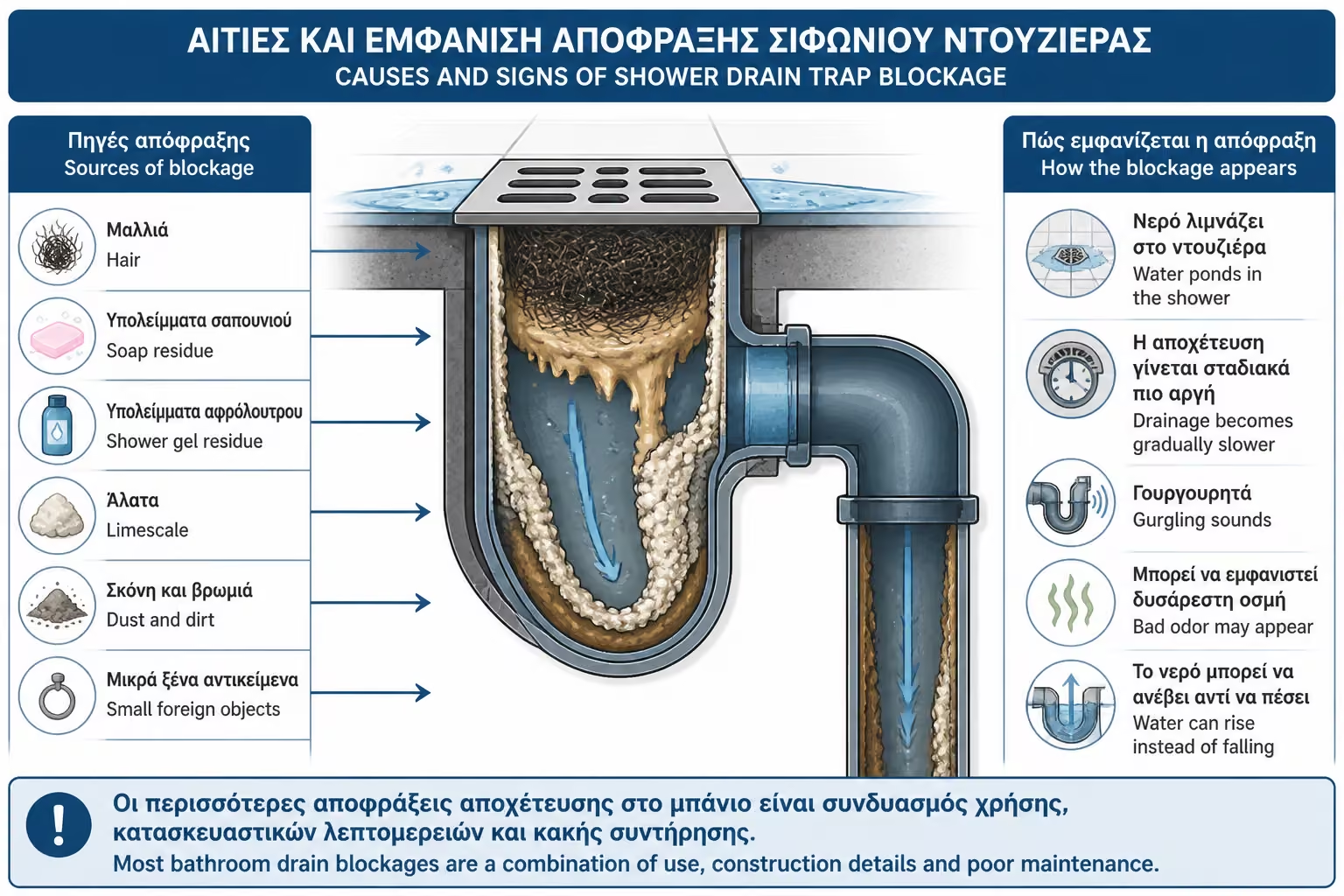
In bathrooms, drains work under demanding conditions. Hair, soaps, shower gels, limescale, dust, cleaning residue, and in some cases small foreign objects all end up there. As these gradually accumulate, they create a kind of sludge inside the siphon and nearby pipes. Water gets through less and less easily until the drain can no longer keep up.
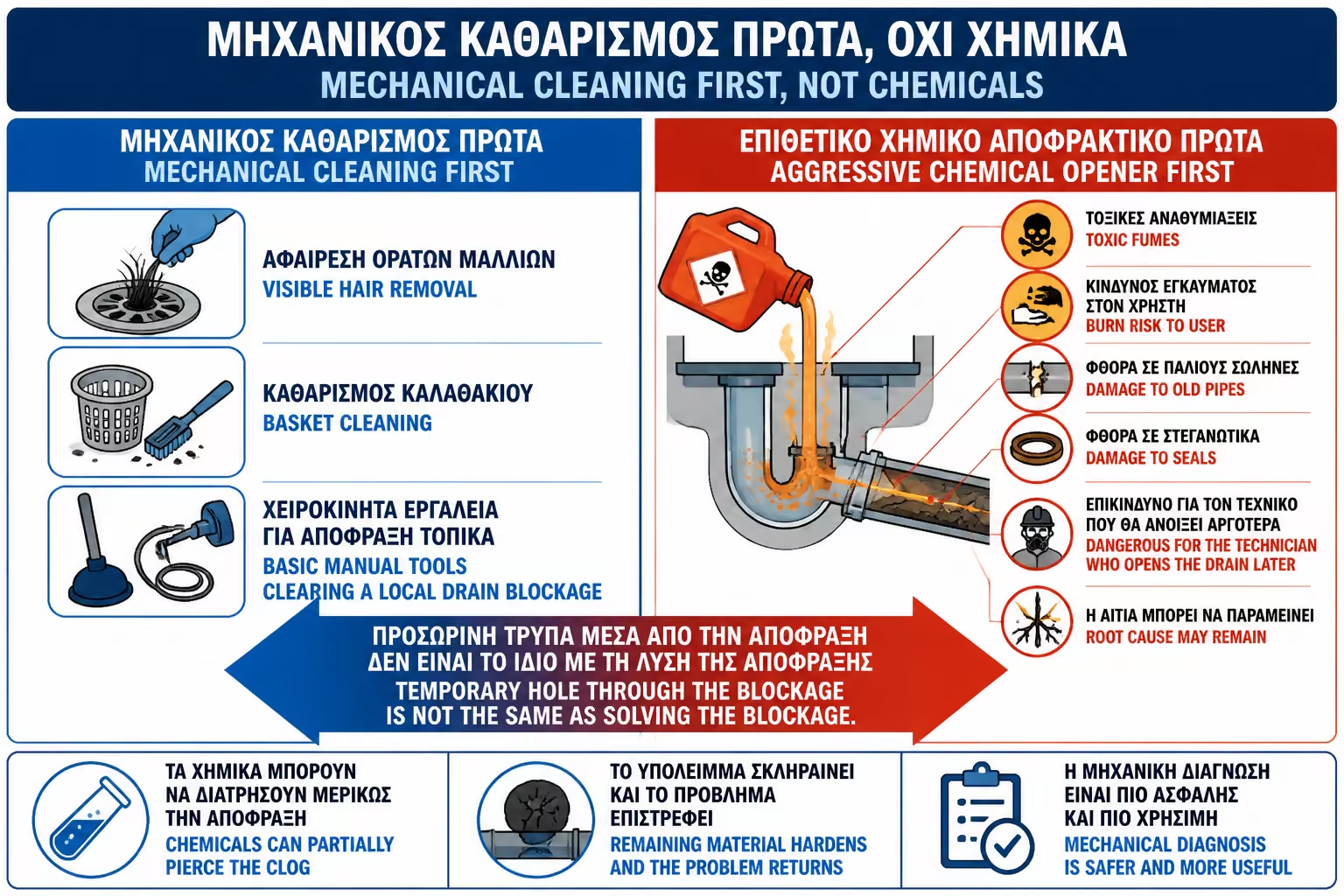
The mistake many homeowners make is treating every clog as if it were the same problem. They pour in a strong chemical drain cleaner, wait a while, and hope everything will be solved. Sometimes there is a temporary improvement. In many cases, however, the chemical does not remove the real cause. It only partially opens a path through the blockage, while the remaining material stays in place, hardens again, and the problem returns.
More importantly, powerful chemicals are not harmless. They can cause fumes, burns, surface damage, problems in older pipework, and extra risk for the technician who may later be called to clear the drain. Once caustic liquid has already been poured into a siphon, any later mechanical cleaning becomes more dangerous.
In this guide, we look at what really causes a clog in a floor drain or shower drain, which signs suggest a simple local problem and which point to something deeper in the drainage line, how a proper initial cleaning can be done mechanically, and when it is time to call a drain specialist or plumber. The aim is not to offer a rough "recipe", but to help the homeowner understand how to act without making the situation worse.
A siphon is not just a hole in the floor. It is a key part of the bathroom drainage system. It collects water from the floor, the shower, or other outlets, leads wastewater into the drain network, and above all acts as a barrier against sewer odors.
Most bathrooms have a floor siphon connected to the shower, the basin, or other drains, depending on the layout. In more modern bathrooms there may be a linear drain in the shower, a low-profile siphon, a concealed siphon, or a drainage system with a dedicated grate. The more minimal the construction, the more important it is to provide proper access for cleaning.
The siphon always holds a quantity of water in it. This water trap prevents sewer odors from returning to the bathroom. If the siphon runs dry, is poorly constructed, or becomes clogged, problems begin to appear: odors, slow flow, gurgling, overflow, or water returning from another point.
A simple example is a bathroom that is not used often, such as a second WC or a bathroom in a holiday home. If the water in the siphon evaporates, a bad smell can appear even without a real blockage. By contrast, in an everyday shower where water drains slowly and hair collects around the grate, the more likely cause is mechanical buildup inside or near the siphon.
The shower is one of the most heavily used parts of the bathroom. Hair, soap, shampoo, shower gel, creams, hard-water scale, and small particles from the body and the floor all end up there every day. Each of these on its own might not create a major problem. Together, however, they gradually form a sticky layer inside the drain.
Hair is usually the main cause. It does not wash away easily with the flow of water. Instead, it gets tangled in the grate, in the basket, or along the edges of the siphon and starts acting like a net. Soap and greasy residue stick to it. Over time that net becomes denser until it noticeably obstructs the flow.
In areas with hard water, limescale makes the problem worse. It does not always create a complete blockage on its own, but it helps residue stick to the pipe walls. As a result, a drain that was already marginal because of poor slope or weak construction can start showing recurring problems much sooner.
A homeowner may clean the shower grate every week and still find that the water drains slowly. That happens because the visible point is not always the real problem. The grate may look clean, while a few centimeters below it accumulated material is already narrowing the drain passage.
In practice, most floor drain and shower clogs are not due to a single cause. It is usually the result of a combination of use, construction and poor maintenance. This is important, because if only the symptom is treated, the problem will return.
The most common causes are the following:
| Cause | What happens in practice | How it appears |
|---|---|---|
| Hair | They get tangled in the grate and inside the siphon | Water stagnates in the shower |
| Soaps and shower gels | They create a sticky layer of grease and residue | The drain becomes gradually slower |
| Salts | They stick to the walls and reduce the cross-section | More frequent clogs in hard water areas |
| Dirt or dust | They get in from mopping, work or cleaning | Sludge forms in the siphon |
| Foreign bodies | Lids, small plastics, pieces of packaging | Abrupt and severe clogging |
| Poor pipe slope | The water does not flow properly | The problem often recurs |
| Old piping | Internal buildup or wear | Slow drainage in multiple points |
The difference between a simple clog and a more serious one usually becomes clear from the way the water behaves. If the problem affects only the shower and developed gradually, it is often a local buildup. But if water rises from the siphon when the basin drains or the washing machine discharges, the issue may lie deeper in the drain network.
The siphon rarely clogs "suddenly", unless a foreign object has fallen inside. Usually it gives warning signs first. Water that used to drain away immediately starts lingering for a few seconds. Then it lingers longer. The grate collects dirt more often. Small gurgling sounds may appear, or an unpleasant smell may show up after use.
These signs should not be ignored. The sooner a siphon is cleaned, the simpler the job usually is. When the material stays in for a long time, it compacts, sticks to the walls and becomes more difficult to remove.
A typical example is a shower that starts holding water only when a second person uses it shortly after the first. During the first shower, the drain is just barely keeping up. During the second, because the siphon has already taken a full load of water and foam, the flow is no longer enough. That is a classic sign that the drainage capacity has been reduced, not that the problem is random.
One of the most helpful things a homeowner can do is observe where the problem appears. You do not need to make a technical diagnosis yourself, but you can provide valuable information to the plumber or drain-clearing technician.
If water drains slowly only from the shower, while the basin and toilet are working normally, the clog is likely near the shower drain or the siphon itself. But if running the basin causes gurgling in the floor siphon, there may be a shared pipe with a partial blockage. If water rises from the siphon when the washing machine is discharging, the problem is more serious and should not be treated casually.
Special care is needed when wastewater backs up. If the water that rises has a strong odor, soap residue from another fixture, or visible impurities, then this is not a simple grate-cleaning issue. There may be a blockage in a more central part of the drain system, even in the building stack or at the connection to the main sewer.
In apartment buildings, diagnosis becomes more complex. A problem seen in one apartment may be affected by a shared stack or poor flow at a lower level. That is why, when the issue keeps repeating or affects more than one apartment, coordination with the building manager and a technician is necessary.
There are some simple actions a homeowner can take without opening pipes and without using hazardous materials. These steps make sense when the problem seems local, when there is no wastewater backing up, and when the siphon is easy to access.
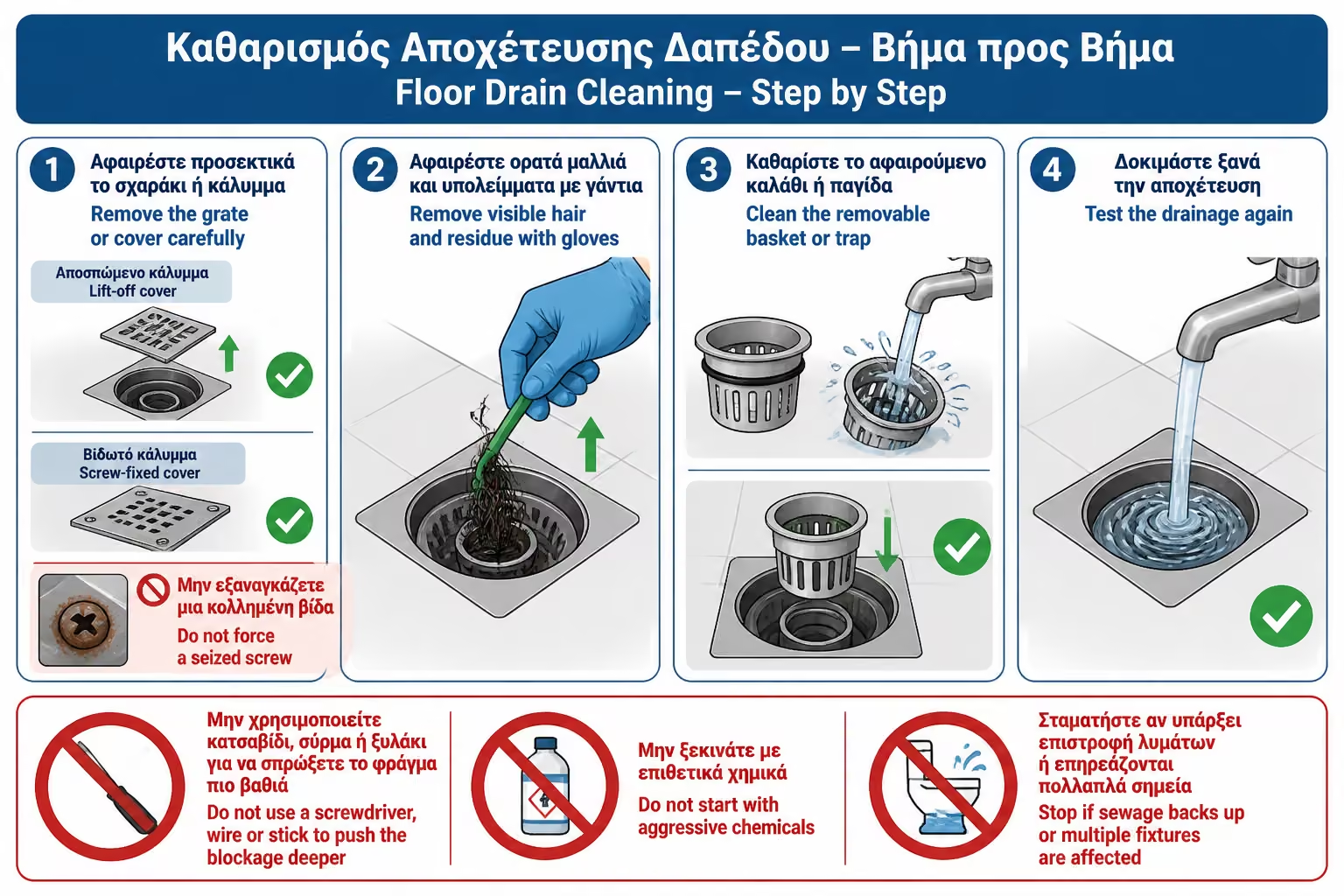
The first step is to remove the grate or cover, provided this can be done without force. Many covers simply lift off, while others are fixed with screws. If a screw is rusted or will not turn, it should not be forced, because the cover may break or be damaged.
Visible material such as hair and soap scum can then be removed with gloves and a simple pick-up tool. In several cases, this alone significantly improves the flow. If there is a removable basket or trap, it must be cleaned thoroughly and re-installed correctly.
What should not be done is to push the hair deeper with a makeshift object. Many people try to "push" the blockage downward with a screwdriver, wire, or stick. That can move the problem to a less accessible point and make the drain harder to clear.
When we talk about mechanical cleaning, we mean removing or breaking up the blockage physically, not through caustic chemical reactions. For a simple local blockage, that may include cleaning the grate, removing hair, using a plunger, or using a flexible hair-removal tool.
A plunger can help, but it needs to be used correctly. There must be enough water to create pressure, and the plunger has to seal properly around the drain opening. Movements should be firm and steady, not so violent that they risk causing damage. On some floor siphons, a plunger does not work well because of the grate shape or the drain path.
Flexible hair-removal tools can be useful in the shower, as long as they are used carefully. They should not be forced into narrow or old pipework. If the tool jams, do not yank it out violently. In old bathrooms, especially those with worn joints or poor alterations, one clumsy movement can create a bigger problem.
For more serious blockages, professionals may use tools such as a drain snake, an electric drain-cleaning machine, or hydro-jetting, depending on the case. These are not simple household remedies. They require experience, because if used incorrectly they can damage pipes, break components, or push the problem farther into the system.
Strong chemical drain cleaners promise a quick result. That makes them tempting, especially when water is not draining and the owner wants an immediate solution. The problem is that a quick fix is not always the right fix.
Many of these products are caustic or highly corrosive. They can react with organic residue, grease, and soap, creating heat and fumes. If the siphon is completely clogged, the chemical may simply sit inside the drain. It does not move into the network, but remains at that exact point, increasing the risk for anyone who then tries mechanical cleaning.
Materials are another concern. Modern plastic pipework, when properly installed and in good condition, is durable. But that does not mean every older installation can withstand repeated use of strong chemicals. In old pipes, weak joints, bad slopes, or areas where liquid stagnates, frequent use can put the installation under extra stress.
Chemicals also do not always remove the real cause. If there is a mass of hair inside, the liquid may dissolve part of the organic residue while leaving the main blockage in place. The owner sees a temporary improvement, but a few weeks later the clog returns. Then the same chemical often gets poured in again, creating a cycle that never solves the root cause.
The phrase "I’ll pour something down it" is one of the most common reactions to a clogged drain. But that logic treats the system as if it were just a simple pipe that needs a strong liquid to clean it out. In reality, a bathroom is a small network of slopes, traps, connections, and access points.
When you pour something in without knowing where the blockage is, it may not even reach the right spot. If the problem is before the trap, it may sit inside the siphon. If it is farther downstream, it may only pass through partly. If there is a foreign object, it will not remove it. If there is a construction defect, it certainly will not fix it.
A typical example is a bathroom where the drain clogs every two months. Each time, the owner uses a chemical and the water drains a little better for a while. But the real problem may be poor slope in the shower connection or an old pipe with internal buildup. In that case, the chemical is not a solution. It is only a temporary postponement.
The right question is not "what should I throw?". It is "where is the problem and why was it created?". This change in thinking saves money, hassle and potential damage.
Many use hot water, baking soda, and vinegar as milder solutions. These methods may help with light buildup or preventative cleaning, but should not be presented as a magic solution for a real clog.
Hot water can soften soap scum and greasy residue, especially when the drain is not completely closed. However, boiling water should be avoided on sensitive or old plastic parts, on acrylic showers or in places where there is doubt about the strength of the materials. Very hot water is not always safe.
Baking soda and vinegar create a foaming reaction, but their effect is limited to severe hair accumulations. They can help gently remove odors and light debris, but not replace mechanical cleaning when there is a real blockage.
If the drain is already very slow, the most important thing is to remove the material blocking the flow. Mild remedies can complement maintenance, but they should not be used to hide a problem that actually needs to be opened and cleaned.
There are cases where the owner can clean the visible spot and solve the problem. But there are also cases where delay makes the damage worse. Experience shows that many people call a technician only after they have already tried several chemicals, pushed the clog deeper, or damaged the grate.
A professional is needed when the clog keeps coming back, when water backs up from the drain, when more than one part of the bathroom is affected, when there is a strong odor, or when the problem appeared after renovation work. Professional help is also needed if a foreign object may have fallen inside, or if the installation is old and the condition of the pipes is unknown.
In an old apartment, for example, a clog in the shower may seem simple. But if the drain has old connections, bad slopes or narrow passages, a simple blockage can reveal a wider problem. There the technician must not just "open" the point, but evaluate if there is a reason why the problem is repeated.
In more difficult cases, a drain camera may be needed. This is not necessary for every blockage, but it is very useful when there are recurring problems, a suspected break, settlement, root intrusion, a bad connection, or a foreign object inside the line.
When a bathroom has been renovated recently and the drain keeps clogging, the cause is not always everyday use. There may be an installation issue. In renovation work, especially when the shower is moved or a bathtub is converted into a shower, the drain must have the right route, the right slope, and sufficient diameter.
If the shower has been installed too low, there may not be enough height to achieve the proper slope. If the pipe has too many bends, flow becomes more difficult. If small-diameter fittings or poor connections were used, residue collects more easily. The same happens when adhesive, grout, plaster, or small debris falls into the drain during renovation.
A new bathroom that starts clogging within a few months should not be treated as normal. It may be just a matter of hair, but it can also be a sign that something was done incorrectly during the build. In such cases, the answer is not repeated use of cleaners. It is proper drain inspection and, if needed, technical correction.
The cost of cleaning or clearing a siphon depends on whether the job is a simple local cleaning or something more complex. In the Greek market of 2026, a straightforward visit for local cleaning or a small blockage in an easy-to-access point will usually cost less than an after-hours emergency call or a job that requires specialized equipment.
As a rough indication, simpler cases may be priced at around €40–80 for a basic visit and cleaning, depending on the area, access, and type of work. For a more demanding drain-clearing job using machinery, the cost may be around €80–150 or more, especially if more time is required, access is difficult, the call is urgent, the work is in an apartment building, or camera inspection is needed.
These prices are indicative and should not be read as a fixed price list. It is one thing to clean an accessible shower drain in a ground-floor apartment, and quite another to deal with a blockage in an old apartment building, with difficult access, no cleanout points, and wastewater backing up.
Before agreeing, the owner should ask exactly what is included in the price. Does it cover only the call-out, or the work as well? Does it include use of a machine? Is there an extra charge for evenings or holidays? Will a receipt be issued? If the problem is not solved, is there still a charge? These are not unnecessary questions. They protect the owner from misunderstandings.
Prevention in the siphon does not need complicated solutions. It takes consistency and proper use. The simplest and most effective measure is to contain the hair before it goes down the drain. A good filter or basket in the shower can greatly reduce the build-up, as long as it is cleaned often.
Periodic cleaning of the grate and the visible part of the siphon also helps. No need to wait for it to get clogged. In a bathroom that is used daily by a family, a simple cleaning every few weeks can prevent several problems.
Care is also needed when mopping. When water carrying dirt, hair, dust, or work residue is poured into the siphon, the siphon acts like a small settling basin. Heavy material stays inside and does not wash out easily. Tools and buckets should not be rinsed into the bathroom floor drain after small household jobs such as sanding walls, painting, or assembling furniture.
If there is a frequent bad smell, it is not right to cover it only with perfumes or cleaners. It must be checked whether the siphon holds water, whether there is a proper trap, whether the network is properly vented and whether there is a partial blockage.
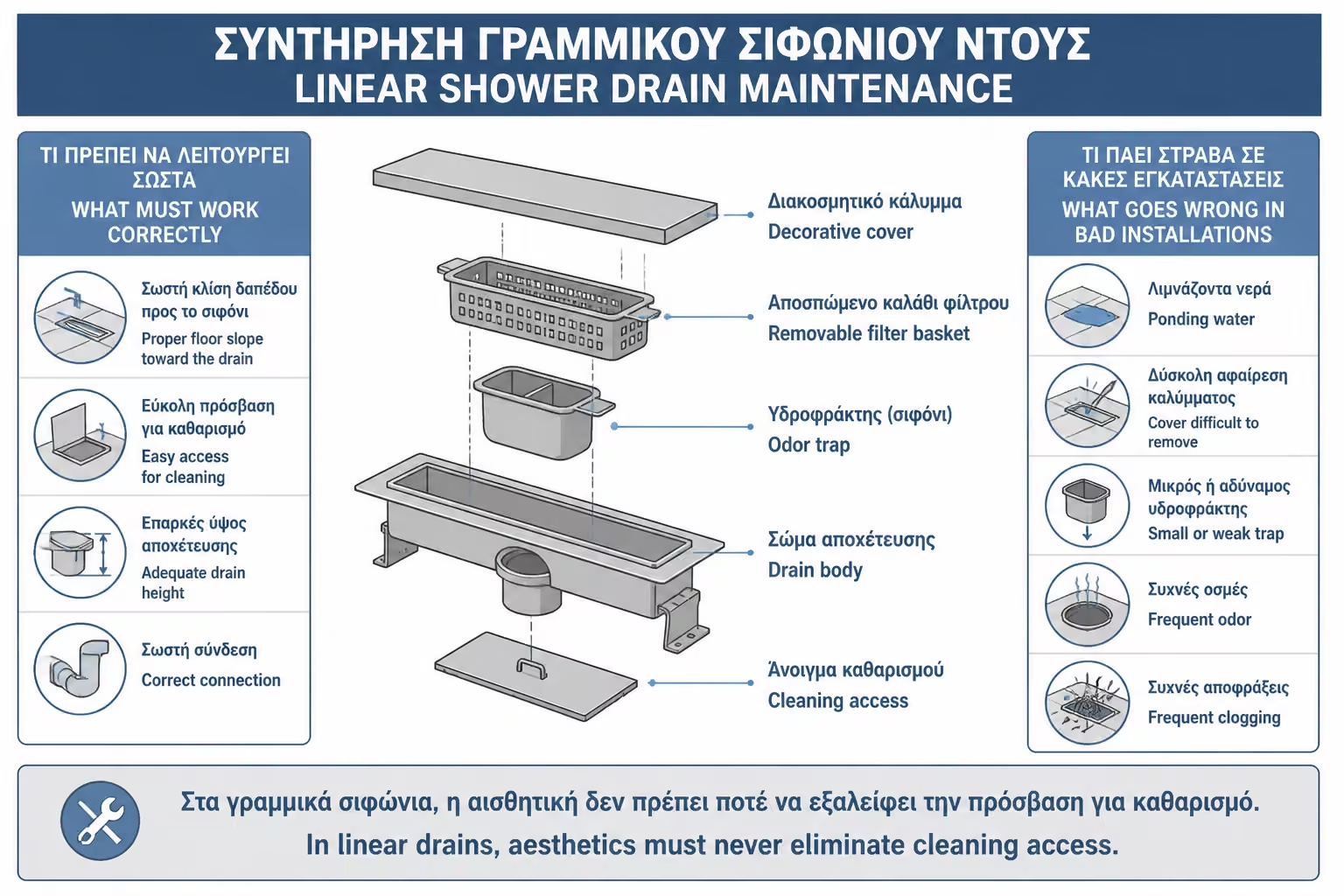
Linear drains are popular in modern renovations because they create a cleaner visual result and allow larger floor areas without a classic center grate. But aesthetics should never come at the expense of function. A linear drain needs the right slope, correct installation, and easy access for cleaning.
In many cases, the problem is not the linear drain itself, but poor installation. If the floor slope does not guide water properly toward the grate, standing water will remain. If the grate is difficult to remove, cleaning will be neglected. If the siphon has a shallow trap or a poor connection, odors and clogs will appear more often.
Anyone choosing a linear drain should ask before installation how it is cleaned, whether the inner insert can be removed easily, what slope is required, and whether the drain has the necessary installation height. Those questions matter far more than whether the grate looks thinner or more elegant.
In a clogged siphon, haste often leads to wrong moves. The most common mistake is using too many different chemicals. Someone drops one product, sees no effect, then drops another. This can create dangerous reactions, fumes and a serious risk of burns.
Another mistake is the use of sharp tools. Screwdrivers, metal wires or improvised tools can scratch, break or wedge into the drain. In old installations, even minor damage can lead to a leak that is not immediately visible, but shows up later as moisture in a wall or ceiling.
Recurrent clogging should also not be ignored. If a siphon is cleaned and then clogs again after a while, something is causing it. It could be use, it could be construction, it could be old piping. But it is not normal to need a blockage all the time.
Before trying anything, it is worth going through the following points first:
| Question | Yes / No |
|---|---|
| Does the problem occur only in the shower or in other parts of the bathroom? | Yes / No |
| Is the water slow to go away gradually or did it rise suddenly? | Yes / No |
| Is there hair or residue visible on the grate? | Yes / No |
| Is the grate or basket easy to remove for cleaning? | Yes / No |
| Have you avoided using a strong chemical before mechanical cleaning? | Yes / No |
| Does water rise from the siphon when the basin or washing machine is draining? | Yes / No |
| Is there a strong odor or gurgling from the drain? | Yes / No |
| Does the problem often return after cleaning? | Yes / No |
| Has the bathroom been recently renovated or has work been done near the drain? | Yes / No |
| Have you informed the technician if a chemical liquid has already been used? | Yes / No |
If most answers point to a simple local problem, careful mechanical cleaning may be enough. If, however, there is wastewater backing up, frequent recurrence, strong odor, or involvement of multiple drains, it is better to arrange a technical inspection before relying on improvised fixes.
If you keep only one point from this guide, make it this: with a clogged siphon, do not start with the “strongest” chemical. Start with correct diagnosis and mechanical cleaning. Most shower clogs begin with hair, soap, and residue that need to be removed, not merely burned away with caustic liquids. If the problem keeps returning, if water rises back up, or if there is a bad smell, do not treat it as a simple cleaning issue. At that stage the drainage system needs to be checked, because the real cause may be deeper or structural.
A clogged floor drain or shower drain is a common problem, but it should not be taken lightly. In most cases it starts with simple things: hair, soap, limescale, and residue that build up gradually. If caught early, it can often be cleaned with safe mechanical methods, without dangerous chemicals and without major hassle.
The difference lies in the diagnosis. A local blockage in the shower grate is one thing, and the return of water from the siphon when another part of the bathroom is working is another. It's one thing to have a drain that needs cleaning, and another to have a network with a bad slope, old piping or a construction error after renovation.
Strong chemical drain cleaners may seem like an easy solution, but they often create more risks than they solve. They can be dangerous for the user, put extra stress on the installation, and make the next technical intervention more difficult. The sounder approach is simple: clean the visible point, observe how the drain behaves, and call a professional early when the problem clearly goes beyond the surface.
A properly cleaned and preventively maintained siphon can work for years without serious trouble. But when it clogs again and again, it is not asking only for cleaning. It is asking for inspection.
Return to category.
Go to categoryReturn to the central guide.
Go to guide