Loud knock
A sharp bang is heard the moment a supply closes.
Water hammer is the loud bang heard in pipework when a tap, mixer, cistern, or appliance solenoid valve closes suddenly.
It usually sounds like:
metallic "thump", banging inside the wall, pipe vibration, sharp jerk, sound as if something is "banging" in the network.
Many owners ignore it, especially if it only happens occasionally. But water hammer is not just an annoying noise. It is an indication of a sudden pressure change in the water supply network.
Over time, it can strain:
piping, joints, pressed fittings, corner switches, batteries, cisterns, spirals, electrovalves for washing machines, water heaters, pipe supports.
The right solution is not to get used to the noise. It is to find why it is created and to limit it.
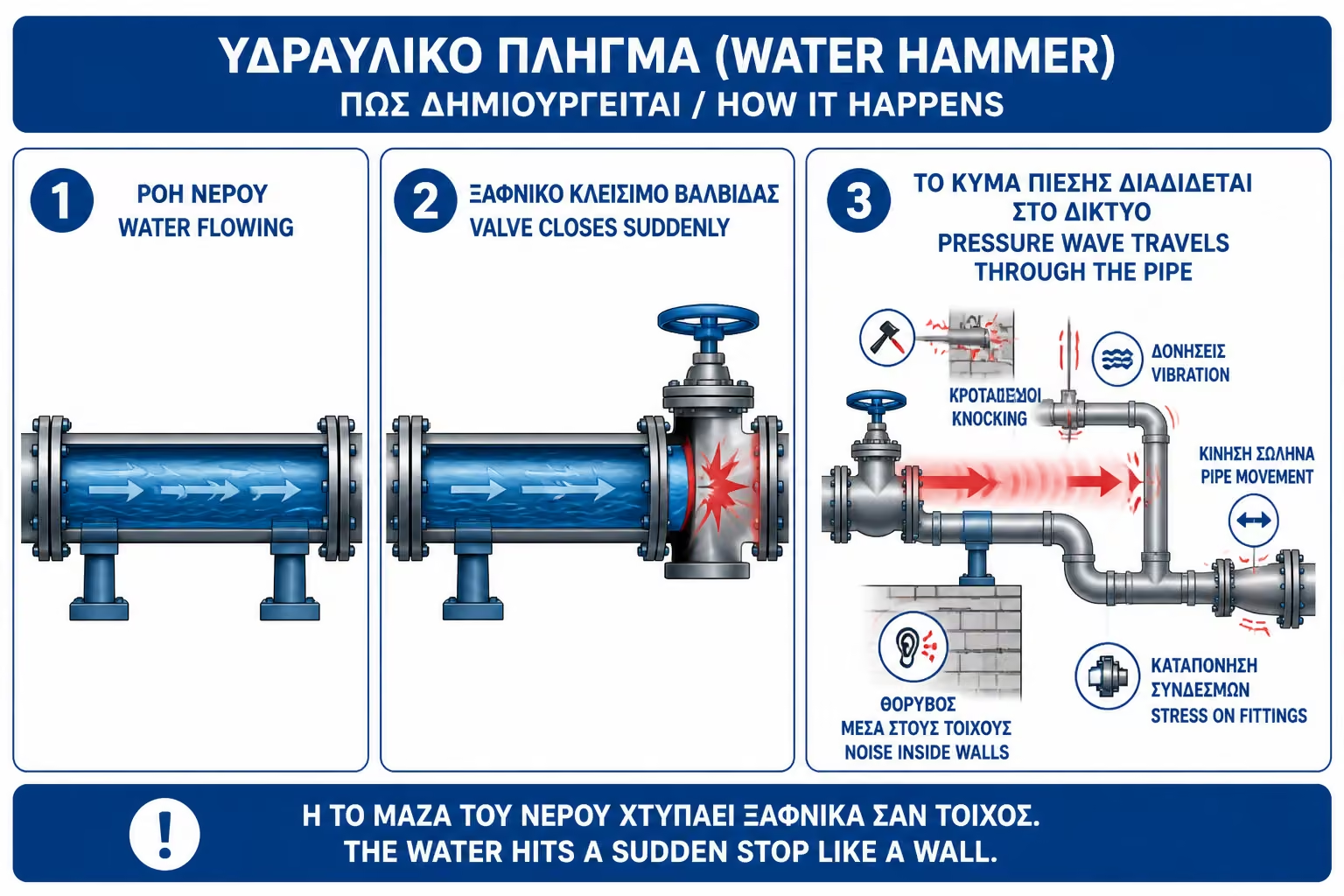
Water hammer happens when moving water inside a pipe is forced to stop abruptly.
Water has mass and momentum. When a tap or valve closes suddenly, the flow is cut off in an instant and a pressure wave forms inside the pipe.
Put simply, it is as if the water suddenly “hits a wall” because its path has been cut off too quickly.
That pressure wave usually shows up through effects such as:
A sharp bang is heard the moment a supply closes.
The pipework or nearby structure shakes briefly.
The line can jump or strike nearby surfaces if support is poor.
The impact travels through the building fabric and sounds louder than the pipe itself.
Joints, valves, and mechanisms are repeatedly loaded by the pressure spike.
Hydraulic hammer often occurs when a supply is suddenly shut off.
It is most often noticed in situations such as:
When you shut off the basin mixer quickly.
When the kitchen tap is closed abruptly.
When the appliance suddenly stops taking water.
When its solenoid valve closes sharply.
When the filling mechanism reaches its shutoff point.
When the internal mechanism closes more abruptly than expected.
When the pressure system is operating or switching quickly.
When the whole installation is already running above the proper pressure.
Very often the problem is more noticeable at night, when the area is quiet and the network pressure may be higher due to low consumption.
If water hammer occurs once, it does not necessarily mean that there is an immediate failure. But if it happens often, it should not be ignored.
Repeated stress can gradually lead to problems such as:
Connections begin to loosen under repeated shock loads.
Flexible connectors fatigue faster than they should.
Weak points begin to seep over time.
Tap and mixer internals take repeated impact loads.
The filling mechanism wears out more quickly.
The sound travels deeper into the structure.
Lines begin to shift when support is not adequate.
Mounting points may loosen or fail over time.
Fast-closing valves wear faster under repeated shock.
Older systems start showing their weak points.
In old installations, where pipes and joints are already worn, water hammer is even more dangerous.
A metallic sound does not necessarily mean that the pipes are metallic.
Even in plastic or multilayer pipework, the noise can sound metallic because the vibration is transmitted through points such as:
Hard mounting points transmit the vibration very easily.
Elbows and corners tend to sharpen the local impact.
Connections change the way the vibration is heard.
The wall itself can carry and amplify the sound.
The impact may concentrate at a distribution point.
Hidden mixer bodies transfer vibration directly into the wall.
Legacy metal parts make the sound harsher and more resonant.
If the pipe is not properly supported or rests on a hard structural element, the sound is amplified.
The noise you hear is not always where the problem is. It can be carried over the network and heard elsewhere in the house.
Water hammer can have one or more causes.
The main causes are usually the following:
The higher the pressure, the stronger the shock.
The flow is cut off instantly and creates the pressure spike.
Fast solenoid valves are a common source.
Vibration is turned into an audible bang inside the structure.
Water keeps more momentum along longer routes.
Age and wear make the system more vulnerable.
Pressure-system settings can intensify the problem.
Fast-closing supplies are left without local damping.
Some components shut much more abruptly than others.
Worn mechanisms terminate the flow more violently.
The network runs without basic pressure control.
Before any solution can be put in place, it must be found which cause predominates.
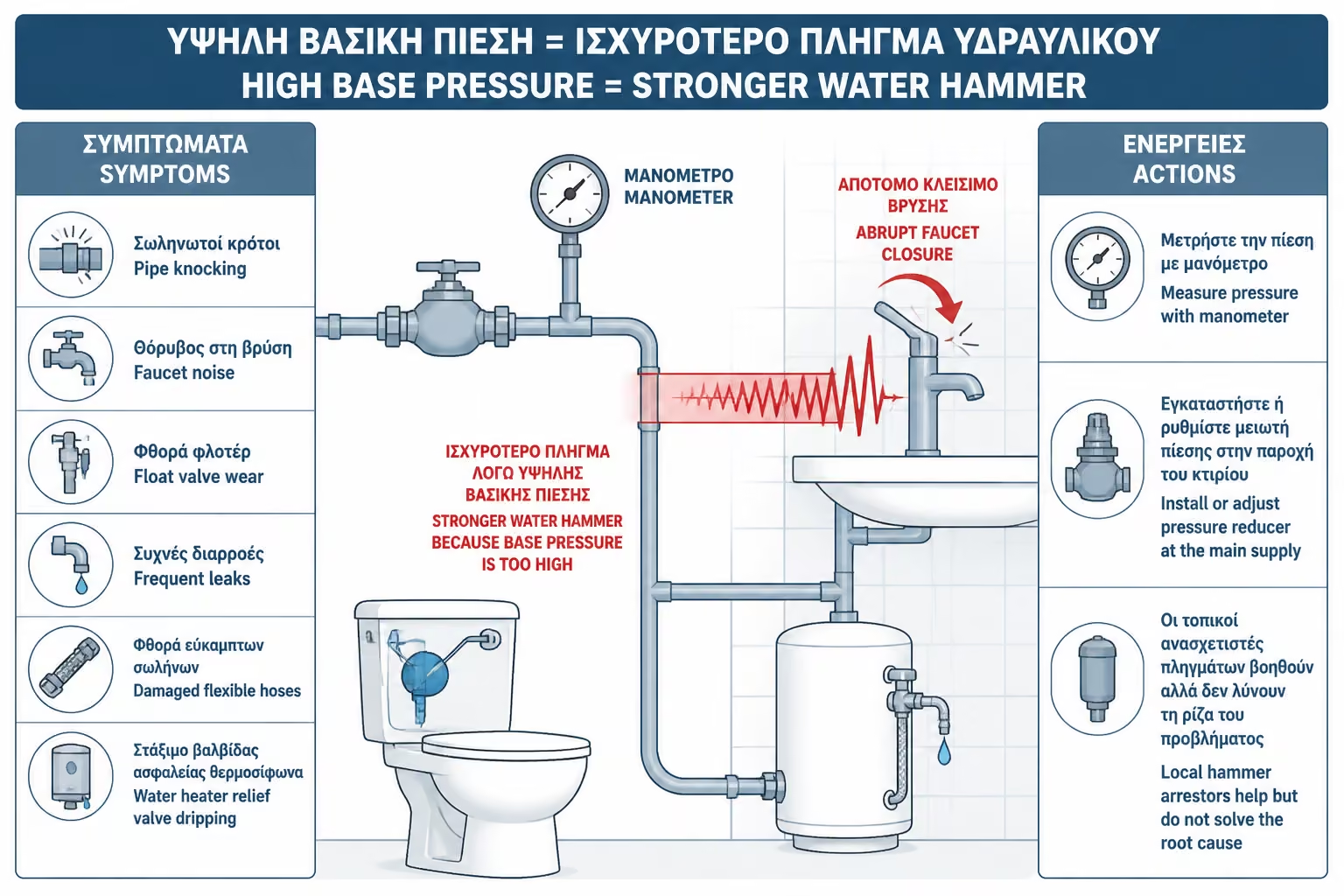
High pressure is one of the main causes of water hammer.
The higher the pressure, the more severe the strain when a supply is suddenly shut off.
If the pressure is too high, the first serious solution is to install or adjust a pressure reducer on the main supply.
If the pressure is not reduced, water hammer arrestors may help locally, but they do not solve the root cause.
When the system is over-pressurized, warning signs often include:
The bang becomes sharper whenever a supply closes.
Fittings react more aggressively to every sudden shutoff.
Cistern mechanisms wear faster under repeated pressure spikes.
Weak joints and older components begin to fail more often.
Flexible supply hoses wear out sooner than expected.
The water-heater relief valve may start dripping under excess pressure.
The pressure should be measured with a gauge first, then the need for a reducer can be assessed properly.
Modern single-lever mixers can shut off very quickly.
When the user drops the lever quickly, the flow is cut off almost instantly. That can create water hammer, especially when network pressure is already high.
The measures that usually help in this case are:
A change in use can reduce the impact immediately.
Higher-quality mechanisms often shut more smoothly.
Without measuring pressure, you cannot confirm the root cause.
Good support limits how vibration spreads through the structure.
Local protection helps where the problem starts at one supply.
Changing habits helps, but not enough if the network has a technical problem.
Washing machines are a very common cause of water hammer.
The reason is that their solenoid valves open and close abruptly. When the valve stops the flow, the water "hits" inside the pipe.
In these cases, the bang may be heard in places such as:
In many cases, a local arrestor on the washing-machine supply solves a large part of the problem.
The cistern can also cause water hammer, especially when the float closes abruptly.
This most often happens when:
If the float wears out often or makes a strong noise, check the pressure first.
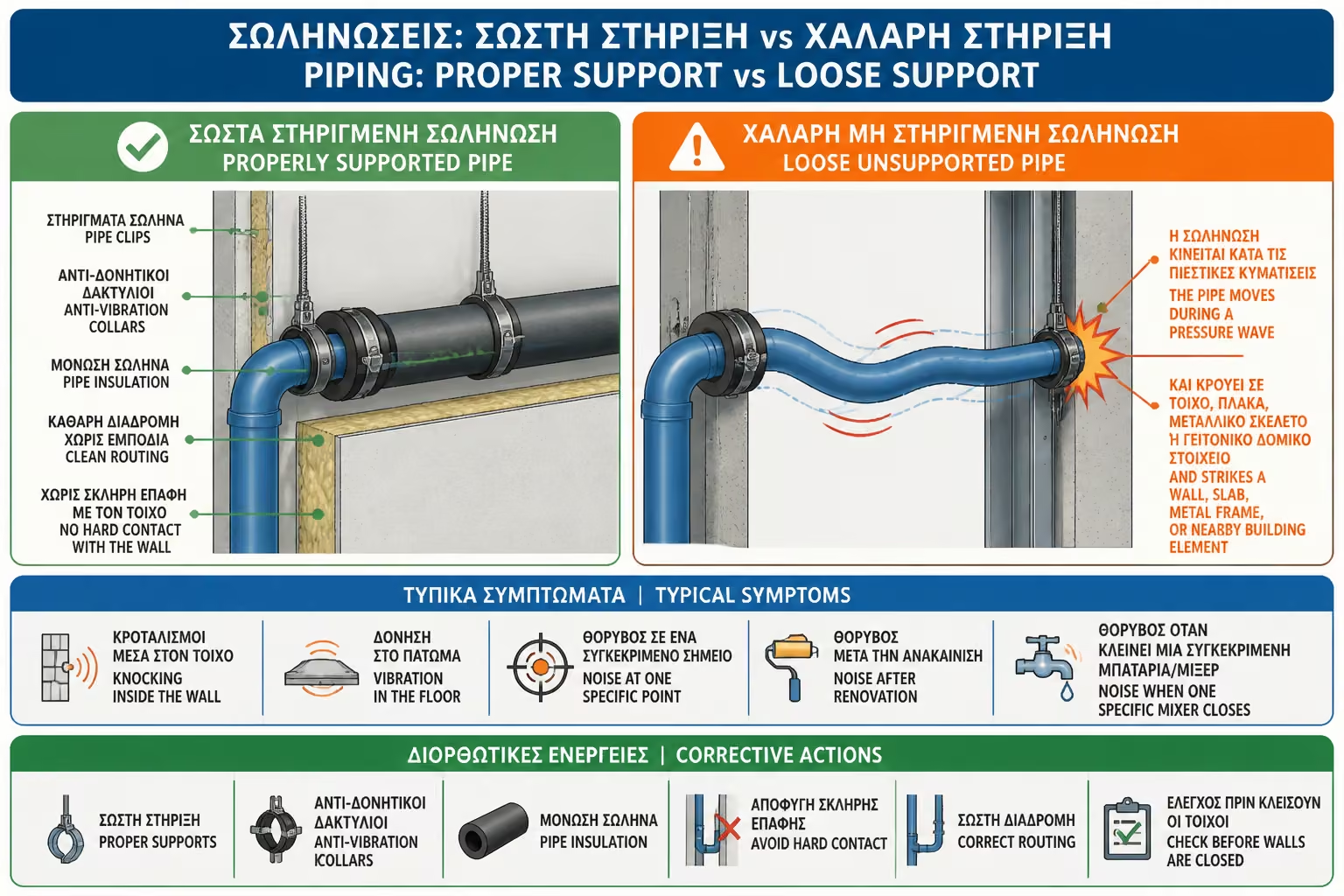
Even if the pressure is not too high, the pipes can bang if they are not properly supported.
When a pressure wave is created, the pipe can move. If it is loose, it will hit a wall, slab, metal frame or other element.
If the pipes are already closed in a wall, the correction is more difficult.
In this situation, the typical symptoms and the usual corrective measures are:
In old networks, water hammer is more dangerous.
In networks like this, typical weak points include:
The material has already lost part of its strength.
Older connections react more easily to shock loads.
Older jointing methods fatigue faster under repeated impact.
Threaded connections no longer grip as securely as before.
Later additions often make the network less stable.
The whole system tolerates repeated shock less effectively.
A network that has lasted for years can start to show problems when the pressure increases or when new fast batteries are put in.
When renovating an old bathroom, if knocks are heard, the entire network must be checked and not just the point where the sound is heard.
Water hammer arrestors are components designed to absorb the pressure wave.
They usually have a small air chamber or mechanism that acts as a pressure "cushion". When a sudden wave is generated, the component absorbs some of the energy and reduces the shock.
They are usually placed in locations such as:
Position matters. They don't come in by accident.
Arrestors are most useful under conditions such as:
The problem is clearly tied to one appliance or outlet.
The solenoid valve is creating the shock locally.
The repeated shutoff follows the machine cycle.
The mechanism cuts flow too sharply.
The symptom is local and consistent.
The base pressure has been corrected, but the shock remains.
Support is not the main cause, yet the noise continues.
They should not be used as the only solution when the mains pressure is too high. First we check the pressure.
Sometimes both are needed, but they have a different role.
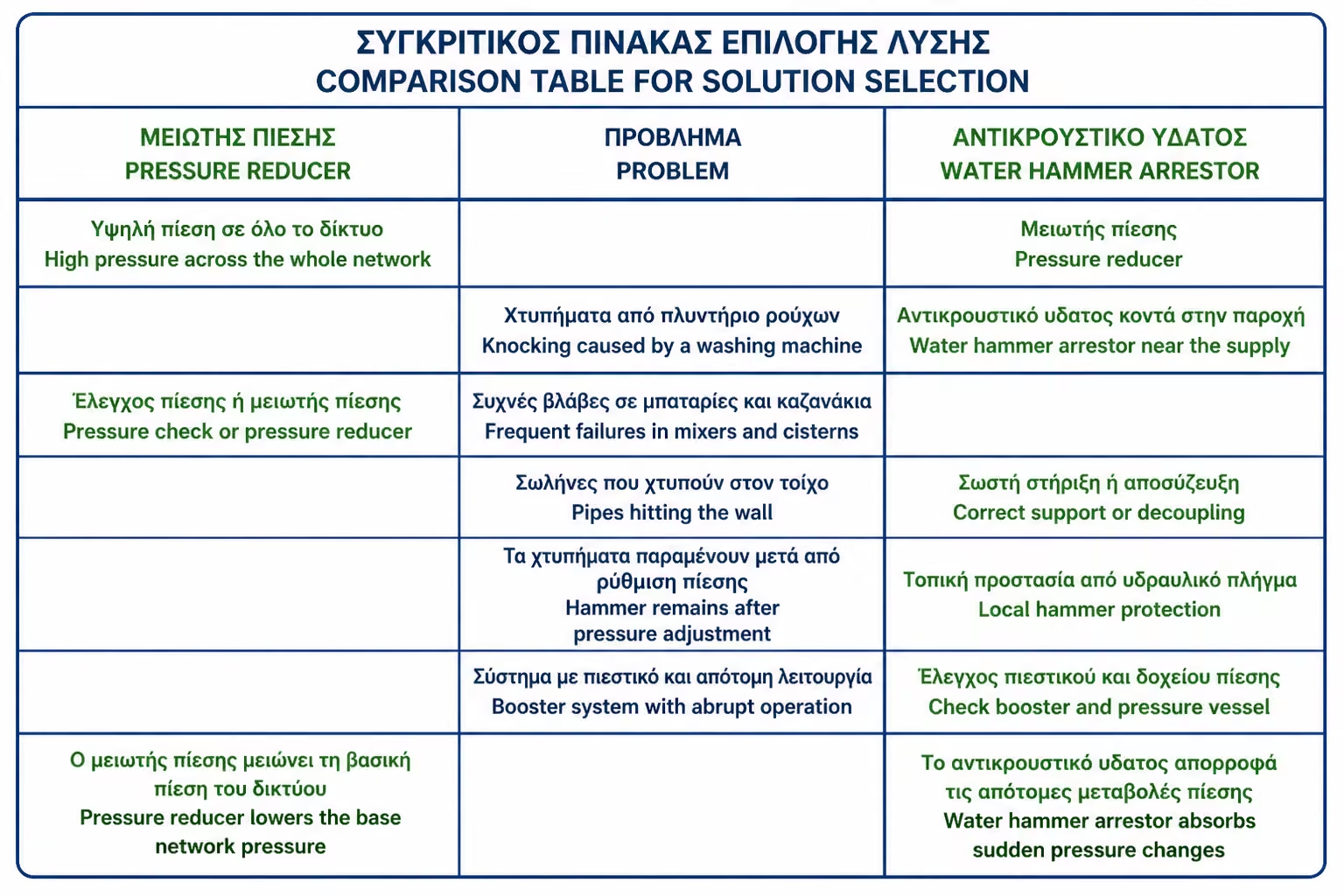
| Problem | Appropriate solution |
|---|---|
| High pressure throughout the network | Pressure reducer |
| Hit by a washing machine | Arrestor near the supply |
| Frequent damage to batteries and cisterns | Pressure control / reducer |
| Pipes hitting the wall | Correct support / uncoupling |
| Wound after pressure adjustment | Local water hammer protection |
| Pressurized with sharp operation | Pressure and pressure vessel control |
The reducer lowers the base pressure of the network. The arrestor absorbs sudden pressure spikes.
In homes or apartment buildings with a booster system, water hammer may be related to poor adjustment or a fault in that equipment.
The most common problems in that setup are:
The system is operating outside the correct pressure range.
The vessel is no longer absorbing changes properly.
The vessel cannot work as intended when the membrane fails.
The booster keeps starting and stopping too often.
The system is shutting off without a smooth pressure transition.
Vibration is transferred more easily into the building.
The control system is not regulating operation correctly.
If the bang is related to the booster system, adding a small arrestor at one tap is not enough. The booster setup itself has to be checked.
Diagnosis should follow a sequence. First note whether the noise appears when:
A local mixer event may point to one specific branch.
The appliance solenoid valve is a common source.
The filling mechanism may be stopping the flow too abruptly.
The pressure system may be involved rather than one outlet.
A repeatable pattern helps isolate the cause much faster.
The first step is to connect the noise to a specific moment of operation.
If it sounds everywhere, it's likely a pressure or mains issue. If it is only heard near the washing machine, it may be local.
Without a pressure measurement, the diagnosis is incomplete.
If the pipes move or touch structural elements, they must be fixed.
Pressure reducer, water hammer arrestor, mechanism replacement, or pipe support correction, depending on the cause.
You can safely start by observing points such as:
The exact timing is often the first diagnostic clue.
One specific outlet may reveal a local cause.
The appliance supply is a frequent source.
The filling mechanism may be shutting off too abruptly.
Night-time overpressure often makes the effect stronger.
A new fitting can change the behavior of the network.
New routing or new supports may be part of the cause.
You can also try closing a tap or mixer more gently and see whether the noise is reduced.
On the other hand, you should not try to handle tasks such as:
The main line needs proper control and experience.
The wrong part or wrong setting can create new problems.
The pressure system requires technical knowledge and safe handling.
Without diagnosis, it is easy to cause unnecessary damage.
The wrong component or wrong location will not solve the issue.
Hot-water systems need proper technical handling for safety.
A plumber is needed for a technical solution.
The final cost depends on the cause and on the kind of intervention the system actually needs.
| Work / Material | Realistic cost |
|---|---|
| Pressure measurement / simple control | €40 – €100+ |
| Local water hammer arrestor | €20 – €80+ |
| Installation of a water hammer arrestor | €60 – €180+, depending on access |
| Pressure reducer | €80 – €180+ for a good part |
| Installation of pressure reducer | €80 – €250+ |
| Booster-system inspection | €80 – €200+ |
| Fixing pipe supports | depending on access |
If the problem is detected before the walls are closed in renovation, the correction is much easier and cheaper.
If there is a known water hammer problem, or if a new plumbing installation is being built, the quote should explicitly include items such as:
The quote should promise a real measurement, not a guess.
Support must be treated as part of the solution, not as an afterthought.
It should be specified if the network pressure makes it necessary.
Local protection should be stated clearly where it is needed.
Noise-transfer points should be addressed explicitly.
If a booster exists, the quote should include it in the diagnosis.
The result should be confirmed in operation before the work is closed out.
The phrase "new plumbing" does not automatically mean that water hammer has been addressed.
The key questions worth asking are the following:
Without a measurement, the diagnosis is incomplete.
The root cause may be overpressure across the whole network.
This separates a local issue from a network-wide one.
The proposed part should match the actual cause.
Placement is critical if the device is going to work properly.
Support quality can matter as much as pressure.
The pressure system may be shaping the whole behavior of the installation.
The answer determines the right scope of the fix.
Verification should be part of the job.
Future maintenance should stay possible.
If the suggested solution is "we'll put a part in and see", ask for a diagnosis first.
| Inquiry | Yes / No |
|---|---|
| Is there a knocking sound when the faucet is turned off? | Yes / No |
| Does it sound when the washing machine stops? | Yes / No |
| Does it sound when the cistern fills/stops? | Yes / No |
| Did the problem appear after a renovation? | Yes / No |
| Has the pressure been measured with a manometer? | Yes / No |
| Is there high pressure in the network? | Yes / No |
| Is there a pressure reducer? | Yes / No |
| Is there a booster system? | Yes / No |
| Are the pipes properly supported? | Yes / No |
| Are there anti-shock valves where needed? | Yes / No |
| Has it been checked after the solution? | Yes / No |
If there are many "yes" to the symptoms and a pressure measurement has not been done, the diagnosis is not complete.
A homeowner hears a loud bang every time the washing machine stops. They replace the flexible hose and the angle valve, but the problem remains.
Then they replace the basin mixer as well, because there is also noise when it shuts abruptly.
Finally, when measuring, the mains pressure is too high. The problem wasn't the parts. It was the overpressure and sudden stoppage of flow from the solenoid valve.
With a pressure reducer and a water hammer arrestor on the washing-machine supply, the problem is reduced significantly.
In another home, the owner reports a bang when a mixer closes and when the washing machine stops.
The plumber first measures the pressure and finds that it is slightly high. He also confirms that the bang is stronger on the washing-machine supply.
He installs a pressure reducer on the main supply and a water hammer arrestor near the washing machine. He also checks the supports at accessible points.
After adjustment, the noises are reduced and the installation works more quietly.
Water hammer is not just an annoying noise. It is a sign that the plumbing network is experiencing sudden pressure changes.
Before adding any component, ask for a pressure measurement. If the pressure is high, start with a pressure reducer on the main supply.
If the problem comes from a specific appliance, such as a washing machine, a local arrestor near that supply may be needed.
If the pipes are striking the wall, their support also has to be checked. An arrestor can help, but it does not fix a loose pipe that is banging against structural elements.
Water hammer is the loud bang or impact noise heard when water flow stops abruptly inside the pipes.
The most common sources behind it are:
Excess pressure makes every sudden shutoff more violent.
The flow is cut off too quickly and creates the pressure spike.
Fast solenoid valves are among the most common sources.
The float valve or filling mechanism may close too abruptly.
Loose routing turns pressure movement into an audible structural knock.
Poor adjustment or faults in the system can intensify the effect.
Older pipes and joints tolerate repeated stress less effectively.
If ignored, it can gradually wear out mixers, float valves, flexible hoses, fittings, joints, and pipework.
Before deciding on the solution, the key questions are:
The exact moment of the noise often reveals its source.
The loudest point is not always the place where the pressure wave starts.
Without a measurement, you cannot confirm whether overpressure is the main cause.
A booster can change the whole behavior of the network.
Loose routing makes the impact louder instead of containing it.
A reducer addresses the root cause when the whole system runs too high.
Local protection makes sense when one specific supply is creating the shock.
The solution is not always just one thing. It may be a combination of a pressure reducer, a water hammer arrestor, and proper pipe support.
In any case, the knocking on the pipes is a warning. Better get it checked out before it turns into a leak.
Return to category.
Go to categoryReturn to the central guide.
Go to guide