
Bathroom Lighting, Ventilation & Heating
Return to category.
Go to categoryThe dehumidifier is one of the devices that enter the conversation when the bathroom does not dry. The mirror remains cloudy, the ceiling shows black dots, the silicones turn black, the towels smell heavy and the owner thinks: "Should I get a dehumidifier for the bathroom?". The thought makes sense, especially in small or blind bathrooms where shower steam lingers in the space.
But a dehumidifier is not the same thing as a fan. The fan blows the humid air out. The dehumidifier draws in the air from the room, removes water and sends it back into the room drier. It's a useful tool, but it doesn't replace the need for fresh air, nor does it solve leaks, bad venting, a closed door with no air intake, or thermal bridges.
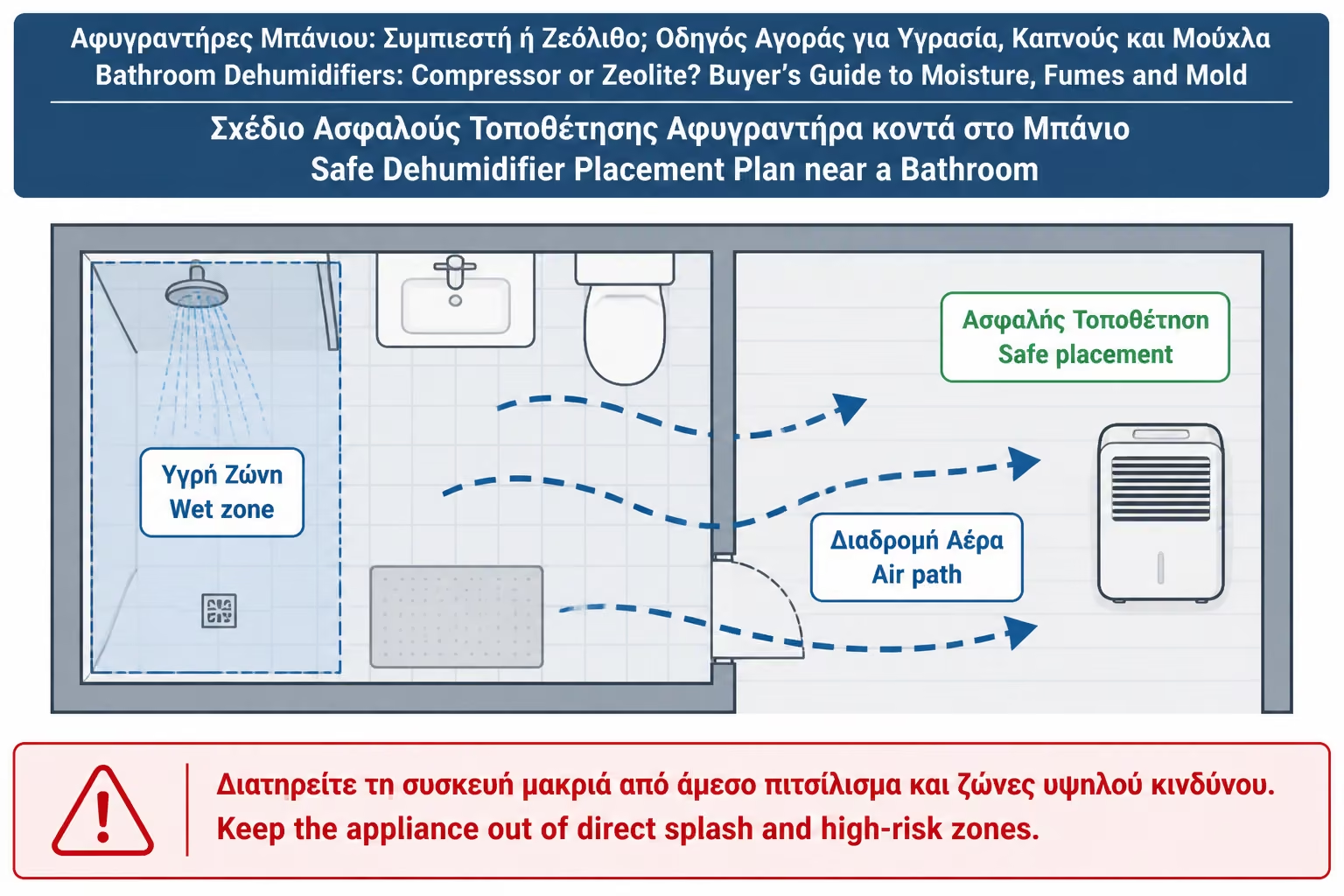
The second important point is safety. Most portable home dehumidifiers are not intended to operate in the bathroom while showering, next to water, splashes or high intensity water vapor. Many manufacturers' manuals warn against using the device in the bathroom and suggest, if we want to dry the space, to place the dehumidifier outside the bathroom with the door open. In a Meaco manual, for example, it is explicitly stated not to use the dehumidifier in the bathroom and to dry the bathroom with the device outside the room and the door open.
This does not mean that the dehumidifier is useless for a bathroom humidity problem. It means it must be used properly: usually in the hallway or near the door after showering, with the bathroom open, not on a wet floor, not in a splash zone, and not as a substitute for normal ventilation. Experts often point out that common appliances are not usually IP-rated for use inside the bathroom, and placing them near the bathroom with the door open can help reduce humidity.
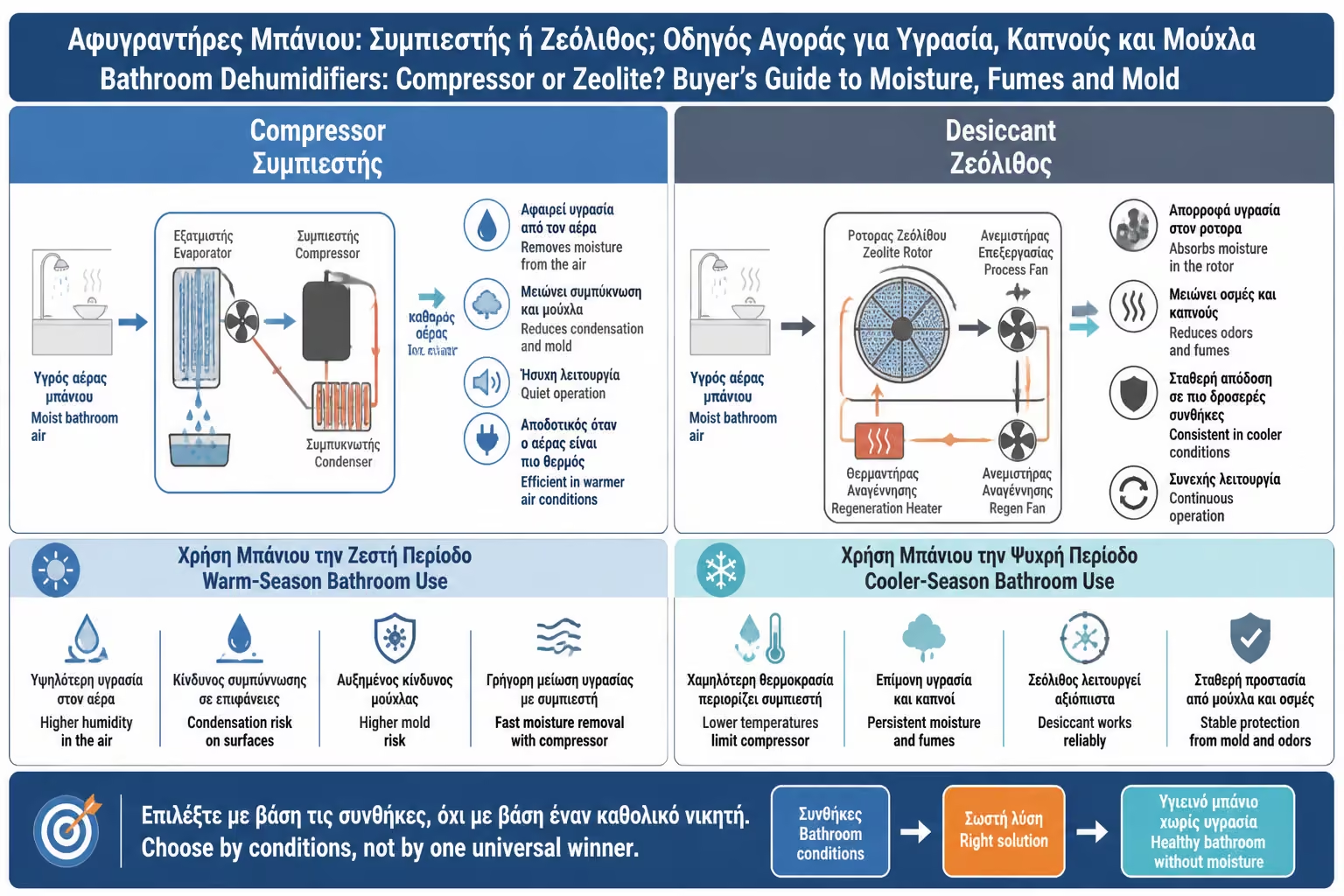
The big question in the market is which type is best: a compressor dehumidifier or a zeolite/desiccant dehumidifier? The answer depends on the temperature of the space, how quickly the humidity rises, whether the space is cold or heated, the cost of operation and how the device will be used. In a warm apartment with a constant temperature, the compressor is often the most economical solution. In a cold or non-constantly heated space, zeolite can perform better because it does not rely on the same cooling principle.
A fan and a dehumidifier do different jobs. The ventilator removes humid air from the bathroom and replaces it with drier air from the house or from outside intake. The dehumidifier recirculates the air in the room and removes moisture from it, collecting water in a container or leading it to a drain.
In a bathroom with a shower, water vapor builds up quickly. Within minutes, relative humidity can skyrocket. The ventilator is the first line of defense because it quickly removes the saturated air. The dehumidifier is most useful afterwards, when we want to reduce the general humidity of the room or the house and help surfaces, towels and corners to dry.
If the bathroom doesn't have a vent or has a very weak/dirty vent, a dehumidifier can help, but it doesn't fix the basic lack of air renewal. If there is bad smell, CO₂, sewage odors or lack of fresh air, the dehumidifier does not get them out. It just removes water.
That's why the correct sequence is: first proper ventilation, then checking air intake from the door, then air duct maintenance and then, if still necessary, a dehumidifier as a complementary solution.
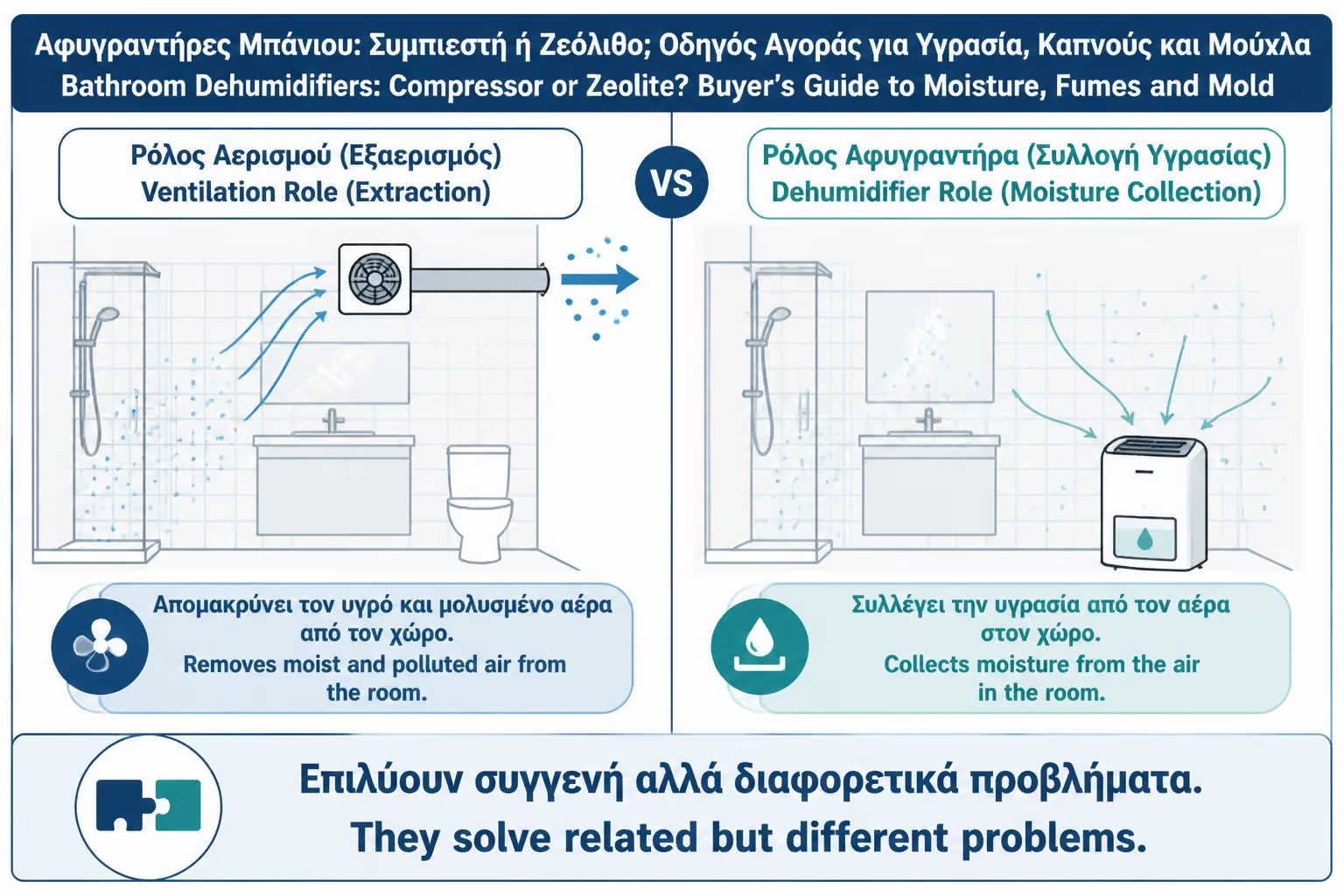
The dehumidifier reduces the relative humidity of the air. This helps to dry surfaces faster, reduce condensation and make it harder for mold to grow. In a house where the bathroom is humid and the humidity is transferred to the hallway, bedrooms or closets, a dehumidifier can help the entire microclimate of the home.
The most correct usage scenario is after the shower. You leave the fan running, open the bathroom door when you're done, and place the dehumidifier outside the bathroom or right in the hallway to pull in the moist air that comes out of the room. This way you avoid the risk of an electrical device in a wet bathroom and at the same time help drying.
A dehumidifier is also useful when drying towels in the bathroom or when the home is generally high in humidity in the winter. If the house holds 65–75% relative humidity for many hours, mold will find opportunities not only in the bathroom but also in corners, closets and behind furniture.
But it must work with a hygrostat or relative humidity target. We don't want to over dry the air. In several practical guidelines, a target of around 50–55% RH is considered a balanced setting for domestic use, so that the device works when needed and stops when the air is within reasonable limits.
The compressor dehumidifier works roughly like a small refrigeration circuit. It draws air from the room, passes it over a cold surface, the water vapor condenses into water and the water is led to the container. Then the air again passes through a warmer part and returns to the space.
This principle is very efficient in relatively warm areas. When the air is warm and humid enough, the compressor can remove enough water with a good consumption/performance ratio. That is why compressor dehumidifiers are very popular in homes, living rooms, bedrooms and heated spaces.
The downside is performance at low temperatures. Because it relies on cooling a surface to condense water, when the air is cold the process becomes more difficult and ice or defrosting may occur. Manufacturer sources report that compressor dehumidifiers are most efficient in warmer spaces, with optimum conditions around residential temperatures, while performance drops noticeably at low temperatures.
For a bathroom that is normally heated, the compressor can be a very reasonable choice. For a cold bathroom, old apartment without space heating or use in an icy corridor, it may perform less than you expect.
The zeolite dehumidifier, or desiccant, works differently. Instead of cooling the air to condense moisture, it passes the air through a moisture-absorbing material such as zeolite or other desiccant material. This material is then internally heated to release moisture, which is collected as water.
The big advantage is that it does not depend so much on the room temperature. In cold spaces, where compressors struggle, desiccant dehumidifiers maintain better performance. That is why they are often recommended for garages, warehouses, cold corridors, unheated rooms or houses where the temperature drops considerably. Market sources state that desiccant units work better at lower temperatures, while compressors are better suited for warmer spaces.
The second feature is that they put out slightly warmer air. This can be an advantage in a cold bathroom or hallway, because it also helps with drying. On the other hand, their operation often consumes more current than a compressor in a warm space, because they use a heating element to regenerate the material.
So desiccant is not always "best". It is best in cold or changing temperatures. In a warm, consistently heated home, the compressor may be more economical.
For use around the bathroom, the choice is not made only on the basis of the liters/day that the device writes. This value is often measured under ideal conditions, such as high temperature and high humidity. In practice, the bathroom has sharp humidity peaks, small space, frequent temperature change and safety restrictions.
| Criterion | Compressor | Zeolite / Desiccant |
|---|---|---|
| Better operating temperature | Heated spaces, usually above 15°C | Cold or changing areas |
| Low temperature performance | It drops noticeably | It remains more stable |
| Consumption in a warm place | Usually cheaper | Often higher |
| Heat in space | Slight rise in temperature | It puts out noticeably warmer air |
| Weight/portability | Often heavier | Often lighter |
| Noise | Compressor and fan noise | Mostly fan noise, but it varies by model |
| For cold bathroom/hallway | Not the first choice | More suitable |
| For a warm apartment | Often the most logical choice | Useful but not always the most economical |
If your bathroom is in a heated apartment and the dehumidifier will work in the corridor or hall after the shower, a good compressor may be the most balanced choice. If the room is cold, if the bathroom is not heated, if the humidity occurs mainly in winter and the corridor drops below 15°C, zeolite has a strong advantage.
The right question is not "which type is better overall?". It is "at what temperature will the device work most hours?".
The small bathroom with a hot shower has a very rapid production of steam. Relative humidity can rise very quickly to levels that fog mirrors and glass. No portable dehumidifier is the ideal first response to this spike. The fan is more suitable to remove the saturated air quickly.
The dehumidifier helps in the second stage: after the shower is over, after the fan runs and after the door is opened, it pulls the remaining moisture from the air and helps drying. In this use, the choice of type depends on the temperature of the room where it will be installed. If the corridor is hot, compressor. If it is cold, desiccant.
In a very small bathroom, placing the device inside the space is often practically and electrically problematic. There is water on the floor, limited clearances, outlets near wet areas and a splash hazard. For this, the safest and most practical solution is usually outside the bathroom, with the door open.
If you want to reduce water vapor peaks, first invest in a fan with a hygrostat or timer. A dehumidifier is a helper, not an extinguisher for shower steam.
The dehumidifier is a portable electrical device with a cord, plug, vents and water tank. The bathroom is a space with water, steam and safety belts. This combination needs a lot of attention. We do not place a common dehumidifier next to a bathtub, shower or wet floor.
Many manufacturers do not recommend use in the bathroom. The argument is simple: most portable devices do not have the required protection for wet zones, are not designed for direct splashing, and can create an electrical hazard if used incorrectly. Market sources and manuals emphasize that, instead of going into the bathroom, the device can be placed outside the room with the door open.
If one insists on using the device in the bathroom, they should check the manual, IP rating, distances from shower/tub, plug, leakage relay and location of use with an electrician. In practice, for most household appliances, the safest recommendation is: not inside the bathroom during or immediately after the shower, but outside the door.
Safety comes before moisture. Better a little slower drying than dangerous use of an electrical appliance.
The most practical location is outside the bathroom, near the door, on a dry floor, with free space around the air inlets and outlets. After showering, leave the door open and the fan running. The dehumidifier pulls in the moist air coming out of the bathroom and helps to reduce the humidity in the hallway and bathroom.
Do not stick it to the wall or in a corner. Dehumidifiers need air circulation. If the intake or exhaust grills are blocked, performance drops and the device may overheat. Do not place it under dripping towels, next to water or where someone might trip.
If the space is very small, you may need to leave the bathroom open to a larger room or corridor. The device works best when it has a volume of air to circulate. If you close it in a very small space, it will quickly reach a target around the device but may not dry the wet corners properly.
The correct position is the one that allows safe operation, free air flow and practical moisture transfer from the bathroom to the device.
The indication “10L/day”, “12L/day” or “20L/day” does not mean that the device will collect that many liters every day in your home. These values are measured in specific temperature and humidity conditions, often more favorable than a real Greek house in winter. At lower temperature, especially for compressor, the actual water collection drops.
For a small apartment or use near a bathroom, a 10–12L/day dehumidifier may be sufficient if the space is heated and the problem is moderate. For a larger house, heavy humidity, lots of towels/clothing or high general humidity, 16–20L/day or more may be needed. But exaggeration is not always a solution. A large device in the wrong location or temperature may not work as you expect.
| Case | Indicative class |
|---|---|
| Small bathroom + hallway, moderate humidity | 10–12L/day |
| Typical apartment with humidity in a bathroom/bedroom | 12–16L/day |
| Larger house or intense humidity | 16–20L/day+ |
| Cold space / unheated bathroom or hallway | Desiccant, not just larger liters |
| Dry towels/clothes frequently | Greater supply and operation of laundry |
Caution: if the problem is purely localized in the bathroom after the shower, the money may be better spent on a better fan with a humidistat than on a large dehumidifier.
Compressor dehumidifiers are often more economical in heated spaces. When the room is 18–25°C, they can remove moisture with good energy efficiency. But if the space is cold, their efficiency drops and they may work more for less water.
Desiccants often consume more power because they use a heating element to regenerate the absorbent material. On the other hand, in a cold space they can be practically more effective, because they continue to remove moisture where the compressor struggles. Also, the warm air they emit can help dry small cold spaces.
So the consumption must be evaluated per liter of water removed and per actual temperature of use, not just by the Watts on the label. A 250W compressor that in a cold room removes a little water may be less useful than a 600W desiccant that essentially removes moisture in a short time.
For the bathroom, because the use is usually short and targeted after the shower, the right choice is a model with a hygrostat, auto mode and good performance at the temperature where it will work. Don't just buy based on “low watts”.
The dehumidifier that will be placed outside the bathroom can be located in the corridor, near a bedroom or in a small apartment where the sound can be heard everywhere. So noise is an important criterion. Compressors have fan and compressor noise. Desiccants have mostly fan noise and often a more stable sound, but this varies by model.
For post-shower use, the noise may be acceptable if the device runs for 30–60 minutes in a non-disturbing time. For night use, a lower level, sleep mode or placement away from sleeping areas is needed. Don't underestimate the issue. An annoying appliance will end up closed, as will noisy fans.
Also pay attention to the sound of the container/float, the vibrations on the floor and the position. On a hard floor, a device can carry a hum. A stable flat floor and proper distance from walls help.
If the bathroom is next to a bedroom, you might want a better low dB fan and humidifier, rather than relying on a dehumidifier running in the hallway at night.
Most portable dehumidifiers have a water tank. When full, they stop. For use after bathing, this is usually enough. However, if the house has high humidity and the device works for many hours, emptying can become a daily nuisance.
Permanent pipe drainage is practical if the device is in a fixed location near a drain. For bathing, however, it needs attention. It does not mean that we put the device in the bathroom so that it can be emptied easily. If such a solution is made, it must be safe, stable, out of the wet zone and in accordance with the manufacturer's instructions.
For most owners, the container is simpler. The important thing is that it has sufficient capacity, easy emptying, good grip and automatic stop when full. If the container is small and clumsy, it will tire you.
In bathroom use, practicality counts as much as performance. A device that is heavy, difficult to empty or cumbersome to move will not be used routinely.
The hygrostat is essential. You want the device to work when the humidity is high and stop when it falls on target. Without a hygrostat, the user has to guess. This leads to either overuse or underuse.
The auto mode keeps the relative humidity on target, e.g. 50–55%. It is useful for daily operation. The laundry mode works more intensively for drying clothes or towels. It can help after a shower with lots of wet towels, but it shouldn't be used unnecessarily for hours if there is no need.
In desiccant models, laundry mode can be particularly effective because they put out warmer air. In a compressor, the performance depends more on the room temperature. If the place is warm, it can work very well. If he is cold, he can disappoint.
For use around the bathroom, prefer a device with a clear humidity indicator, target setting, auto stop, timer and continuous drain function only if you really need it.
Very small electric Peltier dehumidifiers and passive humidity containers/bags have limited capacity. They can help with cupboards, small confined spaces or very mild dampness, but are not a solution for shower steam. A bathroom produces far more moisture than they can actually handle.
If you have a small WC without a shower, a passive product can reduce some damp smell in a cupboard. If you have a bathroom with a daily shower and mold on the ceiling, it will not solve the problem. There you need ventilation, heating, proper air flow and, if necessary, a regular dehumidifier.
Gadgets are attractive because they're cheap and quiet, but they often create the wrong expectations. They do not compare with compressor or desiccant model in actual water removal.
The rule is simple: for shower steam, do not rely on sachets and mini solutions. They are adjuncts, not a primary treatment.
Choose a compressor if the space where it will operate is heated, usually above 15°C, if you want better operating economy at normal home temperatures and if the humidity affects the entire apartment or rooms, not just a cold bathroom. It is a good choice for Athens, Thessaloniki or other residences where the dehumidifier will work in a heated hall, living room or hallway.
It is also a good choice when you want more dehumidification in a warm place, with relatively low consumption. For example, if after showering you open the bathroom door and the dehumidifier is working in the hallway that is 19–22°C, a 12–16L compressor can be a very practical choice.
Do not choose it exclusively for a cold, unheated bathroom or an area that often drops below 10–15°C. In such conditions, the performance drops and it may seem "weak", although in a warm room it would be very good.
For most heated domestic spaces, the compressor is the most balanced and economical choice.
Choose a desiccant if the room is cold, if the temperature changes often, if the bathroom or corridor is not heated consistently, if you have humidity mainly in winter or if you want a faster drying sensation in a small cold room. Desiccant units are more stable at low temperatures and are therefore often recommended for cold rooms, garages, warehouses or unheated areas.
They are also useful when you want the outgoing air to be warmer. This helps in cold bathrooms or for drying towels close to the area, always with secure placement. The heat they produce does not replace normal heating, but it can make the room more comfortable.
The downside is consumption. If the space is hot, a desiccant may cost more to run than a compressor. Also, warmer air may not be pleasant in the summer or in an already warm house.
For small spaces with frequent temperature fluctuations and extreme water vapor peaks, the desiccant has an advantage when used in a cold or changing environment. But if the house is consistently warm, the compressor remains a very strong candidate.
Prices vary depending on capacity, type, brand, consumption, noise, filters, continuous draining capability and functions. They are also affected by promotions, season of purchase and availability. The following ranges are practical buying indications, not binding prices.
| Category | Indicative range 2026 | Comment |
|---|---|---|
| Mini/Peltier dehumidifier | 30–90€ | Only for very small or closed spaces |
| Compressor 10–12L/day | 130–250€ | Good base for small apartment/hallway |
| Compressor 16–20L/day | 200–400€+ | For a larger house or intense humidity |
| Desiccant / zeolite | 180–400€+ | Good for cold or changing areas |
| Models with HEPA/air purifier function | 250–500€+ | Useful add-on, not a basic need for moisture |
| Premium low noise/smart models | 300–600€+ | More settings and better comfort |
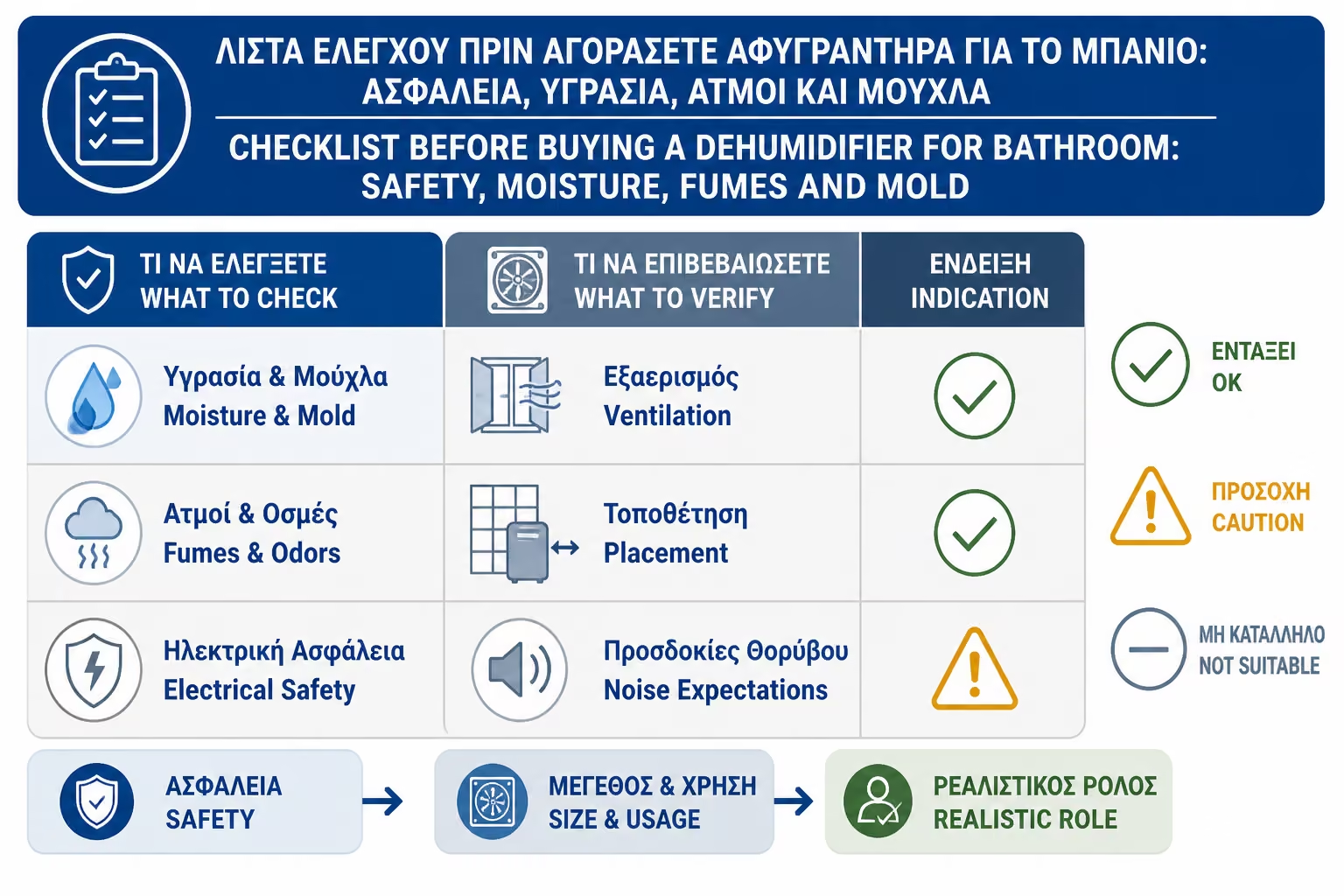
Don't just buy based on litres/day. Look at operating temperature, noise, hygrostat, consumption, warranty, ease of emptying, weight and whether the manufacturer allows or prohibits use in a bathroom. For a bathroom problem, safety and practicality of use are just as important as performance.
If the budget is limited, perhaps the best first investment is a proper fan with a timer/humidifier and a clean air duct. The dehumidifier comes next if the house continues to hold moisture.
Mistakes are made because the dehumidifier is treated as an "antidote" for all moisture. In fact, it must fit the problem and be used correctly.
| Error | What it causes in practice | A more correct approach |
|---|---|---|
| Buy a dehumidifier instead of a fan | Steam does not dissipate quickly | First ventilation, then dehumidification |
| Use of a shared device in the bathroom | Electrical safety hazard | Outside the bathroom with the door open |
| Compressor in cold room | Low performance | Desiccant for low temperatures |
| Desiccant in warm house only for economy | Probably higher consumption | Compressor in heated space |
| Purchase on a litre/day basis only | Wrong expectations | Temperature and actual usage control |
| Mini/Peltier for shower | Insufficient dehumidification | Normal appliance or better ventilation |
| Use with open windows | Waste of energy | Closed openings during dehumidification |
| Device stuck in a corner | Poor air circulation | Free space around the device |
| Without humidistat/auto mode | Pointless or insufficient operation | RH target and automatic mode |
| Ignore leakage or thermal bridging | The humidity returns | Pre-purchase cause diagnosis |
The most common mistake is buying a large dehumidifier for a bathroom that simply doesn't have a proper vent. If the air does not come out of the bathroom after the shower, the device will be fighting a symptom, not a cause.
| Inquiry | Yes / No |
|---|---|
| Is there a proper ventilator in the bathroom? | Yes / No |
| Does the fan have a timer or a hygrostat? | Yes / No |
| Is there a gap under the door for air intake? | Yes / No |
| Is the dampness just after the shower or general in the house? | Yes / No |
| Is the room where the dehumidifier will be placed above 15°C? | Yes / No |
| If the space is cold, has desiccant/zeolite been considered? | Yes / No |
| Will the device work outside the bathroom, in a dry safe place? | Yes / No |
| Does the model have a hygrostat and auto mode? | Yes / No |
| Does the liter/day capacity match the size of the house? | Yes / No |
| Is the noise acceptable for a hallway or nearby bedroom? | Yes / No |
| Does the water tank empty easily? | Yes / No |
| Has it been checked for leakage or severe thermal bridging? | Yes / No |
| Have you read the bathroom restrictions manual? | Yes / No |
If shower steam is the problem, start with the vent, not the dehumidifier. A dehumidifier is a great addition when the house is holding moisture, when the towels do not dry or when the bathroom carries humid air into the surrounding areas. For a heated home, a compressor is usually the most economical option. For a cold bathroom, a cold corridor or a space with large fluctuations in temperature, zeolite/desiccant performs more consistently. And in most cases, place it outside the bathroom with the door open, not in an area with water and splashes.
A dehumidifier can be of great help in humid bathrooms, but only when used correctly and with realistic expectations. It does not replace the vent, fix leaks or fix bad insulation or thermal bridges. It is a humidity control tool, not a cure for every cause of humidity.
The choice between compressor and zeolite depends mainly on the temperature of use. In a warm, heated space, the compressor is usually more economical and efficient. In a cold or changing area, the zeolite/desiccant has an advantage because it maintains better performance at low temperatures and draws out warmer air, aiding drying.
For a bathroom, the biggest issue is safety. Most portable devices should not be operated in the bathroom near water or while showering. The safest practice is to place the dehumidifier outside the bathroom, in a dry place, with the door open after use, while the fan continues to run.
The best solution for a permanently dry bathroom is a combination of: proper ventilator with timer or hygrostat, clean air duct, air intake under the door, adequate heating and, where necessary, a suitable type of dehumidifier. When these work together, mold has a hard time coming back.
Return to category.
Go to categoryReturn to the central guide.
Go to guide