
Bathroom Lighting, Ventilation & Heating
Return to category.
Go to categoryA dehumidifier can be a big help in a damp home, especially when the bathroom gets steamy after a shower, towels don't dry, and mold returns to silicones, joints, and the ceiling. But there is one point that cannot be compromised: the dehumidifier is a portable electrical device and the bathroom is a wet place. This combination needs absolute attention.
The main mistake is to treat the dehumidifier as a simple "moisture machine" that can go in wherever there is a problem. If the problem is in the bathroom, many consider placing it next to the shower, under the sink or near the cabin door. This can be dangerous. Water, steam, splashes, wet floor, bare feet and electric cable are not a combination for experimentation.
In practice, most portable home dehumidifiers are not designed for use in the bathroom. Many models do not have adequate protection against water or splashes, and several manufacturers explicitly state that the device should not be used in a bathroom. EcoAir, for example, explains that its dehumidifiers are generally not IPX rated and therefore should not be used in a bathroom, instead recommending placement outside the bathroom.
This does not mean that a dehumidifier cannot help the bathroom. It means that the safest and most practical solution is usually to place it outside the bathroom, in a dry place, with the door open after showering. Thus it draws the moist air that comes out of the room, without being on a wet floor or near water sources. Again, the manufacturer's instructions must be followed and proper electrical installation must be in place.
The bathroom is a space with special electrical requirements. It is not enough to have an outlet "nearby". We need to know if the socket is permitted, if it is protected by a leakage relay, if it is at a safe distance from a shower or bathtub, if the device has an appropriate IP rating and if the cable does not pass through wet zones. When in doubt, the answer is not "let's try it". He is an electrician.
The safest rule for the owner is simple: a common portable dehumidifier should not be used inside the bathroom, unless the manufacturer's manual specifically allows it and the installation location is safe for a wet area. If there is no clear indication, we consider it unsuitable.
The reason is that portable dehumidifiers are usually designed for rooms, hallways, bedrooms, living rooms, storage or utility areas, not for zones where there are splashes and direct exposure to water. They have air intake/exhaust grills, electric motor, compressor or heating element, circuit board, water tank and cable. If water gets in the wrong place, it can cause damage or risk of electric shock.
Meaco, a well-known dehumidifier manufacturer, states in a user manual that the dehumidifier should not be used inside the bathroom and that, for bathroom drying, the device should be placed outside the bathroom with the door open.
This is the rule to follow unless you have a special device that is specifically designed for a wet room and has the required specifications. Most household dehumidifiers do not fall into this category.
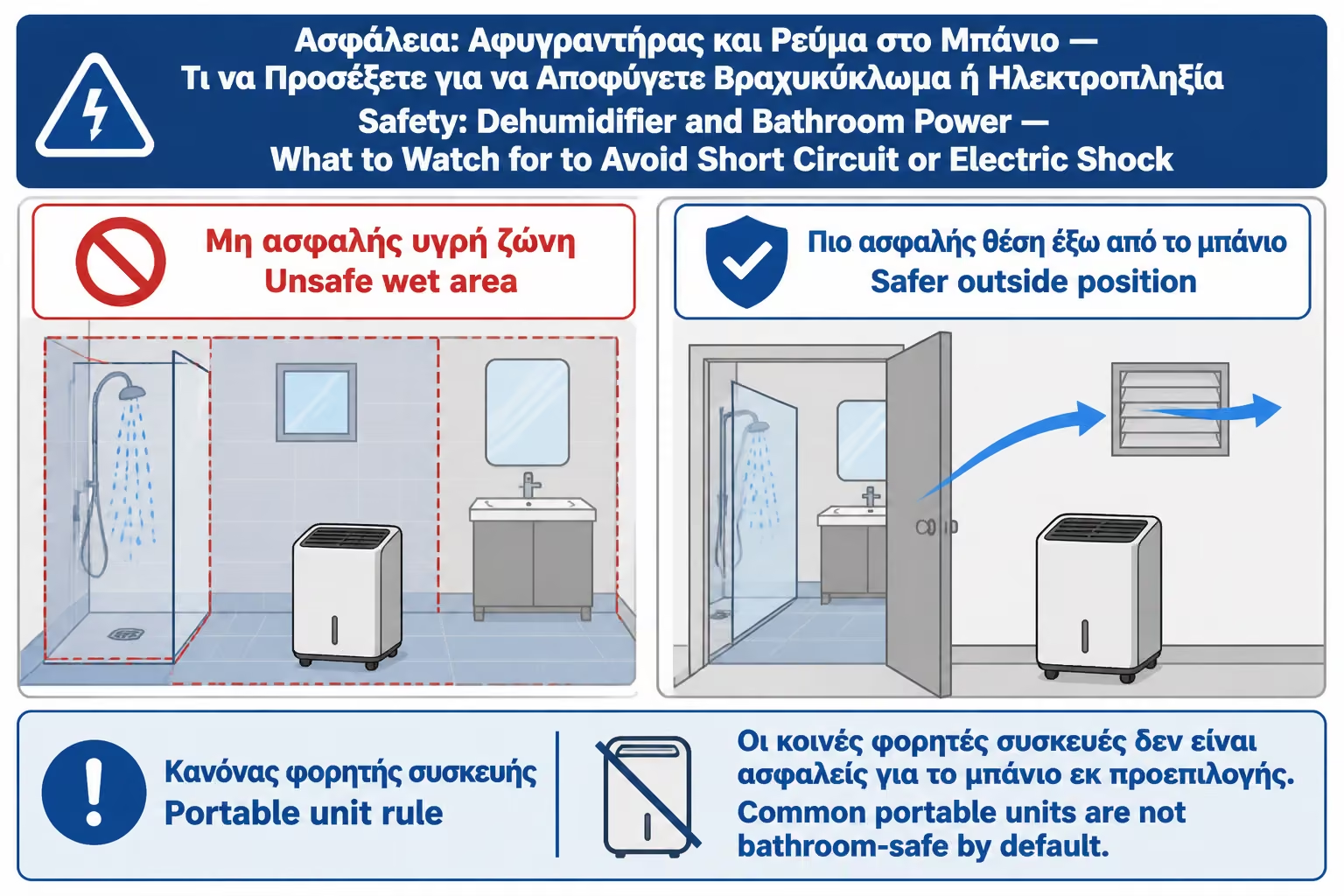
If you want to help dry the bathroom with a dehumidifier, the safest practice is to place it outside the bathroom, in the hallway or in an adjacent dry area, with the bathroom door open. After the shower, the fan continues to run, the door opens, and the dehumidifier pulls in the moist air coming out of the bathroom.
This solution has three advantages. First, the device is not in a place where it can be splashed. Second, the cord and plug remain in a safer environment. Thirdly, it also helps the surrounding areas, because the moist air from the bathroom does not stay in the hallway or bedrooms.
Ideal Home, citing advice from a dehumidifier manufacturer, says it's not recommended to place a dehumidifier inside the bathroom because it's usually not IP rated, but placing it as close to the bathroom as possible with the door open can help reduce humidity.
Practically, place the device on a dry, flat floor, not in front of the door where someone might trip, not attached to the wall and not under dripping towels. The bathroom is ventilated, the dehumidifier helps and the electrical safety is much better.
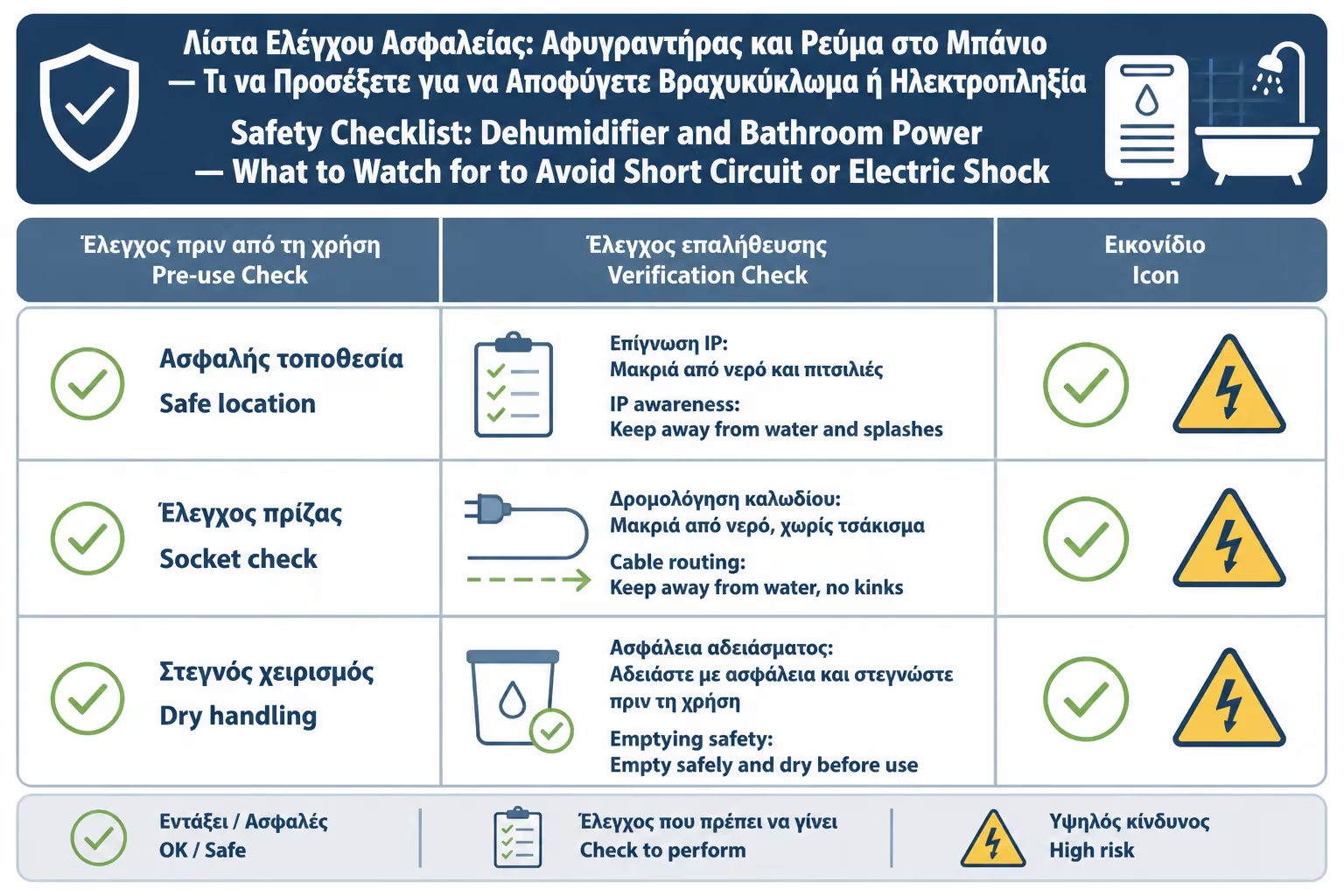
The IP index, from Ingress Protection, shows how protected an electrical device is from the ingress of solid bodies and water. The first digit is for dust/solids and the second is for water. For example, IP20 means protection from some solid bodies, but not substantial protection from water. IPX4 means protection against water splashes from all directions. IPX5 means protection against water jets, and so on.
In the bathroom, the second digit is critical. A device that is not water protected should not be placed in an area where it may be exposed to splashes, high intensity steam or wet hands. Many portable dehumidifiers are not IPX rated for use in the bathroom. EcoAir states that only products with an IPX rating can be used in a bathroom according to the relevant requirements, while theirs are generally not IPX rated and should not be used in the bathroom.
Caution: the fact that a device is "moisture resistant" as a function does not mean that it is water resistant as an electrical protection. The dehumidifier is made to remove moisture from the air. This does not mean it is safe if splashed or operated next to a shower.
If you do not see a clear IP rating and an explicit instruction for use in a bathroom, do not place it in the bathroom.
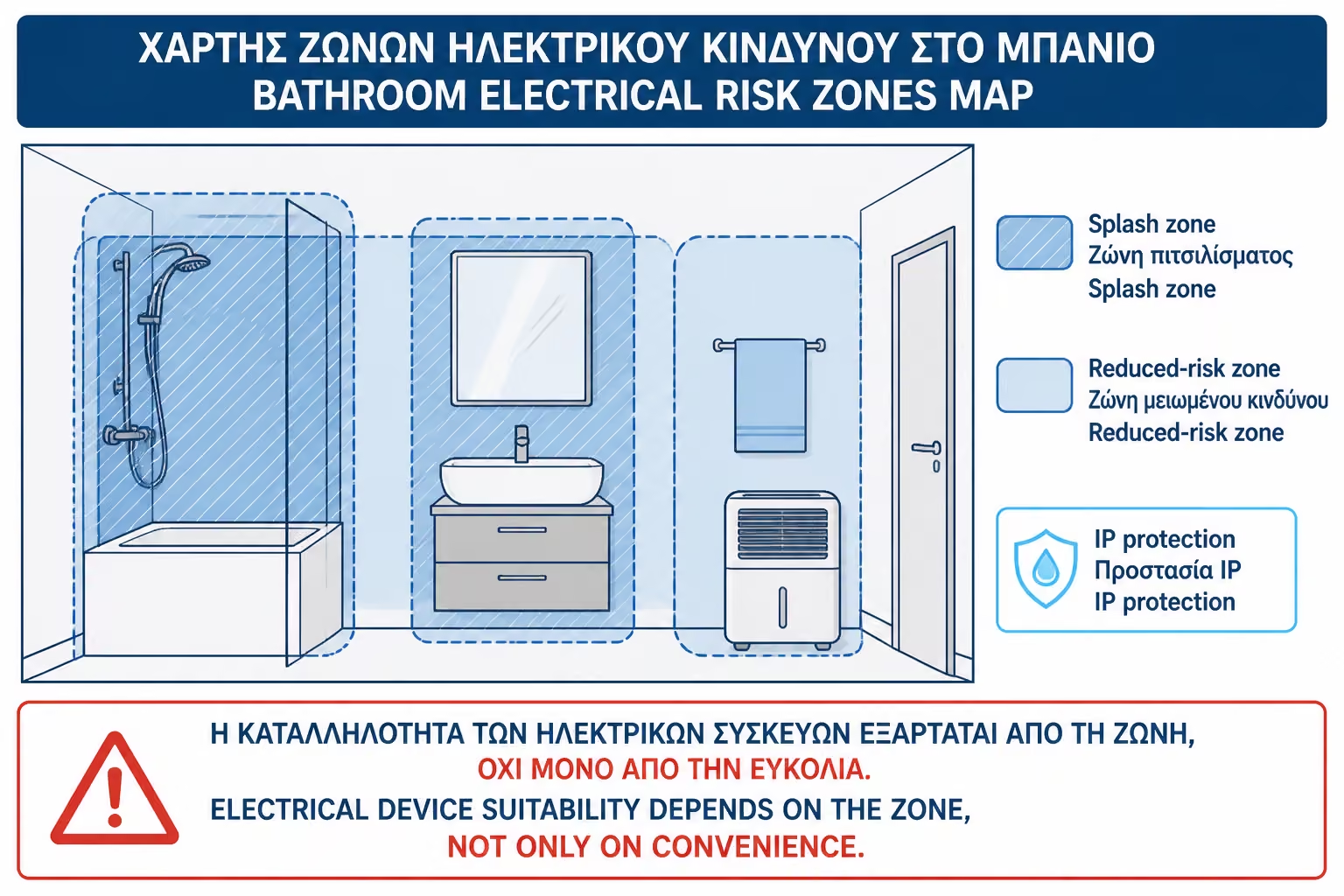
The bathroom is practically divided into danger zones depending on the proximity to the bathtub, shower and possible contact with water. The zone inside the bathtub or shower is the most dangerous. The area above and around the shower or bathtub also has increased demands. As we move further away, the risk decreases, but not zero.
Zones matter for lights, fans, outlets, radiators and any electrical appliance. Not all devices are suitable for all zones. Guides for bathroom zones state that products in zones 1 and 2 need specific protection from water, while fans in such zones must have an appropriate IP rating and RCD protection.
A portable dehumidifier is not a fixed bathroom appliance or a dedicated extractor fan. It is a portable device with a plug and cable. That is why placing it inside the bathroom zones is almost always wrong for standard models. There is no point in putting it "just beyond the shower" if it can still be splashed or if the cable runs across a wet floor.
Safe thinking is: bathroom zones are no place for portable electrical devices that do not have special certification.
If a device is not suitable for use in the bathroom, it is not enough to move it "a little" away from the shower. Splashes, steam, wet hands and wet floors remain a hazard. For a common portable dehumidifier, the practical guideline is to be outside the bathroom, not just a meter away.
If there is a special device that the manufacturer allows for a wet area, then the exact instructions in the manual are followed and the location is checked by an electrician. Distance from water sources, potential for splashing, IP rating, outlet location and cable routing must be considered.
The sink is also not harmless. Many electrical appliances are damaged not by the shower, but by drops, wet hands or water falling from a counter/sink. If you place a dehumidifier next to a sink because it is "not a shower", there is still a risk.
The safe rule is that there is no chance of water falling on the device or its cable. In the bathroom, this possibility is often greater than we think.
Having an outlet in or near the bathroom doesn't automatically mean you can plug in a portable dehumidifier. Sockets in bathrooms are subject to specific rules, distances, protections and restrictions by country and installation. In many homes, bathroom outlets are limited or for special uses, such as a shaver, not a large portable appliance.
If you plan to use a dehumidifier near the bathroom, the outlet should be in a dry and safe location, protected by leakage relays, and not require grommets through doors, wet floors, or passageways. Using extensions in the bathroom is particularly dangerous. A ballad on the floor near moisture nullifies any sense of safety.
Articles on bathroom electrical zones point out that regular outlets have strict distance restrictions from a bathtub or shower, and that using portable devices in the bathroom is a matter of high risk.
If you are not sure that the plug and use are safe, do not try it. Ask an electrician. The cost of a check is less than the risk of electric shock.
The earth leakage relay, or RCD/RCCB, is basic protection that interrupts the current when it detects an earth leakage. It is very important in bathrooms and generally in humid areas. But it does not mean that we can use any electrical device anywhere.
The relay is a line of defense in case of failure. It is not an invitation to abuse. If you put a common dehumidifier next to water, if the cable rests on a wet floor, or if you use a wall washer in the bathroom, the presence of a relay does not make the use correct. It reduces the risk, but does not eliminate it.
In older homes, it is not a given that there is a proper and functioning leakage relay. Nor that all lines are properly protected. If the house is old or if you are unfamiliar with the electrical installation, have an electrician check it out.
For a dehumidifier near a bathroom, the correct triple is: suitable location outside the wet zone, safe socket and relay protection. Not just the third.
The extension is one of the most dangerous "bullets" in wet areas. It can be found on the floor, stepped on, wet, pulled, passed under a door or carried a load for which it is not suitable. In a bathroom or right at the entrance to the bathroom, the risks increase.
The dehumidifier must be plugged directly into a suitable outlet, according to the manufacturer's instructions. If there is no outlet in a safe place, the solution is not a wall socket that goes through the bathroom. The solution is either to use the device in another place or to make a correct electrical prediction by an electrician.
A power strip with a dehumidifier, hair dryer, washing machine or heater is also a bad idea. Dehumidifiers may have a compressor or heating element, depending on the type, and should not share rough circuits with other powerful appliances.
If the installation does not allow safe use, we do not fit the device with rough cables. We adapt the installation or change the way of use.
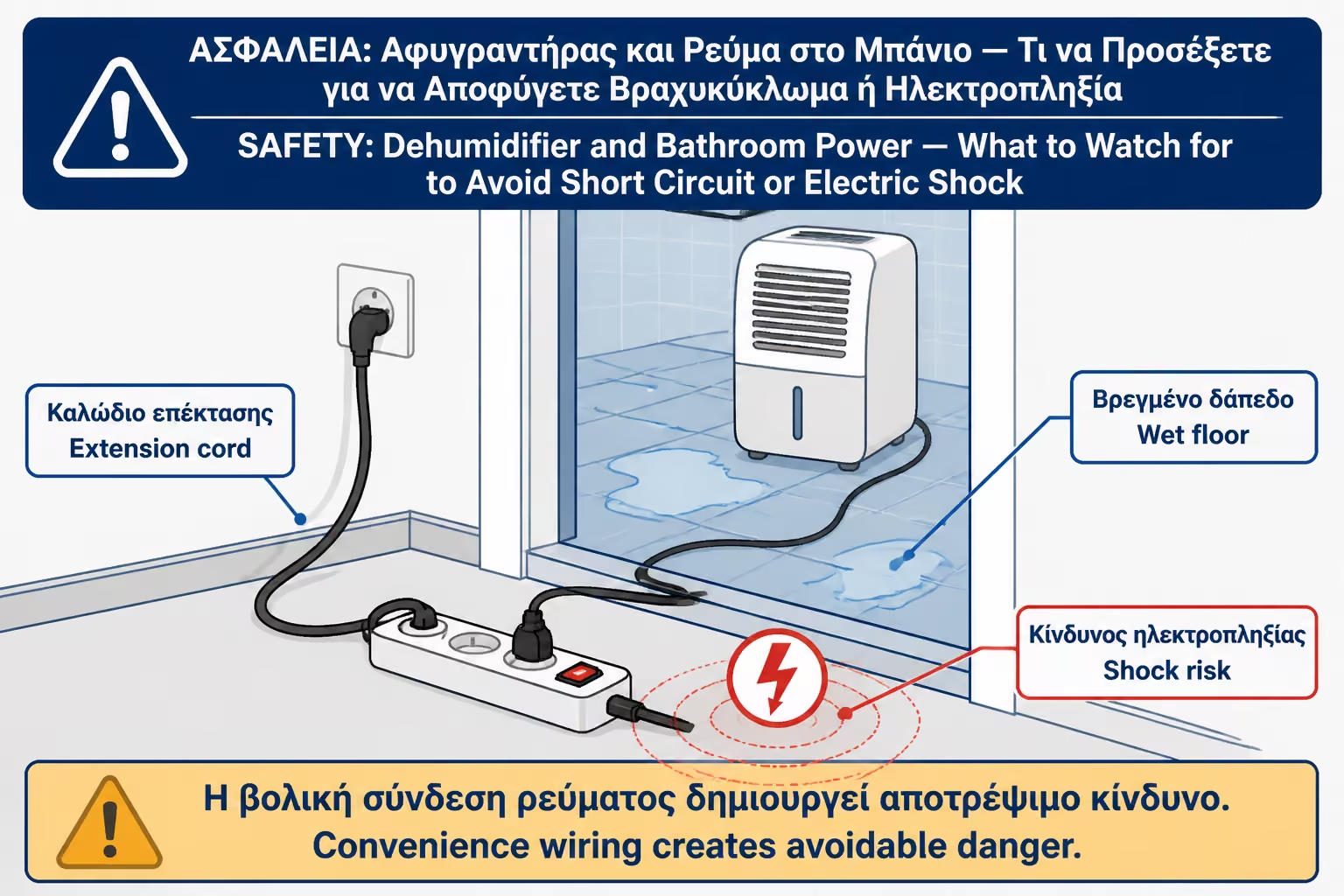
The bathroom after the shower often has a wet floor. The user may be barefoot, with wet hands or touching metal parts. This makes any electrical failure more dangerous. The device does not need to be dropped into water to create a hazard. Moisture, poor insulation, worn cable or water in the wrong place is enough.
That is why the dehumidifier should not be placed on a wet floor, nor should it be moved with wet hands. You shouldn't touch him when you just got out of the shower. Do not empty the container with the appliance connected if there is a risk of water getting on the electrical parts.
It should be used as if it were any serious electrical device: dry hands, dry floor, stable position, proper outlet, no pulls on the cord, no operation where it could fall.
Dehumidification should not pose a greater hazard than the moisture it is trying to solve.
The cable must not pass through a door opening where it can be pinched, nor through a place where people walk. It must not rest on a wet floor or pass near a faucet, shower or sink. It should not be wrapped around the device while it is in operation, as it may become hot.
The device must stand on a flat, stable and dry surface. It must have free space around the air intake and exhaust grills. If it sticks to a wall or is covered by towels, performance drops and it can overheat. Many manufacturers give minimum distances from walls and furniture; these must be observed.
Do not place the dehumidifier on a basin lid, sink counter, narrow chair or unstable base "so it does not rest on the floor". If dropped, it may break, spill water, or create an electrical hazard.
The safe place is boring: dry floor, stable surface, outside the bathroom, near the door but not in the middle of the passage.
The dehumidifier collects water. This means that the device itself contains water while it is electric. The container must be removed and emptied with the appliance switched off and ideally unplugged if it is to be moved or cleaned. Do not pull the container suddenly and do not let water spill on the device.
If the container is cracked, if it does not snap in properly, or if the container full sensor does not work, the device should not continue to be used until it has been checked. Water running from a container onto electrical parts or the floor is an immediate problem.
On models with a continuous drain tube, the tube must be secured and lead to a suitable drainage point without being able to escape. If left, the device can dump water on the floor for hours. This is especially dangerous near an electrical outlet.
Dehumidifier water is not potable. It may contain dust, microorganisms or metals from the device. We pour it down the drain, not for body or kitchen use.
The dehumidifier needs filter cleaning. If the filter is full of dust, the device works harder, heats up more and performs less. This is not only a matter of performance; it is also a matter of safety and longevity.
Before cleaning the filter, switch off and unplug the device. Do not open lids or grills while it is operating. Do not wash filters and reinsert them wet unless the manufacturer allows it and they are completely dry. Moisture inside the device can cause problems.
Clean the water container as well so that no odors or biofilms are created. If used near a bathroom, the device draws in air with moisture, dust, towel fibers and possibly mold spores. Maintenance is more important than in a simple bedroom.
If the device smells burnt, makes strange noises, stops suddenly, blows a fuse or shows water from places it shouldn't, stop using it and ask for a technical inspection.
In the market you may see terms such as "for wet areas", "ideal for bathrooms", "anti-mold" or "suitable for humidity". These phrases do not necessarily mean that the device can be placed in the bathroom or near a water source. They may simply mean that the device is removing moisture from the air.
What you should look for is a clear IP rating and a clear instruction manual. If the manual says not to use in the bathroom, no amount of advertising will invalidate that. If it doesn't say use in a wet area, don't take it for granted. If the product has an IP rating, you need to know exactly what it means and in which zone it is allowed.
Also, a product may be "water-resistant" to a limited extent but not suitable for splashes from showers or use in a bathing zone. "Moisture resistant" is not the same as "bathroom safe".
The correct reading is: manual, IP rating, place of use, electrician if in doubt. No advertising.
Passive humidity containers, pouches and small rechargeable desiccant dehumidifiers have a different risk profile than a normal electric dehumidifier. If they do not have a cable and do not run on electricity in the bathroom, the electrical hazard is reduced. They can be used in cupboards, small corners or closed places, as long as no chemical liquids are spilled and the instructions are followed.
But they do not have the performance needed for shower steam. They won't replace a fan or dry out a steamy bathroom quickly. They are helpful for small localized dampness, not a solution for mold in the ceiling.
Very small electric Peltier dehumidifiers also require electricity and are not meant to be safe for use in the bathroom. If they have a plug and electrical parts, the same rules apply: manual, IP rating, distances from water, not on a wet floor.
Don't confuse "small" with "safe". Current voltage, location and exposure to water matter more than size.
If the bathroom has a permanent moisture problem, the solution is not usually a portable dehumidifier in the room. The most correct technical solution is to improve the mechanical ventilation: correct ventilator, sufficient m³/h, timer, humidistat, clean air duct, correct return and air intake from the door.
If additional dehumidification is needed, a portable dehumidifier can be used in a nearby safe location or, in more complex cases, an installed ventilation/dehumidification system can be considered by a professional. This is for more specific applications, not simply buying a device from a store.
In homes with general humidity, the dehumidifier may be located in a central area of the home, not in the bathroom. If the general humidity of the house is reduced, the bathroom dries more easily and the towels smell less. This is safer and often more efficient.
A permanent solution means a system. No portable device in a hazardous location.
Safe use is not just about buying the device. Socket, leakage relay, location of use, wiring or ventilation improvement may be needed. The cost depends on the existing installation, the area, the electrician, whether VAT is included and whether additional work is required.
| Control / task | Indicative range 2026 | When needed |
|---|---|---|
| Basic electrical safety check | €50–€120 | If you don't know if there is a correct relay/socket |
| Leakage and line relay check | 50–150€+ | In an old residence or questionable establishment |
| New safe socket in neighboring area | 80–250€+ | If there is no suitable outlet outside the bathroom |
| Buy a compressor dehumidifier | 130–400€+ | For heated space |
| Buy a zeolite/desiccant | 180–400€+ | For cold or changing space |
| Bathroom ventilator improvement | 100–500€+ | If the cause is poor ventilation |
| Installing a timer/humidifier | Wide variation | If the ventilator stops too early |
If you have to choose where to invest first, start with safety and ventilation. An expensive dehumidifier won't fix a dangerous outlet, or replace a non-existent or weak fan.
The electrician's quote must clarify what is being checked: leakage relay, socket, ground, line, load, location of use and any need for a new supply.
Mistakes are made because moisture is a daily nuisance and the owner wants an immediate solution. But electrical hazards do not forgive improvisation.
| Error | Risk | A more correct approach |
|---|---|---|
| Dehumidifier in the bathroom without IP rating | Electric shock or damage | Installation outside the bathroom |
| Device next to shower/bathtub | Splashes and water | Away from wet zones or in at all |
| Ballad in the bathroom | Short circuit/drop/water | No wet area extension |
| Cable on wet floor | Electrical hazard | Dry safe route |
| Emptying container with wet hands | Risk of contact with electricity | Erase, dry hands, caution |
| Use without leakage relay | Reduced protection | Check by an electrician |
| Outlet too close to water | High risk | Proper seat/zone control |
| Device attached to a wall | Overheating/low performance | Free air around her |
| Use during the shower | Water vapors and splashes | Use after, out of the bath |
| Trust only in a "bathroom" ad | Incorrect usage | Manual check and IP rating |
The most typical mistake is the ballad from the hallway to the bathroom, with the dehumidifier on the floor after the shower. It's exactly the image to avoid: cable, water, bare feet and a portable device in a wet area.
| Control | Yes / No |
|---|---|
| Does the manual specifically allow for use in the bathroom? | Yes / No |
| Does the device have an appropriate IP rating for the location you are considering? | Yes / No |
| Can it be placed outside the bathroom with the door open? | Yes / No |
| Is the outlet in a dry safe place? | Yes / No |
| Is there a leaky relay that has been checked? | Yes / No |
| Are wall sockets and power sockets completely avoided in the bathroom? | Yes / No |
| Does the cable not go through a wet floor or doorway? | Yes / No |
| Does the device step on a dry, stable and flat surface? | Yes / No |
| Is there clearance around the air vents? | Yes / No |
| Not working during the shower? | Yes / No |
| Not emptying the container with wet hands or near an outlet? | Yes / No |
| Does the bathroom fan also work as a basic solution? | Yes / No |
| If in doubt, has it been checked by an electrician? | Yes / No |
If you want to use a dehumidifier for the bathroom, the safest solution is almost always outside the bathroom, not inside. Put it in a dry spot in the hallway, open the door after showering and leave the bathroom fan running. Do not use trowels, do not run cables through wet floors and do not rely on the phrase "it's for moisture". One removes moisture from the air and another is safe against splashes. If there is no clear IP rating and approval from the manual, the portable dehumidifier stays out of the bathroom.
A dehumidifier can be a very useful tool for a humid home, but in the bathroom, safety comes before performance. Most portable household dehumidifiers are not suitable for use in a wet bathroom, near a shower, bathtub, sink or wet floor. If the manufacturer does not explicitly allow such use and if the device does not have an appropriate IP rating, it does not go inside.
The safest practice is to use it outside the bathroom, in a dry place, with the door open after showering. Thus it helps to remove moisture without being directly exposed to water and splashes. At the same time, the basic ventilation of the bathroom must work properly, with a timer or hygrostat where necessary.
Plugs, sockets, cables and wet floors are where the most dangerous mistakes are made. The leakage relay is a necessary protection, but it is not a license for misuse. If you are unsure about the electrical installation, have it checked by a licensed electrician.
The right bathroom is not only dry. It is also safe. And no moisture solution is worth it if it increases the risk of electric shock.
Return to category.
Go to categoryReturn to the central guide.
Go to guide