
Bathroom Lighting, Ventilation & Heating
Return to category.
Go to categoryHumidity in the bathroom is not only a fan issue. It's also a matter of temperature. A bathroom may have a good fan, a proper timer and a clean vent, but if the surfaces are frozen, the shower steam will always find somewhere to condense. That's why in winter we see more strongly fogged mirrors, sweaty windows, drops on the ceiling and black corners.
The phenomenon is simple: warm moist air from the shower rests on cold surfaces. When the surface is cold enough, the water vapor turns into droplets. This is condensation. The "frozen" bathroom does not only create discomfort for the user. It creates the ideal conditions for water to stay on tiles, glass, mirrors, ceilings and joints.
Heating works proactively because it raises the temperature of the air and, more importantly, the surfaces. A warm wall sweats harder than a cold wall. A warmer ceiling has a harder time reaching the dew point. A lit towel rail helps to dry towels and keep moisture out of the room for hours. Heating does not "disappear" the water by itself, but it makes the bath dry faster and condense less.
But we must make something important clear: heating does not replace ventilation. If we heat the air but do not remove the water vapor from the bathroom, the humidity remains in the room. It may not sit on the mirror right away, but it will find a cool spot later when the air cools. That is why heating and ventilation must work together. One reduces condensation on surfaces. The other removes moisture from the space.
This is also the practical secret to a mold-free bathroom: no cold room that is suddenly ventilated for a while, no warm room that remains closed and damp. It needs moderate, constant heating, proper air renewal, door entry, clean surfaces and quick-drying materials. The Energy Saving Trust points out that spaces that are not properly heated are more prone to damp problems and that in such cases improved ventilation or a periodic increase in heating may be needed.
The cold bath sweats more because its surfaces are closer to the dew point. The dew point is the temperature at which moist air begins to shed water as condensation. The colder a surface is, the easier it is for shower vapor to become droplets on it.
Think of an ice cold glass of water in the summer. It does not "take out" water from the inside out. The moist room air touches the cold glass and condenses. The same happens in the bathroom with the window, the mirror, the outer wall or the ceiling under the roof. When they are cold, they become moisture collecting surfaces.
This is why mold often appears in certain places: in corners, around door frames, on the ceiling, on exterior walls and behind furniture. It's no accident. These are the coldest or least ventilated spots.
Heating helps because it moves surfaces away from this critical boundary. The warmer the surfaces, the less water condenses on them after showering.
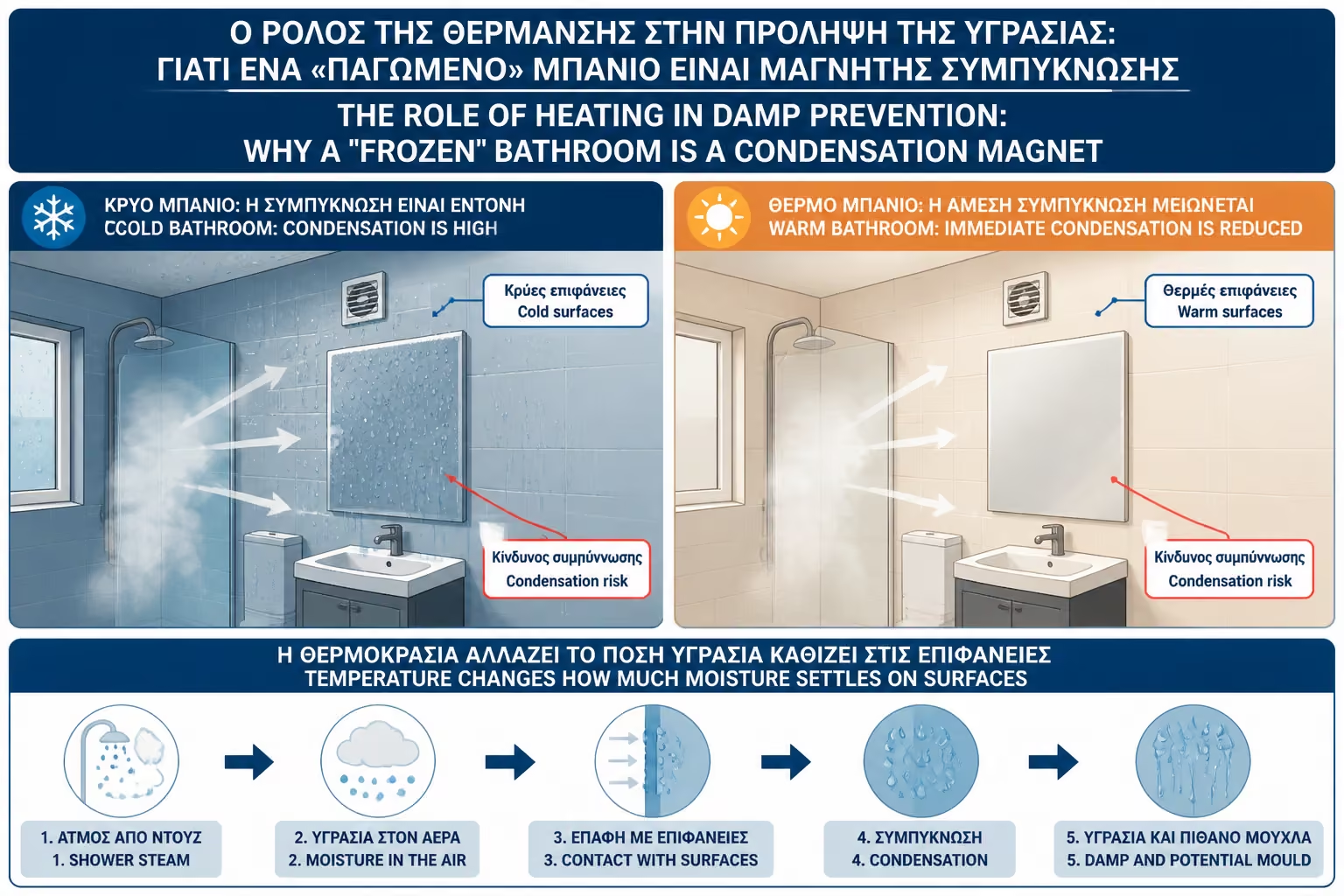
When we heat the air, we do not remove water from it. The absolute amount of water vapor can remain the same. What changes is the relative humidity. Warmer air can hold more moisture without reaching saturation. So, for the same amount of water vapor, the relative humidity drops when the air warms.
This explains why a bathroom with a towel rail or heater can look more "dry". The air does not necessarily become dry because the water has disappeared. It becomes more able to hold moisture until ventilation removes it.
But the crucial thing is that it doesn't stay there. If warm moist air remains in the bathroom and later cools, the relative humidity will rise again and condensation may occur later. That is why heating must be combined with ventilation. We heat the space to reduce direct condensation and ventilate to remove moisture.
The EPA states that mold growth can be prevented or controlled by indoor humidity control, and that if the mold is cleaned without correcting the water problem, it is likely to return. Heating is part of that control, not the whole solution.
Windows and exterior walls typically have a lower surface temperature than interior partitions. Especially in old houses with single glazing, insufficient insulation or frames with thermal bridges, the internal glazing can become very cold in winter. This is where the wet bathroom air condenses first.
Exterior walls work similarly. If they are not well insulated or if there is a column/beam that carries cold inwards, the surface drops to a lower temperature. This is why we see black dots in corners or above the shower, even if the tiles generally look clean.
Heating helps to raise the temperature of these surfaces. It doesn't work wonders on a really bad thermal bridge, but it does reduce the effect. If the bathroom is preheated before the shower, the mirror, glass and walls start at a higher temperature and condense less.
But if a certain spot is always moldy, even with heating and ventilation, then you may need an insulation or leak check. Paint and cleaner are not enough when the surface is permanently cold.
The towel rail is often treated as a comfort: warm towel after shower. In fact, it can also be a moisture prevention tool. A wet towel in a cold bath slowly evaporates water over hours. If there are many towels, the bathroom remains wet even after the shower is over.
The lit towel rail helps to dry towels faster and reduce the time that moisture stays in the room. It also raises the air temperature locally and helps keep surfaces from freezing. This is especially useful in small or blind bathrooms, where moisture does not have an easy escape.
It doesn't mean it has to burn all day for no reason. The correct use is planned: just before the bath, during use and for a period after, depending on the space. In electric towel rails, the thermostat or the timer are very useful so that there is no unnecessary consumption.
The towel rail does not replace a ventilator. If it dries the towels but the water vapor remains in the air, the moisture will transfer to windows and walls. Must work together with ventilation.
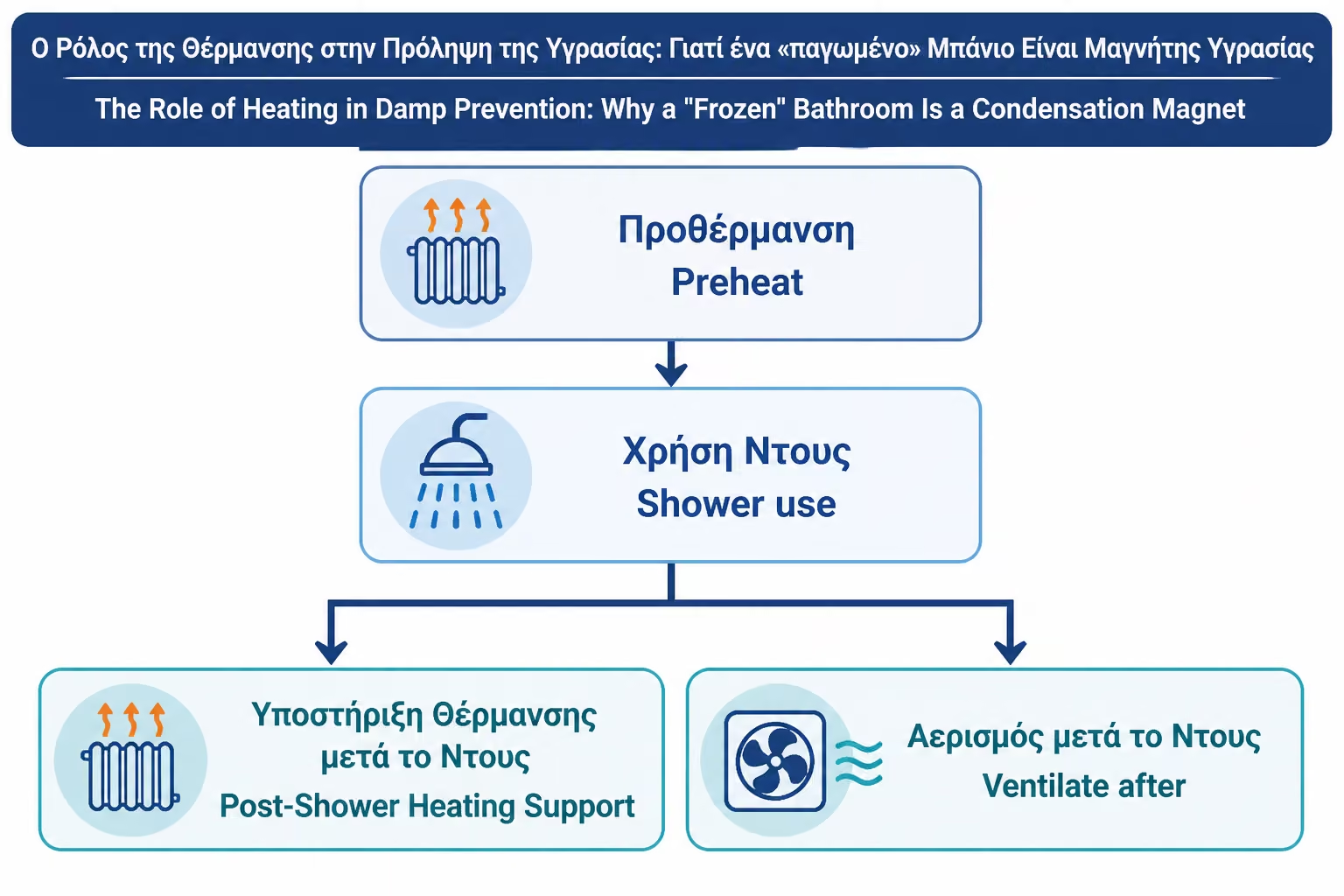
A bath that heats up only after being filled with steam has already missed the first critical stage. The surfaces are cold, the steam rises sharply and condensation begins immediately. Conversely, if the bath is preheated shortly before use, the surfaces start warmer and condense less.
The warm-up does not need to be excessive. In many bathrooms it is sufficient to turn on the towel rail or heating element 20–30 minutes before the shower, depending on the power, size and insulation condition. In a bathroom with underfloor heating, the logic is different, because the system has more inertia and works better with a fixed program.
Preheating is particularly useful in bathrooms with an external wall, window, roof or cold corners. It does not completely prevent the mirror from fogging, but it can reduce the intensity and especially the time the moisture remains.
The practical difference is visible after a few days. If the bathroom is heated first and ventilated afterwards, silicones, joints and corners dry faster.
After the shower, the bathroom has two problems: very humid air and wet surfaces. The fan removes moist air. Heating helps surfaces and towels dry. If only one works, the effect is half.
If you only open a fan in a cold bathroom, the surfaces can remain cold and wet for quite some time. If you only turn on heating without ventilation, the air will hold moisture until it cools or finds a cold spot. The right combination is heating for drying and ventilation for removing water vapor.
On a practical level, after showering run the fan on a timer or humidifier, keep the towel rail on for a reasonable amount of time, and leave the door slightly open when possible. If the bathroom is blind, the hygrostat is particularly useful because it continues until the humidity drops.
UK government guidance on residential ventilation highlights the need to keep ventilation devices open and to clean bathroom and kitchen ventilators regularly. Heating helps, but fresh air is still necessary.
In bathrooms with moisture problems, stability often works better than flash. If the room stays frozen all day and is only heated for a few minutes, the walls, ceiling and glass do not have time to really warm up. The air warms up a bit, but the surfaces stay cold. Thus the condensation continues.
Constant or programmed heating keeps surfaces at a better temperature. It doesn't mean that the bathroom has to be overheated all day. It means that it should not fall in very cold temperatures, especially in winter. Coventry City Council, in guidance on condensation and mould, states that keeping the temperature above 15°C helps reduce the risk of condensation and mould, while a more constant temperature helps more than constant on/off.
In a Greek residence, the exact temperature depends on insulation, usage and energy costs. In practice though, a bath that drops to 10–12°C in winter will condense much more easily than one kept at a milder temperature.
The economical solution is planning: we heat when needed, but we don't let the space freeze completely for many hours if it has a history of mold.
If you have a hygrometer in the bathroom, you might see something interesting: when the room warms up, the percentage of relative humidity drops, even if no water was removed. This is because warmer air can hold more water vapor.
Example: a cold room with 70% relative humidity may, when heated, show a lower percentage. This does not mean that the water disappeared. It means that the air has a greater "capacity" of moisture. If this air is ventilated, then the moisture leaves the space. If it stays inside and cools down, the rate will go up again.
That is why it is wrong to only look at the hygrometer at the moment when the heating is turned on. We have to see what happens after an hour, after the shower and the next morning. If the humidity drops and the space dries out, the system works. If it only drops temporarily and then comes back, better ventilation or moisture source control is needed.
The EPA recommends keeping indoor humidity low, below 60% RH and ideally between 30% and 50% where possible, as a mold control measure. In the bathroom after the shower there will be spikes, but they should not stay for hours.
Underfloor heating is especially helpful because it heats up a large area and keeps the floor drier. After the shower, the water on the floor evaporates faster and the space acquires a more uniform thermal sensation. Also, because the heat starts from low, it reduces the feeling of an icy bath.
The drawback is response time. Underfloor heating is not ideal for an "I’ll switch it on 10 minutes before I go in" routine. It works best with a schedule and steady operation. Used properly, it can keep the bathroom at a mild temperature and reduce cold surfaces. Used badly, it can consume energy without delivering an immediate benefit.
In bathrooms with a history of dampness, underfloor heating can be excellent as part of an overall solution, but it is not a replacement for an extractor fan. The water that evaporates from the floor still has to leave the room. Otherwise, it simply turns back into moisture in the air.
It works best in constant or programmed operation, combined with timer-controlled or humidistat-based ventilation.
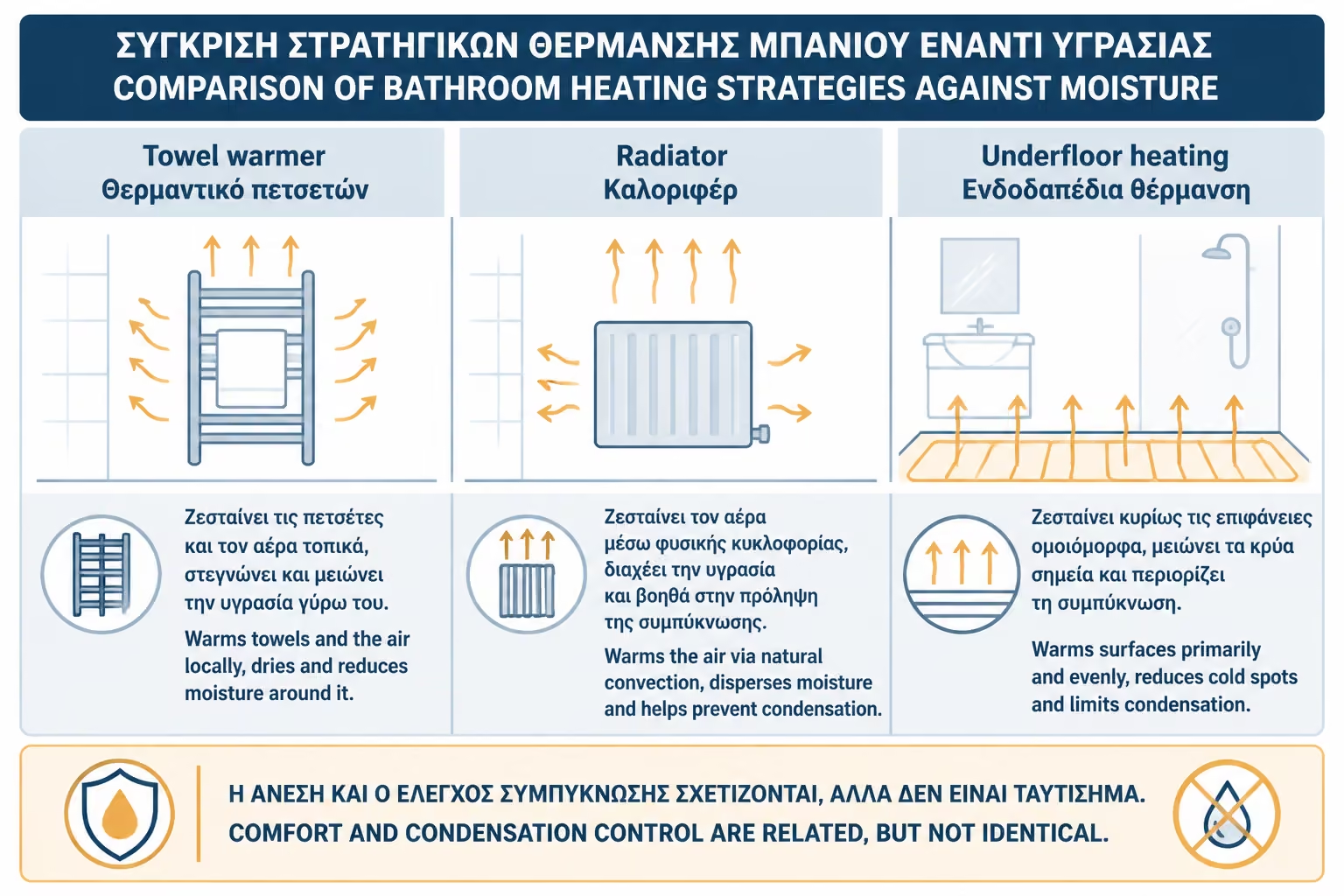
The electric towel rail is practical in bathrooms without central heating or in between seasons. It can work independently, dry towels and raise the temperature locally. But it needs the right choice of power, the right location and a safe electrical installation.
Not placed where aesthetically convenient if there are shower/tub zones and IP requirements. It must be installed by an electrician, protected by leakage relays and properly connected. We do not use rough sockets or sockets in the bathroom. Bathroom heating is an electrical matter, not a simple accessory.
In practice, the towel rail should be able to dry towels without being completely covered. If we fill it with many folded wet towels, the efficiency of the space decreases and the towels may dry slowly. It needs proper use: spread towels, air around them, operation for enough time.
A towel rail is one of the best small interventions for comfort and dampness prevention, but it must be designed and used correctly.
The water towel rail or radiator body is connected to the heating system of the house. When the heating works, it heats the bathroom and dries towels. It is an efficient solution if the heating system works for several hours and if the body has the right power for the space.
The problem is that in many houses the central heating does not work when the bathroom is used or only works for a few hours. Then the bathroom stays cold and the towel rack doesn't help. In such cases, an electric towel rail or hybrid solution can provide autonomy, but requires proper installation.
In a renovation, it must be calculated whether the towel rail is enough as the main heating. Many times a small body is chosen because it is beautiful, but it does not cover the losses of the bathroom. Then the towels warm up, but the space remains cold.
Bathroom heating is not just about design. It wants power proportional to square footage, height, exterior walls, frames and insulation.
Infrared panels can provide a sensation of heat to surfaces and users, while air heaters heat the air quickly. Both solutions have their place, but in the bathroom they need strict electrical safety and correct product selection.
Common portable air heaters should not be used casually in the bathroom. There is a risk of water, splashing and electric shock. If an electric heating solution is chosen, it must be suitable for a bathroom, with a correct IP rating, correct location, stable installation and leakage relay protection.
Infrared panels can help in small bathrooms, especially if they are installed correctly, but they do not dry the air on their own. Surfaces and bodies heat up. If there is no ventilation, the moisture remains.
Any electrical heating in the bathroom should be installed by an electrician. This is not the place for improvised sockets, extension leads, or portable heaters next to the shower.
Many avoid ventilation in winter because "the heat escapes". This is understandable, but if moist air stays in, the moisture will create mold, decay and poor air quality. The solution is not to close the ventilation. It is to ventilate correctly and in a controlled manner.
Mechanical ventilation with a timer removes humid air from the bathroom when needed, not all day. Heating keeps surfaces warmer to reduce condensation. The door with a small gap allows replacement air to enter so the fan can perform.
In more advanced solutions, there are ventilation systems with heat recovery, but in a typical residential bathroom the practical solution is a correct ventilator, correct running time and adequate heating.
The Energy Saving Trust states that ventilation is vital for good indoor air quality and helps remove moisture and pollutants from the home. The goal is not to choose between heat and a healthy space, but to combine them in the right way.
The window helps, but does not always replace heating. If you open the window for a long time in winter, the moisture may escape, but the surfaces will get cold. Then, in the next shower, they will condense even more easily. So window ventilation should be short and effective, not permanent freezing of the bathroom.
Best practice is to warm the room before use, run the fan or open the window briefly afterwards, and then not let the bathroom freeze for hours. If there is a window in a skylight with poor circulation, natural ventilation may be limited, so mechanical ventilation remains important.
In old single-glazed frames, the window is often the coldest point. Heating reduces the effect a bit, but frame or glazing improvement may be needed if condensation is severe.
The window is a ventilation tool, not a complete solution on its own. If the bathroom stays cold, condensation will keep forming.
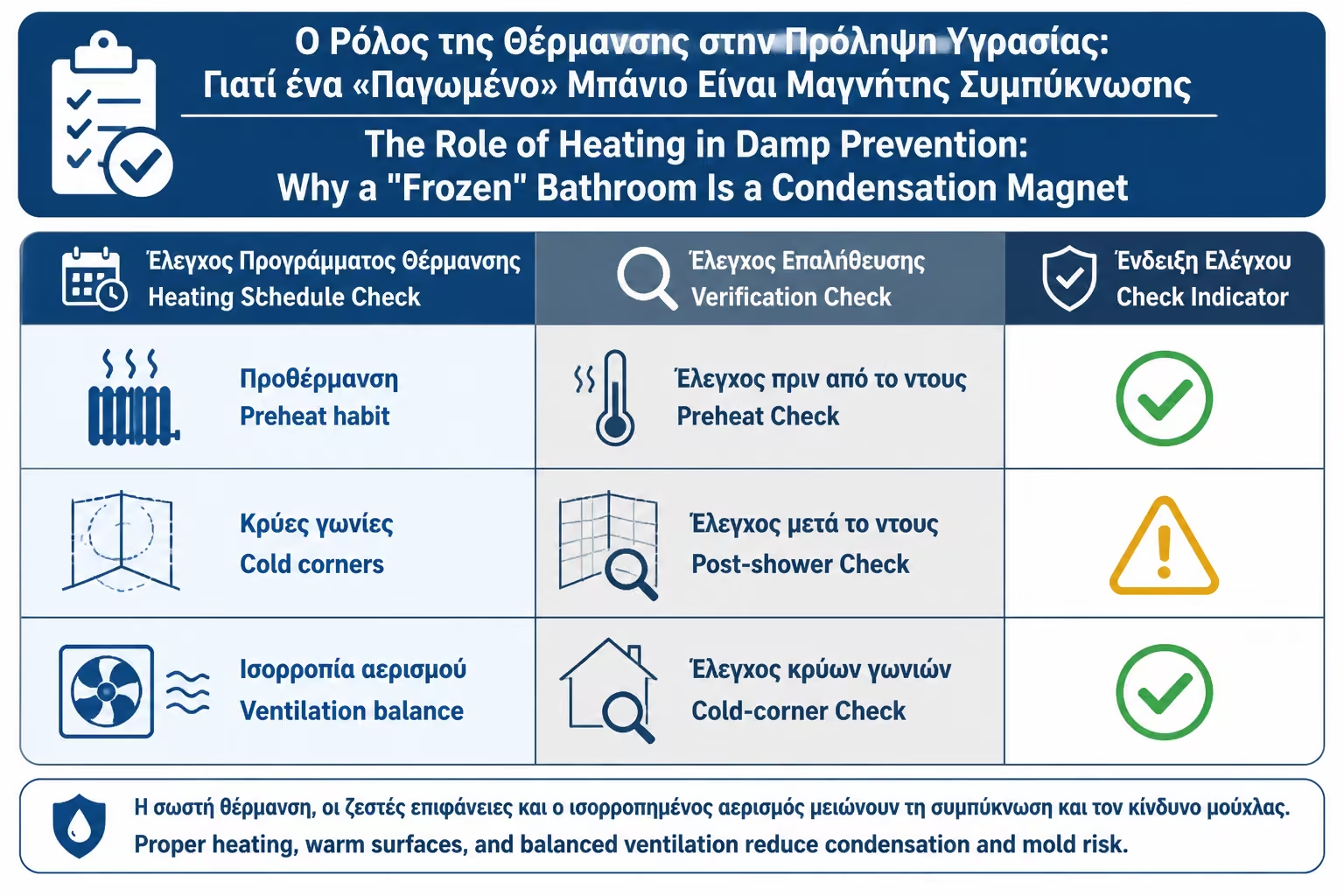
A practical program for a bathroom with a history of condensation is as follows: pre-warm before use, ventilate during and after, dry surfaces and towels, and avoid sudden cooling of the room.
For example, turn on the towel rail 20–30 minutes before showering if the room is cold. Open the vent during the shower or let it activate with a humidistat. After showering, let it run on a timer for 10–15 minutes or as needed. Keep the towel rack a little longer to dry the towels. If you can, scoop the water out of the cabin with a spatula.
If the bathroom has a window, open it for short ventilation, not to freeze the space. If it's blind, make sure the door has a gap or an air intake for the vent to work. If there is a hygrometer, watch how quickly the humidity drops after the shower.
Prevention is a daily habit. It doesn't need exaggeration, but it does need consistency.
The cost depends on whether there is already central heating, if an electric towel rail is needed, if a new electrical line is required, if underfloor heating is being renovated or if a body is simply added. Also affected by area, materials, VAT, access, square footage and installation status.
| Solution | Indicative range 2026 | When does it make sense? |
|---|---|---|
| Simple water towel rail | 80–250€+ device | When there is a heating network |
| Electric towel rail | 120–400€+ device | For autonomy and intermediate seasons |
| Hybrid towel rail | 200–600€+ | Water + electrical resistance |
| Electrical supply/connection | 80–250€+ | If there is no secure line |
| Underfloor electric heating under renovation | 300–1,000€+ | If opening floor/renovation |
| Infrared bath panel | 150–500€+ | When proper installation is permitted |
| Improvement of ventilator with timer/humidifier | 100–350€+ | Supplements for moisture |
The prices are indicative and depend a lot on whether the work is done in a finished bathroom or in a renovation. In an existing bathroom, electrical safety can increase costs. In a renovation, it is an opportunity to foresee the correct location, lines, thermostat and ventilation without any hassles.
Don't choose a radiator based on looks alone. Ask to be checked if its power is sufficient for the particular bathroom.
Faults in bathroom heating are usually seen in winter, when the bathroom fills with steam and the corners turn black. Many times it is not only the ventilator that is to blame. It's because the bathroom stays cold.
| Error | What it causes in practice | A more correct approach |
|---|---|---|
| Heating for only 5 minutes | The air heats up, not the surfaces | Warm-up or fixed program |
| No heating in a blind bathroom | Intense condensation | Towel rack or other solution |
| Heating without ventilation | Moisture stays in the air | Timer/humidifier together with heating |
| Open window for hours in winter | Surfaces are freezing | Short ventilation |
| Small towel rack for a large bathroom | Insufficient heating | Power calculation |
| Many towels on the body | Reduced space heating | Spread towels and air around |
| Portable air heater with balladeze | Risk of electric shock | Permanent suitable solution |
| Ignoring thermal bridges | Mold in the same spot | Insulation check |
| Uncontrolled overheating | Useless consumption | Thermostat/timer |
| Mold painting without thermal solution | Reappearance | Heating + ventilation + restoration |
The most typical mistake is the closed, cold bathroom that is heated only by the steam of the shower. This "warm" air is full of moisture and rests on icy surfaces. It's the perfect condensing recipe.
| Control | Yes / No |
|---|---|
| Is the bathroom cold before the shower? | Yes / No |
| Is there a towel rail or other fixed heating element? | Yes / No |
| Does the heating turn on before use and not just after? | Yes / No |
| Do the towels dry within a reasonable amount of time? | Yes / No |
| Does the fan run during and after the shower? | Yes / No |
| Is there a timer or a hygrostat? | Yes / No |
| Is there a gap under the door for air intake? | Yes / No |
| Does the window open quickly, without freezing the space for hours? | Yes / No |
| Are there any corners that stay cold and turn black? | Yes / No |
| Is the heater rated correctly for the square footage? | Yes / No |
| Is the electric heating installed with correct IP/safety? | Yes / No |
| Does the humidity drop within a reasonable amount of time after showering? | Yes / No |
If your bathroom gets moldy in the winter, don't just look at the ventilator. Also measure the room temperature. A frozen ceiling or exterior wall will condense water vapor even if the fan is running. The towel rail is not just for convenience; it is a preventive tool, because it keeps the area and the towels drier. The correct recipe is pre-heating before the shower, ventilation after, and enough heat so that the surfaces do not stay below the dew point. If the same corner always turns black, then we also check thermal bridging, not just color.
Heating plays a key role in preventing moisture problems in the bathroom. A cold bathroom is far more prone to condensation because water vapor from the shower settles on cold surfaces and turns into droplets. When those droplets remain on ceilings, corners, grout lines, and silicone joints, they create ideal conditions for mold.
Proper heating helps preventively. It heats the surfaces, reduces direct condensation, dries towels and accelerates the drying of the space. A towel rail, underfloor heating or a properly dimensioned body is not just a matter of comfort. It is part of the hygienic operation of the bathroom.
But heating does not remove moisture by itself. If the moist air is not removed, it will stay in the bathroom and condense when it cools. That is why it is always necessary to combine it with ventilation: clean ventilator, timer or humidistat, proper ventilation and air intake through the door.
The best solution is balance. Warm bath before use, controlled ventilation afterwards, dry towels and check cold spots. When these work together, the bathroom doesn't have to struggle every winter with foggy windows, black corners and damp smells.
Return to category.
Go to categoryReturn to the central guide.
Go to guide