
Bathroom Lighting, Ventilation & Heating
Return to category.
Go to categoryPassive moisture collectors are among the simplest products that one finds in supermarkets, paint stores and home stores. A plastic can, a tablet or bag of salts/crystals, and a container underneath where liquid collects. They have no plug, no noise, no motor, no installation and they cost little. So it is reasonable to ask: can they really help in a small WC or bathroom cabinet?
The short answer is: yes, but only when used correctly. Passive moisture collectors can help in small, closed and relatively mild spaces, such as bathroom cabinets, small WCs without showers, under-sink storage, towel closets or small musty-smelling corners. However, it is not a solution for a normal bathroom with a hot shower, intense water vapor, mold on the ceiling or daily condensation on the walls.
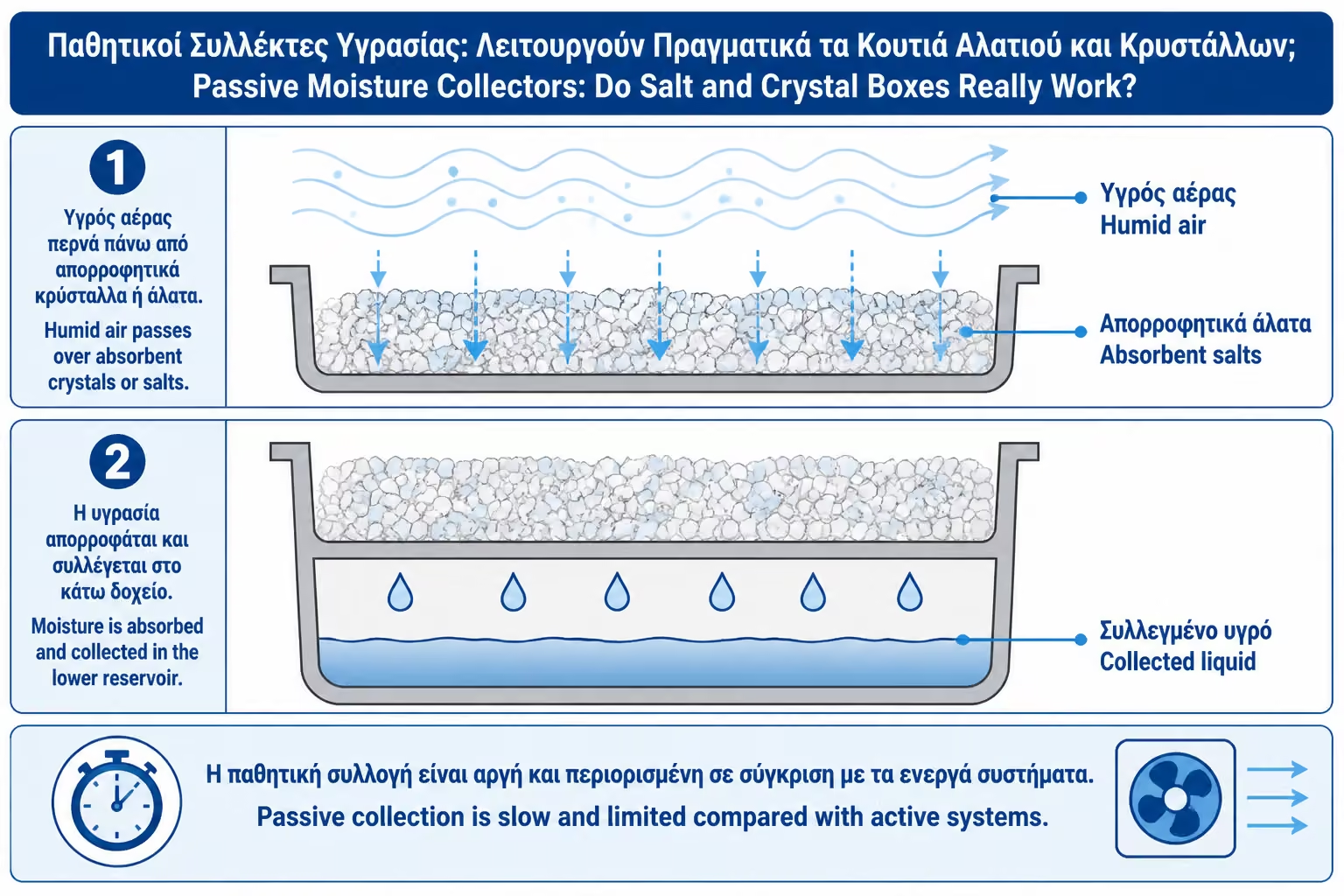
The reason is that they work passively. They don't have a fan to move air, they don't blow moist air out, and they don't actively control the relative humidity of the room. The salts draw moisture from the air around them and gradually dissolve, creating a liquid solution in the container. Products such as DampRid describe this process as absorbing moisture from crystals that gradually dissolve into a liquid brine, i.e. a salt solution.
This means that passive collectors are useful for “small, slow, localized” moisture. They cannot compete with an electric dehumidifier or a proper ventilator. If a bathroom gets steamy after a shower, it needs mechanical ventilation, a timer, a hygrostat, air intake through the door and proper drying. The can of salt may help a little with the cupboard or closet smell, but it will not "clean" the air of a bathroom full of water vapor.
In this guide we'll look at how dehumidifiers work, where they work, where they fail, how they differ from a dehumidifier and a fan, how to use them safely and when they're worth buying instead of paying for a more serious solution.
Passive moisture collectors are simple containers containing hygroscopic material, usually salts such as calcium chloride or similar crystals. This material has the ability to draw water vapor from the air. As it absorbs water, it gradually dissolves and the resulting liquid ends up at the bottom of the container.
Their operation does not require electricity. There is no compressor, fan, filter, cable or sensor tank. This makes them quiet and easy to use. You place them in one spot, let them work, and when the container is full or the tablet is finished, you empty the liquid and change the refill.
In essence, this is a very simple form of dehumidification. But since there is no mechanical air circulation, their action is slow and local. They work best when the space is small and closed, so that the air around the container is slowly exchanged with the humidity of the space.
That is why they make sense in cupboards, lofts, storage boxes, boats, caravans, under-sink cabinets, or small WCs. It is not reasonable to expect them to deal with steam from a hot shower.
Moisture salts are hygroscopic. This means they attract water from the air. Calcium chloride, often used in such products, can absorb moisture and turn into a liquid solution. This is why you see the tablet shrink and liquid collects in the container.
The process is chemically and physically simple: water vapor from the air comes into contact with the crystals, binds to the material, and eventually brine is formed. Other manufacturers of similar products describe that calcium chloride crystals absorb water vapor until it dissolves into a liquid.
The liquid collected is not just pure water. It is a saline solution. May be irritating, stain, damage wood, metal, fabrics or surfaces if spilled. That is why the container must stand firmly and away from children, pets and places where it can tip over.
An important point: the collectors do not magically "dry" the space to a certain percentage of relative humidity. They don't have a hygrostat. They work as long as there is moisture available and as much as the material can absorb. Their performance depends on the temperature, humidity, volume of the room and how closed it is.
Passive dehumidifiers work best in small, enclosed spaces where there are no large and sudden productions of water vapour. Ideal examples are bathroom cabinets, towel closets, small WCs without showers, closed storage under the sink, storage boxes or small corners that smell of dampness.
In such spaces, humidity rises slowly. There is no sudden "burst" of steam like in the shower. So the passive material has time to absorb water vapor and reduce the heavy feel or closing smell a bit. Their use is also practical because in cupboards and small WCs there is not always an outlet or the possibility of an electrical device.
It is also a good solution for seasonal protection. For example, in a holiday home that stays closed, a can in a bathroom cabinet can help keep towels from smelling or a small closed spot from collecting moisture. But it will not protect the whole house from mold if the general humidity is high.
Their best use is complementary. They do not replace ventilation, heating or an electric dehumidifier. They simply help in small areas where the humidity is mild and the budget is low.
They are not enough for a normal bathroom with a daily hot shower. A shower can fill the space with water vapor within minutes. A passive collector does not have enough absorption speed to deal with such a peak. It will continue to collect moisture slowly, but the steam will already have settled on mirrors, windows, ceiling, joints and silicones.
They are also not sufficient in bathrooms with active mold on the ceiling, on walls that sweat, in corners with thermal bridges, on leaks, or in areas where the relative humidity is generally very high. In such cases diagnosis and substantial intervention is needed: ventilator, air duct, air intake, heating, insulation or leak repair.
They are not enough in open spaces. If you put a can in a large bathroom or hallway with constant air exchange, its effect will be small. It will absorb moisture from the air around it, but it will not actually control the microclimate of the room.
Simply put: if you need a solution for a cupboard smell, they are worth it. If you need a shower steam solution, no.
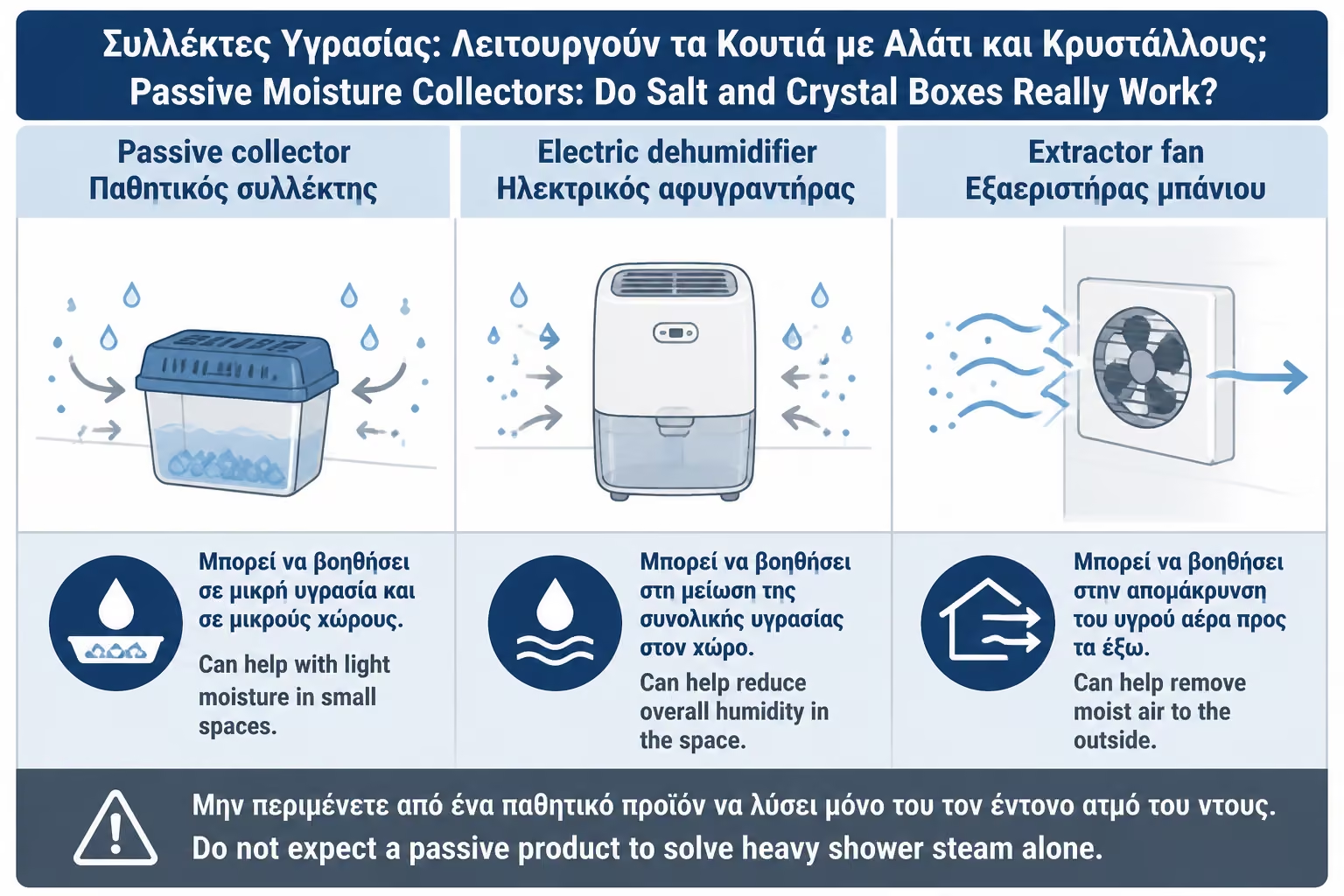
The passive collector is slow, quiet, cheap and local. The electric dehumidifier is active, much more powerful, makes noise, consumes electricity and can control the humidity of a larger space. The difference in performance can be huge.
An electric dehumidifier continuously draws in air with a fan, removes moisture and returns drier air to the room. It has a hygrostat, container, filter and specific capacity in liters/day. A passive collector simply sits in one spot and absorbs whatever moisture comes into contact with its material. Practical market analyzes emphasize that moisture absorbers are ideal for small closed spaces, but have a much lower performance than electric dehumidifiers.
| Criterion | Passive collector | Electric dehumidifier |
|---|---|---|
| Current | You don't need to | It is needed |
| Noise | Zero | There is |
| Performance | Low/local | Much higher |
| Space of use | Closets, small WC, closed areas | Rooms, corridors, general dampness |
| Dealing with shower steam | Insufficient | Auxiliary, but not a substitute for ventilation |
| Purchase cost | Low | Medium/high |
| Maintenance | Change tablet/empty fluid | Filters, container, current |
For small cabinet without outlet, passive collector makes sense. For a general home moisture problem, the electric dehumidifier is in another category.
The fan extracts moist air from the bathroom. The passive collector does not output anything. This is the main difference. If the problem is shower steam, a ventilator is essential. If the problem is a towel closet that smells like clods, the passive collector can help.
In a small WC without a shower, where the issue is light dampness and closed room smell, a collector can be useful, especially if there is no socket and you don't want to put in a fan. However, if the WC has a window that stays closed, a bad smell or strong humidity due to a plumbing problem, the can does not solve the cause.
In a normal bathroom, proper ventilation comes first. If the fan does not pull, if there is no timer, or if the door does not have an air intake gap, the passive collector will not correct the problem. It will collect some water in the container and give the feeling that "something is happening", but the surfaces will continue to sweat.
The passive collector is a supplement. The ventilator is a basic system.
Realistically, you can expect a reduction in clod smell in a small space, less moisture in a cupboard, a better feel in an infrequently used WC and protection of small stored items. You may see liquid in the container and this is an indication that the product is actually absorbing moisture.
You should not wait for the bathroom to dry after showering. You should not wait to stop mold in the ceiling. You shouldn't expect it to fix moisture from a leak. You shouldn't expect it to drop the relative humidity of a large room from 75% to 55% in a controlled manner.
The shelf life of the tablet depends on the humidity. In mild use it can last weeks or months. In a very humid environment it can finish much faster. Some market guides state that the tablets can last up to a few months in normal conditions, but in extreme humidity they can run out in as little as a few weeks.
If a can fills up very quickly, don't just see it as a success. See it also as an indication that the area has high humidity and may need a more serious solution.
Yes, it can be a good low-budget solution for a small WC without a shower and without an outlet, especially if the problem is mild dampness or a musty smell. In such a space, there are no large peaks of water vapor. The can can work slowly and quietly, without electricity and without installation.
Place it in a stable place, away from children, pets and where it can be spilled. If there is a cabinet under the sink, it can go in, but not right next to dripping pipes or where it can get directly wet. If there is a small shelf or corner, even better.
If the WC has a window, natural ventilation remains important. If it doesn't have one, the can can help a little, but it doesn't remove odors like a vent. If there is a persistent odor, siphons, drainage and ventilation should be checked.
So, for a small WC, it is a reasonable low-cost solution, as long as we don't ask it for a job it can't do.
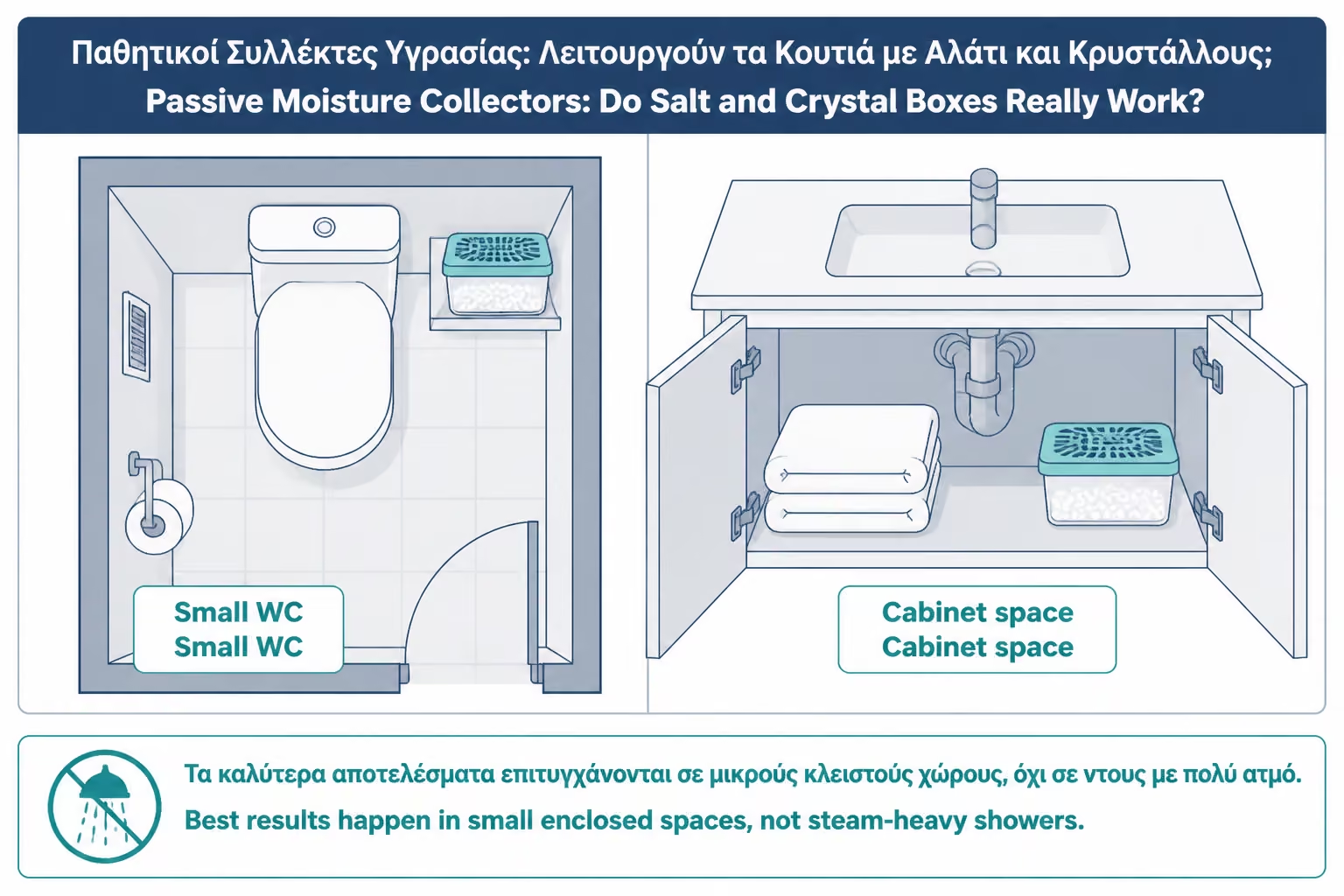
Yes, here are some of the most appropriate uses. Bathroom cabinets often smell musty because they have limited ventilation, hold towels, stationery, cleaners or cosmetics and are in an area with frequent humidity. A small passive collector can reduce the humidity inside the cabinet.
It is especially useful under the sink, where there are pipes, a siphon and closed air. But be careful: if there is a real leak from a siphon or pipe, the can is not a solution. It will collect moisture, but the cause will continue to wet the furniture. If you see swelling, drips, a musty smell, or water in the bottom of the cabinet, check for leaks first.
Place the collector on a small tray or in a place where it will not spill onto wood/MDF. Salty liquid can leave damage if knocked over. Do not put it on clothes, toilet paper or towels.
For cabinets, the cost/benefit ratio is good. But it needs stable placement and periodic control.
Passive collectors do not have an electrical hazard because they are not connected to power. This is a big advantage in bathrooms and small WCs. But it does not mean that they are completely "innocent". The salts and especially the resulting liquid must be handled carefully.
Liquid solution can irritate skin or eyes and damage surfaces if spilled. It should be kept away from children and pets. It should not be swallowed. It should not be poured onto metals, wood, fabrics or joints without cleaning. If spilled, wipe up immediately and rinse surface according to product instructions.
Always read the label. Another product may have a different composition, different disposal method and different warnings. Some products have replacement tablets, some pouches, some liquid containers. Do not transfer the liquid in an empty, unmarked bottle.
Safety here is not about electric shock. Covers spillage of salty liquid, contact with children/animals and damage to surfaces.
The change must be done with gloves or at least with care so that the liquid does not come into contact with skin and surfaces. Open the container slowly, without pressing. Drain the fluid according to the manufacturer's instructions. Many such products allow disposal down the drain with plenty of water, but this should not be taken for granted for every product. We read the label.
After emptying, rinse the container if provided by the manufacturer and allow it to dry before inserting a new tablet. Do not touch the tablet with wet hands. Do not break it to "work faster", unless the product allows it. The breakage can create dust or change the way it sits in the container.
If the container is cracked, does not close properly, or has been knocked over in the past, replace it. A cheap plastic box dripping in a cupboard can do more damage than it's worth.
Do not leave a full container for months without checking. When liquid collects, it must be emptied.
Place the collector where there is air around it, not crammed behind objects. In a cupboard, leave some space around the can. In small WC, put it on a stable shelf or corner where it won't be kicked and it won't fall. In an under-sink cabinet, put it on a tray or plastic base for safety.
Do not place it directly under dripping water. If water drips, there is a leak and it needs to be repaired. Do not place it on unprotected wood. Do not close it in a bag or box, because it needs contact with air.
In an area with high humidity, two smaller collectors in different places may be needed instead of one large one. But if you get to the point where you're filling a lot of cans in a bathroom, you probably need another solution.
The correct position is stable, ventilated, safe and accessible for inspection.
Passive collectors are economical. The cost depends on the size, the brand, whether it is a simple box or a more beautiful device, whether it accepts spare tablets and how often it needs to be replaced.
| Product / use | Indicative range 2026 | Comment |
|---|---|---|
| Small disposable moisture can | 2–6€ | For cupboards and small areas |
| Plastic base with tablet | €5–€15 | Reusable container |
| Replacement tablets / crystals | 3–10€ | Depending on size and duration |
| Larger collector for small room/WC | 8–20€ | Best for indoors |
| Multi-piece packages | 10–30€ | Good for cupboards/cottages |
The real cost is not just the purchase. It is also the replacement frequency. If in a very wet WC the tablet runs out every 2–3 weeks, the annual cost goes up. In this case, a better ventilation solution or an electric dehumidifier in an adjacent area may be beneficial.
For cupboards and small spaces, however, it is one of the most economical interventions you can make.
The first sign is that the tablet shrinks and liquid collects in the container. This means it absorbs moisture. The second sign is that the place smells less musty or the towels in the cupboard look drier. The third is that it reduces the feeling of heavy humidity in a small closed spot.
However, if the collector gathers liquid while mold continues to grow on the ceiling, that does not mean it is "not working". It means it is working at the wrong scale. It can collect some moisture, but the room's underlying problem is bigger than its capacity.
A hygrometer can help. If in a small cabinet you see that the relative humidity drops a little or that it does not rise as much, there is a benefit. In a normal bathroom after a shower, you will hardly see a substantial difference from just a passive collector.
The correct assessment is to judge him for his use: cupboard, small WC, closed spot. Not for electric dehumidifier operation.
They can help reduce the risk of mold in small enclosed spaces if the humidity is mild and there is no leakage. For example, in a cupboard with towels they can reduce odor and moisture. In under sink storage they may help as long as the pipes are not dripping.
They cannot "guarantee" that mold will not appear. Mold needs moisture, organic matter and time. If the cupboard is dirty, if there are wet towels, if the faucet is dripping, or if the bathroom remains wet, the can just alleviates the situation a little.
In an open bathroom with a shower, it is not a mold prevention measure. There, prevention is ventilation, drying, heating, surface cleaning and the right materials. The passive collector can be placed inside the bathroom cabinet as an additional aid, not as a main measure.
If there is already black mold on the ceiling or joints, first clean/repair and resolve the dampness. Then the collector can help in small closed places.
Don't buy a passive collector if you expect it to solve a hot shower problem. Do not buy it as a replacement fan. Do not buy it if there is an active leak. Don't buy it to cover mold that is already spreading. In these cases, it will give a false sense of action.
Also don't buy it if the space is big and open. Its performance will be very small. If you have general humidity in the house, you better consider an electric dehumidifier and proper ventilation. If you have a blind bathroom with moisture, it is better to invest in a fan with a hygrostat.
If you have children or pets who may knock over the container, it needs very careful placement. If you can't mount it safely, you might be better off not using it.
The passive collector is a good buy when it fits a small, closed and mild problem. It's a bad buy when bought out of desperation for a major technical problem.
For small WC without outlet, the economic strategy is combination. First, as long as there is frequent natural ventilation or fan operation if available. Second, cleaning siphons and checking for sewage odors. Third, fixed-point passive collector. Fourth, small hygrometer to see if there is a real problem.
For a bathroom cabinet, the strategy is even simpler. Do not put wet towels inside. Allow a little ventilation when possible. Check siphon and pipes. Place a small moisture collector in a tray. Check on him every few weeks. If it fills up too quickly, you're looking for a cause.
If there is a musty smell, empty the cupboard and clean it. Don't just put a collector on already moldy items. The collector does not clean mold. It just reduces humidity.
This is the proper low-budget use: prevention and gentle support, not treatment of severe dampness.
Mistakes are made because the product is simple and cheap, so it seems harmless and "general purpose". In practice, it has certain limits.
| Error | What happens in practice | A more correct approach |
|---|---|---|
| Use in a bathroom with a shower as the main solution | It does not catch water vapor | Ventilator with timer/humidifier |
| Placement in a large open space | Minimal effect | Small enclosed spaces |
| Overturning a container in a cabinet | Saltwater damage | Fixed stand/tray |
| Use on wet furniture from a spill | The cause continues | First leak repair |
| Tablet change without emptying/cleaning | Dirt and odors | Regular emptying and cleaning |
| Place near children/animals | Contact/swallowing hazard | High or safe point |
| Expectation that stops mold in the ceiling | Disappointment | Vent/Condensation Solution |
| Ignore hygrometer | You don't know if it helps | RH measurement in space |
| Lots of boxes instead of a technical solution | Ongoing costs with no solution | Diagnosing the cause of moisture |
| Liquid disposal without instructions | Possible damage/mishandling | Read product label |
The most typical mistake is to put a can in the bathroom and then the owner thinks that he "solved the humidity". If the mirror fogs up, the ceiling darkens and the joints stay wet, the can is not a solution. It's just a little help.
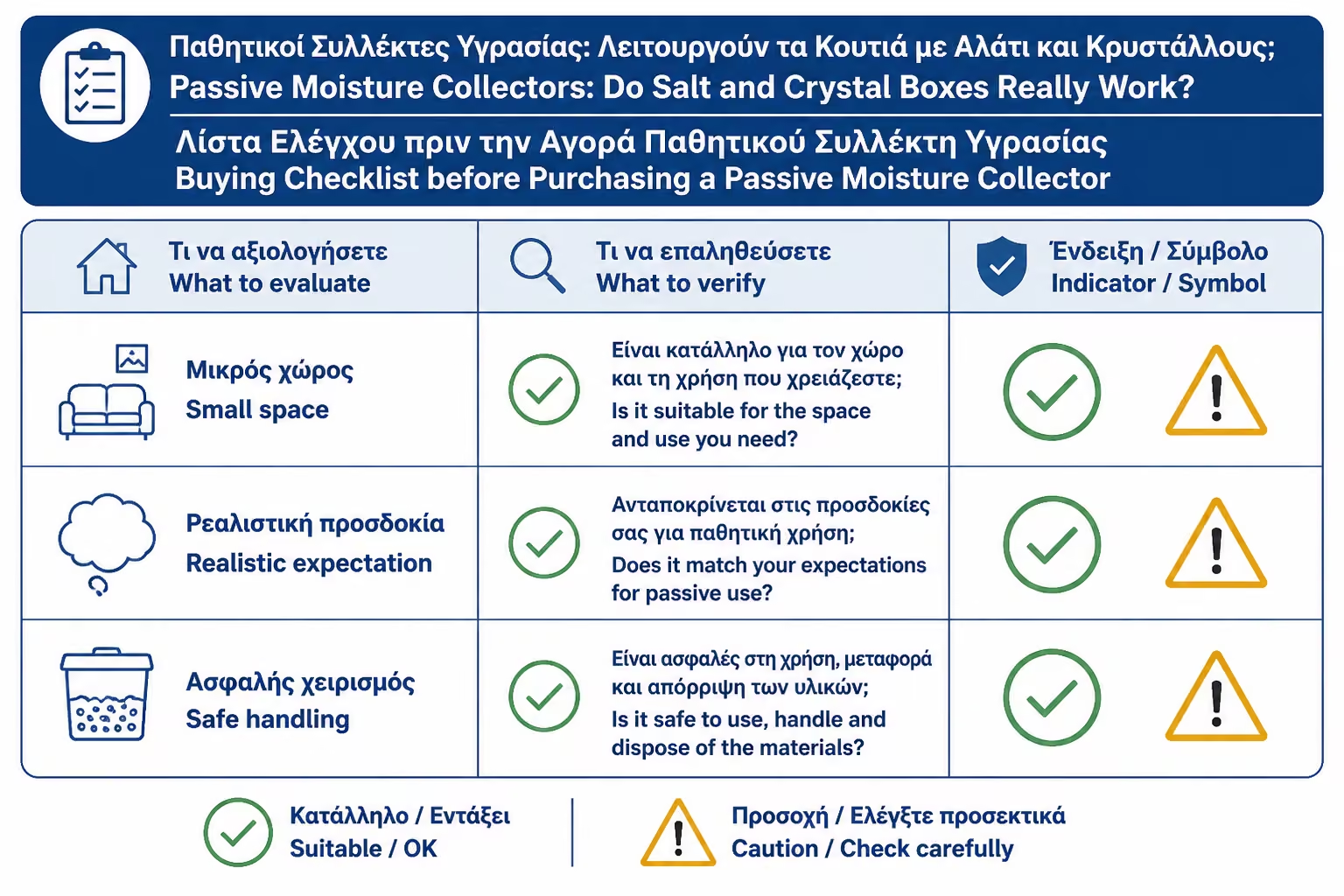
| Inquiry | Yes / No |
|---|---|
| Is the space small and confined? | Yes / No |
| No daily steam from the shower? | Yes / No |
| Is the problem mild damp or musty smell? | Yes / No |
| Has a pipe or siphon leak been blocked? | Yes / No |
| Is there a safe place to keep the container from spilling? | Yes / No |
| No access to children or pets? | Yes / No |
| Will it be checked and emptied regularly? | Yes / No |
| Is the surface underneath protected from possible liquid leakage? | Yes / No |
| Have you read the product disposal instructions? | Yes / No |
| If the problem is large, has a fan or electric dehumidifier been considered? | Yes / No |
| If there is mold, has the cause been cleaned and treated? | Yes / No |
| Is the solution used as a supplement rather than a sole? | Yes / No |
Salt cans work, but not as many people think. It is a good, cheap and quiet solution for a small closed WC, bathroom cabinet or under-sink storage. It is not a solution for shower steam, mold in the ceiling or dampness from a leak. If the container fills up quickly, don't just be happy that it's “working”; see it as a sign that the area has high humidity. For real bathroom with shower, first ventilation and drying, then passive collector only as an aid in closed places.
Passive salt or crystal moisture collectors really do work, but on a limited scale. They draw moisture from the air, turn it into a liquid solution and help in small enclosed spaces where the humidity is mild and slow. They are economical, quiet and do not need electricity, so they make sense in small WCs without sockets, bathroom cabinets, under-sink storage and places that smell like clods.
But they should not be overestimated. They don't replace a fan, deal with steam from a hot shower, fix leaks, or stop permanent mold on a ceiling or walls. If the bathroom has severe condensation, it needs proper airflow, a timer or humidifier, a clean vent, a vacuum under the door, and possibly heating or insulation.
Correct use is complementary. We put the can where it can help: in a small closed place. We place it safely, we control it, we empty it according to the instructions and we don't let it spill on furniture or fabrics. If we expect it to do the job of an electric dehumidifier or fan, we will be disappointed.
As a low-budget solution, it is worth it. As a primary solution for a wet shower bath, no. It's this difference that determines whether the money will catch on or whether you'll just be buying tablets every month without solving the real problem.
Return to category.
Go to categoryReturn to the central guide.
Go to guide