
Bathroom Lighting, Ventilation & Heating
Return to category.
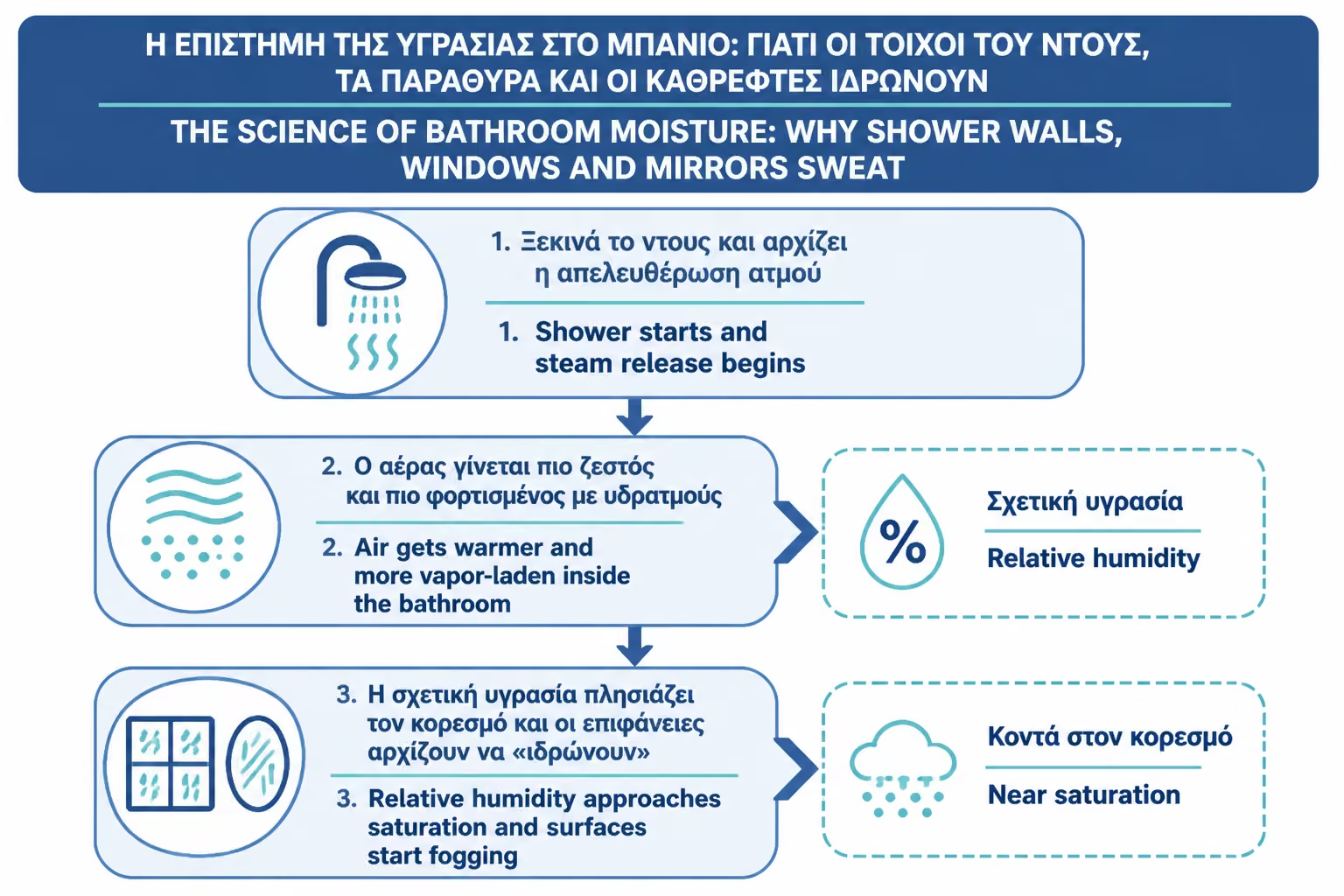
Go to categoryThe "sweaty" bathroom is one of the most common phenomena in every home. Take a hot shower and within minutes the mirror fogs up, the tiles are covered with fine droplets, the window drips, the ceiling darkens in the corners and the walls look wet. Many consider it normal and pass it by. Others worry that there is a leak. In fact, in most cases it is condensation of water vapor.
Condensation is not a harm in itself. It is a natural phenomenon. The warm bathroom air fills with water vapor during the shower. When this moist air touches cooler surfaces, such as a mirror, glass, exterior wall, ceiling or corner with a thermal bridge, the water vapor turns into water droplets. What we see as "sweat" does not come through the wall. It is created on the surface.
The problem starts when this happens often and the area does not dry quickly. A foggy window for a few minutes after a shower is not a disaster. A wall that stays damp for hours, however, is another matter. When moisture is repeated daily and remains on joints, silicones, paints, ceilings and furniture, it creates an ideal environment for fungi and mold.
The temperature difference is the key. The warmer and moister the air and the colder the surface, the easier it is for condensation to form. That is why the problem is more intense in winter, in blind bathrooms, on external walls, in corners without insulation, in frames with cold glass and in bathrooms that are not properly ventilated after the shower.
In this guide we will see in a simple way what condensation is, what relative humidity means, what dew point is, why certain surfaces sweat, how the phenomenon is connected to mold and what you can do practically with ventilation, heating, insulation and proper use of the bathroom.
Water vapor condensation is the conversion of invisible water present in the air into visible droplets on a surface. Air always contains some amount of moisture. When we take a hot shower, this amount increases very quickly. The steam we see is nothing but water in the form of tiny droplets and water vapor suspended in the air.
Warm air can hold more moisture than cold air. When the warm, moist bathroom air meets a cold surface, it cools locally. If it gets cold enough, it can no longer hold all of its moisture. Then the excess moisture comes out of the air and becomes a drop on the surface.
This is why the mirror fogs up first. The mirror usually has a cold glass surface and is exposed to moist air. The same goes for the window. If the glass is cold, water vapor condenses on it and creates fog or drops.
On walls, the phenomenon is more insidious. It doesn't always look like a drop right away. It may appear as a dull moisture, a dark spot, a wet corner or small black dots after a while. That's where mold often starts.
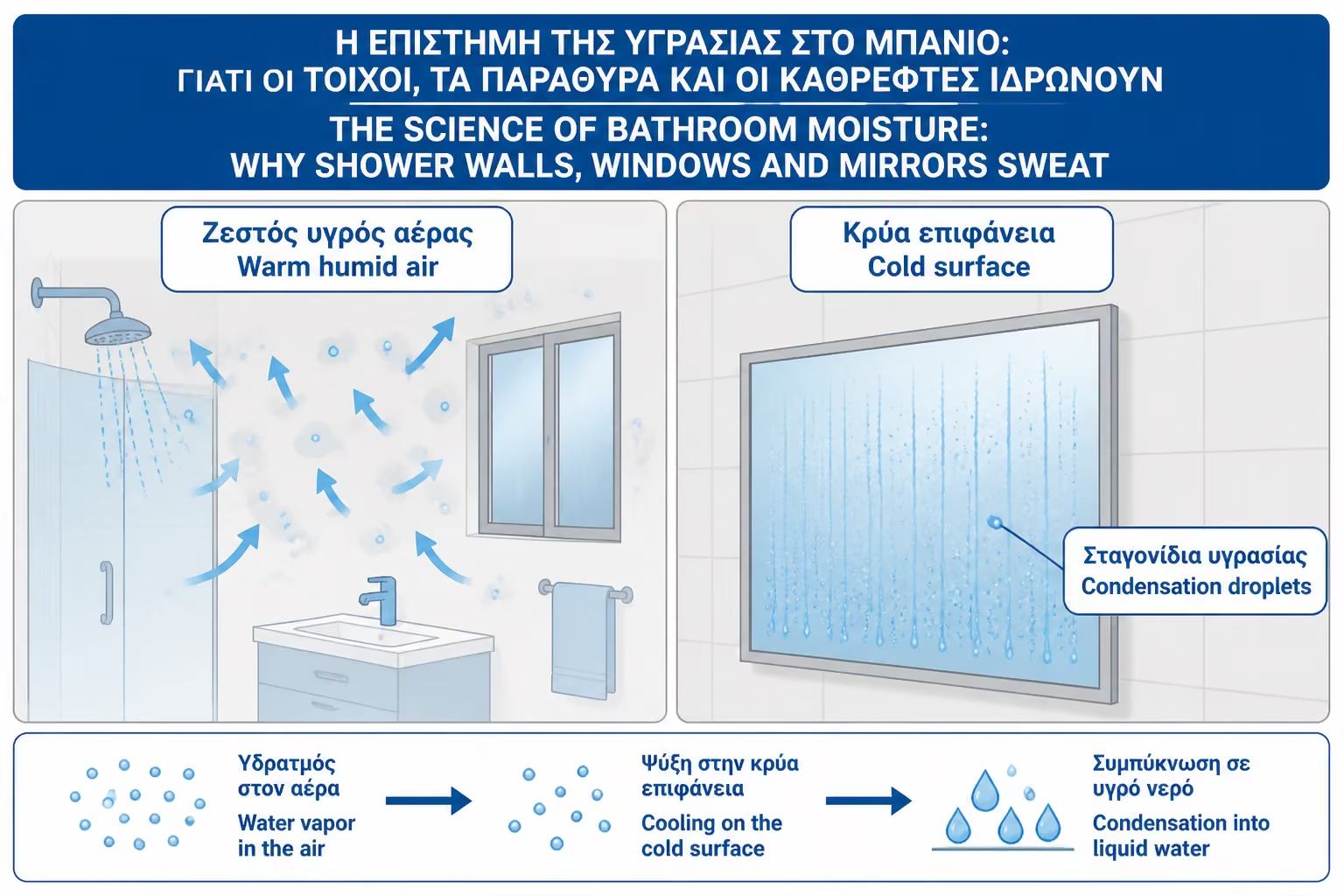
The hot shower produces a large amount of water vapor in a short time. The water falls in fine drops, comes into contact with warm air, evaporates and fills the space with moisture. The hotter the water, the longer the shower and the more closed the cabin or bathroom, the more moisture accumulates.
In a small bathroom, air volume is limited. This means that the same amount of water vapor raises the relative humidity much faster than in a large space. If the bathroom is blind, without a window, and the ventilator is not working properly, the air becomes saturated quickly.
A 10-minute shower can completely change the conditions of the room. Before showering, the bathroom can have normal humidity. Then the humidity can approach very high levels, especially if the air is not renewed. Then a cold surface is sufficient for condensation to occur.
That is why the problem is not solved just by wiping the mirror. The water you see in the mirror is just part of the moisture. The rest is in the air and on surfaces.
Relative humidity is expressed as a percentage. When we say that the relative humidity is 60%, it means that the air holds 60% of the maximum humidity it can hold at that temperature. If it reaches 100%, the air is saturated. It cannot hold any more water without starting to condense.
Importantly, relative humidity depends on temperature. Warm air can hold more water. The cold less. So an air that at 24°C seems "tolerable", when it touches a surface of 12°C it can reach local saturation and leave water.
This explains why the drops appear in certain places and not everywhere the same. The air in the bathroom may have the same humidity, but the surfaces have different temperatures. The glass, the outer wall and the thermally bridged corner are cooler. That's where the problem first appears.
Relative humidity is a useful indicator, but it is not sufficient by itself. We also need to know the temperature of the surfaces. That's where the dew point is hiding.
The dew point is the temperature at which the air begins to give off moisture as water. Simply put, if moist air cools to a certain temperature, it reaches the limit where it cannot hold any more water and condensation begins.
Example: if after the shower the bathroom has hot and very humid air, the dew point can be quite high. If the mirror or window has a temperature lower than this point, it will fog up. If an exterior wall has a surface colder than the dew point, it will "sweat".
There is no need for the owner to mathematically calculate the dew point. But he needs to understand the logic: condensation occurs when moist air touches a surface that is cold enough. So we have two ways to reduce the phenomenon. To reduce the humidity of the air with ventilation and to increase the temperature of the surfaces with heating or better insulation.
If we only do one, it may not be enough. A fan helps a lot, but if the wall is frozen and the use is heavy, condensation can occur again. A warm surface helps, but if the bathroom remains full of water vapor without ventilation, we will still have a problem.
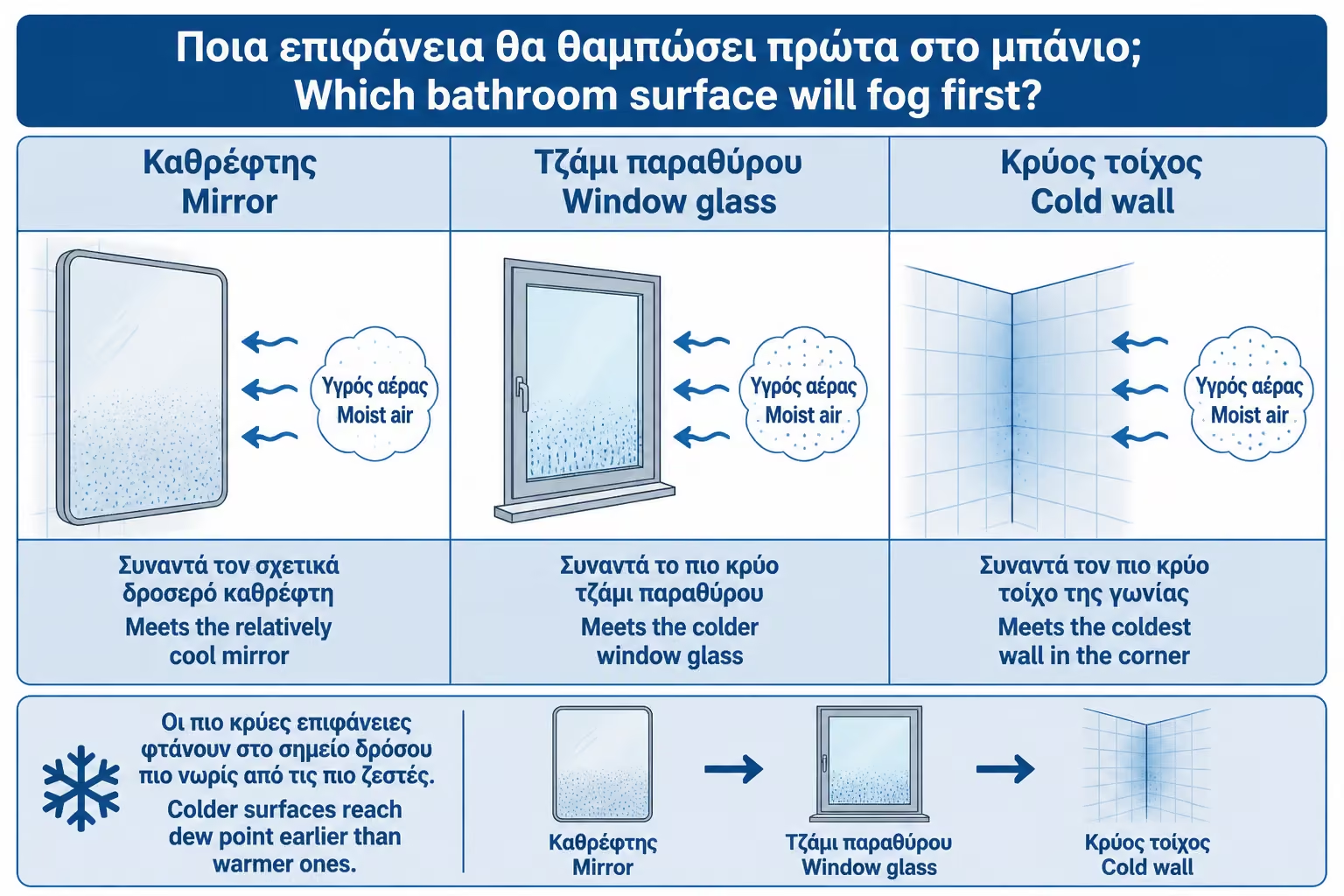
The mirror is usually one of the coldest and smoothest surfaces in the bathroom. Glass does not absorb moisture like a porous material. So the water vapor sits on it and forms a thin layer of droplets. This layer scatters the light and the mirror becomes cloudy.
Mirror fogging is quick and visible, so we notice it right away. It does not necessarily mean that there is a serious problem. It's normal to feel cloudy for a few minutes after a hot shower. The problem is when the mirror stays cloudy for a long time or when the whole bathroom stays wet.
Mirrors with an anti-glare film or heated pad behind the glass help because they keep the mirror surface warmer. If the surface does not fall below the dew point, it does not fog as easily. But this does not remove moisture from the bathroom. It just keeps the mirror clean.
That's why the anti-glare mirror is a convenience, not a ventilation solution. If the space is not ventilated, the moisture will end up on other surfaces.
Windows sweat because the glass is often colder than the bathroom air. This is especially true in winter when the outside temperature is low. The inner glass is cooled, the humid air of the bathroom rests on it and the water vapor condenses.
In single old panes, the phenomenon is more pronounced. Glass does not have a good thermal insulation capacity, so the inner surface becomes very cold. In double energy glazing, the problem is reduced because the inner surface stays warmer, but it does not always disappear. If the humidity is too high, it can fog even good glass.
Water in the window can run onto the sill, frame or wall around the window. If this happens every day, it can cause mold on the silicones, wear on the wooden frames or marks around the frame.
If the window sweats excessively, the issue is not just the glass. It is a combination of high humidity, low surface temperature and insufficient ventilation.
The walls and ceiling sweat when their surface is cool enough for moist air to condense on them. This most often occurs on external walls, corners, near beams, columns or thermal bridges, as well as in ceilings under a roof or unheated space.
The thermal bridge is a point where heat escapes more easily to the outside. There the inner surface is colder than the rest of the wall. That is why we often see mold in corners, behind furniture, around frames or at the wall-ceiling connection. They are not random points. They are cooler spots.
On painted walls and ceilings, condensation may appear as a wet sheen, drips, dark spots, or peeling over time. If the paint is not suitable for bathing or if the surface does not dry, wear is accelerated.
On tiles, condensation appears as droplets on the surface. Tiles are water resistant, but joints and corners with silicone are more sensitive spots. Tanning can start there.
Condensation usually occurs during or shortly after using the bathroom. It affects cold surfaces, mirrors, glass, corners and ceilings. It often decreases when the space is ventilated, when it warms up better or when the surfaces are dried.
Leakage, on the other hand, has a more specific source. It can occur continuously, regardless of whether a shower has been taken. It can leave a stain in a specific place, grow over time, be accompanied by swelling, peeling, drops from a specific crack or moisture on a wall that abuts a pipe. If there's a drain or water leak, venting won't fix it.
| Mark | More likely condensation | More likely to leak |
|---|---|---|
| Appears after showering | Yes | Not always |
| It fogs up the mirror/glass | Yes | No |
| Dampness on many cold surfaces | Yes | Usually not |
| Specific stain that grows | Not always | Yes |
| It remains a wet spot for days | Suspicious | Possible |
| It is reduced by ventilation and heating | Usually yes | Not really |
| It is accompanied by a sewer smell | Not necessarily | Possible |
The distinction matters. Treating a leak as simple condensation delays the repair. Treating simple condensation as a leak can also lead to unnecessary work. When in doubt, have the issue inspected by a technician.
Mold needs moisture, organic matter and time. In the bathroom there are all three. Moisture comes from water vapor and condensation. Organic matter can be dust, soap scum, fibers, paint, silicone or joint dirt. The time is given when the surfaces remain wet for many hours.
Mold often starts in corners because that's where the surface is coldest and air circulation weakest. It also starts on the silicones around the tub or shower, because these often stay wet. In ceilings it appears in places where steam rises and rests on a cold surface.
Mold does not always mean there is a leak. Very often it means that the surface receives frequent condensation and does not dry quickly. If you simply clean the mold with bleach or a special cleaner, but don't address the cause of the moisture, it will return.
The secret is to reduce the time the surface stays wet. This is done by ventilation, heating, better insulation, cleaning and proper use.
Ventilation removes moist air and replaces it with drier air. This lowers the relative humidity and thus reduces the chance of condensation. The faster the humid air leaves after the shower, the less water will sit on walls, windows and mirrors.
Ventilation should start during or immediately after showering and continue for a long time. That is why ventilators with a timer or a hygrostat are very useful. If the fan stops as soon as the light goes out, the moisture remains. If it continues for 10–15 minutes or as long as necessary until the humidity drops, the bath dries more properly.
But ventilation needs air intake. If the bathroom door is completely sealed, the vent cannot pull properly. A small gap under the door or other air transfer solution is necessary for the flow to work.
Ventilation does not eliminate condensation in every situation, but it is the first line of defense. Without it, moisture stays in the room and finds the cold surfaces.
A cold bath condenses more easily. Not because it always has more moisture, but because its surfaces are colder. If the walls, tiles, mirror and glass are cold, they reach below the dew point more easily.
Heating helps in two ways. First, it warms the air, which can hold more moisture without immediately condensing. Second, it warms the surfaces so they don't drop below the dew point as easily. An electric towel rail, radiator or underfloor heating can significantly reduce the effect, especially in winter.
But be careful: heating without ventilation is not enough. If you heat the bathroom but don't remove the humidity, you're just holding more water in the air. When the air encounters a cold surface, or when it cools later, condensation may reappear.
The correct strategy is a warm bath before and during use, and good ventilation afterwards. Heating and ventilation work together.
If a bathroom has an uninsulated exterior wall or a vaulted ceiling, the surfaces can be very cold in winter. Then condensation occurs even with moderate humidity. Ventilation helps, but the problem may persist in specific cold spots.
Insulation raises the temperature of the inner surface. When the wall is warmer, it is less likely to drop below the dew point. That's why in well-insulated bathrooms the condensation on the walls is less, even if the mirror fogs up for a while.
Thermal bridges are more difficult. The rest of the wall may be relatively good, but a corner, a beam, a column, or the spot around the frame may be colder. That's where the first black dots appear. If you keep cleaning the same corner and the mold comes back, there is probably a thermal bridge or poor air circulation.
The definitive solution may require thermal insulation intervention, not just a better ventilator. In renovations, especially on external bathroom walls, it is worth considering the thermal behavior before putting in new tiles and paints.
Corners often have a lower surface temperature and poorer air circulation. Air does not move easily in closed corners. If there is also an external wall or structural element that acts as a thermal bridge, the corner becomes an ideal point of condensation.
Behind furniture, cupboards, mirrors without clearance or large surfaces that lean against the wall, air circulates less. The surface stays cooler and dries more slowly. If moist air from the shower gets there, mold can appear even if the rest of the room looks dry.
That is why bathroom furniture should have short distances, proper ventilation and materials suitable for humidity. Mirrors that stick completely to the wall with no traffic behind them can trap moisture, especially if the wall is exterior.
Mold in a corner is not always a matter of "bad cleaning". It is often a matter of cold surface and stagnant air.
The tiles hold up very well to water, but they don't solve condensation. Drops form on them, which flow towards the joints, corners and silicones. Joints are more porous and can hold dirt and moisture. Silicones, especially if they are old or of poor quality, turn black easily.
Painted surfaces on the ceiling and walls must have a suitable color for wet areas. A simple matte paint in a bathroom with a lot of condensation can stain, bubble or mold more easily. Satin or special anti-mould/moisture-resistant paints help, but are not a substitute for ventilation.
Silicones around bathtubs, showers and sinks must be suitable for bathing and applied correctly. If water or condensation stays on them all the time, they will turn black faster. The same applies to joints that do not dry.
The choice of materials can delay wear, but the main solution is to reduce the moisture remaining on the surfaces.
The technical solution is important, but the daily use plays a big role. A bathroom that is properly ventilated after every shower will last much better than a bathroom that stays closed and damp for hours.
Open the vent before or during the shower, not just after the room is full of steam. Let it work afterwards, ideally with a timer or hygrostat. If there is a window, open it briefly when conditions permit, but don't rely on it alone if the bathroom is blind or the weather is wet.
After showering, it helps to scoop the water out of the cabin with a small spatula. Less water on the surfaces means less evaporation afterwards. Keep the door slightly open after use if privacy is not an issue to help air circulation. Do not leave wet towels permanently in a small closed bathroom.
These habits don't cost much, but they significantly reduce the amount of time the space stays damp.
If condensation occasionally appears on the mirror and glass, better ventilation and proper use are usually sufficient. But if the walls sweat every day, if there is mold coming back, if the ceiling is darkening, if the paints are blistering or if the surfaces remain wet for hours, a technical evaluation is needed.
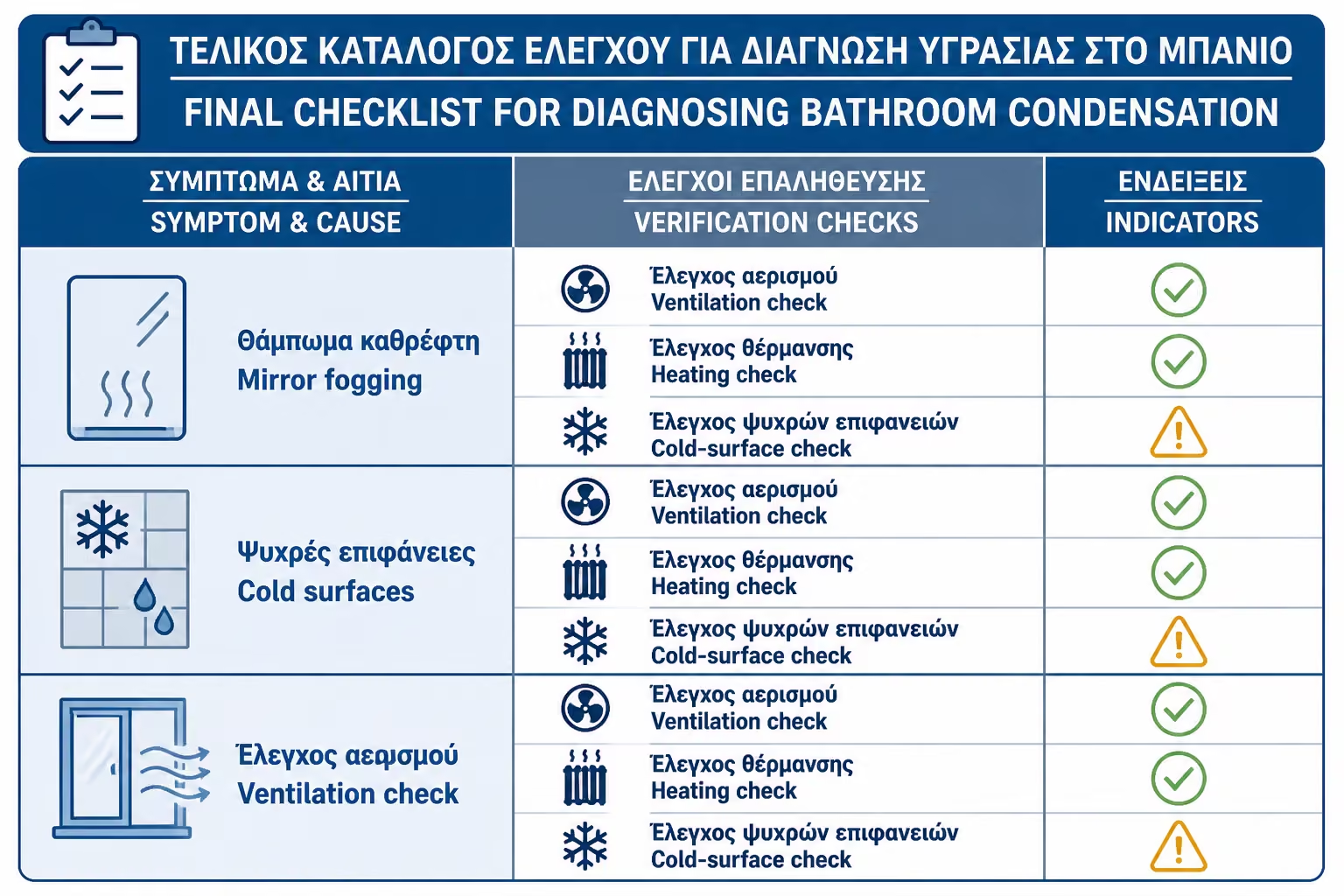
First, the ventilation is checked: flow m³/h, timer function, ventilator position, fan cleanliness, air duct, return and air intake from the door. Then the heating of the space is checked. Cold surfaces, thermal bridges and the possible need for insulation are then examined.
If a leak is suspected, it must be checked separately. Condensation and leakage can coexist. For example, a bathroom may have general condensation but also a local leak behind a faucet or siphon. We should not rule anything out without checking.
Technical intervention is also needed when the mold is extensive or when it affects sensitive people. Cleaning up mold must be done with care and the right products, but the cause must be solved.
The cost depends on the cause. If the problem is misuse or insufficient operation of the existing ventilator, it can be solved at almost no cost. If a new fan, timer, humidistat, air duct improvement or insulation is needed, the cost increases. If there is a leak, the picture changes completely.
| Intervention | Indicative range 2026 | When does it make sense? |
|---|---|---|
| Improved use / ventilation | 0–20€ | When the problem is mild |
| Ventilator cleaning | 0–100€ | When performance has dropped |
| New ventilator with timer | 80–250€+ | For bath with shower |
| Ventilator with hygrostat | 120–300€+ | For blind or wet bathrooms |
| Air duct / grille improvement | 100–400€+ | When the network "chokes" the flow |
| Anti-mold paint / ceiling repair | 100–500€+ | Only after the moisture has dissolved |
| Local thermal insulation intervention | Wide variation | In thermal bridges / cold walls |
| Leak check / repair | Wide variation | When a local stain is suspected |
Prices depend on area, floor, access, materials, VAT, extent of damage and whether the work is done individually or as part of a total renovation. The important thing is not to just paint over the mold without addressing the cause. He will be back.
The correct order is diagnosis, treatment of cause and then surface restoration.
Many bathroom moisture problems persist because they are dealt with superficially. The owner cleans the mold, but does not improve the ventilation. It paints the ceiling, but it doesn't heat the room. He buys a powerful ventilator, but the door has no gap. He puts on an anti-glare mirror, but the walls are still sweating.
| Error | What happens in practice | A more correct approach |
|---|---|---|
| Cleaning mold without moisture solution | The mold is coming back | Ventilation, heating, insulation where necessary |
| Simple painting over stains | It swells or re-molds | Diagnose cause before painting |
| Fan that turns off with light | The moisture stays after the shower | Timer or hygrostat |
| Closed door without air intake | The fan does not pull | Gap under the door |
| Cold bathroom without heating | Cold surfaces, intense condensation | Constant space heating |
| Ignoring thermal bridges | Mold in same corners | Insulation and cold spot testing |
| Anti-glare mirror as a "solution" | Clear mirror, wet walls | Ventilation overall |
| Opening a window for a long time in winter without heating | The surfaces are getting cold | Short ventilation + heating |
| Too hot shower without ventilation | Sudden increase in humidity | Ventilation during use |
| Confusion of condensation with leakage | Faulty repairs | Autopsy when signs persist |
The typical mistake is painting the ceiling with "anti-mould" paint without correcting the ventilation. Paint can delay the problem, but if the ceiling continues to sweat every day, the mold will return.
| Control | Yes / No |
|---|---|
| Does the fan run during the shower? | Yes / No |
| Does it continue to work after showering with a timer or a humidifier? | Yes / No |
| Is there a gap under the door for air intake? | Yes / No |
| Does the mirror de-fog within a reasonable amount of time? | Yes / No |
| Does the window dry or drip for hours? | Yes / No |
| Are the corners of the ceiling showing black marks? | Yes / No |
| Is there an exterior wall or roof over the bathroom? | Yes / No |
| Is the bathroom adequately heated in winter? | Yes / No |
| Do the towels dry or stay wet in the bathroom? | Yes / No |
| Is there a particular stain that grows regardless of showering? | Yes / No |
| Has the vent and return recently been cleaned? | Yes / No |
| Have thermal bridges or very cold surfaces been checked? | Yes / No |
| Does the mold always return to the same spot? | Yes / No |
If the bathroom is "sweating", don't just look at the ventilator. Look at the triangle: humidity, surface temperature and drying time. Shower steam will build up anyway. The question is whether they will go away quickly and whether the surfaces are warm enough not to reach the dew point. In moldy bathrooms, the solution is not a single product. It is proper ventilation with air intake, adequate heating, checking for cold spots and restoring surfaces only after the cause has been solved.
Condensation in the bathroom is a natural phenomenon, but when it is repeated daily and the surfaces remain wet, it becomes a technical problem. Walls, windows and mirrors “sweat” because the warm moist air from the shower hits cooler surfaces and reaches the dew point. The water we see does not necessarily come from a leak. It is often created on the surface.
The problem becomes serious when the moisture is not removed quickly. Then joints, silicones, ceilings, corners and furniture stay wet for a long time. This creates ideal conditions for mold and fungus. That is why it is not enough to clean the black marks. We must reduce the cause that creates them.
The correct treatment is a combination. It needs ventilation that works for a long time, air intake from the door, sufficient heating so that the surfaces are not frozen, proper insulation where there are thermal bridges and materials suitable for a bathroom. If a leak is suspected, it must be checked separately.
When we understand the science behind moisture, we stop treating the bathroom with only cleaners and dyes. We see it as a system of air, temperature and surfaces. And then the solutions become more correct, more permanent and more economical over time.
Return to category.
Go to categoryReturn to the central guide.
Go to guide