
Bathroom Lighting, Ventilation & Heating
Return to category.
Go to categoryLighting in the bathroom is not only a matter of aesthetics. It is also a matter of safety. In a space where there is steam, water, shower, sink, glass cabins and electrical appliances, a lamp is not enough to be beautiful or powerful. It must be suitable for the position where it will be placed.
The mistake that is often made is simple: the owner chooses a lamp as he would for a bedroom or hallway. He sees a spot, a sconce or an LED mirror that fits aesthetically and thinks it can go anywhere in the bathroom. In practice, however, a light far from the shower is one thing and a spot directly above the bathing area is another.
This is where IP pointers come in. The markings IP44, IP65, IP67 and similar are not decorative details on the packaging. They show the degree of protection of the lamp against solid bodies and water. In the bathroom, especially near a shower or bathtub, this information is critical.
The difficulty for the owner is that the rules are not always explained in a simple way. He hears that "in the bathroom we want IP44", then he sees that "in the shower we want IP65", then someone tells him that "if it's high it doesn't matter", while the electrician talks about zones, RCD, low voltage and distances. The result is confusion.
This guide explains in practical terms what the IP rating means, what the key zones are in the bathroom, when IP44 makes sense, when IP65 is a safer choice, why the distance from the shower changes the requirements and what to ask your electrician before buying fixtures.
In a living room or bedroom, the lamp rarely encounters water or strong humidity. In the bathroom, the situation is different. Water vapor from the hot shower rises to the ceiling, splashes can reach nearby surfaces, while in walk-in showers the water spreads more easily in the space.
This means that the lamp must withstand the environment where it is located. We're not just talking about whether it will break sooner. We are also talking about electrical safety. An inadequately protected light fixture in the wrong location can oxidize, fail, create a hazard, or require replacement much sooner than expected.
The problem becomes more pronounced in small bathroom renovations. In many Greek apartments, the shower, sink and ceiling light are located very close together. A central spot can be almost above the shower, even if the owner does not perceive it that way in the design.
That is why the choice of bathroom lighting should not be made only from a photo. The location, the distance from the water, the height, the presence of a cabin or walk-in shower and the way the space is used must be checked.
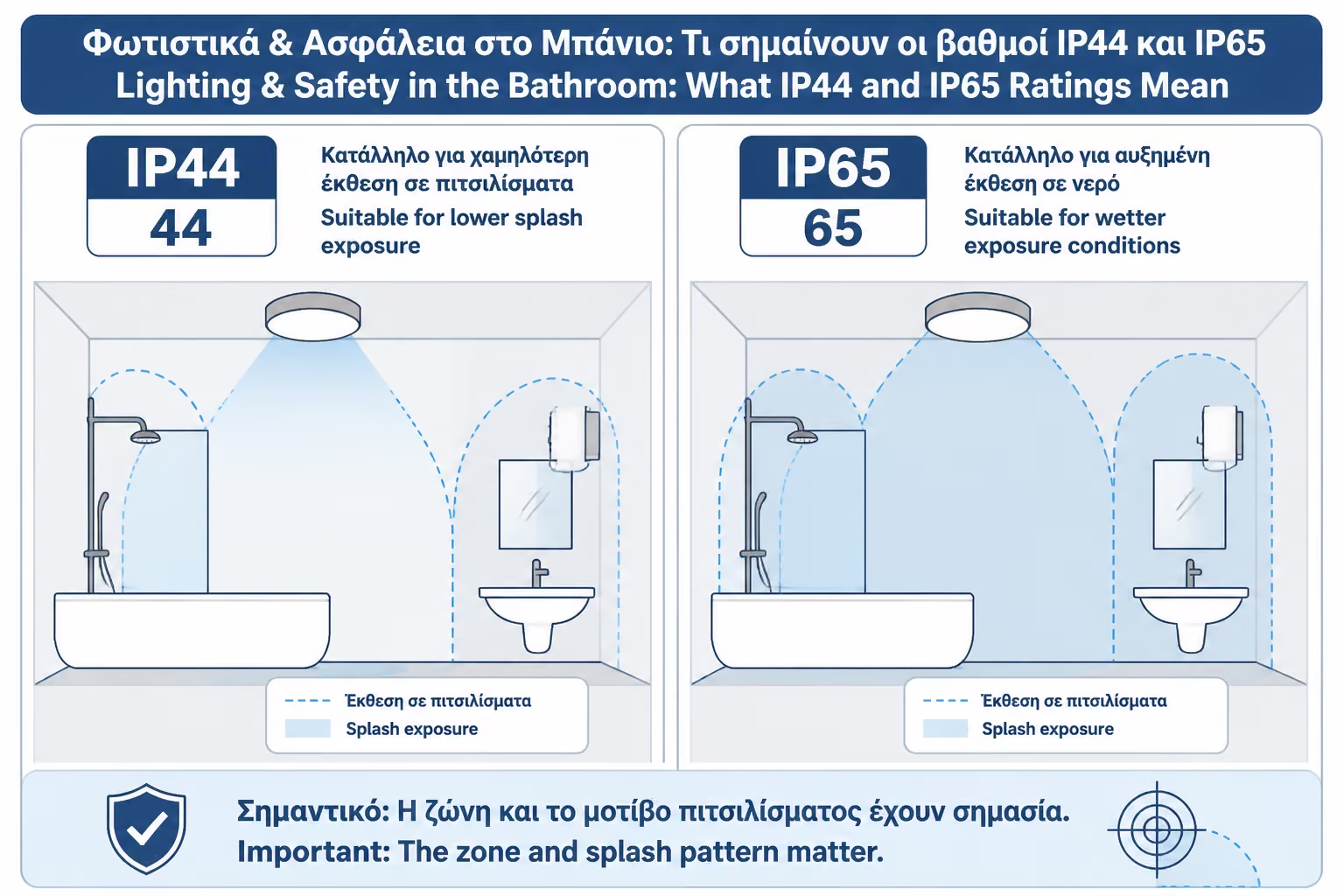
The IP index comes from "Ingress Protection" and shows how protected an electrical product is against the ingress of solid bodies and water. It consists of two digits. The first concerns protection from solid bodies and dust. The second concerns protection from water.
For example, in IP44, the first “4” refers to protection against solid bodies of a certain size, while the second “4” refers to protection against water splashes from various directions. In IP65, “6” indicates higher protection against dust and “5” indicates protection against pressurized water jets.
In practice, for the owner the most critical element in the bathroom is usually the second digit, i.e. protection from water. But it does not mean that the first digit is useless. A bathroom light is a total product and build quality, tightness, back, rubbers, connections and correct placement all play a role.
| Indication | Practical importance in the bathroom |
|---|---|
| IP20 | Usually unsuitable for wet or exposed bathroom locations |
| IP44 | Splash protection, frequent minimum choice in wet zones |
| IP65 | Higher protection, practically preferable near or above a shower |
| IP67 | Protection for temporary submersion, used in very special applications |
IP is not a matter of "bigger is better for everything". It's a matter of choosing the right position. An IP65 light can be an exaggeration in a place away from water, but a very reasonable choice above a shower. Conversely, an IP20 light may be acceptable in other areas of the house, but not in a problematic bathroom spot.
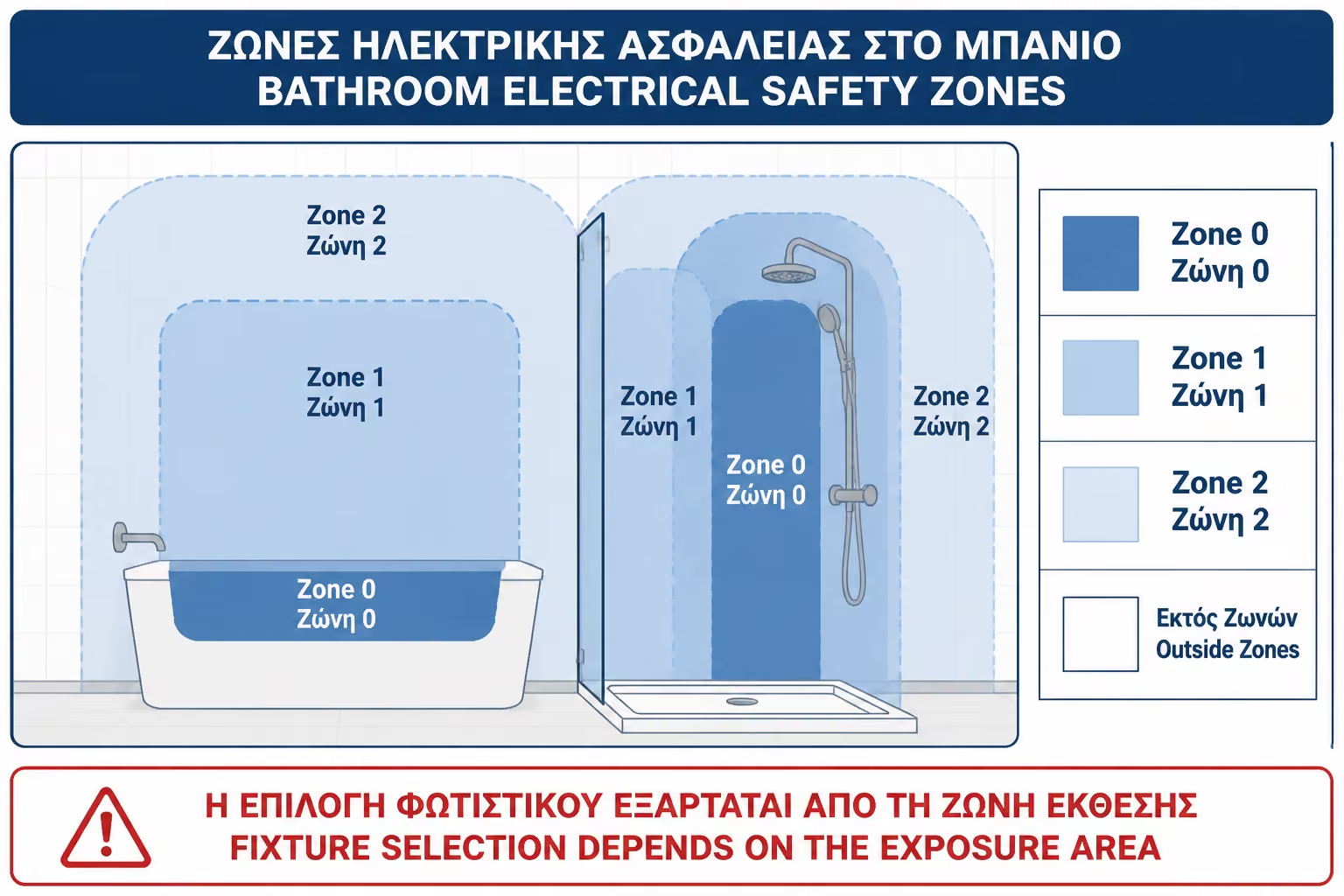
To decide what kind of lighting is allowed or appropriate, the bathroom is divided into zones according to the distance from the bathtub or shower. These zones are used in electrical installation regulations for areas with a bath or shower. The IEC 60364-7-701 standard specifically concerns electrical installations in areas where there is a permanent bathtub or shower, while in Greece the electrical installations are related to the ELOT HD 384 / ELOT 60364 standards and the current regulatory framework.
In general, practical description, the main zones are:
| Zone | Where is it located? | General practical protection requirement |
|---|---|---|
| Zone 0 | Inside the bathtub or shower area where water collects | Very strict protection, special equipment, usually very low voltage |
| Zone 1 | Above the bathtub or shower up to a certain height | Luminaires suitable for intense moisture/splash, IP65 is often preferred |
| Zone 2 | Perimeter area around Zone 1 | Splash protection is usually required, often IP44 as a basis |
| Out of zones | Further away from tub/shower | A less stringent requirement, but the bathroom remains a wet space |
In international guides based on respective regulations, Zone 0 is described as the inside of the bathtub or shower, Zone 1 as the area above it up to about 2.25 m and Zone 2 as the area about 0.60 m beyond Zone 1, with minimum protections such as IPX7 for Zone 0 and IPX4 for Zones 1 and 2 depending on the application and template.
Important: zones should not be taken lightly by the owner. The exact assessment is done by a licensed electrician, based on the layout of the bathroom, the location of the shower, the height of the ceiling, the existence of a cabin, the type of light and the applicable requirements.
Zone 0 is the strictest area. It is the point where there is direct presence of water, i.e. the inside of the bathtub or shower. In practice, owners rarely place lights there, except for very special constructions, such as lighting inside a bathtub, spa or special wet-room applications.
For a typical residential bathroom renovation, the basic advice is simple: don't design lighting in such an area without a specially designed system and professional installation. Improvised LED strips, economical lighting or "tight" solutions without certified specifications do not fit here.
If for some reason lighting is needed in this zone, very strict requirements regarding protection against water and low voltage are introduced. In international guidelines, Zone 0 is associated with IPX7 type protection and special power supply restrictions.
For the owner, this means that Zone 0 is not a field for aesthetic experimentation. If a photo shows impressive lighting in a shower or bathtub, behind it there must be a proper technical study, not simply buying a lamp off the shelf.
Zone 1 is the area above the bath or shower, usually up to a height of approximately 2.25m from the finished floor or the base of the bath/shower, depending on how it is defined. It is an area with strong water vapor and possible splashes, especially if the shower is open or has a long-range shower head.
This is where the question often arises: is IP44 enough or is IP65 needed? In many technical reports, Zone 1 is referred to as splash protection, i.e. at least IPX4, while practical lighting buying guides often recommend IP65 for fixtures in or directly above the shower area, as it provides higher protection against splashing water.
In practice, for a spot or downlight above a shower, IP65 is usually a safer and more professional choice than a simple IP44. Especially in a walk-in shower without an enclosed cabin, where water vapor and splashes move more freely, the increased protection makes sense.
A practical example: in a bathroom with an 80x120 cm shower and fixed glass on one side only, the ceiling spot above the shower will often receive water vapor and possible drops. There to choose a simple interior spot because "it is high" is wrong logic. Height helps, but does not eliminate the need for proper protection.
Zone 2 is the area surrounding Zone 1, usually at a horizontal distance of about 60 cm from its boundary. It is less exposed than Zone 1, but remains an area where splashes, water vapor and frequent humidity may be present.
In this area, IP44 is often the minimum practical basis for bathroom lighting. This is especially true for sconces near the mirror, fixtures near the shower, ventilation fans, or fixtures located in areas where water can reach them. International bathing zone guides often list IPX4 as the minimum protection for Zone 2.
IP44 does not mean that the lamp can be directly wetted with pressure. It means it has splash protection. If a fixture is located where it may frequently receive direct water from the shower head, then higher protection should be considered.
In small bathrooms, Zone 2 often takes up much of the space. This is one reason why many bathroom lights are recommended to be at least IP44, even if they are not directly above the shower. It's not an exaggeration. It is practical to adapt to a wet space.
When a luminaire is outside the main zones, the requirements are less stringent. But this does not mean that the bathroom suddenly becomes the same as a living room. The humidity is still there. Water vapor circulates, condenses on the ceiling and affects the fixtures, especially if the ventilation is poor.
In a large bathroom with good ventilation, a light fixture away from the shower may not need the same protection as a spot above the shower. But in a small bathroom without a window, where after every shower the steam fills the whole space, the choice of lamps with some moisture protection remains more prudent.
A frequent mistake is placing a decorative sconce or hanging lamp above the mirror, which is not suitable for a bathroom. On the first day it looks impressive. After months, oxidation, tarnishing, damage or loosening of materials may occur.
Out of zone does not mean "without criteria". It means that the electrician has more flexibility, but the choice must still be reasonable for a wet environment.
IP44 is a very common indication on bathroom lighting. For many parts of the room it may be sufficient, as long as the fixture does not receive direct water flow and is in a position where the main exposure is splashes or moisture.
It is often suitable for mirror sconces, over-sink fixtures, general lighting in areas outside the direct shower area, as well as in Zone 2 areas where the specific installation allows. It is a practical base for luminaires that are close to a wet environment but not within the zone of intense exposure.
But IP44 should not be used as a "magic license" for anywhere in the bathroom. If the light is directly above a shower, especially on a low ceiling or in an open shower, IP65 is usually a better choice. If there is a possibility of direct spray from the shower head, IP44 may not be enough.
In practice, IP44 is a good starting point for many bathroom locations, but not all. The position determines the requirement.
IP65 offers higher protection than IP44, especially against splashing water. For this reason it is often used in downlights, spots or lamps that are placed in or very close to the shower area.
In a typical bathroom renovation, it is worth considering IP65 in three situations: when the light fixture is above the shower, when there is a walk-in shower without a full cabin, and when the bathroom is small and highly steamy. Also, IP65 is often a safer choice for ceilings where the distance from the shower is short and daily use is intense.
This does not mean that all bathroom lighting must be IP65. It can increase costs for no reason at all. A mirror light away from direct water may be correct with IP44 as long as it is suitable for its location. IP65 is more valuable in higher risk areas.
A practical example: in a bathroom with two spots, one above the sink and the other above the shower, it is not necessary that they have the same requirement. The shower spot can be selected IP65, while the other can be IP44 or another suitable light, depending on the location and installation. The correct solution is not always uniform. It is zonal.
IP67 refers to much higher protection against water, as it is associated with temporary submersion. In a typical residential bathroom, there is rarely a need for ceiling lights or a mirror. It mainly appears in special applications, such as lighting inside a bathtub, special wet zones or specific low voltage systems.
For the owner to see IP67 and think "it's the best" is not always the right thought. It can be technically overkill for a simple niche and unfairly limit design options. On the other hand, if we are really talking about a point with direct contact with water, then the choice must be made by a professional and not by simply comparing prices.
In any case, special applications should not be done casually. If someone wants lighting in an alcove in the shower, on a floor, on a counter near water or in a place with possible water accumulation, it needs study, suitable equipment and safe power supply.
For most homes, the essential decision is mainly between IP44 and IP65, based on the location of the luminaire. IP67 is a special case.
Not all showers are the same. A closed cabin limits splashes and water vapor better than an open walk-in solution. A shower curtain usually offers less protection and may allow water to escape more easily. These differences also affect the choice of lighting fixtures.
In an enclosed cabin, the fixture outside may be less exposed to splashes. In a walk-in shower, especially with fixed glass on only one side, water vapor and droplets move more freely. If the shower head is a rain shower on the ceiling, the area below it has a different exposure than a simple shower with a telephone low on the wall.
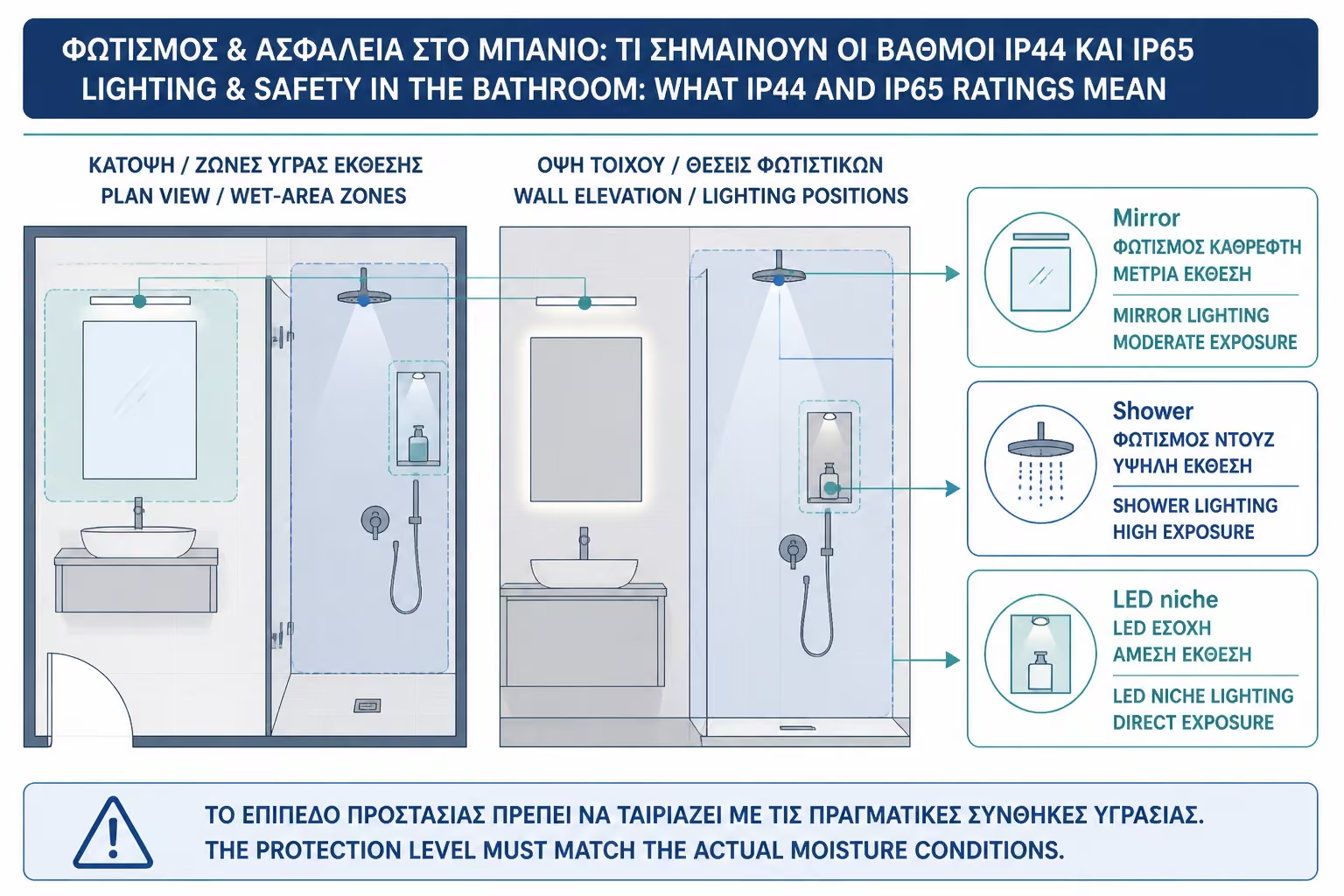
A light above a rain shower needs much more careful evaluation than a light on the opposite side of the bathroom. The same applies to hidden lighting in a shower niche. Aesthetics are not enough there. It requires a product and installation that can withstand real conditions of use.
The distance, then, is not just meters on the wall. It is also a way of using water. The electrician must see the bathroom as a real space, not just a floor plan.
The ceiling lights above the shower are one of the most common cases where attention is needed. Many owners want a spot inside the shower area so it doesn't stay dark. The idea is correct from a functional point of view, but the choice of lighting must be made with strict criteria.
A simple recessed indoor spot is not suitable for such a position. You need a lamp with suitable IP protection, correct placement, compatible lamp or integrated LED, and secure connection. In many practical applications, IP65 is the preferred choice for spot over shower.
Particular attention is needed on false ceilings. If a recessed spot is installed in plasterboard, it must be checked whether the false ceiling is suitable for a wet area, whether there is a proper seal around the lamp and whether the body of the lamp is properly ventilated. A light can be IP65 from the front, but the mounting can be rough from the back. This reduces real safety and durability.
A good electrician will not just look at the IP on the box. It will also look at where it goes in, how it is connected, what is on top, if there is an RCD, if the line is correct and if the light fixture is suitable for the particular application.
Mirror lighting is usually located near the sink. There we don't have the same exposure as in the shower, but there are splashes, humidity and daily water use. This applies to sconces, over-mirror lights and LED mirrors.
For mirror lights, IP44 is often a reasonable practical choice, especially if they are close to the sink but not in a zone of direct water exposure. But if the mirror is too close to the shower, or if the bathroom is so small that the sink area gets wet often, the requirement may change.
In LED mirrors, not only the front surface must be checked, but also the back, the driver, the connections and the installation instructions. A mirror may be suitable for a bathroom, but not for any position in the bathroom. If it is too close to a shower or bathtub, it needs to be checked by an electrician.
A frequent practical error is to install an illuminated mirror without a proper supply provided. Then the connection is done roughly behind the mirror, with pressure on the cables or without easy access. Even if the mirror is good, the installation can spoil the effect.
LED strips have made a strong entry into bathroom renovations. They get under furniture, behind mirrors, in false ceilings, on shelves and in shower niches. But the LED strip is not just "a self-adhesive light". The bathroom needs the right product, the right profile, the right power supply and the right protection.
In places away from water, such as under hanging furniture, the requirement may be milder, but moisture is still present. In an alcove inside the shower, however, things are much stricter. There tape, profile, cover, joints and feed must be suitable for the position.
A frequent problem is the use of "watertight" LED tape without proper protection at the joints. The tape may have some IP marking, but cut ends, glues or splices may not have the same protection. Then the failure is not due to the LED as an idea, but to poor implementation.
Also, the power supply should not be placed where it is convenient. It must be located in a safe, accessible and suitable location, in accordance with the manufacturer's instructions and the electrician's assessment. If it breaks, it must be able to be replaced without tearing half the structure apart.
The IP address is important, but it is not the only security element. A luminaire with a correct IP must be included in a correct electrical installation. This means proper wiring, proper connections, grounding where required, leakage protection and testing by a licensed electrician.
In bathrooms, protection through residual current devices, known to most as leakage relays, is a critical issue. It is not enough to buy a "sealed light" if the installation is old, without proper protections or with rough connections.
In old houses, especially in ten-year-old apartments, bathroom renovation is an opportunity to check the electrical installation as a whole. Many times there are old lines, insufficient grounding, sloppy things or switches in the wrong places. Changing lighting without checking can leave hidden problems.
The owner must ask for responsible installation, not just "turn on the light". In the bathroom, just because something works doesn't necessarily mean it's installed correctly.
The cost of bathroom lighting depends on the type, quality, design, IP protection, whether it is an integrated LED or with a replaceable bulb, the brand and the installation. It is also affected by area, floor, access, condition of existing facility, whether VAT is included and whether the quote is for materials only or materials plus labour.
| Selection | Indicative range 2026 | Comment |
|---|---|---|
| Simple IP44 bathroom light | €25–€90 | For key locations with moisture/splashes |
| Best IP44 sconce or mirror light | €50–€180 | It depends on design and quality of light |
| Spot / downlight IP65 | €20–€80 per piece | A common choice for showers or wet zones |
| Quality IP65 downlight with good LED/CRI | 50–150€+ | For more demanding applications |
| LED mirror suitable for bathroom | 120–500€+ | Depending on lighting, anti-fog, dimensions |
| LED strip with profile and power supply | 80–250€+ per application | Wide variation by length and protection |
| Additional electrical work | Wide variation | Depends on digging, errands, amenities |
The price difference between a simple spot and a suitable IP65 for a shower is usually not so great as to justify the risk. Excessive economy is not worth it there. If the budget needs to be reduced, it is better to do it in decorative details and not in lighting fixtures that are near water.
Very low bid should be checked. Does it include a proper IP? Does it include proper positioning? Does it include VAT? Does it include chores? Does it include line control? If the answer is not clear, the low price may hide shortcomings.
Bathroom lighting mistakes aren't always obvious on day one. A lamp can light normally, look beautiful and not cause a problem at first. The issue is what happens after months of use, steam, cleaners and water.
| Error | What can it cause? | A more correct approach |
|---|---|---|
| Lamp without IP in a bathroom | Damages, oxidations, unsuitability | Choosing a light fixture suitable for wet areas |
| IP44 over shower without control | Possible insufficient protection | IP65 is often preferred in such a location |
| LED strip in a niche without watertight joints | Damage, moisture in the connections | Complete tape, profile and connection system |
| Selection by design only | Inappropriate product for the position | Position and IP first, aesthetics second |
| Supply behind mirror without design | Rough connection, difficult maintenance | Prediction before the tiles |
| Ignoring ventilation | Moisture in all fixtures | Proper ventilation and appropriate options |
| Improvised connection by a non-expert | Serious security risk | Installation by licensed electrician |
A typical example is the small bathroom without a window, where a simple decorative ceiling lamp is inserted because it "does not get wet immediately". After a winter, the lamp dims, the metal details deteriorate and the LED starts flickering. The problem wasn't the aesthetic choice. It was that the product did not fit the real environment.
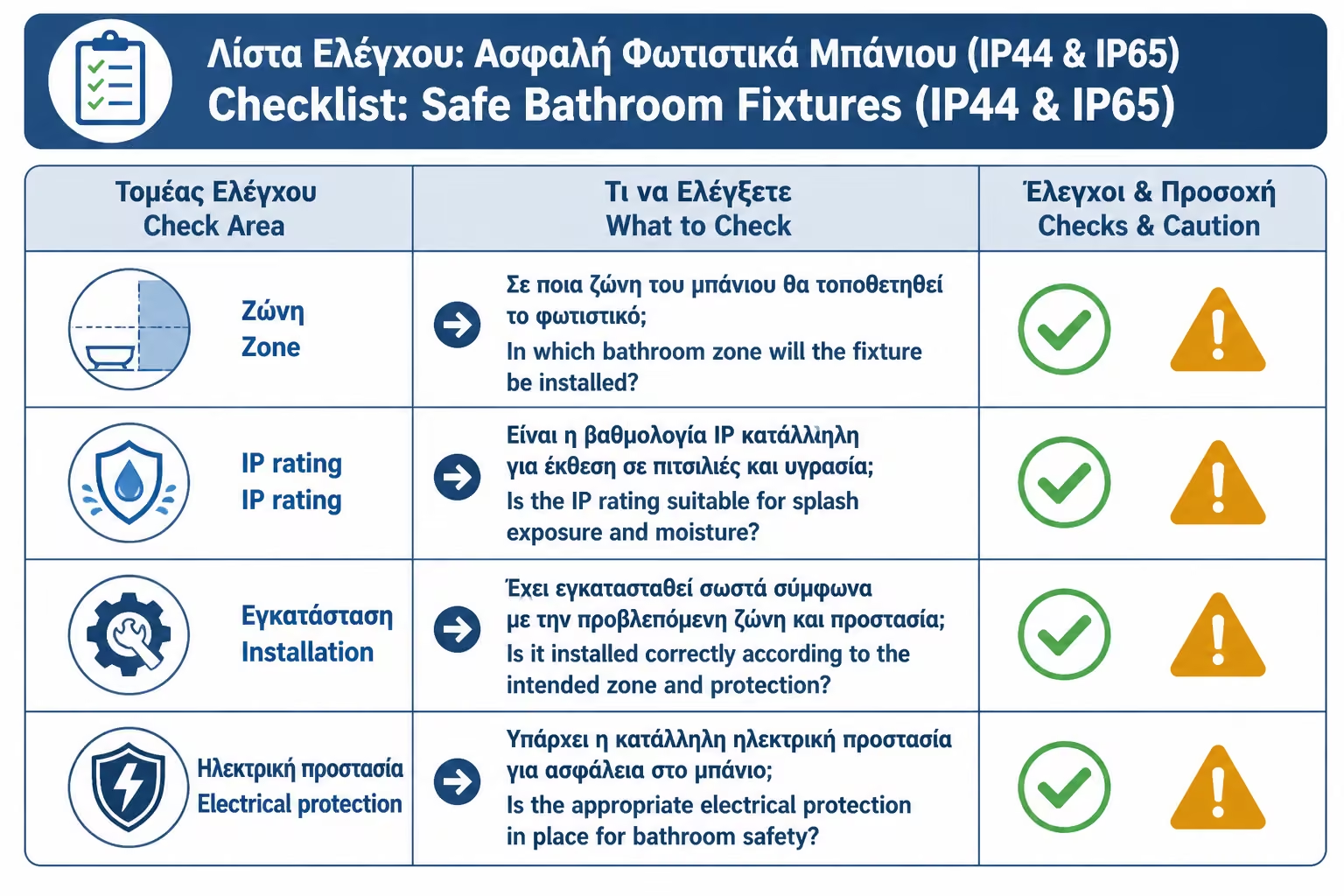
Before buying bathroom lighting, ask an electrician to see the layout of the space. Where is the shower? Where is the sink? How far is the fixture from the water? Is there an enclosed cabin or walk-in? How high is the ceiling? Is there a false ceiling? Is there a leakage relay? Is the installation old?
Don't settle for the general phrase “get a waterproof”. Ask specifically what IP each location needs. The spot inside the shower is another, the mirror sconce is another, the hidden lighting under the furniture is another and the central light away from water is another.
Also ask to check that the fixtures you like have clear specifications. If they don't list an IP, if they don't have bathing instructions, or if the vendor can't explain their use, you better be wary.
Proper cooperation between owner and electrician begins before the purchase. Not when the lamp has already been purchased and must "somehow" be placed.
| Inquiry | Yes / No |
|---|---|
| Is the bathroom zoned according to shower or bathtub? | Yes / No |
| Has it been checked whether the luminaire is in Zone 1, Zone 2 or out of zones? | Yes / No |
| Does the spot above the shower have adequate protection, usually IP65? | Yes / No |
| Fixtures near the sink have at least adequate splash protection, e.g. IP44 where required? | Yes / No |
| Is the LED mirror suitable for use in a bathroom? | Yes / No |
| Does the LED strip, if present, have the correct profile, power supply and joint protection? | Yes / No |
| Has leakage relay and proper electrical protection been checked? | Yes / No |
| Are utilities provided before tiles and false ceilings? | Yes / No |
| Does the luminaire have clear IP specifications from the manufacturer? | Yes / No |
| Has the electrician confirmed that the mounting position is suitable? | Yes / No |
| Does the offer make it clear whether it includes fixtures, labour, VAT, maintenance and installation inspection? | Yes / No |
| Is there provision for maintenance access to drivers, power supplies or LED strips? | Yes / No |
If you have to stick to one rule, stick to this one: in the bathroom we don't choose a light fixture based on appearance alone. First we look at its position in relation to the shower or bathtub, then the appropriate IP index and then the design. For luminaires close to splashes, IP44 is often the minimum practical basis. For spots above or in the shower area, IP65 is usually a much better choice. And in any case, the final decision and installation must be made by a licensed electrician, because the IP rating is no substitute for proper electrical protection.
IP ratings on bathroom lighting are not a detail for technical catalogues. It is a key criterion for safety and durability. A light fixture that works perfectly in a hallway or bedroom may be unsuitable near a shower, bathtub or wet environment.
IP44 is a common and useful basis for luminaires located in areas with moisture or possible splashes. IP65 offers a higher degree of protection and is usually more suitable for fixtures above a shower or in places with more intense exposure to water. IP67 is for special applications and is not needed in most standard bathroom lighting.
The right choice is not made with a general rule for the whole bathroom. It is done by position. The mirror needs another light, the ceiling above the shower needs another, an alcove with LEDs and another ambient lighting under a piece of furniture. The earlier these are decided in the renovation, the fewer considerations, mistakes and compromises there will be.
The most important thing is not to treat the lighting as a decoration disconnected from the electrical installation. In the bathroom, the right light must be both beautiful and safe. And this requires a combination of the right product, the right location, the right IP, good installation and professional inspection.
Return to category.
Go to categoryReturn to the central guide.
Go to guide