
Bathroom Lighting, Ventilation & Heating
Return to category.
Go to categoryOne of the most common mistakes in bathroom ventilation is that the fan stops just when we need it most. Someone takes a hot shower, the room fills with water vapor, the mirror fogs up, the walls retain moisture, and as soon as he leaves the bathroom, the light goes out. If the fan is connected simply along with the light, it also goes off. That is, it stops before the area has time to really dry.
This is where the fan comes in with a timer, or otherwise with a time delay. Its operation is simple in everyday use: it turns on together with the light or with a separate signal from the switch, but when the light goes out it does not stop immediately. It continues to run for a few more minutes, usually 5, 10, 15 or even more, to remove any remaining water vapor after use.
This little delay makes a big difference. The humidity in the bathroom does not disappear the moment the faucet is turned off. Surfaces remain wet, the floor evaporates water, the cabin holds drips, towels are damp and the air still has high relative humidity. If the fan continues to run for 5–10 minutes, it helps keep this moisture off of joints, silicones, ceilings and furniture.
In blind bathrooms, i.e. bathrooms without windows, the timer is even more important. Some ventilation guidelines for a bath or shower without an opening window state intermittent extraction of 15 l/s with a 15 minute overrun after the light goes out. This does not mean that every Greek bathroom needs exactly the same arrangement, but it shows the basic logic: after the shower, the ventilation must continue.
The crucial thing, however, is that the timer is not just a "function in the box". To work properly, it needs proper wiring. Many time-delay models require permanent power, neutral, and a separate signal from the light switch. In old bathrooms where only two wires reached the old vent, simple replacement may not be enough. That is why the connection must be checked by a licensed electrician, especially since the bathroom is a place with special electrical requirements, as defined in ΕLOT HD 60364-7-701:2024 for places with a bathtub or sprinkler.
The timer fan is a fan that has a built-in switch-off delay function. When commanded to run, usually by the light switch or a separate switch, it starts normally. When the command is interrupted, it does not stop immediately. It continues for a predetermined time and then turns itself off.
This time can be fixed or adjustable. In many models there is a small slider on the device, with which the electrician or technician can set the duration of operation. In other models, the setting is done electronically or by a small switch. In more modern devices, there may be a combination of timer, humidity sensor and boost function.
The basic idea is to not rely solely on the user for ventilation. The user takes a shower, turns off the light and leaves. The fan continues to run a little longer without anyone having to remember to leave it on. This protects the bathroom from the most frequent problem: short operation.
A simple ventilator without a timer may be sufficient in a WC without a shower, where the main objective is to remove odors. In a master bathroom with a shower, however, the timer is often a much more practical choice.
Post-shower moisture isn't just in the air. It's everywhere. On the tiles, cabin, floor, ceiling, mirror, towels and silicones. Even if the mirror begins to fog, the space may still be laden with water vapor.
If the fan goes off immediately with the light, the bathroom dries slowly and often in the wrong way: moisture condenses on the coldest surfaces. Over time, this can lead to blackened joints, mold in corners, swelling in furniture, odors and wear and tear on painted surfaces.
A practical example: in a small blind bathroom of 4 m2, someone takes a 10-minute hot shower. If the fan only runs while the light is on and then stops, the air can remain humid for quite some time. If it continues for 10–15 minutes, the time the humidity stays in the room is significantly reduced.
The timer does not make the fan louder. It makes him more useful, because it allows him to work at the right time and for a long time.
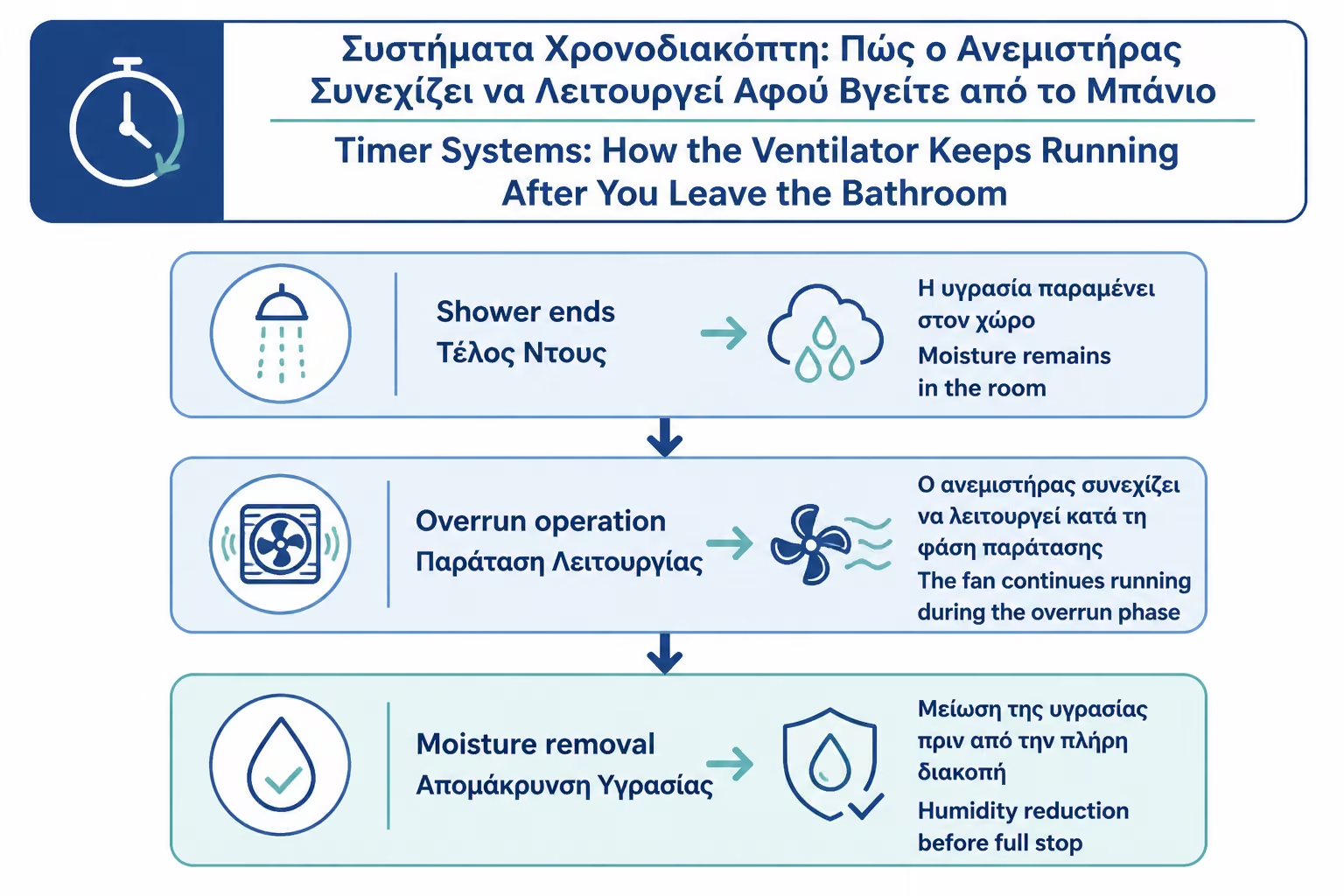
The most common logic is for the fan to start when the bathroom light comes on. When the light goes out, the timer activates and keeps the fan running for the set time. To do this, many models need three basic connections: permanent phase, neutral and return from the light switch.
Simply put, the fan needs to have power available even after the light goes out so that it can continue to work. The return from the switch acts as a signal: "light on" or "light off". When the signal is turned off, the timer board uses permanent power to keep the motor running.
| Cable / signal | Practical role |
|---|---|
| Permanent phase | Powers the fan to keep going after the light goes out |
| Neutral | Necessary for circuit operation |
| Return from switch | It informs the timer that the light has turned on or off |
| Grounding | If required by device type and protection class |
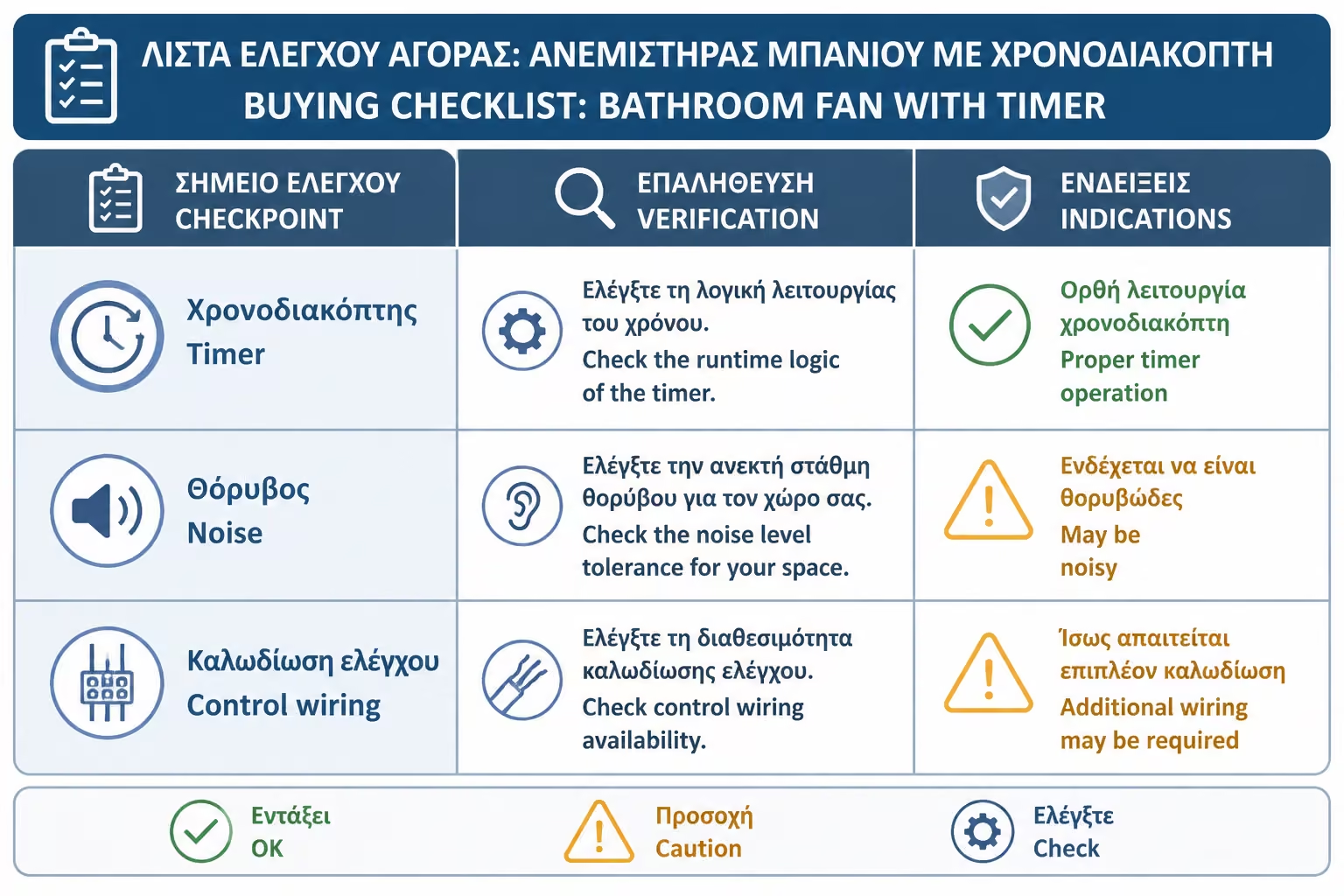
In an old installation, there may not be a permanent phase at the vent point. There can only be the return from light and neutral. In this case, the timer cannot work properly without rewiring or a different solution. This is one of the most common reasons a timer fan is purchased but ends up being connected as a simple on/off.
That is why before buying the device, it is necessary to check what cables are present at the site.
Many old ventilators operated simply: turn on the light, turn on the fan. The light would go out, the fan would stop. This was often done by simply feeding from the same switch. For such operation, a permanent phase in the fan was not required.
But the timer needs to "live" even after the light is turned off. If there is no permanent power supply, it has nowhere to get power for the 5–10 minute delay. So, in many old installations, simply replacing the old fan with a new timer model is not enough.
This does not mean that a timer cannot be inserted. It means that an additional line, a change of wiring, a connection from a junction box or a different type of control may be needed. These should be evaluated by an electrician. Testing should not be done with "whatever cable is available", especially in the bathroom.
A frequent problem is that the owner buys a timer model from an e-shop, the craftsman opens the old ventilator and sees that the necessary permanent power supply is not present. Then either the timer is not used or it starts on time. The correct order is wiring check first then purchase.
The usual residential setting is about 5–15 minutes after the light goes out. For small WC without shower, 5 minutes may be enough. For bathing with a shower, usually 10–15 minutes is a more practical basis. For a blind bathroom without a window or for a bathroom with high humidity, even more may be needed, depending on the fan, duct and use.
Some manufacturers list factory settings or overrun ranges around 15–30 minutes, depending on the model and timer/humidist combination. The important thing is to allow the ventilator to complete its cycle and not stop prematurely because it is bothersome.
| Use of bathroom | Indicative timer setting | Comment |
|---|---|---|
| Small WC without shower | 3–5 minutes | Mainly for smells |
| Small bathroom with shower and window | 5–10 minutes | If the window also opens, it may be enough |
| Standard bathroom with shower | 10–15 minutes | Good practical basis |
| Blind bathroom without a window | 15 minutes or more | Depending on humidity and duct |
| Bathroom with frequent family use | 15–20 minutes | Especially if the showers are done consecutively |
There is no absolute set-up for every home. The right thing to do is to start at a reasonable price and observe. Is the mirror fogging up? Are the corners drying out? Does it smell? Does the noise bother you? Based on these, the setting is adjusted.
5 minutes is useful for quick ventilation after simple WC use or short wash basin use. It is not always enough after a hot shower, especially in a small or blind bathroom. If the mirror remains cloudy or the tiles stay wet for a long time, 5 minutes is probably too little.
10 minutes is a more realistic baseline for many bathrooms with showers. They allow the fan to continue after the user leaves, without staying on for too long. If the vent has proper flow and the duct is good, 10 minutes may be enough.
15 minutes is a safer choice for blind bathrooms, windowless bathrooms, and areas with a history of mold or condensation. It doesn't mean it always has to be 15 minutes, but if the bathroom is humid, it's often a better setting than 5 minutes.
Duration should be matched with noise. A silent fan can work for 15 minutes without disturbing. A noisy fan will create a reaction even at 5 minutes.
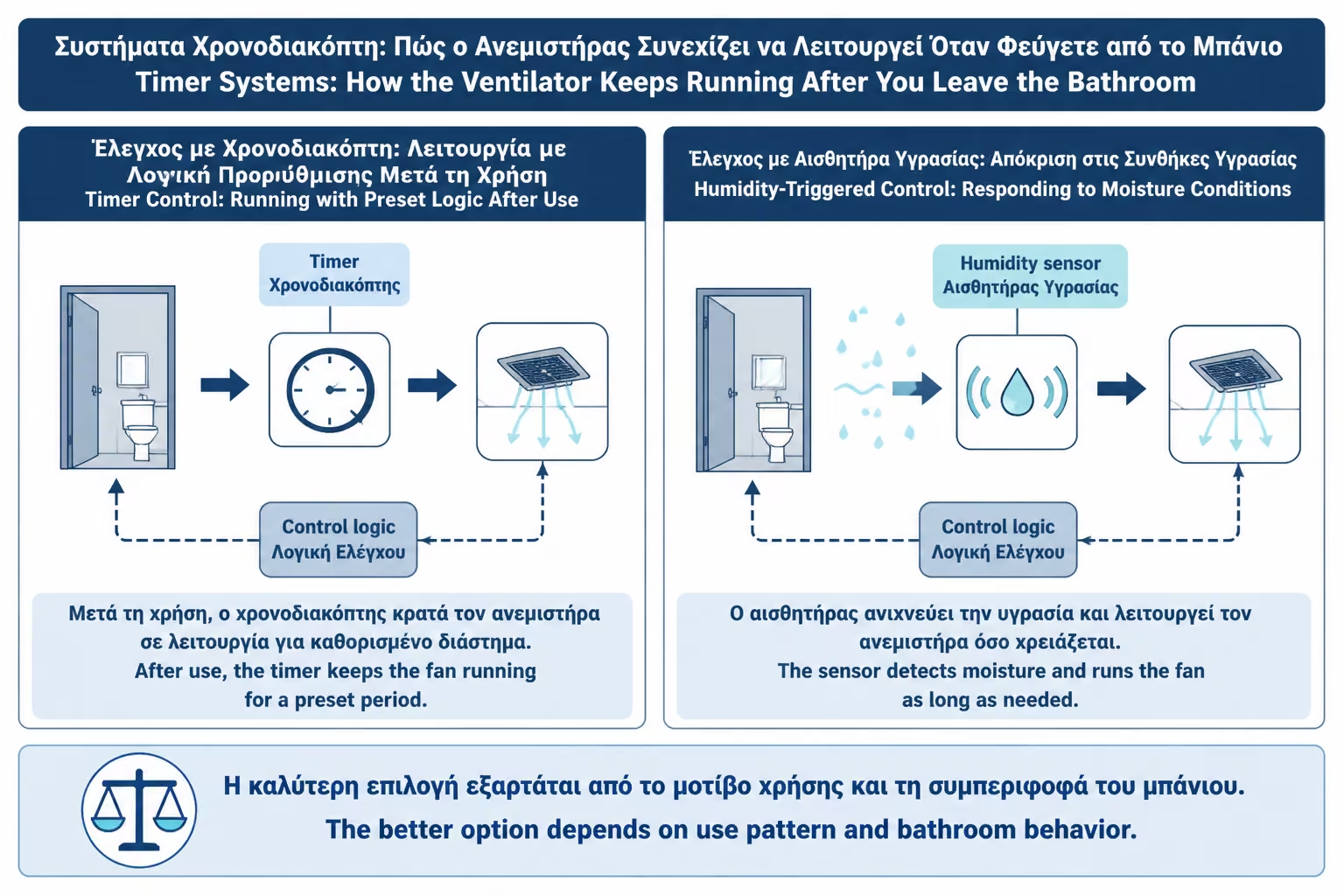
The timer works with time. The hygrostat works with humidity. They don't do the same job, although they often work very well together.
The timer is simple, reliable and economical. It does not need to measure humidity. It just knows that after use it should continue for a few minutes. It is ideal for bathrooms where use is relatively predictable and the ventilator is activated by light.
The hygrostat is smarter because it senses if there is real humidity. If someone goes into the bathroom just to wash their hands, it doesn't necessarily need a big function. If he takes a hot shower, the humidifier can keep the fan on longer. It is particularly useful in blind bathrooms or in areas with high humidity.
The best solution for a master bathroom is often a timer + hygrostat. The timer ensures minimum operating time after use, while the hygrostat adjusts operation when humidity remains high. In a small WC, the hygrostat is usually not needed. In a bathroom with a daily shower, it is worth considering.
Connecting to the light is practical because the fan starts automatically when someone enters the bathroom. No second thought needed. When the light goes out, the timer takes over. This is the most common solution in homes.
But it is not always ideal. If someone enters the bathroom for a while, the fan may start unnecessarily. If someone wants to shower with dim lighting or without the main light, the ventilation may not work as it should. If the bathroom has natural light and the user does not turn on the light during the day, the fan may not start.
The separate switch gives more control, but is up to the user. If the user forgets to open it, the moisture remains. That is why in bathrooms with moisture problems, a separate switch alone is not always the best solution.
A good practice is that the fan can be activated by light, but also have humidity logic or a timer. In neater installations, there may be a separate isolation switch for maintenance, not for daily on/off.
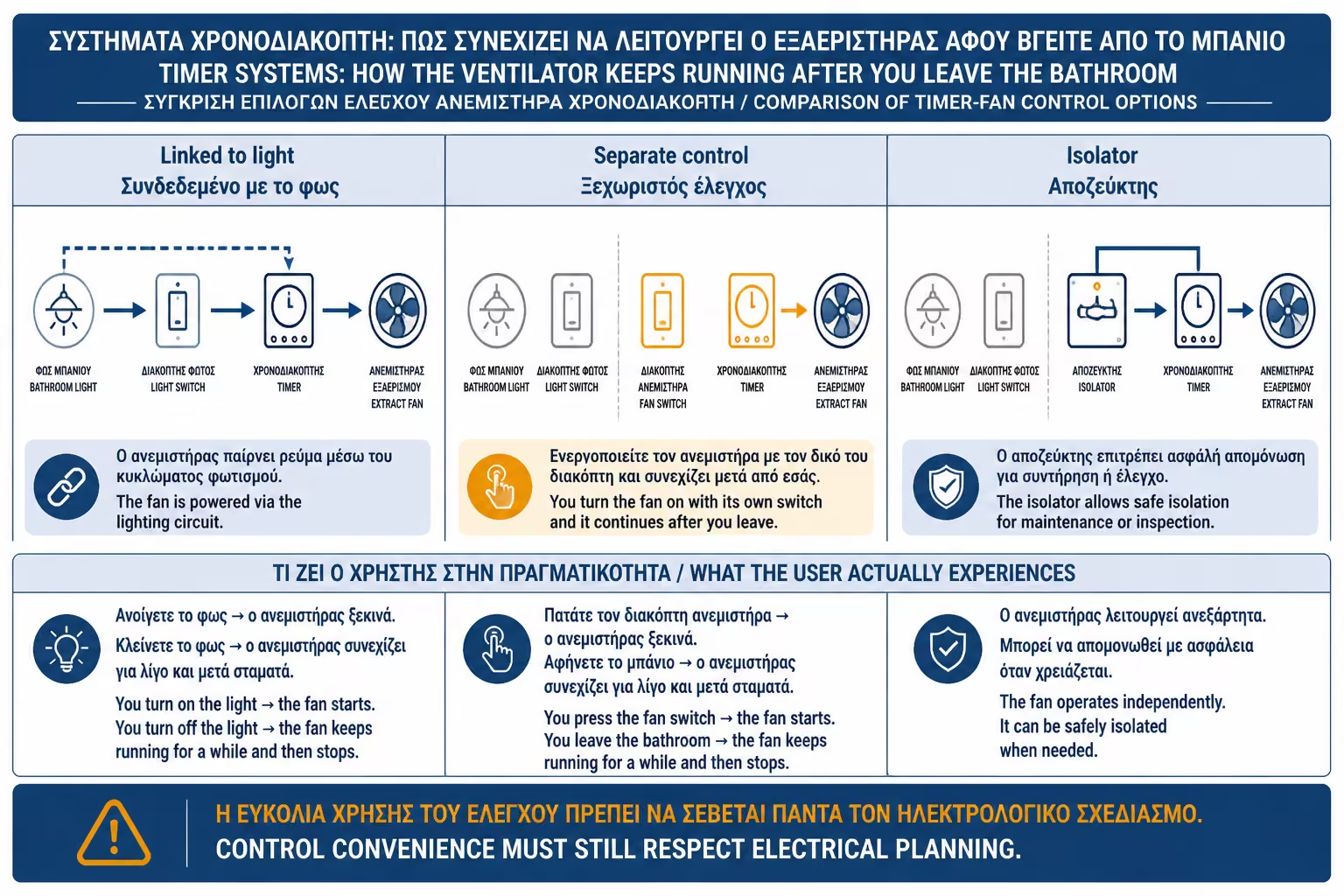
In many installations, an isolation switch is provided for the ventilator. This is not necessarily your daily use switch. It is a switch that allows the electrician or the user to isolate the device for maintenance, cleaning or inspection.
The isolation switch is particularly useful in models with a timer or hygrostat, because these may have a permanent power supply. If the impeller needs to be cleaned or the faceplate removed, it must be possible to isolate the device safely.
The position of the switch must be suitable for a bathroom and checked by an electrician. We don't put switches where it's aesthetically pleasing if it's not safe. In many cases, the switch can be located outside the bathroom or in a convenient location.
The owner does not need to operate the isolation switch daily. But he must know that it exists and what it does.
The timer means the fan will continue to sound after you leave the bathroom. If the device is noisy, this function can be annoying. Especially in a bathroom next to a bedroom, the 10–15 minute overrun can sound much longer when the house is quiet.
That is why ventilators with a timer should ideally be low noise. For everyday use, it's a good idea to look for models with low dB(A), especially if they will be working after the lights go out. In practical buying guides, quieter models are often recommended for areas where noise is an important criterion, especially when there is night use or children/bedrooms nearby.
A noisy fan with a timer is often worse than a simple one, because it is more annoying and eventually the user tries to turn it off. Conversely, a silent fan with a correct timer becomes an almost invisible function of the bathroom.
Timer selection should not be done without looking at the noise. If you want it to work after use, you have to be able to handle it.
The timer increases the operating time, not the output. If the vent is too small for the bathroom or the ductwork is difficult, overrun can help but not completely solve the problem.
For example, if a blind bathroom needs about 120–150 m³/h and the ventilator is actually performing much less due to a long duct, leaving it on for 10 minutes longer will improve the situation, but it may not be enough. A better type, such as centrifugal or in-line, or duct cleaning/improvement may be needed.
Proper ventilation is a combination of supply and timing. If you have correct m³/h but zero overrun, moisture may remain. If you have overrun but a few m³/h, the moisture can still remain. Both are needed.
Before choosing a timer model, calculate the volume of the bathroom and check the air path. The timer is an important feature, but it is not a substitute for proper calculation.
In a simple bathroom with a short outlet, the timer can work very effectively. The fan continues for 10 minutes and the area is cleaned. In a bathroom with a long duct, many corners or a bad external grill, the same 10 minutes may not have the expected result.
The conductor creates resistance. If the fan cannot overcome it, the actual airflow is reduced. So the timer works, but it moves less air than you think. This is one of the reasons why some bathrooms retain moisture even though they have a timer.
Practically, if the fan runs for 10–15 minutes after showering and the mirror remains cloudy or the corners do not dry, don't just increase the time. Also check the duct, door air intake, return and supply.
The time delay is effective when the ventilation system is actually capable of exhausting air.
The timer doesn't help if the fan has nowhere to pull air from. When the fan blows air out of the bathroom, other air must come in to replace it. Usually this is done from the gap under the door.
If the door is very "tight", with little or no gap, the ventilator works under pressure. It can make more noise, draw less air and not dry the bathroom well. This is common after renovations, when a new door with a better fit is installed but no air intake is provided.
The solution may be a small crack under the door, a discreet louver or other air transfer provision. You don't always need a large blind that spoils privacy. But it needs some route.
A timer fan that continues to run in a "sealed" bathroom may be wasting time without moving enough air. The air intake is the forgotten half of the system.
In a blind bathroom, the timer is almost essential. Without a window, the bathroom has no natural way to quickly remove moisture after a shower. If the fan goes out with the light, the space remains closed and damp.
In such bathrooms, a 10–15 minute setting is often a good starting point. If the bathroom is small but heavily used, it may need more. If the fan is quiet, the longer time does not bother. If it is noisy, a better model must be selected first, because otherwise the timer will become a problem.
In a blind bathroom it is also worth considering a humidity sensor together with a timer. The timer ensures basic operation after light, while the hygrostat can keep the fan running longer when humidity remains high.
The blind bathroom does not forgive short ventilation. There the time delay is a small investment with a big benefit.
If the bathroom has a window, the timer can still be useful. The window does not always open, especially in winter, at night or when the bathroom faces a light fixture with smells. Also, the natural opening does not always guarantee proper air flow.
In a bathroom with a window, the timer can be set a little lower, for example 5–10 minutes, if the area dries well. If the window is small, if the bathroom is heavily used, or if the ventilation from the window is not sufficient, it may take longer.
The logic is not to consider the window an automatic solution. If the window remains closed for practical reasons, the ventilator with timer protects the space. If it is opened frequently and the bath dries quickly, the time delay may be shorter.
The timer does not compete with the window. It complements it.
On many models, the timing is set by a small potentiometer or switch on the fan board, usually behind the faceplate. Other models have easier access or electronic adjustment. The adjustment must be made with the device isolated from the current and according to the manufacturer's instructions.
It is not right for the owner to open the fan himself to tamper with settings if he does not know what he is doing. The device is located in a bathroom, has an electrical supply and can have a permanent phase even when the light is off. The check must be done safely.
Usually, the electrician during installation puts an initial setting. After a few days of use, the owner may request a small adjustment if the time is too short or too long. On models with easy external adjustment, it can be done more simply, but again the instructions must be followed.
Correct adjustment is not theoretically possible. It is done after actually using the bathroom.
If the timer fan does not turn off, it may be set too long, have a wiring problem, have a hygrostat keeping it open, or have a faulty board. If the timer doesn't work and it goes off immediately with the light, there may not be permanent power or it may have been connected incorrectly.
If it starts strangely, lags, flickers, or makes noise, there may be an electrical connection issue, insufficient power, a motor problem, or resistance in the wiring. Improvised tests should not be done, especially in a bathroom.
| Symptom | Possible cause | What to check |
|---|---|---|
| It goes out immediately with the light | It has no permanent phase or wrong connection | Timer wiring |
| It does not fade for a long time | Big adjustment, hygrostat, wrong connection | Settings and wiring |
| It doesn't start with light | It does not receive a signal from a switch | Switched live / return |
| Makes a lot of noise on overrun | Noisy motor or conductor | dB, duct, grille |
| It works but doesn't dry | Low supply or bad conductor | m³/h, type, air intake |
| It turns on by itself | If it has a hygrostat, it sees moisture | Humidity limit and sensor |
Diagnosis should be done by an electrician or technician, not by random wire changes. A fan with a timer is a small device, but the connection logic is more complex than a simple fan.
The ventilator with timer is an electrical device in a wet room. This means it must be placed in a location suitable for a bathroom, with proper IP protection, proper wiring, proper termination/isolation and installation protection. The existence of a timer does not change the security requirements.
In bathrooms with a shower or bathtub, special requirements apply for electrical installations in such areas. The current Greek standard ELOT HD 60364-7-701:2024 concerns spaces containing a shower or sprinkler and is relevant to the evaluation of such facilities.
The final position of the ventilator must be checked in relation to the bathing zones. If it is near a shower or bathtub, the requirements may be more stringent. If it goes into a suspended ceiling, there must be access and proper installation. If it is connected to a light, timer and permanent power supply, the wiring must be done according to the manufacturer's instructions.
The owner can decide he wants a timer. Connecting is not a DIY job though.
The cost depends on the type of fan, the flow, the noise, whether it has only a timer or a hygrostat, the quality of the motor, the diameter, the existing wiring and the need for maintenance. It is also affected by area, floor, access, whether VAT is included and whether the offer is for appliance only or a complete installation.
| Selection | Indicative range 2026 | What to watch out for |
|---|---|---|
| Simple axial without timer | €25–€70 | Economical, but stops with light |
| Axial with timer | €50–€130 | Good basic solution for small/typical bathrooms |
| Silent axial with timer | 80–180€ | Best for master bathroom |
| Timer + humidity sensor | 100–230€+ | Useful in blind bathrooms |
| Centrifugal with timer | 120–280€+ | For more difficult pipelines |
| In-line with timer/controller | 120–350€+ | For suspended ceilings and quieter operation |
| Additional wiring for timer | Wide variation | If there is no permanent power supply |
| Complete installation with duct/grill | 150–600€+ | If location or network changes |
The low price makes sense for a simple replacement where proper wiring is already in place. If new line, boxes, fixtures or false ceiling access is needed, the cost goes up. This is not about the timer as a component, but the installation required for it to work properly.
A very low bid should be checked: does it include a proper timer connection? Does it include permanent power if needed? Does it include VAT? Does it include IP and zone control? Does it include recoil and grille? If not, it may be a simple fan replacement, not a complete ventilation solution.
Mistakes with timer ventilators are common because their operation seems simple, but connection and adjustment require attention.
| Error | What it causes in practice | A more correct approach |
|---|---|---|
| Buy a timer without cable control | Time delay doesn't work | Permanent phase check before purchase |
| Set only 2–3 minutes after showering | Moisture remains | 10–15 minutes as a practical shower base |
| Too long in noisy model | Disturbance at home | Quiet fan or correct setting |
| Timer on weak fan | It works but doesn't dry | Correct m³/h and appropriate formula |
| Bad air intake from door | Reduced performance | Slot or transport blind |
| Wrong connection to the light | Does not start or stop properly | Connection by an electrician |
| Absence of isolation switch | Maintenance difficulty | Safe isolation provision |
| Ignore pipeline | Low actual supply | Route and grid control |
| No return | Return of smells | Correct check valve |
| Timer as a unique solution for mold | The problem remains if there is a leak | Humidity and ventilation control overall |
A typical example is a blind bathroom where the owner installs a fan with a timer but sets it to 3 minutes because the noise bothers him. The bathroom continues to hold moisture. The problem is not the timer. It is that the device is noisy and the time is too short. The correct solution would be a quieter fan with sufficient overrun.
| Inquiry | Yes / No |
|---|---|
| Does the bathroom have a shower or bathtub and does it need to be run after use? | Yes / No |
| Is there permanent power at the vent point? | Yes / No |
| Is there feedback from the light switch to signal the timer? | Yes / No |
| Has it been checked if the old wiring supports timer model? | Yes / No |
| Is the flow m³/h sufficient for the volume of the bathroom? | Yes / No |
| Does the vent type fit the duct? | Yes / No |
| Can the overrun setting be adjusted? | Yes / No |
| Is the noise acceptable for 10–15 minutes of operation after use? | Yes / No |
| Is there sufficient air intake through the door? | Yes / No |
| Is there a return for odors and air returns? | Yes / No |
| Is the location and IP protection suitable for a bathroom? | Yes / No |
| Is there a possibility of safe isolation for maintenance? | Yes / No |
| Will the installation be done by a licensed electrician? | Yes / No |
| Does the quote include appliance, timer, wiring, ducts, grilles, labour, VAT and incidentals? | Yes / No |
If you want a fan with a time delay, don't treat it like a simple fan that "stays open a little". To work properly, it needs proper wiring with permanent power and signal from the switch, proper m³/h flow, sufficient air intake from the door and low noise so that it does not disturb you when it continues after use. For a bath with a shower, start with a practical 10–15 minute overrun and adjust based on whether the mirror is dulling and the surfaces are drying. If the timer bothers you, it's usually not the timer's fault; it's the noisy or wrongly selected fan.
A fan with a timer is one of the simplest and most useful upgrades to a bathroom. It solves a very practical problem: that ventilation must continue after the user leaves the room. With a few minutes of time delay, the water vapors are removed more correctly, the mirror de-fogs faster, the surfaces dry better and the risk of mold and wear is reduced.
Its operation is simple for the user, but the installation should not be underestimated. A timer fan needs proper wiring, often permanent phase, neutral and a signal from the light switch. If the old installation does not have them, additional work may be required. That is why it must be checked before purchase and connected by a licensed electrician.
The ideal solution is not only "to have a timer". It is to have the right supply for the bathroom, the right type for the duct, low noise, sufficient air intake and time setting that suits the use. In a typical bathroom with a shower, 10–15 minutes is often a good rule of thumb. In WC, less may be enough. In blind bathrooms it may need more or a combination with a humidity sensor.
If designed correctly, the timer is one of those features that doesn't look impressive, but really protects the bathroom. It does not change the image of the space like a new tile or an illuminated mirror. But it helps the bathroom stay dry, hygienic and durable after every shower.
Return to category.
Go to categoryReturn to the central guide.
Go to guide