
Bathroom Lighting, Ventilation & Heating
Return to category.
Go to categoryThe bathroom is a small space with a large chemical burden. Scale removers, bleaches, mold sprays, perfumes, clogs, disinfectants and toilet cleaners are often used all together, in a space that often has no window or is poorly ventilated. The result is that, while trying to make the bathroom "clean", we may be filling the air we breathe with strong fumes.
That's why eco-cleaning makes sense. Not because every natural material is magical, nor because vinegar and baking soda can replace any disinfectant. It makes sense because for everyday bathroom maintenance we often don't need heavy chemicals. We need frequent cleaning, removal of soaps and salts, good drying, proper ventilation and safe products that do not overburden the air.
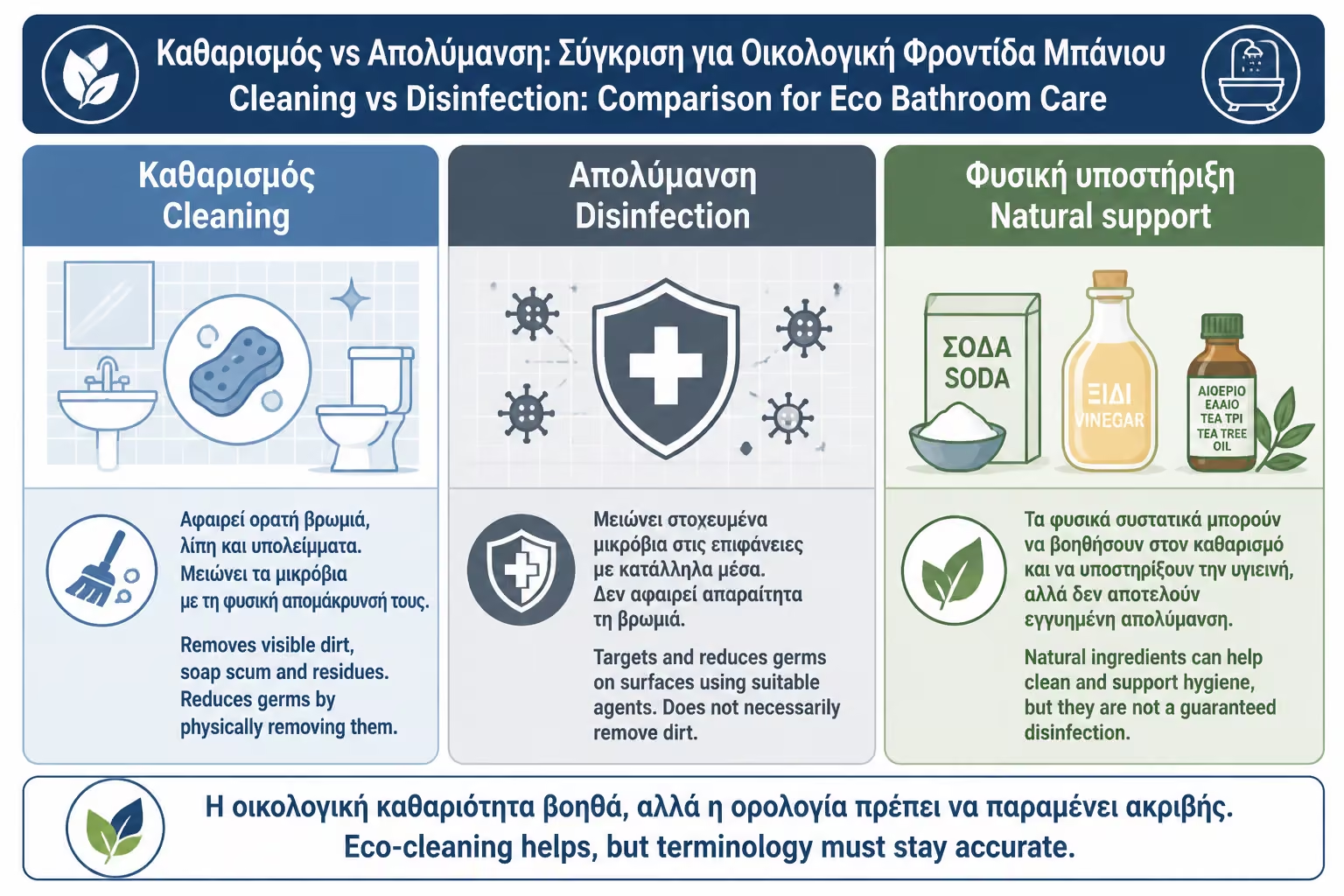
But we must distinguish two words that are often confused: cleaning and disinfection. Cleaning removes dirt, soaps, salts, grease, dust and most of the microorganisms from the surfaces. Disinfection uses an approved disinfectant to kill specific microorganisms. The CDC states that in most household situations cleaning with soap or detergent and water removes most microorganisms from surfaces, while home disinfection is usually not necessary unless someone is sick or has recently visited someone who is sick.
This is important because many "ecological recipes" are presented as daily disinfection, when in reality they are daily cleaning. Vinegar cleans salts and soap scum well, but is not an approved disinfectant. Essential oils, such as tea tree, may have antimicrobial properties at the laboratory level, but should not be relied upon as a reliable surface disinfectant in the home. For true disinfection, surface disinfectants are products with specific testing and registration, as the EPA explains the difference between cleaning, disinfection and sanitation.
So the aim of this guide is realistic: to reduce the daily use of heavy chemicals, to clean often and properly, to keep the bathroom dry and to use milder solutions where sufficient. When there is deep mold, drainage, a biohazard, disease in the home, or a surface that needs regular disinfection, then we switch to an appropriate product, with instructions, ventilation and caution.
Cleaning is the removal of dirt. In the bathroom this means removing salts, soaps, hair, dust, toothpaste residue, grease from cosmetics and organic material that feeds mold and bacteria. If you clean often, the space needs less "heavy" products, because layers of dirt don't have time to build up.
Disinfection is another thing. It refers to the use of a product that has been tested to kill specific microorganisms in a specific contact time. It is not enough that it smells strongly or says "natural". Contact time, proper dilution and clean surface prior to disinfection are critical. The CDC emphasizes that surfaces should be cleaned before disinfecting because dirt can make it harder for chemicals to reach and kill microorganisms.
The term "natural disinfection" is often used loosely in marketing and home recipes. For everyday use, it is more correct to talk about mild ecological cleaning. If we really want to disinfect a basin, toilet bowl or surfaces after an illness, we need an approved disinfectant.
This does not detract from the value of soda, vinegar or soap. Instead, it puts them in their proper place: they're great maintenance tools, but not a panacea for every health need.
The bathroom is a small space. A bleach spray, a descaler, and an air freshener can fill the air very quickly. If there is no window or if the ventilator is weak, the fumes remain. This can irritate the eyes, throat and respiratory tract, especially in people with asthma, allergies or sensitivity to fragrances.
Eco-cleaning reduces this daily burden. If we clean often with mild materials, we don't have to "fight" three-week-old salts or water-soaked mold every time. Frequency is more important than volume. A gentle cleaning 2–3 times a week is often better than a very aggressive cleaning once a month.
In addition, the eco-friendly materials are usually cheap and simple: baking soda, white vinegar, liquid soap, microfiber cloths, joint brush, glass spatula, and optionally a few drops of essential oil for fragrance. You don't need dozens of products.
The condition is to know where each material fits. Vinegar does not go on marble. Baking soda should not be rubbed aggressively on sensitive surfaces. Essential oils are not for everyone. Ecological does not mean careless.
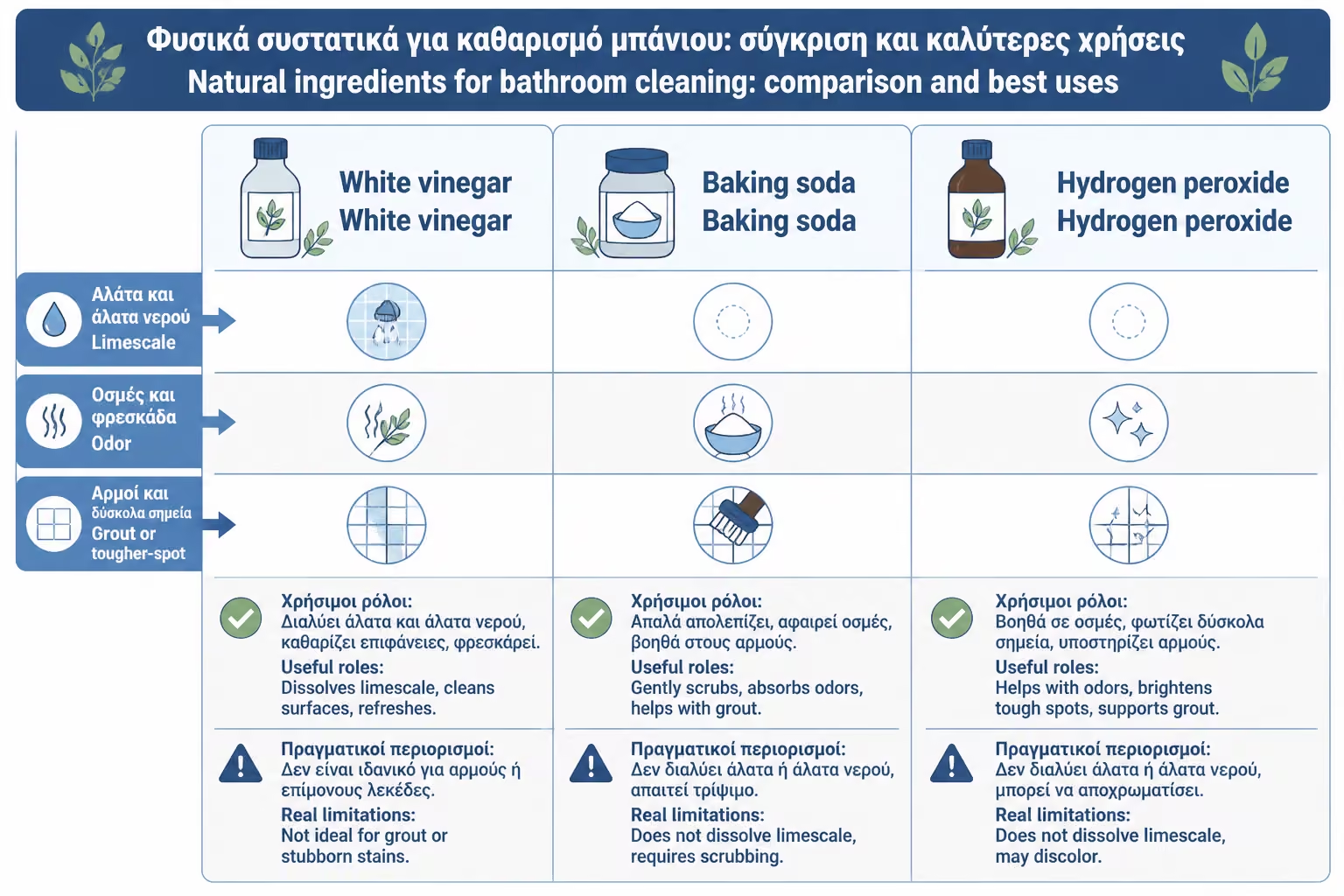
Baking soda is one of the most useful ingredients for the bathroom. It is mildly alkaline, helps with odors and acts as a gentle abrasive. It is good for sinks, ceramics, tiles, lightly soiled joints, soapy surfaces and small areas that need scrubbing without too much aggressive product.
The simplest use is a paste: a little baking soda with a little water until it becomes creamy. Apply it to the sink, joints or areas with soapy water, leave for a few minutes and rub gently with a sponge or brush. Then rinse well. If a residue is left, it can leave a white haze.
Baking soda is also useful for odors in bins or cupboards, but not as a disinfectant. It can help absorb mold odor, but if there is mold or a leak, it doesn't solve the cause.
Beware of excessive rubbing. On glossy, painted or sensitive surfaces, even a mild abrasive can dull the finish if used frequently and forcefully. Always test on a small spot.
White vinegar is acidic, which is why it is especially useful for salts. On shower glass, faucets, tiles and white spots from hard water it can help a lot. Dissolves salts and reduces dullness, as long as the surface is suitable.
A simple everyday solution is to spray diluted white vinegar and water in a glass cabinet, leave for a few minutes and wipe with a microfiber cloth. For batteries, it's best to apply with a cloth rather than spray wildly on joints, as acidic products can affect some finishes if left too long.
Vinegar should not be used on marble, natural stone, limestone materials, travertine or acid-resistant surfaces. It can dull, chemically etch or alter protective finishes. If you have black batteries, brushed finish or special coatings, check manufacturer instructions.
And above all: vinegar is not a reliable disinfectant. EPA does not list it as a disinfectant and its effectiveness against pathogens should not be considered equivalent to an approved product.
Tea tree oil has a reputation as a “natural antimicrobial”. Indeed, essential oils have been studied for antimicrobial properties in laboratory conditions. But this does not mean that a few drops in a household spray equates to reliable surface disinfection in the bathroom.
Essential oils are best treated as a fragrance and cleaning aid, not a primary disinfectant. They can give a pleasant feeling of cleanliness and, in small quantities, be used in perfume recipes. But for basins, surfaces after illness or sanitary critical points, an approved disinfectant is needed.
Pay attention to safety as well. Essential oils are concentrated substances. They can irritate skin, eyes or respiratory tract. They can be dangerous to pets, especially cats, depending on the oil and exposure. We do not use them undiluted on surfaces that we touch often, nor excessively in a blind bathroom.
For daily eco-cleaning, 3–5 drops in a spray bottle are enough for fragrance. More does not mean cleaner. It often means more irritating.
Before any "recipe", the safest and most effective base is soap or mild detergent with water. Removes organic dirt, grease, soap residue and a large part of microorganisms mechanically. It is what public bodies also recommend as a first step on many household surfaces. The CDC states that cleaning with household cleaners that contain soap or detergent removes germs and dirt from surfaces.
In an everyday bathroom, this is often enough for a sink, counter, tiles, knobs and exterior surfaces. If you clean regularly, you don't need to use a disinfectant every time. If someone is sick, if bodily fluids are present, or if you want actual basin/knob/handle sanitization, then clean first and then disinfect with an appropriate product.
This is important for air quality. The less often heavy chemistry is needed, the less fumes in a small space. "eco" starts from frequency and mechanical action: cloth, brush, scrubbing, rinsing, drying.
Homemade ingredients are supplements. The base is a clean surface.
For gentle daily cleaning you can use a simple spray of water, some mild liquid soap and optionally a little essential oil for fragrance.
| Material | Quantity |
|---|---|
| Water | 500 ml |
| Mild liquid soap or dishwashing detergent | 1 teaspoon |
| Tea tree or lavender | 3–5 drops optional |
Shake gently, spray on sink, tiles or counter and wipe with microfiber cloth. No need to soak the surface. The goal is to remove residue before it becomes a layer. Then, if the surface comes into contact with skin or care products, wipe with a clean, damp cloth.
This recipe is not a disinfectant. It is a maintenance cleaner. It is suitable for frequent use, especially when you want to reduce heavy chemicals.
Do not use on natural stone without checking, mainly due to soap/residue and possible oils. For marble, prefer a special neutral stone cleaner.
For salts on glass and tiles, vinegar is one of the most practical materials. A mild recipe is:
| Material | Quantity |
|---|---|
| White vinegar | 1 part |
| Water | 1 part |
| Optional essential oil | 2–3 drops per 500 ml |
Spray on glass cabin or tiles with salts, leave 3–5 minutes and wipe. For strong salts, repetition may be necessary. Then rinse or wipe with a clean damp cloth, especially near metal parts.
Do not use on marble, natural stone, limestone tiles, unprotected cement mortars or sensitive battery finishes. Do not mix it with bleach or any chlorinated product. Mixing bleach with acids such as vinegar can create dangerous chlorine fumes; the CDC warns against mixing bleach with other cleaners.
Vinegar is great for salts, but not for everything. The surface decides if it is allowed.
For joints with soapy water or light dirt, make a paste with baking soda and water.
| Material | Quantity |
|---|---|
| Baking soda | 3 spoons |
| Water | as needed for paste |
| Mild soap | a few drops optional |
Apply the paste to the joints, leave for 5–10 minutes and scrub with a joint brush. Rinse well. If a white residue remains, wipe with a fresh cloth. This recipe mainly helps dirt and soap scum, not deep, water-soaked black mold.
Do not scrub too hard. Joints can wear out, especially if they are old or already crumbling. If the joint rubs and comes out as powder, no cleaning is needed; re-grouting is probably needed.
For silicones that have darkened deeply, baking soda can clean the surface, but will not solve the problem inside the material. There often a removal and new silicone is needed.
Low household hydrogen peroxide can be used on some surfaces as a stronger alternative to regular soap, especially for stains and surface mold. There are also commercial peroxide-based disinfectants that are listed as disinfectants, but there we are talking about specific products with instructions and not for any home use.
For home use, apply to small test spot, leave as directed on label and rinse/wipe. It can discolor materials, so care should be taken on colored joints, fabrics, painted surfaces and delicate finishes.
It does not mix with vinegar. The combination can create peracetic acid, an irritant and corrosive. Do not use after bleaching without good rinsing and ventilation.
Peroxide is a useful tool, but the label must be read. If you want real disinfection, choose an approved product with clear instructions and contact time.
The most dangerous point in "natural" cleaning is that some people mix products to make them "stronger". This can become dangerous.
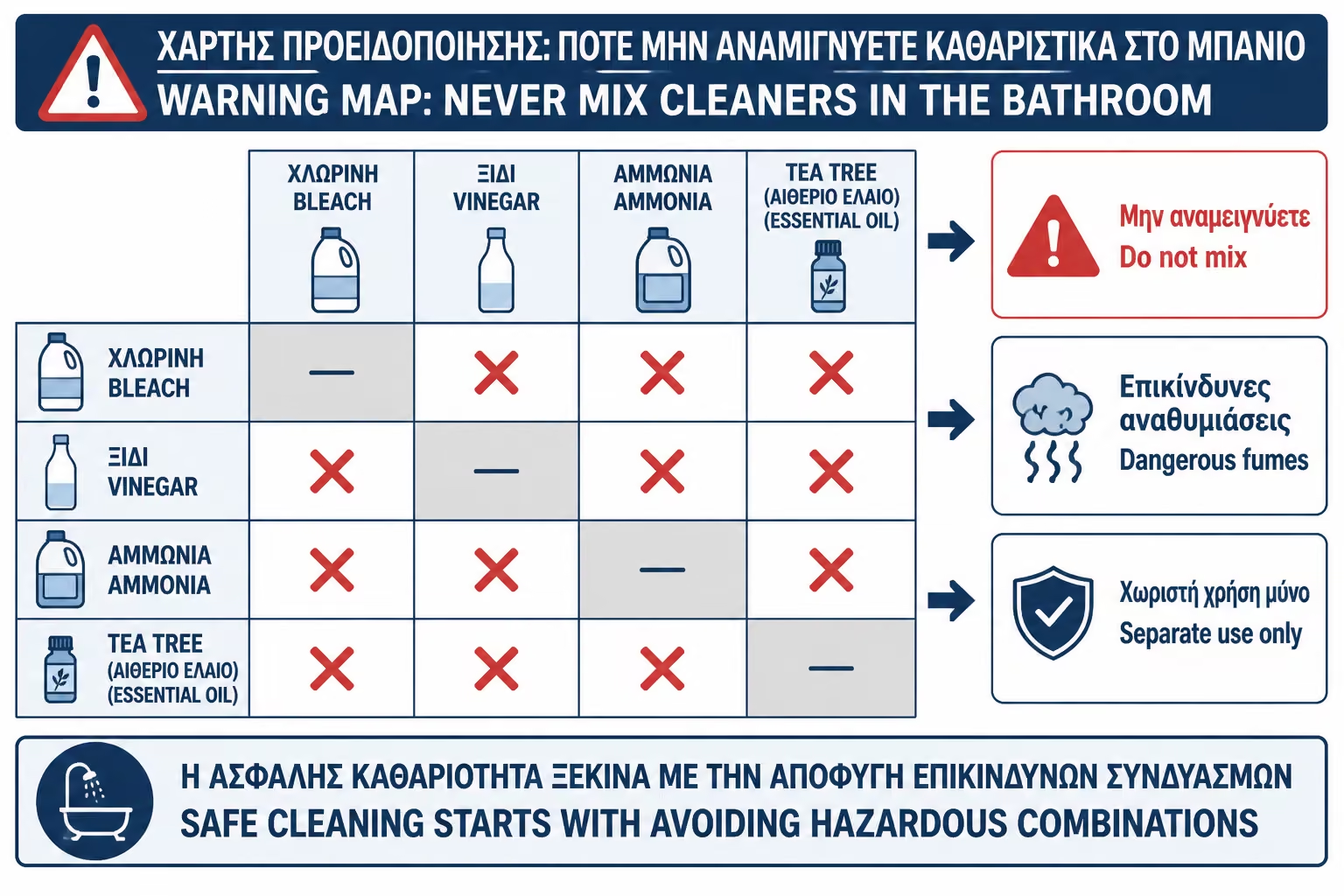
| Mixture | Why it is a problem |
|---|---|
| Bleach + vinegar | May release chlorine gas |
| Bleach + ammonia | May produce toxic chloramines |
| Bleach + descaler/toilet cleaner | Dangerous fumes |
| Vinegar + peroxide | May create peracetic acid |
| Too many fragrances or essential oils in a small bathroom | Respiratory irritation or headache |
| Drain opener + any other cleaner | Risk of reaction and splashing |
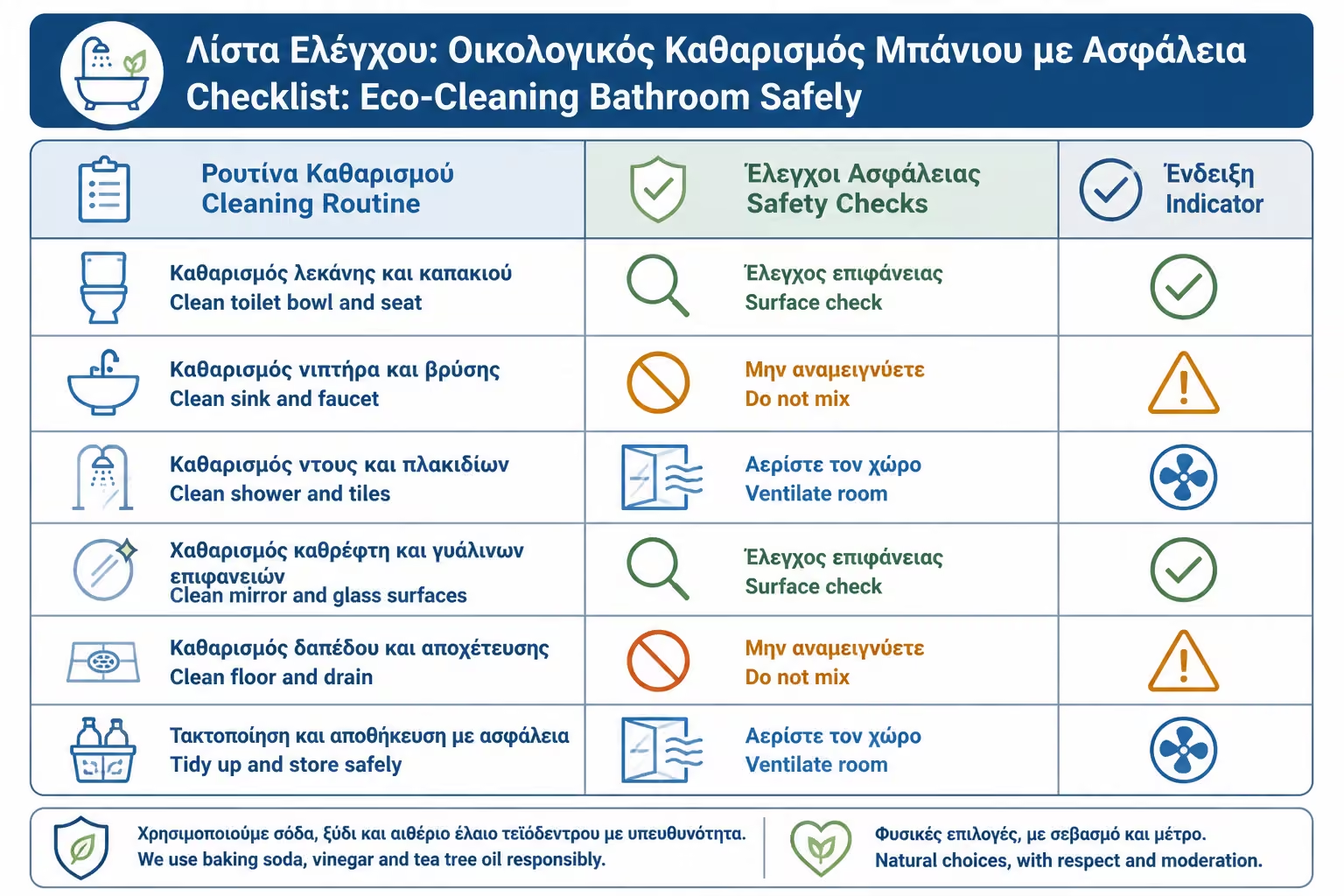
The basic rule is one product at a time. If you switch products, rinse well, ventilate, and let the surface dry. In a small bathroom, open the door or window and run the extractor fan.
Eco-cleaning should not turn into a chemistry experiment. Safety comes first.
The toilet bowl is often the place that needs the most serious cleaning. For daily maintenance, you can use a mild cleaner, a brush, and frequent light cleaning. For limescale inside the bowl, vinegar can help as long as there is no bleach product already on the surface.
A mild method is to pour vinegar into the bowl, leave it for 10–15 minutes, and scrub with a toilet brush. For a stubborn limescale line, reapplication or a dedicated descaler may be required. Baking soda can help as a gentle scrub, but the baking soda and vinegar mixture foams mainly because the two substances neutralize each other. The foam may help a little mechanically, but it is not a "super-cleaner".
For true toilet disinfection, especially when there is gastroenteritis, illness, or a specific hygiene need, use an approved disinfectant according to the label. The EPA maintains lists of registered disinfectants for specific pathogens and emphasizes that disinfectant products must meet testing requirements.
Daily ecological maintenance reduces the frequency of heavy disinfection, but does not eliminate it when there is a real reason.
The best eco-friendly shower recipe isn't in a bottle. It's the spatula. After showering, remove water from windows and tiles. This reduces salts, soaps and mold-feeding moisture. This is more effective than letting the waters dry and then spraying chemicals.
For daily maintenance, you can use a mild vinegar spray on a glass cabin if the surface allows it. Wipe with a microfiber cloth and let the fan run. If there are natural stones or delicate finishes, use a neutral cleaner.
Silicones need drying. If the corner of the shower is always wet, mold will return. That's where it helps to wipe the corner with a dry cloth after use, especially in bathrooms with a history of tanning.
Ecological cleaning is not only about "what I spray". It is also "how much water I let remain".
If the bathroom is not ventilated, no eco-cleaning will last long. Moisture will sit on surfaces, soap scum will stay wet, and mold will find conditions. The ventilator, the window and the air intake from the door are basic parts of cleanliness.
After each shower, the fan should run for a while. If it has a timer or a hygrostat, even better. If the door doesn't have a gap underneath, the fan isn't pulling properly. If the fan is full of dust, performance drops. If the vent has a sticky return, odors return.
Air quality doesn't improve just because we don't use bleach. It improves when we remove water vapors, odors and pollutants. This is a technical function, not an aromatic one.
Ecological cleaning must be accompanied by mechanical or natural ventilation. Otherwise, we simply clean more gently an area that continues to remain moist.
Regular disinfectant is needed when there is illness in the home, gastroenteritis, body fluids, heavy microbial load, shared bathroom with increased risk or when we want to disinfect high contact surfaces for a specific reason. In such cases, homemade mixes are not the right choice.
High-touch surfaces in the bathroom are faucet knob, knob, switches, faucet, basin lid, countertop and handles. They are cleaned first. Disinfectant is then applied according to the label and contact time. If you wipe it off right away, it may not have time to work.
The EPA explains that surface disinfectants are subject to more stringent testing requirements than sanitizing products and that sanitizing claims fall within a regulatory framework. This is the reason why we should not write "disinfection" in every homemade recipe with vinegar or oil.
Eco-friendly means I use disinfectant when needed, not every day for no reason.
For small surface mold on hard surfaces, cleaning with detergent and water, good drying and improved ventilation can help. Vinegar or peroxide can be used on suitable surfaces with care. But if the mold has penetrated silicones, joints, plasterboard or porous materials, mild cleaners are not always enough.
EPA notes that porous materials that have become moldy may need to be disposed of because mold can grow within the voids of the material and be difficult or impossible to remove completely. This is especially true for old silicone joints and ceilings that have absorbed moisture.
If you see black silicone that won't clean, the solution is not a "stronger natural formula". It is removal and new silicone on a dry surface. If the ceiling has mold, the solution is not only spray. It's cleaning, fungicide where needed, primer, proper paint and correct ventilation.
Eco-cleaning is excellent in prevention. In deep mold, technical treatment is needed.
Eco-cleaning is economical, especially if the bathroom is maintained frequently and dirt is not allowed to build up. The basic materials are cheap, while the biggest "investment" is in good cloths, brushes and shower spatula.
| Material / tool | Indicative cost 2026 | Use |
|---|---|---|
| Baking soda | 1–3€ | Pastes, gentle rubbing, odors |
| White vinegar | 1–3€ / liter | Salts, glass, soaps |
| Mild liquid soap | 2–6€ | Daily cleanser |
| Household peroxide | 2–6€ | Surface stains, with care |
| Tea tree/lavender essential oil | 5–15€+ | Fragrance, auxiliary use |
| Microfiber cloths | 3–10€ | Reduced need for chemicals |
| Joint brush | 2–8€ | Joints and hard spots |
| Shower spatula | €3–€15 | Scale and mold prevention |
Compared to many ready-made cleaners, the cost is low. But if there is serious mold, worn joints or poor ventilation, eco-cleaning will not save technical intervention. It will reduce the symptoms, not the cause.
The best economy is prevention: drying, frequent gentle cleaning and proper ventilation.
Eco-cleaning fails when it is done with excessive expectations or without knowledge of the materials. "Natural" does not always mean safe for every surface or sufficient for every problem.
| Error | What it causes in practice | A more correct approach |
|---|---|---|
| Vinegar on marble/natural stone | Dullness and chemical deterioration | Neutral stone cleaner |
| Tea tree as a disinfectant | False security | Use only as a fragrance/aid |
| Mixing vinegar with bleach | Hazardous fumes | Never mix |
| Strong scrubbing soda | Dulls sensitive surfaces | Gentle pressure, test |
| Peroxide in colored materials | Discoloration | Small spot test |
| Cleansing without drying | Mold return | Drying and ventilation |
| Homemade sprays without a label | Confusion/misuse | Write content and date |
| Lots of essential oils | Irritation, hazard to pets | Little or no drips |
| Eco cleaning on an active leak | The problem continues | Repair first |
| Fragrance instead of cleaning | Covering odors | Source detection |
The most typical mistake is the phrase "I put vinegar and soda together". The foam is impressive, but chemically the two materials are largely neutralized. Better to use them sequentially and purposefully: baking soda, vinegar for salts, not as a magic mixture.
| Frequency | Work |
|---|---|
| After every shower | Trowel on windows/tiles, vent, door open when possible |
| 2–3 times a week | Mild soap spray on sink, counter, faucets, quick wipe |
| 1 time per week | Vinegar in salts where allowed, joint brush, basin cleaning |
| Every 2 weeks | Check silicone, corners, behind batteries, under sink |
| Every month | Ventilator cleaning outside, grille and odor control |
| When there is disease | Cleaning first, then approved disinfectant on contact surfaces |
This program greatly reduces the need for aggressive cleaners. If you let the bathroom become full of salts, mold and soap scum, you will need stronger products. If you keep it dry and slightly clean every day, mild materials will suffice much more often.
| Control | Yes / No |
|---|---|
| Do you know if you want cleaning or actual disinfection? | Yes / No |
| Never mix bleach with vinegar, ammonia or other cleaners? | Yes / No |
| Have you checked if the surface can withstand vinegar or soda? | Yes / No |
| Do you use a fan or open door when cleaning? | Yes / No |
| Are homemade sprays labeled with contents? | Yes / No |
| Are essential oils used sparingly? | Yes / No |
| Are there pets or children who may be exposed to essential oils? | Yes / No |
| Are surfaces dry after cleaning? | Yes / No |
| Has mold not penetrated silicones/joints? | Yes / No |
| Is an approved disinfectant used for disease or biological contamination? | Yes / No |
| Is the bathroom fan cleaned and working properly? | Yes / No |
| Don't you use fragrances to cover up a musty or sewer smell? | Yes / No |
The most ecological cleaner in the bathroom is the dry bath. If you flush after showering, run a fan, dry silicones, and clean frequently with mild soap, you'll need far fewer chemicals. Baking soda is good for gentle scrubbing, vinegar for salts, tea tree for aroma and freshness — not guaranteed disinfection. When there is disease, deep mold or a need for real disinfection, we use an appropriate product with instructions. Eco-cleaning means less chemical burden, not a denial of safety.
Ecological cleaning of the bathroom is completely possible, as long as it is done with realistic expectations. Baking soda, white vinegar, mild soap, microfiber cloths, and small amounts of essential oils can cover much of the daily maintenance. They can reduce salts, soaps, odors and the need for heavy chemicals.
However, they do not always replace disinfection. Vinegar is not an approved disinfectant, essential oils should not be presented as a guaranteed germicidal solution, and homemade sprays are not suitable for every sanitary situation. When there is disease, biohazard, or the need for actual disinfection, the right product and proper use is needed.
The greatest success of eco-cleaning lies in prevention. If the bathroom is ventilated, dried and cleaned often, it does not need aggressive cleaners every time. If we allow moisture, salts and soaps to build up, no natural formula will work wonders.
A clean bathroom should not smell strongly of chemicals to be clean. It must be dry, ventilated, mold-free, free of debris and with frequently maintained surfaces. That's where the real ecological cleanliness lies.
Return to category.
Go to categoryReturn to the central guide.
Go to guide