
Bathroom Lighting, Ventilation & Heating
Return to category.
Go to categoryThe musty smell in the bathroom is one of the most insidious problems in the house. It is not always apparent at first glance. The bathroom may look clean, the tiles are washed, the sink is shiny and yet, when you open the door, there is that heavy, damp, "musty" smell. Other times the smell only appears after showering. Other times when the ventilator is off. Other times in the morning, after a night with the door closed.
The big mistake is to cover it up with fragrance. Sprays, diffusers, candles, or scented toilet products can make the bathroom smell better for a while, but they do not remove the source. If there is mold behind the furniture, stagnant moisture under the sink, a dry trap, a dirty vent, or odors coming in from a shaft, the fragrance simply mixes with the problem. Often it makes it even more unpleasant.
A musty smell is a sign that there is moisture lingering somewhere. There may or may not be visible mold. The EPA notes that visible mold and musty odors should not be present after proper cleaning and remediation, and emphasizes that the water or moisture problem must be corrected before the remediation is considered complete. In other words, if the bathroom smells musty, the question is not "what perfume should I put on?". It is "where does the moisture stay?".
The source may be very different from what you think. It can be under the sink, behind bathroom furniture, in the towel cabinet, in the floor drain, in the vent, in the light fixture, behind blackened silicones, wet drywall, or in a stain that indicates a hidden leak. That is why methodical control is needed, not random cleaning.
In this guide we'll look at how to tell a musty smell from a drain smell, how to spot the hidden source, which spots to check one by one, and how to eliminate the smell permanently, not just cover it up.
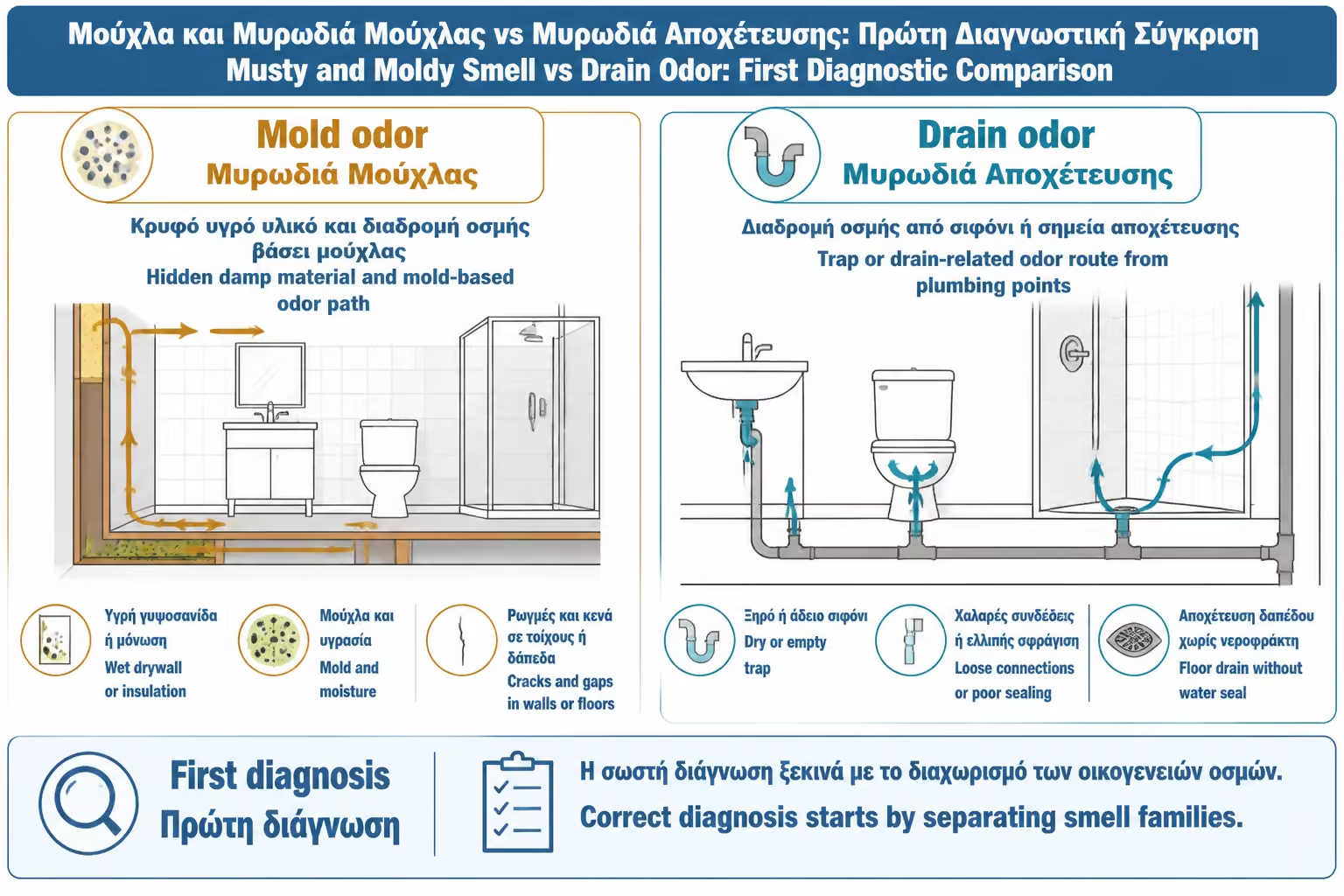
Before you start cleaning, you need to identify what kind of odor you have. A musty smell is usually heavy, earthy, and damp, like a closed basement, a wet towel, or an old cupboard. A drain odor is sharper and more "gassy", often reminiscent of a trap, sewage, or rotten eggs, depending on the cause.
The distinction is not always easy, because a bathroom can have both. For example, a dry floor drain or trap can let drain odors through, while poor moisture control has created mold behind the vanity. Simply spraying fragrance will temporarily mask both odors, but it will not solve either one.
| Type of odor | Likely source | First check |
|---|---|---|
| Musty / stale smell | Moisture on surfaces, furniture, joints, ceiling | Visual inspection in corners and behind or under furniture |
| Drain or sewer smell | Trap, dry P-trap, biofilm, drainage | Water in traps, drain cleaning |
| Odor from the shaft or vent | Air duct/vent, backdraft | Smell near the ventilation grille |
| Wet towel smell | Towels, cupboard, poor drying | Check textiles and storage areas |
| Odor after showering | Condensation, poor ventilation | Timer, humidistat, make-up air |
| Odor when other fans are running | Shaft / air backflow | Check valve |
If the smell is a strong drain or sewer odor, or if it appears suddenly and persists, it deserves attention. Sewer odors can indicate that there is an air path from the drainage system into the room. A scientific paper on sewer gas notes that sewer odors may indicate a complete pathway from the sewer to indoor air, although the absence of odor does not always rule such a pathway out.
Air fresheners add smell. They don't remove moisture, kill mold at the root, clean siphons, repair leaks, or fix a vent. They may temporarily improve sensation, but often delay diagnosis.
In a bathroom with mold, the problem is that there is material that remains wet. The EPA gives as a rule of thumb that leaks and other water problems should be fixed, materials should be completely dried, and mold should be removed from surfaces, while porous materials may need to be disposed of if moldy. If you just put perfume on top of it, the source stays active.
In addition, strong fragrances can bother people with asthma, allergies or fragrance sensitivities. A bathroom with mold and a strong artificial aroma is not healthier. It's just more confusing olfactively.
The correct logic is: first find the source, then clean/repair, then dry and improve ventilation. The perfume, if we want it, enters at the end and only in a clean space.
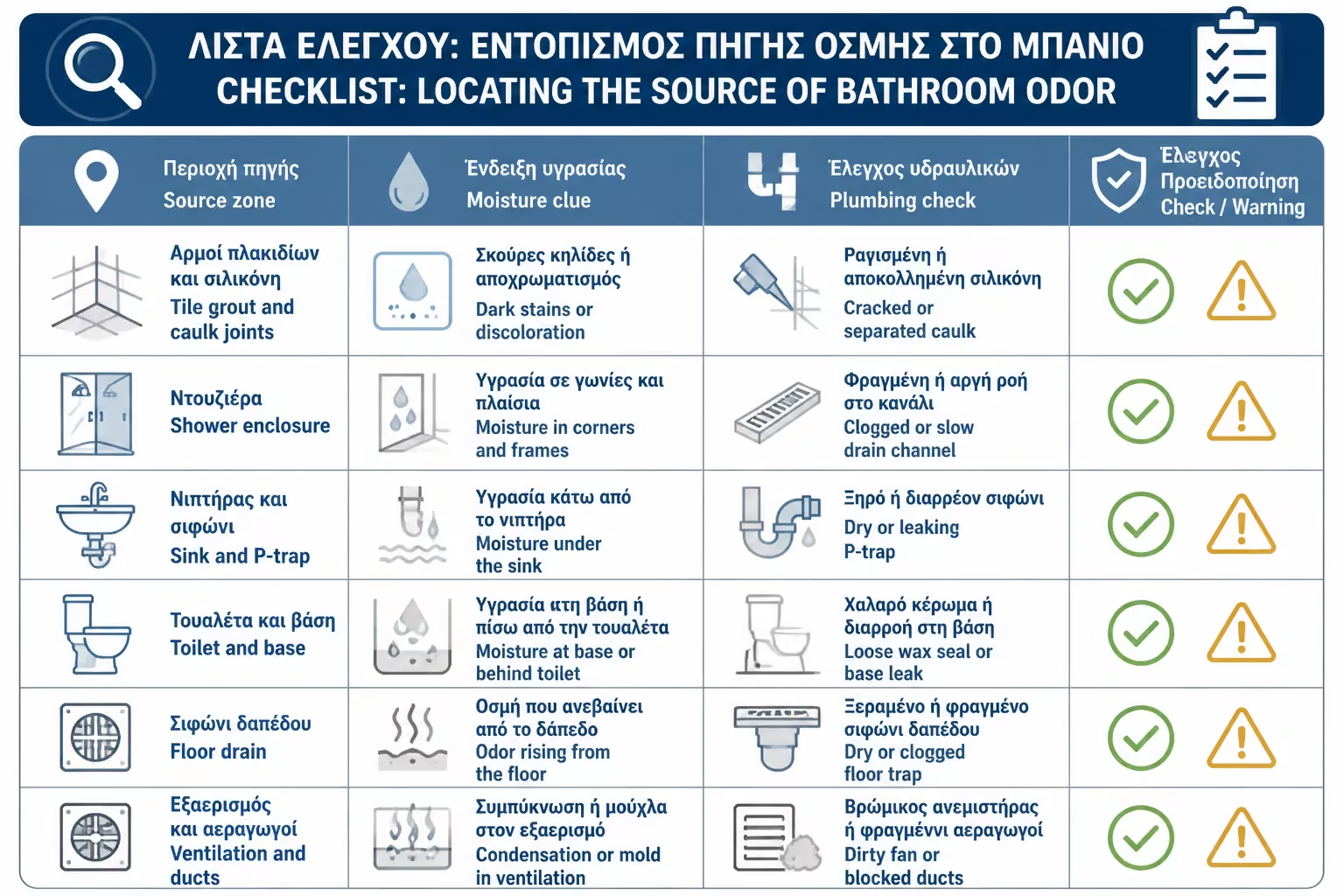
The most practical way to diagnose is to check the bathroom in order, not randomly. Open the door after the bathroom has been closed for hours and try to figure out where the smell is coming from. Do not clean first, as you will confuse the readings.
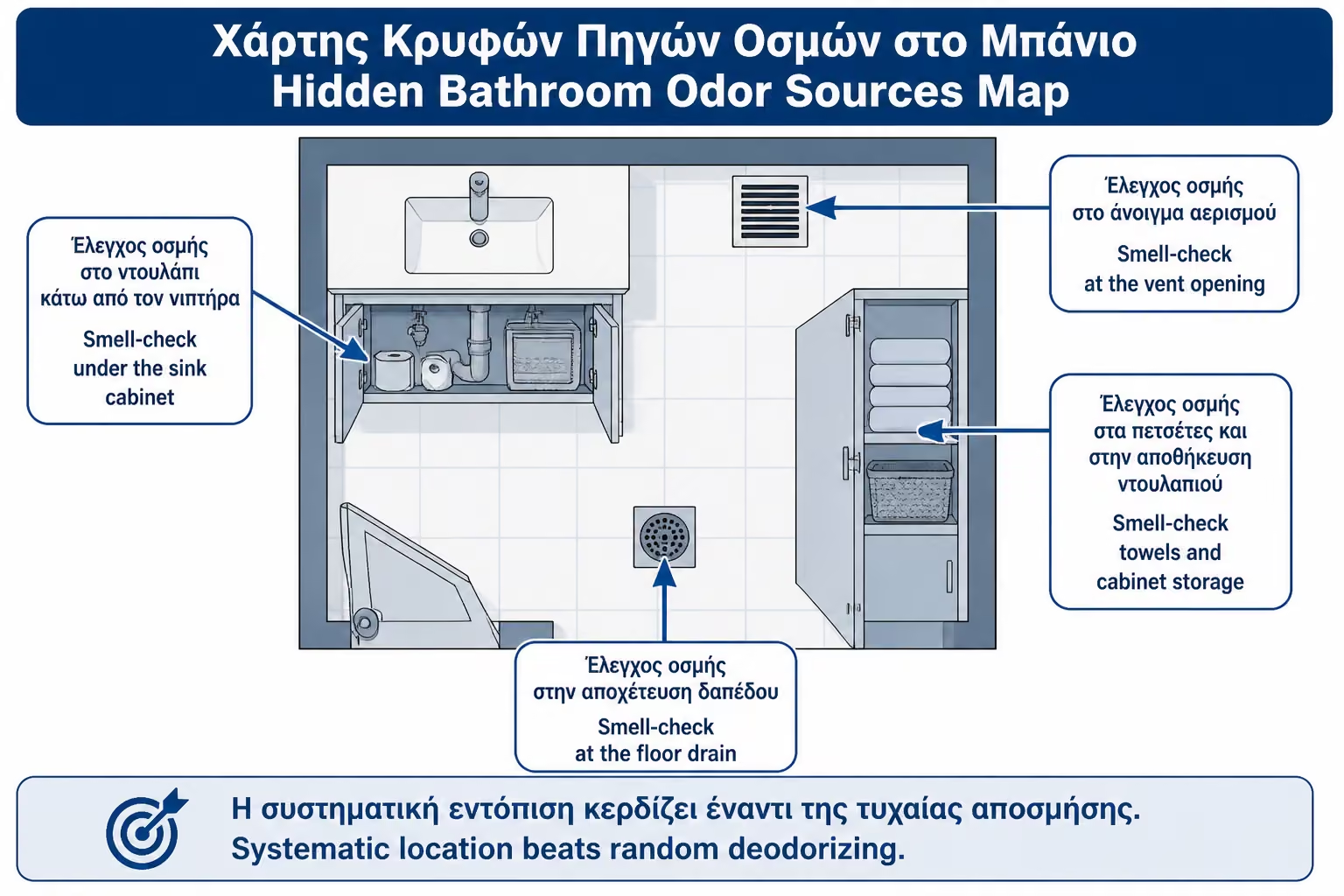
Carefully approach different places with your nose: under the sink, inside the cabinet, near the floor drain, on the vent grill, behind the door, around the basin, near the shower silicone, on the window and in the corners of the ceiling. The source is often indicated by the intensity of the smell.
Then do a second check after showering. If the smell gets stronger after use, it is probably linked to condensation, wet surfaces, towels or poor ventilation. If it gets stronger when the fan is off, it could be a light bulb or backfire. If it occurs when the bathroom has not been used for days, look for drains that are drying out.
Odor diagnosis requires observation in different conditions: dry bath, after shower, with fan on, with fan off, with door closed and with door open.
The cabinet under the sink is one of the first areas to check. There is a siphon, piping, battery connection, drain, cleaners, papers, towels and often poor ventilation. If there is a small leak, it may not be immediately visible on the floor, but water the underside of the furniture.
Remove all items. Check the bottom of the cabinet for bulging, black marks, soft MDF, white scale, drips or a musty smell. Run dry paper around siphon connections and supplies. If the paper gets wet, there is a leak or condensation in the tube.
Smell the items that were inside. Many times the smell is not from the wood, but from wet cloths, old sponges, spilled cleaners or toilet paper that has absorbed moisture. If the cabinet smells, empty it completely and leave it open to dry after checking for leaks.
If the wood or MDF is swollen and smells strongly, simple cleaning may not be enough. The material may have absorbed moisture and may need replacement, or at least serious drying and restoration.
Stagnant air can form behind bathroom furniture, mirrors, storage columns or cabinets. If the wall is external or cold, moisture condenses behind the furniture and the surface dries slowly. There the mold can grow without being seen.
If the smell is stronger near a piece of furniture, move it as far away as possible. Check back, base, legs, wall contact and bottom. Look for black dots, swollen material, graying, damp dust or a damp wood smell.
Mirrors that are completely attached to the wall or cabinets that do not leave air behind them can trap moisture. In a bathroom with poor ventilation flow, this becomes more pronounced. If the mold is behind built-in or hanging furniture, a technician may be needed for safe removal.
The solution is not to spray perfume behind the furniture. The solution is to dry the wall, clean the mold, improve air circulation and fix any thermal bridging or leakage.
The floor siphon has water in it to act as an odor trap. This water creates a barrier that prevents sewer gases from entering the bathroom. If the siphon runs dry, if the bathroom is not used often, or if the water evaporates due to heat/inactivity, the smell of sewage can pass into the room.
The EPA, in guidelines for indoor air quality, states that dry drain traps can allow sewer gas to pass through and that periodically supplying water to the odor trap helps keep it from drying out. This is very relevant to guest bathrooms, cottages or siphons that do not receive water often.
The first simple action is to pour water into the siphon and see if the smell diminishes. If the bath is not used often, repeat periodically. If the smell returns very quickly, there may be a problem with the siphon, odor trap, drain vent, or crack/failure.
Attention: a siphon smell is not a musty smell. If it smells like a drain, cleaning mold in the joints will not solve the problem.
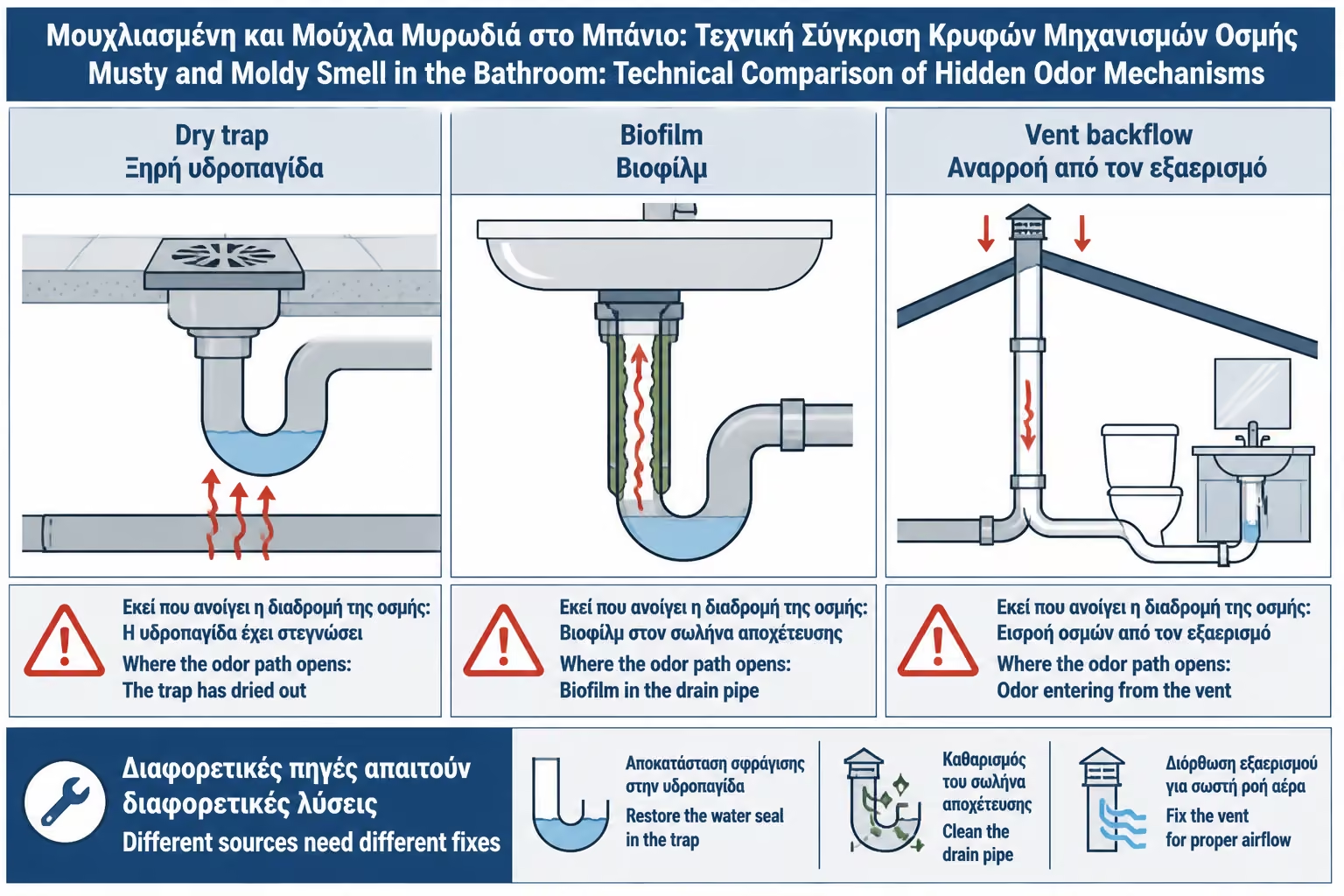
Even if the odor trap has water, the sink faucet can smell because of biofilm. Soaps, toothpastes, hair, grease from cosmetics and organic residues create a layer inside the tube. This can give off a cloister or sewer-like smell.
If the smell is stronger when you approach the sink or when the water is running, clean the faucet. Many times it needs loosening and mechanical cleaning, not just liquid dumping. If you don't know how to do it, call a plumber. Chemical sealants must be used with great care, as they can cause damage or dangerous reactions if mixed with other products.
For gentle maintenance, regular hot water rinsing and cleaning of the cap/valve, where hair and soaps collect, helps. If there is an overflow in the sink, it can also smell because it holds dirt. Many clean the sink but forget the overflow hole.
If the odor persists after cleaning, check for a leak in the siphon or a problem with the drain vent.
In many apartment buildings, the bathroom fan vents into a skylight. If the flue has odors, moisture, trash, cooking fumes or returns from other apartments, the odor can be drawn back into the bathroom when the fan is off.
Approach the vent grill when it is off. If the smell is stronger there, a possible source is the air duct or light duct. Check if the non-return valve is present and working. If the return is stuck open or missing, flue air may be backing up into the bathroom.
If the smell occurs when it is windy or when other tenants are using fans, the problem points even more to return air. The solution may be grille cleaning, return fitting/replacement, vent inspection or, in difficult cases, communal light fitting inspection.
Do not cover the grill to stop the smell. You will also stop ventilation, and then the humidity will get worse. It needs backflow and proper flow, not sealing.
Towels are a common source of cloister smell. If they are left damp in a small bathroom, if they are not completely dried, if they are stacked in a cupboard or if they are washed at a low temperature without proper drying, they can smell musty even if the space is relatively clean.
Remove all towels and mats from the bathroom and smell them individually. If the smell follows the towels, the problem is fabric. Wash, dry well in the sun or tumble dry where permitted, and store only when completely dry. Do not store half-dry towels in a closed cupboard.
Bath mats also retain moisture. If they have a rubber base, they may trap water underneath. Pick them up, check the floor and let them dry completely. A clean bathroom with a permanently wet mat can smell musty.
If you remove siphons and ventilation but keep damp cloths, the smell will return.
Bathroom cabinets often become "odor traps". Inside them are cleaning products, paper rolls, old sponges, brushes, cosmetics, cloths and liquid products. If something has been spilled or if a sponge has been left wet, the smell can become strong.
Empty the cupboard completely. Throw away old sponges, wet papers, products that have been opened or smell strange. Clean the interior with a mild detergent, dry completely and leave it open for ventilation. If there is mold on the back, it needs more careful treatment.
Do not put perfumes in a dirty cupboard. They will temporarily mask the smell but not remove the source. A small passive moisture collector can help after cleaning, especially if the cabinet is closed and not well ventilated.
The basic principle is: bathroom cabinet with only dry and clean items. Anything that goes in wet will sooner or later smell.
If the smell returns immediately after cleaning, if there is swelling on a piece of furniture or wall, if you see salts, drips, soft wood, peeling or a specific stain, you should think about a leak. Even a small leak can create a strong clod smell if it irrigates clod material.
The most suspicious areas are under the sink, around the basin, behind the furniture, on the shower silicones, behind the faucet, on the floor drain and on the ceiling if there is a bathroom above. If the material is wet, the smell does not go away with surface cleaning.
The EPA emphasizes that proper mold remediation requires correcting water problems and completely drying materials, while porous materials may be difficult or impossible to clean completely once they have become moldy. This is very true for MDF bathroom furniture, plasterboard and porous substrates.
If a leak is suspected, call a plumber or technician. Do not cover the spot with silicone or paint without a diagnosis.
Permanent neutralization has four steps. First, you locate the source. Second, you remove or clean the affected material. Third, dry completely. Fourth, you change the conditions so that the moisture does not return.
If the source is moldy silicone, it may need to be removed and replaced. If it is grout, it may need cleaning or regrouting. If it is a cabinet that has absorbed moisture, part of it may need drying or replacement. If it is a trap, it may need cleaning and the water seal may need to be restored. If it is the vent or shaft, it may need backdraft control and cleaning. If towels are the problem, wash them and dry them completely.
Then prevention is needed. The fan should run quite a bit after the shower. The door must have an air intake. Surfaces must be dry. Cupboards should not be filled with wet items. Vent and return to be maintained.
Permanent neutralization is not a product. It is a process that removes the source and changes the conditions.
Baking soda, passive moisture collectors, activated carbon, and some mild cleaners can help with minor odors, but only after the source is removed. If you put baking soda in a leaking cabinet, the smell will continue. If you put activated carbon next to moldy silicone, it will reduce the smell a bit but won't solve the mold.
Vinegar can help with some odors and surface cleaning, but should not be used on marble or natural stone and should never be mixed with bleach. Baking soda can absorb odors in a closed cupboard, but should be changed. Activated carbon helps more with odors than moisture.
Passive salt dehumidifiers help in small enclosed areas such as cupboards, but do not remove the cause of mould. They can enter after cleansing, not instead of cleansing.
Auxiliary products are the last stage. First source, then cleaning, then drying, then absorption of residual odors.
When there is a smell, many people use several products together: bleach, vinegar, scale remover, caulking, fragrance, anti-mold. This is dangerous. The CDC reminds that bleach should never be mixed with ammonia or other cleaners and that fresh air should be present when cleaning products are used.
In a bathroom, the risk is greater because the space is small and often without good ventilation. Use one product at a time. You read the label. Rinse thoroughly before changing product. You do not pour bleach into a siphon where you have already put a clog or acid cleaner. You don't mix vinegar with bleach. You don't mix peroxide with vinegar.
For small surface mold, hard surfaces can be cleaned with detergent and water and allowed to dry completely, as recommended by the EPA for small surfaces. For persistent or extensive mold, an appropriate product and perhaps a technician is needed.
Cleaning safety is just as important as odor removal.
If the bathroom is not ventilated, the odors will return. Ventilation removes moist air, reduces condensation and helps dry siphons, joints, towels and furniture. If the vent is dirty, without a timer, or with a bad vent, the shutter smell will persist.
Check if the fan is actually pulling. Clean cap and impeller. Check if the rollback works. If the air is vented into a skylight, check if odors return. If there is no vacuum under the door, the ventilator may be underperforming. Air has to come in from somewhere to go out somewhere.
In a bathroom with a history of moldy smell, a timer or a hygrostat are very useful. The ventilator should continue after the shower, not stop with the light. In closed WCs without outlets or a vent, natural ventilation and passive collectors can help, but are no match for proper mechanical extraction.
Permanent odor neutralization requires a dry bath. And dry bathing without ventilation is difficult.
A plumber is needed when the smell resembles a drain, when a dry or damaged trap is suspected, when the sink trap is dripping, when there is stain around pipes, or when the odor returns despite filling the trap with water.
An electrician is needed when the problem is related to a fan that is not working, a timer/humidifier, an unusual noise, a connection, or the need for new ventilation. The ventilator is an electrical device in a wet area and we should not improvise.
A mold technician or repair shop is needed when the mold is extensive, when there is a strong odor with no visible source, when porous materials are waterlogged, or when people with asthma/allergies are affected. The CDC states that if you see or smell mold, you should remove it and correct the moisture problem.
Do not delay technical inspection when the smell is persistent. Odor is often an early sign before much damage is seen.
The cost depends on the source. It can be almost zero if it is due to a dry siphon or wet towels. It can become important if there is a leak, moldy furniture or a need to improve ventilation.
| Intervention | Indicative range 2026 | When needed |
|---|---|---|
| Cupboard cleaning/emptying | 0–30€ | Mild closing smell |
| Siphon filling/cleaning | 0–50€ | Dry odor trap or mild odor |
| Siphon cleaning by plumbing | 50–150€+ | Biofilm, leakage, difficult access |
| Vent/Return Cleaning | 40–150€+ | Airway odor or reduced flow |
| New check valve | 30–120€+ | Luminaire odors |
| Replacement of silicone/joints | 70–350€+ | Mold in depth |
| Under sink leak repair | Wide variation | Drops, swell, liquid MDF |
| Improved ventilation with timer/humidifier | 100–500€+ | Recurring dampness/odor |
Prices depend on area, access, materials, VAT and whether the work is done individually or within a renovation. The important thing is to pay for a diagnosis and a solution, not just a perfume or surface cleaning.
Common mistakes are all variations of the same problem: we cover instead of spot.
| Error | What happens in practice | A more correct approach |
|---|---|---|
| Aromatic over musty | Temporary coverage | Source detection and cleanup |
| Cleaning tiles while the cupboard smells | The smell remains | Check under the sink |
| Ignore floor drain | Return of sewer odors | Water in the odor trap / control |
| Ventilation grille seal | More humidity | Revert, not close |
| Using several cleaners together | Vapor hazard | One product at a time |
| Storage of wet towels | Smell of closure | Dry thoroughly before storing |
| Passive collector on leakage | The cause continues | Repair first |
| Painting over moldy surface | Reappearance | Cleaning, drying, cause |
| Illuminator ignored | Smells return | Return check |
| No remark when it appears | Misdiagnosis | Control before/after shower, with/without ventilation |
A typical example is the bathroom that smells "musty", but the source is a dry floor drain. The owner cleans tiles, puts perfumes and changes towels, but the smell remains. With a little water in the trap and checking the siphon, the problem can be revealed immediately.
| Control | Yes / No |
|---|---|
| Is the smell more like mold or sewage? | Yes / No |
| Is the smell stronger under the sink? | Yes / No |
| Is the cabinet under the sink bulging or damp? | Yes / No |
| Does the floor drain have water in the odor trap? | Yes / No |
| Does the sink or overflow smell when running water? | Yes / No |
| Is the smell stronger on the vent grill? | Yes / No |
| Is there a check valve in the vent? | Yes / No |
| Do towels or mats smell different? | Yes / No |
| Is there mold behind furniture or a mirror? | Yes / No |
| Does the smell get stronger after showering? | Yes / No |
| Does the smell appear when the bathroom is closed? | Yes / No |
| Has the fan and vent recently been cleaned? | Yes / No |
| Suspect a leak or a growing stain? | Yes / No |
If the bathroom smells musty, don't start with fragrances. Start by locating. Empty the cabinet under the sink, check faucets, smell the vent grill, look behind furniture and take the towels out of the room for a day. If the smell changes, you have found direction. The permanent solution is always the same: we remove the source, dry the material, fix a leak or vent, and then use odor absorbers only as a supplement. The fragrance enters a clean bath, not on active moisture.
The musty and musty smell in the bathroom is not simply a matter of fragrance. It is an indication that there is moisture, stagnant air, biofilm, return from a light pipe or drainage problem somewhere. If it gets covered in perfumes, it will come back. If the source is found, it can be permanently solved.
The right process is methodical. We distinguish the smell of mold from the smell of sewage. We check under the sink, behind furniture, siphons, towels, cabinets, vent and light fixture. Clean or remove the affected material. We repair leaks. Fill or clean odor traps. We put a return where air returns. And, above all, we make sure the bathroom dries.
Permanent odor neutralization comes when the bathroom has proper air flow, a clean vent, a functioning siphon, dry cabinets and materials that do not retain moisture. Then, if you want, you can add a mild fragrance for a sense of freshness. But you won't need it to hide a problem.
Return to category.
Go to categoryReturn to the central guide.
Go to guide