
Bathroom Lighting, Ventilation & Heating
Return to category.
Go to categoryPlants in the bathroom have a special charm. They soften the image of the tiles, give life to a space that is often cold and technical, and create the feeling of a small spa. A fern on a shelf, a gladiolus next to the sink, an orchid near a bright window or a sansevieria in a corner can instantly change the atmosphere of the bathroom.
But there is also the practical side. The bathroom is a place with high humidity, sudden temperature changes and often limited natural light. Some plants suffer in such conditions. Others, on the contrary, love them. Plants that come from tropical or subtropical environments often thrive in a warm and humid atmosphere, as long as they have proper light, drainage and are not waterlogged.
The point that needs attention is the myth that plants "solve" bathroom humidity. Yes, some plants absorb moisture from the environment or utilize high humidity through their leaves and roots. Yes, they can improve the sense of space and contribute to a better microclimate. No, they do not replace a fan, dehumidifier, timer, humidistat or proper air intake through the door. For shower steam, mold on the ceiling or sweaty walls, a technical ventilation solution is needed.
The same goes for air quality. The well-known idea that plants "clean the air" was based on laboratory studies, but in real homes the effect is much more limited. The American Lung Association points out that the popular belief about plants and air purification stems mainly from the 1989 NASA study, but in real homes the effect is small relative to ventilation and control of pollutant sources.
So the proper place for plants in the bathroom is this: they are not dehumidifiers and they are not industrial-grade air filters. They are living decorative elements that love the humid microclimate, offer a sense of freshness, can help balance the space a bit and make the bathroom more pleasant. If we use them with realistic expectations, they are a great addition.
Yes, but to a limited extent. Plants participate in moisture exchange with their environment. Some absorb water mainly from the roots, some love high humidity in the leaves, while epiphytic plants such as some orchids or air plants are adapted to exploit moisture from the air. But the amount of moisture they can "manage" is very small compared to the water vapor produced by a hot shower.
A shower can raise the relative humidity of the bathroom to very high levels within a few minutes. No potted plant can absorb this moisture spike fast enough to protect mirrors, windows, ceilings and joints. A fan or direct ventilation is needed for this.
Plants do best in mild, consistent moisture. For example, a spathe or fern may thrive in a bathroom where the humidity is often higher than the rest of the house. This does not mean that it "dries" the bathroom. It means that the bath offers the plant conditions that it likes.
The practical approach is simple: plants for sensation, decoration and microclimate; ventilation for real water vapor removal.
Many houseplants come from areas with high humidity, filtered light and constant temperatures. The bathroom, especially if it has a window and is used frequently, can partially mimic these conditions. After the shower, the humidity increases, the leaves do not dry so easily and plants that suffer in a dry living room can show better.
The Royal Horticultural Society recommends plants for bathrooms based on humidity and light, stating for example that ferns such as maidenhair fern love moist environments and suit a bright bathroom without direct sun.
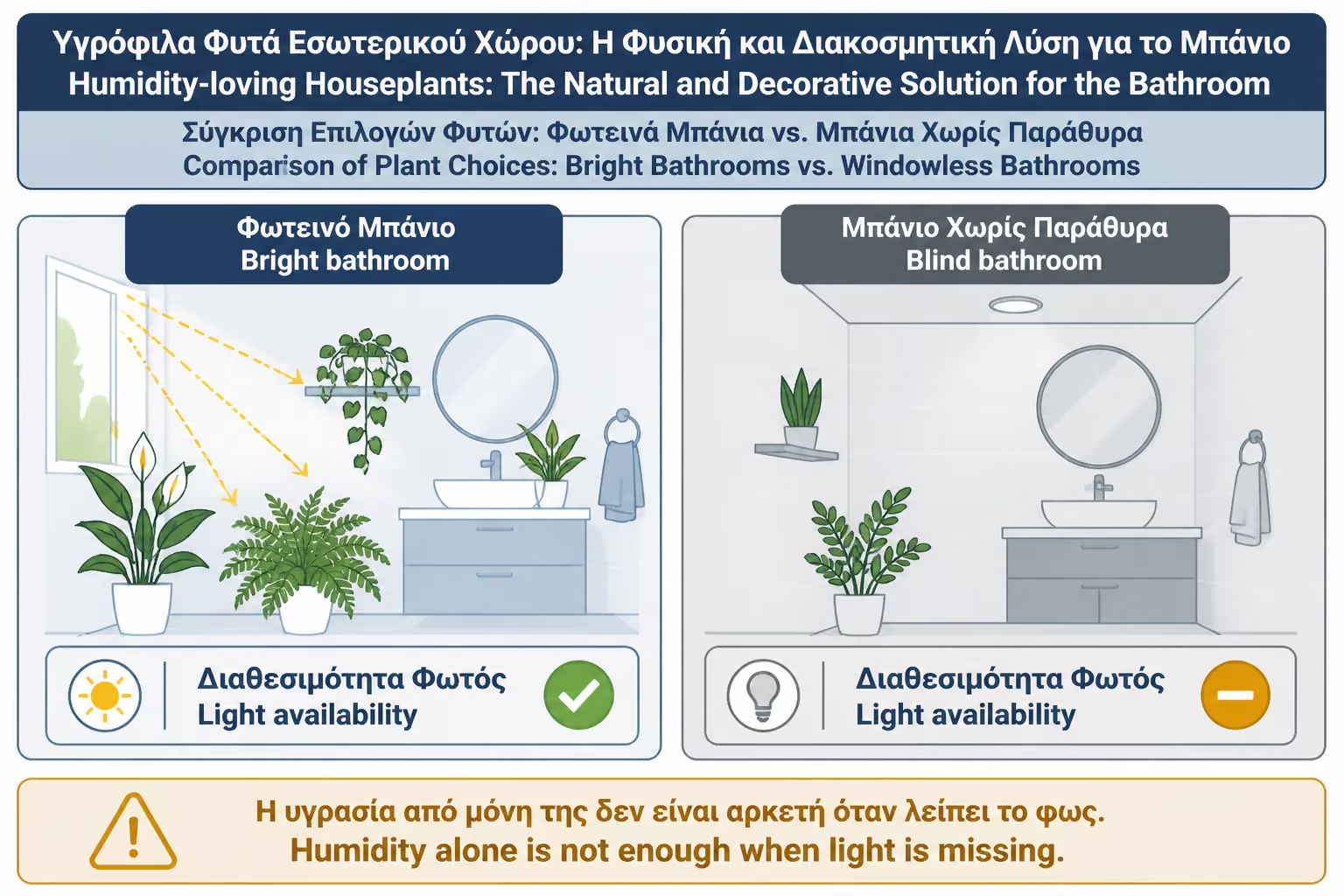
The key is "bright" and "no direct sun". Many tropical plants do not want hot sun on their leaves, but they do need plenty of diffused light. A bathroom with a small skylight may be suitable for some hardy plants, but not all. A blind bathroom without natural light is a much more difficult case.
Also, the humidity of the air does not mean that we should water excessively. Many bathroom plants die not from drought, but from root rot because the owner waters them as if they were in a dry room, while their soil never dries out.
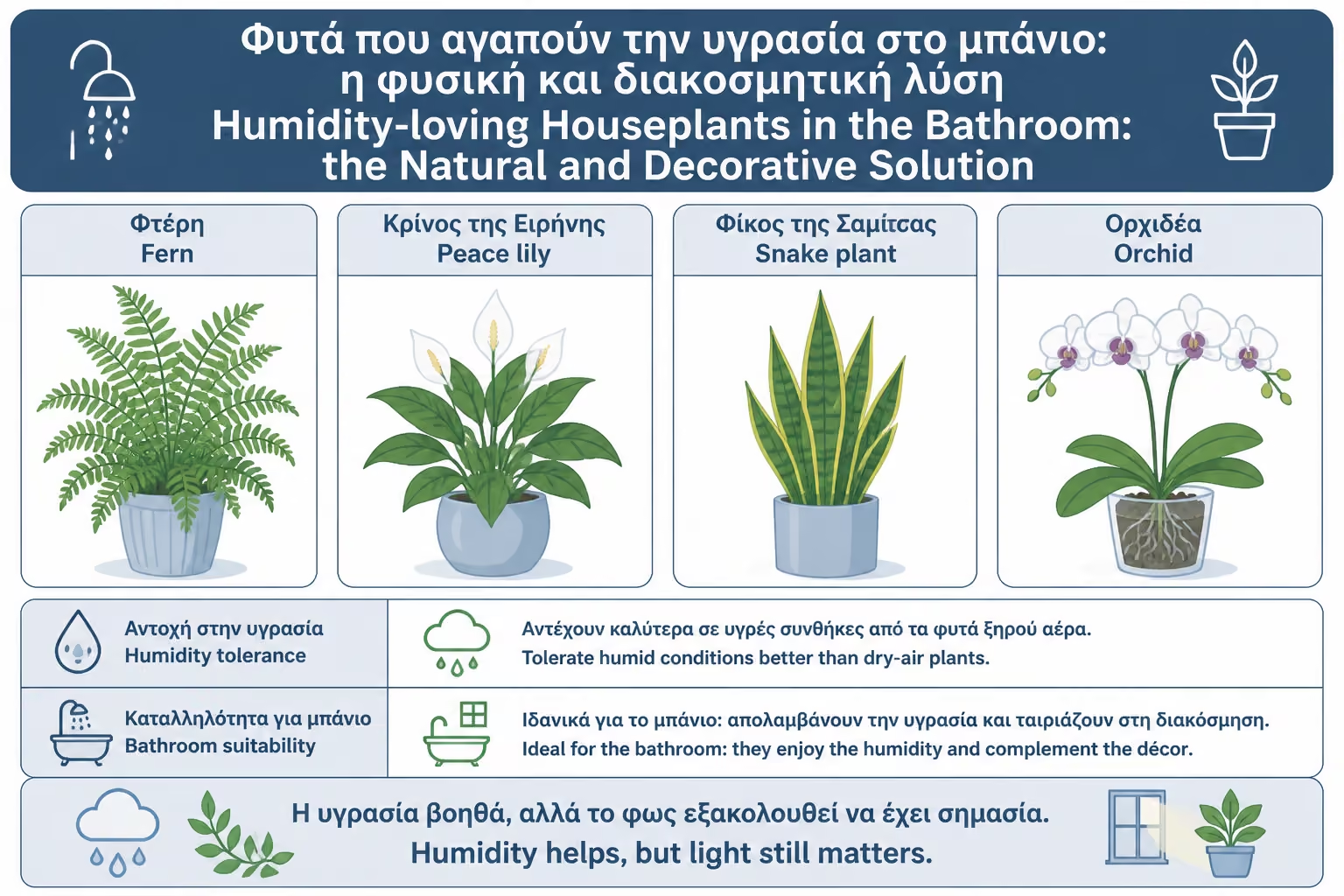
The fern is one of the most suitable plants for a bathroom, especially if the space has enough indirect light. Ferns love moisture and a cool, stable atmosphere. In dry houses they often dry out at the edges, but in a bathroom with frequent humidity they can look much richer.
They are particularly suitable for shelves, hanging cases, corners near a window or on a piece of furniture away from direct splashes. The fern should not be in the flow of hot steam or where drops fall from the shower. It wants a moist environment, not permanently wet foliage and stagnant soil.
The soil should remain slightly moist, but not muddy. The pot needs good drainage. If the bath is too dark, the fern will thin out, turn yellow or shrivel. If it is too bright with direct sun, the leaves may burn.
The fern is an ideal choice when we want a rich green effect and we have moisture, but also light. In a blind bathroom without a window, it is not the easiest solution unless there is a grow light or a systematic change of position.
The spathiphyllum, also known as the peace lily, is a favorite indoor plant because it has glossy leaves and white flowers. It suits bathrooms with indirect light and a humid atmosphere. The high humidity helps to keep the edges of the leaves from drying out and gives a more "tropical" feel.
The big mistake is over watering. Because the spathiphyllum is in a wet bath, the soil may dry more slowly. If we water it too often, the roots may rot. The plant needs a moist but well-drained substrate. Better to test the soil with a finger before watering, rather than watering on a schedule.
Spathiphyllum tolerates lower light than other plants, but does not do well in complete darkness. In a windowless bathroom, it can survive temporarily if periodically moved to a brighter spot, but is not ideal long term without artificial lighting.
Important note: spathiphyllum is toxic to cats and dogs if chewed. If there are pets that have access to the bathroom, attention needs to be paid to its location.
Sansevieria, also known as snake plant or "mother-in-law's tongue", is one of the most resistant indoor plants. It tolerates lower light, does not need frequent watering and forgives omissions. For a bathroom, it is a good choice when the space is not very bright or when the owner does not want a demanding plant.
Unlike the fern, sansevieria does not need constantly moist soil. On the contrary, it is at risk from excessive watering. In a bathroom, where the humidity is high, it must be watered even more sparsely. The soil must dry well between waterings. The pot must have a drainage hole.
Sansevieria is particularly practical in small bathrooms because it grows vertically and does not spread too far. It can be placed in a corner, next to a piece of furniture or in a place where it does not receive direct water. It is not a plant that "sucks up" shower steam to a significant degree, but it tolerates changing conditions well.
And here there is the matter of pets: sansevieria is considered toxic to cats and dogs if eaten. In a house with pets, put it out of reach or choose safer plants.
The orchid, especially the common Phalaenopsis, can be excellent in a bathroom with a bright window and indirect light. Orchids love air humidity, but they don't want their roots to sit permanently in water. This makes them an interesting choice for the bathroom: they enjoy the humid atmosphere after a shower, but they need proper drainage.
The big advantage is aesthetics. An orchid on the sink counter or on a shelf near a window gives a more premium image than many green plants. The bathroom can provide the moisture that is often missing from a dry living room.
The big drawback is the light. The orchid needs enough diffused light. If the bathroom is dark, it will not bloom properly and may weaken. Also, it should not be in direct hot sun or where water falls from the shower.
In the orchid, watering is done when the substrate and roots need it, not because "it's in the bath". Many orchids die from overwatering, not from lack of moisture in the air.
In addition to fern, spathiphyllum, sansevieria and orchid, there are other good options. Lust is extremely hardy, easy to grow and can be hung from a shelf. Chlorophyte is also easy, bright and durable. Air plants can harness moisture from the air, but they need proper light and periodic soaking/drying. Philodendrons and some monsteras love moisture, but need space.
| Plant | Suitability for bathing | What to watch out for |
|---|---|---|
| Fern | Very good in humidity | It wants indirect light and not dry soil |
| Spathiphyllum | Good for wet bathing | No over watering, toxic to pets |
| Sansevieria | Very durable | Little water, good drainage |
| Orchid | Excellent in a bright bathroom | It wants indirect light and not stagnant water |
| Lust | Easy and hanging | Needs some light, toxic to pets |
| Chlorophyte | Durable and bright | It wants indirect light |
| Aerophytes | Good in humidity | They want drying after soaking |
| Philodendron | Good in hot humid place | It needs space and light |
The choice should be made based on the light and use of the bathroom, not just the humidity. If the bathroom has no natural light, the options are significantly limited.
Blind bathing is difficult for plants. Moisture may be present, but without light plants cannot photosynthesize properly. No plant lives long term in complete darkness, even if it can tolerate "low light". Low light does not mean no light at all.
There are three practical solutions. The first is to use plants in rotation: they stay in the bathroom for a few days and then return to a bright spot. The second is to install a suitable grow light, especially if you want a permanent green corner. The third is to choose very hardy plants like sansevieria or pothos, knowing that even these will need light for long-term health.
Artificial plants are also an option if the goal is purely decorative. They do not help the microclimate, but they give an image without the need for light. In a blind bathroom with serious humidity, it may be more honest to invest first in ventilation and then in decoration.
If the bathroom doesn't have a window, don't buy a fussy fern or orchid expecting it to live on steam alone. Moisture is no substitute for light.
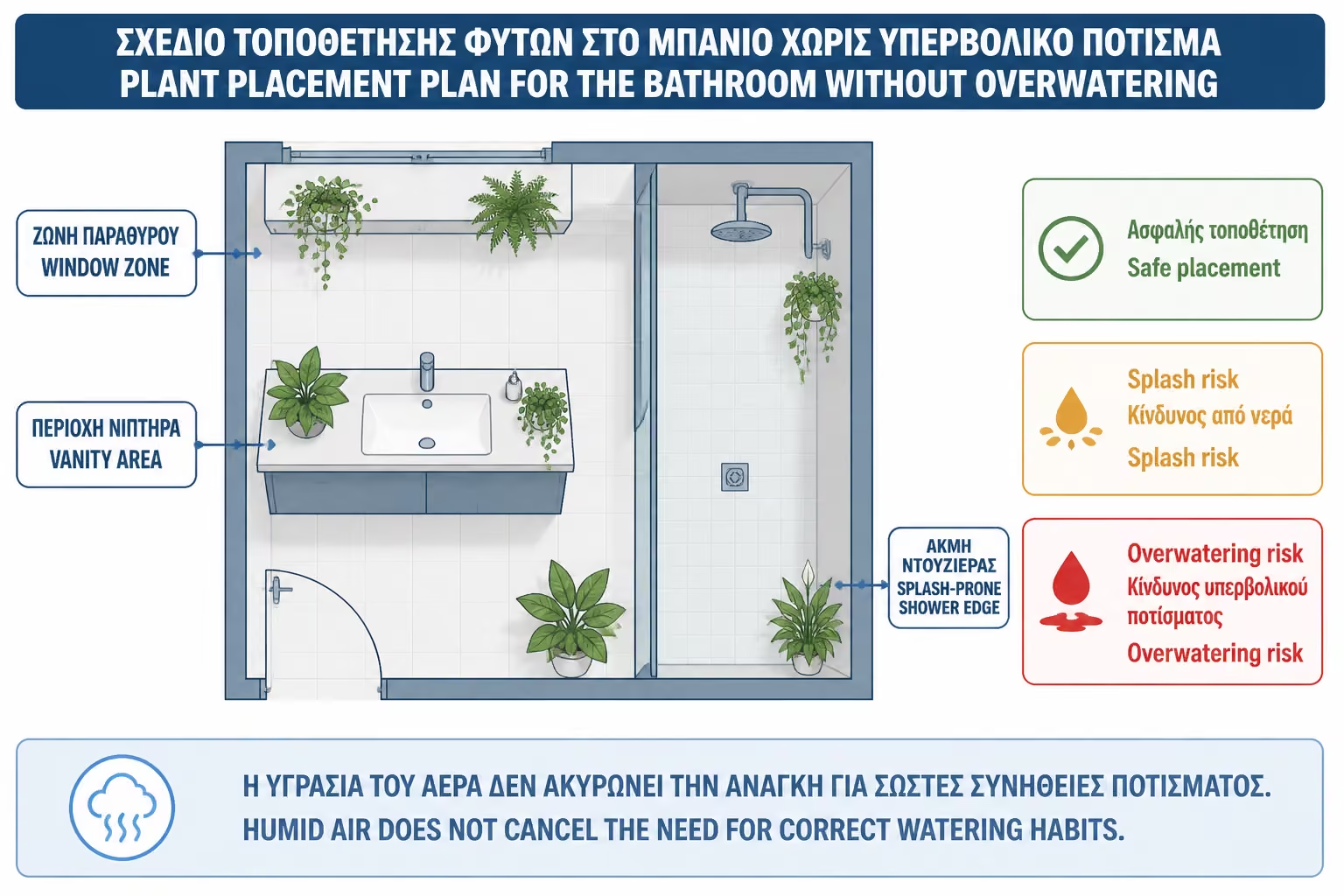
The plants should be in a spot with light, but not in direct contact with water. Ideal spots are shelves near a window, a sink counter away from splashes, hanging sinks, a windowsill with filtered light or a corner where movement is not obstructed.
Don't put them inside the shower stall unless we are talking about very specific plants and layout. Direct water, soaps, cleaners and sudden temperatures can damage the leaves and soil. Do not place them on top of electrical appliances, near sockets or near heaters that dry them out.
The pot should have a saucer or a cuspo, but it should not permanently hold water at the bottom. In a bath, because the soil dries more slowly, standing water is a common cause of root rot. If you are using a caspo without a hole, remove the watering pot and allow it to drain before returning it.
Plants must decorate the space without obstructing ventilation, cleaning or access to cabinets and mechanisms.
The biggest mistake is over watering. Because the bathroom is humid, the soil dries more slowly. If you water as you would a plant in a dry living room, there is a risk of root rot. This is especially important for sansevieria, orchids and plants in caspo without good drainage.
Always test the soil before watering. For ferns, the soil can be kept slightly moist, but not permanently wet. For spathiphyllum, let the top dry a bit. For sansevieria, allow the soil to dry thoroughly. For orchids, you look at the substrate and roots, not the log.
Do not leave water on the saucers. Don't water because "it's hot in the bathroom". Air humidity does not mean that the plant needs more water at the roots. It often means the opposite.
If the leaves turn yellow, the soil smells, mold appears or the base softens, there is probably too much moisture in the substrate. Then we reduce watering and check drainage.
An ironic problem is that plants can carry mold in the soil if they are overwatered or if the space is not ventilated. White or gray mold on the surface of the soil means that the substrate stays too wet and the air does not circulate enough.
This is no reason not to put plants in the bathroom. It's a reason to take good care of them. Use pots with holes, light substrate, proper watering and periodic ventilation. Remove dead leaves from the surface of the soil, as they are food for fungi. Do not allow leaves to rot in the caspo.
If mold appears in the soil, remove the top layer, allow the soil to dry out more and improve ventilation. If it persists, change the substrate and check if the plant does not fit the space.
Plants should improve the look of the bathroom, not become a new source of mold.
Plants can affect air quality to a small extent through photosynthesis, moisture, microbial life in the substrate and absorption of certain substances. But claims that some plants effectively "clean" the air in a home are often exaggerated. The laboratory studies were done in closed chambers, not in normal houses with ventilation, furniture, pollutants, people and doors opening and closing.
The American Lung Association states that to achieve substantial improvement in air quality through plants in real-world settings, very large amounts of plants would be needed, and that the best strategy is to control pollution sources, ventilate, and use filters when necessary.
For the bathroom, this means that plants do not replace ventilation. They do not adequately remove water vapor, odors, cleaning chemicals or mold spores. They can make the space more pleasant, provide a psychological sense of freshness and contribute a little to the microclimate, but not function as a technical air system.
The best "air quality" in the bathroom comes from a clean vent, proper airflow, low mold, dry surfaces and mild cleaners. Plants are the beautiful complement.
Many popular bathroom plants are toxic to cats or dogs if chewed. Spathiphyllum, sansevieria, passionflower, and several philodendrons can cause mouth irritation, drooling, vomiting, or other symptoms in pets. If your pet goes into the bathroom and chews leaves, the choice of plant should be done carefully.
The solution may be placing on a high shelf, hanging caspo or choosing safer plants. Chlorophyte is generally considered a friendlier choice for homes with pets, although even non-toxic plants can cause stomach upset if eaten in quantity.
Pay attention to fertilizers, pesticides and water collected in saucers. These can be more dangerous than the plant itself. In a bathroom, where there are also cleaning agents, the plants should not become a point where pets have access to chemicals or liquids.
The decoration must be safe for all users of the home, and this includes animals.
The cost depends on the size of the plant, species, caspo, substrate and whether you buy from a nursery, florist or big box store. In general, creating a green corner in the bathroom can be done economically, as long as you don't start with large or demanding plants.
| Plant / solution | Indicative range 2026 | Comment |
|---|---|---|
| Small sansevieria | 8–25€ | Durable and ideal for beginners |
| Small spathe leaf | 8–25€ | It needs proper watering and indirect light |
| Fern small/medium | 10–35€ | Good in bright wet bath |
| Phalaenopsis orchid | €12–€35 | It needs a bright spot and proper drainage |
| Lust / Chlorophyte | 5–20€ | Economical and easy solutions |
| Caspo / hanging base | 5–40€+ | It affects the aesthetics a lot |
| Grow light for blind bathroom | 20–80€+ | Useful if there is no natural light |
If the bathroom is damp and moldy, don't spend on a lot of plants first. Spend first on ventilation, cleaning and damp prevention. Then add plants that will endure and highlight the space.
One or two correct plants in a good position are better than many plants that lack light, are watered incorrectly and eventually become a source of problems.
In a small bathroom, prefer vertical solutions. A sansevieria in a narrow pot takes up little space. A tall shelf wish can be hung beautifully without getting in the way. A small fern in a hanging caspo softens the picture near a window.
In a bathroom with a sink counter, an orchid or a spathe leaf can act as a natural decorative object. In a walk-in shower, avoid putting a plant in a place that receives water and soaps. Best on a shelf out of the splash zone.
In a bathroom with a window, use the window sill only if it does not have direct hot sun and if the flower pot does not block the opening. In a bathroom with a light fixture, choose plants that can withstand lower light, such as sansevieria or pothos.
The decoration must allow for cleaning. If plants make it difficult to access corners, sills or windows, moisture and dust will collect. Green should help the feeling of cleanliness, not hide problems.
Plants are not a good idea in a bathroom with active mold that has not been treated. If the ceiling is turning black, the joints are wet and the ventilator is not working, first we fix the problem. Plants can hide visual points or increase organic matter in the space if leaves fall.
It's also not a good idea in a very dark bathroom, unless you accept plant rotation or a grow light. Not a good idea if you don't have time to take care of them and will leave them in a sink full of water. Not a good idea if there are pets that chew on toxic leaves.
Avoid too many plants in too small a bathroom where they block air circulation. Too much "jungle" in a poorly ventilated area can make cleaning more difficult. Plants should be placed sparingly.
If the space is technically problematic, the plant is not a solution. It is the last level, since the space is properly dried and ventilated.
The most common mistakes are wrong expectations and wrong watering. Plants aren't dehumidifiers, and a bathroom isn't always ideal just because it's humid.
| Error | What it causes in practice | A more correct approach |
|---|---|---|
| Wait for them to absorb shower steam | The moisture remains | Ventilator as a basic solution |
| We put a plant in a blind bath without light | Gradual weakening | Grow light or switch position |
| Excessive watering | Root rot / mold in the soil | Soil test before watering |
| Plant in a splash zone | Soaps and waters on the leaves | Position outside direct shower |
| Caspo without drainage | Standing water | Pot with a hole and a drained caspo |
| Poisonous plants with pets | Danger if chewed | High position or safer plants |
| Too many plants in a small bathroom | Difficult to clean / poor flow | Few and properly placed |
| We ignore mold in the soil | New source of trouble | Reduce watering and change substrate |
| We choose a plant only by appearance | He can't stand the conditions | Select based on light/humidity |
| We hide problems with plants | The humidity continues | First technical solution, then decoration |
The most typical mistake is a fern in a dark windowless bathroom. At first she looks beautiful. Then it thins, turns yellow and fills dry leaves. The bathroom was damp, but had no light. The plant needed both.
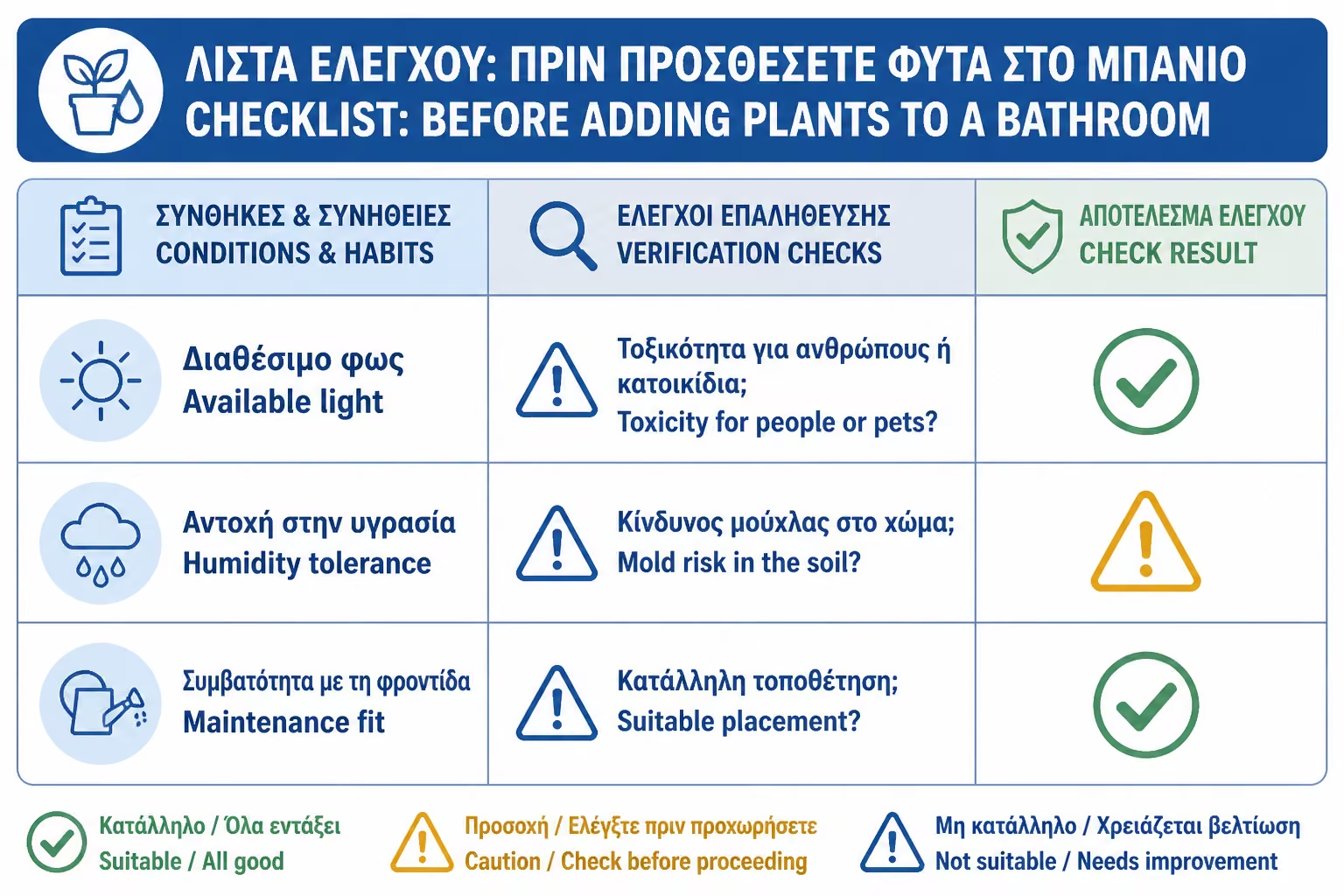
| Inquiry | Yes / No |
|---|---|
| Does the bathroom have natural light? | Yes / No |
| Is the light indirect and not hot direct? | Yes / No |
| Does the vent work properly after showering? | Yes / No |
| Does the bathroom dry in a reasonable amount of time? | Yes / No |
| No active mold in ceiling or joints? | Yes / No |
| Will the plant not accept water or soaps directly? | Yes / No |
| Does the pot have drainage? | Yes / No |
| Is there a saucer/caspo that doesn't hold water permanently? | Yes / No |
| Is the plant safe for children or pets in the area? | Yes / No |
| Is there room to clear around the plant? | Yes / No |
| Will watering be based on the soil, not the calendar? | Yes / No |
| In a blind bathroom, is there a grow light or position change? | Yes / No |
Put plants in the bathroom to improve the feeling, not to solve a technical humidity problem. Fern, spathiphyllum, sansevieria and orchid can do well in a humid microclimate, as long as they have the right light and are not overwatered. But if the ceiling is darkening or the walls are sweating, first fix ventilation, air intake and thermal bridges. The plant is the decorative finish of a healthy bathroom, not the machine that will dry it.
Indoor plants can give the bathroom life, naturalness and a sense of clean, calm space. Some species, such as fern, spathiphyllum, sansevieria and orchid, can fit very well in the wet microclimate of the bathroom, especially when there is indirect natural light and the right temperature.
However, they should not be treated as a dehumidification solution. The amount of moisture that a plant can "handle" is small compared to the water vapor of a hot shower. For mold, condensation and sweaty walls, the real solution remains proper ventilation, clear air duct, timer or humidistat, air intake through the door and adequate heating.
The best use of plants is complementary. After the bathroom dries properly, plants can make it more pleasant and livelier. In bright wet bath, ferns and orchids can show excellent. In a more difficult or dark bathroom, sansevieria and passionflower are hardier choices. In a blind bathroom, a change of position or artificial lighting is needed.
With realistic expectations, plants are a beautiful natural addition. They do not replace technical measures, but they make a properly ventilated bathroom seem warmer, more human and more complete.
Return to category.
Go to categoryReturn to the central guide.
Go to guide