
Bathroom Lighting, Ventilation & Heating
Return to category.
Go to categoryThe wall-mounted bathroom heater is the classic solution for those who want quick heat without waiting for the whole house to heat up. You press a switch, the fan starts, the resistance heats the air and within minutes the small bathroom feels more comfortable. For a morning shower, for a bathroom without central heating or for in-between seasons, the logic of spot heating is practical and economical when used correctly.
Unlike the underfloor or hydraulic towel rail, the air heater does not try to keep the bathroom consistently warm all day. It is a direct response device. It quickly heats the air, gives a feeling of comfort before or after the shower, and then turns off. This is its great advantage, but also the reason why it should not be treated as a solution to all moisture problems.
The bathroom, however, is a wet place. It has steam, splashes, wet hands, bare feet and limited distances. A common portable air heater has no place in the bathroom. The safe solution, when choosing an air heater, is a wall-mounted device specially designed for the bathroom, with a suitable IP protection index, permanent electrical connection and placement in the right zone.
This is why we often see IP24 or higher on bathroom air heaters. IP indicates the protection of the device against solid bodies and water. The second digit is crucial in the bathroom: “4” means protection against water splashes from all directions. Guides for bathroom zones often state that Zone 2 requires at least protection against water spray/splashes, i.e. IPX4 or IP44, depending on the device and application.
In Greece, the electrical logic for rooms with a bathtub or shower is linked to ELOT HD 60364-7-701, which concerns low-voltage electrical installations in rooms containing a bathtub or shower. The ELOT HD 60364-7-701:2024 edition was issued on 06/12/2024 and concerns exactly these special requirements. This means that the final location and connection is not decided "by eye", but by a licensed electrician based on the zones of the particular bathroom.
The wall-mounted air heater is an electric heater that is permanently installed on the wall. It has an electric resistance and a fan. The fan draws air from the bathroom, passes it through the heating element and returns it warm to the room. Its difference from a simple portable air heater is that it is designed for fixed installation, with moisture protection and a more controlled electrical installation.
Its power usually ranges from about 1,000 to 2,000W, with several models having two stages, e.g. 1,000/2,000W. Some have a thermostat, timer, overheat protection, fan mode without heating or cord control so you don't have to touch buttons with wet hands.
Its great value is speed. A small bathroom can feel warmer in minutes. This makes it useful in old flats, bathrooms without a heating element, holiday homes, guest WCs or houses where the central heating does not come on for a short shower.
However, it is not a low-consumption permanent heating system. If you leave it running for hours, it consumes as much power as it says. Correct use is short, targeted and controlled.
The bathroom has a different thermal need than other rooms. We don't just want 20°C to sit around in clothes. We want instant comfort when we step out of the shower wet. There the air heater has an advantage, because it quickly warms the air and reduces the feeling of cold.
In many homes, the central heating does not work when the bathroom is in use. Or it works but the bathroom is small, outside and freezing. A hydraulic towel rail can be cold if the boiler is not on. Subflooring can take time. The air heater provides an immediate solution.
It also has a low purchase cost compared to other solutions. It can be installed without changing plumbing, without removing tiles and without a large body on the wall. In low budget renovations, this is important.
The downside is that it mainly heats the air, not the space masses. If the bathroom is freezing, the walls and tiles stay cold. Once extinguished, the heat is lost quickly. So it is great for immediate use, not for long term thermal stability.
Spot heating means that we heat the space only when we need it. In the bathroom this makes sense, because the use is short. If you shower for 10–15 minutes and need comfort for half an hour, it is not necessary to heat the whole house or to work the bathroom from morning to night.
An air heater can turn on 5–10 minutes before showering and turn off shortly after. With a timer or thermostat, consumption is limited and the risk of forgetting to turn it on is reduced. This makes it practical for everyday use as long as it is properly installed.
Spot heating is not correct if the bathroom has a serious condensation problem due to cold surfaces. It may warm the air, but if the walls and ceiling are frozen, water vapor may continue to condense. For permanent moisture prevention, more stable heating or better insulation is also needed.
Therefore, the wall-mounted air heater is a tool for comfort and quick heating. It does not always replace a towel rack, ventilation or thermal upgrade of the space.
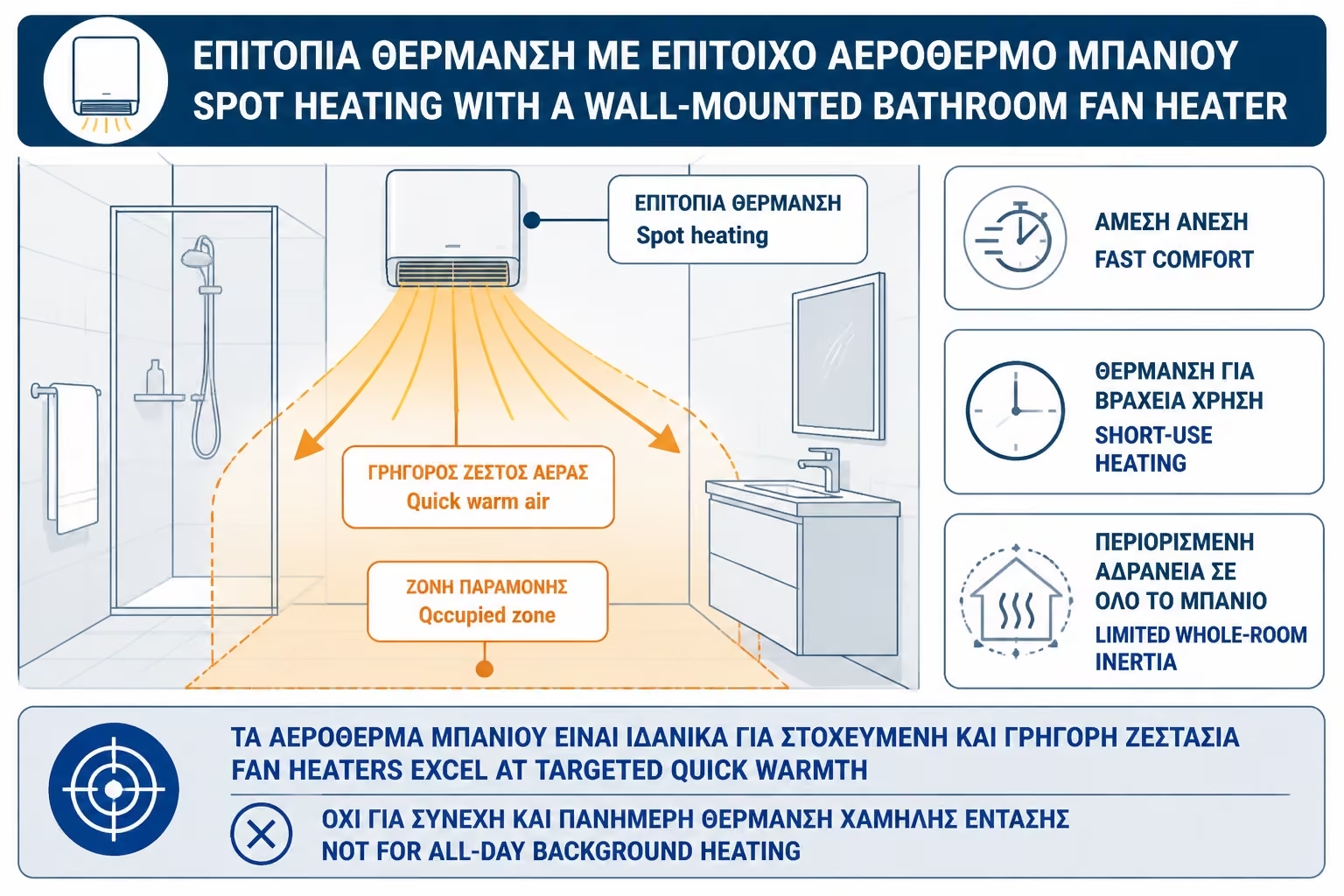
The IP24 indicator consists of two digits. “2” refers to protection against solid bodies of a certain size. "4" refers to protection against water splashes from all directions. For bathing, this second digit is the critical one, because the device may be exposed to water vapor and splashes.
An IP24 air heater is not waterproof in the sense that it can get wet directly from the shower. It does not mean that it goes inside the cabin, nor that it withstands water jets. It means that it is designed with splash protection in the right fit frame.
In practice, many wall-mounted bathroom heaters with IP24 or similar protection are intended for installation outside the immediate wet zone, often in Zone 2 or outside zones, depending on the country, standard, manual and layout. Sources for bathroom heaters state that IP24 devices can be installed in zone 2 or safer areas, with a fixed connection and installation by a licensed electrician.
So IP24 is a minimum indication of suitability for a wet environment, not a free license to install everywhere.
Many owners get confused because they see IP24, IP44 or IPX4. The second digit is the one that shows the protection against water. In all three cases, the “4” at the end means splash protection. The first digit is for solids/dust and may vary.
An IP44 has greater protection against solid bodies than an IP24, but in terms of splashes both are class 4. IPX4 means that no specific protection for solid bodies is stated in the first digit, but protection against splashes in water is stated.
| Indication | What does it mean practically? |
|---|---|
| IP20 | Not suitable for splashes |
| IP21 | Protection against vertical drops, not enough for near showers |
| IP24 | Splash protection, often indicated on bath heaters |
| IP44 / IPX4 | Splash protection, a frequent requirement in Zone 2 |
| IPX5 | Protection against water jets |
| IPX7 | Protection against temporary submersion, other category of use |
For bathroom, we don't just look at IP. We also look at what zone it will go into, what the manufacturer's manual says, how it will be connected, where the switch is and if there is an RCD/leakage relay.
The right choice is not "the bigger the IP, the more it's over". It's the right IP for the right location.
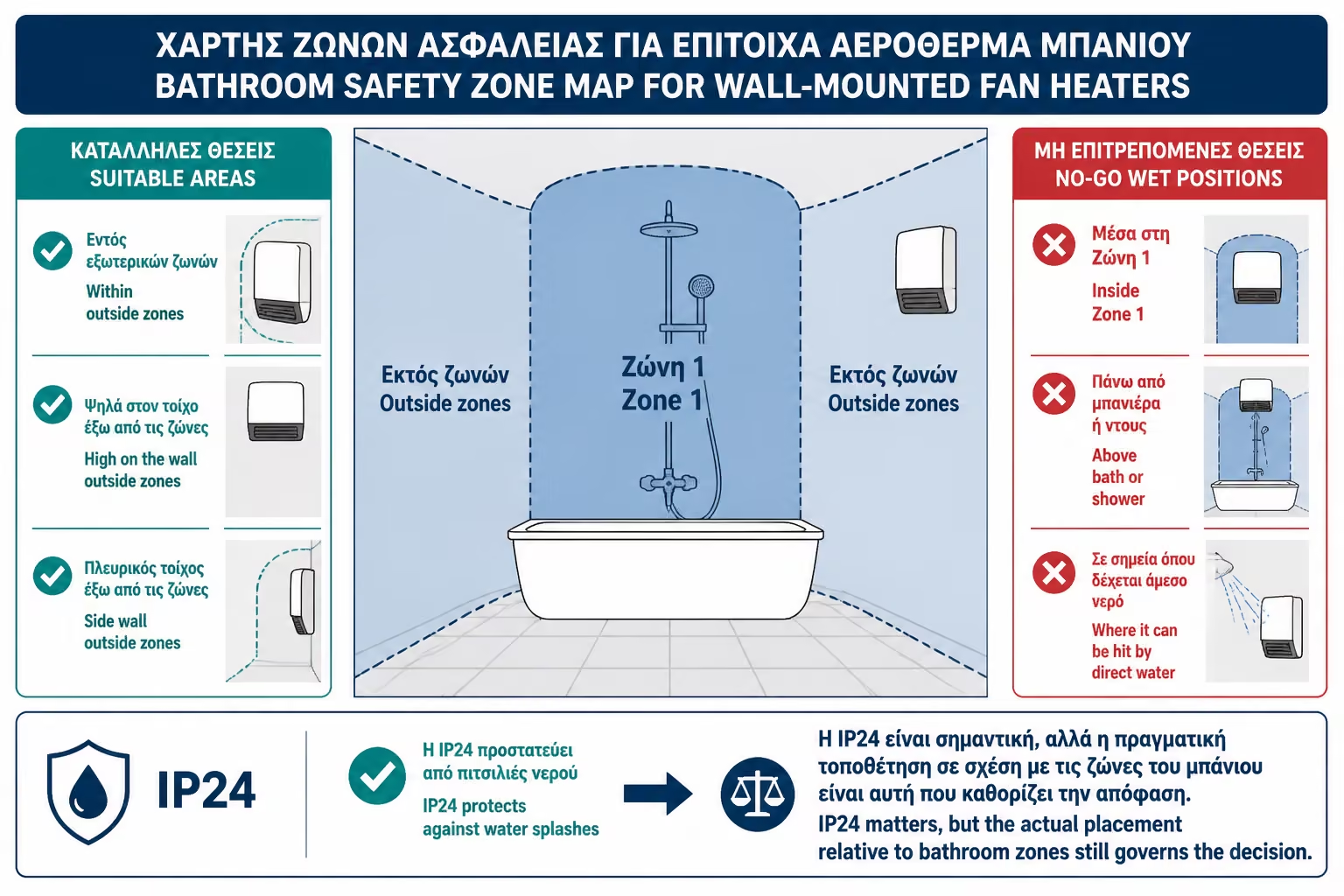
The bathroom is divided into zones according to the distance from the bathtub or shower. Zone 0 is the inside of the bathtub or shower. Zone 1 is the area above this. Zone 2 is the area around the bath or shower, often around 0.60m from the edge and up to a height of around 2.25m, according to general bathroom zones guides.
A wall-mounted air heater never enters Zone 0. It should not be placed in the shower or in a place of direct exposure to water. Zone 1 is also extremely strict and is no place for a common air heater. The most common practice is out-of-zone placement or, where the product and electrician allows, in Zone 2 with an appropriate IP.
| Region | Practical treatment for air heater |
|---|---|
| Zone 0 | No |
| Zone 1 | As a rule, not for common fan heaters |
| Zone 2 | Only if the IP/manual/electrician allows it |
| Out of zones | Preferred seat, but with bathroom rules |
| Near a sink | Beware of splashes and wet hands |
The final decision should be made by a licensed electrician based on the actual bathroom. In walk-in showers without a cabin, splashes can reach further. In a small bathroom, there may not be a safe place for an air heater and another solution is needed.
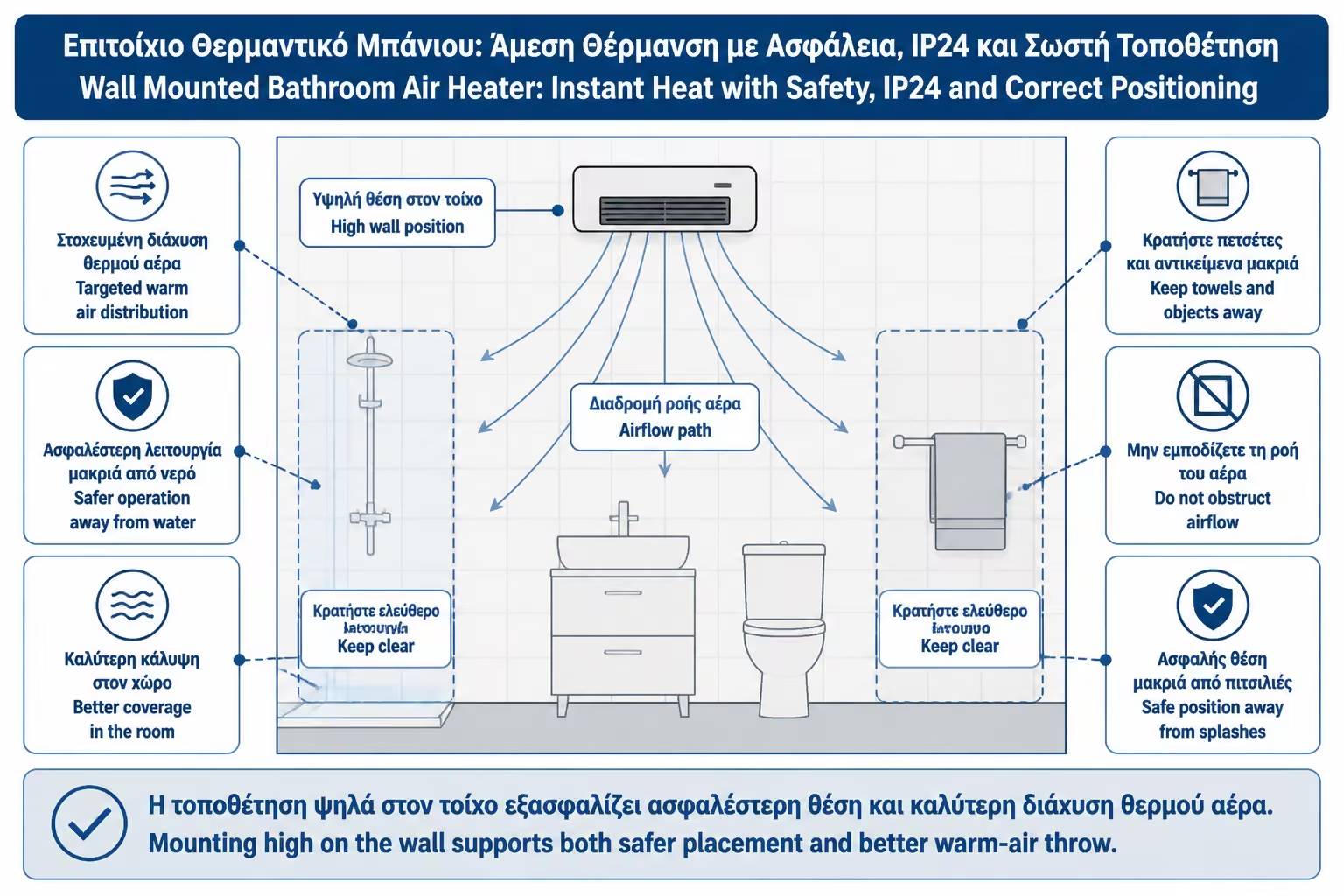
Wall-mounted bathroom air heaters are often placed high on the wall. This has practical advantages: they keep away from splashes, do not obstruct movement, do not take up useful space below and direct the warm air towards the zone of use.
But high placement is not enough by itself. If the device is above the bathtub or too close to the shower, it remains a problem. If the hot air blows directly on a shower curtain or plastic items, that is also wrong. If the handle is in a place that can be touched with wet hands, a different solution is needed.
The height must follow the manufacturer's instructions. Usually the manufacturer gives minimum distances from the floor, ceiling, side walls and objects. These distances are not standard. They are about safety, airflow and avoiding overheating.
Do not install an air heater "where it fits". The location must allow for safe air in/out, proper handling and clearance from water.
A wall-mounted bathroom heater must be connected correctly and permanently, according to the manufacturer's instructions and the electrical regulation. It must not work with a wall socket, multi-socket or rough socket in the bathroom. This is one of the most serious risks.
The bathroom cable can be stepped on, get wet, be crushed against the door, or come into contact with water. The air heater is a high-power device, often 1,000–2,000W. It is not a portable appliance charger. It needs a circuit that can handle the load, proper protection, and a solid permanent connection.
Installation must be done by a licensed electrician. The electrician will check if the line is adequate, if there is a leakage relay, if the location is correct, if an isolator is required and if the circuit is suitable for the load.
If there is no secure supply, we are not "comfortable" with an extension. We choose another location or another heating solution.
The leakage relay is essential protection in damp areas. If there is current leakage to earth, it interrupts the supply. For electrical bathroom appliances, 30mA RCD/RCBO protection is often listed as required in zoning and installation guides.
But the relay does not make a wrong installation correct. Does not allow low IP device near the shower. It doesn't make a ballad safe. It is not a substitute for proper grounding, proper line, and proper location.
In old houses, it is not obvious that the relay exists or that it protects that particular line. Before installing an air heater, especially in a bathroom of an old apartment building, the panel must be checked.
Bathroom safety is a system: right device, right zone, right IP, right connection, leakage relay and grounding. Not just one of them.
Handling must be safe. In older models, there is often a lanyard so that the user does not touch a button on the device with wet hands. In newer models there may be a remote control, timer, thermostat or wall switch in a safe location.
The timer is very useful. It reduces the possibility of the device being left on for hours. A program of 15, 30 or 60 minutes fits the logic of the bathroom. The thermostat also helps, but in a small bathroom with rapid temperature changes the practical use is often "on before shower, off after".
Be careful with the remote control. It's convenient, but it shouldn't be the only way to isolate. The device must be capable of being electrically isolated for maintenance or in case of failure.
The control should not be in a position where you can touch it through the shower or with wet hands. Ergonomics should not override safety.
The air heater has a fan, so it is noisy. In a small bathroom, this may be acceptable because it works for a while. But if the bathroom is next to a bedroom or if it is used early in the morning, the noise can be annoying.
Noise depends on device quality, fan speed, wall mounting and age. A cheap or poorly fitted model may hum or vibrate. If it collects dust, it can become noisier.
If absolute silence is a key criterion, the best options are a towel rail, an infrared panel or inlays. If immediate heat is the priority, noise is often an acceptable compromise.
The choice should be made based on usage. For 10 minute spot heating, the noise may not matter. For daily long-hour heating, it has.
Because the air heater moves air, it can raise dust and carry odors into the bathroom. If the device has collected dust in the air inlet or the resistance, it may smell "burnt" in the first operation. If the smell persists, stop use and check.
In a bathroom with mold or a musty smell, the air heater does not solve the source. It can simply circulate the smell faster. If there is an odorous floor trap, mold behind furniture or a ventilation shaft that sends smells back into the room, the cause has to be identified first.
Air quality is improved with ventilation, a clean filter/grill and dry surfaces. The air heater heats, it does not clean the air.
That is why regular cleaning of the intake/exhaust grill is needed, always with the device isolated from the power supply and according to the manual.
It helps indirectly, but is not a primary moisture solution. It heats the air quickly and can help the surfaces dry a little faster when it's running. But if the humid air is not removed, the humidity remains in the bathroom. Once the temperature drops, it can condense again on cold surfaces.
In a cold bathroom, the air heater can reduce the feeling of cold before showering. But because it works for a while, it doesn't necessarily heat the walls, ceiling and tiles deeply. For mold prevention, constant surface temperature, timer/humidist ventilation and drying after use are most important.
If the bathroom already has mold, the air heater does not remove it. If there is poor ventilation flow, it does not correct it. If there is a thermal bridge, it does not eliminate it.
The best use is in combination: an air heater for immediate comfort, a fan for humidity, a towel rack or other means for drying towels.
It should not be placed in the shower, over a bathtub, in direct splash, too close to a sink where you will touch it with wet hands, behind a door that slams on it, under a towel rack or near a shower curtain. It must not blow directly on flammable or heat-sensitive materials.
It should not be placed low to the floor. Wet floors, water and bare feet increase the risk. Wall-mounted models are designed for specific heights and distances.
It must not be placed in a position where the air inlet or outlet is blocked. If the device does not breathe, it may overheat. Clothes and towels should not hang on it.
If there is no safe place, we do not choose an air heater. We choose another heating technology.
The air heater is fast, but not the quietest or most stable. The towel rack dries towels better. The underfloor gives a better sense of luxury and stability. Infrared panel gives quiet radiant comfort. The air heater wins in immediacy and low purchase cost.
| Solution | Better use | Restriction |
|---|---|---|
| Wall-mounted air heater | Quick heat before/after shower | Noise, electrical consumption |
| Electric towel rail | Dry towels and gentle heating | Slower response |
| Infrared panel | Quiet instant heat sensation | Needs correct positioning |
| Electric underfloor | Warm floor and comfort | Requires installation under tiles |
| Hydraulic subfloor | Fixed heating in complete renovation | Floor height and thermal inertia |
| Radiator | Central fixed heating | Depends on the central system |
If the request is "I enter a cold bath and I want heat in 5 minutes", the air heater is very powerful. If the question is "I want the bathroom not to get moldy in the winter", a more comprehensive solution is needed.
Wall mounted bathroom heaters are relatively affordable. The cost increases depending on power, IP rating, fan quality, thermostat, timer, digital control and design. Installation depends on whether there is a safe electrical supply.
| Type / task | Indicative range 2026 | Comment |
|---|---|---|
| Basic wall-mounted air heater IP24 | 40–100€ | Simple spot heating solution |
| Best model with timer/thermostat | 80–180€ | More practical and safe |
| Design/digital model | 150–300€+ | By brand and functions |
| Electrical connection | 80–250€+ | Per supply and table |
| New line / RCD control | 100–300€+ | If there is no forecast |
Operating costs are easy to calculate. A 2,000W air heater consumes 2 kWh if it runs for one hour at full power. At an electricity price of €0.25/kWh, that is around €0.50 per hour. If it runs for 15 minutes, the cost is about €0.125. If it has a thermostat or a lower power setting, actual consumption may be lower.
| Power | 15 minutes | 30 minutes | 1 hour | Cost of 1 hour at €0.25/kWh |
|---|---|---|---|---|
| 1,000W | 0.25 kWh | 0.5 kWh | 1 kWh | €0.25 |
| 1,500W | 0.375 kWh | 0.75 kWh | 1.5 kWh | €0.375 |
| 2,000W | 0.5 kWh | 1 kWh | 2 kWh | €0.50 |
So the air heater is economical when it works for a few minutes. It becomes expensive if it is used as the main long-hour heating.
The air heater must be kept clean. Dust in the air intake reduces performance, increases noise and can cause an odor when heated. Clean the grills with a dry or slightly damp cloth after the device has been isolated from the power supply and has cooled down.
We do not spray water or cleaning agents inside the device. We do not open lids unless the manual provides for it. We do not put objects on the grids. If there is a strange noise, if it stops suddenly, if it smells burnt or if it blows a fuse, stop using it and call an electrician or technician.
Because it is in a bathroom, the device is exposed to water vapor and dust from towels. Checking every few months is reasonable. If the bathroom is very humid, cleaning should be more frequent.
Maintenance is not just about performance. It is also a matter of safety.
| Error | Risk / result | A more correct approach |
|---|---|---|
| Buy a common portable air heater | Electrical hazard in a wet area | Only bathroom wall with suitable IP |
| Placement near the shower | Splashes and short circuits | Zone testing by an electrician |
| Use of ballad | High risk | Permanent secure connection |
| IP below IPX4 in wet zone | Insufficient protection | IP24/IP44 or suitable per position |
| No RCD/leakage relay | Reduced protection | Table control |
| Cover with towels | Overheat | Free grids |
| Operation for hours | High electricity costs | Timer and spot heating |
| Use instead of ventilation | Moisture remains | Ventilator with timer |
| No maintenance | Dust, noise, smell | Grill cleaning |
| Incorrect handling position | Touching with wet hands | Cord/timer/safety switch |
The most typical mistake is the portable air heater on the floor "for five minutes". In the bathroom, that five minutes is enough for an accident. The right solution is permanent, wall-mounted, with IP and an electrician.
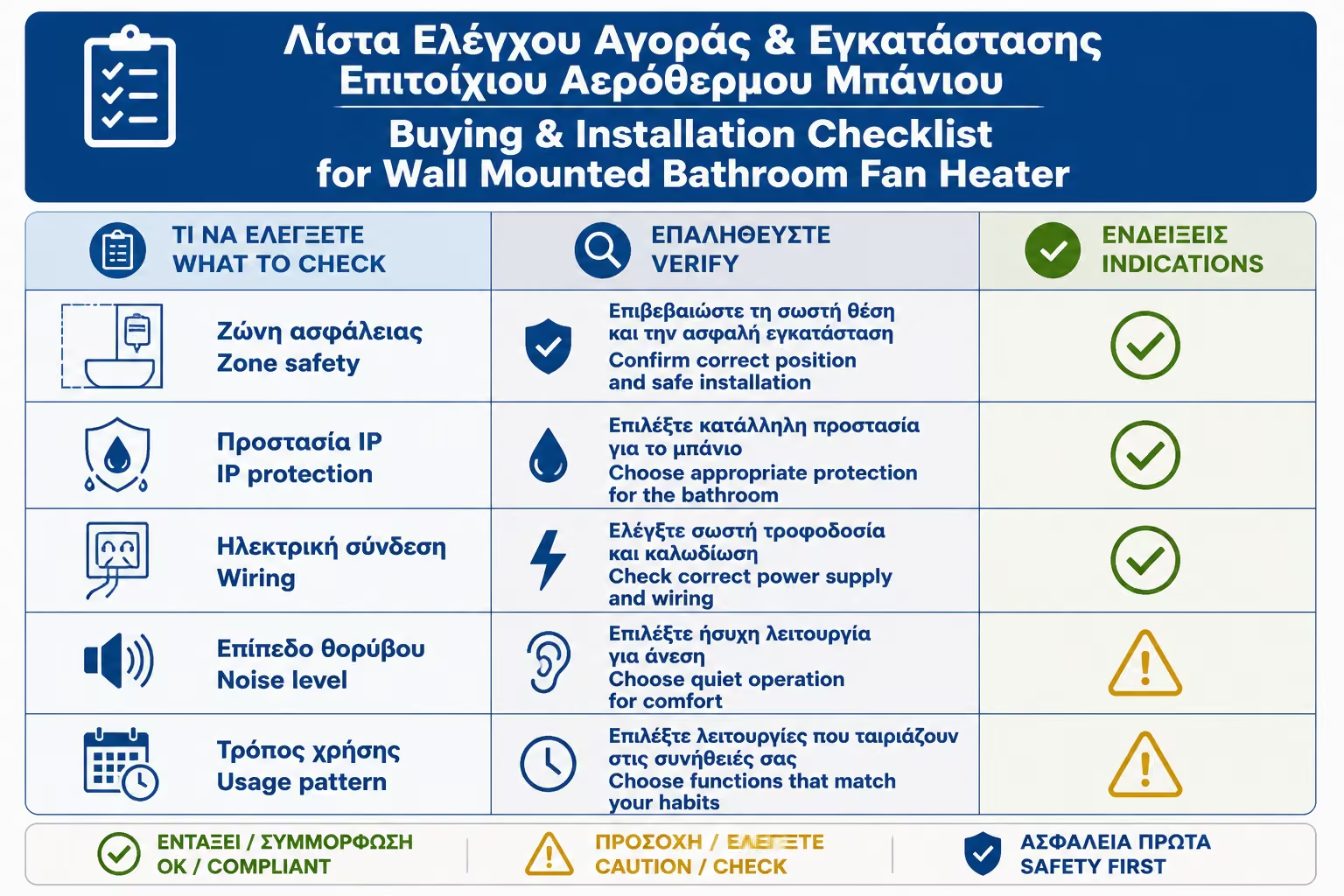
| Control | Yes / No |
|---|---|
| Is the model specifically for a bathroom? | Yes / No |
| Does it have IP24, IP44 or other suitable IP for the position? | Yes / No |
| Has the mounting zone been checked? | Yes / No |
| Is it not directly exposed to water or splashes? | Yes / No |
| Will the installation be done by a licensed electrician? | Yes / No |
| Is there a leakage relay and proper grounding? | Yes / No |
| Won't a power strip or power strip be used? | Yes / No |
| Is there a timer or thermostat? | Yes / No |
| Are the entry/exit grills left free? | Yes / No |
| Does the device not blow on curtains or flammable materials? | Yes / No |
| Is the bathroom ventilation working properly? | Yes / No |
| Has the running cost been calculated based on Watts? | Yes / No |
The wall-mounted air heater is a very good solution when you need quick heat for a few minutes. But in the bathroom we don't buy "an air heater". We buy a bathroom appliance, with a suitable IP, permanent connection, correct zone and leakage relay. IP24 is an indication of splash protection, not permission to go next to the shower. If it needs a ballad to work, the installation is wrong from the start.
Wall mounted bathroom heaters remain one of the most practical solutions for instant heat. They are fast, relatively economical on the market, do not require plumbing work and fit the logic of spot heating: they turn on just before the shower, quickly heat the air and turn off after use.
But safety is the central issue. The bathroom is a wet area and the device must be specially designed for such use. IP24 or higher indicates splash protection, but final suitability depends on installation zone, manufacturer's instructions and electrical regulation. Installation must be done by a licensed electrician, with proper permanent bonding, grounding and leakage relay.
The air heater does not replace ventilation. It warms the air, but does not remove water vapor. If the bathroom has mold, a bad smell or condensation, it needs a fan, proper air intake and possibly more stable heating. The air heater is for comfort, not to solve the humidity itself.
If chosen correctly, placed in the right position and used with a timer, it is a reliable and economical solution for cold bathrooms. If used casually, with the wrong IP, loose or near water, it turns from a convenience solution into a serious electrical hazard.
Return to category.
Go to categoryReturn to the central guide.
Go to guide