
Bathroom Lighting, Ventilation & Heating
Return to category.
Go to categoryThe electric towel rail is one of the most practical solutions for a modern bathroom. It warms the towels, helps the bathroom to dry, offers autonomy when the central heating is off and can work with a timer only when needed. In small or blind bathrooms, where moisture lingers for hours after a shower, it can be a real comfort and mold prevention tool.
But there is one detail that is not a detail: it is an electrical device in a space with water. The bathroom is no ordinary room. It has a shower, bathtub, sink, steam, splashes, wet hands, bare feet and often limited space. This means that the installation of an electric towel rail cannot be done with the logic of "I find a socket and plug it in".
Safety in the bathroom is based on three concepts: zones, IP protection index and correct electrical installation. Zones define how close an electrical device is to water. The IP shows how protected the device is from dust and water. The electrical installation ensures that the device is properly powered, protected by leakage relays and does not create a short circuit or electric shock hazard.
In Greece, the reference for rooms with a bathtub or shower is the framework of low-voltage electrical installations and especially the ΕLOT HD 60364-7-701, which concerns rooms containing a bathtub or sprinkler. ELOT has published the edition ELOT HD 60364-7-701:2024, with publication date 06/12/2024 and title "Low voltage electrical installations - Part 7-701: Requirements for special installations or spaces - Spaces containing a shower or sprinkler".
The important practical conclusion is simple: the electric towel rail is not an accessory to be placed casually. It is a permanent electrical installation in a wet area. It needs a product suitable for the location, correct IP, correct power supply, protection, correct distance from water sources and installation by a licensed electrician. If any of these are missing, the problem is not "typical". It's a matter of safety.
An electric towel rail has a heating element, wiring, control, thermostat or timer and a metal body located inside the bathroom. In a normal room, this would just be an electrical device. In the bathroom, however, the same device must be evaluated for the possibility of contact with water.
The risk is not only that water falls directly on her. It's also splashes from showers, steam, wet hands touching switches, the wrong outlet, frayed cord, patch on the floor, lack of a leakage relay, or placement in a zone where the product is not allowed.
Unlike a hydraulic body that is heated by heating water, the electric towel rail needs electrical provision. Even dual fuel towel rails, which run on both heating water and electric resistance, have the same issue when the electric side comes into play.
The basic principle is that safety is planned before the tiles go in, not after the bathroom is finished and we are looking for where to get electricity. In renovation, the position of the towel rail must be decided together with the belts, supply, control and protection.
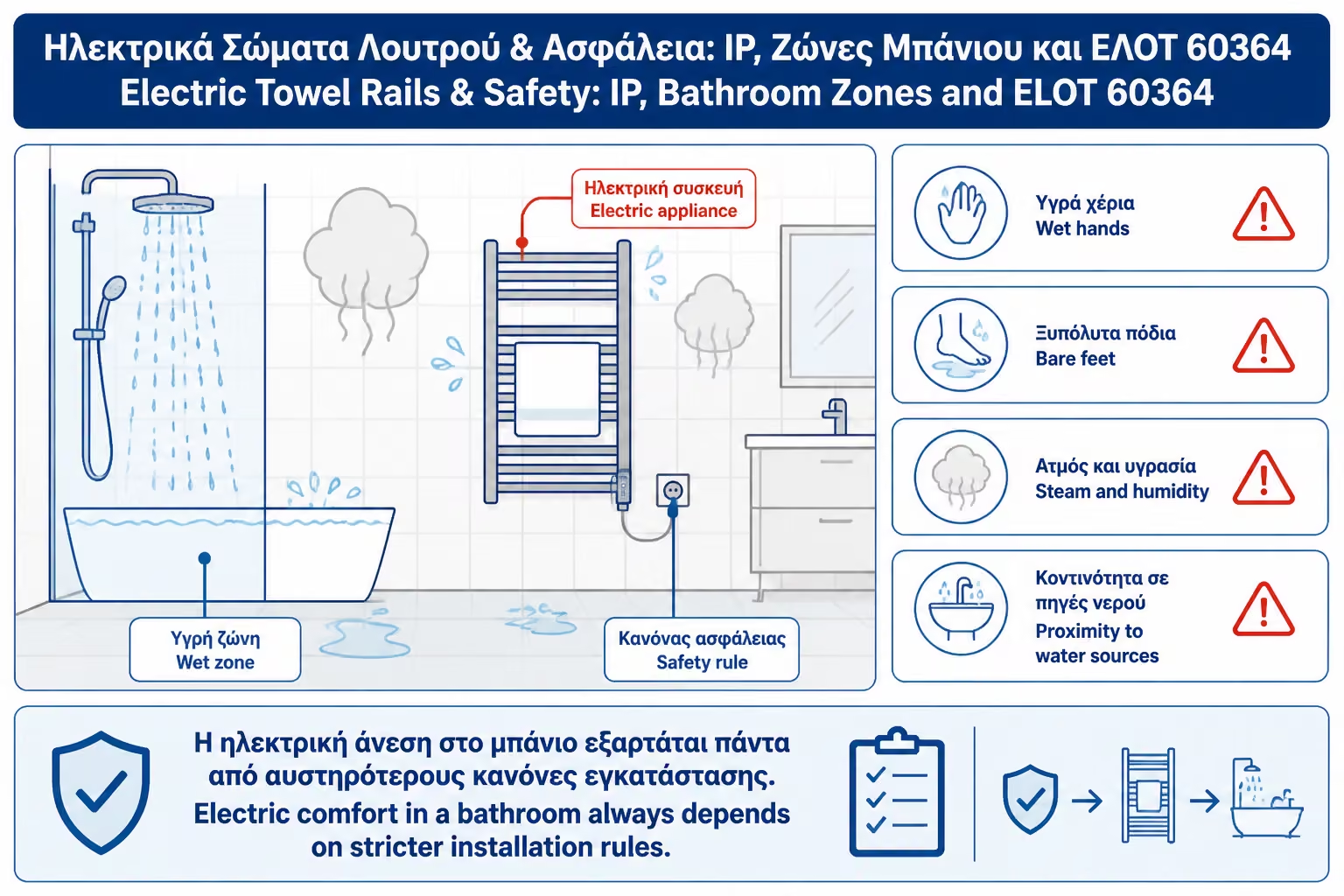
The IP rating, from Ingress Protection, shows how protected a device is from the ingress of solid bodies and water. It is written with two digits, e.g. IP24, IP44, IP55. The first digit refers to solids/dust. The second concerns protection from water.
In bathrooms, the second digit is critical. For example, IPX4 means protection against water splashes. IPX5 means protection against water jets. IPX7 means protection against temporary submersion. “X” means that no specific protection is declared for the first part, not that the device is “unprotected” overall.
For electrical appliances near a shower or bathtub, it is not enough to say "bathroom friendly" in the advertisement. We need to know the IP and the zone where it is allowed to be placed. Buyer's guides for electric towel rails point out that a minimum of IPX4, i.e. splash protection, is usually required for installation in Zone 2.
Attention: IPX4 does not mean that the device can go inside the shower cabin or receive water directly. It means splash protection in the context of proper harness and installation. The manufacturer's position and instructions remain decisive.
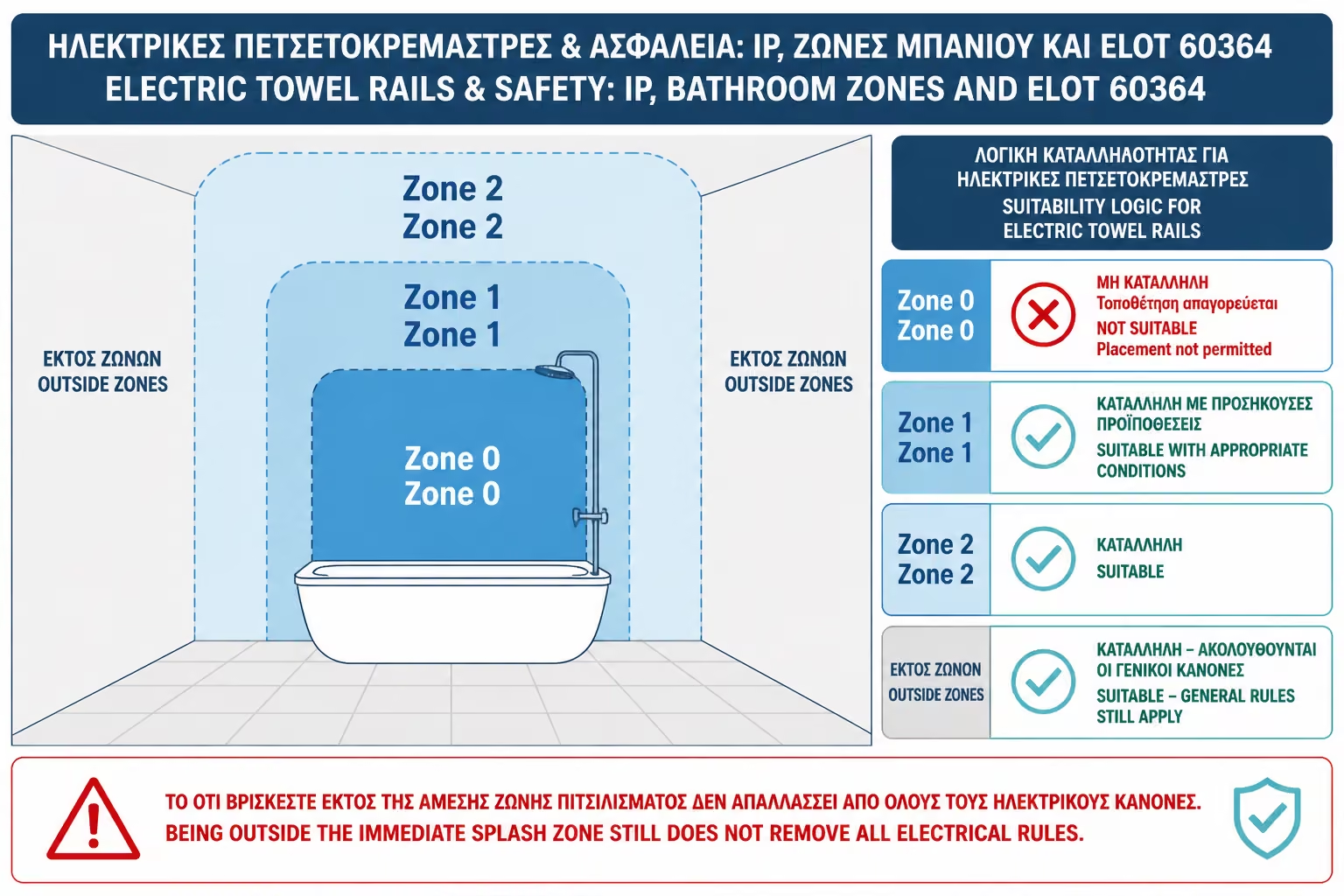
Bathroom zones divide the space depending on the proximity to a bathtub or shower. The closer to the water, the stricter the requirements. The exact application is made by an electrician according to the current standard and the layout of the particular bathroom, but the general logic is as follows:
| Zone | Practical description | What does it mean for a towel rail? |
|---|---|---|
| Zone 0 | The inside of the bathtub or shower | It is not a place for an electric towel rail |
| Zone 1 | Above bath/shower up to a certain height | Very strict belt, usually not for common towel rack |
| Zone 2 | Area around bath/shower, usually at a distance of about 0.60 m. | It can only be allowed with proper IP and proper installation |
| Out of zones | Further away from direct water sources | More flexible position, but still bathroom space |
International guides to bathroom electrical zones often state that Zone 0 is inside the bath/shower, Zone 1 above it up to a height of about 2.25m and Zone 2 extends about 0.60m outside the bath or shower. This description is useful for understanding, but the final application in Greece must be based on the current ELOT HD 60364-7-701 and the actual site.
The towel rail, being an electrically powered metal heater, should ideally be placed outside of direct water zones. If it enters Zone 2, the product, connection and controller must be suitable. If there is not enough space, we do not improvise; we change position or solution.
Zone 0 is the inside of the bathtub or shower. It is the point where there is direct presence of water. There is no electric towel rail. It makes no practical or technical sense and creates an unacceptable risk.
Even if a device has a high IP, this does not mean that it is arbitrarily allowed to enter wherever we want. Each zone has its own rules for voltage, protection, type of equipment and installation. The towel rail is not equipment intended to operate within the zone where the user receives water.
If the shower is a walk-in and does not have a clear cabin boundary, the demarcation needs even more attention. Splashes may reach farther than the drawing shows. The position of the towel rail should be chosen based on actual use, not just “on paper”.
The safe rule for the owner is simple: no electric towel rail in the shower or in a place that can receive direct water.
Zone 1 is the area above the bathtub or shower. It is still high risk because there is strong steam, splashes and close proximity to the wet user. For common electric towel rails, it is not a suitable installation zone.
Only certain types of electrical equipment are allowed in this zone, with appropriate protection and under strict conditions. The logic of the standards is to limit the risk where the user's body may be in direct contact with water. A towel rail that will be touched by someone with a wet hand should not be placed in such a position without clear technical permissibility.
If the bathroom is small and it seems that "it only fits there", this is no reason to violate the zones. It may require a hydraulic towel rail without electric function, another furniture arrangement, a smaller body on a safer wall, or a different heating solution.
Zone 1 is no place for aesthetic compromises. It is a zone where the regulation and the electrician decide.
Zone 2 is the area around the bath or shower, often around 0.60m from the wet zone boundary. It's the area where we often practically want to put a towel rail, because it's close to where we get out of the shower. But it is also an area where there can be splashes.
In Zone 2, the device must have an appropriate IP. In application guides, for fixtures such as heated towel rails in Zone 2 a minimum requirement of IPX4, i.e. splash-proof protection, is often mentioned. If there is a possibility of water jet cleaning or heavy exposure, a higher protection such as IPX5 may be required depending on the case and application standard.
The issue is not only the body. It is also the electrical element, the cable, the cable exit point, the switch, the thermostat and the control. A towel rail may have a suitable body, but the control may not be allowed in the same zone or must be outside the zone.
For an owner, best practice is to design the towel rail outside of Zone 2 where possible. If Zone 2 is needed, choose a product with a clear IP and instructions for the specific zone, and have it installed by an electrician.
Many people think that if the towel rack goes "out of bounds", everything is allowed. This is wrong. Out of zone means it is away from the immediate shower/tub areas, but still inside a bathroom. There is still steam, humidity, wet hands and the need for proper protection.
Even outside the zones, the electric towel rail must have proper installation, proper power supply, leakage relay protection and connection according to the manufacturer's instructions. It should not work with a wall socket or a rough socket. The cable must not pass behind pipes, under furniture or near water.
Out-of-zones more options may be allowed, but installation is still electrical work in a dedicated area. The electrician must confirm that the location, line and equipment are suitable.
In practice, the safest location is on a wall that is accessible for a towel, but far enough away from direct splashes and with a clear wiring path.
The residual current device, or RCD/RCCB, is a critical means of protection. If there is current leakage to earth, the relay interrupts the supply. In humid areas, this protection is especially important. In modern requirements for bathrooms, 30 mA RCD protection is listed as a basic element for circuits supplying equipment in the bathroom.
But the relay is not a license for misuse. It does not mean that we can put a device with a low IP next to the shower. It doesn't mean that ballads are allowed in the bathroom. It does not mean that a worn cable is acceptable. The relay is a last line of defense, not a substitute for proper design.
In old houses, it is not always certain that there is a working relay or that it protects that particular line. It needs to be checked. It is not enough to be "somewhere on the panel". The electrician must confirm the operation and protection of the circuit.
The right logic is threefold: right position, right product, right protection. If one of the three is missing, the installation is not secure.
Electric bathroom towel rails should usually be treated as permanent appliances, with a fixed connection or suitable cable outlet, not as portable appliances that plug into a common bathroom outlet. Many installation guides point out that an electric heated towel rail should not be plugged into a simple wall socket, but properly connected to a safe outlet/connection point, with placement according to the zone.
The permanent connection reduces the risk of rough use, pulled cables, power strips and poor contact. It also allows for proper operating position, secure switching, isolation for maintenance and clean installation with no wires hanging out.
Sockets in the bathroom have strict restrictions. Even if there is a socket, it does not mean that it is suitable for a towel rail or for a particular position. Many times, the correct solution is a separate line or a special supply provided by the renovation.
If the supplier gives a product with a plug, this does not mean that it is allowed to be used in the bathroom. We read the manual, check the regulation and follow the electrician.
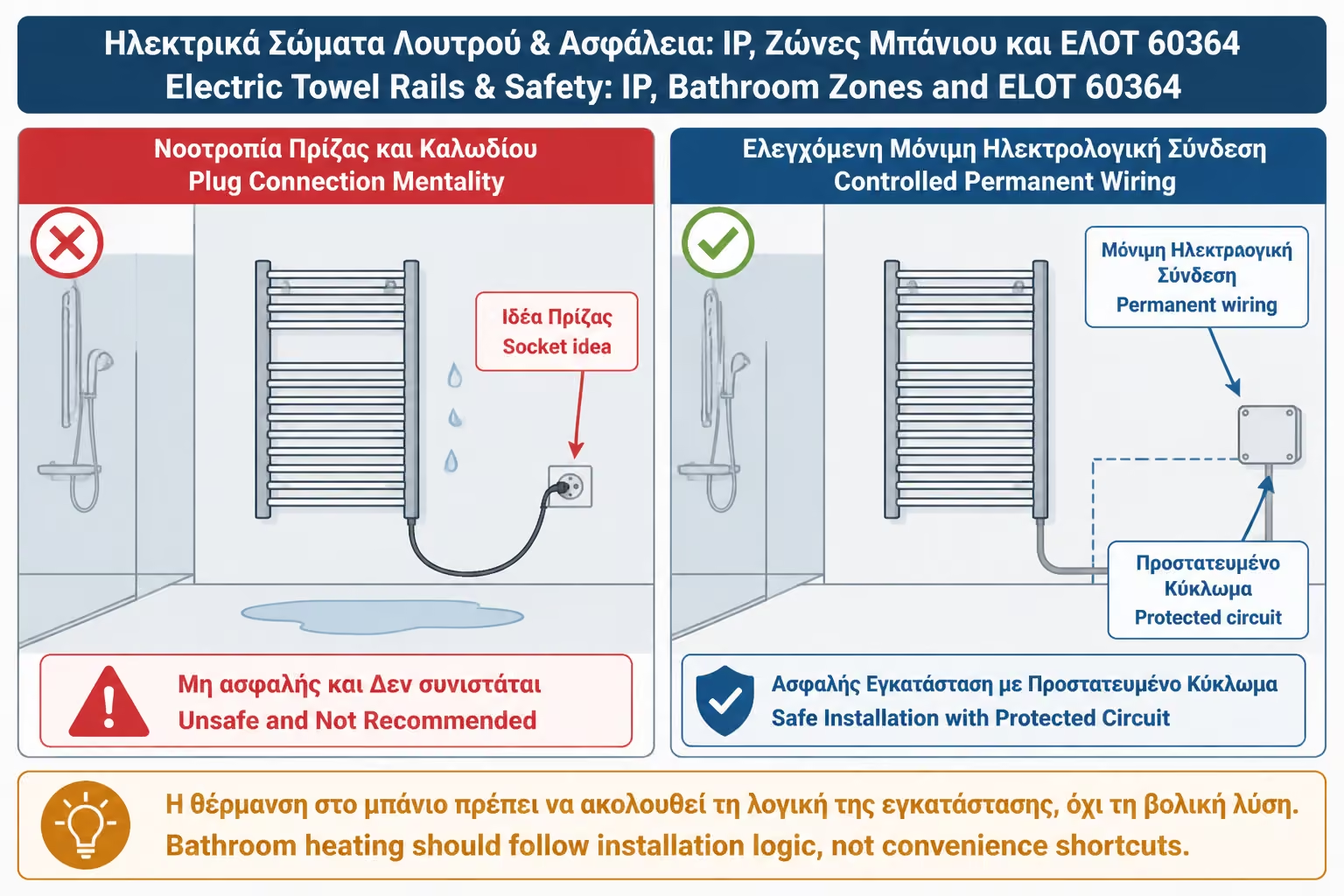
If you have to stick to one rule, stick to this: never a wall socket or power strip for an electric towel rail in the bathroom. Using an extension cord in a wet area is one of the most dangerous mistakes. The cord can be run over a wet floor, pinched in a door, pulled, stepped on, or come into contact with water.
The towel rail is not a seasonal light. It is a heating device that can work for a long time and have a significant load. It needs proper supply. If there is no supply in the right place, we do not create it with a rough cable. We design it and an electrician installs it.
The same applies to smart plugs, socket timers or adapters in the bathroom. Even if they look practical, they may not have adequate protection for a wet area. The timer must be built into the device or installed in a secure manner.
The "temporary solution" in the bathroom is often the beginning of a permanent danger.
The control of the electric towel rail is a point that the user touches. If it is in the wrong zone or if we touch it with wet hands, the risk increases. That is why the position of the control is just as important as the position of the body.
Many electric towel rails have a thermostat or timer on the body. This may be practical, but must be allowed for the specific zone. In other cases, control is from a switch outside the bathroom or from a secure remote control outside the zones. The choice depends on the product and the installation.
The timer is useful for economy and safety, because operation is avoided all day. But it should not be casually added with a simple plug-in timer in the wrong place. It must be part of the secure installation.
The right question for the electrician is not only "where will the body fit in?". It's "where do I open it, where do I close it and what do I touch when I'm wet?".
In the bathroom there are metal elements: pipes, batteries, heating elements, metal frames, possibly earthed appliances. Equipotential bonding and proper grounding are intended to reduce dangerous potential differences between metal parts. In simple words, the user should not be between two metal elements with different electric potential.
In modern installations, how additional equipotential bonding is applied depends on the overall protection system, earthing, RCD and the requirements of the applicable standard. It is not something that is decided by the owner or the board. It's an electrician thing.
The electric towel rail, as a metal body with electrical power, must be part of the installation's protection logic. If an old hydraulic body is replaced with an electric or dual fuel one, it is not enough to look only at the piping. The electrical protection must also be checked.
Grounding is not visible, but it is one of the most important things you buy when paying for proper installation.
In many dual fuel or electric solutions, we have to look not only at the body but also at the electrical resistance/element. The metal body can be just a heatsink, while the electrical part is the one with specific IP, thermostat, cable and controller.
If you buy a dual fuel kit, it must be compatible with the towel rail and suitable for the bathroom. It is not enough that the thread fits. Power, capacity, installation location, IP and instructions must match. The wrong resistor can overheat the body, run out of specification, or cause trouble.
On electric towel rails, look to see if the IP is for the whole device or a specific part. If the controller has a different requirement or must be out of range, this must be adhered to.
Safe purchase is package: body, resistor, control, wiring and installation instructions. No "body from here, resistance from there" without technical control.
The dual fuel towel rail has two worlds: hydraulic and electric. This is its advantage, but also its complexity. When working with heating water, it works like a normal body. When it works with electrical resistance, it heats the water or fluid inside the body locally.
If the valves are closed incorrectly, heated fluid can be trapped without proper expansion. If the resistor is of the wrong wattage, it can overheat. If the user does not know how to switch the function, he may be working electrically while thinking he is working hydraulically.
That is why the dual fuel installation must have clear instructions for use. The owner needs to know which valves are left open, when the resistor is activated, how to isolate for maintenance and what not to do. It's not just a matter of installation; it's also a matter of delivering instructions.
Dual fuel is a great solution when done right. Roughly, it can create problems from both the hydraulic and electrical side.
The towel rail is made for towels, but that doesn't mean it can be covered with anything. We do not hang on it plastics, clothes with synthetics that are not allowed, sponges, mats with a rubber base or objects that can overheat. We follow the manufacturer's instructions.
The location should be away from shower curtains, plastic curtains, furniture that may touch the body, or storage containers with cleaning agents. If the towel rail is too close to a shower curtain, there is a risk of contact with water and also a thermal risk for the material.
Towels should be hung to allow air circulation. If many layers are wrapped around the body, performance is reduced and temperature may rise locally. With a timer and thermostat, the risk is reduced, but correct use remains essential.
The towel rail is not a general purpose clothes dryer. It is a bathroom heater for towels.
Before installation, ask the electrician to check the location with respect to zones, device IP, power circuit, leakage relay, grounding, connection method, operating position and isolation for maintenance. If the house is old, ask for a panel and protection check before a new appliance is added.
The work should not be limited to "powering on". A wet area safe line must be designed. If renovating, wiring must be provided before tiling. If the bathroom is finished, it must be considered whether it can be installed without dangerous errands or rough routes.
Also ask him to explain the usage: which switch isolates the device, how the timer works, what to do if the relay drops, how to clean the device and what not to touch with wet hands.
Proper installation ends when the owner knows how to use the device safely.
The cost depends on whether there is already a suitable line, whether a renovation or intervention is being carried out in a finished bathroom, whether a new supply from a panel is needed, whether a change/leak relay check is required, whether there are incidentals and whether the towel rail is simple electric or dual fuel.
| Work / part | Indicative range 2026 | Comment |
|---|---|---|
| Position, RCD and line control | €50–€120 | In an existing bathroom |
| New supply for towel rail | 100–300€+ | Depending on distance and circumstances |
| Electric towel rail connection | 80–200€+ | If there is a ready safe supply |
| Dual fuel resistance connection | 100–250€+ | It also wants hydraulic control |
| Timer / thermostat / control | 30–150€+ | Depending on the model |
| Check or replace leakage relay | 80–200€+ | If missing or not appropriate |
| Tile repair/repair | Wide variation | If not provided for in advance |
Prices are indicative and are affected by area, access, VAT, board condition and installation difficulty. In a renovation, costs are usually more controlled because the lines are predicted before the walls are closed. In a finished bathroom, lack of foresight can cost more.
Don't judge the installation by the lowest cost alone. In the bathroom, safety is part of the value.
Most mistakes are made by trying to be convenient: to put the device where it is convenient, with power from where it is available. This logic is dangerous.
| Error | Risk | A more correct approach |
|---|---|---|
| Installation without zone control | Splashes and electrical hazard | Control based on ELOT 60364 |
| Buy without IP check | Inappropriate device | IP according to zone |
| Using a simple socket/plug | Poor protection in wet areas | Permanent proper connection |
| Power strip or power strip | High risk | No extension in the bathroom |
| Controller in wet zone | Contact with wet hands | Control in a safe position |
| Missing RCD | Reduced protection | 30 mA control/protection where required |
| Dual fuel without correct valves | Thermal/hydraulic failure | Installation by professionals |
| Wrong body resistance | Overheating or damage | Compatible manufacturer kit |
| Cable near water | Deterioration/danger | Hidden or safe path |
| No owner's manual | Wrong daily use | Delivery and explanation |
The most typical mistake is the towel rack with a plug in a socket or extension "until a proper connection is made". This "temporary" often stays for years and is exactly what should be avoided.
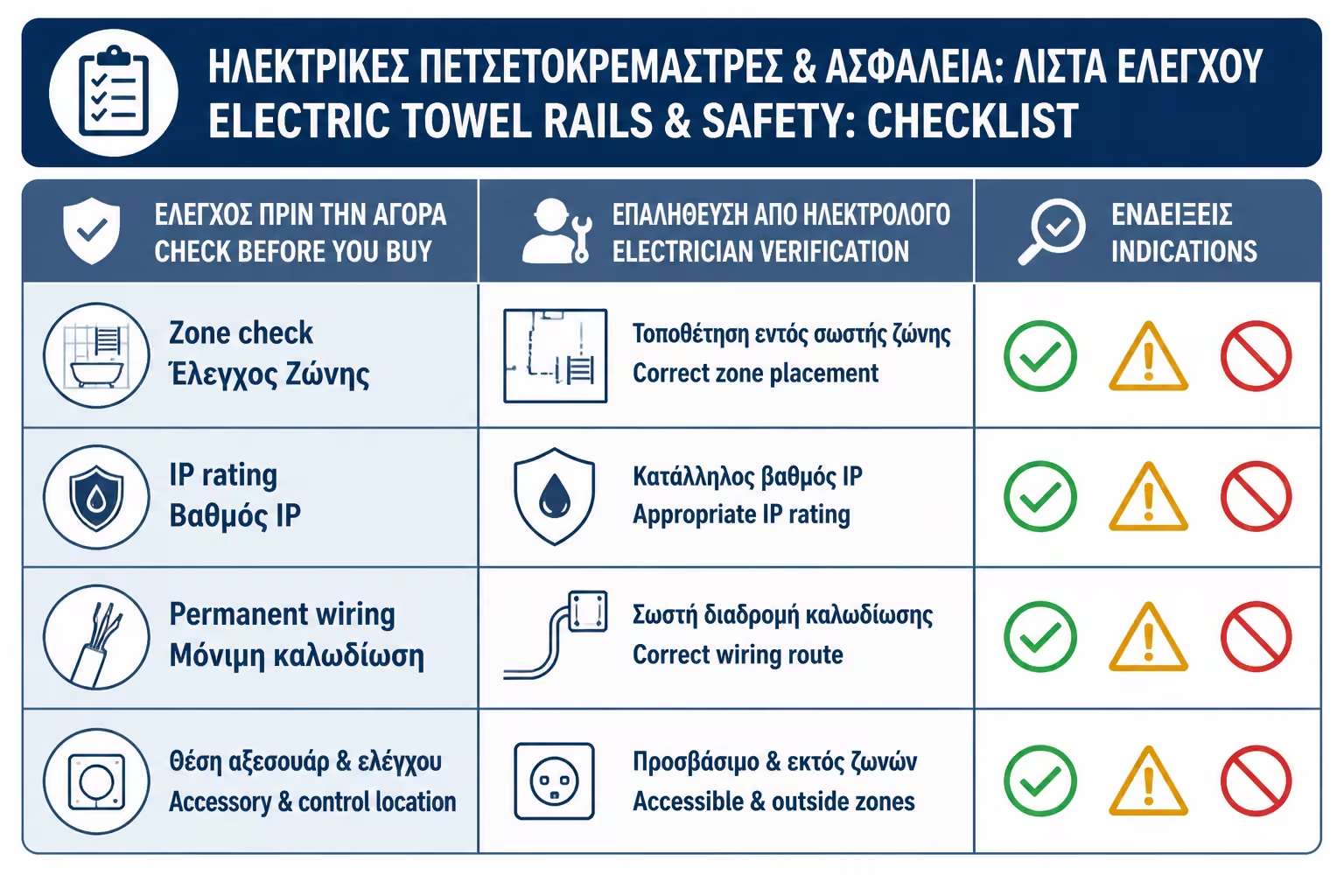
| Control | Yes / No |
|---|---|
| Has the position been determined in relation to the bath/shower? | Yes / No |
| Has it been checked which bathing zone it is in? | Yes / No |
| Does the product have an IP rating appropriate for the location? | Yes / No |
| Does the electrical resistor/element also have an appropriate IP? | Yes / No |
| Will the installation be done by a licensed electrician? | Yes / No |
| Is there a leakage relay and has it been checked? | Yes / No |
| Are wall sockets, power strips and emergency sockets completely avoided? | Yes / No |
| Is the control/timer in a safe position? | Yes / No |
| Is there a way to isolate it for maintenance? | Yes / No |
| Does the device not receive direct splashes from showers? | Yes / No |
| Is it not touching a curtain, furniture or flammable material? | Yes / No |
| On dual fuel, have the hydraulic valves also been checked? | Yes / No |
| Does the owner know how it works and how it isolates? | Yes / No |
The electric towel rail is not "put a body on the wall and plug it in". It is an electrical installation in a place with water. Before buying, decide on the location and have an electrician check zones, IP, RCD, grounding and connection method. If the location falls into Zone 2, IPX4 is usually the minimum starting point, not a clearance for rough installation. If you need a ball joint to get power, the installation is wrong from the start.
Electric towel rails are an excellent solution for comfort, drying towels and reducing humidity in the bathroom. But electrical safety comes before design, power and price. The bathroom is a special space and the installation must be done based on the zones, the IP rating and the requirements of the applicable framework of electrical installations, such as ELOT HD 60364-7-701 for spaces with a shower or sprinkler.
The right choice starts before the purchase. Where will the towel rail fit in? What zone is it in? What IP does the body and electrical resistance have? Where will the controller be? Is there a leakage relay? Will there be a permanent connection or are we trying to "get comfortable" with an outlet? These questions are more important than color or shape.
Safe installation involves no power strips, power strips, messy cables or misplaced controls. It includes proper wiring, proper product, protection, grounding, professional installation and clear instructions for use. In dual fuel solutions, extra attention is also needed on the hydraulic side.
The right bathroom is not only warm and dry. It is safe. And the electric towel rail, when installed correctly, can provide all three: convenience, moisture prevention and safety.
Return to category.
Go to categoryReturn to the central guide.
Go to guide