
Bathroom Lighting, Ventilation & Heating
Return to category.
Go to categoryMold in the bathroom does not appear by chance. It needs moisture, time and surfaces that stay wet. The shower produces steam, that's for sure. The question is what happens next: does the humid air leave the room or does it sit on cold walls, corners, ceilings, windows and silicones? That's exactly where the role of heating comes in.
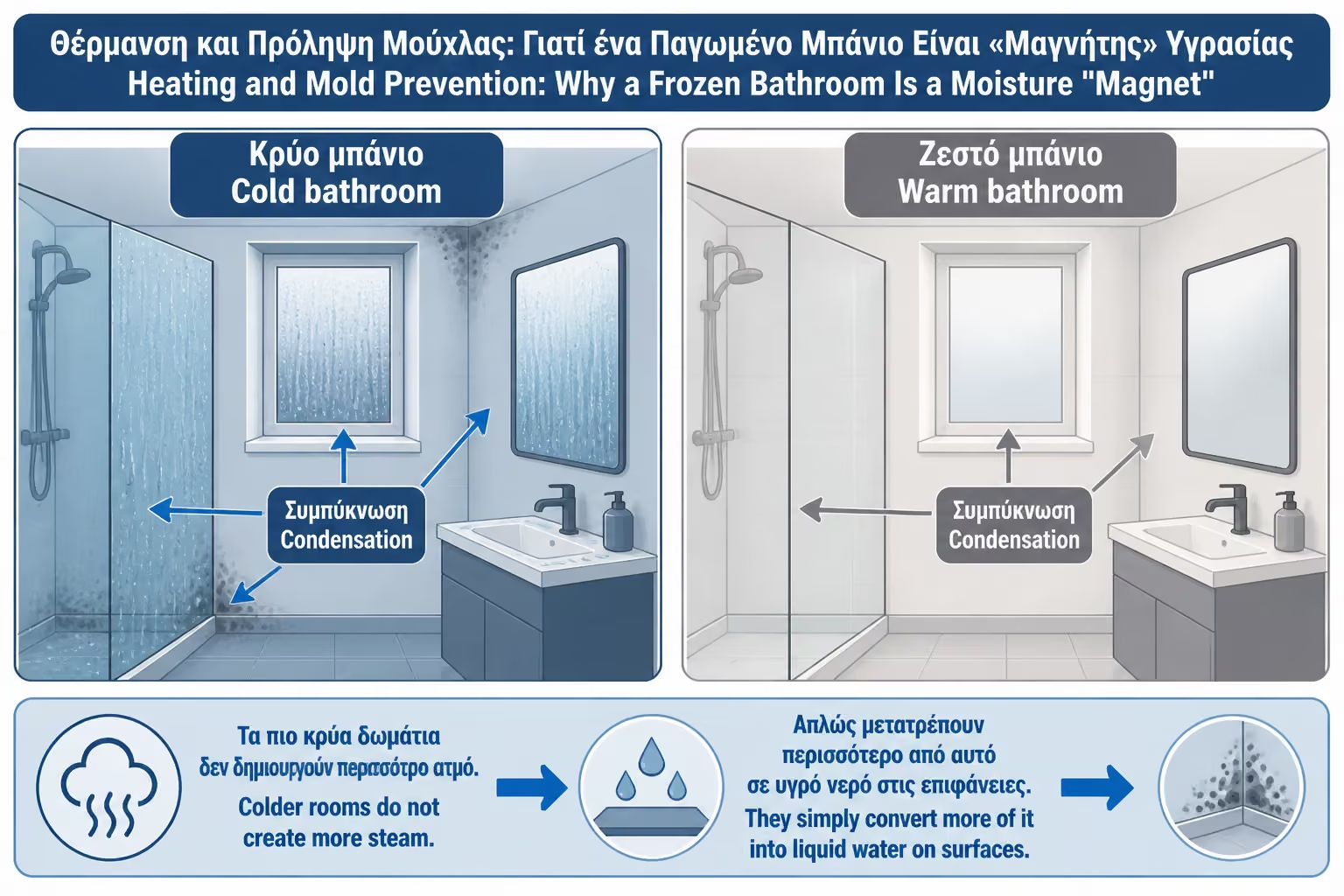
A frozen bath is much more vulnerable to condensation. The hot steam from the shower rises, fills the space and rests on surfaces that have a low temperature. If the wall, ceiling or glass is cold enough, the water vapor becomes droplets. These drops aren't just annoying. It is the water that mold needs to grow.
That is why we see black dots mainly in the corners, on the ceiling above the shower, around windows or on external walls. It's not because that's where the bathroom gets "dirtier". It is because there the surfaces are colder or less ventilated. When the same spot condenses over and over, it stays wet longer. And when a surface remains wet for several hours, mold finds an environment to grow.
Heating works proactively because it raises the temperature of the air and, more importantly, the surfaces. A warm wall condenses harder than a cold wall. A bath that doesn't go too low in the winter dries faster after a shower. A towel rail, radiator, underfloor or a properly adjusted infrared heating panel can help significantly.
But heating alone is not enough. If we heat the humid air but do not remove it, the humidity stays in the bathroom. It may not condense immediately on the mirror, but it will condense when the air cools or finds a cold spot. That's why the serious guidelines for mold and condensation insist on the combination: reduce humidity, increase ventilation or air circulation, insulate cold surfaces and increase air temperature. EPA lists just these as practical actions to prevent condensation.
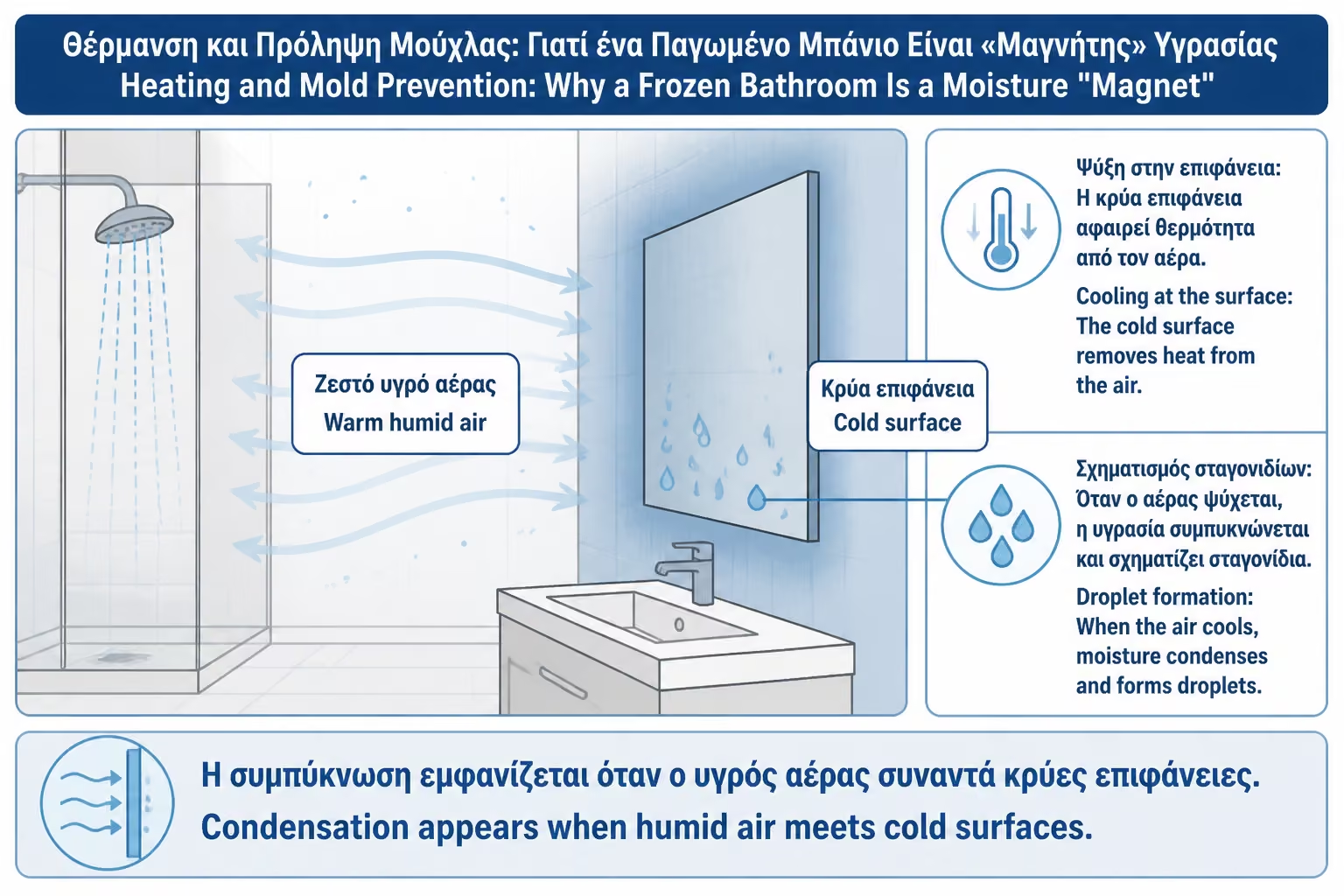
Air can hold water vapor. The warmer it is, the more moisture it can hold without becoming saturated. When warm moist air touches a cold surface, it cools locally. If it reaches the dew point, i.e. the temperature where it can no longer hold all this moisture, the water appears as drops.
This is what we see in the mirror after the shower. This is what we see in the windows in winter. This also happens on the walls, only there it is not always so visible. You may not see drops in a corner, but the surface stays wet long enough to blacken.
Heating reduces the risk in two ways. First, it raises the temperature of the air, so for the same amount of water vapor, the relative humidity decreases. Second, it raises the temperature of surfaces, so it is harder for them to reach the dew point.
The practical conclusion is simple: we don't want the bathroom to be freezing before the shower starts. If the walls and ceiling start at a very low temperature, the steam will condense on them very quickly.
The ice bath does not create more water vapor. The steam is created by the hot shower water. What the ice bath does is turn water vapor into liquid water on surfaces. In other words, it magnetizes condensation.
The most dangerous surfaces are the cold ones: external walls, windows, ceiling under a roof, corners with beams or columns, places behind furniture where air does not circulate. There the surface temperature drops more easily. That's where the mold appears first.
The phenomenon is more intense in winter. The outside cold pulls the temperature of the walls down. If the bathroom is left unheated all day and heated only by the steam from the shower, we have the worst case scenario: warm moist air on icy surfaces.
This is why a bathroom can get moldy while "airing out" after a shower. If the surfaces are already wet and remain cold, a few minutes of airing is not always enough to dry them.
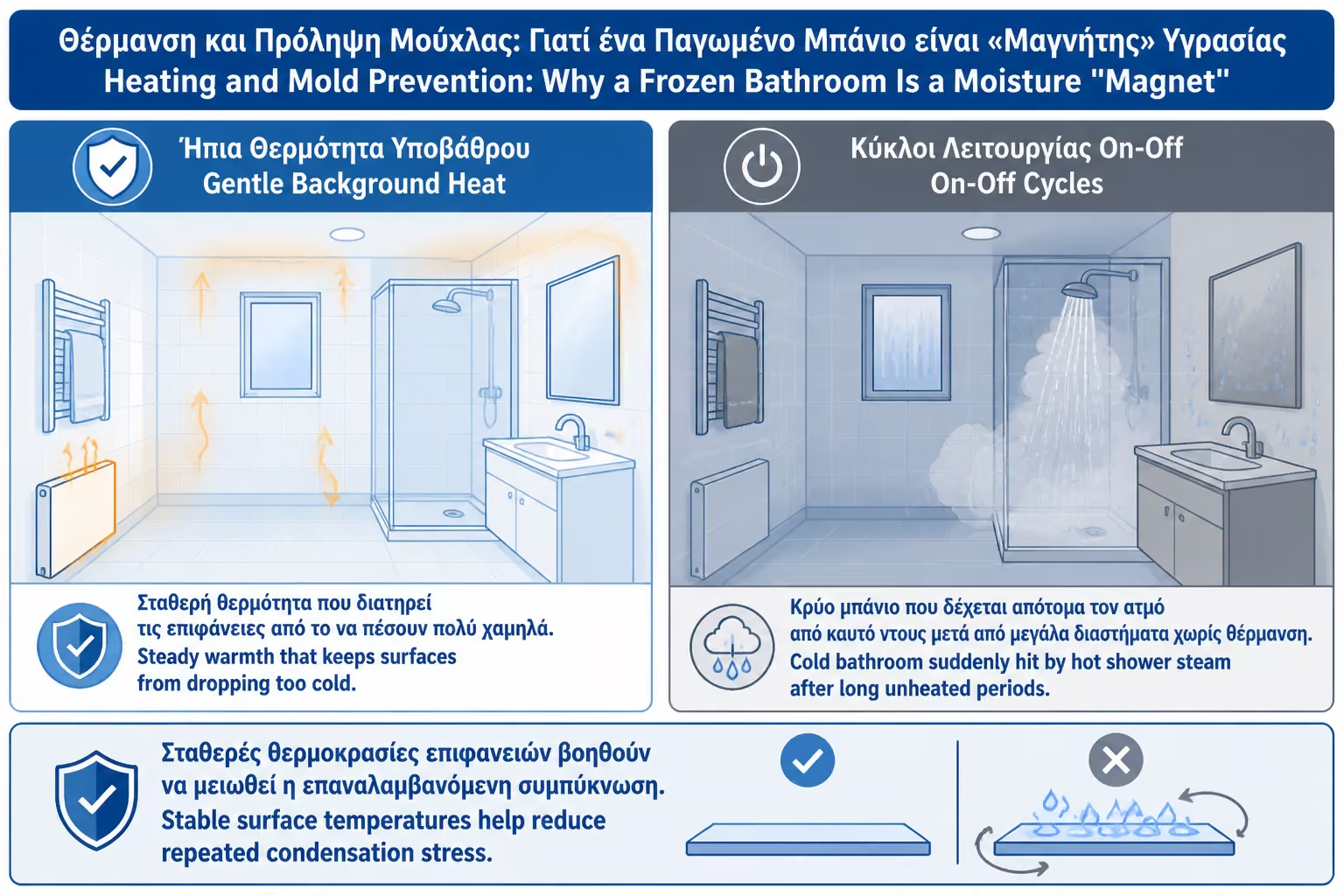
Continuous, gentle heating is often more effective than short intense bursts of heat. Turning on a powerful heater briefly warms the air quickly, but the walls, ceiling and tiles may remain cold. As the space fills with steam, the cold surfaces continue to condense.
Gentle heating keeps surfaces at a more constant temperature. The bathroom does not need to be excessively hot all day. However, it needs to be kept at a very low temperature for long hours, especially in homes with a history of mold. The Energy Saving Trust points out that poorly heated spaces are more prone to damp problems and may need better ventilation or periodic heating increases.
In practice, a bathroom that stays at 16–18°C and rises to 22–24°C during use hours will behave better than one that drops to 10–12°C and only heats up when the hot water is turned on. The surfaces do not have time to freeze as much.
The economic solution is not necessarily "full heating". It's a smart program: low base, warm up before shower, vent after.
The heating helps keep the vapor from condensing as easily. Ventilation removes moist air from the space. If one of the two is missing, the solution is half.
If you only have ventilation but the bathroom is cold, surfaces can get wet immediately after showering and take a long time to dry. If you only have heating but no ventilation, moist air stays in and will cause a problem later. The EPA states that reducing humidity, increasing ventilation or air movement, and increasing air temperature are needed to prevent condensation.
The right combination is: heating before and after use, ventilation during and after the shower, air intake through the door and drying of the wettest surfaces. If there is a hygrostat, even better, because the fan does not just turn off with the light, but continues until the humidity drops.
Neither "heat without air" nor "air without heat" wins in the bathroom. Balance wins.
There is no one solution for all bathrooms. Each system has a different role in moisture prevention.
| Heating system | How it helps | Restriction |
|---|---|---|
| Hydraulic/electric towel rail | Dries towels, gives gentle heat | It may not be enough for the whole space |
| Electric underfloor | Heats tile, reduces cold floor, dries water | It needs warm-up and proper installation |
| Hydraulic subfloor | Stable thermal comfort, warm surfaces | High inertia and thickness requirements |
| Infrared panel | Heats bodies/surfaces instantly | Does not dry towels like a towel rail |
| Wall-mounted air heater | Fast air heat | It does not heat the surfaces deeply |
| Classic radiator | Constant heating when the system is working | Bulky, vulnerable to rust |
For mold prevention, systems that keep surfaces more consistently warm have an advantage. Underfloor heating and a properly sized towel rail are more helpful on a daily basis than an air heater that only runs for a few minutes.
This does not mean that the air heater is bad. It's great for instant comfort. It's just not the best "shield" against condensation if the bathroom stays cold the rest of the time.
Many people think only of the steam of the shower. But wet towels are a great source of moisture after use. A towel that stays cold and wet for hours evaporates water in the bathroom, maintaining high humidity even after the shower is over.
The towel rack helps right here. It's not just a matter of comfort or a "hot towel". It is a way to reduce the residence time of water on fabrics. The faster the towel dries, the less time it supplies the bathroom with moisture.
The mistake is to hang many wet towels in a small cold bathroom, close the door and turn off the ventilation/heating. The next morning, the place smells musty and the corners work like condensation traps.
If the bathroom has mold, check not only the walls but also the towel routine: where they dry, how quickly, how many there are and whether the ventilation continues after the shower.
You don't need an absolute temperature for all houses. For bathroom use, the feeling of comfort is often around 22–24°C when we get out of the shower. To prevent condensation, however, the lowest temperature to which the room falls during the remaining hours is also important.
If the bath falls to very low temperatures, e.g. 10–12°C, surfaces become a moisture magnet. If it stays on a milder basis, e.g. 16–18°C, and rises to 22–24°C in the hours of use, the surfaces behave better. In condensation and mold guidelines, we often find the logic of more consistent heating, rather than short bursts of high heat, to reduce the risk of condensation.
For homes with vulnerable people, the elderly or health problems, comfort and health requirements may be different. Here we are not talking about a medical instruction but about technical prevention of moisture in the bathroom.
The practical goal is: that the area does not feel frozen before the shower and that it dries within a reasonable time afterwards.
An inexpensive hygrometer can tell you if the bathroom is drying properly. After showering, it's normal for the relative humidity to go up a lot. The problem is if it stays high for hours. The EPA recommends keeping indoor humidity below 60% where possible and ideally in a range of about 30–50% for mold control.
In the bathroom, of course, after the shower there will be a peak. It is not realistic to always stay below 60%. What we want is for the moisture to drop quickly. If an hour after showering the bathroom is still very wet, then the ventilation, heating or both are not sufficient.
Watch three things: the relative humidity before the shower, the peak after the shower, and the time to return to normal levels. If the bath already starts at 70% before the water even turns on, there is a general problem of humidity or insufficient ventilation.
The hygrometer does not solve the problem. But it does show you if the habits and interventions are working.
Warming up is one of the simplest preventive measures. If you turn on the towel rail, underfloor or other system just before showering, the surfaces start out warmer. This reduces direct condensation.
The warm-up time depends on the system. An air heater can give sensation in a few minutes, but it does not have time to warm the walls deeply. An electric subfloor takes longer to heat up the tile. A towel rack can take 20–40 minutes to actually help the space and the towels.
With a Wi-Fi thermostat or timer, preheating is done automatically. If you wake up at 07:00, the bath may start at 06:15 or 06:30, depending on the system. So you don't get hot all day, but you also don't enter a freezing area.
Preheating is particularly important in bathrooms with an external wall, window or ceiling under a roof.
After the shower, the bathroom has two loads: humid air and wet surfaces. The fan removes the moist air. Heating helps surfaces and towels dry. If we extinguish both at once, the moisture remains.
The practical routine is simple: leave the fan running, keep the towel rail or heater on for a reasonable amount of time, open the door when there is no issue of moisture spreading throughout the house, and squeegee the water off the windows/tiles. The UK Existing Homes Guide emphasizes that ventilation devices should be kept open and bathroom and kitchen ventilators cleaned regularly.
If there is a hygrostat on the ventilator, let it decide when to stop. If there is only a timer, try 15–30 minutes and see with a hygrometer if it is enough. In a blind bathroom, it often takes more than the 5 minutes that someone leaves "by eye".
Mold is mainly prevented after the shower, not while cleaning the black dots.
If a certain spot always turns black, even with heating and ventilation, there may be thermal bridging. A thermal bridge is a point where cold passes more easily from the outside to the inside, such as a column, beam, slab, corner or poor insulation joint. The surface there stays colder than the rest of the wall.
Heating helps, but doesn't always make the problem go away. If thermal bridging is severe, the surface may continue to drop below the dew point. Then a technical solution is needed: thermal insulation, improvement of the frame, change of air flow or special intervention on the surface.
Do not try to solve thermal bridging with anti-mold paint alone. Paint can delay the appearance, but if the surface remains cold and damp, the mold will return.
A heat spot that turns black every winter is a sign that it needs diagnosis, not just cleaning.
Continuous gentle heating does not mean that everything has to burn 24 hours a day. It means we avoid large temperature drops and use programs. The cost depends on the power, hours and energy price.
| Device | Power | 1 hour | 2 hours | Cost of 2 hours at €0.25/kWh |
|---|---|---|---|---|
| Electric towel rail | 500W | 0.5 kWh | 1.0 kWh | €0.25 |
| Electric underfloor for a small bathroom | 600W | 0.6 kWh | 1.2 kWh | €0.30 |
| Infrared panel | 700W | 0.7 kWh | 1.4 kWh | €0.35 |
| Wall-mounted air heater | 2,000W | 2.0 kWh | 4.0 kWh | €1.00 |
| Demister mirror | 50W | 0.05 kWh | 0.10 kWh | €0.025 |
The economy is getting out of control. Timer, thermostat, Wi-Fi program, boost mode and fan hygrostat reduce useless hours. A 2,000W air heater for 10 minutes might be reasonable. For 4 hours daily, no.
If the bathroom has a permanent mold problem, don't just look at the electricity cost of an appliance. Also factor in remediation costs for mold, paint, silicone, furniture wear and poor air quality.
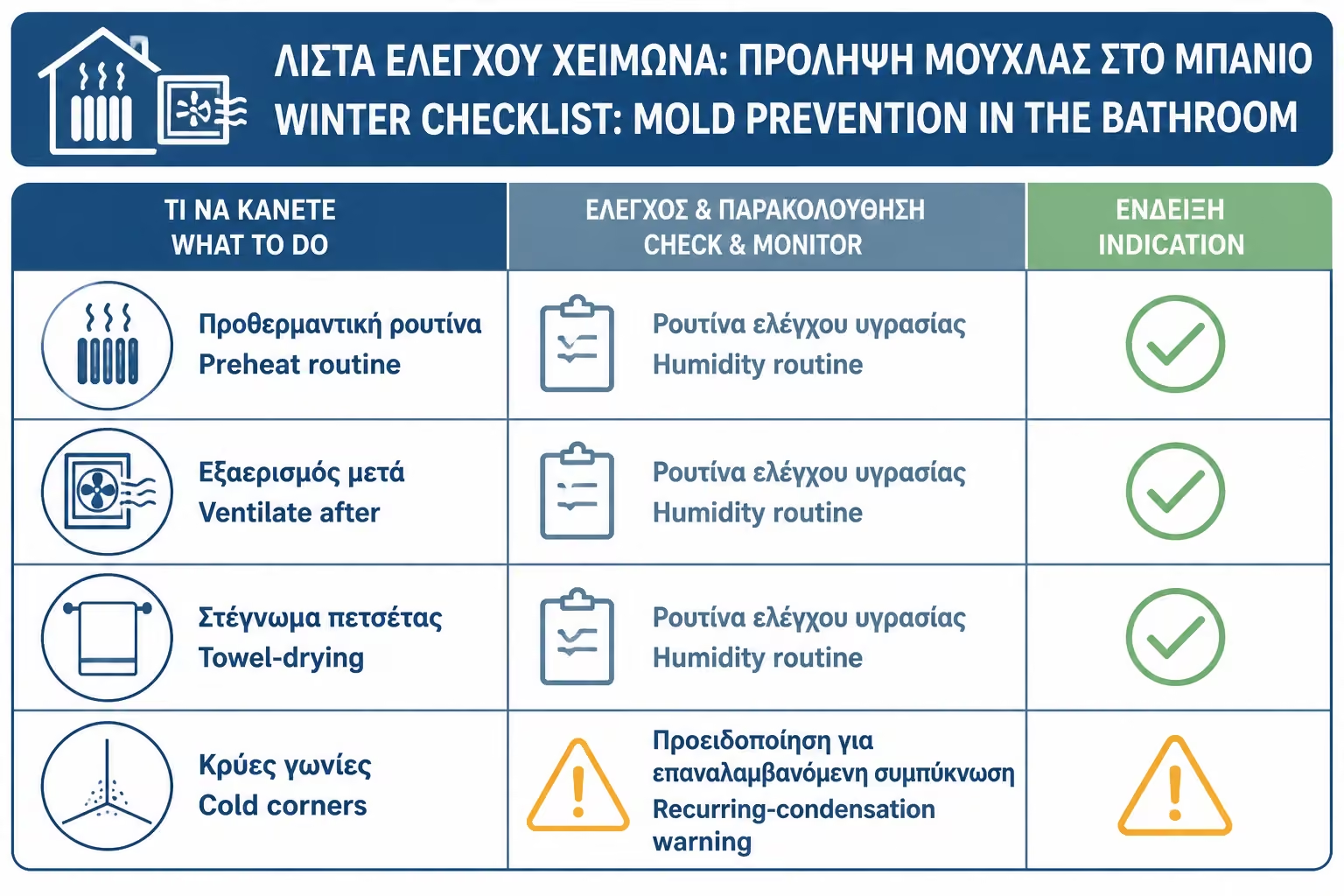
A practical winter routine for a bathroom with a history of condensation might be: a low temperature base to keep the space from freezing, pre-heating before showering, ventilation during and after, drying surfaces and towels, and checking humidity with a hygrometer.
If using an electric subfloor, set it to start well before use. If using a towel rail, apply boost before and after showering. If you have an air heater, use it only for a few minutes of comfort, not as permanent heating. If you have a window, open it soon after showering, without freezing the space for hours.
The bathroom must dry within a reasonable time. If two hours after the shower the corners are still wet, something is not working properly: ventilation, heating, air intake, leaks, silicones or thermal bridges.
A daily routine is more effective than the occasional "deep clean" when mold has already appeared.
If mold is present despite proper heating and ventilation, another cause must be sought. There could be a leak, moisture from above, broken silicone, poor sealing, leaking behind tiles or a drainage problem. Condensation mold is usually diffuse on cold surfaces. Mold from a leak is often accompanied by staining, swelling, peeling, or moisture unrelated to the shower.
The EPA emphasizes that if the mold is cleaned but the water problem is not corrected, the mold will likely return. This is absolutely critical in the bathroom: we do not paint, heat or perfume over active moisture from leakage.
If the spot remains wet even when the bathroom is not in use, call a technician. If you smell mold in a cupboard or behind a piece of furniture, open it and check. If the ceiling has a growing stain, check from above.
Heating is a shield against condensation. It is not a cure for leaks.
Damp and mold is not just a technical issue. They can affect health, especially in people with asthma, allergies, respiratory sensitivities, the elderly, children or people with reduced immunity. The UK government's damp and mold guidance emphasizes that damp and mold can be a serious health hazard and must be dealt with and prevented quickly.
In homes with vulnerable people, prevention is even more important. We don't wait for the wall to turn black to act. We keep the bathroom dry, reasonably warm and well ventilated. We use a hygrometer, clean the ventilator and do not store wet towels.
If there are symptoms or if the mold is extensive, professional treatment is needed and, for health issues, a doctor's advice. This article is about technical prevention, not medical diagnosis.
The best mold is the one that never appears. This is achieved with controlled humidity, not perfumes or rough paint.
Prevention seems like a small daily cost: a little heating, fan operation, timer, maintenance, water spatula. Restoration is seen when the problem has progressed: mold cleanup, silicone replacement, ceiling painting, plaster repair, furniture replacement, leak testing.
| Prevention intervention | Indicative cost 2026 | Role |
|---|---|---|
| Bathroom hygrometer | 5–25€ | RH monitoring |
| Timer/ventilator hygrostat | 30–150€+ | Ventilation after showering |
| Ventilator cleaning | 0–80€ | Maintain performance |
| Boost towel rail with timer | Low consumption | Towel drying |
| Glass/tile trowel | €3–€15 | Less water on surfaces |
| Ceiling mold remediation | 100–500€+ | When the problem has occurred |
| Replacement of brittle silicone | 70–250€+ | If the mold has gone deep |
| Damp/leak repair | Wide variation | If there is a technical reason |
Prevention is not free, but it is much cheaper than repeated rehabilitation. It is also healthier and more comfortable.
The mistake is to cut heating completely to save money and then pay in mold, decay and poor air quality.
| Error | What does it cause? | A more correct approach |
|---|---|---|
| Ice bath all day | Cold surfaces and condensation | Mild temperature base |
| Strong heating for 5 minutes | Hot air, cold walls | Warm-up and stability |
| Heating without ventilation | Moisture remains in the space | Heating + ventilation together |
| Fan only with light | It goes off too early | Timer or hygrostat |
| Closed door without air intake | The fan does not pull | Gap under door |
| Wet towels in a cold bath | Prolonged humidity | Towel rail/ventilation |
| Open window for hours in winter | Surfaces are freezing | Short ventilation |
| Anti-mold paint without cause | Reappearance | Moisture control first |
| Ignoring thermal bridging | Mold in the same spot | Technical diagnosis |
| No hygrometer | We don't know if it dries | RH measurement |
The most common mistake is to let the bathroom be heated only by the steam from the shower. This "warm" air is loaded with moisture and rests on icy surfaces. It's the perfect recipe for condensation.
| Control | Yes / No |
|---|---|
| Doesn't the bathroom drop to too low a temperature? | Yes / No |
| Is there a warm up before the shower? | Yes / No |
| Does the fan work during and after the shower? | Yes / No |
| Is there a timer or a hygrostat? | Yes / No |
| Does the door have a vacuum or other air intake? | Yes / No |
| Do the towels dry within a reasonable amount of time? | Yes / No |
| Are the corners and ceiling dry after use? | Yes / No |
| Does the humidity drop below 60% after some time? | Yes / No |
| No constant cold spots that turn black? | Yes / No |
| No suspicious stain or leak? | Yes / No |
| Has the vent been cleaned recently? | Yes / No |
| No perfume used to cover musty smell? | Yes / No |
If you want to stop mold in the bathroom, don't just think "put in a stronger fan" or "get anti-mold paint". Consider surface temperature. A wall that stays frozen will condense, no matter how clean the bathroom is. Keep a gentle heating base, pre-heat before showering, leave the fan on afterwards and towel dry quickly. If the same spot turns black every winter, check for a thermal bridge or leak. Heating is a shield, not magic paint.
Heating is one of the most underrated factors in bathroom mold prevention. When the room is frozen, the water vapor from the shower finds cold surfaces and condenses. This repeated dampness in the corners, ceiling, windows and exterior walls is the first step to mold growth.
Continuous, gentle heating helps because it keeps surfaces warmer and reduces the chance of condensation. It doesn't mean that the bathroom has to be overheated all day. It means that it should not be exposed to very low temperatures and that it should be preheated before use, especially in winter.
However, heating must always be combined with ventilation. The warm moist air must leave the bathroom. A fan with a timer or a humidistat, proper air intake from the door, a clean air duct, dry towels and daily drying habits are just as important as the radiator.
If the bathroom is still moldy despite proper heating and ventilation, then another cause must be sought: a thermal bridge, a leak, poor sealing or an unventilated area. The permanent solution is not to cover the mold, but to remove the conditions that create it.
Return to category.
Go to categoryReturn to the central guide.
Go to guide