
Bathroom Lighting, Ventilation & Heating
Return to category.
Go to categoryInfrared heating panels are starting to appear more and more often in proposals for modern bathrooms. They are thin, discreet, can be inserted into the wall or ceiling, do not take up space like a radiator, do not have a fan, do not raise dust and offer a different feeling of warmth. Instead of heating the air first, they emit infrared radiation that is absorbed by bodies, tiles, walls, objects and surfaces, much like we feel the sun's heat on our skin.
This heating method is particularly interesting for the bathroom, because the bathroom is a place of short but intense use. We don't always need to heat a large volume of air for hours. We often want a quick feeling of comfort when we get out of the shower, especially if the bathroom is small, has cold tiles or is not well connected to the central heating system. A correctly placed infrared panel can make the user and surfaces feel warmer, without waiting a long time for all the air to heat up.
But you need to be careful with the claims. Infrared panels are not "magic" heating with zero consumption. They are electrical devices. A 600W device consumes up to 0.6 kWh per hour of full operation, like any 600W electric heater. The potential savings do not arise because they violate physics, but because they can work targeted, at a lower sense of air temperature, for less time or in a specific zone of use. The Energy Saving Trust explains that infrared heating works by radiant heat which instantly warms people and objects, but recommends that independent advice be sought on whether it is suitable for a home.
Also, the claim that they are "ideal for poorly ventilated areas" needs to be worded correctly. Infrared panels can help in spaces where air is difficult to renew because they don't rely as much on heating large volumes of air and can keep surfaces warmer. This can reduce condensation in cold spots. However, they do not correct poor ventilation. They do not remove water vapor, odors, CO₂ or mold spores. If the bathroom is not ventilated, moisture will remain in the space.
So the correct position of infrared panels in the bathroom is this: they can be very good supplementary or even main electric heating in small spaces, when chosen with the right power, right location, suitable IP rating and safe electrical installation. They do not replace the ventilator, do not remove moisture and should not be used casually near water.
Infrared heating is a form of radiant heat. Instead of mainly heating the air by convection, like a classic radiator or convector, it emits infrared radiation that is absorbed by surfaces and bodies. These surfaces then deliver heat to the space.
The simplest example is the sun. You may feel hot in the face even if the air around you is cool because the radiation reaches your body directly. Accordingly, an infrared panel in a bathroom can make the user feel warm more immediately than a heater that first tries to heat all the air.
In practice, infrared heating panels are flat electrical surfaces, usually a wall or ceiling. They can be white, glass, mirrors, decorative panels or thin plates that fit more subtly into the design. Their operation is silent, without a fan.
The technology is not "new" in the physical sense, but is relatively newer as a popular home solution in thin design panels. The crucial thing is to choose it correctly for the space and not just because it sounds trendy.
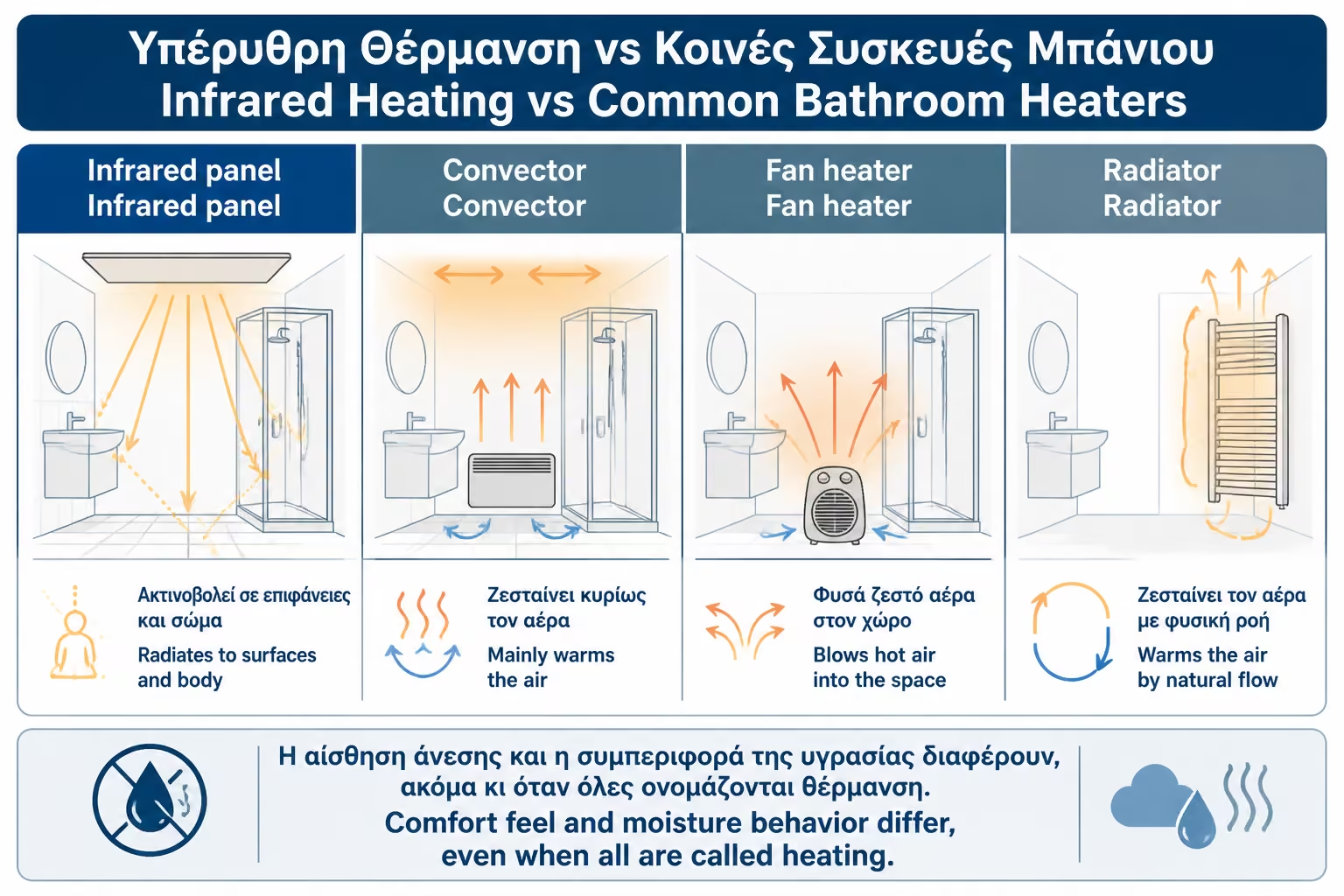
An air heater heats air quickly and pushes it with a fan. A convector heats the air passing through the device and creates circulation. A classic radiator heats by both radiation and convection, but much of its function involves heating air moving through the space.
The infrared panel works more with radiation. This means that the sensation of heat is more immediate when you are in the "line of sight" of the panel. If the panel faces your body, the tiles or a cold surface, the energy is absorbed there. If there is an obstacle, the heating is reduced behind it.
| Type of heating | Mostly it warms up | Advantages | Restrictions |
|---|---|---|---|
| Fan heater | Air fast | Instant feel, cheap device | Noise, dust, bathroom safety |
| Convector | Air | Quiet, simple | It takes time, dust circulates |
| Water heater / towel rail | Air + surfaces | Constant heating | Dependent on host system |
| Electric towel rail | Towels + air | He dries towels | Needs position, limited radiation |
| Infrared panel | Bodies and surfaces | Instant radiant comfort, silent | It needs proper direction and electrical safety |
For a bathroom, the infrared panel is interesting because the user is in the space for a short time and wants immediate comfort. But it is not always better than a towel rail, because it does not dry towels in the same direct way, unless the towels are in a place that "sees" the panel.
They can be more economical in certain uses, but not because the current is converted to more heat than other electrical appliances. All direct electric heaters convert almost all the electrical energy into heat in the space. The difference lies in how and where we feel this heat.
An infrared panel can allow a lower air temperature with the same sense of comfort, because it directly heats the body and surfaces. It can also work targeted only in the bathroom for a short time, instead of turning on an entire heating system. In such use, it can reduce costs. But if you leave it on all day or if it's undersized and runs all the time, it won't be economical.
The Energy Saving Trust explains that infrared panels can be cheaper to install than plumbing systems, but running costs depend on how they are used, the price of electricity and whether they are suitable for the site.
So the correct wording is: they save when used as targeted, controlled heating, with a thermostat or timer, correct power and correct position. They do not automatically save because they are "infrared".
The calculation is the same as for any electric heater:
Consumption = power in kW × operating hours
If a panel is 600W, that is 0.6 kW, and works for 2 hours, it consumes 1.2 kWh. If the electricity price is €0.25/kWh, the cost is around €0.30. If it works for 1 hour, about €0.15. If he works 4 hours a day, the monthly cost changes significantly.
| Power panel | 1 hour | 2 hours | Cost of 2 hours at €0.25/kWh |
|---|---|---|---|
| 300W | 0.3 kWh | 0.6 kWh | €0.15 |
| 500W | 0.5 kWh | 1.0 kWh | €0.25 |
| 600W | 0.6 kWh | 1.2 kWh | €0.30 |
| 800W | 0.8 kWh | 1.6 kWh | €0.40 |
| 1,000W | 1.0 kWh | 2.0 kWh | €0.50 |
If the panel has a thermostat, it does not always work at full power. It can cycle on/off after the space or surfaces heat up. But in a bathroom with frequent door opening, cold surfaces and poor insulation, it can work longer.
The secret is control. Timer 30–60 minutes before and after use can be economical. Continuous operation for no reason no.
The bathroom is a place where radiant heat is quickly felt. When you get out of the shower, you don't just care about the air temperature. You care if you feel cold in your body and if the surfaces around you are frozen. An infrared wall or ceiling panel can target the area where you are standing, e.g. in front of the sink or outside the cabin.
Also, it doesn't take up any space on the floor. This is important in small bathrooms where there is no room for a towel rack of sufficient strength or where we do not want to spoil the design. A ceiling panel, for example, can provide heat without taking up a wall.
It does not have a fan, so it does not make noise and does not raise dust. This is an advantage in a small space. Also, because it heats surfaces, it can help keep the tiles or the wall that "sees" the panel from being so cold.
The downside is that it doesn't dry towels as well as a towel rail. If the main goal is dry towels, the towel rack remains more practical. If the goal is a direct sensation of heat on the body and on surfaces, the infrared panel makes sense.
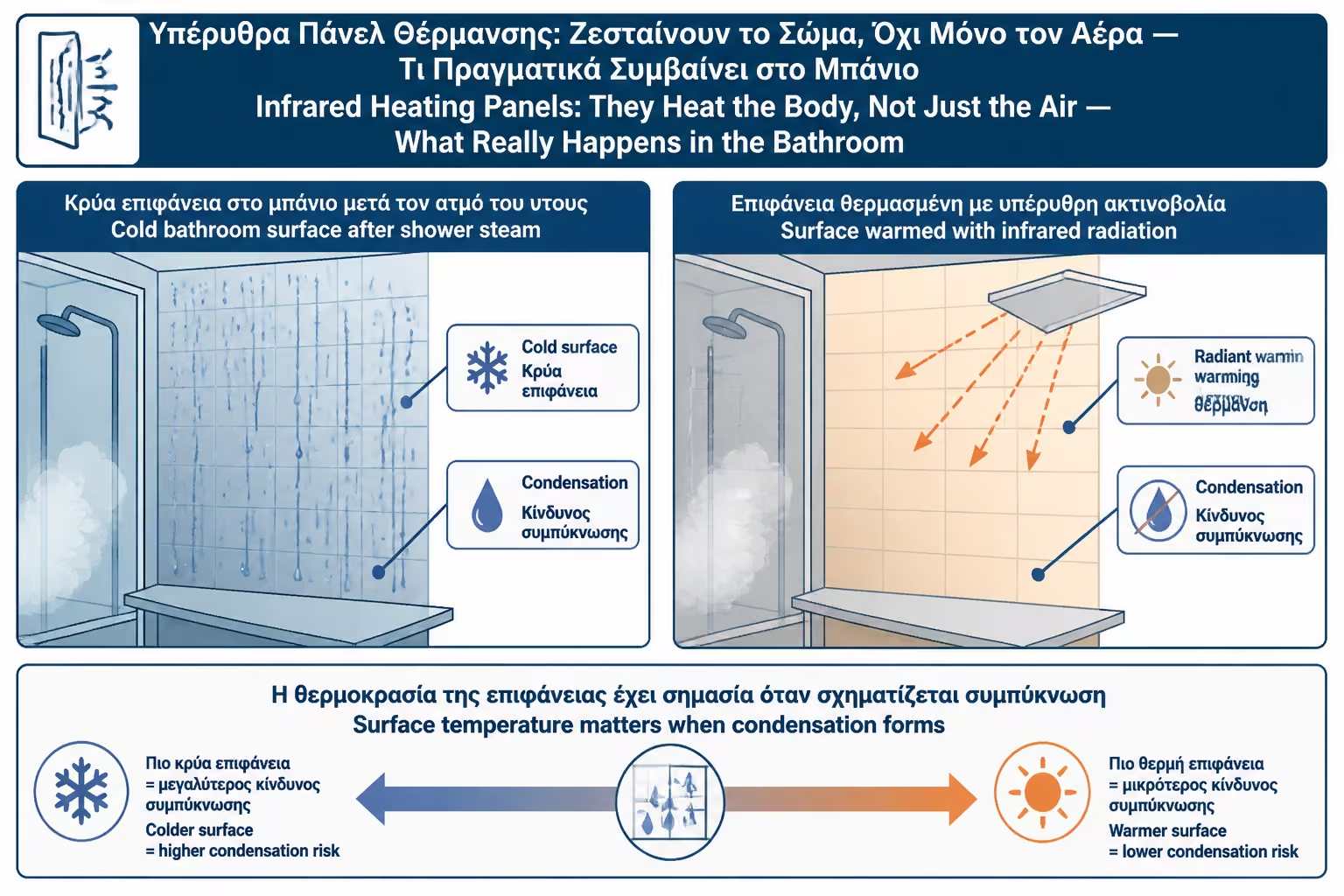
Great care is needed here. Infrared panels can be useful in areas where there is poor air circulation because they do not rely solely on heating the air. They can warm surfaces, reducing the chance of their temperature falling below the dew point. This can limit condensation on cold spots.
But it is not a solution for poor ventilation. If the bathroom fills with water vapor and it does not leave, the humidity remains. The panel can keep some surfaces warmer, but it doesn't remove water from the air. It does not replace a ventilator, does not emit odors, does not reduce CO₂ and does not deal with moldy odors from a siphon or skylight.
The correct phrase is: suitable for spaces where we want comfort without strong air circulation, not for spaces that are not ventilated. If there is poor ventilation, it must be corrected at the same time.
In a bathroom with poor ventilation, the infrared panel can be an auxiliary measure together with a fan with a timer/humidifier, not a substitute for ventilation.
Condensation occurs when moist air meets a cold surface. If a surface stays warmer, it condenses less. This is where infrared panels are of practical interest: because the radiation is absorbed by walls, tiles and objects, they can raise the temperature of certain surfaces.
If the panel "sees" a cold exterior wall or the area around the mirror, it can reduce the cold feeling and perhaps the condensation there. But if the humidity is too high or if there is a thermal bridge, the problem may remain. Warming helps, but the moisture has to go.
In a bathroom with mold, it is not enough to heat the wall. Needs cleaning, drying, leak testing, improved ventilation and possibly insulation. The panel can reduce one of the causes — cold surface — not all.
Infrared heating therefore has a preventive role in condensation, but not a curative role in existing mold.
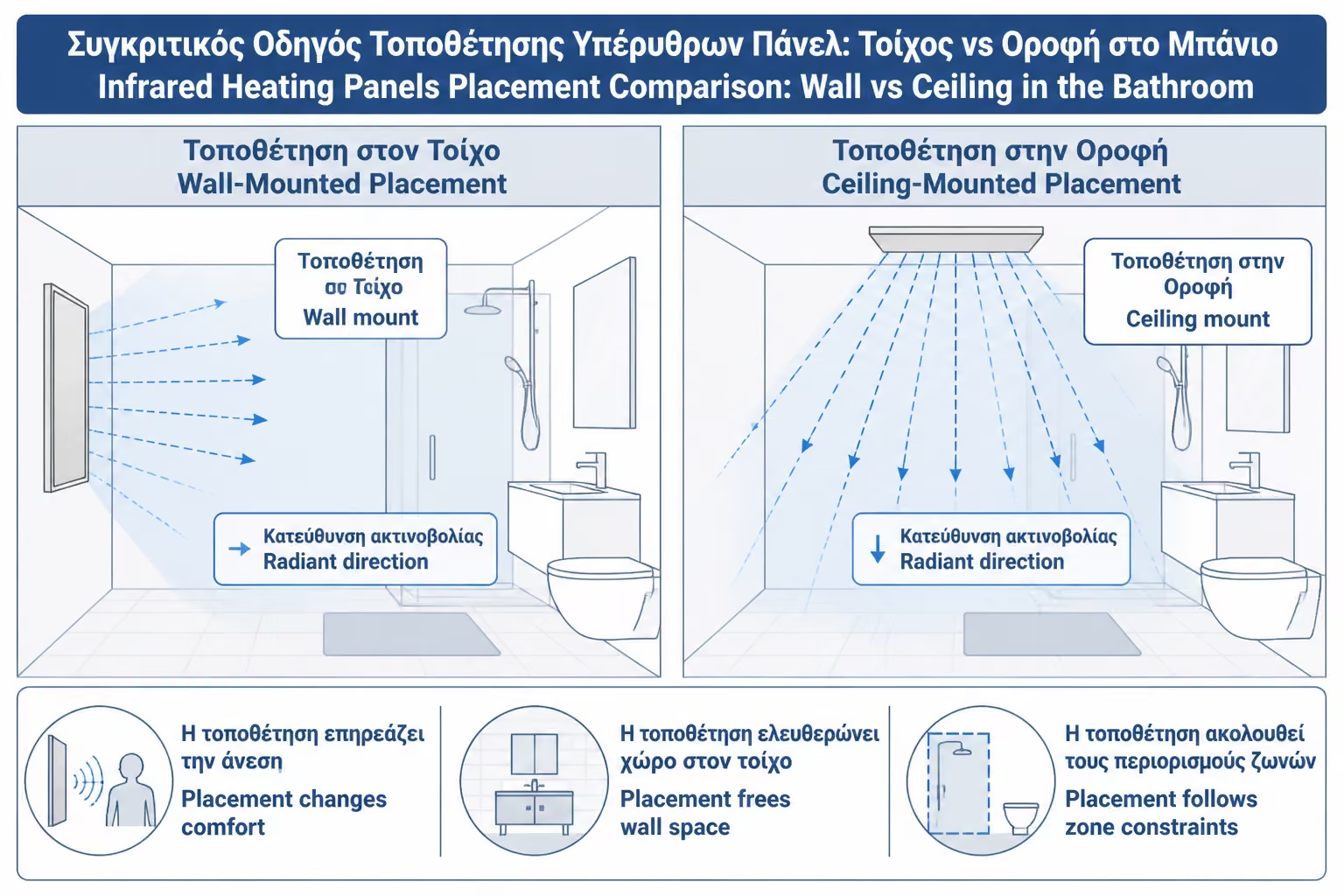
Position is decisive. The panel must "see" the area you want it to heat. If it gets behind a door, behind a piece of furniture, or in a place blocked by a cabinet, it will perform worse. Infrared heating requires a visual path to bodies and surfaces.
In a bathroom, good places are often the ceiling above the free use zone, a wall opposite the sink or an area outside the shower, always away from direct splashes and in accordance with the zones. Mirror panels can be practical, but they must have a suitable IP and a correct electrical installation.
Do not place panels where they will receive direct water from a shower. Do not put it behind towels, curtains or furniture. Do not treat it as a decorative frame without a thermal study.
The best position is one that combines thermal targeting, zone security and a clean electrical connection.
Output depends on size, insulation, whether the panel is primary or supplementary heating, location and use. For a small WC or a small bathroom, 300–500W panels can be enough as supplementary heating. For a larger or cold bath, 600–1,000W or more may be needed, depending on losses.
As a rule of thumb, you can start at 80–120W/m² for a well-insulated space and go up to 120–150W/m² for a colder bathroom. But since the infrared panels work directionally, the sensation strongly depends on the position. A properly placed 600W can feel more useful than a misplaced 800W.
| Space | Indicative power as supplementary heating | Comment |
|---|---|---|
| Small WC 2–3 sq.m. | 300–400W | If there is no strong humidity |
| Bathroom 4–5 sq.m. | 500–700W | Common practice class |
| Bathroom 6–8 sq.m. | 700–1,000W+ | Needs a heat-loss calculation |
| Cold bathroom with external wall | +15% to +30% | Per insulation/window |
| As a unique heating | Watt/BTU calculation | No "by eye" selection |
If the panel is the only heating in the bathroom, ask for a power calculation. If it is for comfort after the shower, it can be chosen more targeted.
The infrared panel is an electrical device in a wet area. So the same basic principles apply as with any electric bath heater: correct IP rating, correct zone, leakage relay, permanent installation and an electrician. It is not enough to say "bathroom panel" in the ad.
For areas near a bath or shower, bathroom zone guides often state that Zone 2 extends approximately 0.60m outside the bath or shower and that a minimum of IP44/IPX4 is required for electrical equipment in such zones, while in more exposed zones the requirements may be more stringent.
In Greece, the application must be made based on the applicable ELOT HD 60364-7-701 framework for spaces with a shower or sprinkler and with control by a licensed electrician. The panel must be selected for the specific location, not generally for "bathroom".
Be careful with the controller too. If the thermostat/control is in the wrong place, the problem is not just the panel. It's the whole handling system. Often the thermostat is placed outside the wet zone or outside the bathroom.
Wall panels are easy to install and can target a specific area. It is a good solution when there is a free wall that does not receive water and has a clear view of the user. It can act as a discreet heater.
Ceiling panels are particularly interesting in small bathrooms, because they do not occupy a wall. The radiation descends towards the floor and the user's body, and the panel stays away from direct splashes as far as the zone and IP allow. But it needs proper support and electrical provision.
Mirror panels are aesthetically pleasing and can reduce mirror fogging, but they must be sized correctly. A low-power heated mirror can help prevent fogging, but won't warm the bathroom sufficiently. Another mirror demister and another main infrared heater.
Location selection should be based on usage: where you stand wet, where you want comfort, where there is water, where a power line passes, and what zone applies.
Infrared panels can help prevent mold when the problem is associated with cold surfaces and condensation. If a wall is heated better, it can stay drier. If the bathroom stops being icy, water vapor has less opportunity to become droplets on surfaces.
But mold always has moisture as a basic condition. If the bathroom is not ventilated, if there is a leak, if the silicones remain wet, or if the luminaire returns moist air, the panel does not solve the problem. It can improve comfort but leave the cause active.
The correct sequence is: clean existing mold, correct moisture/leakage, vent, then heat as a preventative measure. If you put panels in a moldy bathroom without a vent, you'll just have a warmer bathroom that continues to hold moisture.
The infrared panel is a prevention tool, not a disinfection product.
In small bathrooms, the biggest advantage is that they do not take up space. A towel rail needs a wall, free access and space for towels. A ceiling panel or thin wall panel can be inserted more discreetly.
Second advantage is the immediate sensation. For a small bathroom that is used 15–30 minutes, an infrared panel with a timer can be practical. It doesn't need to raise the temperature of the whole house. Heats the wear zone.
Third advantage is the silent operation. In a small blind bathroom, a noisy fan and an air heater can be annoying. The panel has no moving parts.
The downside is that it doesn't offer towel storage or drying. In small bathrooms, you may need a combination: an infrared panel for comfort and a small towel rack or good ventilation for drying.
The first disadvantage is that it needs "vision" towards the area it heats. If one stands outside the radiated zone, the sensation is reduced. This differs from a system that heats all the air evenly.
The second is that it does not store heat like a hydraulic floor or a heavy body. When turned off, the direct radiant sensation is lost relatively quickly, although warm surfaces retain some heat.
The third is electrical consumption. If it is used for many hours every day as the main heating, it can be quite expensive. It is economical when it works in a targeted manner, not when it permanently replaces an efficient central system.
The fourth is security. It must be a fixed installation, with a suitable IP and an electrician. It should not be replaced by a portable infrared heater in the bathroom, because this completely changes the level of danger.
If you want warm and dry towels, the electric towel rail is more suitable. If you want a direct sensation of heat on the body and on surfaces, the infrared panel is more interesting. If you want both, maybe a combination is needed.
| Need | Better choice |
|---|---|
| Hot towels | Electric towel rail |
| Immediate feeling of warmth in the body | Infrared panel |
| Towel drying after shower | Towel rack |
| Small bathroom without free wall | Ceiling panels |
| Design without visible bodies | Infrared panel / ceiling |
| Moisture and mold | Ventilation + heating, not just one body |
| Use outside of central heating | Both, with a timer |
In many bathrooms, the best solution is a combination: infrared panel for user comfort and a towel rack for towels. If the budget or the space does not allow it, the choice is made based on the main need.
Don't buy a panel because it's "cheaper" without knowing what you want to heat. Buy it because it fits the way you use the bathroom.
Prices vary depending on power, size, design, if it is a white panel, glass, mirror, ceiling, with integrated thermostat or smart control. Installation depends on existing power line, zones, IP and need for new supply.
| Type / task | Indicative range 2026 | Comment |
|---|---|---|
| Small infrared panel 300–400W | €120–€300 | For WC or additional use |
| 500–700W panel | 180–500€ | Frequent category for bathroom |
| Large panel 800–1,000W+ | 300–800€+ | For larger spaces |
| Mirror panel | 250–900€+ | Design + function |
| Ceiling panels | 200–700€+ | It needs proper support |
| Thermostat / timer / smart control | 50–200€+ | If not included |
| Electrical supply/connection | 100–300€+ | Depending on bathroom and table |
If there is already a secure supply and the panel goes outside difficult zones, the installation cost is more controllable. If a new line is needed, cables moved, or ceiling mounted with special support, the cost goes up.
In any case, do not count only on the price of the panel. Calculate thermostat, installation, IP, security and location.
| Error | What it causes in practice | A more correct approach |
|---|---|---|
| Buy from design only | Insufficient heating | Power calculation |
| Placement behind an obstacle | Low performance | Clear line of sight to the area of use |
| Consider that it solves the ventilation | The moisture remains | Ventilator with timer/humidifier |
| Portable heater in the bathroom | Electrical hazard | Permanent panel with proper IP |
| No thermostat/timer | Useless consumption | Scheduled check |
| Wrong IP rating | Risk of moisture | Select by zone |
| Subsizing for "economy" | It works constantly without comfort | Correct power |
| Waiting for hot towels | Disappointment | Towel rack for towels |
| Placement near water | Risk of short circuit | Zone testing by an electrician |
| Cover with towels/clothes | Overheating/low performance | Panel free, not spreader |
The most common mistake is the claim "I put it on because I don't have good ventilation". No. You put it on for warmth and comfort. You fix the ventilation separately.
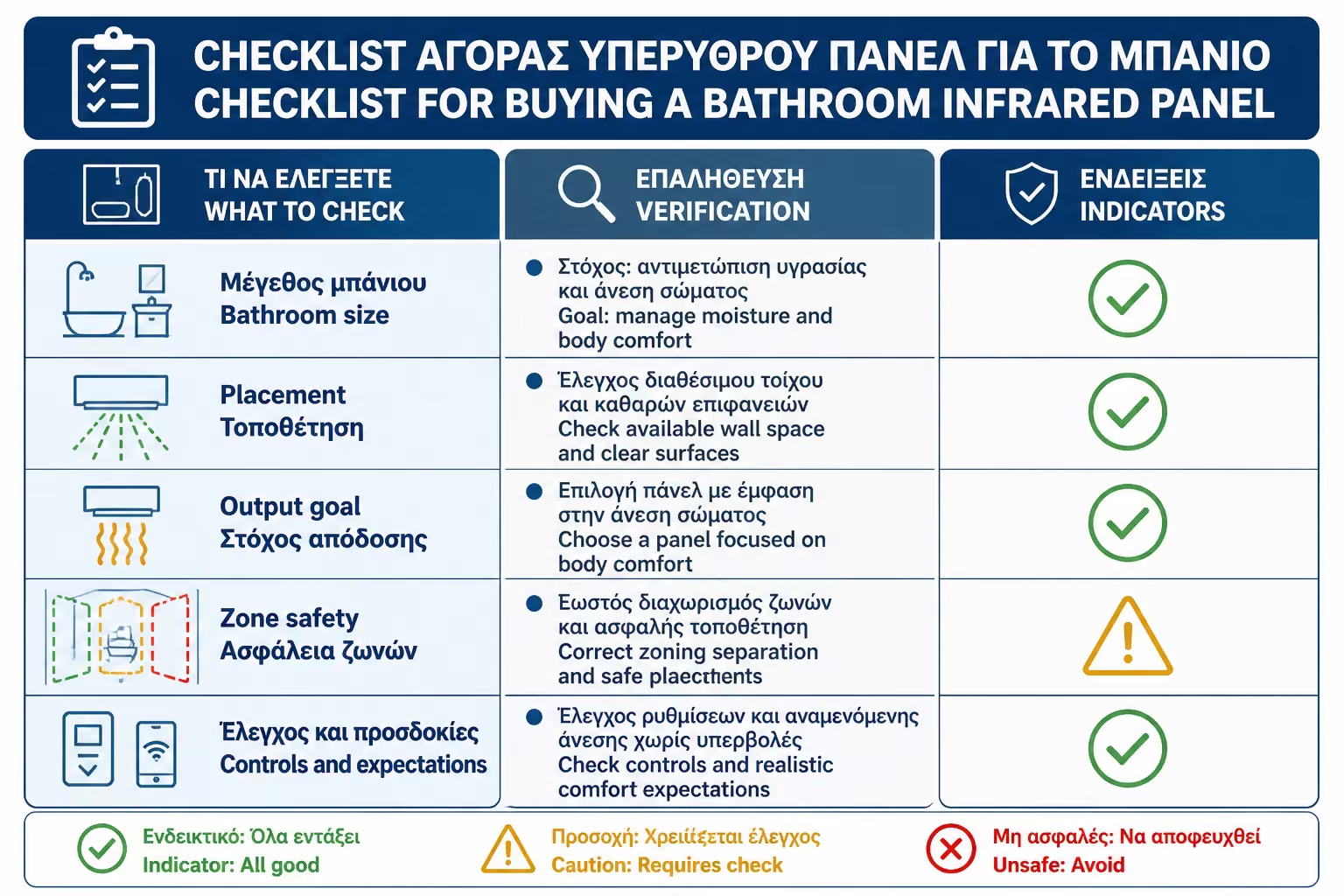
| Control | Yes / No |
|---|---|
| Do you want main or supplementary heating? | Yes / No |
| Has the required power been calculated in Watts? | Yes / No |
| Does the panel "see" the zone you want it to heat? | Yes / No |
| Does the location not receive direct splashes? | Yes / No |
| Has the bath zone and required IP been checked? | Yes / No |
| Will the installation be done by a licensed electrician? | Yes / No |
| Is there a leakage relay and correct supply? | Yes / No |
| Is there a timer or thermostat? | Yes / No |
| Not meant to be covered with towels or clothes? | Yes / No |
| Does the bathroom ventilation work independently? | Yes / No |
| If mold is present, has the cause of dampness been resolved? | Yes / No |
| Have you calculated running costs with your kWh rate? | Yes / No |
Infrared panels are a very good solution when you want an immediate feeling of heat in the bathroom without filling the space with bodies. But don't buy them with the myth that they "don't burn". Do what Watts write. Economy comes from proper location, proper power and timer. And above all, don't think of them as a ventilation solution. They heat surfaces and bodies, but do not emit water vapor. For a mold-free bathroom, both are needed: heating to prevent the surfaces from freezing and ventilation to remove moisture.
Infrared heating panels are an interesting, modern and aesthetically clean solution for the bathroom. They heat bodies and surfaces directly, offer a quick feeling of comfort, do not make noise, do not take up space on the floor and can be discreetly placed on a wall or ceiling. In small bathrooms, especially when the use is short and specific, they can be very practical.
But the savings are not automatic. An infrared panel remains an electric heater. The economy results when it works targeted, with a thermostat or timer, in the right zone and with the right power. If it is undersized or left on for too many hours, running costs can become significant.
For poorly ventilated spaces, infrared panels can help provide comfort and heat cold surfaces, but do not correct ventilation. They don't remove water vapor, they don't dry the air like a dehumidifier and they don't replace a fan. If there is mold or strong condensation, mechanical ventilation, proper heating and treatment of the cause are also needed.
The right purchase starts with three questions: how many watts does the bathroom need, where can it be placed safely, and what do you want it to heat. If the answers are clear, the infrared panel can become a very elegant and effective comfort solution. If bought simply because "it's new technology", it may disappoint.
Return to category.
Go to categoryReturn to the central guide.
Go to guide