
Bathroom Lighting, Ventilation & Heating
Return to category.
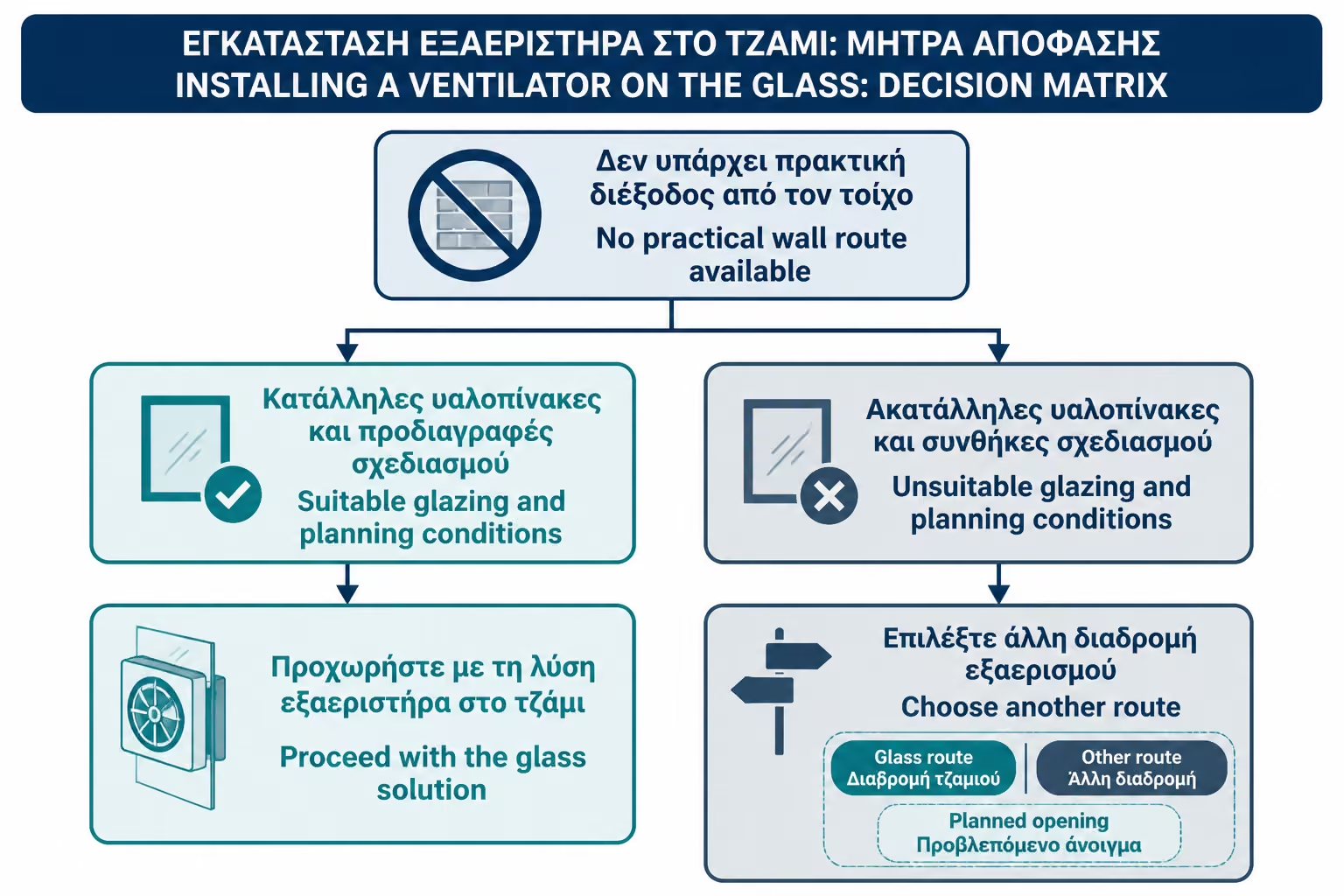
Go to categoryInstalling a ventilator on the glass is a solution that is mainly found in old apartments, small WCs, bathrooms with a window to a skylight or places where it is not possible to drill a new hole in the wall. If you cannot pass an air duct, if the external wall is difficult, if the apartment building does not allow interference with the view or if the bathroom already has a small window, the idea of putting the ventilator on the glass seems simple and practical.
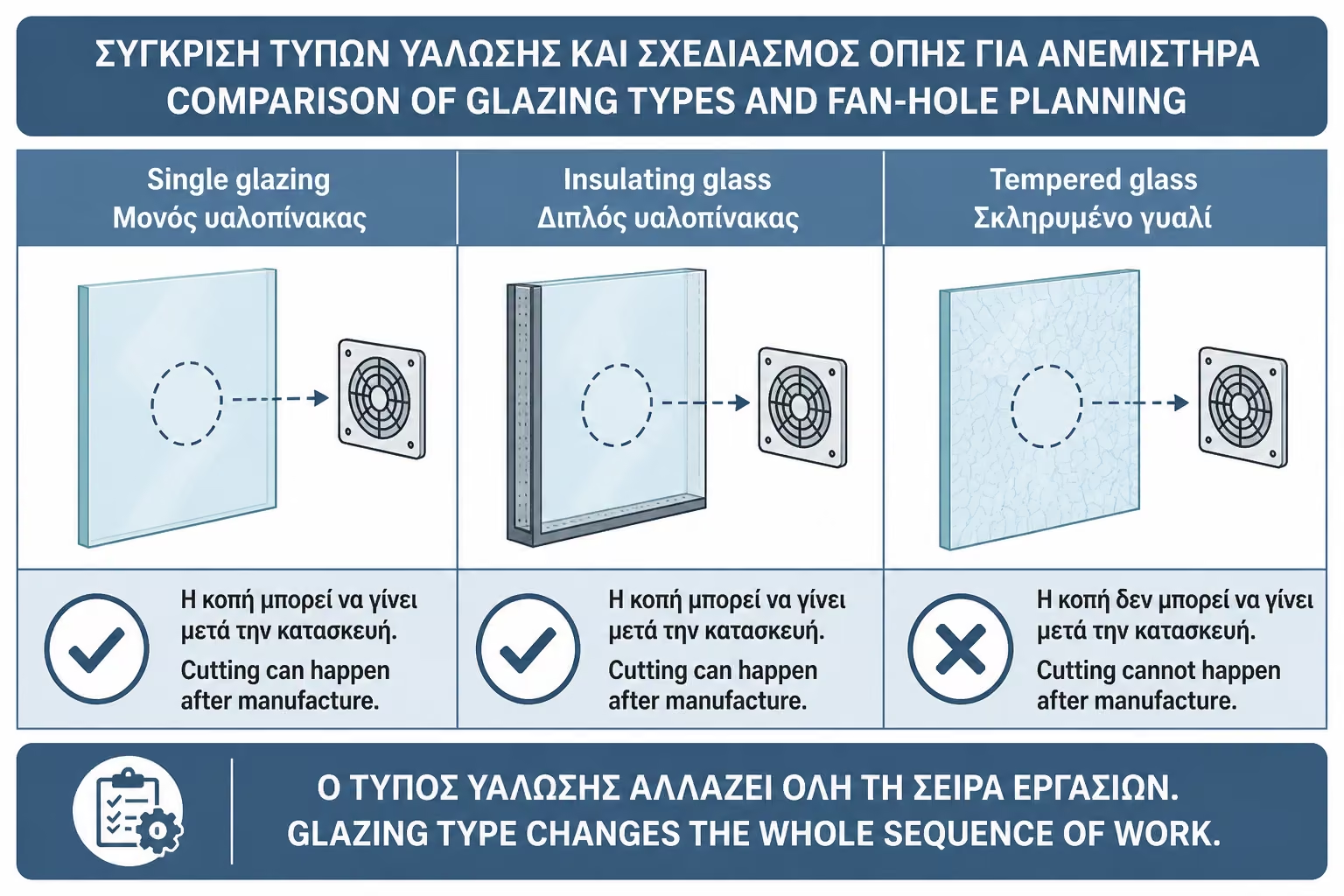
In practice, however, the solution needs a lot of attention. Glass is not a wall. It doesn't drill the same way, doesn't forgive the wrong diameter, and can't always be cut after it's already installed. Another old single plain glass, another double energy glass, another tempered/hardened safety glass, another small bathroom skylight. Whether cutting is done, where it is done and with what process depends on the type of glass.
The most frequent mistake is that the owner first buys a fan and then asks if the glass is "cut". In old single pane glass, a glazier can sometimes drill a hole with special tools, as long as the glass is not hardened and there is enough clearance from the edges. In double or triple glazing, however, the practical solution is not to cut the existing glass in place. A new glazing/new sealed unit with the hole preformed by the manufacturer is usually required, because drilling into existing double glazing destroys the tightness of the unit and can lead to fogging or loss of insulating properties.
Mounting on glass also has performance limitations. We are usually talking about small axial fans, suitable for short and direct extraction. It is not the ideal solution for a long air duct, a large supply or a blind bathroom with intense humidity. However, it is useful when we want direct output to a light fixture or outside space, without having to worry about the wall.
In this guide we will see when it is worth installing a ventilator in the glass, what applies to single and double glazing, how the cut is done, what you need to know before ordering new glass, what features the ventilator should have and what alternatives there are when the window is not suitable.
Glass mounting makes sense when the bathroom has a window, but there is no easy or allowable possibility of opening a wall. This is often the case in apartments where the bathroom wall is not external, where the only contact with air is a light fixture, or where a wall opening would create a large mess, appearance problem or technical difficulty.
It is also useful in small WCs or old bathrooms where the window is already in a convenient position for extraction. If the fan can blow the air directly out, without pipes and corners, the performance can be satisfactory for small spaces. In this case, windowing works like a simple direct extraction.
However, it is not the best solution for every bathroom. If the bathroom is large, if it is heavily used, if the shower is far from the window, or if the position of the window creates poor air flow, the solution may be modest. The fan will draw air from the window spot, but it does not mean that it will quickly remove water vapor from the entire bathroom.
Before you decide, you need to see the floor plan. Where does the air come in? Where is the door? Where is the shower? Is the window opposite the door or right next to it? If the flow is correct, the solution can work well. If the air takes a "short cut", the effect will be limited.
In old bathrooms there may be only one simple crystal. This is the simplest case for installing a vent in the glass, because the glazier can, under conditions, drill a hole in the glass or replace the glass with a new one that has been cut to the correct dimensions.
Even here, though, we're not talking about sketchy DIY work. The hole must have the correct diameter, be made with a suitable tool, have enough distance from the edges of the glass and not create cracks. If the crystal is old, thin or stressed, it may break during cutting. If it is safety hardened, it is not post-cut in the usual way.
The correct procedure is to first select the vent, read the required hole diameter from the manufacturer, and then give the details to the glazier. We don't "roughly" make a hole. The vent frame must fit properly, clamp the crystal without over-pressing it, and seal.
In many cases, even if theoretically cutting the existing single pane, it is safer to order new glass with the correct hole. So, if something goes wrong, the bathroom is not left without glass and we don't risk breaking old material.
Double energy glazing is not just two sheets of glass. It is a sealed unit with a gap, spacer, often filling gas and special coatings. If we drill or cut an existing double glazing, we destroy the tightness of the unit. This can lead to fogging between the panes, loss of thermal insulation performance and practically nullifying the function of the double glazing.
Therefore, in double or triple glazing, the correct approach is usually a new glazing unit with a factory-prescribed hole. The glazier measures the existing glass, determines the location and diameter of the hole, and orders a new sealed unit that is manufactured with the hole from the beginning. Sources from glazing companies and practical installations say that for double glazed units the solution is new glass/new unit with a pre-formed hole, not cutting the existing sealed glass.
This increases cost and time. It is not a "half an hour" job. It requires measuring, ordering, manufacturing, glass replacement and then installation of the ventilator. If the window is small and the cost of new double glazing is high, it may be worth considering another solution, such as a suspended ceiling vent or replacing a small section with panels.
The important thing is not to attempt to drill through existing double glazing as if it were simple single glass. The risk and the end result are not justified.
Toughened safety glass, also known as tempered, has undergone a special heat treatment. This makes them more resistant to impact and thermal shock, but means they cannot be cut or drilled after hardening. If cutting is attempted, the glass may shatter.
If a hole is required in such a crystal, the hole must be provided prior to the curing process. That is, a new glass is made with the right dimensions and the hole in the right place, and then it is hardened. In reports of glass applications it is pointed out that toughened/tempered glasses are not cut in situ and that the holes must be provided during manufacture.
How does the owner know if the glass is tempered? It's not always obvious. There may be markings in the corner, but not always visible. In newer frames, in doors, in low points or in specific security applications, safety glass is more likely to be used. The glazier should check this before suggesting a cut.
If the glass is tempered, the solution is to replace it with a new specially made glass or choose another ventilation position. There is no foolproof "trick" to drill a hole afterwards.
The correct order is not to cut a hole and then find which vent fits. First, the ventilator is selected, or at least its category, so that we know exactly the hole diameter, the thickness of glazing it accepts, the tightening method, the flow rate, the IP protection and if it has backflow.
Then the glazier checks if the existing glass can be cut or if a new one is needed. If it is a double crystal, a new unit with the hole must be ordered. If it is a single pane, it can be decided whether to cut the existing one or to replace it with a new one.
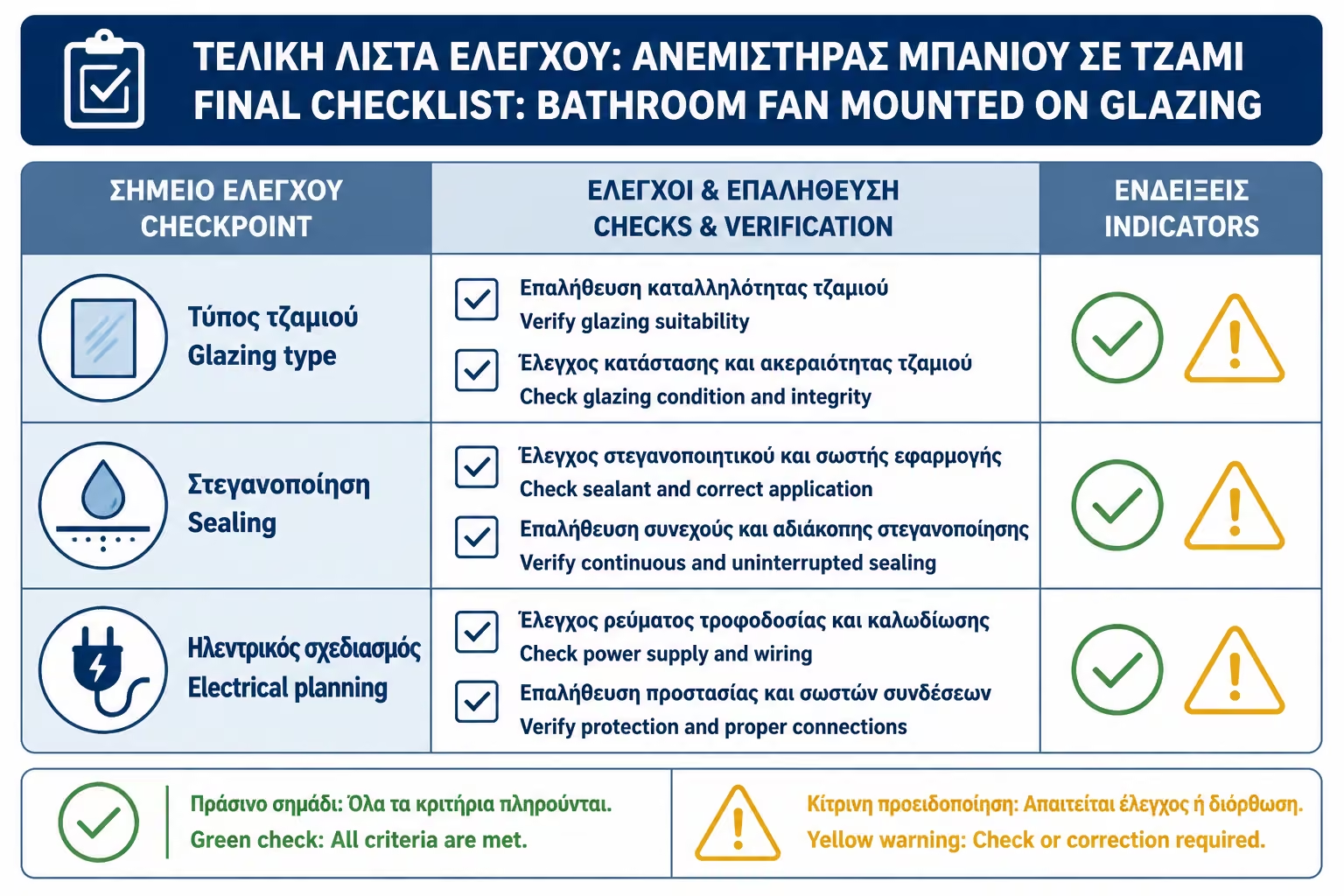
Then the glass and the ventilator are installed. The electrical connection must be made by a licensed electrician, especially if the ventilator has a timer, a humidistat or a permanent power supply. The fact that the fan goes into the glass does not make the electrical installation any less serious.
Bad order leads to mistakes. If the wrong diameter hole is cut, the vent may not be attached properly. If the wrong position is selected, the fan body may not fit due to the frame or leaf. If the thickness of the double glazing is not calculated, the model may not apply.
Each window vent has a specific hole requirement. It may be referred to as cut-out diameter or hole diameter. This dimension is not the same as the outer cap diameter. The cap can be larger to cover the hole, but the actual cut must fit the body of the device.
If the hole is smaller, the vent does not fit. If it is larger, it may not press properly, may not seal, create vibrations or press the glass incorrectly. In glass, there is no easy fix. It's not like a wall where you can fill the void with plaster or foam. Crystal needs precision.
The location of the hole must also have clearance from the edges. Many glaziers ask for minimum safety distances so that the glass does not become brittle around the hole. For example, glass cutting companies report that a significant distance from the edges is required, while for toughened glass the requirements are even stricter.
Before ordering, the glazier must be given the technical details of the fan, not just a product photo.
The window ventilator should usually be placed as high as possible in the available window, because warm moist air rises. If placed low, it can remove water vapor that collects near the ceiling less effectively.
But there must be enough distance from the frame, from hinges, from reclining mechanisms and from the edges of the glass. If the window is small, there may not be enough room for a proper hole. In this case, a smaller fan or other solution may be needed.
The position must also respect the air flow. If the bathroom door is right next to the window and the fan goes in there, the air can come in through the door and leave right away, without going through the shower. If the window is opposite the door or close to the moisture zone, the solution is better.
In practice, we don't choose a position based only on where the device fits. We choose a position based on glass, frame, safety and air flow.
Many modern bathroom frames are hinged or tiltable. If a ventilator is placed on the glass, it must be checked whether the sash will continue to open, whether the ventilator is on the frame, wall, screen, shutter or railing, and whether the weight affects the operation.
On small tilt windows, installing a vent can make the opening awkward. The fan body may protrude and prevent reclining. It can also make cleaning difficult or wear mechanisms if the sheet is not designed for added weight.
Before placing the order, a test with the dimensions of the device must be done. It is not enough to fit the hole in the glass. It must fit the entire body of the fan, inside and out. If there is a roller, shutter or screen, this should also be checked.
In some cases, it is better to replace a small fixed part of the window with new glass that has a hole, rather than to put the ventilator in a movable leaf that is opened every day.
The installation on the glass must be watertight. We don't want water, air, insects or dust to get in around the fan body. The vent must be properly clamped to the crystal and have suitable gaskets or seals as per the manufacturer.
Care must be taken in excessive pressure. We do not tighten the glass like a sheet metal. If the fan is pressed incorrectly or if the hole has micro-cracks, breakage may occur. Installation should be done with gentle, even tightening.
On the outside, there must be protection from rain, especially if the window is exposed. If the window faces a skylight, rain may not be a big deal, but dust and odors are. If facing the exterior, the exterior face of the fan must be suitable for weather exposure.
Watertightness is not just a matter of water. It's also a matter of air. If there are gaps around the fan, cold air will enter when it is off and comfort will be reduced.
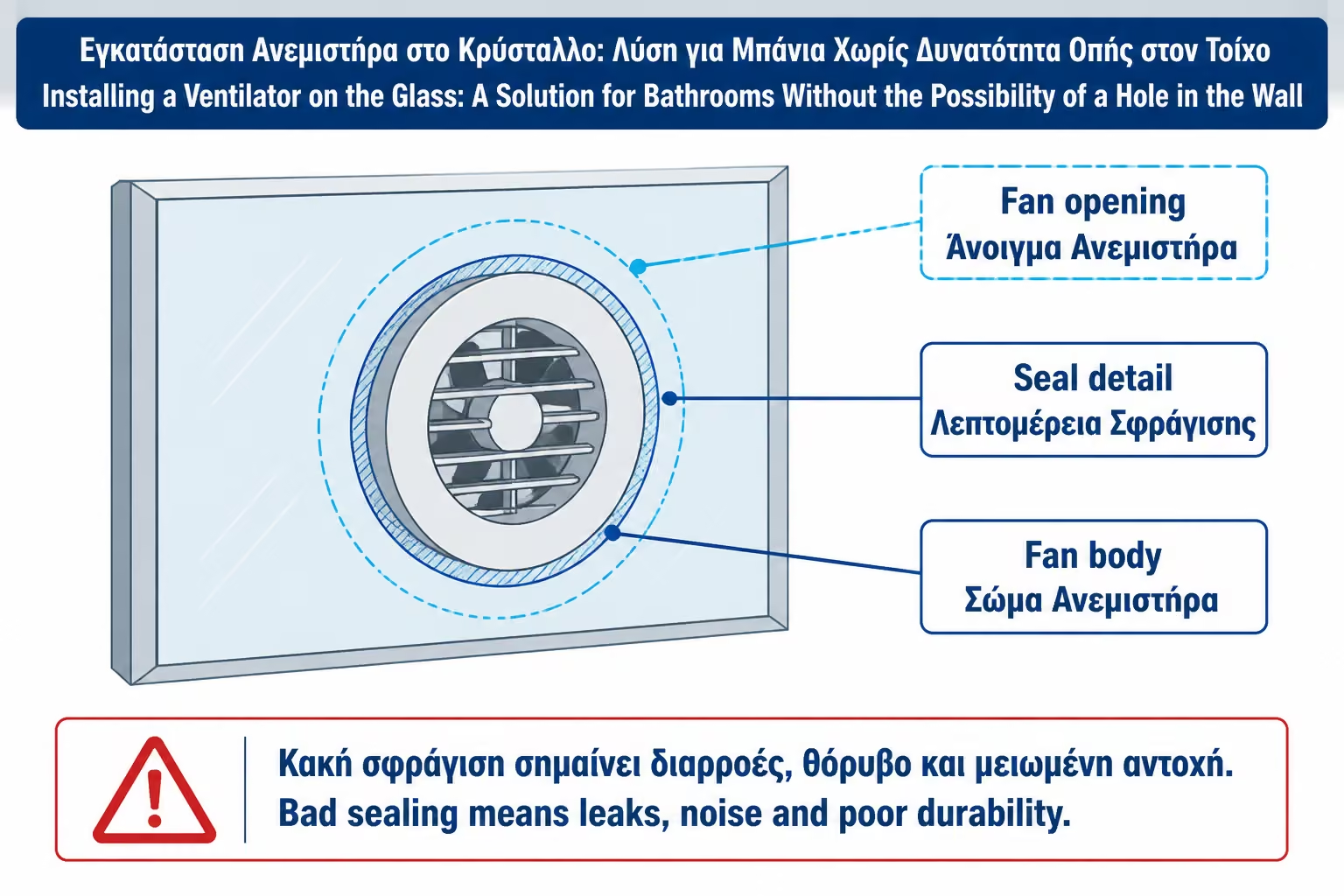
The window vent should ideally have a non-return valve or external flap. When the fan is off, the opening in the glass is a direct path to the outside. Without return, cold air, lamp odors, dust or insects can enter.
In luminaires, feedback is particularly important. If other areas vent at the same light fixture, odors can back up into your bathroom. If the fan only has a simple front without a flap, the problem may remain.
But the return must open easily. Small window fans do not always have a lot of pressure. If the valve is too heavy, it will reduce the flow. If they are too light, they may flap in the wind. The option must be compatible with the device.
A good non-return valve is a small detail that makes the glazing solution much more comfortable in everyday use.
The ventilator is an electrical device in a wet room. Even if it goes into the glass, the connection must be done correctly. The position, the IP protection, the wiring, the existence of a leakage relay and the way of operation must be checked: switch, light connection, timer or hygrostat.
In old bathrooms, the window may be located where there is no nearby water supply. Roughly running a cable over tiles or near water is a mistake. If a new line is needed, it must be done by an electrician. If the fan has a timer, it may need a permanent phase and return from a switch. If it has a hygrostat, it must be properly powered to work even when the light is off.
The location of the switch also matters. It should not be placed in an inappropriate zone. In bathrooms with a shower or bathtub, special requirements for electrical installations apply and the electrician must assess the location of the device and the connection.
The glazier deals with the glass. The electrician with safe operation. Both are needed.
Glazing ventilators are usually axial and suitable for direct extraction. This is good because they don't have a large airway to overcome. On the other hand, the diameter and size are limited by the window. It is not always the solution for very large benefits.
For a small WC or a small bathroom, a properly selected glass ventilator can be enough. For master bathroom with daily hot showers, care is needed. The volume of the bathroom must be calculated and a supply selected to cover the use. If the bathroom is 5–6 sq.m. and has high humidity, a very small window fan may not be enough.
The advantage is direct export. If the fan blows directly outside, the actual duct loss is small. So the rated output may be closer to the actual output than a fan pulling through 3–4 meters of pipe.
But the supply must be combined with proper air intake from the door. If the door is fully closed with no gap, the window vent will struggle like any other fan.
The window vent is usually visible and the motor is located on the window itself. The crystal and bezel may transmit vibrations. If the mounting is not stable, humming, rattling or resonance may be heard.
Compared to an in-line fan, the window fan is usually more immediately audible in the bathroom. This is why dB(A), motor quality and proper mounting must be considered. A cheap, noisy window fan can become annoying, especially if it's on a timer after you shower.
Noise can also come from external shutters or blinds. If it is blowing in the light or in the face, the flaps may rattle. If the recoil is sketchy, it may go tock-tock when the pressure changes.
Choosing a quiet model is important, but not enough. It needs stable mounting on the glass, proper sealing and quality components.
The installation on the glass is practical, but aesthetically it does not suit every bathroom. The ventilator can be seen on the window, both inside and outside. If the bathroom is aesthetically pleasing, with minimal lines and a clean window, a plastic body on the glass can look sketchy.
In old WCs or utility bathrooms, this may not be a problem. In a master bathroom with a higher aesthetic, an in-line solution with a discreet grille or false ceiling ventilation may be preferred, if it is technically possible. If the only solution is glass, it is worth choosing a model with a cleaner design and a color that matches the frame.
The exterior image should also be considered, especially if the window faces a view or shared space. In apartment buildings, there may be restrictions or aesthetic issues with exterior facades, especially on exposed sides.
Function is the first priority, but in a bathroom renovation aesthetics should not be ignored.
When double glazing is expensive or difficult to order with a hole, an alternative is to replace a small section of glazing with insulating panel or other suitable material in which a hole can be more easily drilled. This solution is often used in auxiliary frames, doors or small fixed sections, when aesthetics and thermal insulation requirements allow it.
The advantage is that the hole can be made more easily and at less cost than new double glazing with a hole. The downside is that it changes the appearance of the frame and maybe reduces the brightness. Also, the panel must be suitable for moisture, external exposure and tightness.
In a small bathroom or WC to a light fixture, it can be a practical solution. In a master bathroom with an obvious window, it may not be aesthetically acceptable. In any case, it should be done by a technician who knows frames and seals.
This solution is worth considering when the existing glazing is double/insulated and replacement with new perforated glazing is prohibitively expensive.
Mounting on the glass is not always the best option. If it is possible to open a wall to the outside, this can be a more robust and cleaner solution. If there is a suspended ceiling and the possibility of in-line ventilation, it can offer a better suction position and lower noise. If there is already a vent, it may be worth improving it rather than tampering with the window.
Prefer another solution if the window has expensive energy double glazing and the hole will require expensive replacement, if the glass is too small, if the window is opened often and the ventilator will block, if the position of the window is bad for flow or if aesthetics are important.
Opt for glazing when the extraction is immediate, the window is in a suitable position, the glazing can be replaced or cut safely and the cost is reasonable compared to alternatives.
The right choice is not "glass or wall" in general. It is which solution best serves the specific bathroom.
The cost depends on the type of glass, size, whether it is single or double, whether new glass is needed, ventilator model, electrical connection and access. It is also affected by the area, the type of frame, whether VAT is included and whether the work is done as part of a total renovation.
| Work / material | Indicative range 2026 | What affects the price? |
|---|---|---|
| Simple window ventilator | 40–150€ | Supply, noise, return |
| Cut in single plain glass | 40–120€+ | Size, access, risk of breakage |
| New single glass with hole | 60–180€+ | Dimensions, thickness, cut |
| New double glazing with hole | 150–400€+ | Dimensions, energy characteristics, construction |
| Part replacement with panel | 100–300€+ | Material, frame, tightness |
| Electrical connection | 80–250€+ | Wiring, switch, timer |
| Complete solution with glass + fan + connection | 250–700€+ | Complexity, product, access |
Prices are indicative and may vary significantly. In plain old single glazing, the solution can be relatively economical. In a dual energy crystal, the need for a new unit can raise the cost quite a bit. If a new power line is also needed, the total cost increases.
The quote must clarify whether it includes the glazing, hole, fitting, vent, electrical connection, waterproofing, VAT and any repairs.
Errors in the glass are more difficult to correct than errors in the wall. That is why care is needed before cutting or ordering.
| Error | What it causes in practice | A more correct approach |
|---|---|---|
| Buy a fan before the glass is checked | The hole may not be made | Glazing check by a glazier |
| Attempting to cut double glazing on site | Damage to tightness | New double unit with hole |
| Cutting tempered glass | Risk of breakage | New glass with hole before hardening |
| Incorrect hole diameter | Poor fit or inability to fit | Manufacturer's technical data |
| Hole too close to edge | Risk of cracks | Keeping safe distances |
| Placement on movable sheet without control | It prevents the opening | Check dimensions and mechanisms |
| No return | Cold air, smells, insects | Model with damper or external flap |
| Rough electrical connection | Danger and malfunction | Licensed electrician |
| Very little supply | Moisture does not go away | Calculation of m³/h |
| Ignoring aesthetics | Bad effect on the window | Choose a distinctive model or other solution |
A typical example is an owner who has a new energy-efficient bathroom window and requests that it be "drilled" for a ventilator. If an attempt is made on site, the glass loses its tightness or breaks. The correct solution is a new unit with a hole or alternative vent location. This should be said from the start, not after the device is purchased.
| Inquiry | Yes / No |
|---|---|
| Has it been checked whether the glass is single, double or tempered? | Yes / No |
| Did the glazier confirm if the existing glass is being cut or if new is needed? | Yes / No |
| Have you selected a vent and do you know the exact hole diameter? | Yes / No |
| Does the hole have sufficient distance from the edges of the crystal? | Yes / No |
| Will the window continue to open or tilt without obstruction? | Yes / No |
| Is there room inside and outside for the fan body? | Yes / No |
| Does the fan have a return or an external flap? | Yes / No |
| Is the flow m³/h sufficient for the volume of the bathroom? | Yes / No |
| Is there a gap under the door for air intake? | Yes / No |
| Does the window position help the flow from the door to the exhaust? | Yes / No |
| Will the electrical connection be done by a licensed electrician? | Yes / No |
| Does the quote include glass, vent, vent, waterproofing, labour, VAT and electrical? | Yes / No |
If you are considering a window ventilator, don't start by buying the fan. Start with the type of crystal. If it is a single plain glass, there may be a solution of cutting or replacing it. If it is double energy, it usually needs a new sealed unit with a ready hole. If it is tempered, it is not cut after manufacture. Have the glazier and electrician look at the spot together before ordering. In glass, the mistake is not easily corrected with a little plaster. It wants correct diameter, correct position and secure connection from the start.
Installing a ventilation fan on the glass can be a very practical solution for bathrooms where a hole in the wall is not drilled. It is particularly useful in small WCs, old bathrooms with a window to a skylight and areas where we want direct extraction without a network of pipes. When the window is in the right position and the glass can accept the operation, the solution can work satisfactorily and with limited considerations.
But it is not a solution that is done casually. The type of mosque determines the process. The single single crystal can, under conditions, be cut or replaced. Double energy glass usually requires a new unit with a factory hole. Toughened glass is not cut after manufacture. These differences must be clarified before the ventilator is purchased.
The final success depends on many details: correct hole diameter, sufficient distance from the edges, compatibility with the frame, backflow, tightness, low noise, correct m³/h flow rate and secure electrical connection. If any of these are overlooked, the result can be noisy, ugly, inadequate or dangerous.
If your bathroom does not allow a hole in the wall, glass is a solution worth considering. But it should be looked at by a glazier and electrician, not just the shop that sells the vent. With proper study, it can give simple and direct derivation. Roughly applied, it can damage a crystal and not dissolve moisture.
Return to category.
Go to categoryReturn to the central guide.
Go to guide