
Bathroom Lighting, Ventilation & Heating
Return to category.
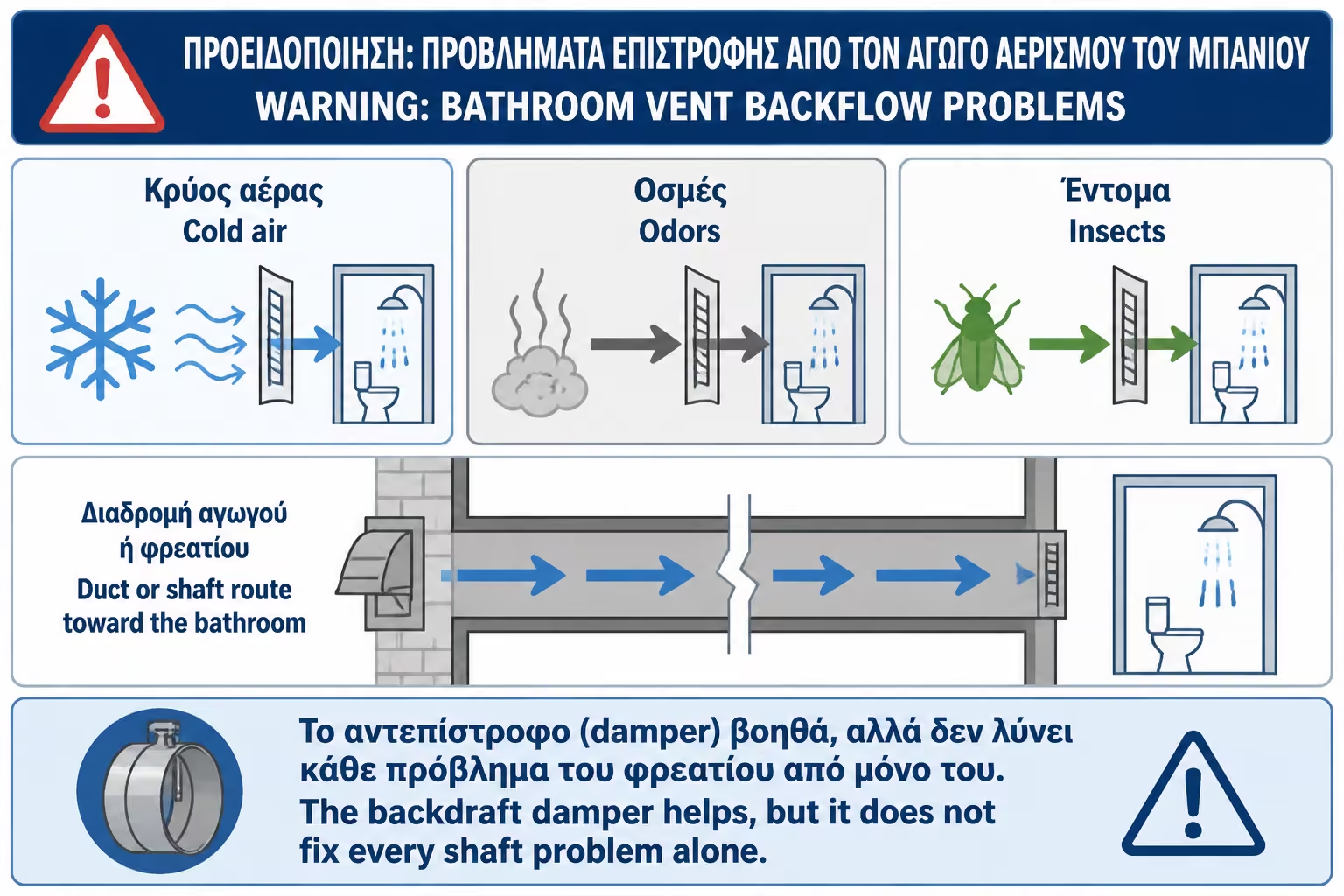
Go to categoryThe bathroom fan has a simple purpose: to push humid and heavy air out. In practice, however, the ventilation network does not always work in only one direction. When the fan is off, the air duct can be reversed. Cold outside air, odors from a light fixture, air from a communal well, dust or even insects can enter from there.
This is one of the most annoying problems in apartment buildings bathrooms. The owner has a fan, the fan works when it is on, but when it is off, there are smells coming from the grill. Sometimes the bathroom smells like there is a problem with the drain, when in fact the smell is coming from the light pipe or the vent. Other times, especially in winter, the bathroom gets cold because air is coming in from the fan outlet.
The non-return valve, also known as a backdraft damper or backdraft shutter, exists precisely for this reason. It allows air to escape when the fan is running, but restricts backflow when the fan stops. It is a small accessory, often inexpensive compared to the total cost of the renovation, but it can significantly improve the comfort and hygiene of the bathroom.
But it is not a magic solution for everything. If the luminaire has a strong odor problem, if the common vent is incorrectly designed, if the outlet is blocked or if the vent is weak, the non-return valve helps but does not always eliminate the problem. Also, if incorrectly selected or placed carelessly, it can reduce the fan's performance, make noise or stick.
In this guide we will see what a non-return valve is, how it works, where it is placed, what types there are, what to look out for in bathrooms with a light or external outlet, when it is necessary and what mistakes to avoid.
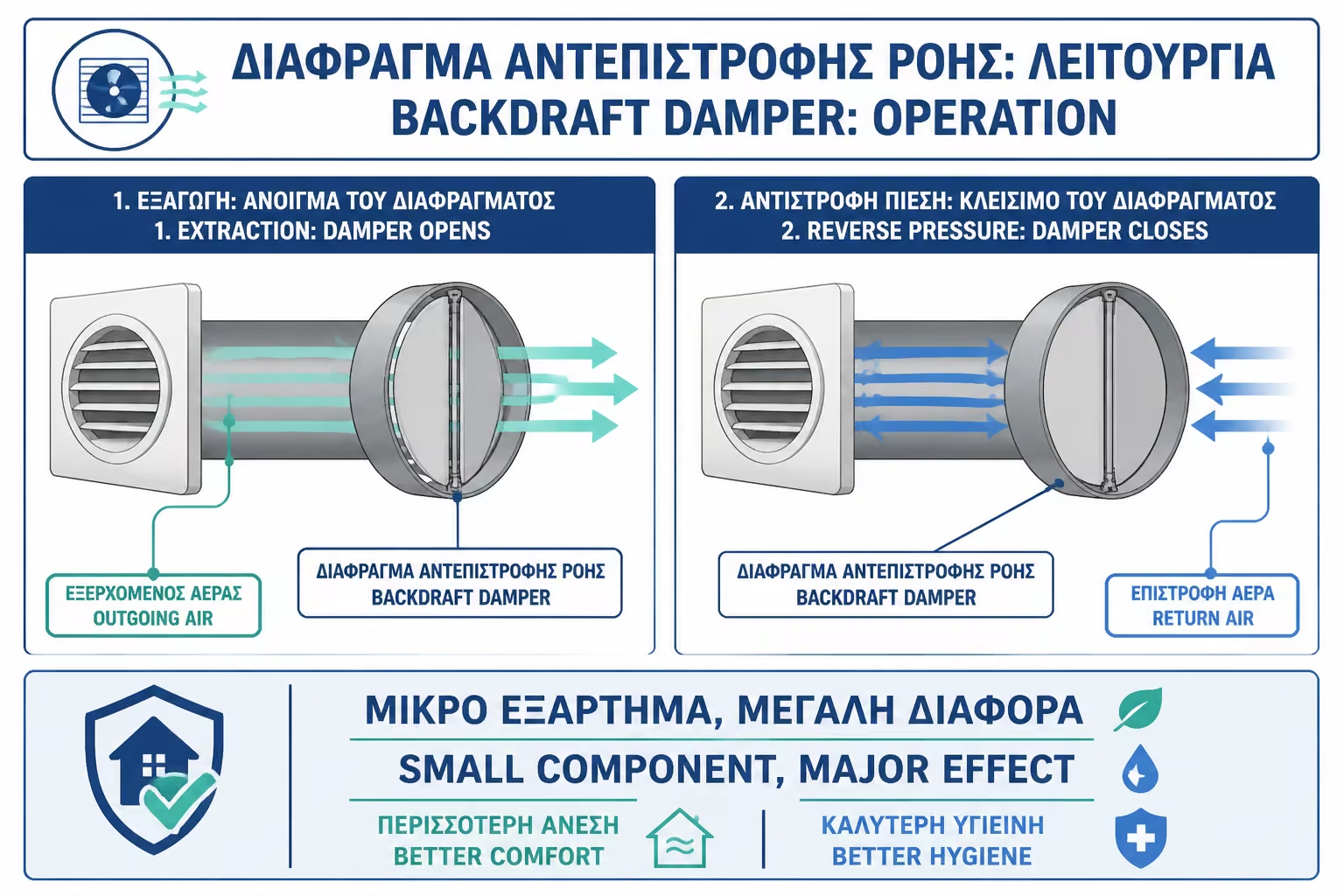
A check valve is a component that allows air to flow in one direction and restricts the opposite. In bathroom ventilation, the correct direction is from the bathroom to the outside. When the fan operates, the air pressure opens the valve and the moist air escapes. When the fan stops, the valve closes and prevents the air from returning.
In its simplest form, it can be a plastic flap behind the vent or on the outer grill. In more elaborate installations, it may be a separate fixture inside the air duct, with light leaves, a spring, or a special mechanism that opens with the flow and closes when it stops.
Its function is passive. It does not necessarily have a motor or electrical part. Reacts to air flow. This makes it simple and reliable, as long as it is properly dimensioned and clean. If the valve is too heavy or hard, a small fan may struggle to open it. If it is too light and loose, it can flap in the wind and make noise.
The non-return valve does not replace the ventilator. He works with him. The fan exhausts the air. The valve makes sure it doesn't back up when the fan is off.
In bathrooms that open onto an exterior wall, roof, or roof, the vent is essentially a small passageway to the outside environment. When it is windy or when there is a temperature difference between inside and outside, the air can move in reverse. Thus, in winter, cold air can enter the bathroom through the ventilation grille.
This is not just a matter of comfort. Cold air can make the bathroom colder, locally increase condensation around the grille and create a drafty feeling. In small bathrooms, even a small uncontrolled air intake is noticeable, especially when the space is close to a bedroom or when the bathroom is heated with a towel rail.
The non-return valve acts as a "door" that closes when the fan is not working. It does not make the installation completely airtight, especially if it is a simple plastic valve, but it significantly reduces unwanted air ingress.
In more demanding cases, for example in areas with a lot of wind or in exits to the roof, attention is also needed to the final external grille. If the grille is exposed to the wind, it may press the valve or make noises. There the solution is not only the valve, but also a proper external end.
In many apartment buildings, the bathroom ventilation exits into a skylight. The luminaire can serve several apartments, several kitchens, bathrooms or auxiliary spaces. If the vent has odors, isn't properly ventilated, or other vents are pushing air toward it, odors can return through the bathroom vent.
This is especially annoying because the owner often looks for the cause in the drain. It checks faucets, basin, sink, silicones, when in fact the smell is coming from the ventilation. A simple test is to smell near the grill when the fan is off, or to observe if the smell occurs when other apartment fans are running.
The non-return valve reduces the return of odors from the luminaire to the bathroom. When your own fan is off, the damper closes and restricts air from entering the common area. However, it does not always solve the problem 100%, especially if the light fixture has very strong odors, if there is negative pressure in the bathroom or if the valve does not close properly.
If the smell is strong and continuous, the valve is necessary, but it is good to check the overall condition of the luminaire, cleanliness, the existence of common outlets and possible returns from other fans.
The ventilation duct is an opening. If the outside is not properly louvered or if the return is left open, dust, small insects or even small leaves/dirt can enter there, depending on the location of the outlet. At exits to a skylight, the problem can be even more pronounced, because skylights often collect dust, moisture and organic debris.
The check valve is not an insect trap, but it helps. When closed, it reduces the opening to the bathroom. If combined with a proper external grill or screen, it further limits the entry of insects. But be careful: a screen that is too dense can cut off the air flow and reduce the fan's performance.
This is one of the points where balance is needed. We want protection from insects, but we don't want to "suffocate" the ventilation. A grille with a suitable free cross-section and an easy-to-open valve is usually a better solution than a very dense screen that fills with dust and reduces the flow.
Insect protection must be maintained. If the screen or grill becomes clogged, the fan will make more noise and draw less air.
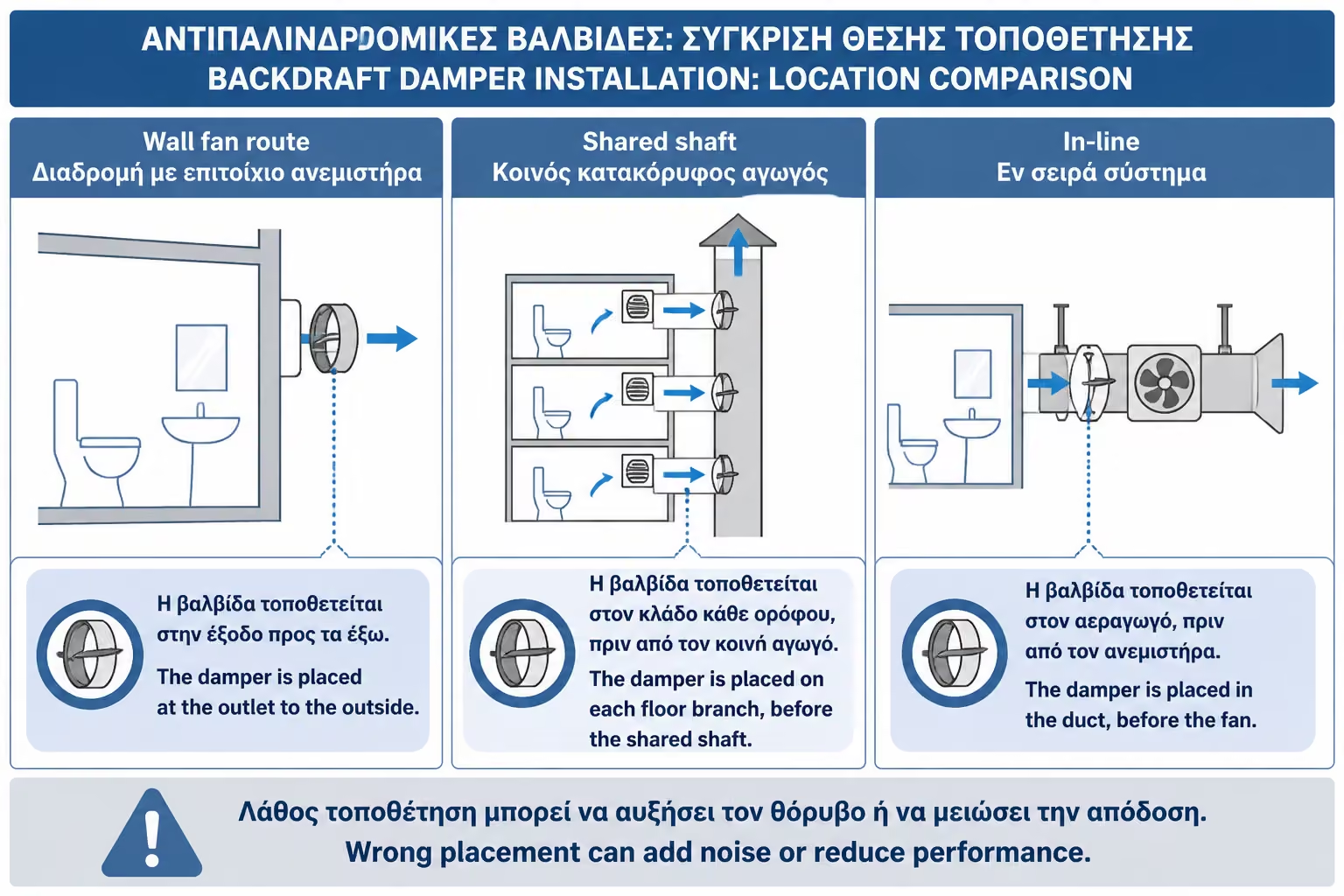
The non-return valve can be located in different parts of the system. It can be integrated into the ventilator itself, behind the face or in the outlet. It may be a separate fitting inside the tube. It can also be present on the outer grille, as a flap that opens outwards.
The correct location depends on the installation. If the vent is wall-mounted and exhausts almost directly outside, the built-in or external valve may be sufficient. If there is a vent in a suspended ceiling, a valve can be placed in the line, in a place accessible for inspection. If there is an in-line fan, the return must be placed on the correct side of the mains to prevent returns from the outlet.
| Valve position | Advantage | What to watch out for |
|---|---|---|
| Integrated in the ventilator | Simple solution, easy purchase | It may be small or of low quality |
| Inside the airway | Better position control | It wants access for maintenance |
| On the outside grill | Protects from outside air | It can blow with the wind |
| In an in-line system | Controls the return to the network | It has to go in the right direction |
| In a light fixture | Reduces odors from common areas | Needs resistance check and cleaning |
The main thing is that it can be cleaned or checked. A valve closed in a suspended ceiling without access can cause a problem if it sticks.
There are different types of valves. The simplest is the single flap, a leaf that opens with the flow of air and closes when it stops. There are also double butterfly flaps, where two semicircular leaves open outwards. There are external gravity louvers, where small flaps open when the fan is running and close when it stops. There are also neater valves with a spring or tighter fit.
Each type has advantages and disadvantages. Very light flaps open easily with a small fan, but may flap in the wind. The sturdier ones close better but may require a stronger flow to open. External blinds are practical, but if they are cheap they can be noisy. Spring-loaded valves may seal better, but increase resistance.
| Type | Where does it fit? | Possible downside |
|---|---|---|
| Single flap | Simple installations, small pipelines | It may not close perfectly |
| Butterfly damper | Round vents | It needs proper diameter and cleaning |
| Gravity shutter | External exits | It can blow with wind |
| Spring | When we want better closure | It can add resistance |
| Integrated in the fan | Simple replacements | Not always the best quality |
The selection must match the ventilator's supply. A heavy valve on a small fan may not open properly. A very light on exposed external output can knock and disturb.
Yes, it can reduce it if it is wrongly selected or of poor quality. Every component inside the airway creates some resistance. The check valve is no exception. When the fan is running, it must open the valve and push air through it. If the valve is tight, hard or sticking, it reduces the actual flow.
That doesn't mean you should avoid it. In most bathroom installations, especially in light fixtures and external outlets, the valve is very useful. But it means that it must be chosen correctly. Its diameter must match the pipe. The leaves should open easily. The grill should not be too closed. The installation must allow clear flow.
A common mistake is to fit a cheap valve with too small an opening into a system that already has a long vent and a weak axial fan. The owner partially solves the issue of smells, but the ventilation becomes weaker. The correct solution would be a better valve or a stronger/better vent for the added resistance.
The valve must protect without choking the flow.
A check valve can make noise if it is not properly selected or if it is in an exposed location. The most common noise is the clapper when blowing or when the fan starts and stops. There may also be whistling if air passes through a small opening at high speed.
On outdoor louvered grills, wind can cause the flaps to flap. This can be heard in the bathroom as a small tick-tock or a plastic snap. In a skylight, pressure differences from other vents can also move the valve.
The solution depends on the cause. It may need a better quality valve, a slightly different position, a better outer grill, anti-vibration mounting, or a valve with a more stable mechanism. In some cases, a valve inside the vent helps instead of just an external louver.
If the valve whistles when the fan is running, there is probably a small cross-section or high air velocity. There the diameter, grille and flow of the vent should be checked.
The light fixture is one of the most common and most difficult cases. In many Greek apartment buildings, the bathrooms are ventilated towards the skylight. The skylight may have a small cross-section, insufficient cleaning, many outlets from different compartments and circulation of odors. That's where the non-return valve is almost essential.
If there is no valve, air from the light fixture can enter the bathroom when the fan is off. If another tenant operates a fan, pressures can build up that push air into the other apartments. If the flue has odors from kitchens, garbage or moisture, these can pass through the vent.
The valve greatly reduces the problem, but must be combined with proper return, clean ducting, and adequate fan power. If your vent is weak and the valve is heavy, it may not open fully. If the light guide has severe underpressure or overpressure, a more serious check may be needed.
In apartment buildings, interventions that disturb other owners or change shared routes without consultation must also be avoided. The valve at your point is usually a simple improvement, but larger changes to the illuminator need control.
When the air duct exits to an external wall, the valve mainly protects against cold air, dusty air, insects and wind return. If the outlet is exposed to rain, there must also be a proper external grill or cap that prevents water from entering.
On a roof or roof, the end result is even more important. The valve must work with a fitting that protects against rain, wind and insects. If the termination is wrong, water can get in or unwanted pressures can be created. The valve alone is not always sufficient for complete protection.
In areas with strong winds, external blinds can flap. A different type of valve or a better end grill may be needed there. In areas with a lot of dust or insects, more frequent cleaning is needed.
The outside point should be designed for ventilation, not just a hole with a cap. The more correct the ending, the less return problems the bathroom will have.
In in-line systems, the check valve must be positioned with care. The motor is inside the network, so it must be decided at which point we block the return air. Usually the return is placed on the exhaust side so that when the fan stops, the air from the outside or the skylight does not return to the bathroom.
In complex networks with two suction grids, the situation calls for even more attention. If there are branches, additional valves or adjustments may be needed to prevent air from turning from one path to another. But this should not be done casually, because each additional valve increases the resistance.
The big advantage of in-line is that the system can be designed more professionally. The disadvantage is that what is hidden in the false ceiling must be accessible. If the check valve gets to the point where it never opens, you won't be able to clean or change it when it gets stuck.
In in-line installations, always ask to be shown where the return is located and how to access it.
The check valve works in an environment with moisture, dust, lint and sometimes greasy or sticky contaminants from the air. Over time, the leaves or flaps can collect dirt and not close properly. They may also get stuck halfway open or not fully open.
If it gets stuck open, smells or cold air will come back. If stuck closed or half closed, the fan will draw less air and may make more noise. If it rattles due to wear or loosening, it will be annoying.
The solution is a periodic check. On visible exterior grills, cleaning is relatively simple. On valves in a duct or false ceiling, access is required. That is why the position of the valve must be selected not only for operation, but also for maintenance.
In bathrooms with frequent use, it is advisable to check the grille, the face of the ventilator and the return at least once a year. If there are strong odor or dust problems, more often.
There are a few signs that feedback is missing or not working properly. If you feel a cold draft from the grill when the fan is off, it needs to be checked. If smells come in from the light fixture, too. If you hear louver noises when it's blowing, the existing valve may be sloppy or misplaced. If you see insects near the grille, the outer protection may be insufficient.
A simple practical test is to hold a piece of tissue paper close to the grill when the fan is off. If the paper is moving towards the bathroom, there is backflow. If it smells strongly around the vent, the odor may be coming from there. It's not a scientific measurement, but it helps tell if there's a problem.
But be careful: if the bathroom has smells, the ventilation is not always to blame. It could be a siphon that has dried up, a drainage problem, bad silicone, moisture or mold. The non-return valve only helps when the problem comes from the airway.
Correct diagnosis before the purchase avoids wrong solutions.
In most cases, yes. The non-return valve can be retrofitted, either by replacing the outer grill, fitting an in-tube fitting, or replacing the vent with a model that has a built-in non-return.
Convenience depends on access. If the fan is on a wall with a single outlet, the addition can be relatively easy. If the vent is in a closed false ceiling without a hatch, the addition can be difficult. If the exit is in a light fixture without access from the outside, the solution must be done from the bathroom side.
The diameter should also be checked. If you have a Φ100 tube, the valve should fit correctly. If inserted roughly or with the wrong diameter, losses or noise may occur. If there is already a return on the vent, a second one may not be needed unless there is a serious return problem. Two valves in series can increase resistance and reduce flow.
Before inserting a second or additional valve, it is a good idea to check that the existing one is working properly.
The check valve does not solve problems that are not caused by backflow in the airway. If the smell is coming from a dry floor drain, a problem with the drain or a bad smell in the basin, the valve will not help. If the bathroom has mold due to insufficient ventilation, the valve protects against backflow, but does not increase the flow by itself.
Also, if the luminaire has a very serious odor problem or if there is a shared network with strong pressures, a simple valve can reduce the problem but not eliminate it. In such cases it may be necessary to check the entire network, consult with management or technical intervention in the common area.
If the fan is too weak, adding a valve can make performance worse because it adds resistance. Then maybe a better vent or duct cleaning is needed along with the valve.
Backflow is a necessary component in many situations, but should not be used as the only solution for every odor or dampness.
The cost is usually small compared to the vent or renovation, but depends on the type, diameter, quality, location and installation work. It is also affected by whether the installation is accessible, if a new grill is needed, if there is a false ceiling, if any improvements are required and if VAT is included.
| Part / job | Indicative range 2026 | What affects the price? |
|---|---|---|
| Simple plastic valve Φ100 | 5–20€ | Quality, clapper type |
| Better butterfly or inline valve | 15–50€ | Diameter, mechanism, material |
| External grille with blinds | €10–€40 | Material, size, protection |
| Quality exterior finish | 30–100€+ | Durability, weather protection, design |
| Replacement fan with built-in return | 50–180€+ | Model, noise, timer |
| Placement in easy access | €30–€100 work | Time, place, connection |
| Installation in false ceiling or difficult position | Wide variation | Access, mailbox, errands |
The low price of the part does not mean that the cheapest should be chosen. A valve that sticks, knocks or reduces flow can create more discomfort than the economy it offers. In simple installation, a good valve is a small cost with a large practical benefit.
The quote should clarify whether it includes only the part or the labor, if the grille needs to be changed, if the direction of installation will be checked, if there will be access for cleaning, and if the flow will be tested after installation.
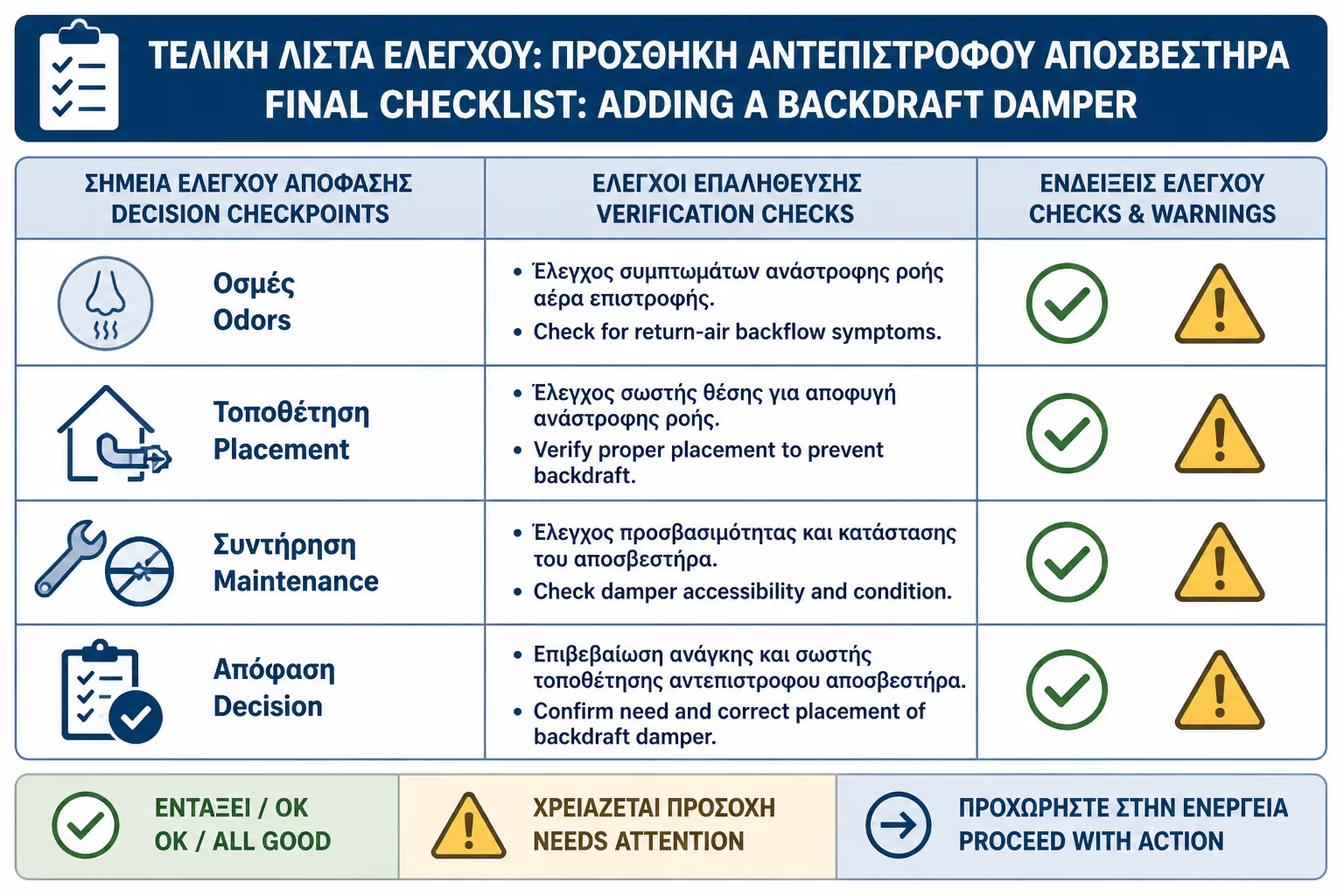
Before installing a non-return valve, have the air direction and existing installation checked first. Is there already a backflow in the fan? Does it work? Does the air actually come out? Is the end grill clean? Are there any smells from the light fixture or from the drain?
Also request that a valve be selected appropriate for the diameter and flow of the vent. If the fan is small, the valve should open easily. If the outlet is exposed to wind, a solution that will constantly flap should be avoided. If the valve goes into a suspended ceiling, there must be access.
After installation, it should be tested. Does the vent open? Does the valve open fully? Is there a loud noise? When the fan turns off, does it close properly? Are you experiencing back wind? These must be checked before the job is considered complete.
The valve is a small component, but fitting it correctly requires attention to detail.
Mistakes in check valves are often because they are considered a simple component. But a wrong valve can reduce performance or create new noise.
| Error | What it causes in practice | A more correct approach |
|---|---|---|
| Very heavy valve on a small fan | It does not open fully | Lightweight valve suitable for dispensing |
| Very cheap clapperboard | It blows with the wind | Better quality part |
| Wrong placement | It prevents extraction | Arrow/flow direction control |
| Two valves for no reason | Increased resistance | A proper valve where needed |
| Valve without access | It does not clean if it sticks | Accessible point |
| Very small grill with return | Hissing and low flow | Adequate free cross-section |
| Illuminator ignored | Odors remain from common area | Total odor source control |
| Dealing with sewage odors as backdraft | The problem is not solved | Check siphon/drainage |
| Valve in a dirty pipeline | It sticks fast | Cleaning before installation |
| Purchase without diameter control | Poor fit and leaks | Pipe/Orifice Measurement |
A typical example is a bathroom where a non-return valve is inserted to stop odors from the light fixture, but the valve is placed upside down. The fan is having trouble getting air out, the noise is increasing and the bathroom is getting damp. The part was correct. The installation was wrong.
| Inquiry | Yes / No |
|---|---|
| Have you confirmed that the problem is coming from the vent and not the drain? | Yes / No |
| Is there already a check valve on the vent? | Yes / No |
| Does the existing valve open and close properly? | Yes / No |
| Is the new valve the correct diameter for the pipe? | Yes / No |
| Does the valve open easily with the supply of the particular fan? | Yes / No |
| Is the mounting direction checked correctly? | Yes / No |
| Does the valve not reduce the free cross-section of the airway too much? | Yes / No |
| Is there access for cleaning or replacement? | Yes / No |
| Does the outer grill protect against insects without choking the flow? | Yes / No |
| If there is a light fixture, has the source of the odors been checked? | Yes / No |
| Has the vent been tested after installation? | Yes / No |
| Does the quote state part, labour, VAT, access and possible grille or duct changes? | Yes / No |
If cold air or odors are coming from the fan, don't rush to replace the whole fan. First check if there is a correct non-return valve and if it is working. The valve should open easily when the ventilator is running and close cleanly when it stops. Do not put a heavy or rough return on a small fan, because you will reduce the flow. And don't close the valve in an inaccessible place. The part is small, but it should be able to be inspected and cleaned.
The non-return valve is one of the small components that can make a big difference in the bathroom. It doesn't look special, it's not accurate and it doesn't impress like a new air vent or an illuminated mirror. Nevertheless, it can solve everyday problems: cold air from the external wall, odors from a light pipe, return air from a communal network and the entry of insects from the ventilation duct.
The right valve allows the fan to do its job when it's running and protects the bathroom when it's off. But to be effective, it must match the diameter, flow and location. It must open easily, close properly, not hiss, not rattle and be cleanable.
It is not a solution for every odor or moisture problem. If there is a drainage problem, dry siphon, mold or insufficient vent supply, a separate inspection is needed. But in every bathroom that leads to a light fixture or to an external outlet, the return is practically a necessary detail.
The best time to predict is during the installation of the ventilator or before the suspended ceiling is closed. If the bathroom is already finished, it can often be added later, as long as there is access. In any case, the correct return is a small technical measure that makes the bathroom more comfortable, cleaner and more protected when the fan is not working.
Return to category.
Go to categoryReturn to the central guide.
Go to guide