
Bathroom Lighting, Ventilation & Heating
Return to category.
Go to categoryThe bathroom fan does not work properly just because it is "loud". It works properly when it is in the right position and when the air has somewhere to go in and out. This is the point that is often overlooked in renovations. The owner buys a fan with several m³/h, the electrician puts it in the place where the old one was, the fan turns, but the mirror remains cloudy, the ceiling holds moisture and the smells do not go away quickly.
The problem is not always the device. Many times it is the air flow. To ventilate a bathroom, the ventilator must draw moist air out, while at the same time fresh air must be brought in from somewhere else, usually the gap under the door or a conveyance louver. If the door is almost airtight, if there is no crack or if the ventilator is too close to the air inlet, then the air takes a "short cut" and does not clean the entire space.
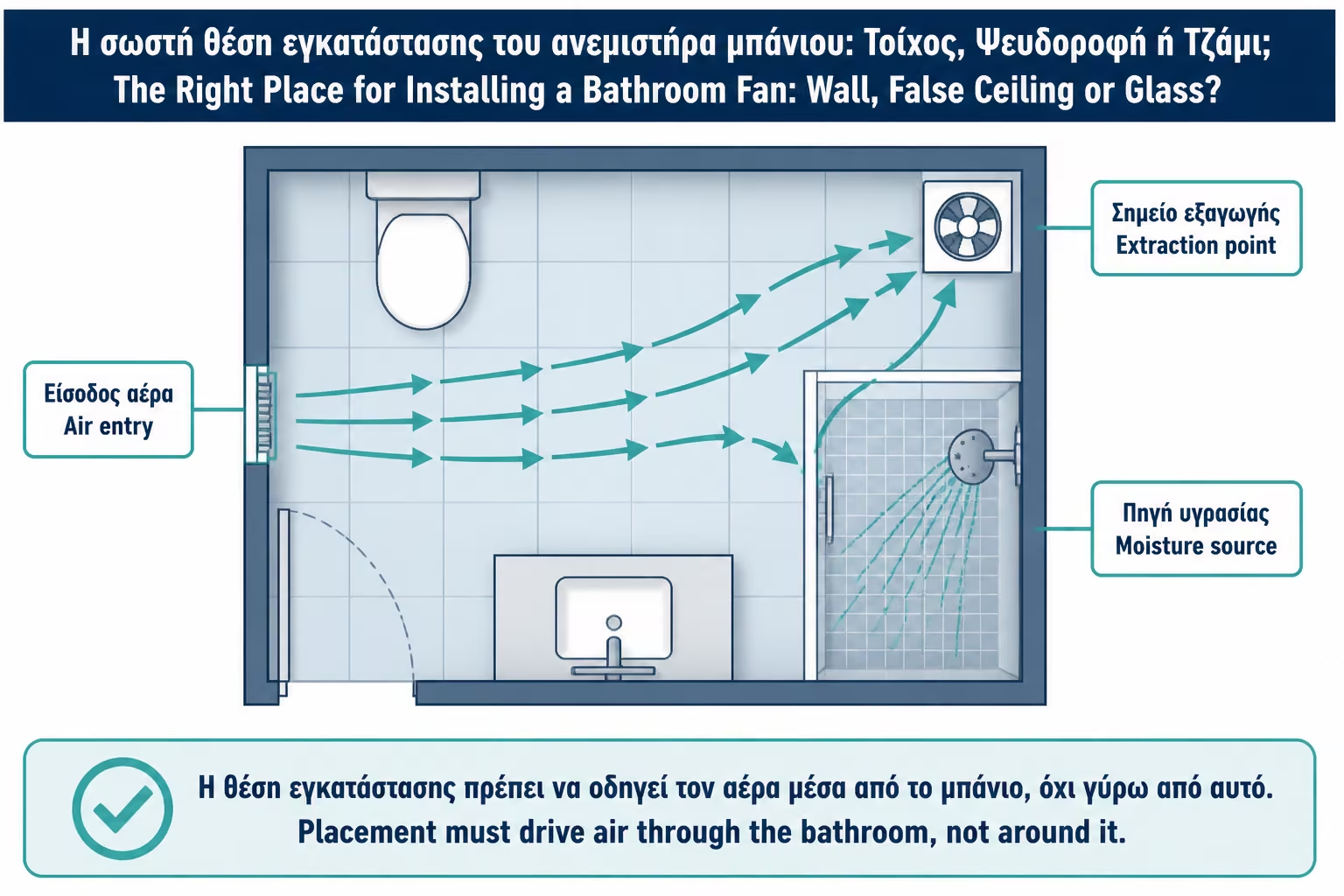
The ideal logic is to create a path: air enters through the door, passes through the bathroom, carrying away water vapor and odors, and exits through the ventilator. That is why we often say that a good position for the ventilator is high and as far as possible opposite the door or the air intake point. Thus, a current is created in the space, what many describe as cross-ventilation. It's not exactly the same as a natural two-pane window, but the principle is similar: the air needs to cross the space, not turn locally around the fan.
In practice, the correct position depends on the floor plan. Another bathroom with external wall, another blind bathroom with light fixture, another bathroom with false ceiling and in-line fan, another small WC with window, another shower cubicle in the background. Also, the position must be combined with electrical safety, bathing zones, IP protection, noise, maintenance and real exportability. Technical ventilation guides point out that the fan should be located as far as possible from the source of replacement air, usually high up and opposite the door, so that it draws moist air from the whole room and not just from a small area.
This guide explains how to choose the right bathroom vent position, when it makes sense to install it on a wall, when on a suspended ceiling, when on a glass, why the door is part of the ventilation system and what mistakes to avoid before drilling holes, passing air ducts or buying a device.
A fan removes air from the bathroom. In order to do so, however, new air must enter its place. If there is no air intake, performance drops. The fan tries to create a negative pressure, but because the space is closed, it draws less air, makes more noise and does not remove moisture effectively.
The most common air entry is the gap under the door. When the fan is running, it draws air from the house into the bathroom and exhausts it to a skylight or outside. If the door has a sufficient gap, the air passes below, moves through the space and is removed from above. This is much more efficient than a fan that is next to the door and draws air directly from under it, without "sweeping" the bathroom.
Home ventilation guides often state that bathroom doors need space under the leaf for make-up air. As an example, several manufacturers talk about a gap of about ¾ of an inch, which is about 19 millimeters, so that air can pass through when the fan is running.
This does not mean that every door must be cut like this in every Greek bathroom. But it means that the door must not be completely "sealed". In a new renovation, especially when new doors with rubbers or thresholds are put in, it must be foreseen how air will enter the bathroom.
In the bathroom, the term cross-ventilation is used practically to describe the movement of air from an entry point to an exhaust point. It is not necessarily natural ventilation with two windows. It can be mechanical ventilation: the door acts as an air inlet and the ventilator as an outlet.
The best route is usually diagonally or opposite. If the air comes in through the door and the fan is high on the opposite side, the air goes through more of the room. So it draws moisture from the shower, odors from the basin and water vapor that has risen to the ceiling. Conversely, if the vent is directly above the door, it may draw mostly fresh air that has just entered, leaving the depth of the bathroom less ventilated.
The ideal flow looks like a "sweep" of space. Air enters low, passes through the use zone and exits high. This is also why fans are usually placed high on the wall or ceiling: warm moist air rises. If the fan is low, it can lose some of the moisture that collects high.
This principle is not a theoretical luxury. It is the point that explains why two bathrooms with the same ventilator can have completely different behavior. In one, the air passes properly through the entire space. In the other, the fan draws air from the easiest path and leaves moisture dead zones.
There are two practical principles that must be combined. The first says that the vent should be located close to the source of moisture, i.e. near the shower or bathtub, so that it removes the water vapor before it spreads throughout the bathroom. The second says that it should be located away from the air intake, usually the door, so that the air can cross the space.
If the shower is at the back of the bathroom and the door is on the opposite side, these two criteria agree. The best position is usually high up near the shower, opposite the door. This creates a very good flow. The air enters through the door, passes through the space and leaves where the water vapor is produced.
But if the shower is close to the door and the sink or basin is in the background, the choice becomes more complex. We don't want the fan to just pull air through the door and leave moisture behind. In such a case, a ceiling position, in-line system or better distribution of suction may be needed.
In practice, there is no one-size-fits-all bathroom. There is one principle: the ventilator must draw air through the room and not by the shortest route.
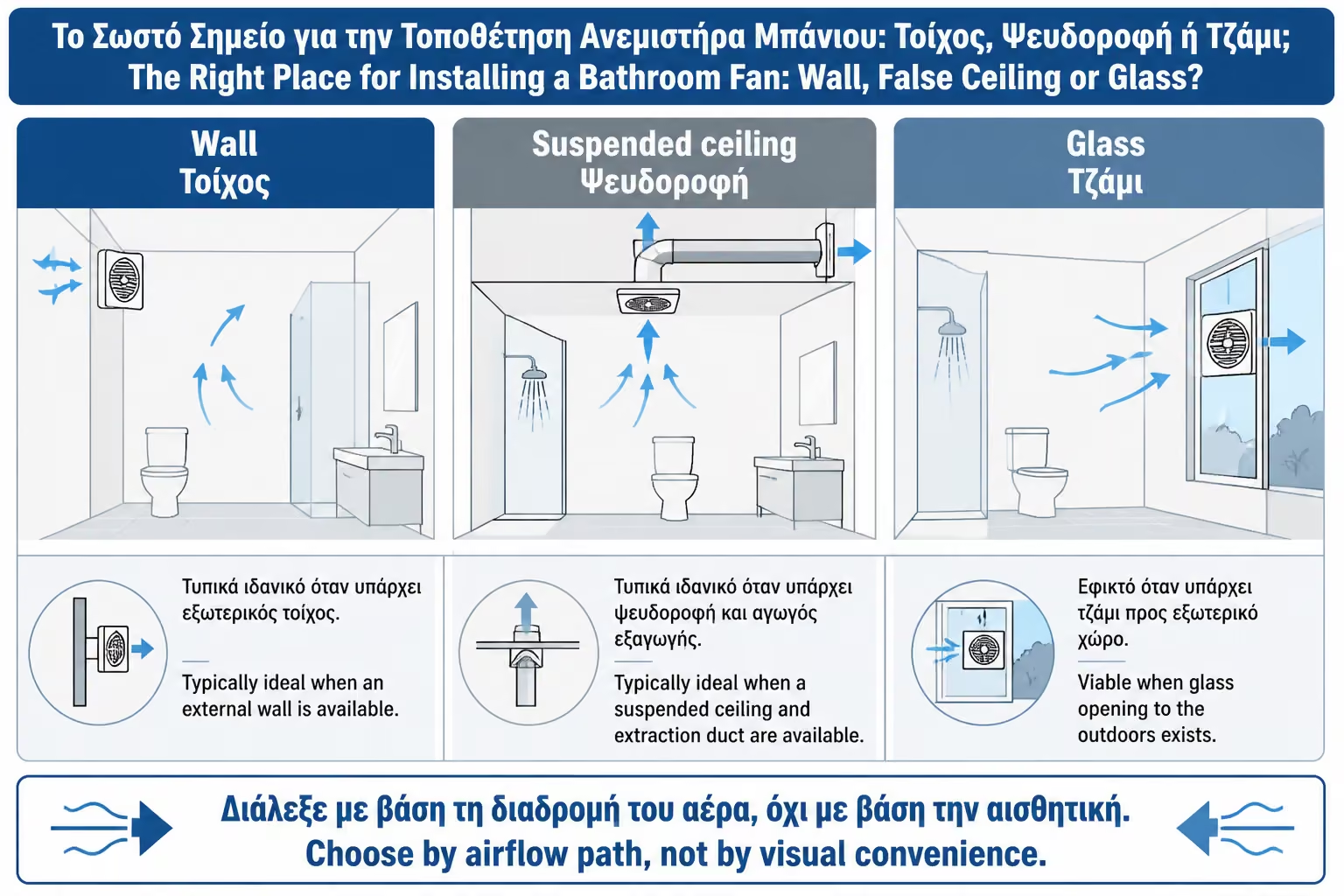
Wall mounting is the most popular solution. The fan is inserted high up on an external wall or on a wall facing a skylight and exhausts the air to the outside. It is simple, economical and often sufficient when the exit is near.
This solution is suitable for bathrooms that have an external wall, a skylight or an existing ventilation hole. If the path is short and straight, a good axial fan can work satisfactorily. In small WCs or in bathrooms where the shower is close to the exhaust wall, wall mounting is practical and logical.
The downside is that the location is often determined by where a hole already exists, not where the space needs to be best ventilated. In older apartment buildings, the vent may be next to the door, in a low spot, or away from the shower. Then, even if the device is changed, the flow remains moderate.
A practical example: a bathroom with a door on the left and a shower on the right in the background. If the vent goes high up on the shower wall, opposite the door, the flow is good. If it goes over the door because there was an old hole there, it will draw mostly air from the door gap and the shower will dry more slowly.
Wall mounting is not sufficient when the wall location does not accommodate the flow or when the duct behind the fan is difficult. If the fan is in a bad spot, a different solution may be needed, even if the old installation was like that for years.
It is also not enough when the air has to pass through a long duct, many corners or a common well with resistance. There a simple wall mounted axial may spin but not move enough air. If such a path exists, a centrifugal or in-line ventilator should be considered.
In renovations where the layout of the bathroom changes, it is a mistake to blindly keep the old position. If the shower is moved, if a walk-in is introduced, if the door is changed or if a false ceiling is created, it is an opportunity to redesign the suction as well.
The old hole is a given, but it is not always a correct solution. Sometimes it's worth investing in a new location or a new vent, especially if the bathroom is blind and moisture has been a chronic problem.
The suspended ceiling gives great freedom for ventilation. Instead of the fan being visible on the wall, only a subtle grille can be seen on the ceiling. The motor can be in-line inside the suspended ceiling or in an accessible technical point, and the air can be led by a duct to a skylight or external outlet.
This solution is very good when we want the suction to be done from a specific point, for example near the shower. In a walk-in shower, the grill can be placed close to the area where water vapor rises, while the motor is far away, reducing noise in the bathroom.
The false ceiling also helps aesthetically. If the bathroom has hidden lighting, spot and linear design, a simple ventilation grill integrates much better than a large plastic fan on the wall. In more thoughtful renovations, this is often the cleanest solution.
The downside is that it requires proper planning. Conduit, slope or path without condensation traps, access to the motor, access to the driver/electrical point where available, soundproofing if needed and proper exit must be provided. A suspended ceiling that encloses all components without a hatch can create a future maintenance problem.
If an in-line or ceiling system is chosen, the point of the grille is critical. The grille should be located where moist air collects or where it helps the flow from the door to the exhaust. Usually this means near the shower or tub, but not in a position that will only draw locally and leave the rest of the bathroom without circulation.
In small bathrooms, a grill in the right place is enough. In larger bathrooms, two suction points can be considered, for example one near the shower and one near the basin, but this requires proper calculation. If a second grille is simply inserted without study, the suction can be distributed incorrectly and reduced where it is really needed.
The grill should not be inserted directly next to the door, unless the floor plan requires it and it has been studied. If it is too close to the air inlet, a short-circuit is created: the fresh air enters through the door and immediately leaves through the grill, without passing through the shower.
Good grill placement is what forces the air to make the useful path.
Installing a ventilator in a glass used to be quite common, especially in small WCs or bathrooms with a skylight window. The fan is placed on the glass and blows the air directly outside. It is a simple solution when there is no wall suitable for drilling or when we do not want to open a new hole in masonry.
But it has limitations. Firstly, it does not fit all frames and all glazing. In double energy glazing, drilling is not simply an afterthought. Special glass with a hole must usually be ordered. Second, the vent in the glass can be more visible and less aesthetic. Thirdly, it can affect sound insulation, thermal insulation and tightness of the frame.
In bathrooms with a small window, the fan on the glass can work well if it is high and if the door provides air intake. But if the window is opened frequently, if the ventilator prevents its use or if the position is low, the solution becomes less practical.
Glazing is a realistic solution in certain cases, but in a new renovation it is usually considered after first seeing if there is a better wall or suspended ceiling solution.
If the bathroom has a window, many consider that there is no need for a fan. This is not always the case. The window helps a lot, but it depends on whether it's opened, how often it's opened, what the weather is like, if it faces a skylight, and if there's actual airflow.
In small bathrooms with a window to a skylight, natural ventilation may be insufficient, especially in winter when the user does not want to leave the window open. In such cases, the ventilator complements natural ventilation and ensures constant removal of water vapor after showering.
If a ventilator is fitted to the glass, we need to think about how it will work with the window. If the window is opened and the fan draws air from too close, it may not ventilate the entire bathroom. If the door provides air intake and the fan is opposite, the flow is better.
Natural ventilation is valuable, but should not always be considered sufficient. In a heavily used bathroom, mechanical ventilation offers control and stability.
The door is a key part of the ventilation system. If the air is not coming in from there, the ventilator is struggling. The most discreet solution is the gap under the door. It is not very visible and allows the air to pass low. In some cases, an air louver can be inserted into the door or wall, but this comes at an aesthetic and acoustic cost.
Technical guides point out that the undercut, i.e. the gap under the door, is a common way to provide replacement air. As an example, a door width of 760mm with a gap of 20mm gives an active area of approximately 0.0152m² for air passage, although the actual adequacy depends on the fan output and path resistance.
If a new bathroom door is installed, care must be taken. Many modern doors close better, have a smaller gap and improve sound insulation, but at the same time limit air intake. If the bathroom is blind, this can make ventilation worse.
The ideal solution is to have enough air intake without sacrificing too much privacy. In family bathrooms, a large blind on the door can be a nuisance due to sound. In such cases, the right gap under the door is usually more subtle.
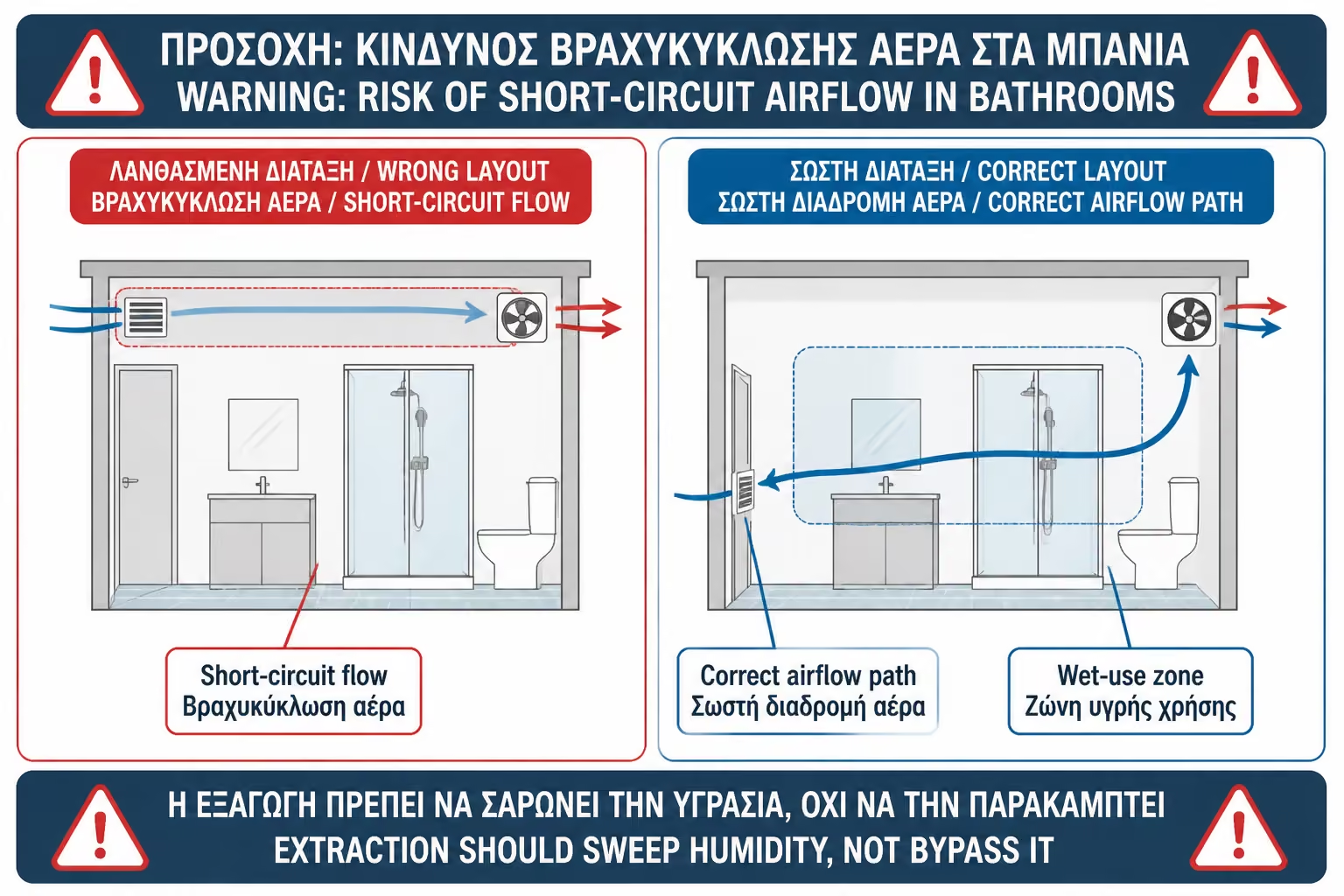
The short-circuit in the ventilation occurs when the air that enters the room leaves almost immediately from the ventilator, without passing through the areas that need ventilation. It's like turning on a faucet and the water immediately leaves the drain without washing the surface you want.
In the bathroom, this happens when the fan is too close to the door or air intake. The fan draws the easiest draft: air from the door gap. The shower, which is in the background, can stay wet. Corners may not dry. The mirror may slowly dim.
A practical sign of a short-circuit is when you feel a strong current near the door, but the moisture at the bottom of the bathroom remains. Another sign is when the vent seems to be working, but the water vapor is not leaving the shower area.
The solution is to change the suction position, better air distribution or an in-line system with a grill in the right place. Not always solved with a stronger fan.
The shower and bathtub are the main sources of moisture. So the ventilator must be able to "see" this zone through the air flow. In many cases, the best location is on or near the shower, but this must be combined with electrical safety and appropriate IP protection.
If a fan or grill is installed too close to a shower, the bathroom zones should be checked. The electrical appliance must be suitable for its location. We don't just pick the best streaming location and ignore safety. In areas with a bathtub or shower, special requirements for electrical installations apply, such as those covered by ΕLOT HD 60364-7-701:2024, so the final location must be confirmed by a licensed electrician.
On a practical level, if the grill is on the ceiling outside the cabin but close to the shower, it often works well and is easier to meet the requirements. If it has to fit right into the cabin, it needs a stricter selection of equipment.
The goal is not to put the fan "into the water". The goal is to pull the water vapor from the right area in a safe way.
The fan doesn't just remove moisture. It also removes odors. That's why in a WC without a shower, the position near the basin can make sense. In a bathroom that has both a shower and a basin, it must be decided which need is more critical or how to serve both.
In a small bathroom, one correct position can cover both. If the ventilator is located in the background opposite the door, the air passes through the entire bathroom and removes odors and water vapor. In a large bathroom, the basin can be located in a separate corner or behind a partition. There a suction grill may not be enough.
In more elaborate installations, there can be two grilles with an in-line fan, but this requires proper planning so that suction from the critical point is not reduced too much. We don't just put two openings because "more is better".
If the main problem is odors from a light fixture or air returns, then it is not enough to change the position of the ventilator. Needs backtracking, duct control and possibly final output control.
The location of the vent in the bathroom is only half the story. The other half is where the air ends up. Extraction must be to a suitable external point, not into a suspended ceiling, loft or closed space. Venting wet air inside a closed structure is a serious mistake and can create mold, decay and moisture.
In apartment buildings, the exit is often in a skylight or in a communal well. It must be checked whether this luminaire works, whether it has a sufficient cross-section, whether there are odor returns and whether the specific connection is permitted. In single-family houses, the exit can be in an external wall, roof or attic with exhaust to the outside, but always with a proper end grill and waterproofing.
The outer grille should have protection against rain, insects and air return, but not choke the flow. A very closed or dirty grille increases resistance and reduces efficiency. If there is a backflow, it should open easily and not stick.
The vent is a line from the door to the outside outlet. If the last point is wrong, the correct internal position is not enough.
Fan noise is also affected by position. A fan on the wall right next to the user's ear is louder than an in-line fan in a suspended ceiling. A duct with corners, constrictions or poor support can create hum, hiss or vibrate. A small grill can "whistle" when too much air passes through.
If the bathroom is next to a bedroom, the location of the motor is important. An in-line fan can move the motor further away from the room, reducing perceived noise. But it must be properly supported, not transmit vibrations to the false ceiling and have suitable ducts.
A frequent mistake is the choice of a powerful fan in a small duct diameter. The air passes at a higher speed, the noise increases and the user eventually turns off the fan. Correct position and correct diameter are often more important than simply increasing power.
Good ventilation should work for a long time. To do this, it must be noise tolerant.
The location of the vent is not selected based on airflow alone. It is also selected based on electrical safety. The ventilator is an electrical device in a wet room. If it is near a shower or bathtub, the zone, IP protection and connection method must be checked.
Installation must be done by a licensed electrician. If the ventilator has a timer, humidity sensor, separate switch, light connection or in-line motor in a false ceiling, the connections must be made correctly. Also, there must be adequate leakage protection and a generally safe electrical installation.
It is not right for the owner to move a fan himself or add a supply because "it is a small appliance". The bathroom is a special place. A wrong connection can be dangerous, especially if the device is near a water zone.
The rule of thumb is: the ventilation engineer or contractor can suggest the location for air flow, but the electrician must approve the safety of the location and connection.
The old location of the vent should be questioned when the bathroom changes layout or when there have been chronic moisture problems. If before the renovation the bathroom had mold, water vapors and smells, it does not make sense to keep the same logic just because "that's the way it was".
A new location should be changed or considered when the vent is too close to the door, far from the shower, low, ductwork is bad, the outlet doesn't work, or the new cabinet/shower changes the flow of the space.
In a full renovation, repositioning is easier before tiles, false ceilings and trim go in. After that, each change becomes more expensive. That is why the ventilation position must be decided along with the layout, plumbing, electrical and lighting.
The phrase "put him where he was" is often the beginning of a new problem with old causes.
The cost depends on whether we are talking about a simple replacement in the same location or a new location, a new duct, false ceiling, hole in the wall, grill, electrical supply and incidentals. It is also affected by area, floor, access, the condition of the existing facility, whether there is a skylight or external wall, whether VAT is included and whether the work is being carried out as part of a total refurbishment.
| Task / choice | Indicative range 2026 | What affects the price? |
|---|---|---|
| Replace fan in same position | €50–150 labor + device | Access, connection, timer |
| New hole in the wall | 80–250€+ | Wall thickness, material, external access |
| New short distance pipeline | 80–250€+ | Length, diameter, grids |
| In-line in false ceiling | 180–600€+ | Motor, ducts, grilles, door |
| Glass installation | 80–250€+ without new glass | Glass type, hole, replacement |
| New double glazing with hole | Wide variation | Dimensions, frame, glazing |
| Electrical supply / timer / sensor | 50–250€+ | Wiring, switches, automation |
| Repairs and restorations | Wide variation | Tiles, plasters, false ceilings |
The low price is reasonable when just changing a fan in the same position. However, if the location changes, a new pipeline is laid and a suspended ceiling or electrical transmission is needed, the cost rises. This is not an exaggeration. It's the difference between replacing an appliance and changing a ventilation system.
The right question in the quote is not just "how much does the ventilator do?". Is it "includes duct, grille, return, electrical, VAT, maintenance and access for maintenance?".
Errors in position are not always immediately apparent. The fan spins and sounds, so everyone thinks it's working. The truth is seen after the shower: how quickly the steam leaves, if the mirror is foggy, if the corners are dry and if the smells return.
| Error | What it causes in practice | A more correct approach |
|---|---|---|
| Fan next to the door | Air short-circuit | Placement opposite or close to the source of moisture |
| Door without gap | Reduced supply | Air inlet crevice or louver |
| Fan away from the shower | Water vapor remains in the background | Grill near the moisture zone |
| Placement low on the wall | Moist air remains aloft | High mounting or ceiling |
| Duct with many corners | Decline in real performance | Better path or suitable type of fan |
| Extraction to suspended ceiling | Moisture inside the structure | Always exit to an appropriate external point |
| In-line without a box office | Difficult maintenance | Access to motors and ducts |
| Fan in the wrong zone | Security issue | Check by an electrician |
| Glass without proper hole | Risk of breakage or poor sealing | Special glazing/proper fit |
| We hold the old position without thinking | The problem is repeated | Redesign in the renovation phase |
A typical example is a blind bathroom where the fan is above the door because it was easier to run a cable there. When it works, it draws air from the crack in the door and blows it out immediately. The shower in the background stays wet. Owner buys stronger fan but problem persists. The solution was not more m³/h. It was correct suction position.
| Inquiry | Yes / No |
|---|---|
| Has it been identified where the replacement air will come in? | Yes / No |
| Is there adequate clearance under the door or other air intake? | Yes / No |
| Is the fan located as far as possible from the door to avoid short-circuiting? | Yes / No |
| Does its location draw air from the shower or the main source of moisture? | Yes / No |
| Is the suction high, where the moist air rises? | Yes / No |
| Does the extraction lead to a suitable external point and not to an enclosed suspended ceiling? | Yes / No |
| Has the length and angles of the vent been checked? | Yes / No |
| Does the vent type match the duct run? | Yes / No |
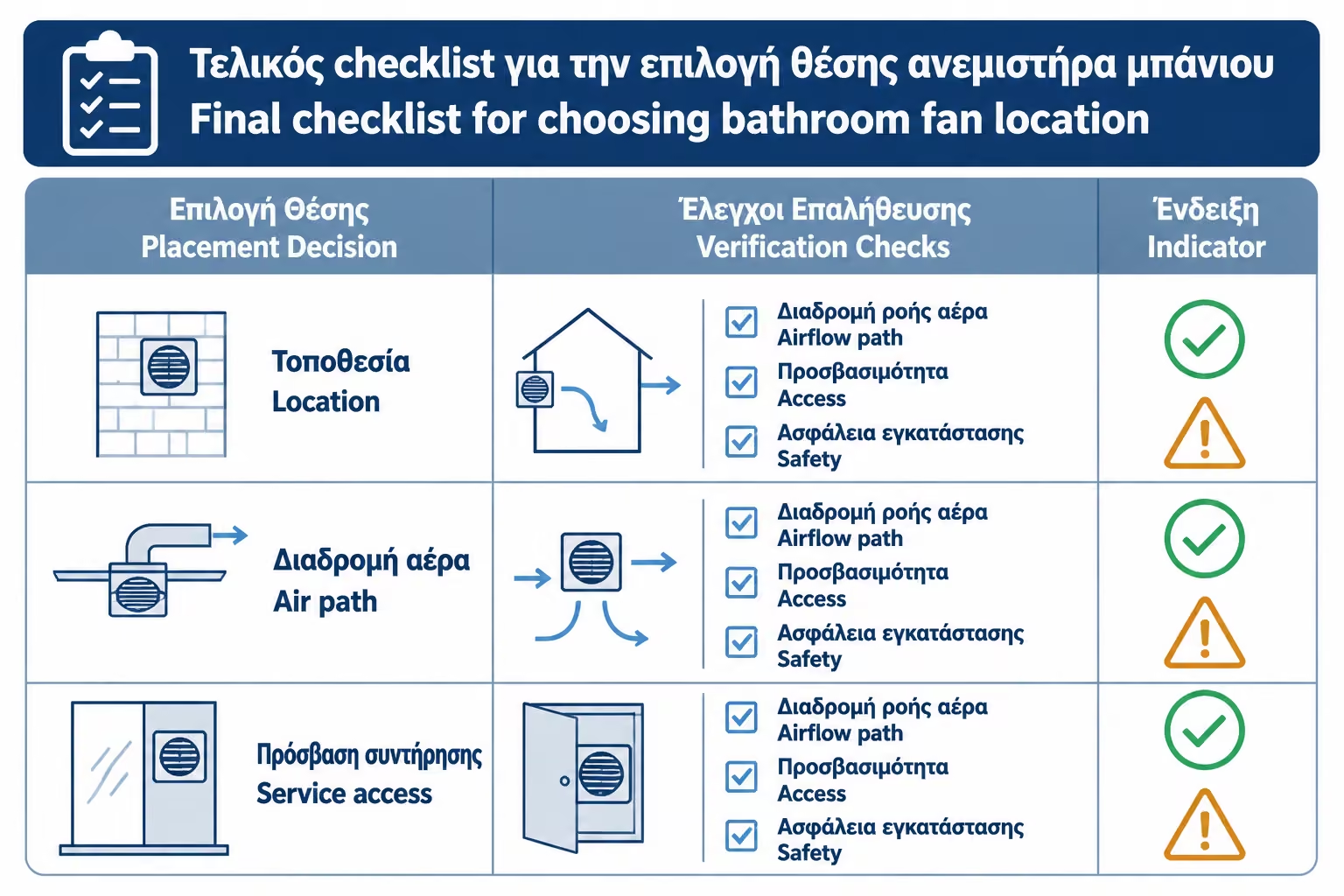
| If it goes into a suspended ceiling, is there access for maintenance? | Yes / No |
| If it goes into glass, is the glass and frame suitable? | Yes / No |
| Has the location been checked for bathing zones and IP protection? | Yes / No |
| Will the electrical connection be done by a licensed electrician? | Yes / No |
| Is there a timer or humidity sensor so it continues after showering? | Yes / No |
| Does the quote describe appliance, conduit, grilles, return, electrical, VAT and incidentals? | Yes / No |
If you have to keep a rule for the position of the ventilator, keep it: don't put it where it's "convenient", but where it forces the air to cross the bathroom. Air must enter through the door or other designated entrance, pass through the shower zone and exit from above. If the fan is next to the door, it can draw in fresh air and leave moisture behind. The right location, the right door gap and the right ducting often make more of a difference than a "stronger" fan.
The correct position of the ventilator is a key part of the performance of the bathroom. It is not enough to choose a device with enough m³/h. If the air does not enter properly, does not pass through the wet zones and does not exit through a suitable outlet, the ventilation will be mediocre. The fan can be heard, but the bathroom does not dry.
The best logic is to treat the bathroom like an air path. The door or blind brings air in. The ventilator pulls it from the opposite or more appropriate side. The shower, tub and basin should be within this flow, not outside of it. When the flow is designed correctly, the fan works more efficiently, with less noise and less need for oversupply.
Wall mounting is simple and often sufficient on short runs. The suspended ceiling gives better flexibility and a cleaner effect, especially with an in-line solution. Glass can be a solution in specific cases, but it needs attention to the frame, glass and tightness. In any case, the final decision must combine airflow, electrical safety, IP protection, noise and maintainability.
If you are renovating, decide on the location of the vent before tiles, false ceilings and doors go in. They are among the decisions that do not look spectacular in the photo, but determine whether the bathroom will remain dry, clean and hygienic after each use.
Return to category.
Go to categoryReturn to the central guide.
Go to guide