
Bathroom Lighting, Ventilation & Heating
Return to category.
Go to categoryThe lighting inside the shower cabin is one of the options that make a bathroom look more modern and neat. A properly lit shower isn't just prettier. It is more comfortable, safer to use and much more pleasant, especially in bathrooms where the cabin is at the back of the room and remains dark from the general lighting.
In most old bathrooms, the lighting stops at the central ceiling light. The user enters the shower and the light comes from behind or from the side, often cut off by the glass, the curtain or their own body. The result is a bathing area that looks darker than the rest of the bathroom. This is not only aesthetically disturbing. It also affects practical use: cleaning, shaving legs, checking floors, shampooing, shower gels and a general sense of security.
The solution can be a properly selected waterproof spot on the ceiling of the cabin, a linear lighting in a special position or a more complex system with color therapy, known as chromotherapy, integrated into the shower head. These solutions can create from pure practical light to a spa atmosphere. But since we are talking about electrical equipment in or very close to the water zone, technical attention is necessary.
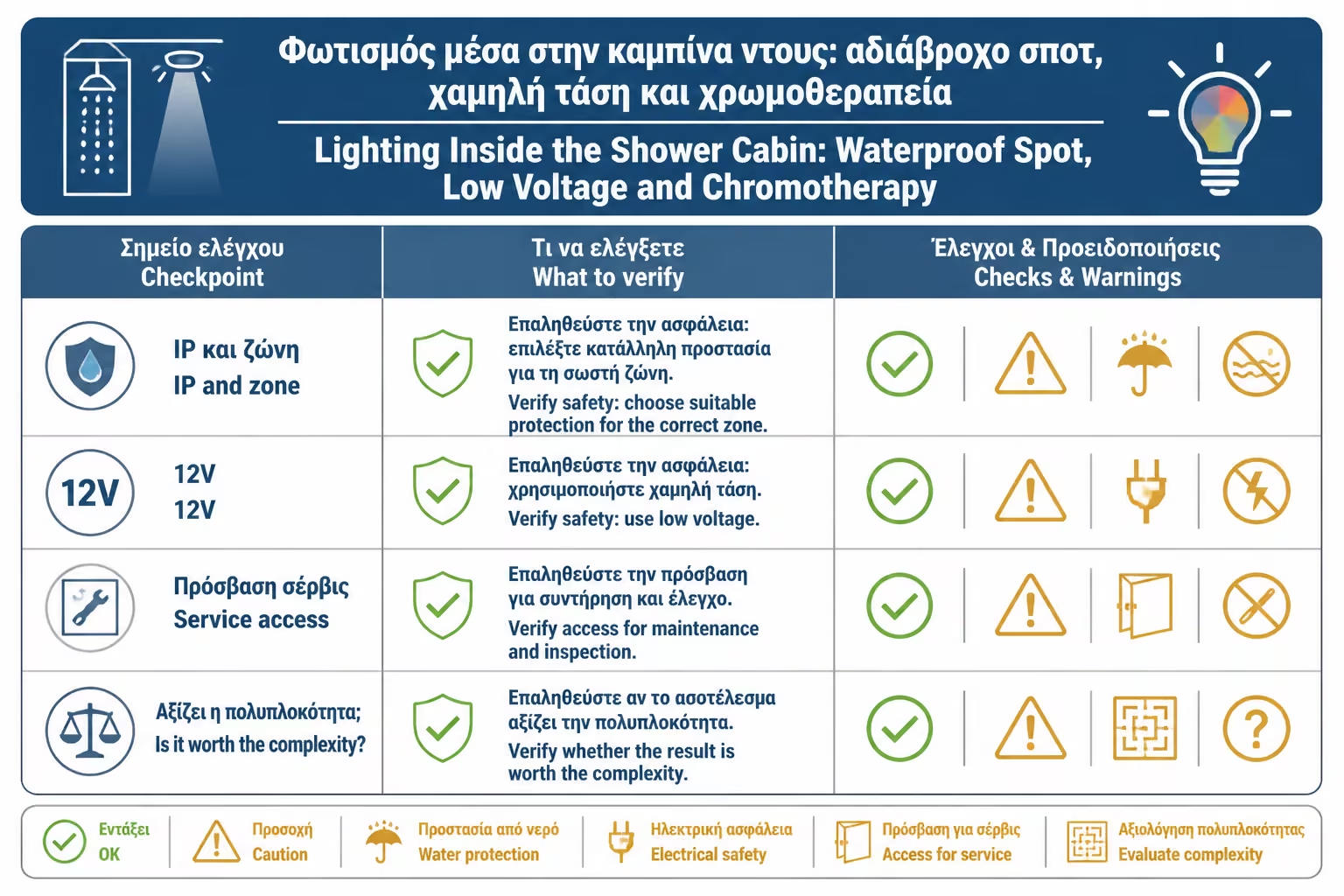
The main mistake is to treat the lighting in the shower as a simple decorative option. "We put a spot", "we put a waterproof LED strip", "we put a head with colors". In practice, each of these options has requirements: IP rating, suitable voltage, correct driver, leakage protection, bath zones, access for maintenance and installation by a licensed electrician.
The valid Greek standard title ELOT HD 60364-7-701:2024 concerns low-voltage electrical installations in spaces that contain a bath or sprinkler, i.e. bathtub or shower. The same scope is based on IEC 60364-7-701:2019 for spaces where a bathtub or shower is permanently installed. This means that lighting in or around the cabin should not be treated casually, but as part of a dedicated wet room electrical installation.
In this guide we'll look at when lighting inside the shower cubicle makes sense, which solutions are practically safer, what 12V/24V watertight spots mean, what you need to know about IP65 and IP67, how showerhead color therapy works and what mistakes to avoid before closing ceilings, taps and tiles.
The shower is often the most "hidden" part of the bathroom. In many Greek apartments, it is located at the back of the room, behind a glass cabin, fixed glass or curtain. If the general lighting is in the center of the bathroom, the light does not always reach the cabin properly. The bathroom may appear bright when viewed from the door, but the shower area remains semi-dark.
This is especially evident in walk-in showers with dark tiles, black profiles, smoked glass or matte surfaces. Dark materials absorb light and the shower looks more closed. A small waterproof spot in the right place can completely change the image, without the need for excessive lighting in the entire bathroom.
There is also a practical side. Inside the shower we want to see clearly the floor, the slopes, the siphon, the shampoos, the places that slide, the cleanliness of the joints and the surfaces. For the elderly, children or people with impaired vision, proper visibility in the shower is not a luxury. It's a matter of everyday comfort and safety.
Of course, the lighting inside the cabin should not be blinding. If a spot is placed directly above the head with a narrow beam, it can be annoying. If it's too cold, it can make the shower seem hard. If it does not have proper protection, it can create a technical risk. So the question is the right light, not just more light.
The shower area is one of the most demanding areas of the bathroom. International and European standards for bath or shower rooms use zones to define where electrical equipment is allowed or must be installed. In practical guides based on IEC 60364-7-701, Zone 0 is the interior of the bath or shower, Zone 1 is the area above it up to a certain height, and Zone 2 is the perimeter area around Zone 1.
For the owner, this translates into something simple: the closer a fixture is to the water, the stricter the requirements. A light above the sink is not rated in the same way as a spot inside the shower cabin. A light fixture in the center of the bathroom does not have the same exposure as a light fixture located directly above a rain shower.
In practice, many fixtures in or directly above the shower are treated as equipment highly exposed to moisture and splashes. For Zone 1 and Zone 2 we often see minimum requirements like IPX4 in international specifications, while for areas where there may be water splashes or more intense exposure a higher protection such as IP65 is often recommended. For Zone 0, i.e. inside the water collection point itself, the requirements are even stricter, with references to IPX7 and low voltage on relevant drivers.
This does not mean that the owner has to memorize regulations. It means having the electrician evaluate the fixture position based on the specific shower, not a general rule of thumb.
In shower lighting, IP65 and IP67 are often seen. IP65 indicates high dust protection and water splash protection. IP67 indicates protection against dust and protection under conditions of temporary submersion. In practice, IP65 is often used for spot or downlights above the shower area, while IP67 appears in more demanding or special applications, such as luminaires in very wet locations or systems that may receive more direct contact with water.
Importantly, IP should not be interpreted lightly. A luminaire with IP65 is not suitable for any use in water. An IP67 product does not mean that the entire installation is invulnerable. IP refers to the product as tested, not every possible rough connection that can be made on site.
| Area / use | Practical approach | What to watch out for |
|---|---|---|
| Ceiling over shower | An IP65 waterproof spot is often chosen | Position, height, light beam, RCD |
| Very exposed point | Higher protection may be required | Evaluation by an electrician |
| Internal point with possible concentration of water | Very strict approach, special equipment | No improvised solutions |
| Color therapy in a shower head | Certified finished product | Manufacturer, supply, service |
The word "tight" in the market is often used too easily. A light fixture may be sealed from the front but installed incorrectly from the back. An LED strip may have protection, but its connections may be vulnerable. A spot can have a correct IP, but enter a suspended ceiling without proper provision for moisture and maintenance.
In the bathroom, safety doesn't come from a number alone. It results from correct product, correct location, correct installation and correct electrical protection.
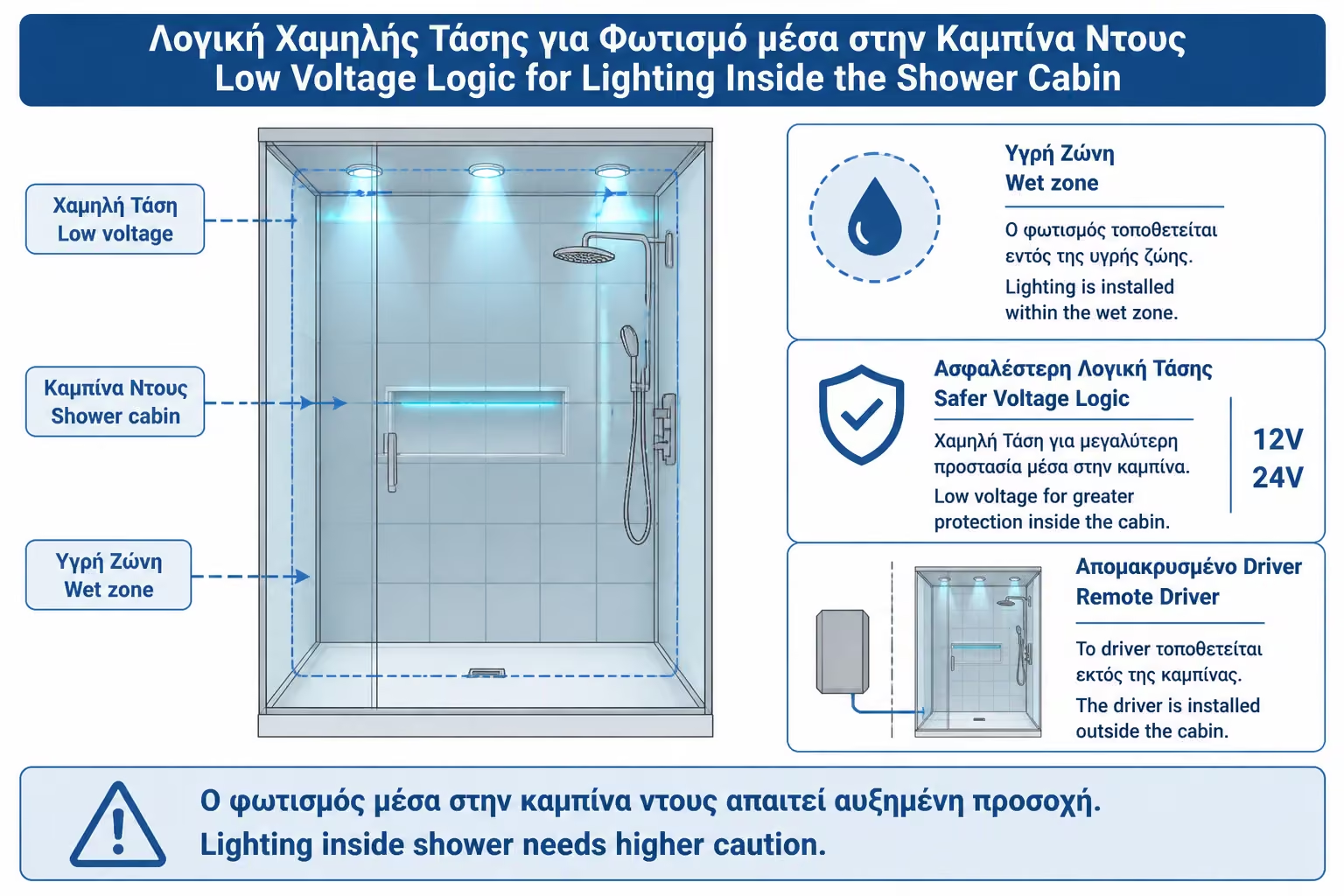
In demanding wet zones, low voltage lamps, such as 12V or 24V, are often preferred, through a suitable power supply or driver. The logic is that the lighting body located near the water works with a lower voltage, while the power supply is placed in a safer place.
This does not mean that the low voltage allows for a rough installation. Driver, wiring, protection, location and connection still require professional application. Bathroom electrical installation guides state that the SELV source, such as a transformer or power supply, must be outside zones 0, 1 and 2, which shows how important the location of the power supply is, not just the fixture itself.
A sealed 12V or 24V spot inside the cabin can be a very good solution when the right product is chosen and installed carefully. The luminaire must have an appropriate IP for its location, the driver must be located in an accessible and safe place, and the line must be protected according to the requirements of the installation.
The mistake is to buy a "12V waterproof spot" and consider that the issue is solved. If the power supply is inserted above the suspended ceiling with no access, if the connection is made casually, if the product is not really suitable for the zone, or if there is no proper leakage protection, the low voltage alone is not enough.
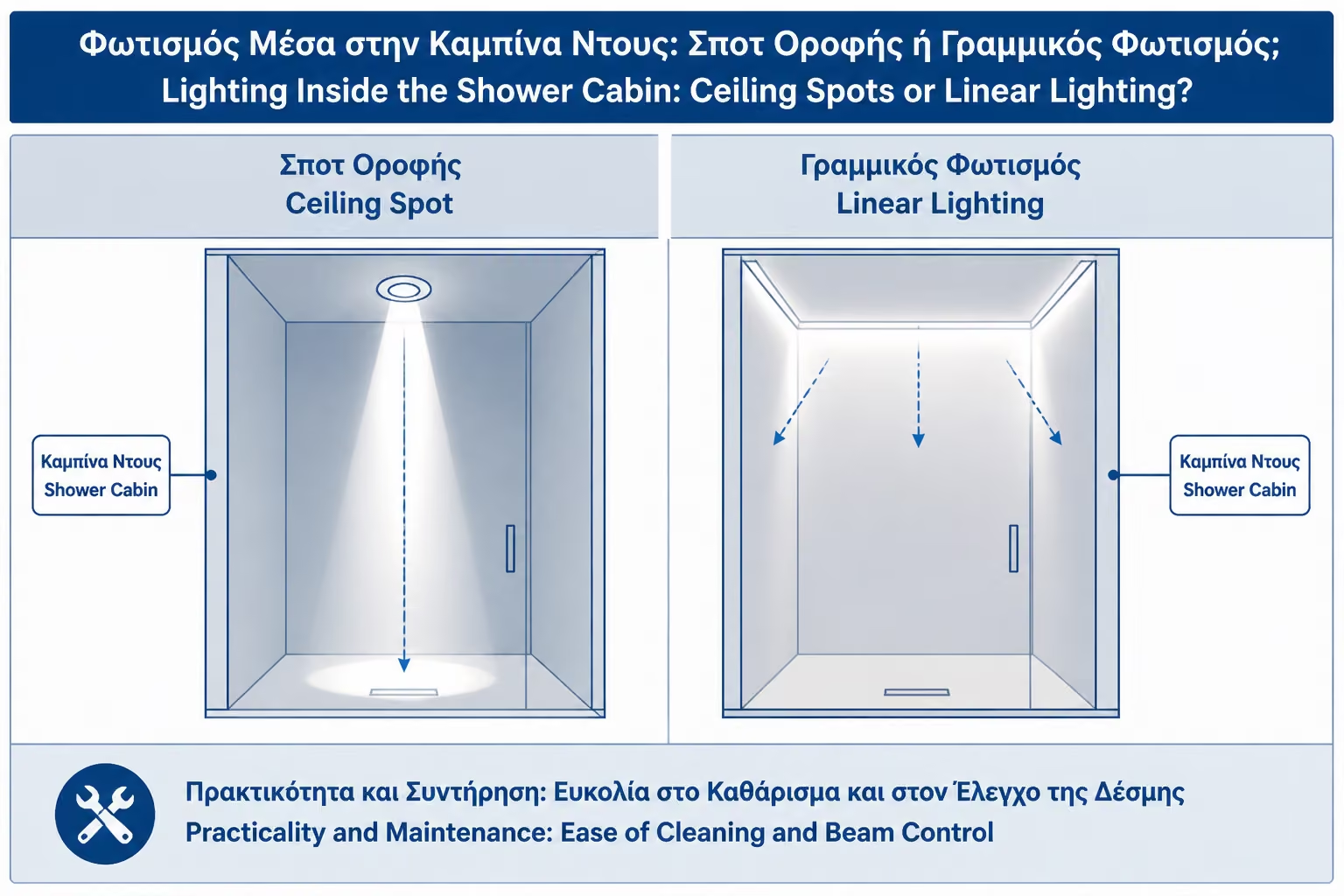
The most common solution for lighting inside the shower cabin is a waterproof spot or downlight on the ceiling. It is discreet, does not take up space, directly illuminates the bathing area and can be easily integrated into a false ceiling or an existing ceiling, depending on the construction.
The spot must be placed with care. If it goes right over the user's head, it can cast a strong shadow on the body or be irritating to the eyes when looking up. If it is placed too close to the wall, it may illuminate the tiles more and less the area of use. If the beam is too narrow, it creates a "spot" of light and not a comfortable uniform diffusion.
In a walk-in shower, a spot towards the center of the bathing area or slightly in front of the shower head may work best. In an enclosed cab, frame, glass, door and height must be considered. In a shower with a rain shower on the ceiling, the spot must not collide with the head, nor be located in a place that receives direct and continuous exposure.
The practical aim is to light up the shower without creating a strong glare. A good sealed downlight with the right beam and color temperature can give a better result than many small fixtures that went in without a design.
In addition to spot, linear lighting can also be used in a special waterproof profile. This solution gives a more architectural look and can highlight a wall, a recess, a false ceiling or the length of the walk-in shower. It is more demanding, but it can give a very impressive result.
Linear lighting must be designed from scratch. It needs track, profile, power, joint protection and correct driver position. If it is going to go into or very close to the water zone, the watertightness requirements are strict. A simple LED strip on a random channel is not enough.
Unlike the spot, linear lighting can "wash" the wall with light, highlighting tiles, stone or micro-cement. This is very beautiful in spa aesthetics. But it also highlights the imperfections. Bad cuts, crooked joints, surface ripples or rough finishes are more visible when the light falls parallel to the wall.
It's a solution worthy of thoughtful renovations, but not as a casual addition. If the budget is tight, a good waterproof spot can be a safer and more economical option.
Color therapy, or chromotherapy, in shower systems is the use of colored lighting in or around the shower head. The user sees the water or bathing area lit up in different colors, creating a spa feeling. Typically these systems use RGB or RGBW LEDs and offer color changing programs or fixed options.
Aesthetically, the result can be impressive. Especially in a large rain shower head or a ceiling shower system, light can make the experience more special. But it should not be presented as a medical treatment or as a solution with guaranteed health benefits. In the residence, chromotherapy is primarily an atmospheric and sensory experience.
There are shower heads with built-in LEDs that are battery operated, electrically powered, or in some cases with a small hydro generator from the water flow. Quality varies greatly. Another inexpensive color-changing accessory and another certified bathroom system from a serious manufacturer, designed for permanent installation.
For a master residence bathroom, color therapy should be evaluated as an added luxury. First the basic lighting, plumbing, water pressure, drainage and waterproofing must be correct. Then it makes sense to add chromotherapy.
There are two main rationales. The first is to install independent lighting inside the cabin, such as a waterproof spot or linear LED, and the second is to choose a shower head with integrated lighting or chromotherapy.
The independent spot is usually more practical as lighting. It gives real visibility to the shower, can be selected in the right color temperature and serves every day. The chromotherapy head gives experience and atmosphere, but does not always replace functional lighting. If the only light inside the shower is colored, practicality may be limited.
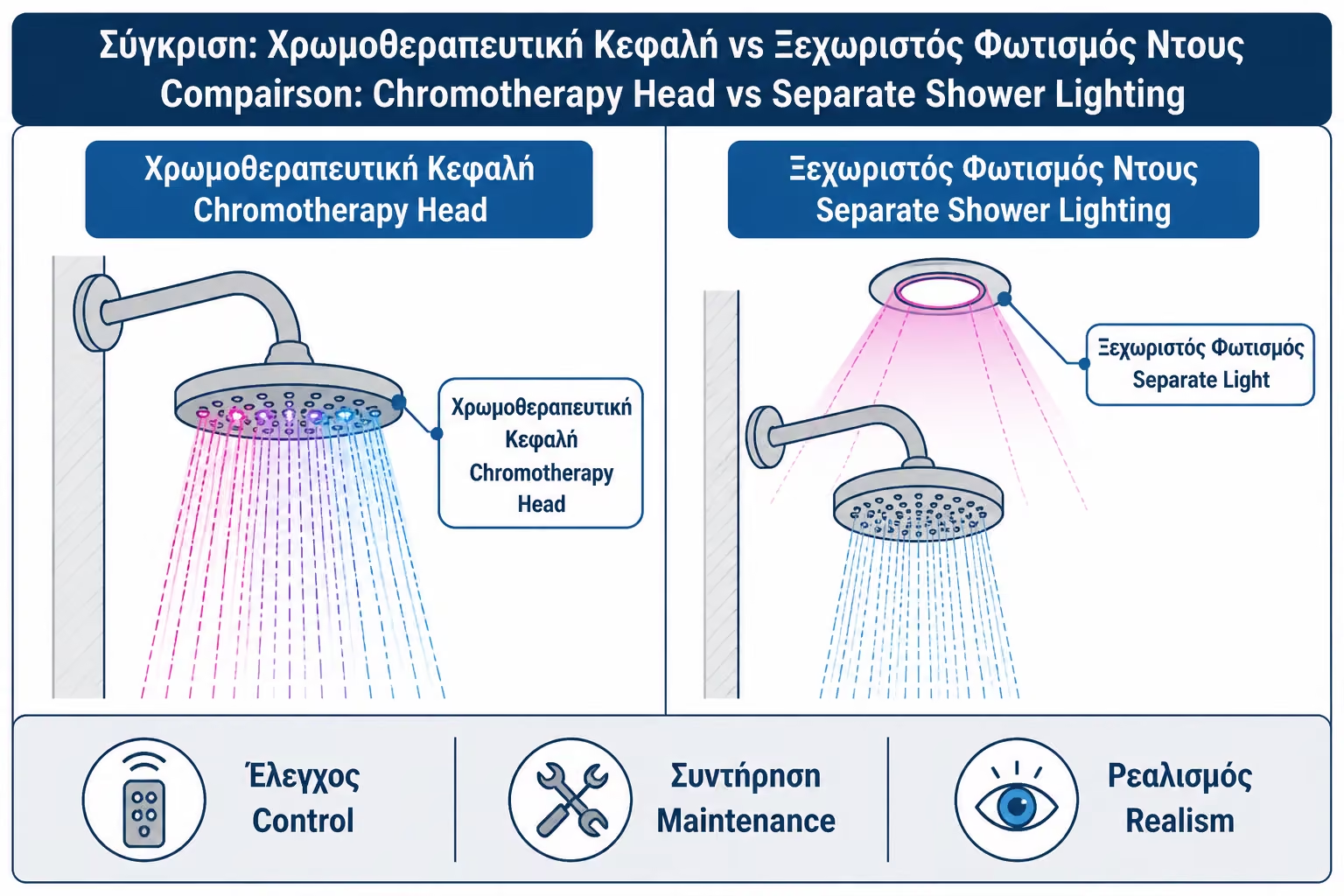
| Solution | Advantage | Restriction |
|---|---|---|
| Waterproof ceiling spot | Practical lighting, clear visibility | It needs correct location and IP |
| Linear LED | Architectural spa effect | More demanding installation |
| Head with chromotherapy | Experience, color, atmosphere | It is not always enough as a basic light |
| Combination spot + chromotherapy | Practicality and spa effect | Higher cost and complexity |
In an everyday bathroom, the best course of action is to first ensure functional lighting within the cabin and then consider chromotherapy as a supplement. Otherwise, there is a risk of having impressive color but not good practical light.
For basic lighting inside the cabin, the color temperature should match the rest of the bathroom. Typically, a neutral light around 4000K gives a clear picture, good visibility and a modern feel. In bathrooms with a spa feel, warmer light around 3000K can make the shower more relaxing.
Very cool light, like 6000K or 6500K, needs attention. Inside the shower it can look harsh, especially when there are white glossy tiles, chrome and a glass cabinet. It can resemble a professional or hospital environment rather than a relaxed residential bathroom.
If there is chromotherapy, basic white lighting should remain independent or at least available as a neutral option. Colors are nice for atmosphere, but not ideal for all uses. You don't want to be cleaning the shower or checking joints under blue or red light.
A good practical solution is 4000K for functional spot and chromotherapy as a separate effect. So the bathroom remains practical and when you want to relax you can use the colors.
The CRI is less critical in the shower than in the mirror, but it is not unimportant. If the cabin light highlights tiles, stone, mosaic or special textures, the color rendering affects the final result. A cheap, low-quality LED can make materials appear duller or cooler.
In a simple white shower head, CRI may not be the first criterion. In a neat walk-in shower with large tiles, natural shades or a decorative wall, it is worth choosing a better LED. The light inside the cabin isn't just for seeing. It also highlights the most important point of the bathroom.
If the lighting inside the shower is combined with an illuminated alcove, LED profile or architectural light, the LED quality becomes even more important. There, "tight" is not enough. We also want proper performance, uniformity and consistent color temperature.
As a practical guide, if you have a choice, go for fixtures with decent or high color rendering, especially if the shower has materials you want to stand out.
12V/24V lighting needs a driver or power supply. This part should not be treated as a detail. It is often the first point that may need replacing over time and should be located in a safe, dry and accessible location.
In a suspended ceiling, there must be a way of access. In a piece of furniture or a technical point, there must be ventilation and proper protection. It must not be trapped behind tiles or inside a closed structure without control. If the driver breaks down and there is no access, a small electrical fault can be caused.
Also, it must be checked if the driver is suitable for the load, if it is compatible with a dimmer or smart control and if it is outside dangerous zones according to the electrician's assessment. For SELV installations, the location of the power source is critical and should not be decided lightly.
The owner must ask the electrician not only to "connect the light", but to explain to him where the driver will be located and how it will be replaced if necessary.
IP rating and low voltage are important, but not a substitute for overall electrical safety. In the bathroom, the installation must be properly protected. Having a leakage relay, proper grounding, proper lines and secure connections are essential.
Several guides for lighting in bathroom zones state that when using a 230/240V fixture in certain zones, 30mA RCD protection is required. Although the exact application must be confirmed by a licensed electrician based on the Greek installation, the practical essence is clear: the bathroom is not a place for electrical improvisations.
In old homes, bathroom renovation is an opportunity to check the existing electrical installation. If there are old lines, inadequate protection or rough connections, there is no point in adding modern lighting without correcting the base.
Just because a light is on doesn't mean the installation is safe. Especially inside the shower cabin, the installation must be checked with professional seriousness.
The false ceiling is a frequent solution in bathroom renovations, because it hides wiring, allows recessed spots and gives a cleaner result. Above the shower, however, needs special attention. The suspended ceiling is exposed to water vapor and must be suitable for a damp area.
The spot must be suitable from the side facing the shower, but the placement from behind must also be correct. If there is a gap above the false ceiling where moisture collects, if the light fixture is not fixed properly or if the driver is in a bad place, problems can occur.
Access must also be provided. If there are drivers, joints or control systems above the false ceiling, there must be a hatch or other means of maintenance. A suspended ceiling that closes everything "to look clean" can create an expensive problem later.
The correct false ceiling in the bathroom is not only aesthetic. It is a technical system that must cooperate with lighting, ventilation, humidity and maintenance.
There are many different chromotherapy solutions on the market. From simple LED shower heads that change color to more expensive ceiling systems with lighting programs, remote control or connection to smart functions. The difference is not only aesthetic. It is also a technique.
Very affordable LED heads are often intended more for effect than for long-term, serious installation. They may run on a battery or a small hydro generator, but their durability depends on build quality, salts, water pressure and use. In hard water areas, nozzles and internal components can be affected more quickly.
More complete chromotherapy systems are usually of better quality, but require proper installation, possibly electrical power, space for accessories, and access for service. Also, the cost goes up significantly.
The owner has to decide what he wants: a fun effect at a small cost or a serious premium solution that is part of an overall shower system. The two categories should not be compared as if they were the same product.
When we talk about a shower head with lighting or chromotherapy, it is not enough to look at the light. The hydraulic side must also be checked. The head must match the mains pressure, the water supply, the thermostatic system if present and the general installation.
In some LED heads that are powered by water flow, performance depends on pressure and flow. If the pressure is low, the light may be weak or unstable. If the water has a lot of salts, the system may need more frequent cleaning.
In the case of large rain shower heads, it is necessary to check whether the existing plumbing can provide the required flow. There's no point in putting in an impressive lighted head if the water falls weakly or if the temperature fluctuates.
The spa experience is not just about color. It results from proper pressure, constant temperature, proper drainage, good lighting and safe installation.
The lighting inside the cabin is especially valuable when the shower is large, deep, dark, walk-in or located in a place that is not well lit by the rest of the bathroom. It is also worth it when the shower is the main aesthetic element of the space, with a large glass, especially tiles or an illuminated alcove.
In small bathrooms with light-colored materials and good general lighting, it may not be absolutely necessary. There, a proper general ceiling lighting that also covers the shower area may be sufficient. But if the cabin has a curtain, dark tiles or is located in a corner, an additional waterproof spot can make a big difference.
Chromotherapy is worth it when the owner wants experience and not just practical light. It suits more careful renovations, in master bathrooms and in areas where the bathroom is treated as a place of relaxation. It is not a top priority in a financial overhaul where there are more fundamental issues.
The correct rule is: first functional lighting, then atmosphere, then special effects.
There are cases where the lighting inside the cabin needs to be simplified or avoided. If the electrical installation is old and is not going to be fully tested, it is not appropriate to add complex systems in a wet zone. If there is no way to place the driver in a safe and accessible place, the solution should be reconsidered.
If the ceiling is too low, a wrong spot can be annoying. If the shower is very small, general lighting may be sufficient. If the budget is tight, it is better to prioritize waterproofing, proper plumbing, non-slip flooring, quality battery and mirror lighting.
Chromotherapy should be avoided as a cheap "glamour" in a bathroom that has not solved the basics. An illuminated head with colors cannot hide a bad tilt, a clogged siphon, insufficient ventilation or a bad seal.
In technical projects, luxury must tread on the right footing. Otherwise, it becomes a source of problems.
The cost depends on the type of solution, the quality of the lights, the IP protection, the operating voltage, whether there is a suspended ceiling, whether a new circuit is needed, where the driver will be inserted, access, the floor, the area, whether VAT is included and whether the work is done as part of a complete renovation or in a finished bathroom.
| Solution | Indicative range 2026 | What affects the price? |
|---|---|---|
| Waterproof spot IP65 for shower | €25–90 per piece | Quality, beam, CRI, brand |
| Quality spot 12V/24V with driver | 70–180€+ in total | Lamp, driver, installation |
| Linear sealed lighting | 180–600€+ | Length, profile, IP, driver, false ceiling |
| Basic LED shower head | €30–€150 | Quality, mode of operation, durability |
| Premium head / chromotherapy system | 300–1,500€+ | Brand, dimensions, control, installation |
| Electrical supplies and utilities | Wide variation | Digging, access, old installation |
| Dimmer / smart control | 50–250€+ | Compatibility, system, work |
The very low price in such applications should be carefully controlled. Does it actually include a proper IP? Does it include drivers? Is it low voltage? Where is the power supply placed? Is electrical work included? Is there VAT? Is there access for maintenance?
On the other hand, the most expensive solution is not always needed. For most bathrooms, a quality watertight spot in the right location offers more day-to-day value than an expensive colored system that will be used infrequently.
Errors in this area can be aesthetic, practical or electrical. The problem is that many times they are only visible after the bath is over.
| Error | What it causes in practice | A more correct approach |
|---|---|---|
| Simple spot without proper IP | Risk of harm or unsuitability | Waterproof luminaire suitable for the position |
| Driver in wet zone | Risk of damage and difficult maintenance | Safe, accessible spot |
| Light too cold | A harsh, unwelcoming image | 3000K or 4000K depending on style |
| Spot in wrong position | Glare or shadows | Design based on use |
| Chromotherapy as unique light | Impressive but impractical | Separate functional lighting |
| Buy cheap LED head without control | Low durability, problems from salts | Choose a reliable product |
| Closed suspended ceiling without access | Accurate repair | Box or accessible driver |
| Ignore relay leakage and installation | Insufficient electrical safety | Inspection by a licensed electrician |
| Decision after the tiles | Contingencies and compromises | Forecasting from the design phase |
A typical example is the walk-in shower with dark tiles and only one central light in the bathroom. The owner finds after delivery that the shower is dark. If a watertight spot with a proper supply had been foreseen from the beginning, the cost would have been reasonable. After the tiles and suspended ceiling, the addition becomes more difficult and more expensive.
| Inquiry | Yes / No |
|---|---|
| Has the position of the light fixture been evaluated in relation to the bathroom zones? | Yes / No |
| Does the light fixture have an appropriate IP for its location in or above the shower? | Yes / No |
| Has a low voltage 12V/24V solution been considered where appropriate? | Yes / No |
| Will the driver or power supply be located outside the wet zone, in a safe and accessible place? | Yes / No |
| Is there a leakage relay and has the electrical installation been checked? | Yes / No |
| Won't the spot dazzle the user when showering? | Yes / No |
| Does the color temperature match the rest of the bathroom? | Yes / No |
| If there is chromotherapy, is there also normal functional white light? | Yes / No |
| Is the LED shower head compatible with the water pressure and flow? | Yes / No |
| Has water hardness and desalination been considered? | Yes / No |
| Is there access for service to drivers, controllers or components? | Yes / No |
| Does the quote include lighting, IP, driver, labor, VAT, utilities and electrical control? | Yes / No |
If you want lighting inside the shower cabin, start with safety, not effect. For everyday use, a well-placed waterproof spot, often a low-voltage 12V/24V with a driver in a safe and accessible place, is a more substantial choice than an impressive but sketchy paint system. Chromotherapy can give a nice spa feel, but it should be complementary, not a substitute for functional lighting. And in any case, the electrician should check zones, IP, protections and connection before buying the equipment.
Lighting inside the shower cubicle can significantly upgrade a bathroom. It makes the shower brighter, safer, more comfortable and more impressive. In walk-in showers, dark tiles or spa-style bathrooms, a properly designed light fixture can change the entire experience of the space.
However, the right solution is not "just any waterproof spot". It needs a suitable IP, correct location, low voltage where appropriate, driver in a safe place, leakage protection, correct suspended ceiling or construction and installation by a licensed electrician. The bathroom is a special electrical space and the shower area is one of its most demanding parts.
Chromotherapy systems and illuminated shower heads can give an impressive atmosphere, but must be chosen realistically. It's experience and design, not a basic need. First there must be proper white light, safe installation, proper plumbing and good maintenance. Then the color can be added.
The best decision for the owner is to anticipate the lighting of the cabin from the beginning of the renovation. Thus the facilities, drivers, false ceiling, lighting and shower systems are properly integrated into the project. When lighting is planned ahead of time, the result can be both practical and luxurious, without hasty solutions and afterthoughts.
Return to category.
Go to categoryReturn to the central guide.
Go to guide