
Bathroom Lighting, Ventilation & Heating
Return to category.
Go to categoryHidden LED lighting is one of the details that can dramatically change the image of a bathroom. A simple hanging piece of furniture looks lighter when lit from below. A mirror gains depth when lit behind it. A false ceiling or a niche in the shower can give the space a more architectural feel, without necessarily adding a lot of decorative elements.
The problem is that recessed lighting is often treated as an easy "extra idea" at the end of the renovation. The owner sees a photo of a hotel bathroom or on social media and asks "let's put an LED strip somewhere". However, if provisions, power supplies, correct profiles, tightness and access for maintenance are not foreseen, the solution can become sketchy, expensive or problematic.
In the bathroom, the LED strip is not just a decorative accessory. It is located in a place with moisture, water vapors, cleaning agents, possible splashes and frequent temperature changes. A film that works well in a bookcase or bedroom does not mean it is suitable for under bathroom furniture, inside a shower niche or around a false ceiling.
Proper recessed lighting must play a role. Another thing is the low night lighting under the furniture. Another is the backlight behind the mirror. Another thing is the ceiling lighting that "washes" the wall. Another thing is the illuminated alcove in the shower. When all this goes in without a plan, the bathroom can appear excessive, tedious or technically sketchy. But when they are designed correctly, the space acquires depth, comfort and a feeling of higher quality.
This guide explains where hidden LED lighting can be placed in the bathroom, what is the difference between ambient lighting and functional lighting, what technical points should be checked before installation, how much it might cost in the Greek market of 2026 and what mistakes to avoid.
Hidden LED lighting is lighting where the light source is not directly visible or only slightly visible. The user does not look at the LED. It sees the light reflected on a surface: on the floor, on the wall, behind the mirror, under the piece of furniture or inside an architectural detail.
This is also the reason why hidden lighting looks more "expensive" than a simple lamp. It does not draw attention to the body of the lamp, but highlights the space. It creates depth, shadows, a sense of levitation and a calmer atmosphere.
In the bathroom, the effect is even more pronounced because the space is usually small. A light line under a hanging piece of furniture can make the floor appear lighter. A backlit effect behind the mirror can soften the image of the wall. A perimeter light line on the ceiling can visually enlarge the space, if used correctly.
The crucial thing is not to confuse hidden lighting with the basic lighting of the bathroom. The LED strip does not always replace the ceiling light, nor the correct mirror lighting. It usually works complementary. It gives atmosphere, comfort and visual quality, but it should not assume a role it cannot fill.
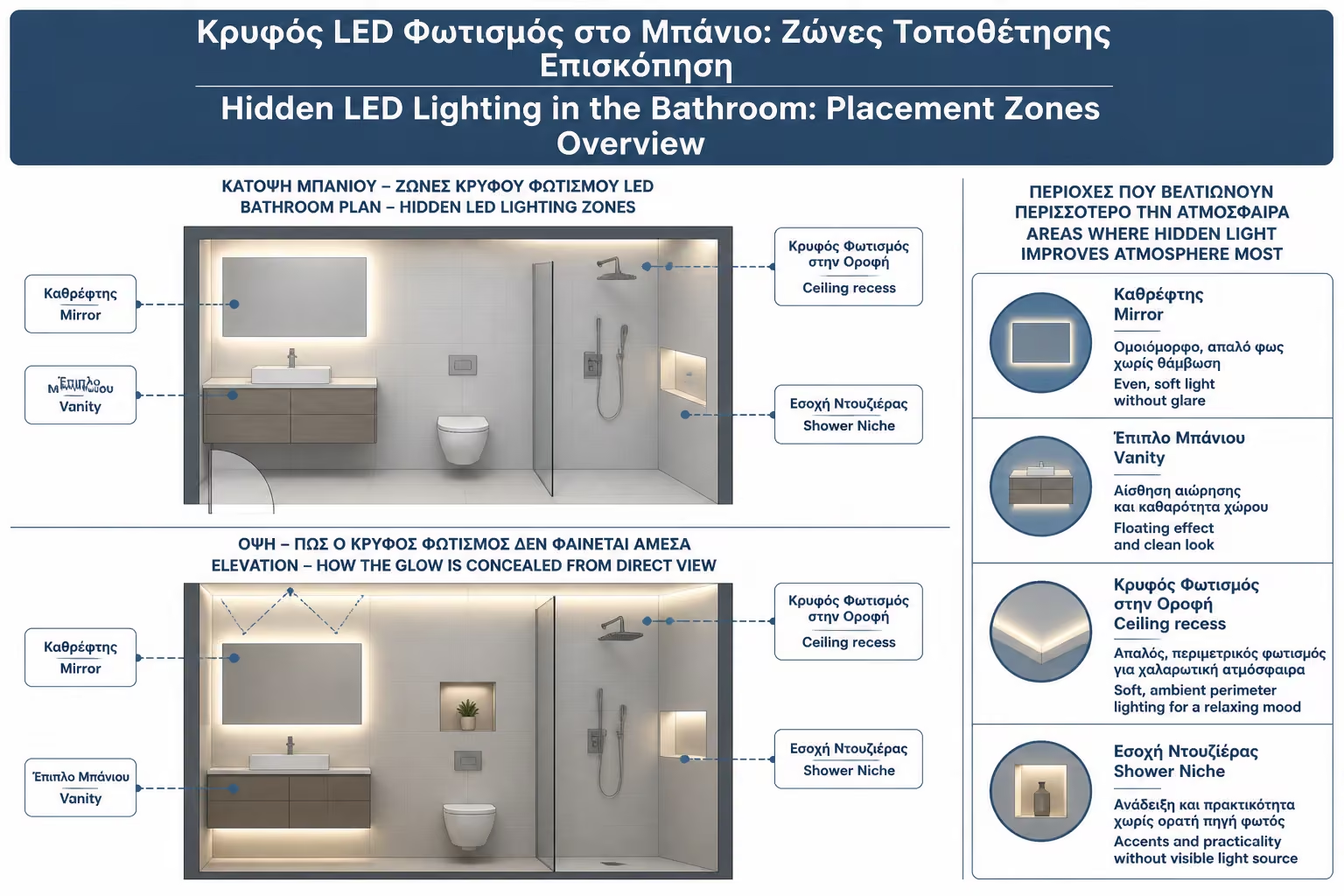
The most common places for hidden LED lighting in the bathroom are under hanging furniture, behind the mirror, in false ceilings, in niches, on shelves or in linear profiles that highlight walls and materials. Each position has a different function and different technical difficulty.
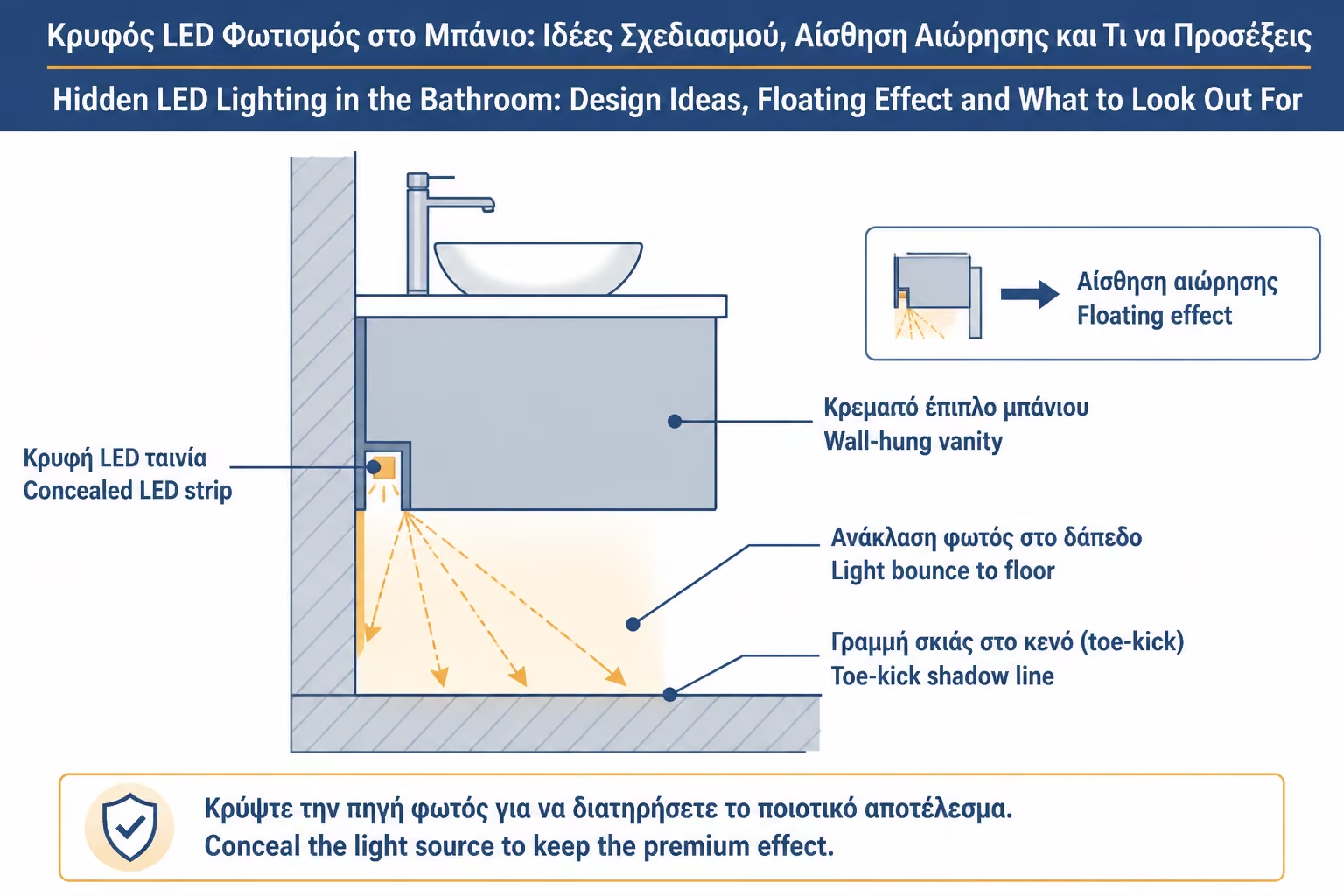
Under the furniture, the lighting creates the so-called floating effect. The furniture seems to float and the floor takes on a soft glow. Behind the mirror, the lighting creates a halo on the wall and makes the sink area more impressive. On the ceiling, hidden lighting can give a sense of height or soften the general light. In a shower niche, it highlights the tile and adds a more premium detail.
| LED position | Main role | What to watch out for |
|---|---|---|
| Under hanging furniture | Floating effect, night lighting | Moisture, floor cleaning, correct intensity |
| Behind a mirror | Atmosphere, depth on the wall | It does not always replace face lighting |
| Around the ceiling | Architectural effect, diffusion | Bathroom height, access, power supplies |
| In a shower niche | Highlight tiles, luxurious image | Tight tightness and correct joints |
| On shelves or recesses | Decorative highlight | Avoid exaggeration and blur |
Site selection must be made before electrical work begins and before walls are closed. If decided at the end, the solutions are limited and often lead to exposed cables, external channels or sketchy connections.
Lighting under hanging bathroom furniture is perhaps the most practical and at the same time impressive hidden LED application. The furniture looks lighter, the floor is softly lit and the bathroom takes on a more modern look without the need for a bold decorative element.
The big advantage of this solution is that it can also work as night lighting. If someone gets up at night, there is no need to turn on the central light. A low, warm LED under the furniture gives enough visibility to move safely, without bothering the eyes.
The point of attention is the intensity. If the LED strip is too strong, the floor can shine too much and every dust, drip or imperfection can be seen. If it is too weak, the effect is lost. Special care is needed on glossy floor tiles, as reflections can become annoying.
Cleaning must also be considered. A mop goes under the furniture, there are water vapors, dust and possible drops. The film should not be left exposed. It needs an aluminum profile with a cover, proper fixing and suitable protection for the bathroom environment.
Lighting behind the mirror is one of the most popular options. It creates a bright outline on the wall and makes the mirror appear to be detached from the surface. It is elegant, calm and fits very well in modern bathrooms.
But his role must be clarified. The backlight behind the mirror is mostly ambient. It lights the wall, not necessarily the face. If the mirror is used for makeup or shaving, additional front lighting may be needed, such as a frontlit mirror, sconces or other task lighting.
A common mistake is to assume that because the mirror "has LEDs", the mirror lighting is also solved. The user turns on the light, sees a beautiful halo on the wall, but his face remains relatively dark or shadowy. The result looks impressive when looking at the bathroom, but not when standing in front of the mirror.
Behind-the-mirror lighting is excellent when used correctly: for atmosphere, depth and soft use. If combined with proper face lighting, then it gives both practicality and aesthetic quality.
Concealed lighting in the ceiling can give a very beautiful effect, especially in bathrooms with false ceilings or architectural recesses. It can illuminate the perimeter of the space, highlight a wall, create a sense of height or work as a softer lighting compared to spots.
In large bathrooms, the perimeter LED line can make the space more unified and more luxurious. In small bathrooms, however, it needs moderation. If the height is low and the false ceiling descends too much, the bathroom can look cramped. The light can be nice, but the construction steals valuable height.
Another point is uniformity. A bad LED strip or a cheap profile can show dots, discontinuities or different intensities. On the roof, these are easily seen. The hidden lighting must be continuous, clean and without "breaks" in the light.
The suspended ceiling must also be technically foreseen: where the power supply will go in, how to access it if it breaks down, how the system will be ventilated and how the connections will be protected from moisture. It is not enough to have a plasterboard and an LED strip. Complete installation is required.
The illuminated alcove in the shower is one of the most impressive details in a modern bathroom. It highlights the tile, makes the space look more thoughtful and offers practical light where shampoos and products are placed.
But it is also one of the most demanding applications. The niche is in or very close to the water zone. Accepts water vapor, drops, cleaning agents and frequent use. A simple LED strip, even if it is listed as "waterproof", is not enough if the joints, cut edges and profile are not properly protected.
Here, strict cooperation between an electrician and a bathroom technician is needed. The niche must have proper sealing as a construction, before even talking about LEDs. The profile must be placed so that it does not retain water, does not create moisture trapping points and can be maintained as well as possible.
In a renovation, if the owner requests an illuminated alcove after tiles have already been installed, the solution becomes very difficult. That is why such applications must be planned from the beginning, together with waterproofing, slopes and electrical supplies.
In addition to the main points, LED can also be placed under shelves, in recesses, under counters or in decorative elements. These solutions can give a very nice result when used in moderation.
In a bathroom with a wooden shelf above the sink or an open towel rail, a thin line of LEDs can highlight the element without weighing it down. On a counter with a built-in sink, low lighting can give a more "custom" feel.
The problem starts when everything is lit up. Under the furniture, behind the mirror, on the ceiling, in the alcove, on the shelves, on the counter. Then the bathroom loses its calmness and looks like a lighting showroom. Good design does not mean a lot of LED strips. It means correctly selected bright details.
A rule of thumb is to choose one to two key hidden lighting points in small bathrooms and more only when the space allows for it. Light should lead the eye, not confuse it.
The color temperature of the recessed lighting affects the atmosphere of the bathroom. For ambient applications such as under furniture, behind a mirror or in a niche, warm light around 3000K is often more pleasant. It gives a relaxed feeling and is not tiring at night.
For a cleaner and more modern effect, neutral light around 4000K can be used, especially if the hidden lighting is combined with the general lighting of the bathroom. But very cold light, like 6000K or 6500K, needs attention. It can make the space look harsh, especially if there are white glossy tiles or lots of reflective surfaces.
In practice, a very good logic is for the mirror and the main lighting to have a neutral light, usually around 4000K, while the hidden lighting is warmer, around 3000K. This creates a separation between functionality and atmosphere.
But there must be a plan. If each LED is purchased from a different supplier and has different Kelvin, the result can become disconnected. A light turns yellow, another blurs and the space loses its coherence. Before purchase, the overall color temperature per light level should be decided.
RGB LEDs allow color changing. They look impressive in photos, especially when they illuminate alcoves, ceilings or behind mirrors. However, in daily living, they need a lot of attention. A bathroom with blue, red or purple lighting can look spectacular for a few minutes, but quickly tire.
If the owner wants color capability, it is better to consider RGBW rather than simple RGB. RGBW also has a separate white LED, so it can provide more useful white light when colors are not being used. Simple RGB often produces white light with mixed colors, which is not as natural.
In a master bathroom, RGB should have a secondary role. They should not replace proper mirror lighting or basic lighting. They can work as an effect in special moments, not as an everyday lighting base.
In small bathrooms, colored LEDs can easily look cheap or excessive if not used sparingly. If a long-lasting effect is desired, a good warm or neutral white LED is usually a safer choice.
Many owners generally talk about "LED tape", but it is not always the best solution. In some applications, a ready-made linear luminaire or integrated profile can be cleaner, more reliable and easier to maintain.
The LED strip has the advantage of being adaptable to lengths, curves and special constructions. It is ideal for hidden lines, furniture, mirrors and recesses. But you need the right choice of tape, power supply, profile, wiring and protection.
The off-the-shelf linear luminaire may be simpler for specific applications. It has an integrated body, diffuser, mounting and often better mechanical protection. It may cost more, but it reduces the risk of poor application.
The choice depends on the point. For under furniture, a proper LED strip in profile can be excellent. For wet niche lighting, a more specialized system may be needed. For a perimeter ceiling, the quality of the tape and profile is critical so that dots and discontinuities do not appear.
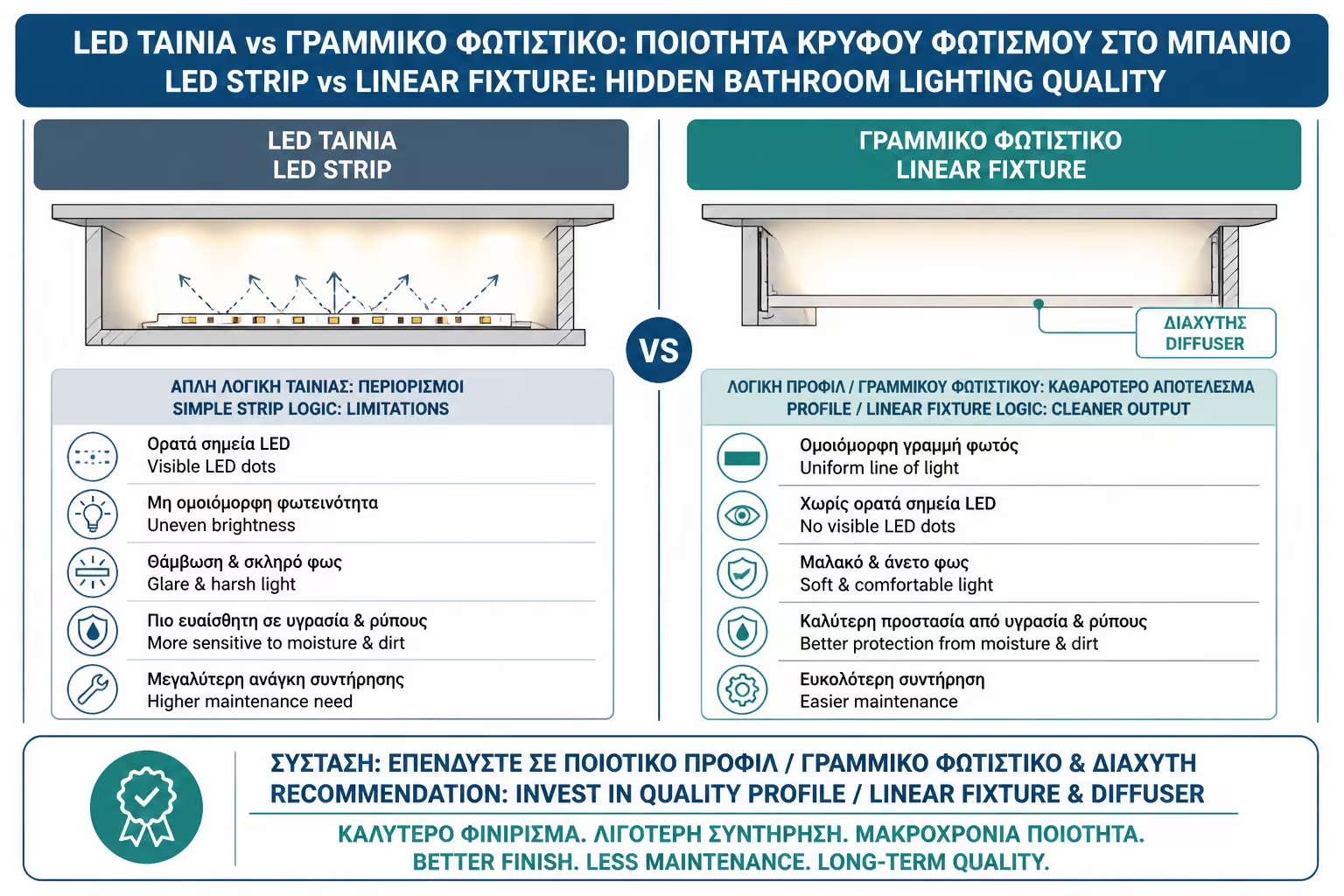
The LED strip must not be left bare. The aluminum profile and the diffuser, i.e. the diffusion cover, have a very important role. The profile helps support and thermally manage the film. The diffuser softens the light and reduces the appearance of individual LED dots.
Without a profile, the tape can peel off, run hotter, collect dust, or look sketchy. In a bathroom, where there is moisture and cleaning, this is even more problematic. The tape sticker is not designed to be a permanent construction solution in a demanding environment.
The diffuser is equally important for the aesthetic effect. If you can see the LED dots on the floor, wall or mirror, the effect looks cheaper. In hidden lighting we want a continuous line of light, not a series of small spots.
At very short distances from the illuminated surface, even more care is needed. If the tape is very close to the floor or wall, the dots are easier to see. There a denser LED strip or a deeper profile with better diffusion may be needed.
The term "waterproof LED strip" is used very easily in the market, but in the bathroom it must be interpreted carefully. One is a film with moisture protection and another is a film suitable for direct exposure to water. It is one thing to protect the tape itself and another to protect the joints, cut ends and connections.
For places with moisture but without direct water, such as behind a mirror or under a piece of furniture, you need a product suitable for the bathroom and proper protection. For locations in or near the shower, the requirements are much more stringent and must be evaluated by a licensed electrician.
The movie's IP doesn't solve everything. If the tape is cut on site and the edges are not properly sealed, the original protection is largely negated. If connections are made casually in a wet zone, the system remains vulnerable. If the power supply is inserted in the wrong place, a maintenance or safety problem may arise.
In the bathroom, the correct phrase is not "we put waterproof tape". It is "we put in a suitable LED system for the specific position, with correct connections, profiles, power supply and electrical protection".
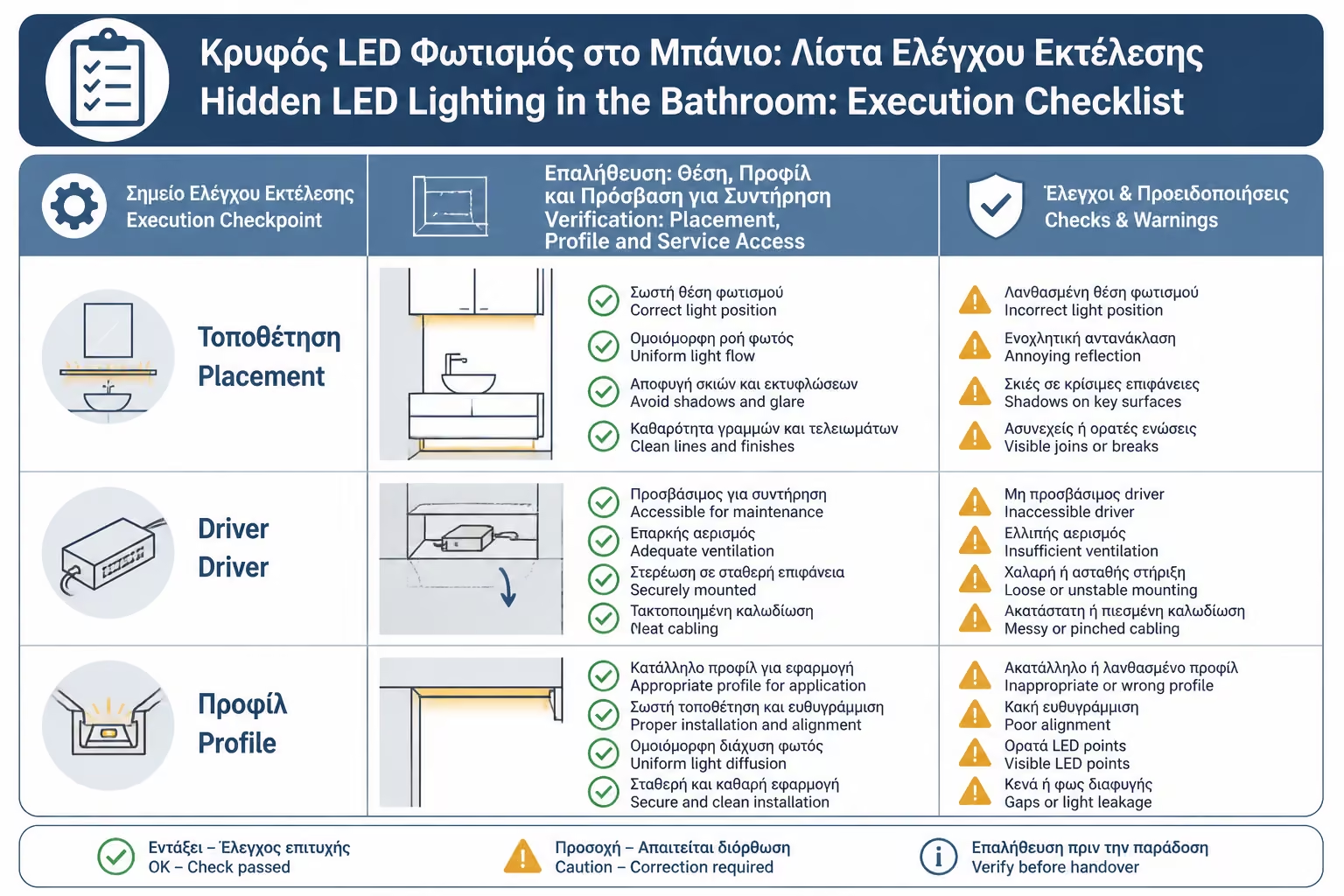
Every LED strip needs a power supply or driver. This component is often the most neglected part of the installation. The owner sees only the bright line. But somewhere there is a power supply that converts the voltage and feeds the film. If this is placed haphazardly or in an inaccessible place, future problems are created.
The power supply must not be enclosed without access behind tiles, in a closed suspended ceiling without a hatch or in a damp place without proper protection. If it breaks, it must be replaceable. If it heats up, it must have the conditions required by the manufacturer. If located near a wet zone, it must be installed in accordance with the instructions and regulations.
A frequent mistake is to make a very beautiful construction, but without any provision for maintenance. When after two years the film starts flickering or the volume drops, no one knows where the power supply is or how to change it without damage.
Proper installation should look simple to the user, but be thought out from behind. Clean image should not come at the expense of maintainability.
Recessed lighting is most valuable when controlled independently of general lighting. If all the sources are lit together, the meaning of the different scenarios is lost. The LED under the cabinet doesn't need to light up every time the center light comes on. The lighting behind the mirror doesn't always have to work together with the face lighting.
A separate switch gives flexibility. A dimmer can make recessed lighting much more useful because it allows low intensity at night and a more intense effect when needed. In under-furniture applications, a motion sensor can be particularly practical for nighttime use.
But compatibility must be checked. Not all LED strips work with all dimmers. Not all drivers are dimmable. Not all sensors are suitable for wet areas or for this particular location. These should be decided before purchase.
In smart installations, hidden lighting can be integrated into scenarios: breakfast, relaxation, night visit, cleaning. This can be very useful, but is not necessary in every bathroom. A simple and properly designed installation with two separate switches can be more reliable than an overly complex system.
Concealed lighting looks expensive when it is discreet, uniform and integrated into the bathroom design. There should be no tape, no dots, no flickering, no different shades of white for no reason, and no visible wires.
It looks sloppy when it's put on after the fact without forethought. When the LED strip is stuck under furniture without a profile. When the light falls unevenly on the floor. When the cable is seen from the side. When the mirror has very bright blue light behind it and the rest of the space is warm. When the ceiling has light discontinuities.
A bathroom doesn't need a lot of LEDs to look neat. It takes a little, right? For example, in a small bathroom of 4–5 m2, a good floating effect under the furniture and a subtle lighting behind the mirror can be enough. If a perimeter ceiling, an illuminated alcove, and RGB lines are added, the effect can lose its seriousness.
Quality in recessed lighting is mostly seen in what we don't see: clean lines, correct diffusion, hidden connections, correct intensity and natural integration into the space.
The cost of LED recessed lighting varies widely. It depends on the length of the strip, the quality of the LED, whether it needs IP protection, the aluminum profile, the diffuser, the power supply, the way of control, the electrical supplies and the complexity of the installation. It is also affected by area, floor, access, whether the work is in an open renovation or a finished bathroom, whether VAT is included and whether the quote is for materials only or materials plus labour.
| Application | Indicative range 2026 | What affects the price? |
|---|---|---|
| LED under hanging furniture | 80–220€ | Length, profile, driver, switch/sensor |
| Lighting behind a mirror | €100–€300 | Mirror dimensions, mounting method, power supply |
| Suspended ceiling perimeter lighting | 180–600€+ | Measures LED, false ceiling, profile, access |
| LED in shower niche | 180–500€+ | Tightness, special profiles, difficult installation |
| Dimmer / sensor / smart control | 40–200€+ | Compatibility, component quality, installation |
| Additional benefits and arrangements | Wide variation | Excavation, tiling, false ceiling, existing installation |
The very low prices are usually for simple tape without a complete system or installation in an easy spot. In a real bathroom, especially when there are dampness and hidden supplies, the cost is not only the tape. It's the whole thing: profile, power, protection, placement, connection and future access.
The higher price is justified when there is difficult access, wet zone, many cuts, special profile, false ceiling, dimmer, smart control or custom construction. It's not justified just because "it's LED". The owner should ask for a detailed description of what is included.
Concealed lighting should be decided early. Before the tiles are laid, before the suspended ceiling is closed, before the furniture is ordered and before the mirror is bought. Otherwise, installation becomes more difficult and often more expensive.
It has to be decided where the LED will fit, how it will light up, where the power supply will be located, if there will be a dimmer, if there will be a sensor, what Kelvin it will be, if the profile will be visible and if access is needed for maintenance. These are not details that are resolved at the end. They are key design decisions.
If the hidden lighting goes under a piece of furniture, the electrician must consult with the manufacturer or supplier of the piece of furniture. If it goes behind a mirror, we need to know the thickness, support and supply. If it enters a suspended ceiling, we need to know the route, the profile and the access point. If it goes into a shower niche, it must be provided along with the waterproofing.
A frequent and expensive mistake is to ask for LED strip when everything is finished. Then the solutions are limited: either a cable is visible, or holes are drilled in finished surfaces, or a battery/wireless solution is chosen which does not have the same effect. Concealed lighting needs design to stay truly hidden.
In simple decorative applications outside the bathroom, some homeowners are experimenting with LED strips themselves. In the bathroom, however, the situation is different. There is electricity, humidity, possible contact with water and the need for proper protection. Installation must be done by a licensed electrician, especially when there is a permanent supply, power supply, connection to a switch, dimmer or lighting near a shower.
The owner can choose the aesthetic, color temperature and location that he likes. He can decide if he wants floating effect, backlit mirror or perimeter lighting. But he shouldn't be improvising with electrical connections, power supplies in wet zones, or sketchy LED joints.
The renovator, electrician and, where applicable, the engineer or decorator should be coordinated. One sees the safety, the other the construction, the third the aesthetic effect. When everyone works alone, the risk of error increases.
In bathrooms with old installations, the addition of LED lighting is an opportunity to check the protections of the installation. It makes no sense to put impressive lighting on a sketchy or dubious electrical base.
Mistakes in hidden lighting are often not visible at first. On the first day everything looks impressive. But then flickering, discolouration, dampness, peeling, unevenness or difficulty in maintenance appear.
| Error | What it causes in practice | A more correct approach |
|---|---|---|
| Bare LED strip without profile | Sketch, dots, peeling | Aluminum profile with diffuser |
| Wrong Kelvin | Blue or yellowish consistency | Design temperatures from scratch |
| Too many LED points | Boring or cheap effect | Few, clean bright details |
| Power supply without access | Difficult repair | Predicted maintenance point |
| LED in shower without proper sealing | Damage and safety risk | Suitable system and electrician |
| All lights in one switch | The atmosphere is lost | Separate circuits |
| Buy a movie by price only | Unevenness, short life | Quality and specification control |
| Decision after the tiles | Contingencies and compromises | Design before installation |
A typical example is the bathroom where LEDs are placed under the furniture without a profile. In the first few days the effect looks nice. After a while, the film begins to show from a low angle, collects dust, unevenly illuminates the floor and eventually looks sketchy. With a proper profile and better position, the same effect could look much better.
| Inquiry | Yes / No |
|---|---|
| Has the role of LED been decided: atmosphere, night lighting or highlighting materials? | Yes / No |
| Are the installation points defined before the tiles and suspended ceilings? | Yes / No |
| Is there a separate switch or script for the hidden light? | Yes / No |
| Is the correct color temperature selected, usually 3000K for atmosphere or 4000K for a cleaner effect? | Yes / No |
| Will the LED tape be placed on an aluminum profile with a diffuser? | Yes / No |
| Is IP protection checked by location? | Yes / No |
| Will joins and cut ends be properly protected? | Yes / No |
| Will the power supply be placed in a safe and accessible place? | Yes / No |
| Has the system been checked for dimmer or sensor compatibility? | Yes / No |
| Has the lighting in the shower, if any, been checked by an electrician? | Yes / No |
| Is overkill with many different LED spots avoided? | Yes / No |
| Does the offer list movie, profile, driver, work, VAT and accesories? | Yes / No |
If you want hidden LED lighting in the bathroom, don't start from "where it will look good". Start with what role it will have. For night lighting, LED under hanging furniture is a great solution. For ambiance, the lighting behind the mirror works very well. For an impressive design, the false ceiling or alcove can give results, but it needs proper technical forecasting. In any case, the LED strip in the bathroom must be installed with a profile, correct driver, suitable protection and access for maintenance. The most beautiful LED is the one that doesn't look like a sloppy addition.
Recessed LED lighting can really upgrade a bathroom. It can make a hanging piece of furniture look lighter, a mirror more impressive, a ceiling more architectural and a niche more neat. However, it is not a solution that is thrown in at the end.
Its success depends on proper planning. Where will it go, what will it illuminate, how bright will it be, what color temperature will it have, how will it be controlled, where will the power supply be hidden and how will it be protected from moisture. These decisions need to be made before the walls are closed, before the tiles go in, and before mirrors and furniture are ordered.
The safest approach is to use hidden lighting as a supplemental layer, not as a substitute for general lighting or mirror lighting. A bathroom needs clear light for use, proper mirror light and, where appropriate, recessed lighting for ambiance. When these are combined correctly, the result is more than just impressive. It is comfortable, practical and technically correct.
Return to category.
Go to categoryReturn to the central guide.
Go to guide