
Bathroom Lighting, Ventilation & Heating
Return to category.
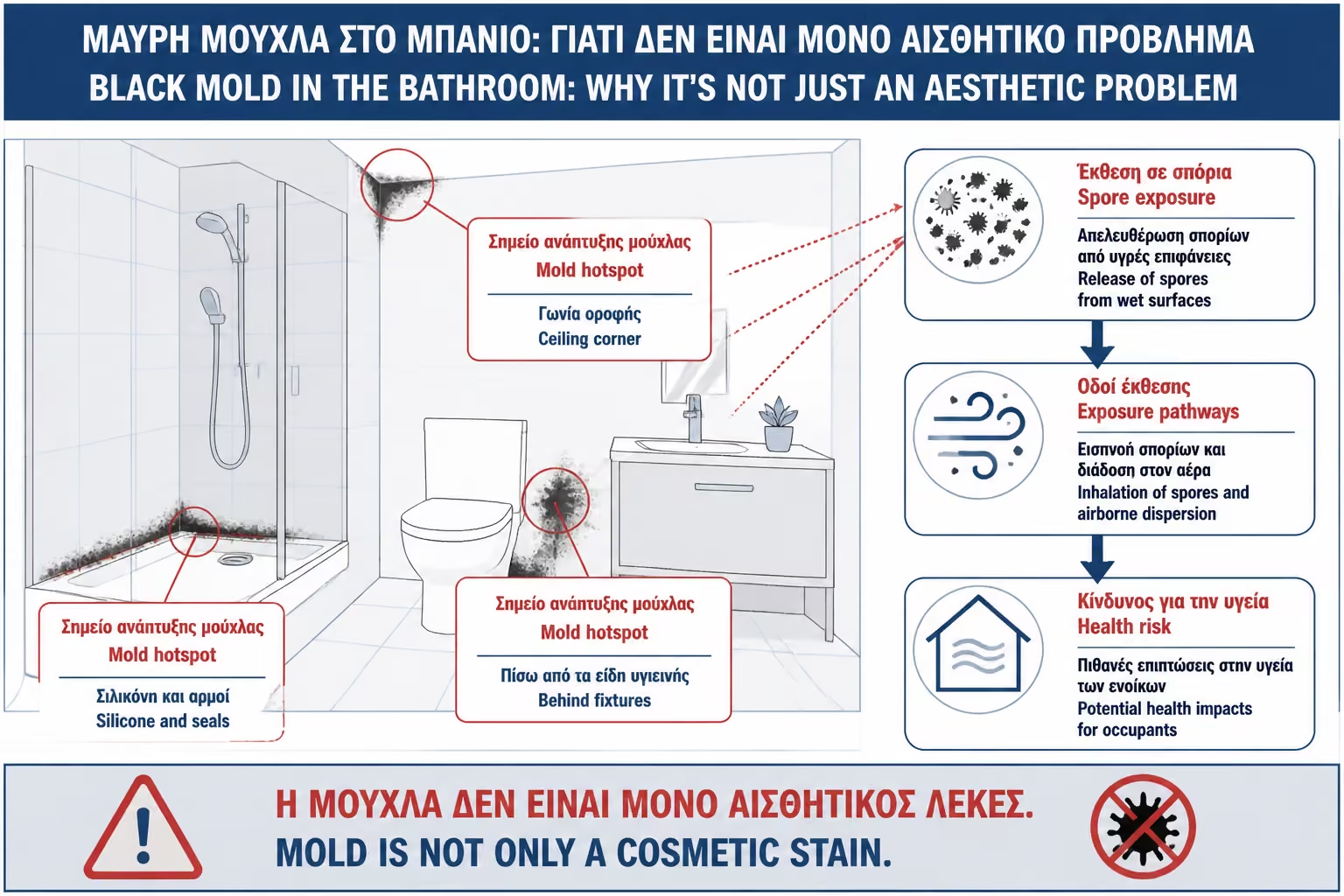
Go to categoryBlack mold in the bathroom is one of those signs that many homeowners are used to seeing. A few black dots on the shower silicone, dark lines on the joints, a tan on the corner of the ceiling, a gray mark behind the furniture or around the window. At first it just looks ugly. Something that will be cleaned "when there is time". But mold is not just a matter of image.
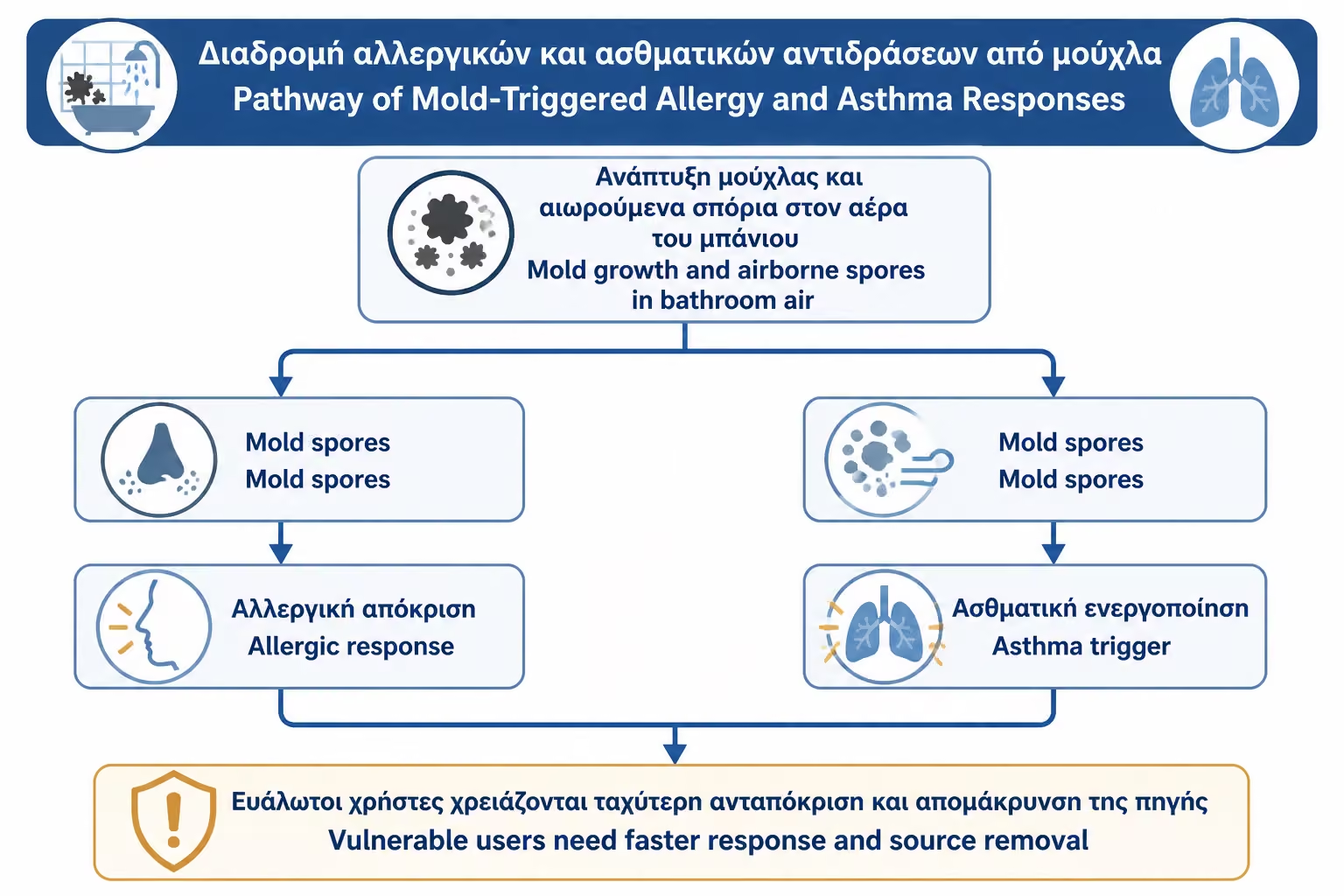
Mold indicates that the space is holding moisture. And when a space holds moisture, it's not just a problem for the materials. There is also a problem with air quality. Fungi grow on moist surfaces and release spores and tiny particles into the air. These can irritate the eyes, nose, throat and lungs, aggravate allergies and cause or worsen asthma symptoms in sensitive people. The World Health Organization has linked indoor dampness and mold to an increased incidence of respiratory symptoms, allergies and asthma.
This does not mean that every little black mark in the bathroom is an immediate medical crisis. But it does mean that we shouldn't let it grow. The area, the duration of exposure, the ventilation of the space and the sensitivity of the people living in the house play a big role. A small spot of silicone mold that is cleaned and remedied is different than a ceiling that turns black every winter and stays that way for months.
Black mold in the bathroom is often the result of condensation. The warm moist air from the shower touches cold surfaces, droplets are formed and the surfaces remain wet. If there is no good ventilation, if the door has no air intake, if the vent is dirty or weak, if the corners are cold due to thermal bridging or if there is a real leak, mold finds ideal conditions.
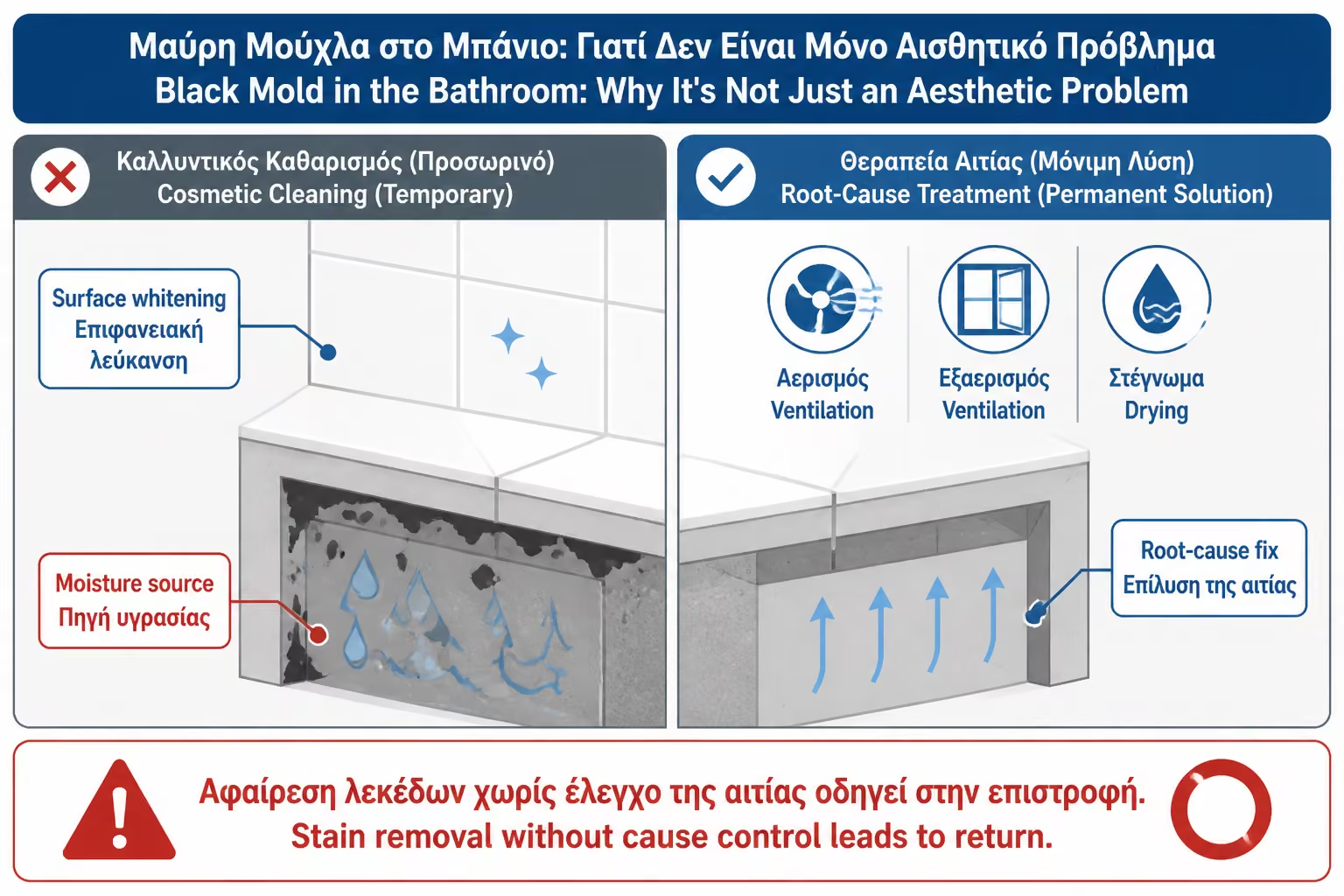
The important thing is not to deal with it only with bleach, spray or painting. These may temporarily clean the surface, but if the bathroom is still wet, the mold will return. The actual treatment has two steps: safely cleaning the existing mold and correcting the cause that creates it.
In everyday language, "black mold" is almost any black or dark fungus mark that appears in a damp place. In the bathroom it can be seen as black dots on silicone, dark lines on joints, black marks on the ceiling or gray spots on painted surfaces. It does not always mean that it is a specific type of fungus.
This is important because many times the term "black mold" is used with excessive fear. There are types of mold that can be dark or black, but the identification of the type is not done by eye. For the owner, the practical significance is different: if there is visible mold indoors, it must be dealt with, regardless of the exact type.
The US Environmental Protection Agency reports that molds can cause allergic reactions, trigger asthma attacks in people with asthma who are allergic to mold, and irritate the eyes, skin, nose, throat and lungs even in people who are not allergic.
So the question is not "is it the most dangerous mold?". The right question is "why is there mold in the bathroom and how can I stop it from coming back?".
The bathroom has everything mold needs: humidity, temperature changes, limited ventilation, and surfaces where organic matter can be held. Shower water vapor condenses on tiles, mirrors, windows, ceilings and corners. Dust, soap scum and towel fibers act as a substrate where fungus can grow.
Mold does not appear because "the bathroom is dirty" in the simple sense. It can also appear in a very clean bathroom if the surfaces remain wet for a long time. Cleanliness helps, but the root cause is prolonged humidity.
The most common spots are ceiling corners, shower gels, joints that do not dry, the bottom of the window, the area behind furniture and places where air does not circulate. If the mold always appears in the same cold spot, there may be a thermal bridge. If it occurs near piping or a specific stain, a leak must be ruled out.
The bathroom does not need to become a sterile space. It needs to dry quickly after use. That's where prevention comes into play.
The main risks from dampness and mold in the home are mainly respiratory and allergic reactions. People who live in damp or moldy spaces are more likely to experience breathing problems, allergies, asthma and respiratory infections, according to public health information such as NHS Inform.
Symptoms can be mild or more severe. Stuffy, sneezing, nasal irritation, coughing, itchy or red eyes, skin irritation or heavy breathing may occur. In people with asthma, mold can worsen symptoms or trigger an attack, especially if there is an allergic sensitivity to mold.
Exposure does not affect everyone the same. A healthy adult may have minimal symptoms with minor exposure, while a child, an elderly person, a person with asthma, or someone with a weakened immune system may be more affected. This is why mold in the bathroom should not be treated as a simple "cleaning detail", especially in homes with vulnerable people.
The right message is balanced: there is no need to panic, but immediate and serious action is needed.
Mold can act as an allergen. When the spores or microparticles are inhaled or come into contact with a susceptible organism, the immune system can react. Symptoms often resemble allergic rhinitis: sneezing, runny nose, stuffy nose, itchy nose, red or watery eyes, and cough.
In some people, symptoms appear quickly when they enter a damp or moldy space. In others, they are more delayed and difficult to connect with the bathroom. If someone notices that they cough more after a shower, are stuffy in the morning, or that symptoms persist in the house and improve when they are away, indoor air quality is worth considering.
The Mayo Clinic reports that mold allergy can cause coughing, itchy eyes and other bothersome symptoms, and in some people it is linked to asthma and can cause airway symptoms.
Allergies do not resolve with medication alone if exposure continues. If the source of mold remains in the bathroom, the organism continues to be exposed. Reducing humidity and removing mold is part of practical treatment.
For people with asthma, mold is a more serious issue. Spores and irritants can irritate the airways. In people who are allergic to mold, exposure can cause a flare-up of symptoms. The EPA reports that molds can trigger asthma attacks in people with asthma who are allergic to mold.
In practice, this can mean wheezing, coughing, chest tightness or shortness of breath. Symptoms may worsen during times when the bathroom holds more moisture, such as in winter, or when mold has spread to the ceiling, joints or behind furniture.
The link between mold and asthma should not be underestimated. It does not mean that mold is the only cause of asthma, nor that every person will be affected the same. But it does mean that in a home with a person who has asthma, visible mold must be addressed immediately and the cause of dampness corrected.
If someone has asthma and the symptoms worsen in a house with mold, they need to contact a doctor and simultaneously treat the area technically. One does not replace the other.
Mold doesn't just affect those with an allergy diagnosis. Exposure to damp and moldy environments can irritate the eyes, nose, throat and lungs even in non-allergic people. The EPA notes that mold can irritate the eyes, skin, nose, throat and lungs in both allergic and non-allergic individuals.
This explains why someone can walk into a moldy bathroom and feel "heavy" air, irritation or cough, without having an official allergy. Air quality in a damp space can be poor, especially if the ventilation does not work and the space remains closed.
In severe or widespread cases, dampness and mold in residences are treated by public health agencies as a significant indoor air quality issue. UK government material on damp and mold states that the effects mainly involve the airways and lungs and can cause serious illness in vulnerable cases.
For the bathroom this means that mold should not be used as "normal". It is an indication that the space needs intervention.
Not everyone has the same sensitivity. Children, the elderly, people with asthma, allergies or chronic respiratory problems, people with weakened immune systems and those who spend long hours at home are usually more vulnerable. In these individuals, even modest exposure may matter more.
Children are an important category because their respiratory system is still developing and they spend a lot of time indoors. The elderly may have reduced respiratory reserve or co-morbidities. People with COPD, asthma or allergic rhinitis may have easier flare-ups.
| Group | Because it needs attention |
|---|---|
| Children | Sensitive respiratory, more time at home |
| Elderly people | Respiratory or cardiac problems often coexist |
| People with asthma | Mold can trigger or worsen symptoms |
| People with allergies | Possible allergic reaction to mold spores |
| People with weakened immunity | Greater sensitivity to infections and irritations |
| Pregnant women or people with chronic diseases | Better to avoid prolonged exposure to poor air quality |
If there is a vulnerable person in the house, the mold in the bathroom should not wait. Even if the area seems small, it must be properly cleaned and the cause corrected.
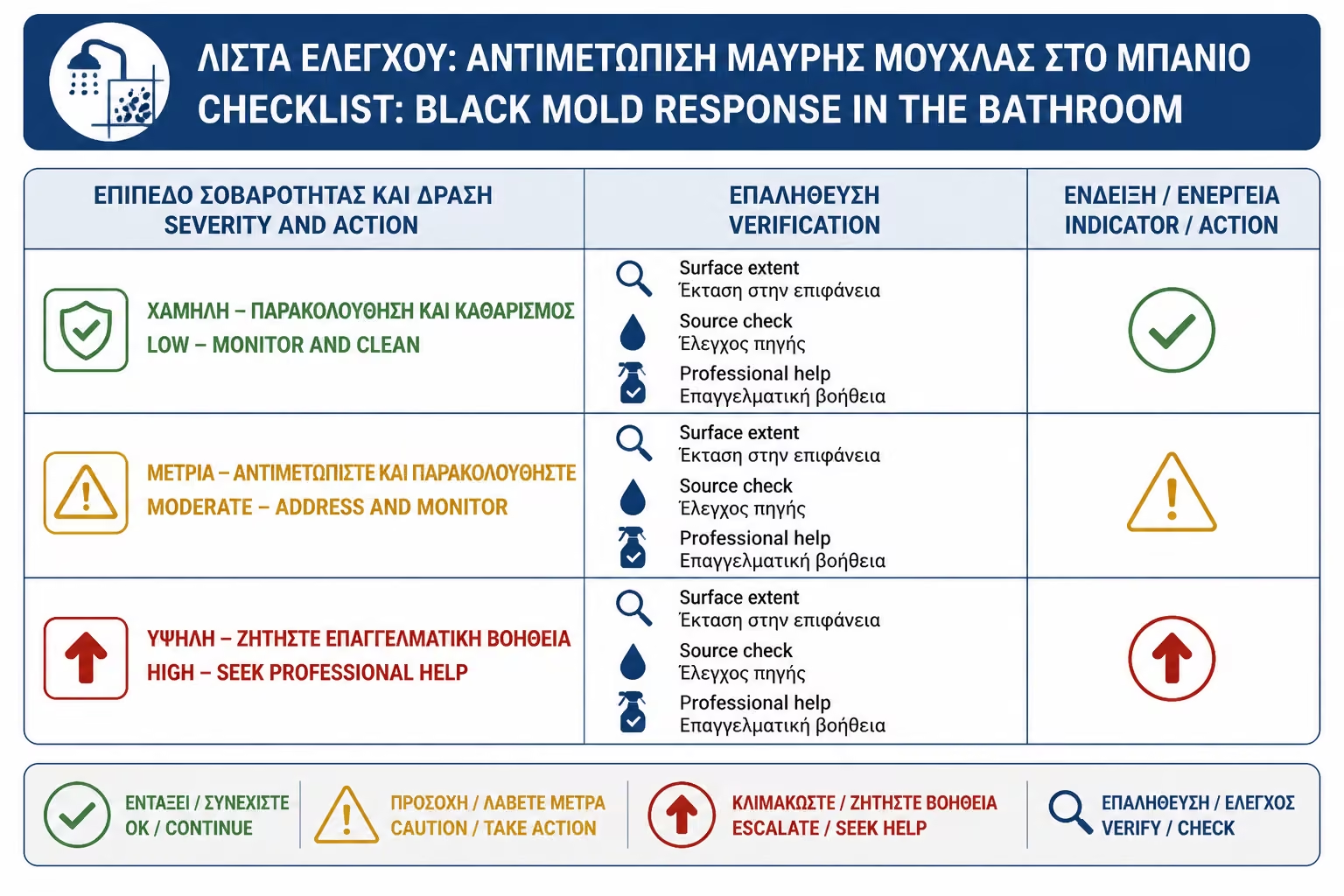
Not all cases are of equal severity. Small black dots on the shower silicone can be a localized surface moisture and cleaning problem. A large black ceiling, a deeply darkening corner, mold behind furniture or a strong musty smell indicate a more serious condition.
Extent matters. The larger the surface area, the greater the potential exposure. Duration also matters. Mold that has recently appeared after a period of high humidity is different from mold that has been around for months or years. Location matters: mold on silicone is easier to clean and replace than mold on porous drywall or a painted ceiling.
Reappearance is also an indication of seriousness. If you clean the same spot and it comes back in a few weeks, the problem is not solved. Condensation, thermal bridging, insufficient ventilation or leakage may be to blame.
In cases of extensive mold, porous materials, or a strong persistent odor, it is advisable to request a technical inspection. Simple surface cleaning may not be enough.
Bleach or special cleaners can remove superficial signs of mold and quickly improve the image. But this does not mean that the problem is solved. If the surface continues to remain wet, the mold will return.
In addition, the use of chemicals in the bathroom requires caution. Never mix bleach with other cleaners, especially acidic products or ammonia, as dangerous fumes can be produced. The area must be well ventilated and the user must wear gloves. For people with asthma or sensitivity, strong fumes can be irritating.
On deeply tanned silicones, cleaning is often insufficient. Mold may have penetrated the material. There the correct solution may be to remove the old silicone, clean, completely dry and re-apply an anti-mould silicone suitable for the bathroom.
Cleaning is necessary, but it is the first step. The second step is to stop the cause of moisture.
For small surface areas, cleaning can be done by the owner with care. Good ventilation, gloves, avoid chemical mixing, gentle mechanical removal and complete drying are required. If a special anti-mold product is used, the manufacturer's instructions must be followed.
We do not violently rub dry mold in a way that raises dust into the air. It is better to wet the surface in a controlled manner with a suitable product to limit dispersion. We do not use hard brushes on joints that are damaged or on a painted ceiling that is peeling.
If the mold is in electrical parts, near lamps, ventilators, sockets or inside a false ceiling, no rough cleaning is done. A technical check is needed there. The same is true if the mold is behind inflated furniture or in porous materials.
After cleaning, the surface must dry completely. If it stays wet, the problem quickly returns.
You should not clean up yourself when the mold is extensive, when it is found in porous materials that have deteriorated, when there is a strong musty smell without the source being clearly visible, when a leak is suspected in a wall or false ceiling, or when there are people in the home with severe asthma, immunosuppression or significant respiratory problems.
Also, you should not intervene yourself if the mold is near electrical. Mold around a light fixture, fan, outlet or electric towel rail should be checked for safety. The bathroom is a wet space and does not tolerate improvised interventions.
If mold keeps coming back after cleaning, diagnosis is needed. There may be thermal bridging, insufficient ventilation, bad venting, a closed door with no air intake, or a leak. Cleaning without a diagnosis is temporary.
The basic principle is simple: small surface mold can be carefully cleaned. Extensive, persistent or "hidden" mold needs a professional approach.
Before mold can be treated, the cause of the damp must be found. In the bathroom, the two main causes are condensation and actual leakage. Condensation usually occurs on cold surfaces, after a shower, in corners, mirrors, windows and ceilings. Leakage often appears as a specific stain that persists or grows, regardless of bathroom use.
| Mark | More likely condensation | More likely to leak |
|---|---|---|
| Mold in ceiling corners | Yes | Not always |
| Mirror and glass fogging | Yes | No |
| Tanning around shower silicones | Yes | Possible if there is a seal failure |
| Local stain that grows | Not always | Yes |
| Moisture without showering | Suspicious | Possible |
| Wall or paint swelling | It can | Possible |
| Improvement by ventilation | Usually yes | Not really |
| Always back to the same cold spot | Thermal bridge | Not necessarily |
If the cause is condensation, the solution is ventilation, heating, air intake and thermal bridge control. If the cause is a leak, it needs repair. If you paint or clean without knowing the cause, there is a good chance you will see the mold again.
Proper ventilation reduces relative humidity and helps surfaces dry quickly. For a bathroom with a shower, the fan must run during use and continue afterwards. That is why timers and hygrostats are particularly useful. If the fan turns off immediately with the light, it often does not have time to remove the moisture.
But there must also be air intake. If the door is fully closed with no gap, the fan is not pulling properly. A gap under the door or other air transfer solution is necessary. The air has to come in from somewhere, go through the bathroom and leave the vent.
The flow m³/h must be sufficient for the volume of the bathroom. A small fan in a large or blind bathroom can work continuously without performing. If the duct is dirty, long or full of corners, the actual flow rate drops. Ventilator maintenance is also critical.
Mold is often a sign that the ventilation is either insufficient, not working long enough, or not flowing properly.
Mold appears most easily when surfaces are left cold and damp. A frozen exterior wall or ceiling under a roof reaches the dew point more easily. Then the water vapor from the shower condenses on it and creates a wet substrate for mold.
Heating helps because it raises the temperature of the air and surfaces. A towel rail, radiator or underfloor heating can reduce condensation. But it is not enough if there is no ventilation. Warm but humid air must be released from the bathroom.
Insulation helps because it raises the temperature of interior surfaces. If a corner always turns black in the winter, there may be thermal bridging. In this case, the best ventilator can reduce the problem, but maybe also thermal insulation intervention is needed.
The correct treatment of mold is a combination of: less moisture in the air, warmer surfaces and a shorter residence time of water on the materials.
In the bathroom, the most vulnerable areas are silicones, joints, painted surfaces, plasterboards, wooden or MDF furniture and areas behind mirrors or cabinets. Tiles as a material last longer, but the joints between them can hold dirt and moisture.
Silicones often turn black because they stay wet and retain soap scum. If the mold has penetrated deep, cleaning is not enough. The old silicone must be removed and new applied on a dry and clean surface.
Painted surfaces on the ceiling need suitable bathroom paint, but paint alone is not a solution. If the ceiling sweats every day, even good paint will strain. Drywall, if it is not suitable for wet areas or if it is soaked, may need to be replaced.
Bathroom furniture must be moisture resistant and must not rest on permanently wet surfaces. Mold behind a piece of furniture indicates poor air circulation or a cold wall.
After cleaning, the most important thing is to change the behavior of the space. If the bathroom continues to hold moisture, mold will return. So the ventilator must be checked, the fan must be cleaned, the timer or humidistat must be working, there must be a vacuum under the door and the surfaces must be dried after the shower.
In areas with silicone, if the old silicone has blackened deeply, it must be replaced. On a ceiling or wall, once the cause of moisture has been solved, cleaning, drying, priming and suitable paint for wet areas may be necessary. We do not paint on a wet or contaminated surface.
If there is mold behind a piece of furniture, the piece of furniture should be removed, the wall should be dried, and it should be considered whether it needs to be removed or rearranged. If the cause is thermal bridging, the mold may return if the thermal problem is not resolved.
Cleaning is the "zeroing" of the problem. Prevention is what keeps it zero.
The cost depends on the extent, cause and material affected. Minor surface mold in silicone can be treated economically. Extensive mold on the ceiling, drywall or behind furniture may require technical intervention. If there is a leak, the cost is determined by the repair of the leak.
| Intervention | Indicative range 2026 | When needed |
|---|---|---|
| Simple cleaning of a small surface | 5–30€ materials | Small dots on silicone/joints |
| Replacement of shower silicone | 50–150€+ | When it has blackened deeply |
| Bathroom ceiling cleaning and painting | 150–500€+ | After the cause of moisture is solved |
| Vent cleaning/improvement | 40–200€+ | When it doesn't pull properly |
| New ventilator with timer/humidifier | 100–350€+ | For insufficient ventilation |
| Air duct or door improvement | 50–400€+ | When there is no air flow |
| Leakage check | Wide variation | When there is a suspicious stain |
| Drywall/hidden mold remediation | Wide variation | When the material is deeply affected |
Prices are affected by area, access, VAT, area, materials and whether the work is done individually or within a renovation. The most important thing is not to pay only for cosmetic restoration without solving the cause. If the bathroom continues to sweat, the mold will return and the cost will repeat itself.
The most economical solution in the long run is the correct diagnosis from the beginning.
Mistakes are made because mold appears to be a superficial problem. Owner sees black mark and thinks cleaner or paint. But the black mark is a result. The cause is humidity.
| Error | What happens in practice | A more correct approach |
|---|---|---|
| Cleaning without moisture correction | The mold is coming back | Ventilation, heating, cause control |
| Painting over mold | It swells or darkens again | Cleaning, drying, primer, correct color |
| Using bleach with other cleaners | Risk of fumes | Never mix chemicals |
| Ignoring asthma/allergies at home | Burden on vulnerable people | Immediate treatment and medical advice if symptoms are present |
| Treat leakage as condensation | The problem is growing | Control of stubborn local stains |
| Buy a ventless dehumidifier | Partial solution | First remove moisture from the source |
| Closed door after shower | It remains moist air | Airflow and fan operation |
| Dirty fan | Low supply | Periodic cleaning |
| Anti-mould paint as a unique solution | Delay, not cure | Correct cause before painting |
| Ignoring thermal bridging | Mold in the same spot | Control of cold surfaces |
A typical example is the ceiling that is painted every year with an anti-mould paint, but the fan does not have a timer, the door does not have a gap and the bathroom stays closed after the shower. Color can't beat physics. If the surface stays wet, the mold will return.
| Control | Yes / No |
|---|---|
| Is the mold small and superficial or widespread? | Yes / No |
| Is there someone with asthma, allergies or breathing problems in the house? | Yes / No |
| Does the mold appear after a shower or is there constant moisture? | Yes / No |
| Is there a particular stain that is growing that indicates a possible leak? | Yes / No |
| Does the fan run during and after the shower? | Yes / No |
| Is there a timer or a hygrostat? | Yes / No |
| Is there a gap under the door for air intake? | Yes / No |
| Have the fan and impeller been cleaned recently? | Yes / No |
| Is the bathroom adequately heated in winter? | Yes / No |
| Does mold appear in a cold corner or exterior wall? | Yes / No |
| Are the silicones blackened in depth and need replacing? | Yes / No |
| After cleaning has the cause of the moisture been corrected? | Yes / No |
Don't judge mold by its color alone. Assess it by cause and extent. Small mold in the silicone can be cleaned or replaced locally, but if it blackens a ceiling, corner or wall, you need to find why the surface remains wet. First check ventilation, timer, door vacuum, fan cleanliness and thermal bridges. If there are children, elderly or people with asthma/allergies in the house, don't put it off. Mold is a technical and sanitary sign that the space is not drying properly.
Black mold in the bathroom is not just an unsightly sight. It is an indication that there is moisture that remains in the space long enough for fungus to grow. And when mold is present, air quality is also affected. The real risks are mainly allergies, irritations, respiratory symptoms and asthma exacerbation, with greater importance for children, the elderly and people with sensitivities.
No need to panic about every little sign. But an immediate and correct reaction is needed. We clean small surface mold safely, avoid hazardous chemical mixtures, replace silicones when they are deeply blackened, and request engineering inspection when mold is extensive, persistent, or associated with a potential leak.
The most important thing is to solve the cause. Without proper ventilation, air intake, heating, checking cold surfaces and repairing leaks where they exist, mold will return. The bathroom should be dried quickly after each use. This is the true measure of success.
Dealing with mold is not just a matter of cleanliness. It is a matter of health, comfort and proper functioning of the home.
Return to category.
Go to categoryReturn to the central guide.
Go to guide