
Bathroom Lighting, Ventilation & Heating
Return to category.
Go to categoryThe heated towel rail is one of the few elements in the bathroom that combine practicality, comfort and technical value. It is not just a "luxury" for hot towels. In a properly designed bathroom, it helps the space dry faster, reduces moisture retention on towels and helps prevent condensation and mold. Especially in small or blind bathrooms, where the air holds moisture after a shower, heating is part of the overall hygiene strategy of the space.
The main dilemma in the market is which type to choose: a hydraulic towel rail connected to the heating network, an electric one that works autonomously, or a mixed-function one, i.e. dual fuel, which works with both the heating water and an electric resistance. Each solution has a different logic, different installation costs, different usage costs and a different relationship with the home's heating system.
The right choice depends on what you already have at home. Another need is an apartment with a natural gas boiler that often works in winter. A house with a low-temperature heat pump, where the circuit water can work at 35–45°C rather than 70°C, has other needs. Other needs are a bathroom that has no heating system at all or a holiday home that is used seasonally.
A common mistake is to buy a towel rail based only on size or design. Whether it has straight or curved bars, black or chrome finish, modern or classic line, is important for aesthetics. But technically there are other questions: will it really heat the bathroom or just the towels? When will it work? What water temperature is the system? How many watts does it deliver? Will it have a timer? Will it work in the summer? Is the electrical installation safe?
The towel rail should be chosen as a small bathroom heater, not just as an accessory. If properly dimensioned and properly controlled, it provides comfort and reduces humidity. If it's small, the wrong type, or only works when you don't need it, it may look pretty but not do any real work.
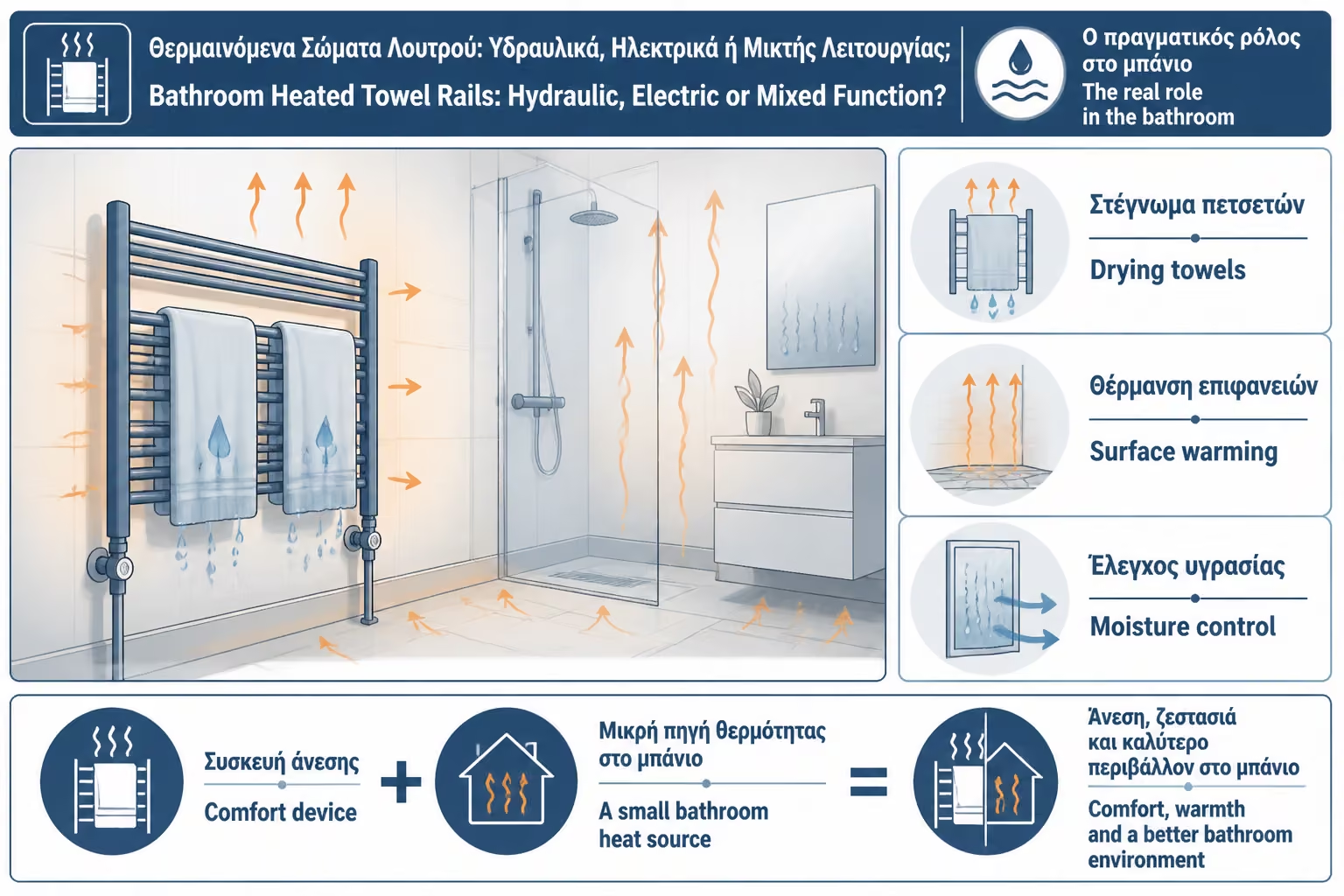
The heated towel rail has two main roles. The first is to dry and warm the towels. The second is to provide heat to the bathroom. Many owners think only of the first role, but the second is just as important, especially in wet bathrooms.
A wet towel left in a cold bath can hold moisture for hours. This moisture slowly evaporates into the space and contributes to the heavy feel, musty smell and mold. If the towel dries quickly on a heated towel rail, the moisture retention time is reduced.
At the same time, the heating helps the surfaces not to be frozen. A cold ceiling, a cold window or a cold exterior wall condenses shower water vapor more easily. If the bathroom is slightly warm before and after use, the surfaces sweat less and dry faster.
But we shouldn't overestimate the towel rack. If the bathroom is large or poorly insulated, a small towel rail may warm the towels but not be sufficient as the main heating. If it is covered by many towels, it gives less heat to the room. If there is no ventilation, moisture remains in the air.
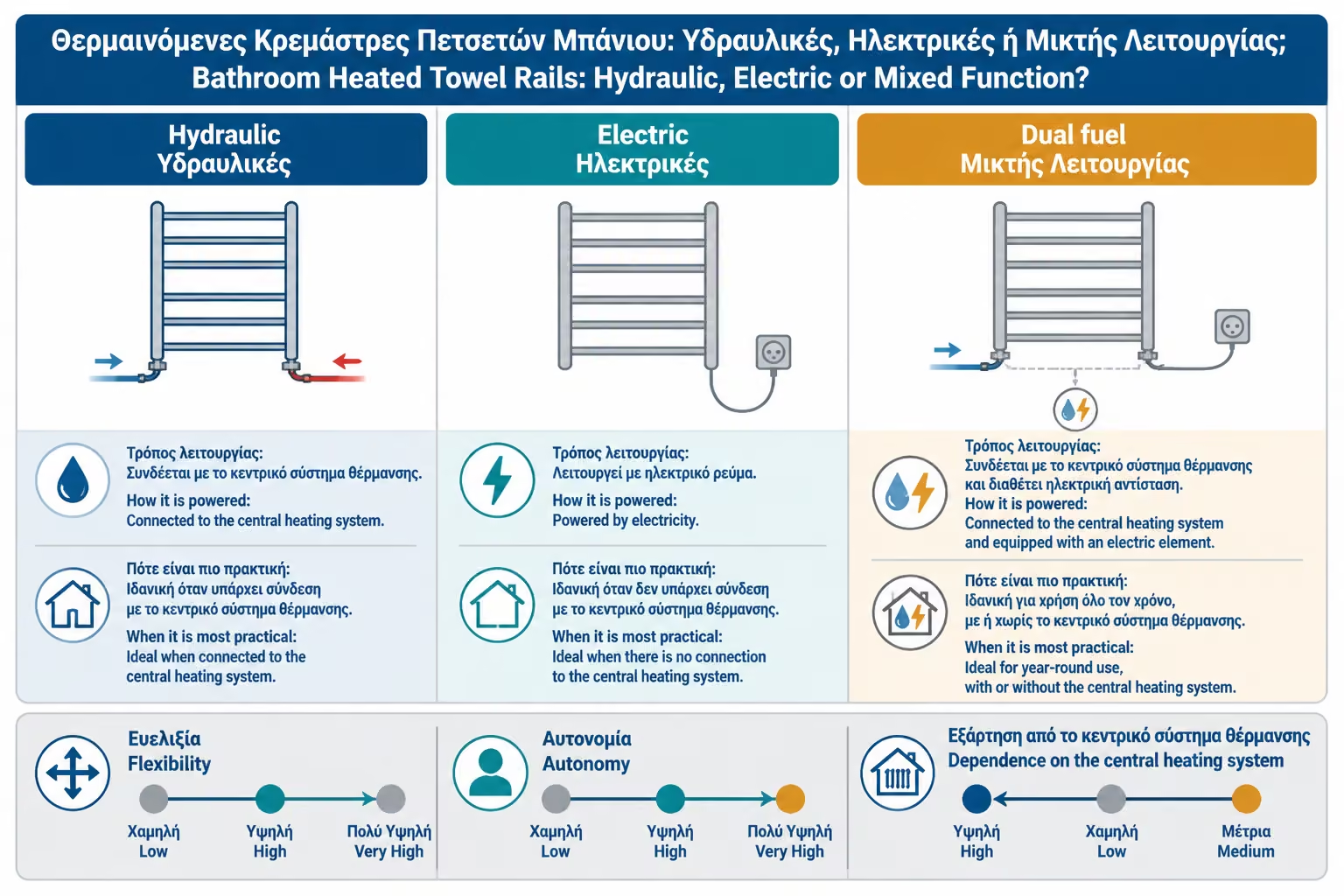
There are three main categories: hydraulic, electric and mixed function. The plumbing is connected to the house's heating network. The electric one works autonomously with electric resistance. Dual fuel combines the two: it works with the heating network in winter and with electric resistance when the central heating is off.
| Type | How it works | When is it best suited? |
|---|---|---|
| Hydronic | Hot water from boiler or heat pump | When there is an active heating network |
| Electric | Built-in or additional electrical resistance | When we want complete autonomy |
| Dual fuel | Heating water + electric resistance | When we want heating in winter and electric in summer |
The choice is not a matter of "which is best overall." A hydronic model makes a lot of sense if the heating system runs often. An electric one is practical if you want a warm towel regardless of central heating. Dual fuel is the most flexible, but it needs proper installation and sensible operation.
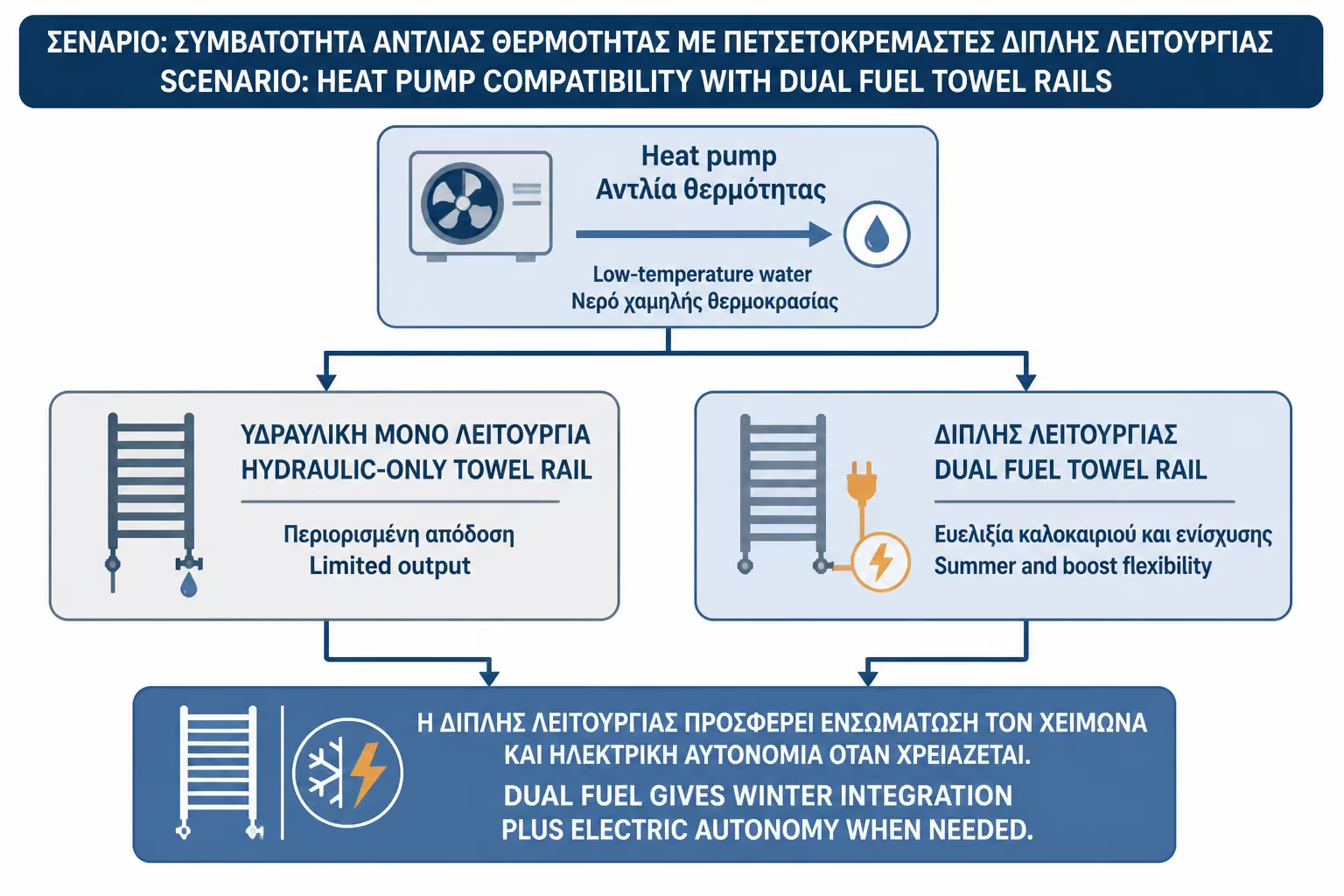
In a home with a gas or oil boiler, hydraulic towel rails often perform very well in winter because the water in the system is quite warm. In a home with a low-temperature heat pump, the same towel rail can be lukewarm if not sized correctly. Market sources for heat pump compatible towel rails point out that a body sized for a 75°C boiler may underperform or appear lukewarm to a pump operating at around 45°C.
The hydraulic towel rail is connected to the heating circuit, like a radiator. When the heating works, the towel rail also heats up. It is a classic, reliable and often economical solution in homes that already have a body network.
The big advantage is that it uses the same heating source as the house. If you have a gas, oil or other central source that works in the winter, the towel rail can provide comfort without separate electrical consumption in the bathroom. Installation is simpler when heating facilities are already in place.
The downside is that it only works when the heating system is also working. If you want a dry towel in May, September or a wet summer morning, the hydraulic towel rail will be cold if the heating is off. This is one of the most common complaints in homes where the bathroom retains moisture outside of winter.
Also, its performance depends on the water temperature. With a high temperature boiler it can perform very well. With a low temperature heat pump, a larger surface area, special design or additional electrical function may be required.
The electric towel rail works independently of the central heating. It is connected to the current and heated by electric resistance. It can be a stand-alone device or a towel rail filled with a special liquid/oil and electric element.
The big advantage is autonomy. You can use it whenever you want: morning, evening, summer, spring, when the central heating is not working. With a timer or thermostat, you can set it to work for 30, 60 or 90 minutes, so it dries towels without burning all day. Modern solutions with timers or smart controls are often recommended for savings, because they heat up when needed and turn off automatically.
The downside is the cost of electricity. Electricity is usually more expensive per kWh than natural gas or an efficient heat pump. A small 300W electric towel rail may have low costs for 1–2 hours of use, but if it is left on for many hours every day, the costs add up. For example, with an electricity price of about €0.25/kWh, a 300W device costs about €0.075 per hour of full operation, while a 600W device costs about €0.15 per hour. If it has a thermostat, it can use less because it cycles on/off. Similar calculations for 2026 show that a 300W electric towel rail at 24.67p/kWh costs around 7.4p per hour of full power.
The electric solution is great for autonomy, but it must be installed with security, proper IP protection, a suitable location and an electrician. It's not a portable heater that plugs into a wall outlet.
The dual fuel towel rail is connected to both the hydraulic heating circuit and an electric resistance. In winter it works with the hot water of the central heating. When the heating is off, it can work electrically to dry towels or warm the bathroom a bit.
This combination is very practical in Greek homes, because the need for dry towels does not exist only in winter. In spring, autumn or even on humid summer days, the bathroom can hold moisture while the central heating is off. The dual fuel solution gives autonomy without giving up the economy of the hydraulic system when it works.
But the installation is more complex. It needs proper plumbing, proper electrical resistance, proper valves, proper wiring and safety rules. It is not a simple matter to "put a resistance" on any towel rail without control. Some dual fuel drivers stress that electric cell operation requires proper body isolation/adjustment and that no dangerous pressures or closed circuit should be created without the possibility of relief.
Dual fuel is often the best choice when you're renovating and want year-round flexibility. It is more expensive than simple plumbing, but it can save you the frustration of "cold towel when the heating is off".
In a home with a gas or oil boiler, the hydraulic towel rail is usually a very sensible choice. These systems often work with higher water temperatures than low temperature heat pumps. This means that a water towel rail can get really hot and deliver a lot of heat to the bathroom.
If the bathroom is mainly used in winter and the heating runs steadily during the hours you bathe, the hydronic solution is economical and simple. But if you want warm towels outside the heating season, dual fuel is more practical. In winter you use the heating network, and during the rest of the year you switch on the electric element only for short periods.
The simple electric towel rail makes sense when there are no heating pipes in the bathroom or when you don't want plumbing work. But if there is already a network, it is a shame to ignore it. Often the best solution is hydraulic or dual fuel.
Pay attention to the size. A small towel rail can burn very hot, but if it's small, it won't heat up the bathroom. We need a loss calculation and not just a "fits on the wall" option.
The heat pump performs best when working with low water temperatures. This is its great advantage in energy efficiency. But classic towel rails are often designed with boiler hot water in mind, i.e. much higher temperatures. When the water is at 35–45°C, the same towel rail gives off less heat.
This means that in a house with a heat pump you have to be more careful. It may require a larger towel rail, a special higher performance body, a combination with underfloor heating or a dual fuel solution with electric resistance for boost. A source for heat pump towel rails typically states that a gas system can operate at 60–75°C, while a heat pump is often 35–55°C, so the towel rail will have a different feel and performance.
If you choose a small conventional towel rail in a heat pump, you may be disappointed because it will feel "lukewarm". It's not necessarily the pump's fault. Sizing is to blame. Pumps need larger emission surfaces or low temperature bodies.
In a heat pump renovation, ask the engineer or installer to calculate the performance of the towel rail at your system's supply temperature, not just the standard catalog figures.
In a home with a heat pump, the dual fuel towel rail can be very practical. The hydraulic circuit provides basic gentle heating when the system is running, while the electric resistance gives a quick boost when you want a really warm towel or quick drying after a shower.
This does not mean that the electrical resistance must work continuously. Correct use is short and targeted: 30–60 minutes before or after use, with a timer or thermostat. This way you don't force the heat pump to raise a high water temperature just for one towel rail, which can reduce the efficiency of the whole system.
The logic is energy-smart: the heat pump works low and efficiently for the home, while the electric towel rail covers the local comfort peak in the bathroom. This may be more practical than designing the entire system at higher temperatures just to keep the towel rail "hot".
But it needs proper installation and control. The electrical resistance must be compatible with the body, have the correct wattage, thermostat/safety and installation by an electrician. Dual fuel is a very good solution when done right, not a sketchy patent.
Usage costs depend on energy price, system performance and operating hours. The hydraulic towel rail uses the energy of the central system. If you have a gas boiler, the cost per kWh of heat is often lower than direct electric. If you have a heat pump with a good COP, the heat costs can be even more advantageous. The electric towel rail, on the other hand, converts 1 kWh of electricity into approximately 1 kWh of heat.
To put it simply: a 300W electric towel rail that works for 2 hours consumes 0.6 kWh. If the electricity price is €0.20/kWh, it costs around €0.12. If it is €0.30/kWh, about €0.18. A 600W for 2 hours consumes 1.2 kWh, which is about €0.24–0.36 at these prices. Actual values change, but the calculation is simple: Watts × hours ÷ 1000 × kWh price. If there is a thermostat, the actual consumption may be lower because the resistance does not work continuously.
| Example of electrical use | Consumption | Cost at €0.25/kWh |
|---|---|---|
| 300W for 1 hour | 0.3 kWh | €0.075 |
| 300W for 2 hours | 0.6 kWh | €0.15 |
| 600W for 1 hour | 0.6 kWh | €0.15 |
| 600W for 2 hours | 1.2 kWh | €0.30 |
| 600W for 4 hours | 2.4 kWh | €0.60 |
The electric solution is economical when used purposefully. It becomes expensive when it is left on for many hours without a timer. Dual fuel gives the best practical scenario: hydraulics when the system works, electrics only when needed.
The cost depends on size, material, design, finish, power, brand, if it is electric or dual fuel, and on the existing installation. It is also affected by the area, access, floor, plumbing, electrical, VAT and if the work is done within a total renovation.
| Selection | Indicative range 2026 | What affects the price? |
|---|---|---|
| Simple hydraulic towel rail | 80–250€ device | Size, finish, power |
| Larger or design-focused hydronic model | 250–700€+ | Design, material, brand |
| Electric towel rail | 120–400€+ | Power, thermostat, timer |
| Dual fuel body + resistor | 200–700€+ | Body, resistance, valves |
| Hydronic installation or pipe relocation | 100–500€+ | Distance, errands, tiles |
| Electrical supply for electric/dual fuel | 100–300€+ | Line, IP, switch, protection |
| Complete installation during renovation | Wide variation | Hydronic work + electrical work + repairs |
Cheap towel racks are not necessarily bad, but they may have poor performance or a finish that wears out quickly. Accurate is not necessarily correct if it does not have the required power. The criterion is not only the price of the body, but the overall function in the bathroom.
In a finished bathroom, installation can cost more than the appliance if new plumbing or electrical is needed. In renovation, forecasting is much easier and more economical.
The towel rack must meet two needs: drying towels and heating the space. For the first, you need sufficient surface area and proper layout. For the second, a thermal power proportional to the losses of the bathroom is needed.
Losses depend on square footage, height, exterior walls, window, insulation, roof, desired temperature and heating system. A small indoor WC may need much less power than a 7 m2 bathroom. with exterior wall and old window. Market sources point out that towel rails often range in wattages of around 200–800W and that thermal performance should match the size of the bathroom.
If the towel rail will be the only heating in the bathroom, do not choose it only by the width of the wall. Request a power calculation. If it will be complementary, it can be smaller, but it must dry the towels that are actually used.
A practical mistake is too small a towel rail in a family bathroom. It fills towels, blocks the heat to the space and in the end neither the towels dry well nor the bathroom heats up.
The finish is not only a matter of aesthetics. It can also affect performance. Many market sources point out that chrome bodies give off less heat than their painted counterparts because the finish affects heat emission. A renovation experience article states that chrome can emit up to about 20% less heat than matte or painted finishes, and is more demanding to clean.
That doesn't mean chrome is wrong. It is popular, compatible with batteries and mirrors, and cleans if properly maintained. But if the bathroom needs real heating, maybe a white, matte black or other painted body will give better performance for the same size.
Black and dark finishes look modern, but require attention to salt and cleaning. Inox is durable, but more expensive. Colored bodies can become a design element, but must be chosen based on the overall aesthetics of the bathroom.
In any case, ask for technical performance data for that particular finish, not just for “the same model” in general.
The ideal location is near the shower or bathtub so you can grab the towel without walking into the bathroom soaking wet. This also reduces water on the floor. But the position must be safe in terms of bathroom zones, especially if we are talking about an electric or dual fuel towel rail.
It should not obstruct traffic, knock on a door, close behind furniture or be in a place where it will receive direct splashes. If it is hydraulic, the piping must be considered. If electrical, wiring and connection must be done by a licensed electrician.
Installation on an external wall may have higher losses. Mounting on an interior wall is often more efficient, but not always practical. In any case, the position must combine use and technical performance.
Don't choose a position just because it "fits there". The towel rail is a device for daily use and a heater. If it is not easily accessible, you will be using it incorrectly.
The electric or dual fuel towel rail is an electric device in a wet area. Installation must be done by a licensed electrician, with proper line, leakage relay protection, proper IP rating, proper location and switch/control out of danger zone where required.
We don't use a simple socket, socket or rough cable in the bathroom. We do not convert a hydraulic towel rail into an electric one with "any resistor that fits". The resistance must be compatible with the body, capacity, filling fluid and manufacturer's instructions.
In dual fuel, hydraulic operation rules must also be observed. Electrical resistance heats the water/fluid inside the body. If the body is insulated incorrectly or valves are closed in a way that creates trapped pressure, there can be a problem. That is why the installation must be done by professionals, plumbers and electricians.
The comfort of the hot towel is not worth any electrical risk. In the bathroom, safety comes first.
Control is critical to cost of use. An electric towel rail without a timer can stay on for hours without reason. With a timer, it can work only when needed: before the morning shower, after the evening bath or for drying towels.
The thermostat helps to prevent the body from overheating and to reduce consumption. 60 or 90 minute programs are practical. Smart controls allow programming from a mobile phone, but they are not necessary for everyone. The important thing is to have some control, not just on/off.
In dual fuel, the electrical control should be clear. The user must know when to operate with water and when with electricity. If there is no clear logic, it may consume unnecessarily or operate in the wrong state.
The best system is the one that fits your routine. If you shower every morning at 7:30, the timer is more useful than any "smart" feature you'll never set.
The towel rack collects dust, salts, moisture and towel residue. If not cleaned, aesthetics are reduced and marks can form, especially on chrome or dark finishes. It is cleaned with a soft cloth, a mild detergent and without aggressive chemicals that can damage the finish.
In hydraulic towel rails, venting may be required if it does not heat up evenly. If it only heats low or only in some places, check the air in the circuit, the valves and the flow. In heat pump systems, the supply temperature is also controlled.
In electric ones, the cable, the switch, the control and any thermostat are checked. If it smells burnt, blows a fuse or behaves strangely, stop using it and call an electrician.
Don't load too many towels. The towel rail must breathe. If you cover it completely, the performance to the space is reduced and the towels may dry more slowly inside.
It is sufficient as a single heating when the bathroom is small, relatively well insulated, without major losses, and the towel rail has been calculated for the thermal needs of the room. In an internal bathroom of 3–4 m2, it may be enough. In a large bathroom of 7–10 m2, with an external wall or a large window, it is often not enough on its own.
If the towel rail has many towels on it, the heat reaching the room is reduced. So a body that on paper covers the bathroom may in practice not warm it enough if it functions mainly as a "hanger". In a family bathroom, a larger model or a second heating source may be needed.
For a heat pump, the issue is even more important. Body performance ratings may be given at high water temperatures. If you work lower, real performance drops. It needs calculation at the right temperature.
Rule of thumb: if the bathroom has a history of mold and is cold, don't buy “whatever fits”. Request a thermal calculation.
Mistakes are made because the towel rail looks like a simple product. In fact, it is a radiator and must fit the system.
| Error | What it causes in practice | A more correct approach |
|---|---|---|
| Selection by design only | Insufficient heating | Watt/BTU calculation |
| Small body in a big bathroom | Cold space and humidity | Higher power or second source |
| Hydronic-only model when the heating is often off | Cold towels outside of winter | Dual fuel or electric |
| Classic towel rail in heat pump without calculation | Lukewarm performance | Body for low temperature |
| Electric without timer | Useless consumption | Thermostat and timer |
| Rough electrical connection | Danger in the bathroom | Licensed electrician |
| Overload with towels | Little heat to the room | Proper use and a bigger body |
| Chrome for display only | Probably less heat emission | Performance control per finish |
| Wrong position away from shower | Water on the floor, difficult to use | Accessible and safe location |
| No vent connection | The moisture remains | Heating + ventilation together |
The most frequent mistake is the too small towel rack because "we don't have space". If it doesn't have room to heat and dry, maybe it needs a layout change or a different solution, not just a smaller body.
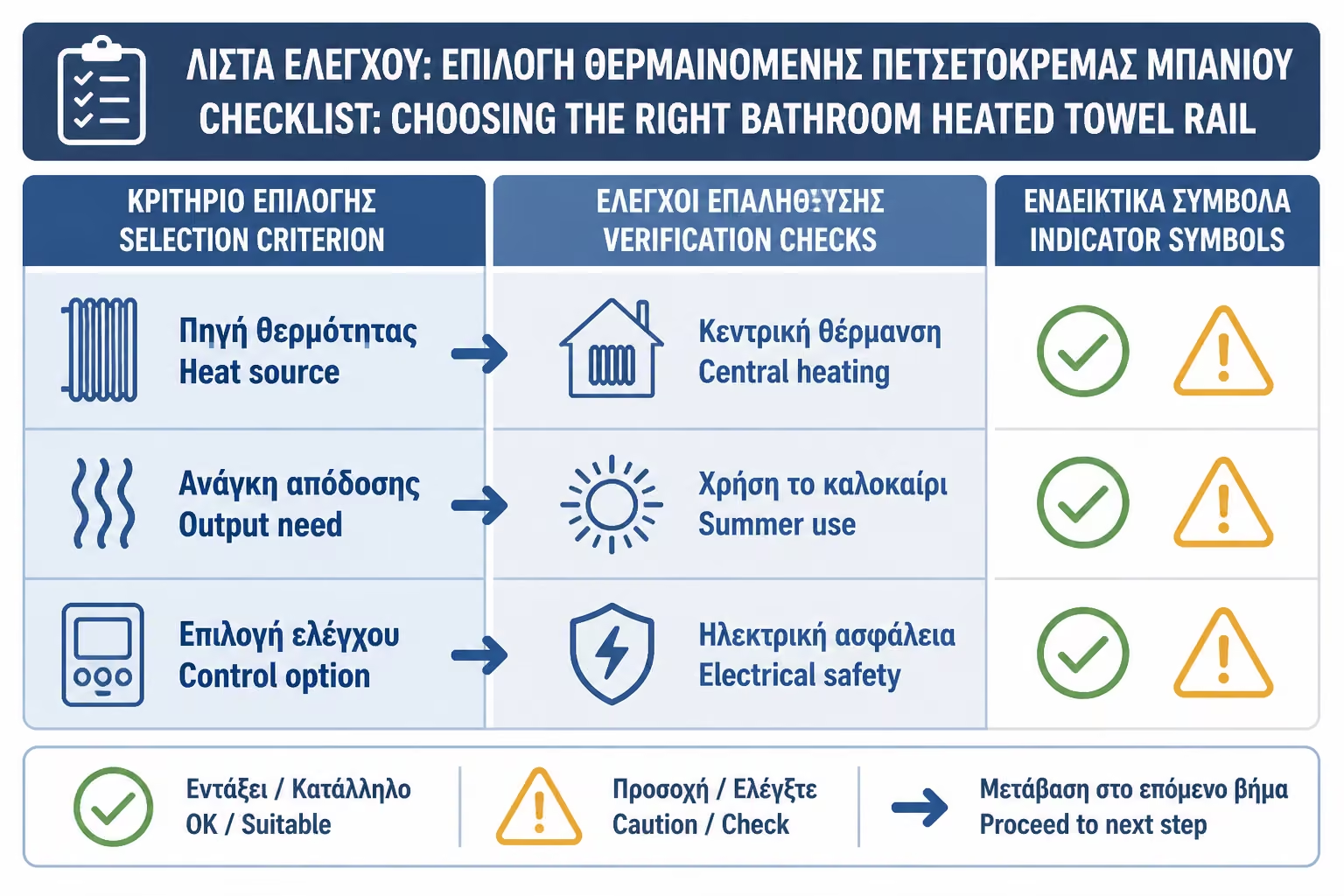
| Inquiry | Yes / No |
|---|---|
| Do you only want hot towels or space heating? | Yes / No |
| Has the required power of the bathroom been calculated? | Yes / No |
| Does the house have a boiler, gas, oil or heat pump? | Yes / No |
| Is the system water temperature high or low? | Yes / No |
| Does the heating work when you use the bathroom? | Yes / No |
| Do you also need operation outside of winter? | Yes / No |
| If there is a heat pump, has performance been checked at low input? | Yes / No |
| Does the electric or dual fuel solution have a timer/thermostat? | Yes / No |
| Is the location safe in terms of bathing zones? | Yes / No |
| Is there a proper electrical line and leakage relay? | Yes / No |
| Is the size sufficient for the family's towels? | Yes / No |
| Has the finish been tested for performance and cleanliness? | Yes / No |
| Does the offer include body, valves, resistance, labour, VAT and incidentals? | Yes / No |
If you have a gas or oil boiler and the heating often works in winter, a hydraulic towel rail can be a very good solution. If you want warm towels outside of the heating season, look at dual fuel. If you have a heat pump, don't buy a towel rail as if you had a 70°C boiler; ask for performance at your system's supply temperature. And in electrical solutions, do not leave the device without a timer. The towel rail should work when needed, not burn electricity all day.
The heated towel rail is much more than a beautiful accessory. It is an element of comfort, heating and moisture prevention. It dries towels, reduces the smell of close-up, helps the bathroom not stay frozen and limits the conditions that favor condensation and mold.
The right choice depends on the heating system of the house. With a gas or oil boiler, the hydronic solution is often economical and efficient in winter. With a heat pump, special attention needs to be paid to the lower water temperature and it is often worth a larger body or dual fuel. If there are no pipes or you want complete autonomy, the electric solution is practical, as long as it has a timer, thermostat and correct electrical installation.
The dual fuel towel rail is the most flexible option for many owners: mains heating in winter, electric operation when the central heating is off. It is particularly useful in bathrooms that retain moisture in spring and autumn or in houses with a heat pump where we want a local boost without changing the entire system.
The final decision should be based on power, heating system, cost of use, safety, location and daily habits. Not only in design. A properly chosen towel rack will feel it every morning: in the warm bathroom, in the dry towel and in the absence of that heavy humidity that makes the room always seem cold.
Return to category.
Go to categoryReturn to the central guide.
Go to guide